
Reviewed · MUSéE D’ORSAY TOURS
Paris: Musée d’Orsay Walking Tour With Reserved Access
Musée d’Orsay began life as a railway station, and that change of purpose is the most interesting part of this experience. You spend about 30 minutes outside learning how its grand Beaux-Arts shell became one of Paris’s main art museums, then enter to see Impressionist, Post-Impressionist, sculpture, and decorative art collections on your own.
I like the small group of up to eight and the useful exterior briefing, especially if you want context before facing the galleries. I also like that the $49 price includes access to both permanent and temporary collections, plus an audio guide. The main catch is important: the host does not go inside. You receive your ticket, then continue independently.
Key points at a glance
- A railway station turned museum: Learn about Musée d’Orsay’s original purpose and its Beaux-Arts facade before entering.
- Thirty minutes outside with an English host: The opening talk gives the building a clear place in Parisian history.
- Self-guided museum visit: After receiving your ticket, you explore the galleries without an inside guide.
- Impressionist and Post-Impressionist art: The collection covers the 19th and early 20th centuries, with sculpture and decorative arts too.
- Reserved access is not a guarantee of a swift entrance: Recent problems have included queues and confusion over doors C, C1, C2, A1, and A2.
- $49 buys convenience and context, not a full guided museum tour: It suits independent art lovers more than anyone seeking expert commentary beside every painting.
The former railway station sets the tone
The first part of the experience takes place outside Musée d’Orsay. That may sound like a slow start when you have come to see paintings, but the building is central to the visit.
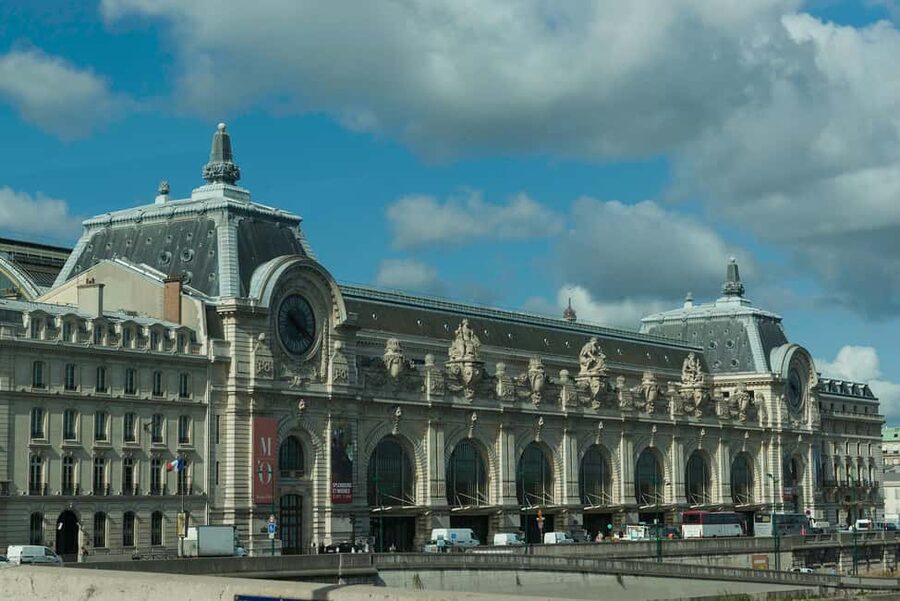
Your English-speaking host explains how this grand railway station was built and later transformed into a museum. You hear about the construction challenges, its place in Paris’s changing city plan, and the architectural details that make the facade worth studying before you go in.
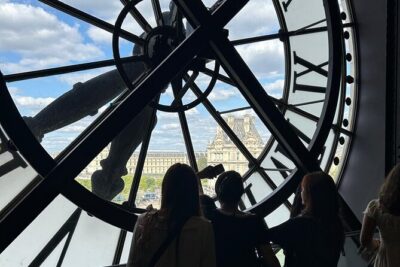
I like this approach because Musée d’Orsay can otherwise feel like a large collection of famous names with little connection between them. Knowing that you are entering a former station gives the soaring interior and broad structure a practical purpose. The Beaux-Arts design is not just decoration. It was made for movement, arrival, and public display.
The outside briefing lasts about 30 minutes. It is not a full architectural walking tour, but it should give you enough background to notice the building as more than a ticket checkpoint. Bring your passport or ID card, as identification is listed among the required items.
More Musée d’Orsay Tours:
- Paris in a Day: Louvre or Orsay, Eiffel Tower, City Walk & Cruise
★ 5.0 · 1,956 reviews - Paris: Musée d’Orsay Skip-the-Line Tour with Expert Guide
★ 4.5 · 1,145 reviews - Musée d’Orsay Skip-the-Line Tour with Expert Guide
★ 4.8 · 1,088 reviews
What the 30-minute briefing actually includes

This is a host-led introduction, not a museum lecture. You remain outside while the host points out features of the facade and explains the building’s past. The talk also covers how the station became a major cultural site.
The information is useful if you are new to Paris or not familiar with the museum. It gives you a simple framework:
- The original railway function explains the building’s unusual scale.
- The Beaux-Arts exterior connects the museum to Parisian civic architecture.
- The conversion explains why this museum feels different from a purpose-built gallery.
- The collection’s 19th and early 20th-century focus makes more sense once you understand the building’s period.
The group is limited to eight people. That is a good size for a short outdoor explanation. You should be able to hear the host without the feel of a large crowd, though the value still depends on how clearly the host presents the material.
No guide names are provided for this activity, so you should book it for the structure of the experience rather than for a particular named art expert.
Entering Musée d’Orsay is the key practical issue
The phrase reserved access sounds simple, but you should read it with care. The experience includes museum admission and is advertised with skip-the-ticket-line access. Yet entering the building may still involve a queue or confusion at the doors.
The instructions say the host gives you your entry tickets after the outside briefing and does not join you inside. That means the host’s role ends just as the most important logistical step begins.
There have been reports of long waits even with timed or reserved access. One particularly difficult situation involved a 45-minute wait on December 30. Another involved a ticket marked for door C when only doors C1 and C2 appeared to be operating, with staff eventually directing the group to A1 or A2.
I would not book this expecting a guaranteed walk straight through the entrance. Arrive ready to follow the host’s instructions, check the door signs carefully, and ask staff for help if the named entrance does not match what you see. Keep your ticket accessible and allow extra time, especially during busy holiday periods.
This is the most serious weakness in the experience. A reserved ticket can still be useful, but the access process has not been consistently smooth.
Inside, you explore the collection yourself
Once you enter, the format changes completely. The host does not accompany you through the galleries. You receive an audio guide and explore independently.
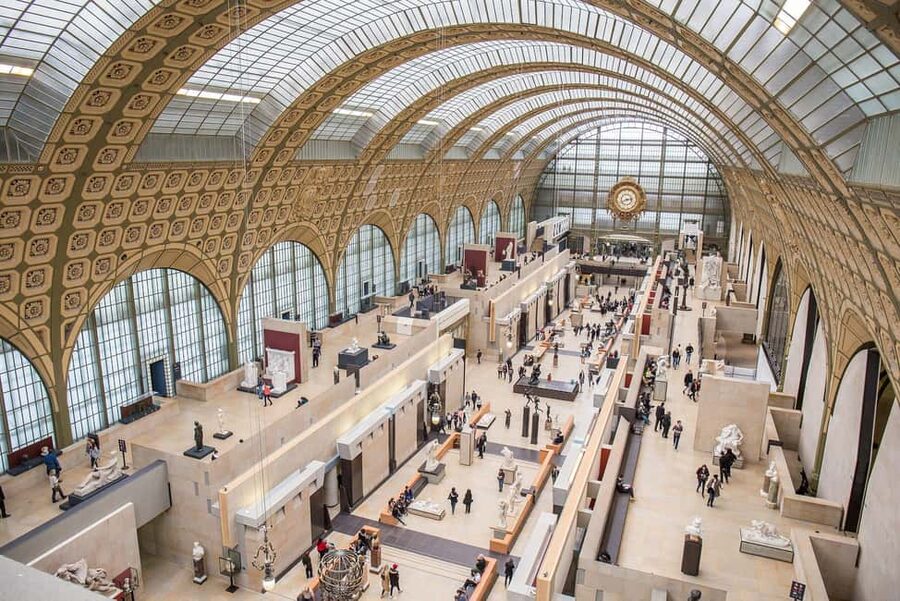
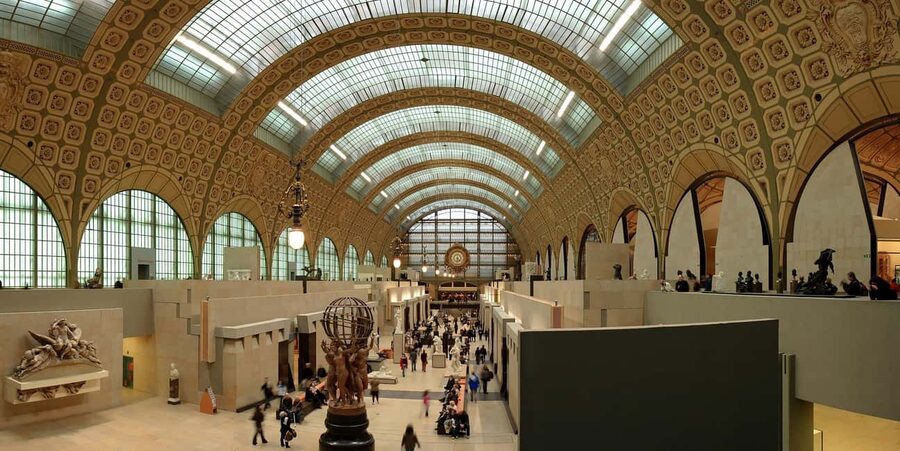
That setup can work very well if you prefer to choose your own pace. Musée d’Orsay contains far more than a short guided visit can cover. You can spend longer with a favorite painting, move past sections that do not interest you, or pause for the building itself.
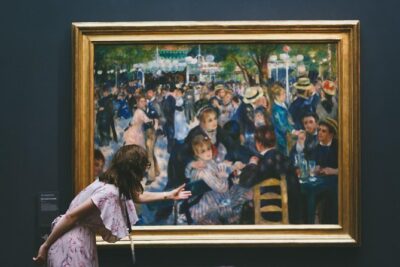
The collection includes Impressionist and Post-Impressionist masterpieces, sculptures, and decorative arts. It covers the 19th and early 20th centuries, giving you a broad look at a period when painting, sculpture, design, and city life were changing quickly.
The permanent collections are included, along with temporary collections. That matters because the temporary exhibition program can change the feel of a visit. You are not limited to one fixed route or one small display.
The audio guide provides structure, but it does not replace an inside guide who can answer questions or adapt the route to your interests. If you want a person beside you explaining why one painting matters more than another, this is not the right format. If you like freedom and quiet time with art, it may be a better fit.
More walking tours in Paris:
- Paris Top Sights Half Day Walking Tour with a Fun Guide
★ 5.0 · 2,893 reviews - Montmartre Hidden Gems and Scenic Highlights Walking Tour
★ 5.0 · 2,684 reviews - Montmartre Hill French Gourmet Food and Wine Tasting Walking Tour
★ 5.0 · 2,588 reviews - Paris Île de la Cité and Notre-Dame Walking Tour With Crypt
★ 5.0 · 2,272 reviews
Why the Impressionist collection is worth your time
Musée d’Orsay is especially useful for anyone who wants to see how 19th-century artists moved away from older academic rules. The Impressionist and Post-Impressionist works give you a chance to compare different approaches to color, light, brushwork, and everyday subjects.
You may find that the museum’s best feature is not a single famous painting but the ability to see related movements in one place. Paintings can be considered alongside sculpture and decorative works, which broadens the period beyond the usual list of Impressionist names.
The activity does not provide an inside art lecture, so prepare in advance if you want more depth. You might choose a few artists or themes to look up before arrival, then use the audio guide to fill in the gaps. That small amount of preparation can make the self-guided portion feel much more focused.
I like the freedom here. A fixed two-hour route can make a museum feel rushed. This format gives you a short introduction, then lets you decide how to use your museum time. The tradeoff is that you must provide your own curiosity and attention.
Allow enough time for a 2 to 2.5-hour visit
The stated duration ranges from two hours to 150 minutes. The first 30 minutes are spent outside with the host, leaving roughly 90 to 120 minutes for the museum if you follow the planned time closely.
That is enough for a strong first visit, but not enough to see everything carefully. You will need to make choices. Focus on the permanent galleries, spend time in the temporary collection, or move at a quicker pace through both.
The actual museum portion may also depend on the entrance line. If you lose 45 minutes waiting, your time inside becomes much shorter. That is why I would avoid scheduling a tight lunch, train, or second museum appointment immediately afterward.
The activity lists no transportation. You make your own way to the meeting point and museum. Comfortable shoes and comfortable clothing are sensible because the visit includes outdoor standing and walking through a large museum.
People with mobility impairments may find this experience unsuitable. The listing specifically says it is not designed for them, and the format includes an outdoor briefing, entry procedures, and independent movement inside.
Is $49 a fair price?
At $49 per person, this sits between a basic museum ticket and a full private or guided art experience. The price includes access to the permanent and temporary collections, an English-speaking outside host if that option is selected, an audio guide, and the small-group introduction.
The value is strongest if you care about three things:
- You want help understanding the former station before entering.
- You prefer to explore the museum at your own pace.
- You value having admission arranged rather than handling every step yourself.
The value is weaker if you are paying mainly to skip a line or receive expert guidance inside. The host does not continue into the museum, and the entrance process may still involve waiting. At $49, that distinction matters.
I would compare this with the cost and availability of a standard museum ticket before booking. If regular entry is easy to obtain for your date, you may be paying a fair premium for the outside briefing and ticket assistance, but not for a complete guided tour. If timed access is difficult to arrange, the package may be more useful, provided you accept that reserved access has not always meant immediate entry.
Who will get the most from this format?
This activity suits an independent art lover who wants a little context, not constant commentary. You should be comfortable reading or listening to an audio guide and choosing your own route.
It is also a good match for someone interested in architecture. The opening explanation helps you see the station’s design as part of the experience, rather than treating the exterior as a quick photo stop.
Families with older children may like the freedom to split up inside or move at different speeds, but the listing does not provide a special family program. Anyone who needs step-free support should choose another option, since the activity is specifically not suitable for people with mobility impairments.
I would be cautious if your main goal is a polished, expert-led art lesson. You will not have a guide beside you to explain each room, answer questions, or adjust the route. You are buying a guided introduction followed by independent museum access.
The small group helps at the beginning. It does not turn the inside portion into a small-group tour.
Simple ways to make the visit better
Arrive with your identification ready and wear shoes you can use comfortably for outdoor standing and museum walking. Avoid bringing pets, alcohol, or drugs, all of which are not allowed.
Listen carefully during the outside briefing, especially when the host explains where to enter and when tickets will be handed over. If the door listed on your ticket is not clearly open, ask museum staff before joining a long line. The confusion between C, C1, C2, A1, and A2 makes this more than a minor detail.
Keep your schedule loose after the tour. The advertised duration is two to 2.5 hours, but an entrance delay could reduce your gallery time or push the visit later.
Inside, decide what matters most before you start. If you want the best use of a limited visit, choose either the Impressionist and Post-Impressionist rooms or a balance of paintings, sculpture, and decorative arts. Trying to cover every corner in 90 minutes will leave you tired and unfocused.
The audio guide can provide a useful route, but you do not have to follow every stop. Skip sections that do not interest you and save time for works you want to study.
Should you book this Musée d’Orsay experience?
Book it if you want a short architectural introduction, museum admission, and the freedom to explore the collection alone. The former railway station story adds useful context, and the small English-speaking group keeps the opening portion manageable.
Think twice if you are booking it for a guaranteed fast entrance or an inside guide. The ticket process can involve a substantial wait, and the host leaves after handing over your admission. At $49, the package offers convenience and orientation, but it is not a full guided museum tour.
For an independent visitor who likes Impressionist art and does not mind taking charge inside, this can be a practical choice. For anyone needing mobility support, strict timing, or detailed commentary beside the artworks, choose a different Musée d’Orsay visit.
FAQ
How long does the Musée d’Orsay activity last?
The stated duration is between two hours and 150 minutes. About 30 minutes are spent outside with the host before you enter the museum independently.
Does a guide accompany me inside the museum?
No. The host gives you the entry tickets after the outside briefing and does not join you inside. You explore the museum on your own with an audio guide.
What language is the host service provided in?
The host or greeter service is provided in English.
What museum collections are included?
Admission includes the permanent collections and the temporary collections of Musée d’Orsay.
Does the price include an audio guide?
Yes. An audio guide is included.
Is transportation included?
No. Transportation is not included, so you must make your own way to the meeting point and museum.
Can I cancel for a full refund?
You can cancel up to 24 hours in advance for a full refund.
Can I reserve now and pay later?
Yes. The activity offers a reserve now and pay later option.
What should I bring to the experience?
Bring a passport or ID card, comfortable shoes, and comfortable clothing. Pets, alcohol, and drugs are not allowed.
Just added around Paris
- Private Paris Marche d’Aligre Walking Tour with Tastings★ 5.0 · 8 reviews
- Private Louvre Museum Tour for Kids & Families with Alberto or his team in Paris★ 5.0 · 41 reviews
- Private Highlights of Paris Tuk-Tuk Experience★ 5.0 · 26 reviews
- Paris Latin Quarter Walking Tour: History & Culture – Small Group★ 5.0 · 14 reviews
- Private Highlights of Paris Bike Tour★ 4.5 · 15 reviews
- Paris Musee d’Orsay PRIVATE TOUR with a Local Private Guide★ 5.0 · 41 reviews
- Private Half Day Historic Tour★ 5.0 · 58 reviews
- Pere Lachaise Cemetery Paris – Exclusive Guided Walking Tour★ 5.0 · 72 reviews
Musée d’Orsay Tours, compared.
Paris in a Day: Louvre or Orsay, Eiffel Tower, City Walk & Cruise
Read our review →
Musée d’Orsay Skip-the-Line Tour with Expert Guide
Read our review →
The Musée d’Orsay Guided Tour Orsay Museum Semi-Private 6ppl Max
Read our review →
Louvre & Musée d’Orsay Guided Museum Tour Semi-Private 6ppl Max
Read our review →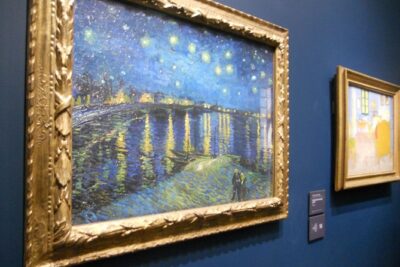
Orsay Museum – Exclusive Guided Tour (Reserved Entry Included)
Read our review →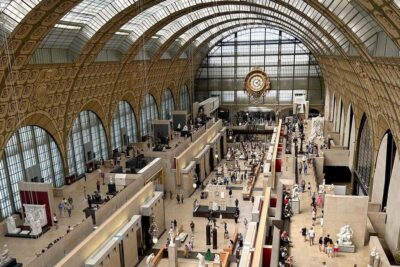
Orsay Museum and Rodin Museum Combo Entry Ticket
Read our review →Browse the lists this tour appears in