
Reviewed · LE MARAIS TOURS
Paris: Private Guided Tour of Marais disctrict
The best part of this private Marais tour is its focus on courtyards, mansions, and small streets rather than only famous monuments. You move through one of Paris’s oldest districts while your guide explains how royal Paris, Jewish Paris, LGBTQ Paris, and today’s lively neighborhood fit together.
I like the two-hour length and the private format, especially for a group that wants to ask questions or set its own pace. I also like the route from Place des Vosges to Centre Pompidou, which gives you a clear sense of how the Marais shifts from grand old residences to modern Paris.
The main drawback is the price: $217 per person can feel high for a walking tour, particularly for a small party. Also, check the meeting point carefully, since one booking caused confusion when the app showed a different location from the Saint Paul station meeting point.
Key points at a glance
- Private group of up to nine: You get a guide for your party rather than joining a large walking group.
- A history lesson through buildings: Hôtel de Sully, Hôtel Carnavalet, and Hôtel de Sens show off the Marais’s grand private residences.
- Place des Vosges is the centerpiece: This elegant square was once a royal and social center of Paris.
- A broad view of the district: The route connects royal, Jewish, LGBTQ, residential, and modern cultural Paris.
- Nine guide languages: Tours are offered in English, French, Spanish, German, Italian, Chinese, Portuguese, Russian, and Japanese.
- Two hours on foot: The compact format works well before lunch, after arrival, or as a first look at the Marais.
Why the Marais makes a strong first walking tour
The Marais is one of the few Paris districts where a short walk can show you several versions of the city at once. Its name means marsh, a reminder that this area was once wet ground outside the medieval city. By the time of Louis XIV, it had become a fashionable address for aristocratic families and royal officials.
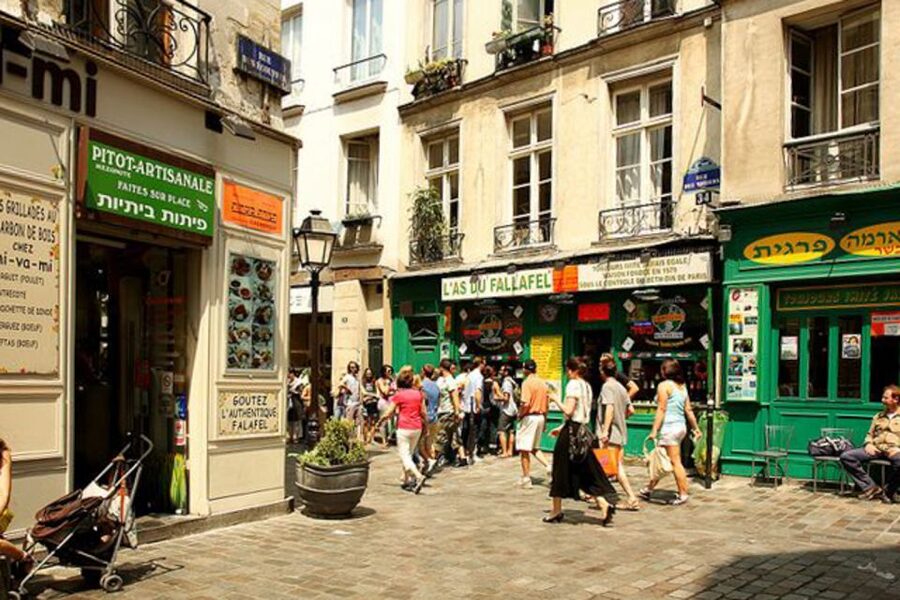
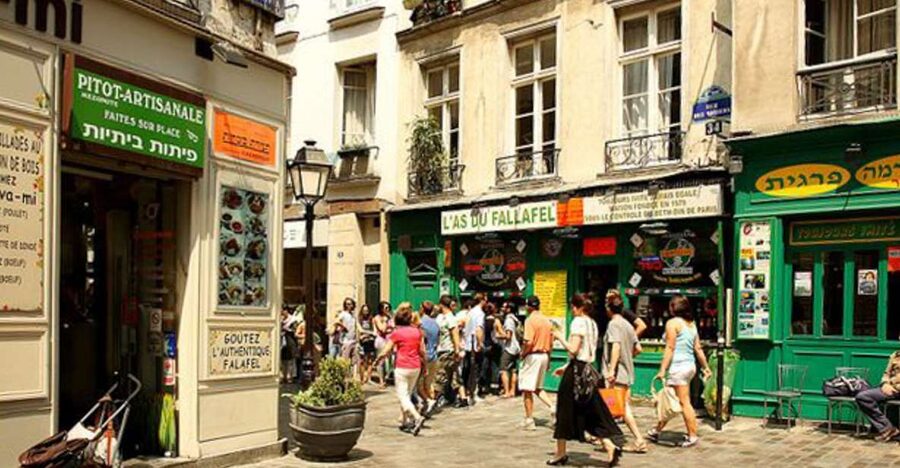
That older Paris did not vanish. Large townhouses still line streets that now hold cafés, galleries, shops, community spaces, and ordinary apartments. The district also has a long Jewish presence and an important LGBTQ community, giving the neighborhood a social story that is broader than its architecture.
This tour is useful because your guide connects those layers instead of treating each building as a separate postcard stop. The appeal is not simply seeing handsome façades. It is understanding why this part of Paris feels both old and young at the same time.
You meet at the exit of Saint Paul station, near the carousel, at 135 Rue Saint-Antoine. This is a practical starting point because Saint Paul places you at the edge of the Marais, close to the first streets of the walk.
Take a moment to confirm the meeting location before setting out. The stated meeting point is the Saint Paul station exit near the carousel, but the location shown in the booking app has caused confusion for at least one party. A quick check can save you an unnecessary taxi ride.
More Le Marais Tours:
- Award-Winning Paris French Bakery Experience — Le Marais, 4th Arr
★ 4.5 · 1,186 reviews - Paris Le Marais Food Tour With 10+ Tastings, Cheese, Wine & More
★ 5.0 · 985 reviews - Paris Le Marais District Original Food and Wine Tasting Tour
★ 4.5 · 880 reviews
A private walk for up to nine people
The tour lasts two hours and is reserved for a private group of up to nine people. That setup matters more here than it would on a simple sightseeing loop. The Marais rewards questions because its buildings often look quiet from the street while their real story lies in who built them, lived in them, or used them.
With your own guide, you can ask for more detail about the royal period, the Jewish quarter, local architecture, or present-day community life. You are not locked into the rhythm of a large group. The tradeoff is cost. At $217 per person, this is not a budget walk, and the value improves when several people share the private booking.
The guides named in the feedback include Martine, Emilie, and Ange. Martine was praised for an energetic approach and for taking the group beyond the usual route. Emilie was singled out for making the tour fascinating and personal, while Ange helped turn a meeting-point problem into a successful outing.
Those details suggest that the guide makes a real difference. You are paying for a person who can interpret the district, not simply lead you from one address to another. Still, guide style can vary, so tell your guide what interests your group at the start.
Hôtel de Sully and the Marais townhouses
One of the pleasures of the route is seeing the exteriors of private mansions, often called hôtels particuliers. These are not ordinary hotels. The French term refers to grand urban residences built for wealthy families, with formal entrances, inner courtyards, and private gardens.
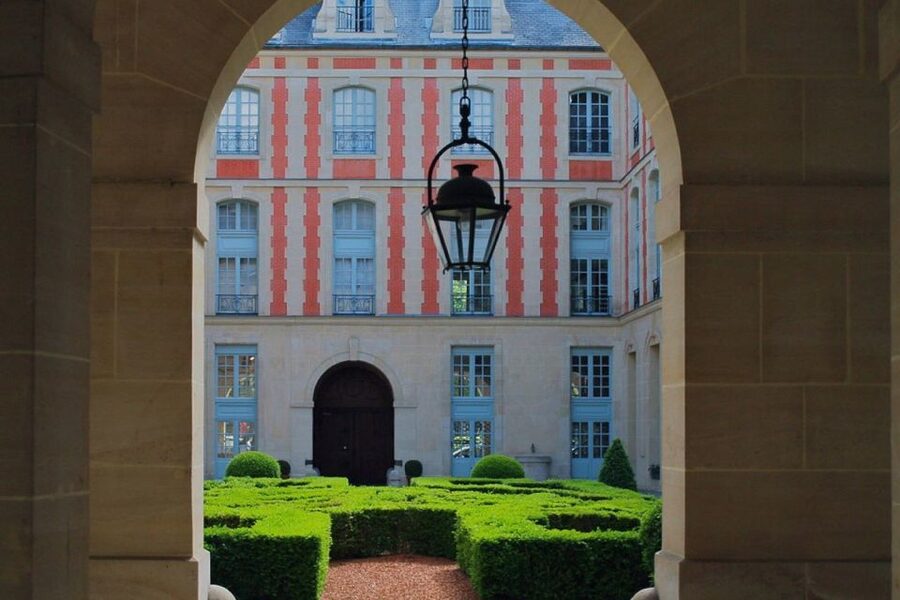
Hôtel de Sully is one of the most important examples on the walk. From outside, you can appreciate the scale and design of a residence created for the Parisian elite. The courtyard and garden spaces help explain how wealthy families once lived behind the street façade.
You should not expect a full interior visit here. The experience focuses on exterior views, courtyards, and the atmosphere of the district. That limitation is worth knowing if you are hoping to tour lavish rooms. The reward is a better sense of how the Marais works as an urban area, with formal residences tucked into a network of narrow streets.
Your guide can also point out how the district’s old buildings now sit beside newer uses. That contrast is part of the Marais’s appeal. It is not a preserved museum quarter, and it is not simply a shopping area. Its identity comes from the overlap.
Place des Vosges, the grand pause in the route
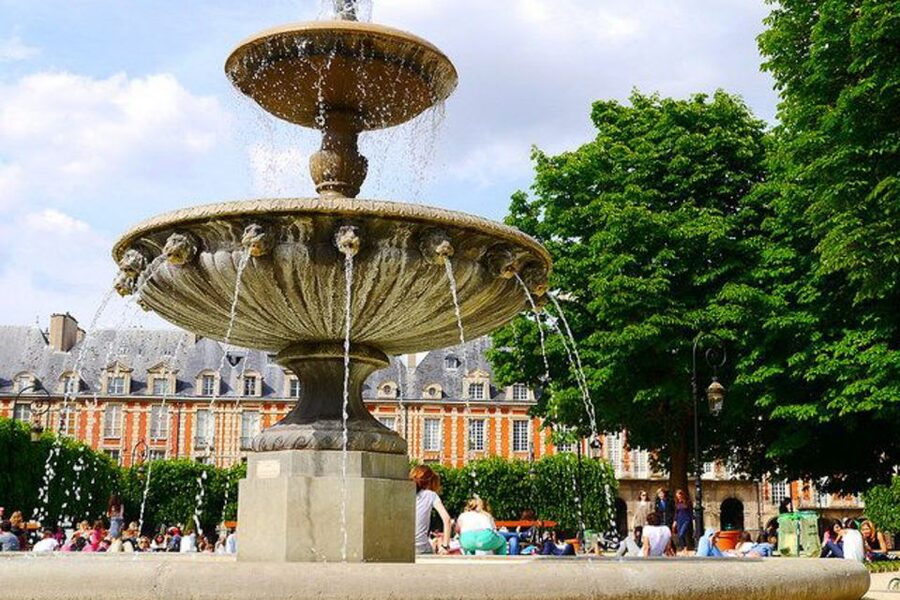
Place des Vosges is the main photo stop and one of the strongest moments of the tour. Its regular shape, arcades, and red-brick façades create a calmer scene than many central Paris streets.
This square was once tied to royal Paris and became an important meeting point for the city’s upper classes. Your guide can help you read the square as more than a pretty place for photographs. Its design reflects the power and order favored by the monarchy, while the surrounding buildings show how fashionable families gathered around it.
The stop also gives you a chance to slow down. Two hours is a brisk format, and Place des Vosges provides a natural pause between the street-by-street parts of the walk. If you enjoy architecture, this is likely to be the highlight. If you prefer interiors and museum collections, you may find the exterior focus less satisfying.
The tour includes a visit and photo stop here, but the supplied details do not promise entry into a specific building. Plan to appreciate the square itself and use your guide for context.
More private tours in Paris:
- Paris: Private Photoshoot at the Eiffel Tower
★ 4.7 · 2,636 reviews - Top Private Cruises in Paris with French Champagne and surprises
★ 5.0 · 1,553 reviews - Private Paris Airport Arrival Transfer – CDG & ORLY Airports
★ 4.5 · 1,119 reviews - Paris Private Arrival Transfer from Charles de Gaulle (CDG) or Orly (ORY)
★ 4.0 · 1,084 reviews
Hôtel de Ville and Hôtel de Sens
The route continues toward Hôtel de Ville, Paris’s city hall. This is another photo stop, giving you a view of the civic side of the capital after the private residences of the Marais.
Hôtel de Ville helps broaden the tour beyond one neighborhood. The building represents municipal Paris, while the Marais nearby shows layers of private life, commerce, religion, and culture. You will not spend a long time here, but the stop makes sense as part of the route toward the district’s western side.
Hôtel de Sens adds another example of old Parisian architecture. Like Hôtel de Sully, it is valued for its historic appearance and connection to the city’s grand residences. Seeing several mansions in sequence lets you compare their façades and settings rather than treating one building as an isolated curiosity.
The drawback is that these stops may feel quick. This is a walking tour with several landmarks, not a detailed architectural study of each one. If you want a long explanation at every address, two hours may pass too fast.
Hôtel Carnavalet and the story of old Paris
Hôtel Carnavalet is a key sightseeing stop because it brings the Marais’s architecture and Parisian history together. The building itself is one of the district’s notable mansions, while its name is closely tied to the city’s past.
The tour emphasizes seeing the exterior, so you should not assume that museum admission is part of the experience. The value comes from your guide’s explanation and from placing the building in the wider route.
This is where the tour’s broad social focus becomes important. The Marais is presented not only as the former home of royal courtiers, but also as a neighborhood shaped by Jewish residents, queer communities, and a younger modern population. That approach keeps the walk from becoming a parade of old stones.
I especially like this balance. Paris can easily be presented as a sequence of kings, churches, and grand façades. The Marais gives you a chance to see how a district changes while retaining signs of earlier lives.
Village Saint Paul and smaller-scale Paris
Village Saint Paul adds a more intimate part of the walk. The name suggests a village, and the area offers a change from the formal scale of Place des Vosges and the larger townhouses.
The route here is about atmosphere and discovery. You may find courtyards, gardens, and passages that are easy to miss when you explore alone. The guide’s role is especially useful in this setting because the most interesting details are not always marked with large signs.
Do not expect every courtyard to be open like a public museum. The tour promises the chance to admire secret courtyards and gardens, but access can depend on the site. Much of the pleasure comes from seeing how these spaces sit behind ordinary streets and from hearing why they matter.
This portion suits you if you enjoy wandering and small details. It is less suited to anyone who wants a packed checklist of major interiors.
Finishing at Centre Pompidou
The walk finishes in front of Centre Pompidou, after passing through the older sections of the Marais. The building’s exposed pipes and bold modern design make it a sharp contrast to the townhouses and formal squares earlier in the tour.
That ending gives the route a useful shape. You begin near Saint Paul in the historic Marais and finish at one of Paris’s best-known modern cultural landmarks. The change in architecture shows how quickly the city can shift from royal-era streets to contemporary art and design.
Centre Pompidou is listed as a photo stop, not an included museum visit. If you want to go inside afterward, treat that as a separate plan. The tour ends in front of the building and then returns you to the starting area as described, but you should confirm the exact end-of-walk arrangements with your guide.
What $217 per person buys you
At $217 per person, this is a premium walking tour. You are not paying for transportation, museum admission, or a long half-day program. You are paying for a private guide, a compact route, and the ability to explore the Marais with your own group.
The price makes more sense for a party of several people, especially if you value a private conversation and a flexible pace. For one or two people, the cost may be harder to justify when compared with a larger shared walking tour.
The strongest value is interpretive. A guide can point out what you would otherwise pass without noticing, explain the district’s social changes, and adjust the conversation to your interests. If you only want photographs of Place des Vosges, you can spend much less by walking there on your own.
The tour has a 4.7 rating from 16 verified bookings, with repeated praise for the guides’ energy, local perspective, and unusual details. Martine was especially well received, and both Emilie and Ange were described as making the walk feel personal and informative. Those comments support the idea that the guide, rather than the route alone, is the main reason to book.
Who should book this Marais tour
I would recommend this experience to you if you want a short, private introduction to the Marais and prefer local explanation over a self-guided stroll. It works well for families, couples, or friends who want to stay together and ask questions.
It also suits repeat visitors to Paris. If you have already seen the Eiffel Tower, Louvre, and Notre-Dame area, the Marais offers a different kind of sightseeing. You get architecture, neighborhood life, and social context without spending a full day on a museum schedule.
The tour may be less suitable if you need extensive time inside museums, want a food-focused walk, or are watching every euro. It is also not a good match if you dislike walking, although wheelchair users can be accommodated when the operator is informed ahead of time.
Guides speak English, French, Spanish, German, Italian, Chinese, Portuguese, Russian, and Japanese. That range is useful for mixed-language families or groups who want more than a basic translation.
Should you book it?
Book this tour if the Marais is high on your list and you want its old mansions, courtyards, royal connections, Jewish heritage, LGBTQ history, and modern culture tied into one clear walk. The two-hour format is easy to fit into a Paris day, and the private group makes it far more personal than a large sightseeing tour.
Skip it if $217 per person feels too steep for an exterior-focused walk or if you mainly want museum interiors. Before booking, confirm the Saint Paul station meeting point near the carousel, then tell your guide which part of the Marais interests you most. That small bit of planning should help you get the best value from the time.
FAQ
Where does the Marais tour begin?
The guide meets you at the exit of Saint Paul station near the carousel, at 135 Rue Saint-Antoine.
How long does the tour last?
The tour lasts two hours.
Is this a private tour?
Yes. The tour is for a private group of up to nine people.
Which places are included on the route?
The route includes the Marais, Place des Vosges, Hôtel de Ville, Hôtel de Sully, Hôtel Carnavalet, Village Saint Paul, and Centre Pompidou.
Is transportation included?
No. Transportation is not included. The experience is a guided walking tour.
Which languages are available?
Guides are available in English, French, Spanish, German, Italian, Chinese, Portuguese, Russian, and Japanese.
Just added around Paris
- Private Paris Marche d’Aligre Walking Tour with Tastings★ 5.0 · 8 reviews
- Private Louvre Museum Tour for Kids & Families with Alberto or his team in Paris★ 5.0 · 41 reviews
- Private Highlights of Paris Tuk-Tuk Experience★ 5.0 · 26 reviews
- Paris Latin Quarter Walking Tour: History & Culture – Small Group★ 5.0 · 14 reviews
- Private Highlights of Paris Bike Tour★ 4.5 · 15 reviews
- Paris Musee d’Orsay PRIVATE TOUR with a Local Private Guide★ 5.0 · 41 reviews
- Private Half Day Historic Tour★ 5.0 · 58 reviews
- Pere Lachaise Cemetery Paris – Exclusive Guided Walking Tour★ 5.0 · 72 reviews
Le Marais Tours, compared.
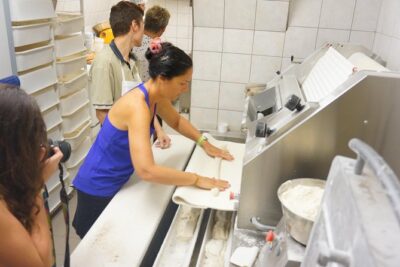
Award-Winning Paris French Bakery Experience — Le Marais, 4th Arr
Read our review →
Paris Le Marais Food Tour With 10+ Tastings, Cheese, Wine & More
Read our review →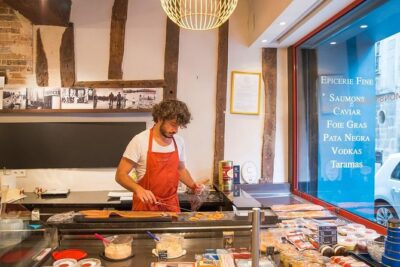
Paris Le Marais District Original Food and Wine Tasting Tour
Read our review →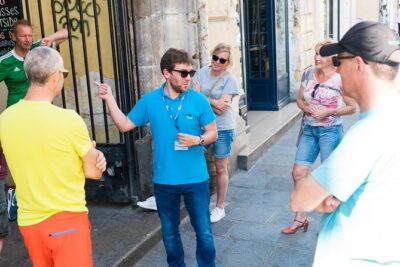
Paris Bike Tour Hidden Secrets in the Latin Quarter & Le Marais neighborhoods
Read our review →
Food and Wine Tasting Walking Tour in Le Marais
Read our review →
Le Marais District & Jewish Quarter Guided Walking Tour 12ppl Max
Read our review →
Le Marais/Paris – The Historic, Trendy, Jewish, LGBT district
Read our review →
Paris Le Marais Food & Wine Tour with Eating Europe
Read our review →Browse the lists this tour appears in