
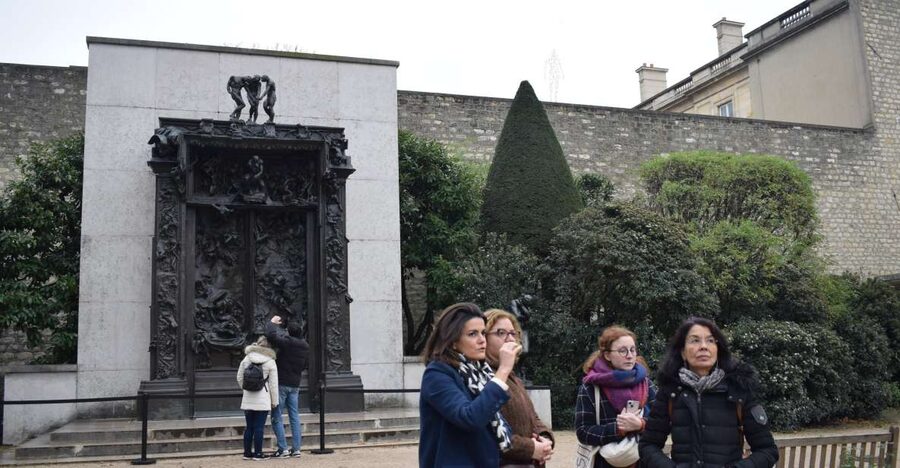
Reviewed · PARIS ART MUSEUM TOURS
Paris: Rodin Museum Guided Tour with skip-the-line tickets
The best part of this Musée Rodin tour is the way it connects famous sculptures to the ideas around them. You will not simply walk past The Thinker and The Kiss, you will hear how political, artistic, and philosophical changes in late 19th-century France shaped Rodin’s work and helped push sculpture toward modern art.
I like the small group format, limited to about eight or nine people, and the practical skip-the-line entry. I also like that the visit includes both the galleries and the gardens, where Rodin’s work gains space, light, and changing views. The main drawback is the fixed two-hour pace: art lovers may want more time, and temporary exhibitions are not included.
Key points to know before you book
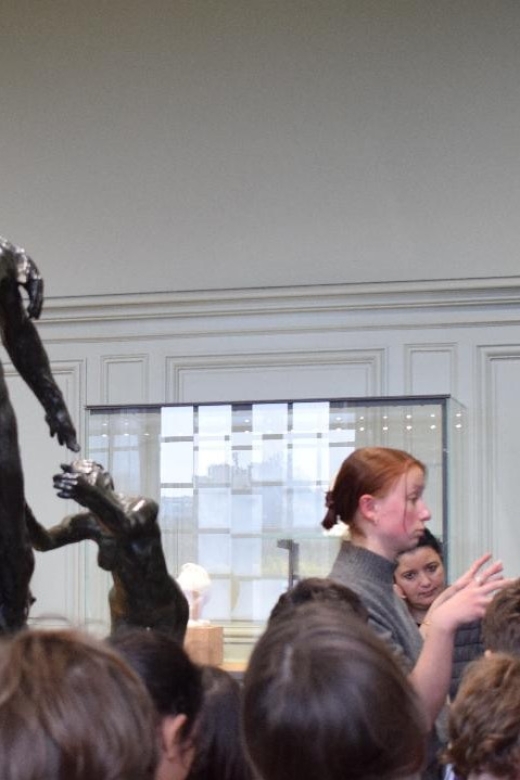
- See Rodin’s major works with context: The Thinker, The Kiss, Balzac, The Philosopher, and The Gates of Hell all receive attention.
- Expect a lively English-speaking guide: Blerta Meraj and Vincent are among the guides praised for humor, clear explanations, and strong art backgrounds.
- Walk through the French gardens: Outdoor sculptures and long views give you a different way to read Rodin’s work.
- Skip the ticket line: This saves useful time, especially during busy periods.
- Keep the group small: The format is designed for discussion rather than a large crowd following a flag.
- Plan for a walking tour: Wear comfortable shoes, bring identification, and leave luggage and large bags behind.
Why Rodin makes a fine two-hour museum visit
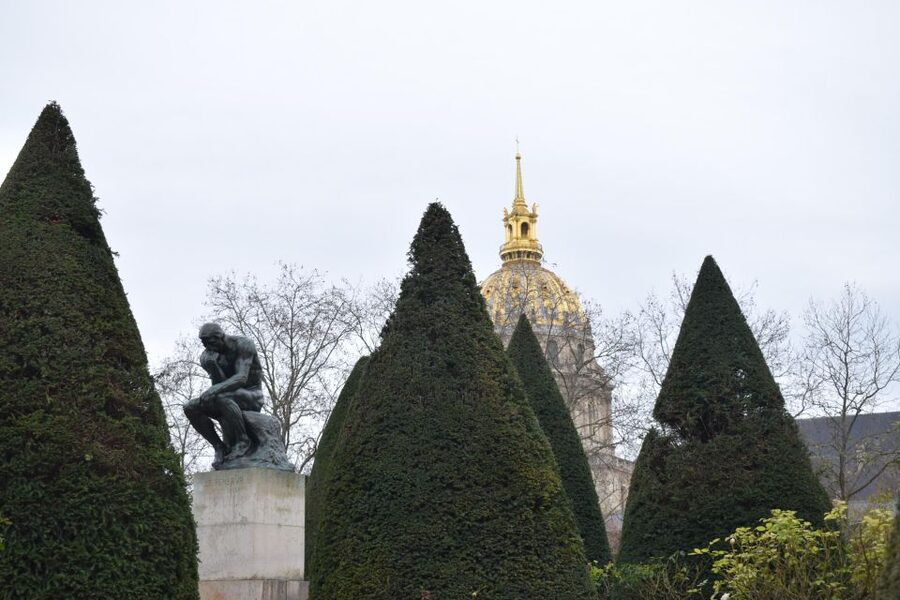
The Musée Rodin is a particularly good choice if you want a museum visit with a clear story. Rodin’s work can look familiar at first. The Thinker is everywhere in reproductions, and The Kiss is one of those sculptures you may feel you already know.
A guide can help you look again. Instead of treating each statue as an isolated masterpiece, the tour places Rodin in the unsettled world of late 19th-century France. You learn how changing artistic ideas, political movements, and philosophical questions affected his approach to the human body, movement, emotion, and unfinished surfaces.
That context matters. Rodin revolutionized sculpture not simply by making dramatic figures, but by changing how a finished sculpture could look and feel. A guided explanation can help you notice the roughness of a surface, an unusual pose, or the way a figure seems to emerge from the material.
This is also a good tour for visitors who find museums tiring. Two hours gives you a focused introduction without requiring half a day indoors. The guide supplies a thread to follow, while still leaving time to look closely.
More art museums in Paris:
- Paris: Orsay Museum and Rodin Museum Combo Entry Ticket
★ 4.4 · 470 reviews - Paris: Picasso Museum Ticket & Optional Seine River Cruise
★ 4.7 · 277 reviews - Paris: Rodin Museum Entry Ticket
★ 4.5 · 220 reviews
Meeting at 77 Rue de Varenne
You meet in front of the museum at 77 Rue de Varenne, 75007 Paris. Your guide carries a sign marked Connecting France, which gives you a clear visual point at a busy city address.
The activity is conducted in English. The group is intended to be small and interactive, with the tour described as semi-private for up to eight people. The booking information also gives a limit of nine participants, so check the exact group size when reserving if that detail matters to you.
There is no hotel pickup or drop-off. You need to make your own way to the museum, and the tour begins at the stated meeting point. Allow enough time to arrive calmly. A late arrival can be especially awkward with a timed museum entry and a small group.
Bring a passport or identity card, along with comfortable shoes. Large bags, luggage, and umbrellas are not allowed, so this is best scheduled when you are traveling light. Paris sightseeing often involves more walking than expected, and this visit includes both indoor galleries and outdoor paths.
Seeing The Thinker, The Kiss, and The Gates of Hell
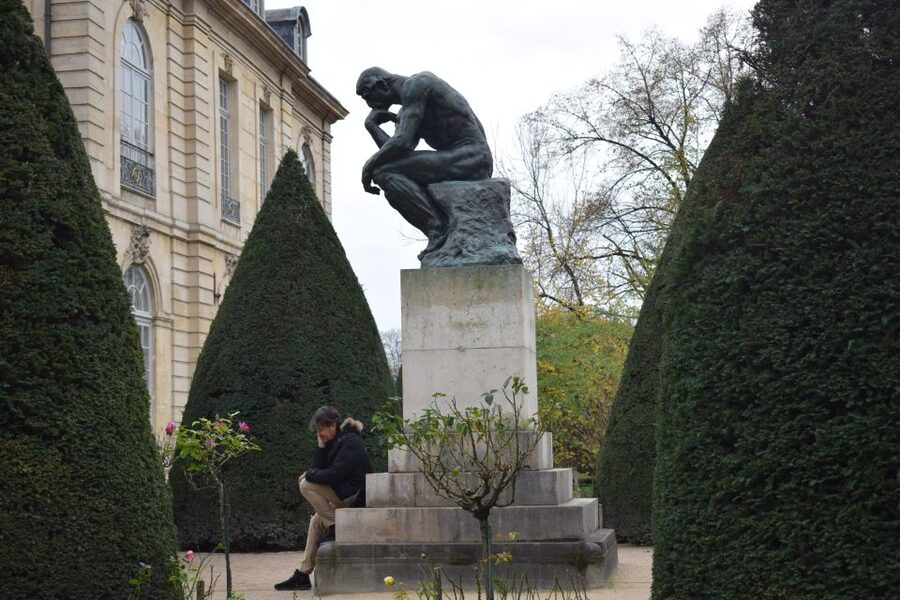
The central part of the visit takes place in the museum galleries. The exact route can depend on the guide and the museum’s conditions, but the main works named for the tour include The Thinker, The Kiss, The Philosopher, Balzac, and The Gates of Hell.
The Thinker is a useful place to consider Rodin’s method. Its familiar pose can encourage a quick photograph, but the guide can redirect your attention to the figure’s physical tension and the way thought is shown through the body. The point is not just that the man is thinking. It is how Rodin makes the act of thought look strained, powerful, and almost physical.
The Kiss offers a different mood. Here, the body becomes the subject of emotion, contact, and movement. A good guide helps you consider how the pose works from different angles and why the sculpture has remained so immediately readable to modern audiences.
The Gates of Hell gives the visit a larger frame. This ambitious work brings together many figures and ideas, including forms that later became famous as separate sculptures. Seeing it alongside individual works helps you understand how Rodin reused, changed, and developed ideas rather than treating every statue as a one-off object.
Balzac is especially useful for understanding Rodin’s willingness to challenge expectations. The sculpture’s treatment of the writer did not fit a simple, flattering portrait. A guide can explain why the work caused such a strong reaction and how it reflects Rodin’s interest in character rather than surface polish.
The tour also includes lesser-known pieces. That is important because the famous works can dominate your attention. Smaller or less familiar sculptures may show Rodin testing a gesture, a torso, a hand, or a fragment before carrying an idea into a larger work.
Entering Rodin’s studio and working methods
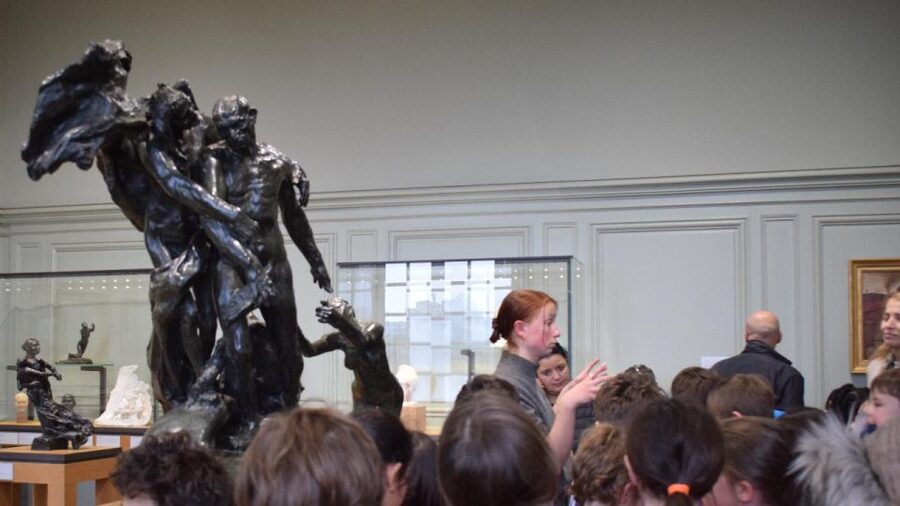
One of the most appealing parts of this experience is the chance to step into Rodin’s studio. The visit is not only about the finished object on a pedestal. It gives you an insider’s view of his avant-garde vision and working techniques.
Rodin’s sculpture is easier to understand when you consider process. You can look for evidence of revision, movement, texture, and the relationship between a completed figure and a work that appears intentionally unfinished. The guide’s role here is valuable because these details are easy to miss when you are moving through a museum alone.
The strongest guides add interpretation without turning the visit into a long lecture. Blerta Meraj is praised for combining strong art knowledge with humor and discussion. Vincent is also described as personable, clear in English, and able to bring an art-history background to the visit.
That teaching style suits this museum. You will likely receive a mix of explanation and questions, rather than a constant stream of dates and names. The most useful feedback about Blerta points to her ability to involve the group in interpreting the art, including ideas that visitors may not have considered before.
The guide quality can vary from one departure to another, as it does with any tour. Still, the named guides have earned particularly strong praise for enthusiasm, humor, clear communication, and the ability to keep a group engaged. If you are especially interested in art, ask at booking whether a particular guide is scheduled, though a specific guide cannot be guaranteed from the information provided.
Same city, a completely different afternoon:
- Paris: Louvre Museum Timed-Entrance Ticket
★ 4.6 · 71,977 reviews - Disneyland® Paris 1-Day Ticket
★ 4.6 · 49,412 reviews - Paris: Versailles Palace and Gardens Full Access Ticket
★ 4.6 · 41,579 reviews - Paris: Evening River Cruise with Music
★ 4.4 · 22,721 reviews
The French gardens change the way you see the sculptures
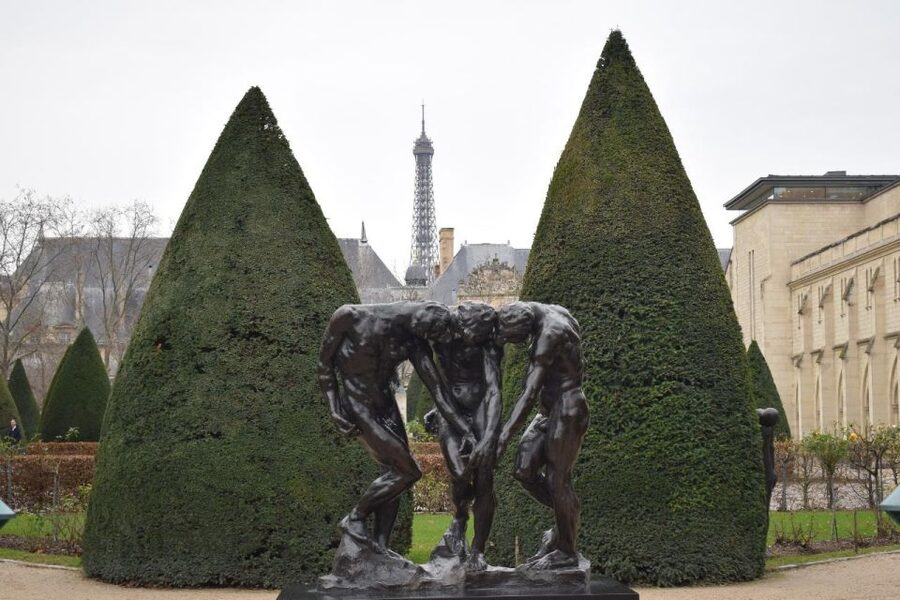
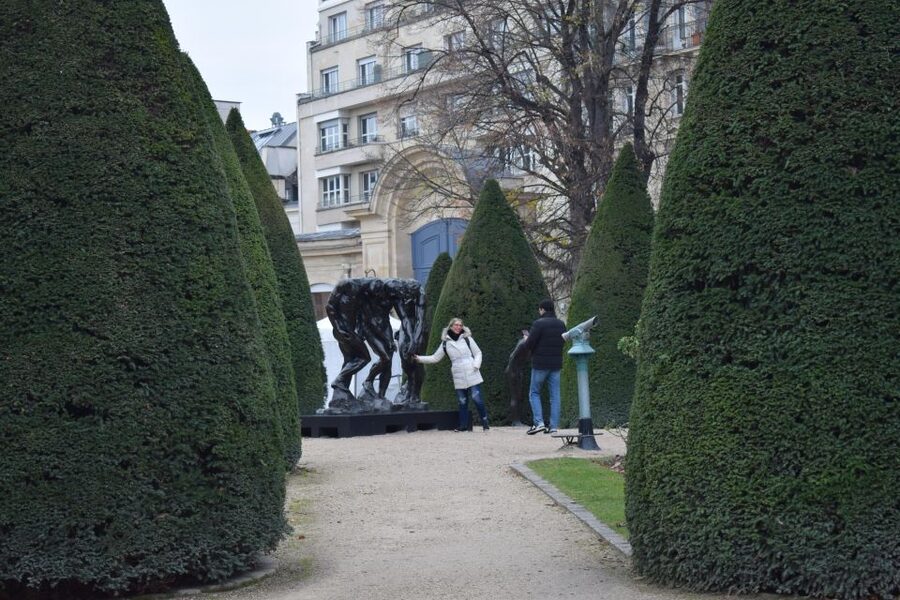
After the galleries, the tour moves into the French gardens. This is more than a pleasant walk between rooms. Outdoor placement changes your relationship with sculpture.
Inside, lighting and walls control the experience. Outside, you can step back, see a piece against open space, and notice how distance affects its shape. The gardens also offer changing perspectives on Rodin’s work, with additional sculptures placed along the paths.
I like this part of the tour because it prevents the visit from becoming too enclosed. After concentrating on surfaces and details indoors, you get room to consider scale, silhouette, and the way a statue occupies its surroundings.
The gardens are also a practical reason to dress for the day rather than just the museum. Comfortable shoes matter, especially if your Paris schedule already includes substantial walking. Weather may affect how enjoyable the outdoor section feels, so a forecast check is sensible, though umbrellas are not permitted inside the activity.
The garden portion is described as an important part of the two-hour route, but it is not a separate garden tour. If you want a slow photographic visit or time to sit with every sculpture, you may need to return on your own after the guided portion.
Looking up at the building’s rococo details
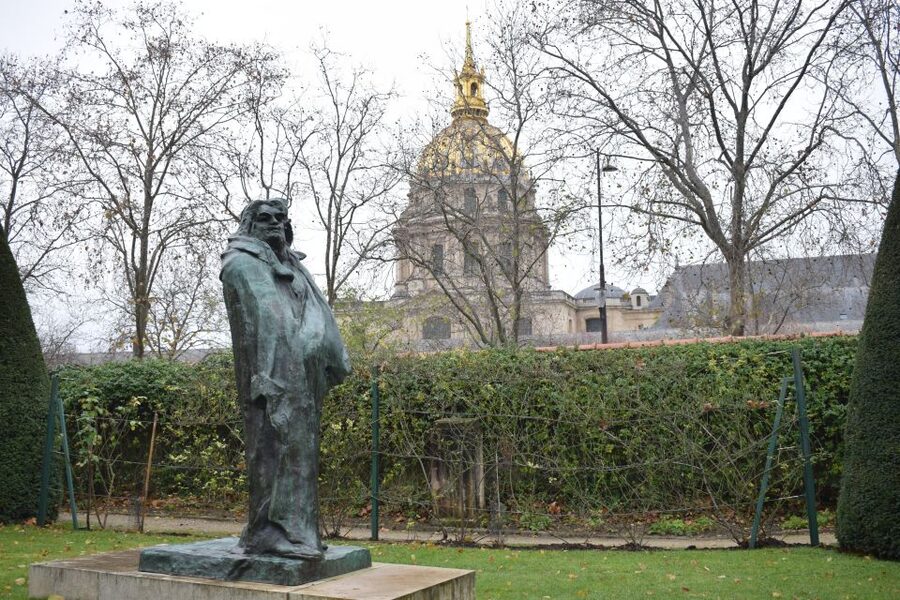
The experience includes attention to the architecture, described as rococo in style. This gives the building a second story beyond its role as a container for Rodin’s art.
A guide can point out how the rooms and decorative details shape the mood of the visit. The contrast between ornate historical interiors and Rodin’s forceful, modern-looking sculpture is part of the appeal. You are seeing an artist associated with a major break from convention inside a building with its own older visual language.
This architectural section also helps you slow down. Museum visitors often look only at the art placed at eye level. Details in the building can explain why a room feels formal, intimate, or theatrical.
The tour does not promise an architecture-focused visit, so art remains the main subject. If your priority is the building itself, you may find the coverage brief. For most people, though, the architectural comments add useful depth without taking the visit away from Rodin.
Is $116 a fair price?
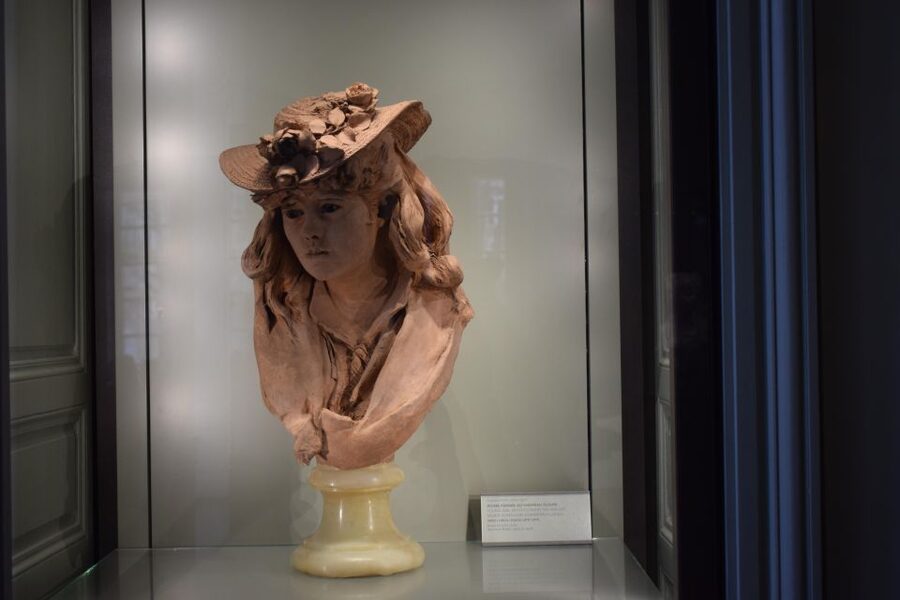
At $116 per person, this is not a budget museum entry. The price includes skip-the-line admission, a professional English-speaking guide, and two hours in a small group through the galleries and gardens.
The value depends on how you normally visit museums. If you are comfortable reading labels, planning your own route, and waiting in a ticket line, a self-guided visit will likely cost less. You also gain control over your timing and can stay as long as you wish.
The guided price makes more sense if you want help making connections. Rodin’s best-known works are easy to recognize, but the political, artistic, and philosophical background is harder to build from labels alone. The guide also helps you connect the studio, the major sculptures, the lesser-known works, the building, and the gardens into one coherent visit.
Skip-the-line access has practical value during a busy Paris day. It will not make the museum empty, and it does not remove the need to meet on time, but it can protect your schedule. That matters if you have a restaurant booking, another museum, or a timed attraction later.
The two-hour length is another part of the value. You receive a focused introduction rather than an open-ended museum session. For first-time visitors or people with limited time in Paris, that structure is helpful. For serious Rodin fans, the price may feel less attractive because you will probably want more time after the guide leaves.
Temporary exhibitions are not included. Check this carefully if a special show is one of your main reasons for visiting.
Who will enjoy this Rodin tour most?
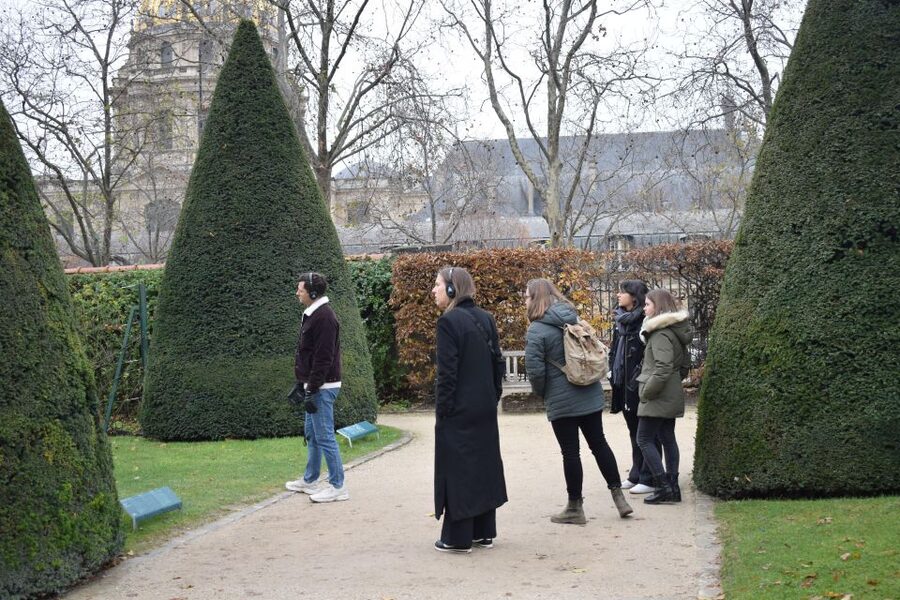
I would recommend this experience to you if you want art explained in plain English and prefer conversation to wandering alone. It suits first-time visitors to the Musée Rodin, couples, families with older children, and anyone who likes a museum visit with a clear beginning, middle, and end.
It is also a strong choice for people who already know The Thinker and The Kiss but want to understand more about Rodin’s wider body of work. The attention to Balzac, The Gates of Hell, the studio, and less familiar sculptures keeps the visit from becoming a greatest-hits stop.
The small format should help if you like asking questions. The guide can respond to the group more easily than a large tour leader can. It also makes the experience more personal, which is useful in a museum where interpretation matters as much as seeing the objects.
I would think twice if you need a fully accessible tour or have serious mobility limits. The information says wheelchair tours are available only on request, while the activity is also described as not suitable for people with mobility impairments or wheelchair users. Contact the provider before paying and ask for a clear accessibility confirmation.
You should also skip this if you want a quiet, unstructured visit lasting several hours. The guide sets the pace, and two hours passes quickly.
Practical details that affect your visit
Cancellation is free up to 24 hours before the start time, and you can reserve now and pay later. These terms are useful if your Paris schedule is still shifting, but you should still check the conditions shown for your selected date.
The tour is offered in English, with a live guide. Food, drinks, souvenirs, personal purchases, and transportation to or from your accommodation are not included.
Plan on walking through both galleries and gardens. Wear shoes you can use comfortably for two hours, bring identification, and avoid arriving with luggage or a large bag. The meeting point is outside the museum, so have the address and the guide’s Connecting France sign in mind.
The overall rating is very high, at 4.9 from 30 reviews. The strongest pattern is clear: the guides receive the most praise, especially for art knowledge, humor, enthusiasm, pacing, and the ability to involve the group. Blerta Meraj is repeatedly singled out for making Rodin understandable and engaging, while Vincent is praised for personable explanations and an art-history perspective.
Should you book it?
Book this tour if you want more than a quick look at Rodin’s famous statues. The combination of a small group, skip-the-line entry, gallery access, studio insight, rococo architecture, and French gardens gives you a well-shaped two-hour introduction.
The price is high compared with visiting independently, and the short schedule will not satisfy every art lover. But if you value a strong guide, want the major works placed in context, and prefer to leave a museum understanding what you saw, this is a sensible choice.
For the best fit, reserve it early in your Paris planning, arrive light and on time, and treat the tour as an introduction. If Rodin captures your attention, you can decide afterward whether the museum deserves a slower return visit.
FAQ
Where does the Rodin Museum tour meet?
The meeting point is in front of the museum at 77 Rue de Varenne, 75007, Paris. The guide will be holding a sign marked Connecting France.
How long does the tour last?
The guided museum and garden visit lasts two hours.
What language is the tour conducted in?
The tour is conducted in English with a live guide.
How many people are in the group?
The experience is described as a semi-private tour for up to eight people, while the booking information lists a limit of nine participants. Check the exact group size when you reserve.
Are skip-the-line tickets included?
Yes. Skip-the-line museum entrance tickets are included.
Which Rodin works will I see?
The tour includes major works such as The Thinker, The Kiss, The Philosopher, Balzac, and The Gates of Hell, along with other famous and lesser-known sculptures.
Are temporary exhibitions included?
No. Access to temporary exhibitions is not included in the tour.
Is the tour suitable for wheelchair users?
Wheelchair tours are available only on request, but the activity is also listed as not suitable for people with mobility impairments or wheelchair users. Contact the provider before booking to confirm what can be arranged.
More skip-the-line tickets in Paris
- Versailles: Skip-the-Line Tour of Palace with Gardens Access
★ 4.7 · 9,778 reviews - Versailles: Skip-the-Line Guided Palace Tour and Full Access
★ 4.6 · 5,214 reviews - Louvre Museum: Skip-the-Line Small Group Guided Tour
★ 4.6 · 3,960 reviews - From Paris: Versailles Skip-the-Line Tour & Gardens Access
★ 4.7 · 3,011 reviews
Just added around Paris
- Private Paris Marche d’Aligre Walking Tour with Tastings★ 5.0 · 8 reviews
- Private Louvre Museum Tour for Kids & Families with Alberto or his team in Paris★ 5.0 · 41 reviews
- Private Highlights of Paris Tuk-Tuk Experience★ 5.0 · 26 reviews
- Paris Latin Quarter Walking Tour: History & Culture – Small Group★ 5.0 · 14 reviews
- Private Highlights of Paris Bike Tour★ 4.5 · 15 reviews
- Paris Musee d’Orsay PRIVATE TOUR with a Local Private Guide★ 5.0 · 41 reviews
- Private Half Day Historic Tour★ 5.0 · 58 reviews
- Pere Lachaise Cemetery Paris – Exclusive Guided Walking Tour★ 5.0 · 72 reviews
Paris Art Museum Tours, compared.
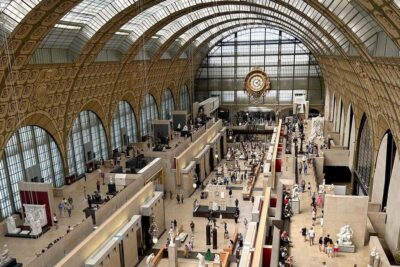
Orsay Museum and Rodin Museum Combo Entry Ticket
Read our review →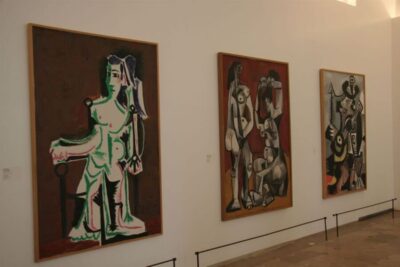
Picasso Museum Ticket & Optional Seine River Cruise
Read our review →
Musée de l’Orangerie Access With Seine River Cruise
Read our review →
Musée de l’Orangerie Flexible Entrance Ticket in Paris with Audio
Read our review →
Louis Vuitton Foundation Exterior Walking Tour and Premium Entry
Read our review →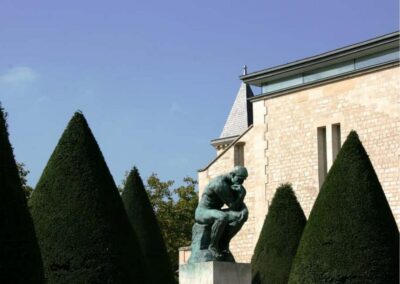
Rodin Museum Skip-the-line Entry Ticket with Audio
Read our review →
Browse the lists this tour appears in