
Reviewed · LOUVRE MUSEUM TOURS
Mona Lisa & Louvre Masterpieces Tour with Reserved Access
The Louvre is too large to tackle casually, especially when the Mona Lisa room feels like a small crowd-control exercise. This reserved-access guided tour gives you a clear route through the museum’s greatest hits, from Leonardo and Raphael to the Venus de Milo, Apollo Gallery, and Napoleon Apartments.
I like two things here: the guide gives the art a story instead of leaving you to stare at labels, and you can stay inside the Louvre after the tour to explore on your own. The main drawback is pace. You will cover a lot of ground, but some art lovers may want more time at each work.
Key points to know before booking
- The meeting point is outside the Louvre entrance: Find the blue-clad team beside the Arc de Triomphe du Carrousel, not at the Pyramid doors.
- The route covers the essential masterpieces: Expect the Mona Lisa, Venus de Milo, Winged Victory, Great Sphinx of Tanis, Michelangelo, Canova, Raphael, and more.
- The guide is the real value: Guides such as Omar, Summer, Anna, Saeed, Natalia, and Anais have been praised for clear explanations and crowd management.
- The guided visit lasts about three hours: A 30-minute Pyramid introduction is followed by roughly 2.5 hours inside the museum.
- You may keep exploring afterward: The planned free time is about two hours, making this more than a quick escorted walk.
- The optional wine stop changes the ending: Upgrade for wine paired with artisanal cheese and charcuterie at Ô Chateau.
Why a Louvre guide helps so much
The Louvre is not simply a museum with a lot of rooms. It is a former royal palace, an archaeological site, and a collection so large that a first visit can feel like several museums stitched together. Without a plan, you can spend half an hour finding a famous gallery and then lose your bearings again five minutes later.
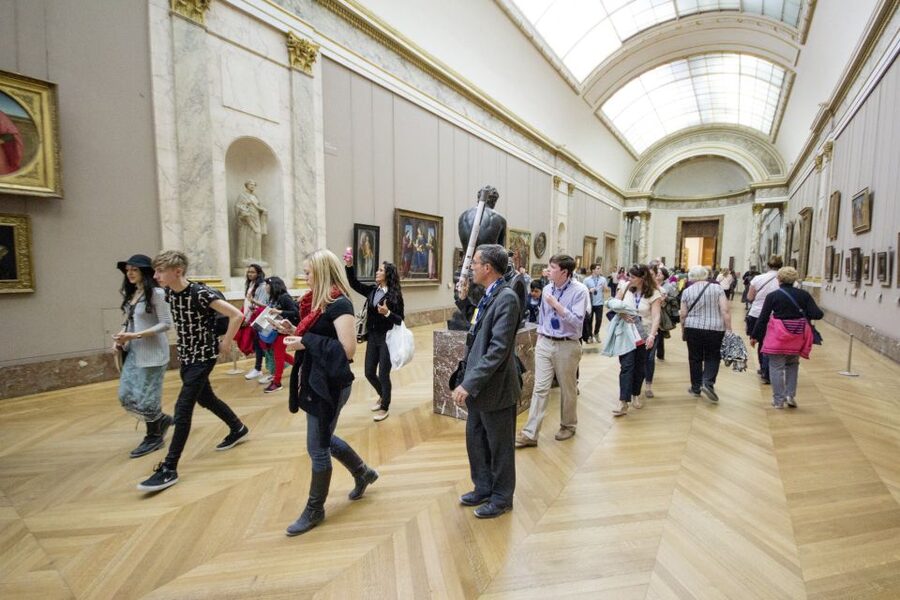
This tour gives you a route and a purpose. Your guide points out major works, explains what you are seeing, and keeps the group moving through crowded corridors. The personal headset matters here. You can listen without standing shoulder to shoulder with the guide, and you are less likely to miss the explanation when another group passes nearby.
The strongest part of the experience is the interpretation. Guides named in the feedback include Omar, Summer, Anna, Saeed, Hugo, Natalia, Anais, Laurent, and others. The specific guide depends on the date, but the praise is consistent: clear English, humor, patience, and a talent for making art approachable.
That matters if you do not have much art background. A painting can look impressive on its own, but a short explanation of its subject, period, or unusual detail gives you a way into it. The best guides also adjust to the crowd. If one gallery is packed, they may change the order or find a better place for the group to listen.
More Louvre Museum Tours:
- Paris: Louvre Museum Timed-Entrance Ticket
★ 4.6 · 71,977 reviews - Paris: Louvre Guided Tour with Reserved Access & Boat Cruise
★ 4.3 · 16,353 reviews - Louvre Museum Masterpieces Guided Tour with Access
★ 4.5 · 12,023 reviews
Starting at the Arc de Triomphe du Carrousel
The tour begins beside the Arc de Triomphe du Carrousel, the smaller triumphal arch near the Louvre and the entrance to the Tuileries Garden. This is an important detail: the meeting point is not at the Louvre Pyramid entrance.
Stand with your back to the Pyramid and look across the road. The arch has a horse-drawn chariot on top. The tour coordinators gather to the left of the arch along the wall railing, wearing blue clothing.
Give yourself enough time to find this spot. The Louvre complex has several arches, courtyards, and entrances, and arriving at the Pyramid alone will not put you in the right place. Once the group is together, the guide begins with the setting and then leads you toward the museum.
This outside introduction is useful because the Louvre can seem like a grand but confusing pile of stone when you first approach it. The Carrousel helps place the museum within the former royal district around the Tuileries.
The Pyramid and the story of the Louvre
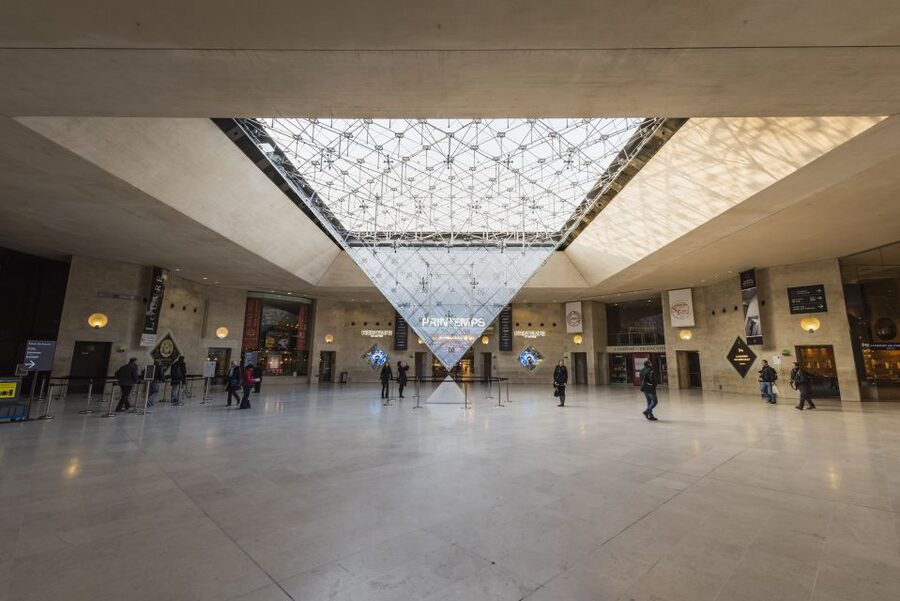
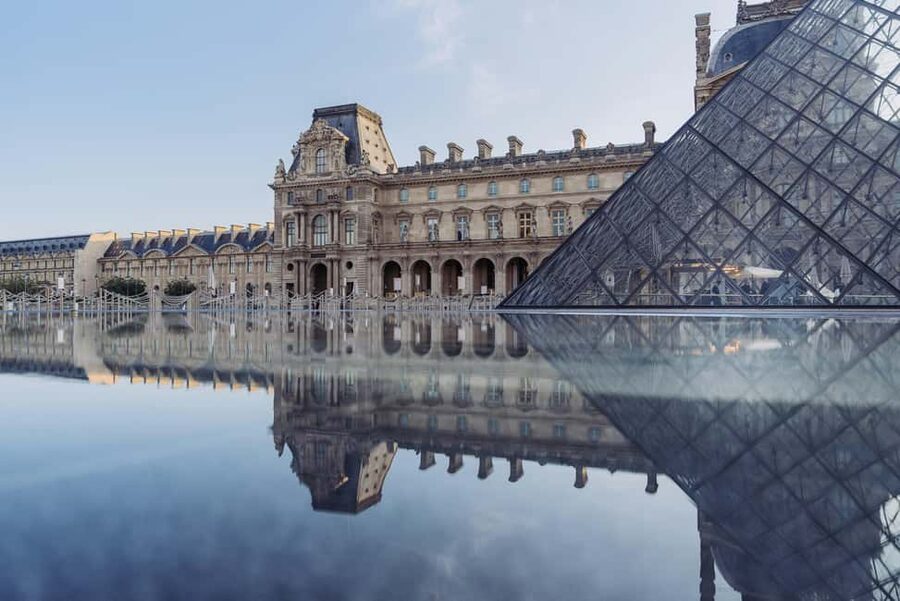
The first scheduled stop is the Louvre Pyramid, with about 30 minutes for a guided introduction and photographs. The glass pyramid is now one of Paris’s best-known sights, but it was controversial when it was built. Your guide uses it as an easy way to explain how the old palace and the modern museum fit together.
The Louvre itself is part of the experience. You will move through layers of construction, from medieval foundations to royal apartments and grand nineteenth-century interiors. One guide can point out that the building is not a neutral box for art. Its halls, staircases, ceilings, and decorative rooms often compete with the collection.
This is a good place for photographs, but do not expect a long independent photo session. The tour is designed to get you inside and moving. If you want a quiet portrait beneath the Pyramid, arrive early and take your pictures before the group gathers.
The major sculptures and ancient collections
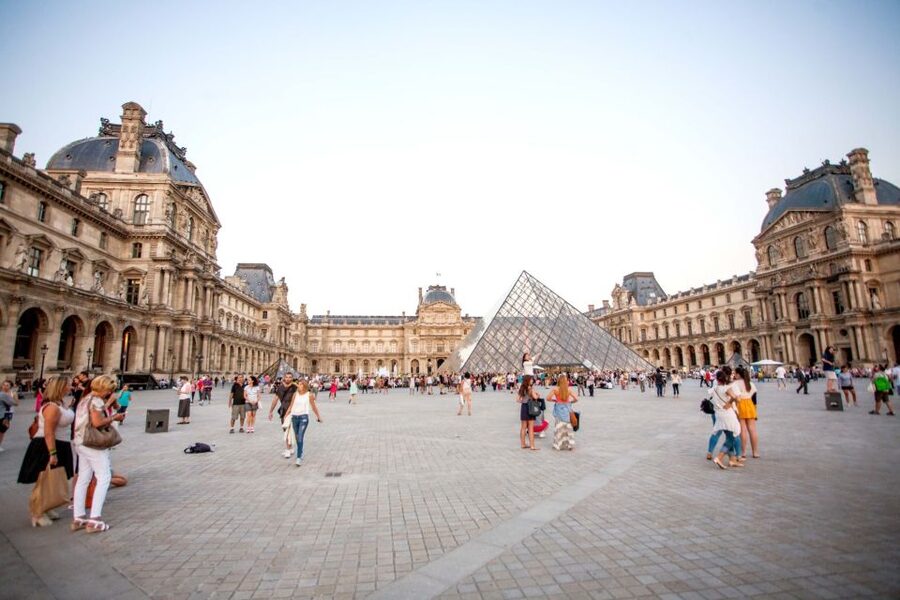
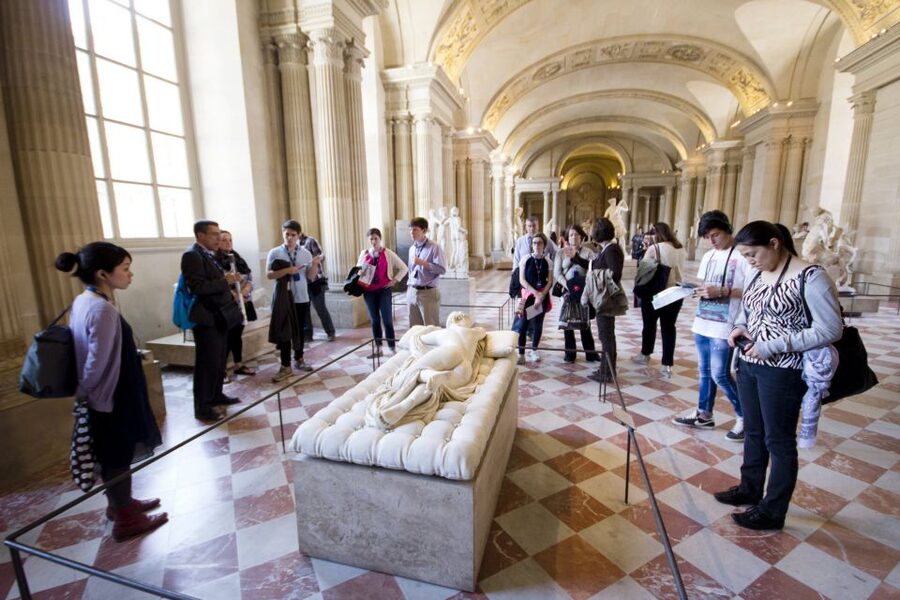
Inside, the route focuses on works that help you understand the scale and range of the Louvre. The Venus de Milo is an obvious highlight, but the guide can give you more than the familiar name and missing arms. You will get context for the sculpture and a better sense of why it became such an enduring symbol of classical beauty.
The Winged Victory of Samothrace is one of the museum’s most dramatic displays. Its position at the top of the Daru staircase lets you meet it almost as a surprise, with the sculpture appearing to move forward through wind and spray. Crowds can gather here, so your guide’s position and headset make a real difference.
The ancient collection also includes the Great Sphinx of Tanis, more than 4,000 years old. It offers a useful change of scale and mood after the famous Greek sculpture. Instead of moving only from one celebrated European artwork to another, you get a glimpse of the Louvre’s Egyptian and Near Eastern holdings.
You will also see Greek and Roman antiquities. The precise order can shift with crowd levels, but the theme is clear: the Louvre’s collection reaches far beyond the Mona Lisa and the French paintings most people expect.
Same city, a completely different afternoon:
- Disneyland® Paris 1-Day Ticket
★ 4.6 · 49,412 reviews - Paris: Versailles Palace and Gardens Full Access Ticket
★ 4.6 · 41,579 reviews - Paris: Evening River Cruise with Music
★ 4.4 · 22,721 reviews - Paris: Eiffel Tower Entry Ticket with Optional Summit Access
★ 4.4 · 20,035 reviews
Renaissance paintings and the Mona Lisa

The Renaissance section brings in Leonardo da Vinci and Raphael. The guide’s job here is not just to point at names on the wall. You will hear about the choices that make a work important, the visual details worth noticing, and the setting in which it was created.
Then comes the Mona Lisa. This is the moment many people have been waiting for, but it is also the part most likely to test your patience. The painting draws a dense crowd, and your viewing position may be brief or partially blocked by people holding phones.
Do not expect a private, silent meeting with Leonardo’s portrait. The practical value of the guide is that you receive advice on how to approach the room and where to position yourself. Summer was praised for helping the group navigate the crowd, while other guides were noted for keeping everyone together without losing the explanation.
The Mona Lisa can be disappointing if you expect a large painting. It is smaller than many first-time visitors imagine, and the crowd can make it hard to appreciate the details. Still, the guide helps you understand why the work matters, so the stop becomes more than a quick photograph.
One useful feature is that the tour does not end your Louvre visit at the painting. After the guided portion, you can remain in the museum and return to rooms that moved too quickly, subject to the museum’s operating rules and access arrangements that day.
Michelangelo, Canova, and the French galleries
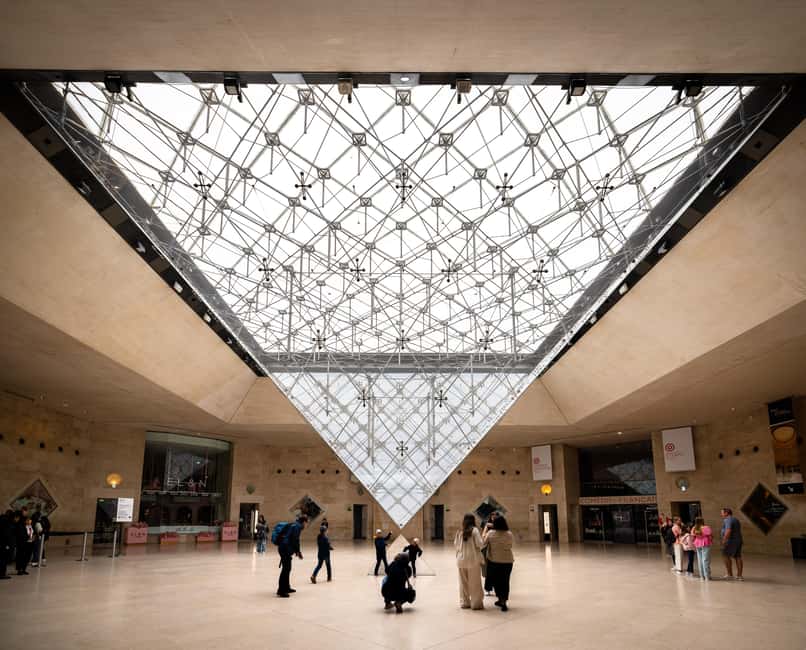
The sculpture route includes Michelangelo’s Dying Slave and Canova’s Psyche Revived by Cupid’s Kiss. These are good works for comparing different ideas of the human body, movement, and emotion.
Michelangelo’s sculpture has an unfinished quality that invites questions about the artist’s process and intention. Canova’s work, by contrast, is polished and theatrical, with intertwined bodies that seem to balance in midair. A guide can help you notice how different materials and artistic periods create different kinds of drama.
The French Romantic galleries add another change in tone. Here, the passion and movement of the nineteenth century replace the calm balance of classical sculpture. The tour gives you a selection rather than a full survey, which is sensible in a museum this large.
You should not book this visit expecting a close look at every famous painter. The route described here emphasizes the Louvre’s headline works, but that does not mean you will see every collection. One visitor specifically found the absence of artists such as Monet disappointing, a useful warning for anyone whose main goal is later French painting.
The Apollo Gallery and Napoleon Apartments
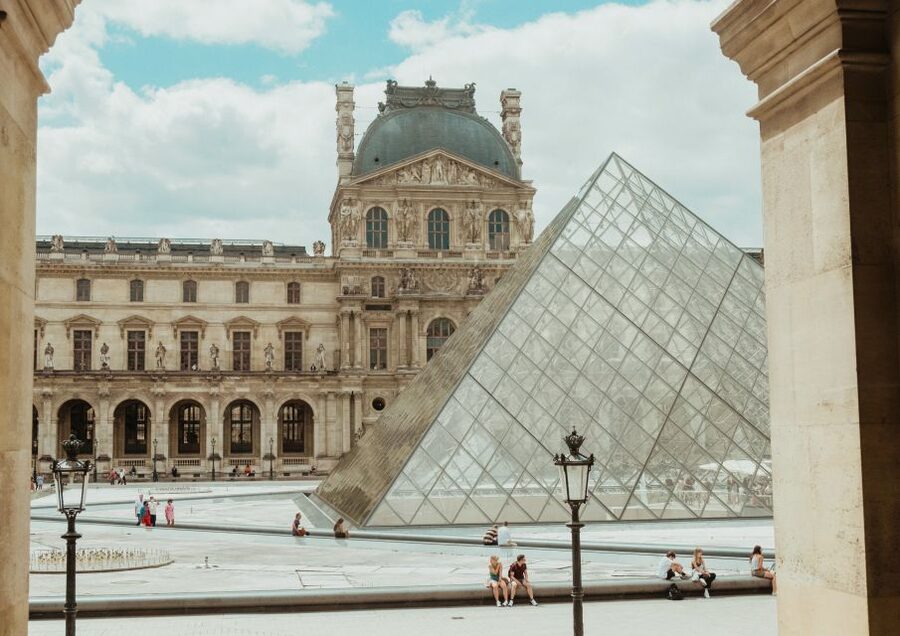
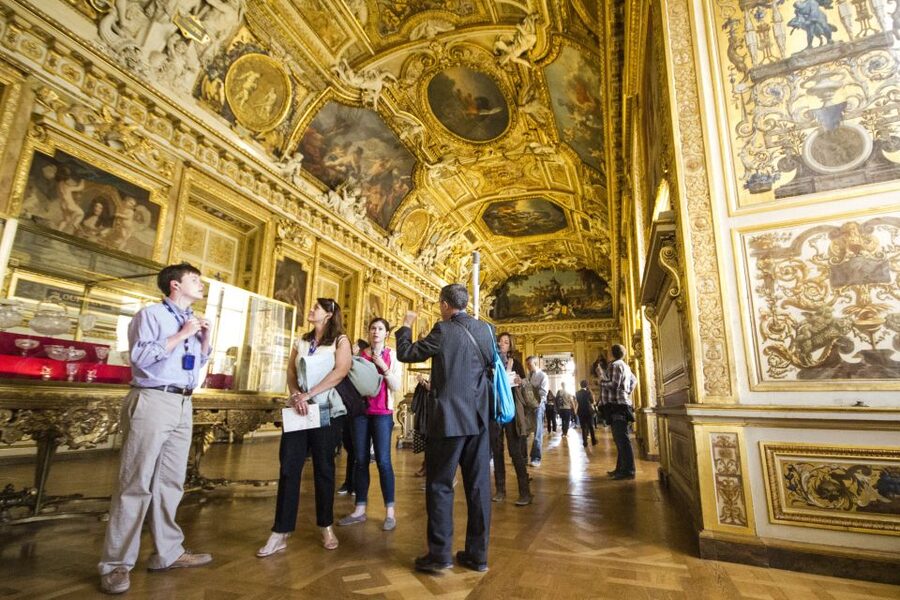
The Apollo Gallery shows how the Louvre once functioned as a royal palace. Its ornate decoration, ceiling paintings, and ceremonial style make it feel different from a standard museum gallery.
The Napoleon Apartments offer an even stronger look at imperial luxury. Their Second Empire furnishings remain in place, giving you a sense of how power was displayed through furniture, mirrors, gold decoration, and scale. These rooms help explain why the Louvre can be as interesting architecturally as it is artistically.
I especially like this part of the route because it breaks up the parade of paintings and statues. You are not simply checking famous names off a list. You are seeing the building as a record of kings, emperors, collectors, and changing ideas about public culture.
Three hours with the guide, then time to wander
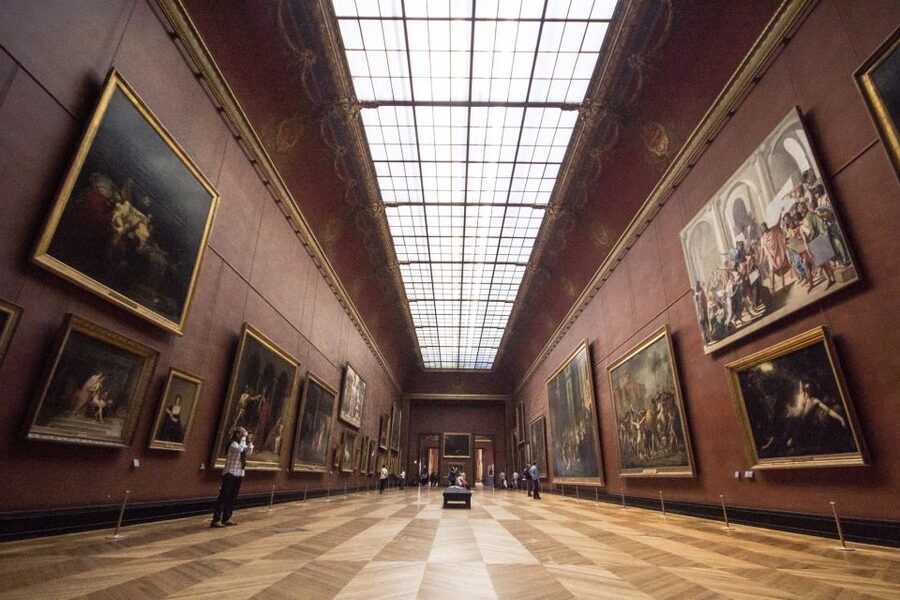
The guided portion takes about three hours, including the Pyramid introduction and roughly 2.5 hours in the museum. This is enough time for a strong first look, but not enough to study every room.
The pace is one of the trade-offs. Some people have appreciated the efficient route through the major works, while others have felt rushed in certain galleries. That is normal for a highlights tour, especially when the museum is crowded and the guide must keep the group together.
The planned itinerary allows about two hours of free time afterward. That extra time is a major reason I see value in the experience. Once you have a map in your head, you can make better choices. You might return to a favorite sculpture, seek out a collection the tour did not cover, or simply slow down in a room that caught your attention.
The tour may end at the Louvre Pyramid or at Ô Chateau if you select the tasting upgrade. Confirm the route on the day, since the practical flow through a large museum can change.
Is the $80 price good value?
At $80 per person, this is not the cheapest way into the Louvre. You are paying for reserved entry, a live English-speaking guide, a headset, and a planned route through the museum’s most famous works.
For a first visit, I think the price can make sense. The Louvre is vast, the popular rooms can be crowded, and the guide saves you from spending valuable time working out where to go next. Several visitors found that the museum made far more sense with a guide than on an earlier self-guided visit.
The value is less clear if you already know the Louvre well or prefer to set your own pace. You may want to spend an hour with one painting, skip the Mona Lisa entirely, or concentrate on a specialist collection. In that case, a standard entry ticket and your own plan may suit you better.
The wine and cheese option adds a social food stop at a central Paris wine bar. It includes wine paired with artisanal cheese and charcuterie. Choose it if you like ending a museum visit with a relaxed tasting, not because it improves the museum entry itself.
Practical details that affect your visit
Wear comfortable shoes. You will spend much of the visit walking and standing, and the museum’s scale makes this a poor choice for anyone hoping for a low-effort outing.
Large bags and luggage are not suitable. Items over 55 by 35 by 20 centimeters are not permitted, and baby strollers are not allowed. Everyone must still pass security, even with reserved entry, so reserved access does not mean walking straight past every checkpoint.
The tour is in English. Groups of seven or more people may be split into separate groups at the meeting point, so a large party should be ready for that possibility.
The experience is not suitable for wheelchair users or people with mobility impairments. The amount of walking, stairs, standing, and crowd movement makes this an important limitation.
You can cancel up to 24 hours before the start for a full refund, and the reserve-now, pay-later option gives you some flexibility when your Paris schedule is still taking shape.
Who should book this Louvre experience?
I would choose this tour for a first visit, a short stay in Paris, or a family group that needs structure. It is also a good fit if you want the famous works explained in plain English instead of trying to read every label while navigating the crowds.
Art lovers should book with realistic expectations. You will see important masterpieces, but you will not have the slow, quiet study time that a specialist might want. Use the guided visit as your introduction, then spend the free time returning to the rooms that interest you most.
The experience suits visitors who value a strong overview and human explanation. The best guides, including names such as Omar, Summer, Anna, Saeed, and Natalia, have been praised for humor, patience, art knowledge, and the ability to keep a group together. The exact guide is not guaranteed, but the guide-led format is the main reason to choose this option.
Should you book it?
Book it if the thought of finding the Mona Lisa, Winged Victory, Venus de Milo, and royal apartments on your own feels tiring. The reserved entry removes some waiting, while the guide gives you a useful path through an enormous museum.
Skip it if you want complete freedom, already know the Louvre, or plan to focus on collections outside the headline route. At $80, the tour is best viewed as a practical introduction, not a full museum study.
For most first-time visitors, I would book it and stay afterward. The guided route gives you the essentials, and the extra time lets you turn a fast highlights visit into a more personal Louvre day.
FAQ
Where does the Louvre tour meet?
Meet beside the Arc de Triomphe du Carrousel, not at the Louvre Pyramid entrance. With your back to the Pyramid, look across the road toward the arch with the horse-drawn chariot. The coordinators wait to the left of the arch along the wall railing and wear blue clothing.
How long does the guided Louvre visit last?
The experience lasts about three hours, or 210 minutes. This includes about 30 minutes at the Louvre Pyramid and roughly 2.5 hours inside the museum. The planned itinerary also allows about two hours of free time afterward.
Is entry to the Louvre included?
Yes. The experience includes a pre-reserved Louvre entrance ticket and reservation fee. You must still pass through museum security.
Which language is the tour in?
The live guided tour is conducted in English. A personal headset is provided so you can hear the guide clearly.
Can I stay inside the Louvre after the guided tour?
Yes. The itinerary provides free time after the guided portion, allowing you to continue exploring the museum on your own.
Is the tour suitable for large bags or wheelchair users?
No. Bags or luggage larger than 55 by 35 by 20 centimeters are not permitted, and baby strollers are not allowed. The tour is not suitable for wheelchair users or people with mobility impairments.
Just added around Paris
- Paris: The Da Vinci Code Walking Tour with a Local Guide★ 4.3 · 5 reviews
- Paris: Flea Market Insider’s Tour in Extra-Small Group★ 4.6 · 73 reviews
- Paris: Private Fashion Tour (Chanel, Dior, Sex & the City)★ 5.0 · 3 reviews
- Paris: Floral Earrings workshop★ 5.0 · 3 reviews
- Paris: Fashion History Walking Tour in the Heart of Paris★ 4.9 · 22 reviews
- PARIS: Family e-bike longtail renting★ 5.0 · 3 reviews
- Paris: Famous Monuments Cycling Tour★ 4.7 · 20 reviews
- Paris: private city tour with seine river cruise★ 4.8 · 28 reviews
Louvre Museum Tours, compared.
Louvre Guided Tour with Reserved Access & Boat Cruise
Read our review →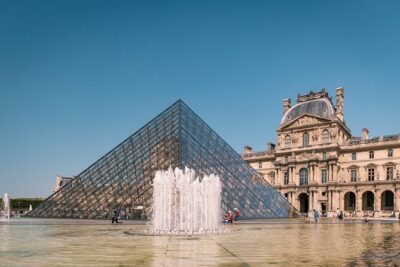
Louvre Museum Masterpieces Guided Tour with Access
Read our review →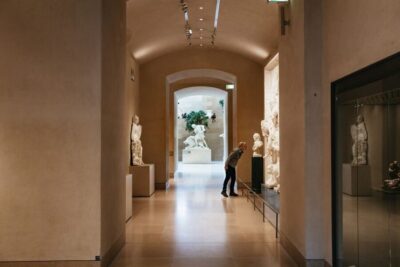
Louvre Museum Entry Ticket With Host and River Cruise
Read our review →
Priority Access Louvre with Host -Direct to Mona Lisa
Read our review →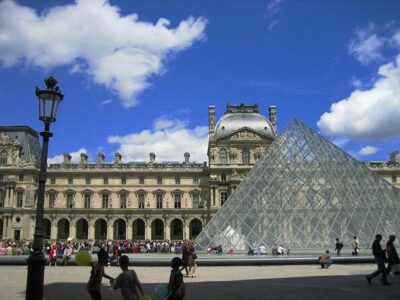
Louvre Museum – Exclusive Guided Tour (Entry Included)
Read our review →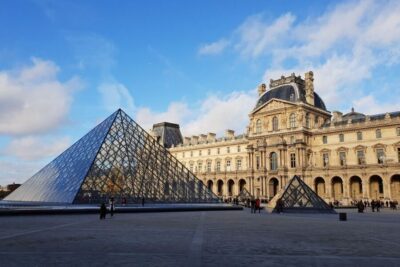
Louvre Reserved Ticket and River Cruise Combo
Read our review →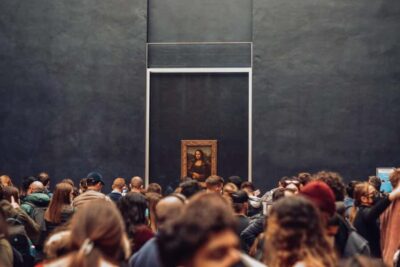
Louvre Museum Hosted Entry and Mona Lisa Audioguide
Read our review →Browse the lists this tour appears in