
Reviewed · PARIS ART MUSEUM TOURS
Paris: Pompidou Centre Private Guided Tour
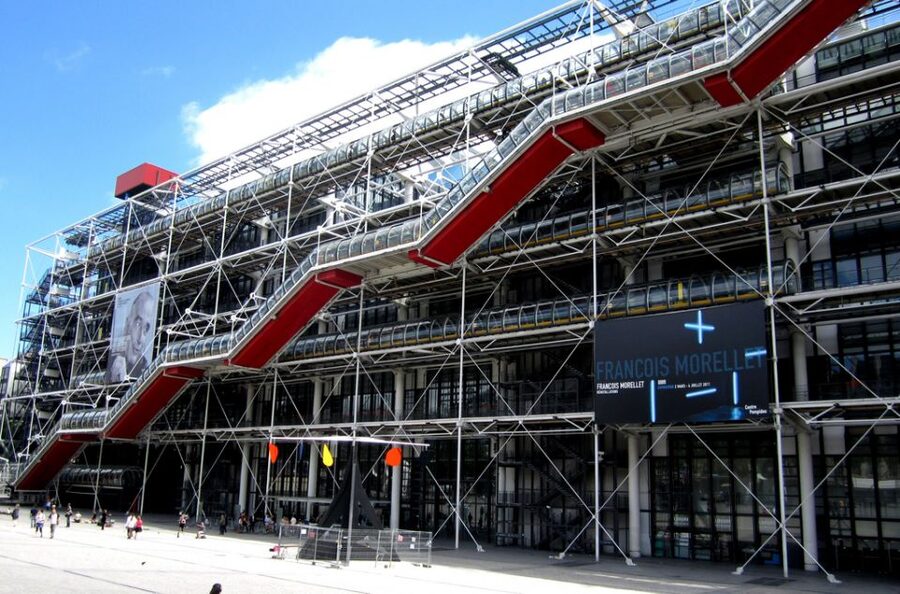
The most interesting part of this private Pompidou Centre tour is that the building becomes the artwork. With the museum closed for reconstruction, you spend the 90 minutes examining the pipes, escalators, structure, and urban setting of a building that was designed to challenge Paris rather than blend into it. Architecture takes center stage, with modern art and city planning providing the wider story.
I like the focus on ideas you can still see from the street, especially the link between the Centre Pompidou and the changing Paris of the 1970s. I also like the private format, which gives your guide room to adjust the conversation, explain difficult modern art clearly, and include children or first-time art visitors. The main consideration is simple: this is not currently a standard museum tour filled with gallery stops. You are paying for interpretation of the building and its setting, not access to the usual collection.
Key points to know
- The building is the main exhibit: Explore the Centre Pompidou as an architectural statement while the museum undergoes reconstruction.
- A private 90-minute format: Your guide can shape the discussion around your interests, questions, and level of art knowledge.
- A close look at Paris in the 1970s: Learn how urban planning, gentrification, and cultural policy helped shape the centre.
- The famous pipes get an explanation: Find out why local people call the building the Notre Dame of Pipes.
- Strong guide options: Guides such as Milica, Boris, Bella, and Stephanie have led this experience, with clear explanations praised across several languages.
- Easy central meeting point: Meet at the Stravinsky Fountain on Rue Saint Merri, where your guide carries a red canvas tote bag.
Meeting the guide at the Stravinsky Fountain
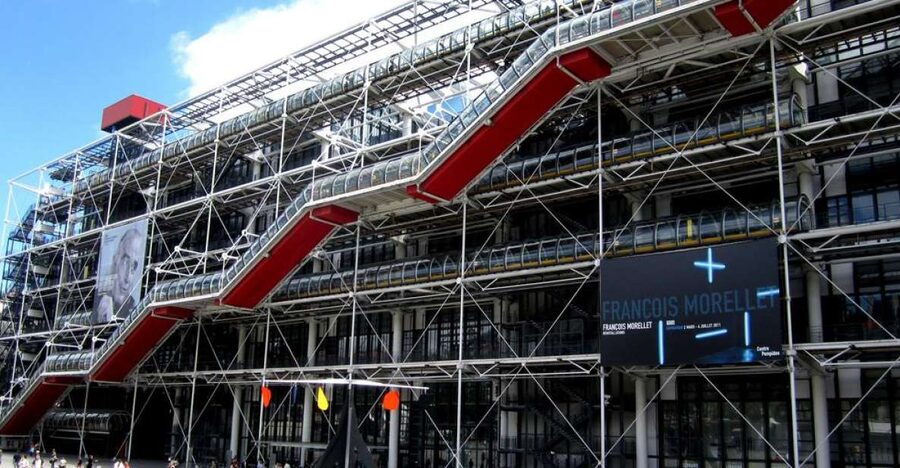
Your tour begins at the Stravinsky Fountain on Rue Saint Merri, in the 4th arrondissement. This is a useful meeting point because it places you right beside the Centre Pompidou and its surrounding public spaces, rather than sending you on a long walk before the tour begins.
Look for the guide carrying a red canvas tote bag. The meeting point is specific, but Paris can still be distracting around the Pompidou Centre, with open plazas, street activity, and the building’s bright exterior pulling your attention in several directions. Give yourself a little time to find the fountain and confirm the guide before the 90 minutes begin.
The private format matters from the first few minutes. Instead of joining a large crowd and waiting for everyone to catch up, you can tell the guide whether you want a basic introduction to modern art, a more architectural discussion, or a closer look at Parisian urban change. The available languages are English, French, and Serbo-Croatian.
More art museums in Paris:
- Paris: Orsay Museum and Rodin Museum Combo Entry Ticket
★ 4.4 · 470 reviews - Paris: Picasso Museum Ticket & Optional Seine River Cruise
★ 4.7 · 277 reviews - Paris: Rodin Museum Entry Ticket
★ 4.5 · 220 reviews
Seeing the Centre Pompidou as an object of art
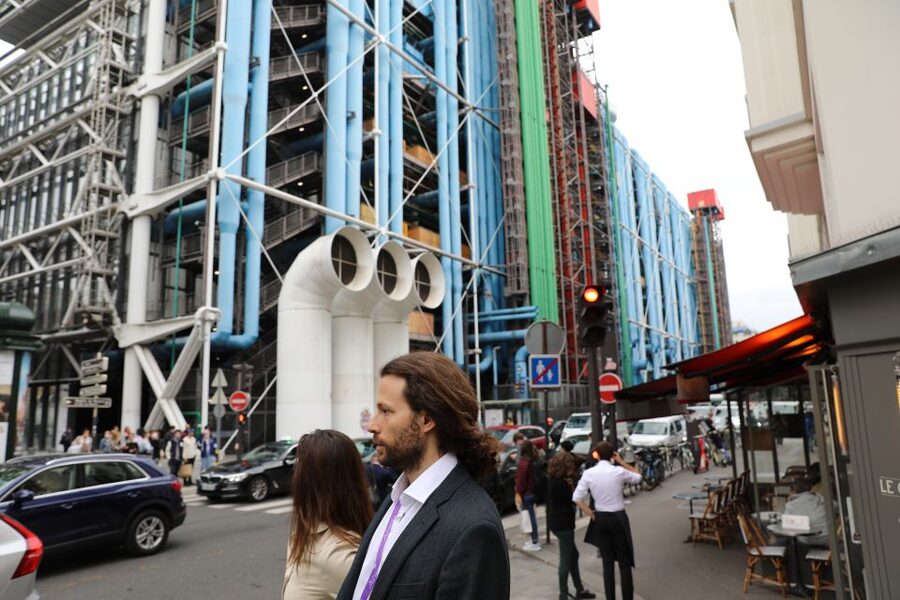
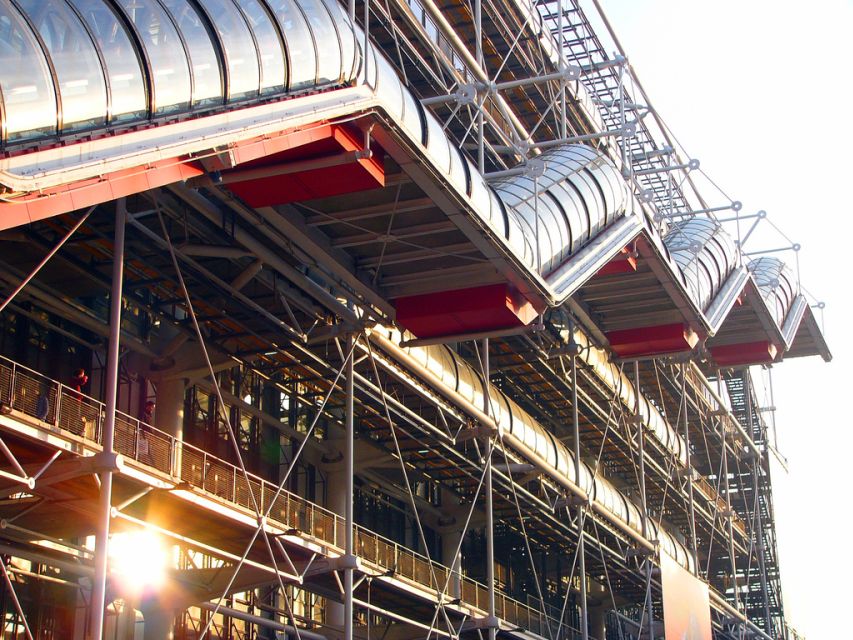
The Centre Pompidou is famous partly because it looks unlike the traditional Paris around it. Its structure, pipes, and circulation systems are displayed on the outside, reversing the usual museum approach in which the machinery disappears behind stone walls and finished interiors.
That reversal is the point of the visit. Your guide helps you look at the building not simply as a place that houses art, but as a work with its own argument. The pipes are not just decoration, and the exposed systems are not an afterthought. They form part of the building’s identity and explain why it became an example of architectural provocation.
You will examine how the centre challenges its surroundings. Paris is often associated with historic façades, careful proportions, and buildings that respect an established street pattern. The Pompidou Centre chose a much louder role. Its exterior makes technology, movement, and service systems visible, asking the city to accept a very different type of public building.
That contrast makes the tour useful even if you are not an architecture specialist. You do not need to know technical terms in advance. The guide’s job is to connect what you see with the choices behind it, so the pipes, structure, and placement begin to make sense as part of one larger idea.
The Notre Dame of Pipes and the building’s public face
One of the memorable details covered on the tour is the local nickname Notre Dame of Pipes. It captures the unusual role of the building in Paris. Notre Dame represents a familiar, historic version of the city, while the Pompidou Centre presents a modern and deliberately disruptive one.
The nickname also gives you a handy way to remember the building. Instead of treating the pipes as a confusing mass of colour and metal, you can think about how the centre turns its working parts into a public façade. The building invites you to inspect things that other structures usually hide.
The surrounding plaza and exterior spaces matter, too. The building is not isolated from city life. Its design affects how people approach it, move around it, and understand the neighbourhood. Your guide links the architecture to urban planning, helping you see the Centre Pompidou as part of a debate about what central Paris should look like and who it should serve.
This is where the tour goes beyond a quick photo stop. You may already have noticed the colourful exterior, but the guide gives you a way to read it. The visit asks why the structure looks this way, why it appeared in this part of Paris, and how its presence changed the area around it.
Paris in the 1970s, gentrification, and urban change
The Centre Pompidou cannot be separated from the Paris of the 1970s. The tour places the building within a period when the city was changing its approach to modern life, public culture, and redevelopment.
You learn how gentrification shaped the museum and its neighbourhood. That subject adds useful tension to the visit. A major cultural centre can bring new energy and public access, but it can also change land values, businesses, and the type of person drawn to an area. The tour does not treat architecture as an isolated art form. It connects the building to the social and economic effects of urban change.
This part is especially valuable if you have already seen the Centre Pompidou from the outside and wondered why it was built there. The answer is not simply that Paris wanted another museum. The building was tied to a larger effort to reshape how the city presented modern culture and how people used an important central district.
I like this city-planning angle because it gives you something to notice after the tour ends. As you walk elsewhere in Paris, you can compare buildings that fit their surroundings with the Pompidou Centre, which argues with its surroundings. That contrast is one of the clearest lessons of the experience.
More private tours in Paris:
- Paris: Private Photoshoot at the Eiffel Tower
★ 4.7 · 2,636 reviews - Top Private Cruises in Paris with French Champagne and surprises
★ 5.0 · 1,553 reviews - Private Paris Airport Arrival Transfer – CDG & ORLY Airports
★ 4.5 · 1,119 reviews - Paris Private Arrival Transfer from Charles de Gaulle (CDG) or Orly (ORY)
★ 4.0 · 1,084 reviews
What happens to the modern art discussion
The Centre Pompidou is known as one of Paris’s major art institutions, after the Louvre and the Musée d’Orsay. Under normal conditions, its collection offers a broad path through modern and contemporary art. During the building’s reconstruction, however, this experience focuses on the centre itself rather than a normal gallery route.
That distinction should guide your booking decision. If your priority is to see paintings and sculptures inside the museum, this is not the right substitute for a regular collection visit. If you want to understand why the centre became such a force in Paris, the current format offers a different kind of access through explanation and close attention to the architecture.
Past versions of the guided experience have included discussion of modern art from the late 19th century through the 1980s, with guides using selected works to explain changing styles and movements. Guides such as Milica, Boris, Bella, and Stephanie have been praised for putting art into context and explaining it in a way that does not feel like a lecture. Since the current visit centres on the building during reconstruction, confirm the exact scope when booking if gallery access is important to you.
The guide’s role is particularly helpful if modern art leaves you cold. You do not have to decide instantly whether a work is attractive or meaningful. A good explanation can show you what the artist, movement, or building was trying to do. Several guide names connected with this experience have been singled out for clear teaching, strong historical background, and a friendly way with children.
A private tour that works for mixed interests
A private group is a good match for families, couples, and small groups who do not all begin with the same level of interest. One person may care about architecture, another about art history, and a child may simply want to know why a museum has so many pipes. Your guide can move between those questions more easily than a fixed group tour can.
The experience has also worked well for younger visitors. The format allows you to ask for simpler explanations without holding up a large group, while adults can still ask more detailed questions about architecture or city policy. The guide can give children a clear entry point, then add complexity for anyone who wants more.
That said, 90 minutes is a focused amount of time. It is long enough for a coherent story about the building, but not long enough to cover every modern art movement, every planning decision, and every part of the Centre Pompidou in equal detail. I would treat it as an introduction with a strong theme, not a complete course in 20th-century art.
The language choice helps, too. Tours are available in English, French, and Serbo-Croatian. If you are visiting with family members who are more comfortable in French, the ability to choose the language can make the conversation more natural and less tiring.
Is $176 per person good value?
At $176 per person, this is a premium activity for 90 minutes. The price makes the most sense for people who value a private guide and want interpretation they cannot get from simply looking at the building on their own.
You are not paying only for entry. The value lies in the conversation: how the centre fits into its neighbourhood, why the building caused such a reaction, how Paris changed in the 1970s, and what gentrification had to do with the museum’s creation. If those questions interest you, the tour can turn a striking exterior into a much more meaningful part of your Paris visit.
The value is weaker if you are mainly looking for access to a large number of artworks. The museum’s reconstruction changes the experience, and the current visit is centred on the architecture. You could see the exterior independently at no cost, but you would lose the connected story about urban planning, local attitudes, and the building’s cultural role.
For a couple or small family that wants a tailored explanation, the private format may justify the cost. For solo visitors or budget-minded art lovers, it is a bigger decision. I would compare the price with your interest in architecture and your desire for a personal guide, rather than comparing it with the cost of a museum ticket alone.
Practical details that shape the experience
The tour lasts 90 minutes and operates rain or shine. Since much of the experience concerns the exterior and urban setting, weather can affect your comfort even if it does not cancel the activity. Bring suitable clothing and shoes, especially if rain is in the forecast.
The tour is wheelchair accessible, which is useful for a building-focused visit in central Paris. Your guide can also communicate in English, French, or Serbo-Croatian. Food and drinks are not included, but the short duration makes it easy to plan a café stop before or after.
You can cancel up to 24 hours in advance for a full refund, and the reserve-now, pay-later option gives you some flexibility while planning your Paris schedule. Those policies are helpful in a city where museum plans can change quickly, though you should still check the available starting times before you commit to a particular day.
The meeting point is close to the Centre Pompidou, so this tour can fit neatly into a day around the Marais and central Paris. Avoid scheduling it too tightly against another timed attraction. The tour may finish on time, but the building and surrounding streets invite extra looking, photographs, and questions.
Who should book this Pompidou Centre tour?
I would recommend it most strongly to visitors who enjoy architecture, city history, or modern art but want help making connections. It is also a good choice if your group has mixed interests and you want a guide who can explain difficult ideas without turning the outing into a formal academic class.
Families can benefit from the private setup, especially since previous guides have been praised for explaining the subject well to children. French speakers and Serbo-Croatian speakers also have a useful language option, while English-speaking visitors can expect a focused discussion in English.
I would hesitate if your main goal is a conventional museum visit with hours among the collection. The current emphasis is the Pompidou Centre as a building and urban statement, particularly during reconstruction. That is not a lesser subject, but it is a different one.
Should you book it?
Book this tour if you want to understand why the Centre Pompidou looks the way it does and what its presence says about Paris. The strongest parts are the private conversation, the explanation of the famous pipes, and the connection between architecture, gentrification, and 1970s city planning.
Skip it if you are seeking a gallery-heavy art tour or the lowest-cost way to see the building. At $176 per person, it asks you to care about ideas as much as sights. For the right visitor, that is precisely the point: after 90 minutes, you should see the Pompidou Centre not just as a strange box of pipes, but as a bold argument about art, public space, and the future of Paris.
FAQ
How long is the Pompidou Centre private tour?
The tour lasts 90 minutes. Starting times depend on availability.
Where does the tour meet?
Meet your guide at the Stravinsky Fountain on Rue Saint Merri, 75004 Paris. The guide carries a red canvas tote bag.
Which languages are available?
The live tour guide is available in English, French, and Serbo-Croatian.
Is the museum collection included during reconstruction?
The current visit focuses on the Centre Pompidou building itself while the museum is closed for reconstruction. It is not presented as a standard gallery tour of the collection.
Is the tour wheelchair accessible?
Yes, the activity is wheelchair accessible.
Can I cancel the tour?
Yes. You can cancel up to 24 hours in advance for a full refund. You can also reserve now and pay later.
Just added around Paris
- Private Paris Marche d’Aligre Walking Tour with Tastings★ 5.0 · 8 reviews
- Private Louvre Museum Tour for Kids & Families with Alberto or his team in Paris★ 5.0 · 41 reviews
- Private Highlights of Paris Tuk-Tuk Experience★ 5.0 · 26 reviews
- Paris Latin Quarter Walking Tour: History & Culture – Small Group★ 5.0 · 14 reviews
- Private Highlights of Paris Bike Tour★ 4.5 · 15 reviews
- Paris Musee d’Orsay PRIVATE TOUR with a Local Private Guide★ 5.0 · 41 reviews
- Private Half Day Historic Tour★ 5.0 · 58 reviews
- Pere Lachaise Cemetery Paris – Exclusive Guided Walking Tour★ 5.0 · 72 reviews
Paris Art Museum Tours, compared.
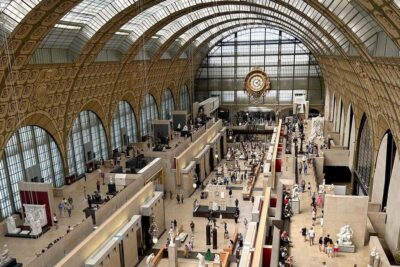
Orsay Museum and Rodin Museum Combo Entry Ticket
Read our review →
Picasso Museum Ticket & Optional Seine River Cruise
Read our review →
Musée de l’Orangerie Access With Seine River Cruise
Read our review →
Musée de l’Orangerie Flexible Entrance Ticket in Paris with Audio
Read our review →
Louis Vuitton Foundation Exterior Walking Tour and Premium Entry
Read our review →
Rodin Museum Skip-the-line Entry Ticket with Audio
Read our review →
Browse the lists this tour appears in