
Reviewed · SEINE RIVER CRUISES
Private cruise with Paris water way
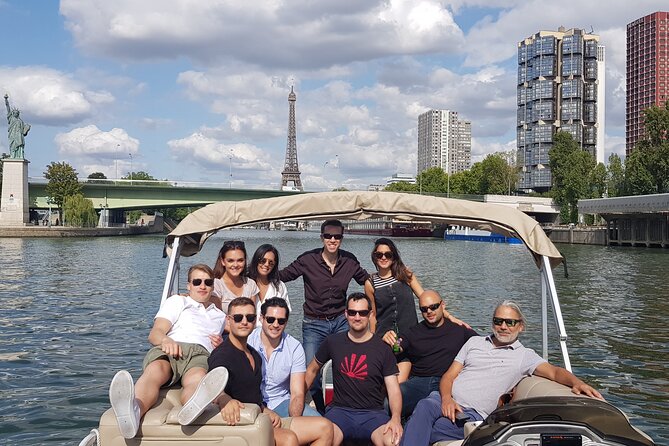
A private boat gives you a fine way to see Paris without fighting crowds on a pavement. For 90 minutes, you glide past the city’s grandest riverfront sights, from the medieval islands and Pont Neuf to the Louvre, Musée d’Orsay, and Eiffel Tower. I like the small-group privacy and the chance to see famous monuments from a calm, low-angle viewpoint.
I also like the clear route: the cruise covers a generous stretch of the Seine rather than circling one short section. Guide Diego has been praised for explaining the sights in a way that kept three children interested. The main consideration is weather, since the trip requires good conditions and the boat’s commentary and views may feel less useful on a gray, wet day.
Key points to know before booking
- A 90-minute private Seine cruise: Only your group takes part, so the outing feels more personal than a standard public boat ride.
- A strong central Paris route: You pass Île Saint-Louis, Île de la Cité, Pont Neuf, the Louvre, Musée d’Orsay, National Assembly, Alexandre III Bridge, and the Eiffel Tower.
- Guide Diego may lead your cruise: He has been specifically praised for showing and explaining the sights, including to a family with three children.
- English is offered: This makes the tour easier to follow if you want spoken context during the ride.
- Departure from 14 Quai François Mitterrand: The cruise begins and ends at the same central Paris meeting point.
- Weather matters: You can cancel free up to 24 hours before departure, and a weather cancellation brings a new date or full refund.
Why a private cruise works well in central Paris
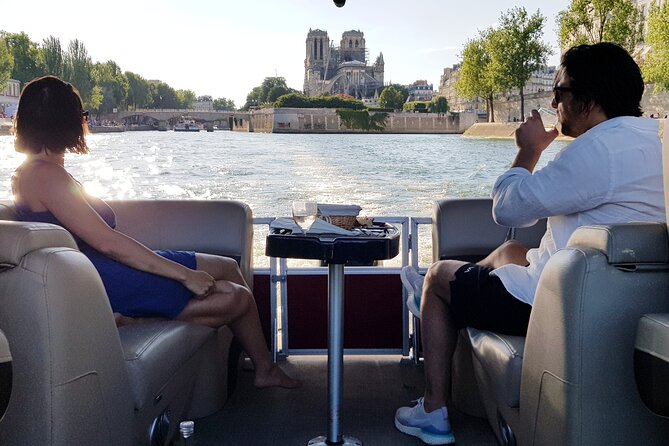
The Seine is more than a scenic strip of water. It is the line that ties together several different chapters of Paris. On foot, you see one neighborhood at a time. From the river, you get a moving view of islands, bridges, royal buildings, museums, government offices, and the Eiffel Tower in one outing.
That is the chief appeal of this experience. You are not spending the full day inside a museum or walking from one monument to the next. You get a broad look at Paris in a fairly short period, with the added comfort of staying with your own group.
The private format matters if you are traveling with family or friends. You do not have to adjust your pace to a large boatload of strangers. You can pay closer attention to the guide, ask questions, and let younger children watch the riverfront without the pressure of keeping up with a walking tour.
I would think of this as an orientation ride with real sightseeing value. It does not replace a visit inside the Louvre, Sainte-Chapelle, or Musée d’Orsay. It does show you where those places sit in relation to the Seine, which can make the rest of your time in Paris easier to plan.
The cruise lasts about one hour and 30 minutes. That is long enough to cover the central sights without turning into a half-day commitment. The route is also practical for a first day in Paris, when you may want an easy way to get familiar with the city before tackling its museums and neighborhoods.
More Seine river cruises:
- Paris: Evening River Cruise with Music
★ 4.4 · 22,721 reviews - Paris: Louvre Guided Tour with Reserved Access & Boat Cruise
★ 4.3 · 16,353 reviews - Paris: Big Bus Hop-On Hop-Off Tour with Optional Cruise
★ 4.4 · 13,279 reviews
Starting at 14 Quai François Mitterrand
The meeting point is 14 Quai François Mitterrand, 75001 Paris. This puts you beside the Seine in the central 1st arrondissement, close to the Louvre and the riverfront.
The activity returns to this same point. That simple start-and-finish arrangement is useful because you do not have to work out a new pickup location at the end. You can then continue sightseeing in central Paris, though the exact timing of your onward plans should allow for the approximate duration of the cruise.
Confirmation is provided when you book, and a mobile ticket is accepted. The experience is offered in English. Public transportation is nearby, and service animals are allowed. The activity notes that most people can participate, but the supplied details do not describe the boat’s step-free access, seating arrangement, or restroom facilities. If those details matter to you, ask the operator before booking.
Île Saint-Louis and Île de la Cité from the river
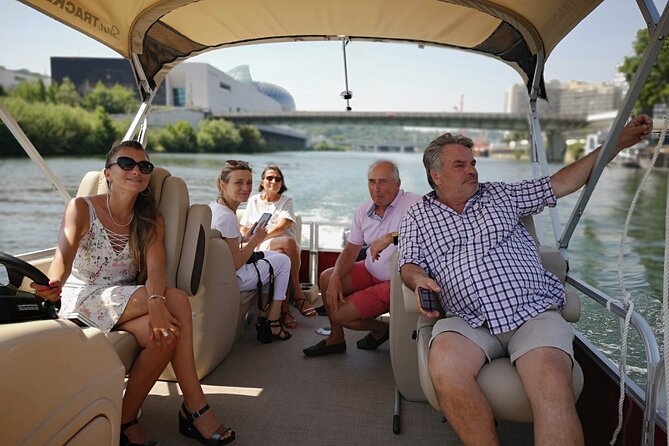
The first part of the route brings you past Île Saint-Louis, one of the two natural islands still found in the Seine at Paris. The other is Île de la Cité. Île Saint-Louis is the smaller island, covering about 11 hectares, and it has a more contained, residential feel than the larger central island.
Its current name dates from 1725 and refers to Louis IX, the medieval king later known as Saint Louis. The island was once associated with Île aux Vaches, where legend places Louis IX before he left for the Eighth Crusade in 1269.
From the water, the island is especially useful as a piece of Paris geography. You see how close it sits to Île de la Cité and how the Seine shapes the oldest part of the city. The Lambert mansion is one of the notable private houses along Île Saint-Louis. It suffered a major fire in 2013, an event that adds a more recent chapter to the island’s long architectural story.
Next comes Île de la Cité, often described as the ancient heart of Paris. It is linked to the city’s beginnings as Lutèce and now falls within the 1st and 4th arrondissements. The island’s position helps explain why Paris grew where it did, with the river offering both a route for trade and a natural defensive boundary.
This section of the cruise is best for context. You are not simply checking off two islands. You are seeing the compact center from which medieval Paris expanded. If your guide points out details along the banks, listen closely here, because the islands give the rest of the route its historical frame.
The Conciergerie and Palais de Justice
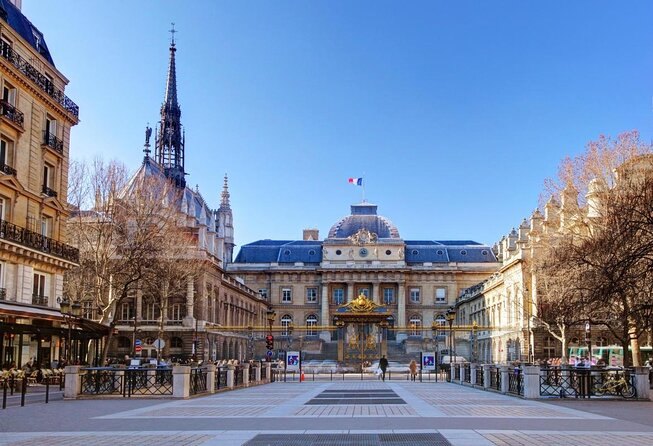
The boat then passes the Conciergerie and the larger Palais de Justice complex. This area was once the Palais de la Cité, the residence and seat of power for French kings from the 10th through the 14th centuries.
The Conciergerie is one of the surviving parts of that royal complex. The broader Palais de Justice also connects to the long development of French courts and government institutions. The site has housed major legal bodies and archives over the centuries.
From the river, you get a useful view of the buildings as part of one large historic center. The limitation is that a passing cruise cannot give you the full interior story. If you want courtrooms, medieval rooms, or a closer look at the Conciergerie, you will need a separate visit on foot.
Still, this is a valuable section for understanding how royal power, law, and the medieval city were concentrated on Île de la Cité. The river view lets you see the complex in relation to the island rather than as an isolated monument.
Same city, a completely different afternoon:
- Paris: Louvre Museum Timed-Entrance Ticket
★ 4.6 · 71,977 reviews - Disneyland® Paris 1-Day Ticket
★ 4.6 · 49,412 reviews - Paris: Versailles Palace and Gardens Full Access Ticket
★ 4.6 · 41,579 reviews - Paris: Eiffel Tower Entry Ticket with Optional Summit Access
★ 4.4 · 20,035 reviews
Under Pont Neuf, Paris’s oldest surviving bridge
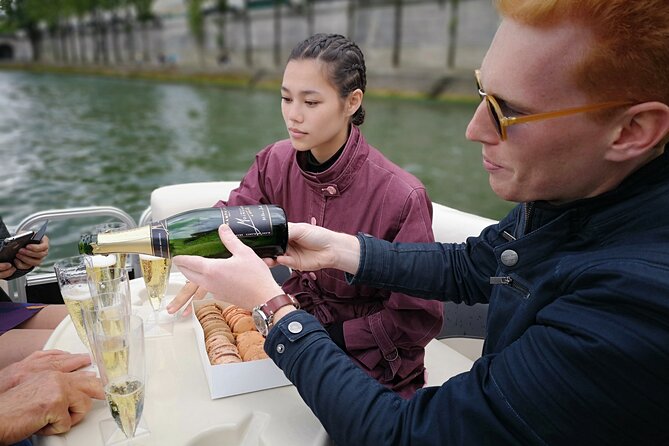
Passing under Pont Neuf is one of the route’s more memorable moments. Despite its name, which means New Bridge, it is the oldest existing bridge in Paris. It crosses the Seine at the western tip of Île de la Cité.
Pont Neuf was built at the end of the 16th century and completed in the early 17th century. It was unusual in its day because it had no houses built along it and included sidewalks that protected pedestrians from mud and horses. It was also the first stone bridge in Paris to cross the Seine from bank to bank.
The river-level view gives you something that a normal street crossing cannot. Look up at the underside of the arches and the stonework as the boat passes below. The bridge and the banks of the Seine are part of a UNESCO World Heritage Site, which helps explain why this stretch feels like one of the city’s great outdoor monuments.
Pont des Arts and the story of the love locks
The cruise continues under Pont des Arts, the pedestrian bridge known for its former love-lock tradition. From 2008 onward, couples attached padlocks to the bridge’s wire-mesh sides. The custom spread to other Paris footbridges.
Paris removed the fences in June 2015 after concern about the weight of the locks and the effect on the bridge’s appearance. Street-art panels appeared first, followed by glass panels later that year. The episode is a small but revealing part of modern Paris: a romantic custom became a public debate about public space, heritage, and tourism.
You will not see the famous mass of padlocks that once covered the bridge. That absence is part of the story. A guide can use this brief passage to explain how the city manages popular traditions when they begin to damage historic structures.
The Louvre from an unusual angle
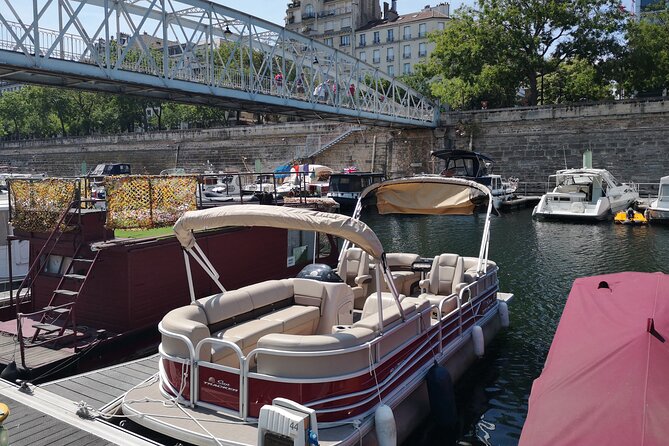
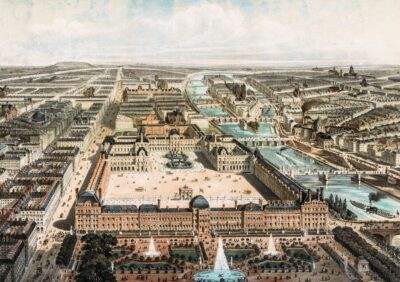
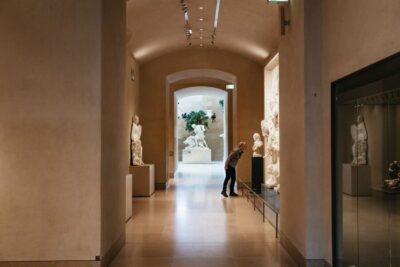
The Louvre is one of the route’s biggest visual rewards. From the Seine, you see the former royal palace as a long riverfront complex rather than only as the entrance to a museum.
The museum began as an idea in the 18th century for displaying masterpieces from the Crown collection. It opened in 1793 as the central museum of the Republic. Today, it is the world’s largest art and antiquities museum, with collections ranging from ancient civilizations to Western art through 1848.
The figures alone can be hard to grasp. The Louvre holds more than 500,000 works, with more than 36,000 on display at the end of 2019. A cruise cannot show you the Mona Lisa, Egyptian galleries, or grand interiors. What it can do is give you a clear sense of the palace’s scale and position beside the Seine.
I like this stop because it helps you make a decision about your own museum time. After seeing the Louvre from the water, you may better understand why an inside visit requires a serious block of time. If you have only a short stay in Paris, the river view gives you a worthwhile introduction without claiming to replace the museum itself.
Musée d’Orsay and the old railway station
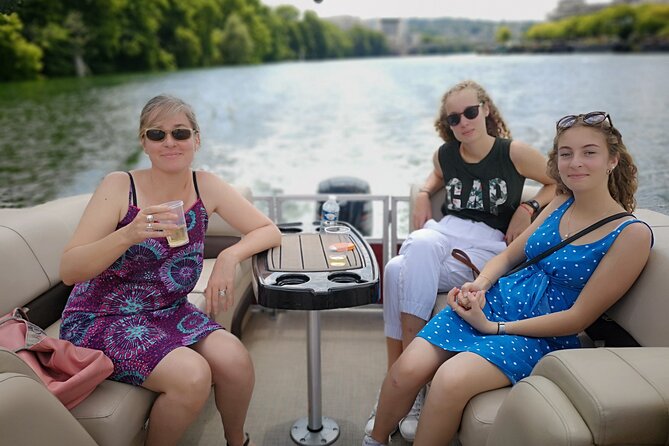
Across the river, the Musée d’Orsay appears in its former railway station. The station was built between 1898 and 1900 by architect Victor Laloux, then converted into a museum and opened in 1986.
The museum focuses on Western art from 1848 to 1914, including painting, sculpture, decorative arts, graphic art, photography, and architecture. It is especially important for Impressionist and Post-Impressionist art, with nearly 1,100 paintings in those categories out of more than 3,650 paintings overall.
The river view helps you notice the station’s unusual proportions. You see a grand civic building that was designed for transport and later given a new purpose as a museum. That change mirrors the wider story of Paris, where older structures often receive new life instead of simply disappearing.
If you plan to visit the Musée d’Orsay, the cruise offers a useful preview. You can spot the building from the water, understand its location on the left bank, and decide if it fits your museum plans. As with the Louvre, the boat gives you the exterior only.
National Assembly and the political riverfront
The route passes the National Assembly, a place tied to two centuries of French political life. Since 1789, French citizens have elected representatives at different times, though the method of election and the powers of the assembly have changed repeatedly.
The name National Assembly, first chosen in the fervor of 1789, disappeared for long periods before returning in 1946. That detail shows how closely the institution’s name and authority have followed France’s changing political system.
From the Seine, the building joins a run of grand official structures along the left bank. This is not a stop for entering a government building. It is a brief look at the physical setting of French national representation, with the river providing the clearest open view.
Under Alexandre III Bridge
Alexandre III Bridge is one of the most decorative crossings on the Seine. It was built for the 1900 Paris Universal Exhibition and intended to mark the alliance between France and Russia.
Tsar Nicholas II, Empress Alexandra Feodorovna, and French President Félix Faure laid the first stone in 1896. The bridge was designed by engineers Jean Résal and Amédée Alby, with architects Cassien-Bernard and Gaston Cousin.
The bridge links the Esplanade des Invalides with the Grand Palais and Petit Palais, both also connected with the 1900 exhibition. Passing underneath lets you see the ornate metal structure from a low viewpoint, while the route also places it within the larger ceremonial axis of the city.
This is one of the places where a private guide can add real value. The bridge is visually impressive, but its connection to the Franco-Russian alliance and the Universal Exhibition gives it meaning beyond decoration.
The Eiffel Tower as the final great view
The cruise ends its major sightseeing run with the Eiffel Tower, Paris’s most familiar landmark. Built by Gustave Eiffel and his team for the 1889 Universal Exhibition, the tower was originally called the 300-meter tower. It rises 324 meters above the city.
The tower was created to mark the centenary of the French Revolution. It later became the symbol of Paris and one of France’s leading cultural attractions, welcoming more than 300 million people since opening to the public.
Seeing it from the Seine gives you a clean sense of its height and setting. The view changes as the boat moves, which is more satisfying than seeing the tower only from one fixed street corner. You should not expect this cruise to include entry or a climb. Its value is the approach and the wide view, not access to the levels.
Because this is the last major sight in the route, the timing can work well for photographs. Exact conditions depend on the day, the light, and the boat’s position, so keep your phone or camera ready rather than waiting for a formal photo stop.
What $94.63 per person gets you
At $94.63 per person, this is not the cheapest way to see Paris from the Seine. Public sightseeing boats can cost less, especially if you are traveling alone or as a couple and mainly want a ride.
The price makes more sense when you use the private format. Your group receives a dedicated boat experience rather than a standard shared cruise, and the route covers many central landmarks in 90 minutes. For a family or a small group of friends, the cost can be easier to justify because you are paying for privacy, a direct meeting arrangement, and guided attention.
I would compare it with the cost of several separate sightseeing outings. Walking between all these sights takes time, and a museum visit brings its own admission costs and schedule. This cruise does not replace those activities, but it combines a wide city view with historical explanation in one compact ride.
The value depends on what you want. If your priority is the lowest possible fare, choose a public boat. If you want your own group together and prefer a calmer, guided look at central Paris, the higher price is easier to defend.
Who will enjoy this cruise most
I would recommend this experience for families, couples, and small groups that want an easy introduction to central Paris. The private setting is especially helpful when children are part of the group. Guide Diego has shown that the route can hold the attention of three children while still giving adults useful background.
It also suits people who want photographs of major sights without walking long distances between them. The route gives you several different kinds of Paris in one outing: medieval islands, royal architecture, art museums, government buildings, bridges, and the Eiffel Tower.
You may want something else if you prefer a long, detailed history tour at each site. The cruise passes many landmarks, so each explanation must remain fairly compact. You will also need a separate visit for museum interiors and closer access to the monuments.
The experience is offered in English, and most people can participate. Since the details do not specify exact boarding access or boat facilities, ask about those points if you have mobility needs or require particular onboard arrangements.
Booking, cancellation, and weather
You can cancel up to 24 hours before the scheduled start for a full refund. Changes or cancellations made less than 24 hours before departure are not accepted for a refund, and the cut-off follows local Paris time.
The activity requires good weather. If poor conditions force a cancellation, you are offered another date or a full refund. I would avoid placing this cruise on the final few hours of your Paris stay, especially if the boat ride is important to your plans.
Since the cruise starts and ends at 14 Quai François Mitterrand, allow enough time to reach the meeting point. The ticket is mobile, and confirmation arrives at booking, so keep the booking details easy to access on your phone.
Should you book Paris Water Way?
Book it if you want a private, well-covered view of central Paris and value a guide who can connect the sights as you move along the Seine. The route is strong, the 90-minute length is practical, and the private format makes it a better choice than a public cruise for families and small groups.
Skip it if your main goal is the lowest price or if you need a fully detailed visit inside each monument. At $94.63 per person, you are paying for privacy and a guided sightseeing route, not museum entry or an Eiffel Tower climb.
For a first look at Paris, especially with children or a group that wants a relaxed outing, I would consider it a sensible splurge. Choose a clear-weather time, arrive ready to watch both riverbanks, and treat the cruise as a smart introduction to the city rather than a replacement for its major museums.
FAQ
Where does the private cruise begin?
The cruise begins at 14 Quai François Mitterrand, 75001 Paris, France.
Where does the cruise end?
The activity ends back at the same meeting point where it begins.
How long does the cruise last?
The cruise lasts approximately one hour and 30 minutes.
Is the cruise private?
Yes. Only your group participates in the private tour or activity.
Is the cruise offered in English?
Yes. English is listed as an available language.
Which Paris sights are included along the route?
The route passes Île Saint-Louis, Île de la Cité, the Conciergerie and Palais de Justice, Pont Neuf, Pont des Arts, the Louvre, Musée d’Orsay, National Assembly, Alexandre III Bridge, and the Eiffel Tower.
What is the price?
The listed price is $94.63 per person.
Can I cancel for a full refund?
Yes. You can cancel at least 24 hours before the experience start time for a full refund. If poor weather cancels the activity, you are offered a different date or a full refund.
Just added around Paris
- Private Paris Marche d’Aligre Walking Tour with Tastings★ 5.0 · 8 reviews
- Private Louvre Museum Tour for Kids & Families with Alberto or his team in Paris★ 5.0 · 41 reviews
- Private Highlights of Paris Tuk-Tuk Experience★ 5.0 · 26 reviews
- Paris Latin Quarter Walking Tour: History & Culture – Small Group★ 5.0 · 14 reviews
- Private Highlights of Paris Bike Tour★ 4.5 · 15 reviews
- Paris Musee d’Orsay PRIVATE TOUR with a Local Private Guide★ 5.0 · 41 reviews
- Private Half Day Historic Tour★ 5.0 · 58 reviews
- Pere Lachaise Cemetery Paris – Exclusive Guided Walking Tour★ 5.0 · 72 reviews
Seine River Cruises, compared.
Louvre Guided Tour with Reserved Access & Boat Cruise
Read our review →
Big Bus Hop-On Hop-Off Tour with Optional Cruise
Read our review →
Tootbus Hop-on Hop-off with optional river cruise
Read our review →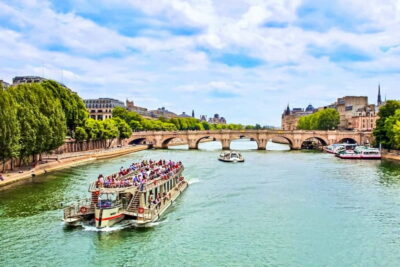
Seine Cruise & Crepe Tasting near the Eiffel Tower
Read our review →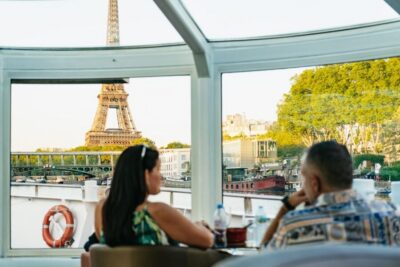
Louvre Museum Entry Ticket With Host and River Cruise
Read our review →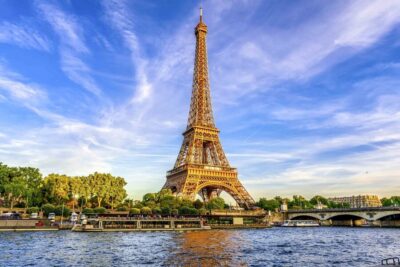
Eiffel Tower Access by Elevator & Seine River Cruise
Read our review →Browse the lists this tour appears in