
Reviewed · PARIS VINTAGE CAR TOURS
The Essentials of Paris in a Classic Open Top Car Citroën DS
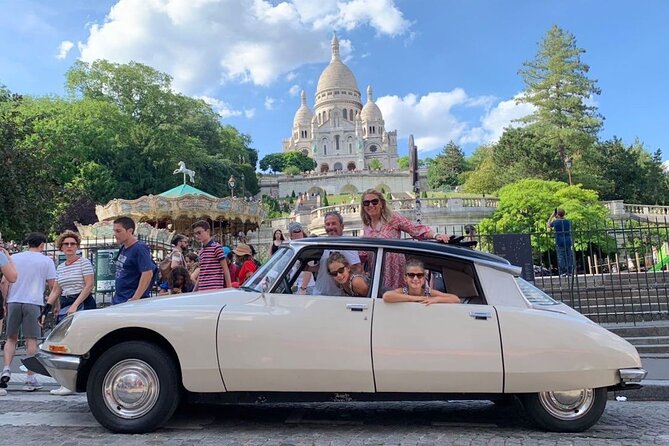
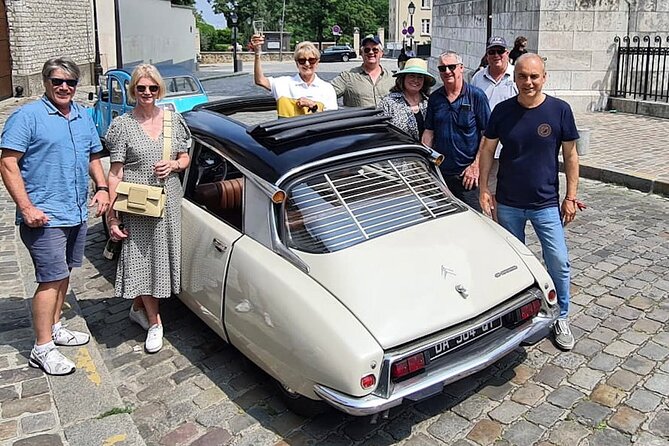
Paris is hard to grasp from a single street-level stroll. This private ride in a classic open-top Citroën DS gives you a fast, stylish overview, from Place de la Concorde and the Eiffel Tower to Montmartre, Notre-Dame, and the Latin Quarter. Guide Benjamin drives and narrates, stopping for photos along the way.
I like the private format, since you can ask questions and shape the conversation around your interests. I also like the hotel pickup and drop-off, which saves time and spares you from learning Paris transit on your first day. The main drawback is traffic. At busy times, you may spend a fair share of the three hours sitting in slow-moving streets, and the open car has no audio system, so hearing Benjamin may be difficult.
Key points to know before booking
- Classic Citroën DS: You ride in a heated vintage car with comfortable seats and plenty of legroom, with the roof open for better views when conditions allow.
- Benjamin is your private guide: He drives, explains the city, answers questions, and can offer suggestions for the rest of your stay.
- A broad Paris overview: The route covers major sights from the Louvre and Champs-Élysées to Montmartre, the Latin Quarter, Saint-Germain-des-Prés, and the Seine.
- Photo stops rather than interior visits: The timed stops are about 15 minutes and admission is not included because the tour focuses on seeing the city from the car.
- Pickup has limits: Pickup and drop-off are available within much of central Paris, but not in the 3rd, 4th, 10th, 11th, 12th, 19th, or 20th arrondissements.
- Best for adults and older children: Children under 10 are not allowed because the rear seats do not have seat belts.
Why a Citroën DS is a smart way to see Paris quickly
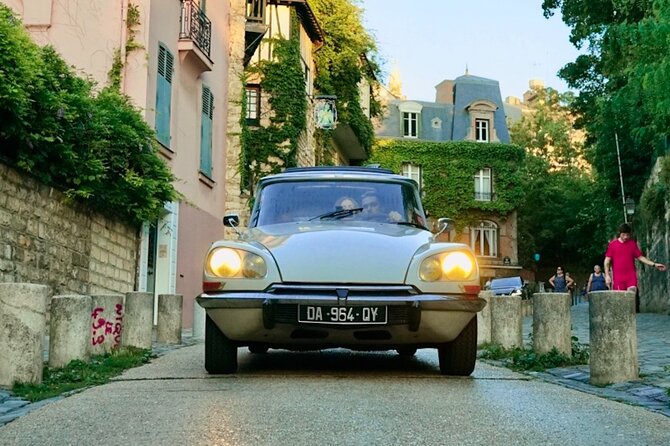
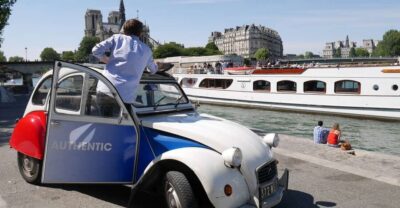
The car is the main event here, not just transportation. A classic Citroën DS gives the outing a sense of occasion that a standard taxi cannot match. The heated cabin and generous legroom help, especially during a long ride through central Paris, while the open roof lets you look up at domes, façades, monuments, and bridges.
The car also makes practical sense for a first visit. Paris spreads its major sights across several districts, and walking between them can consume most of a day. In roughly three hours, you can connect the grand axis from La Madeleine and the Tuileries to the Champs-Élysées, then cross the Seine toward the Eiffel Tower, Montmartre, Notre-Dame, and the Left Bank.
This is a private tour for your group of up to four people. That matters because you do not have to wait for strangers or follow a fixed group conversation. You can ask Benjamin to explain French politics at the National Assembly, point out an old cinema location in Montmartre, or suggest what to see after the ride.
The tradeoff is speed. You will see a great deal, but you will not explore every stop in depth. The listed stops at Place de la Concorde, the Champs-Élysées, the Arc de Triomphe, the Eiffel Tower, Montmartre, Sacré-Cœur, Notre-Dame, and the Panthéon each allow about 15 minutes. That is enough for orientation and photos, not a full visit inside each monument.
More 2CV and vintage car tours in Paris:
- Paris: Discover Paris by Night in a Vintage Car with a Local
★ 4.6 · 1,058 reviews - Paris Private Flexible Duration Guided Tour on a Vintage Sidecar
★ 5.0 · 776 reviews - Vintage 2CV Adventure: 2 -Hour Paris Secrets Tour
★ 4.5 · 488 reviews
From La Madeleine to the Champs-Élysées
The route begins around central Paris, where La Madeleine provides an impressive first look at the city’s grand style. Its neoclassical exterior resembles a classical temple, while the interior is richly decorated. You may see it from outside rather than enter, so consider this an architectural introduction rather than a church visit.
The Tuileries Gardens lead naturally toward Place de la Concorde. This formal garden is a pleasant contrast to the traffic around it, with broad paths linking the Louvre and the square. From the car, you can appreciate the long perspective across central Paris, though a short stop will not replace a proper garden walk.
Place de la Concorde receives a 15-minute stop. Its fountains, statues, and wide open space make it one of Paris’s most dramatic urban rooms. The Luxor Obelisk is the centerpiece, an ancient Egyptian monument that brings a striking piece of distant history into the middle of the French capital.
You then pass the Palais Bourbon, home of the French National Assembly, along the Seine. The building gives the riverfront a formal political air. The Champs-Élysées follows, with luxury shops, cafés, and heavy traffic leading toward the Arc de Triomphe.
The avenue can be impressive, but it is also one of the places most likely to slow the tour. Benjamin’s own suggested travel window is between 10 a.m. and 4 p.m., when traffic is usually easier than during the busiest periods. Even then, Paris traffic remains unpredictable.
The Arc de Triomphe and Eiffel Tower
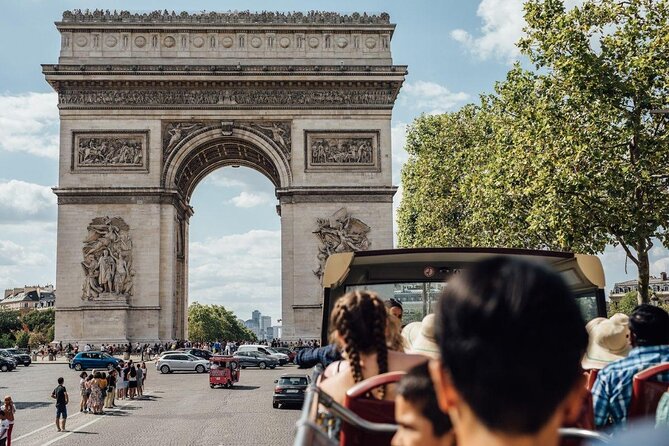
The 15-minute stop at the Arc de Triomphe gives you time to take pictures and understand its place at the center of the city’s grand avenues. The monument honors French military victories and offers one of the most recognizable views down the Champs-Élysées. This experience does not include climbing to the roof or entering the monument.
The route then moves toward the Eiffel Tower, with Rue de l’Université offering a more intimate setting near the famous structure. The street is lined with elegant townhouses and cafés, and it can provide a better photographic approach than simply stopping beside a large traffic circle.
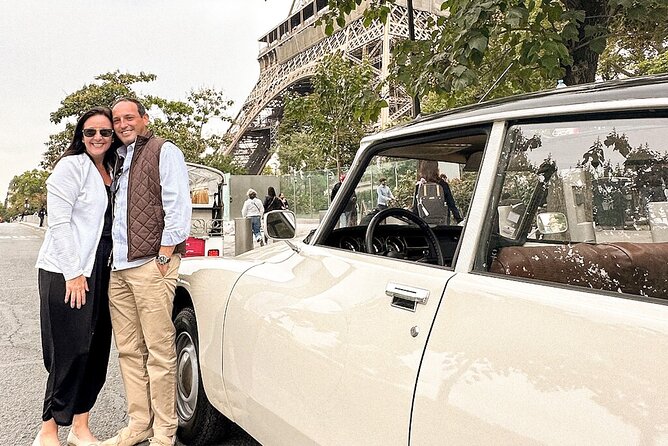
The Eiffel Tower stop also lasts about 15 minutes. You will have time to admire the iron structure, take photographs, and ask Benjamin about its place in Paris. You will not have time to go up the tower, so book a separate timed visit if you want the summit or second-floor views.
Nearby sights include the École Militaire, the grand military school built in the 18th century, and the Invalides with its gold dome and connection to Napoleon’s tomb. The Pont Alexandre III adds another fine view, with ornate lamps and sculpted decoration over the Seine.
This part of the route shows why the car is useful. You can connect several distant sights without spending your energy walking from one major monument to the next. You still need to accept that a panoramic tour gives you an outside view, not the full experience of each attraction.
Montmartre, from Pigalle to Sacré-Cœur
Montmartre is the most varied section of the outing. The route passes through Pigalle, once famous for cabarets and nightlife, including the Moulin Rouge with its red windmill. You may also hear about Le Chat Noir, the old cabaret linked with artists and writers.
The road then turns into the quieter streets of the hill. Rue de l’Abreuvoir, La Maison Rose, the Clos Montmartre vineyard, and Place du Tertre show the village-like side of the district. Place du Tertre remains associated with painters working around cafés, though the area can feel busy and commercial at popular times.
The route includes Rue Lepic, the Café des 2 Moulins associated with the film Amélie, the Moulin de la Galette, and the former home connected with Van Gogh. These details give the neighborhood more depth than a simple drive to the basilica. You see how Montmartre combines art, cinema, old windmills, churches, cafés, and steep stairways.
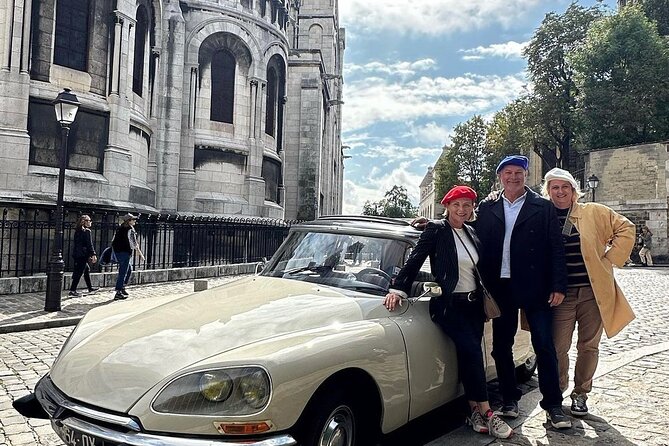
The 15-minute Montmartre stop and the separate 15-minute Sacré-Cœur stop are valuable, but they are short. You may have time to admire the basilica and look across Paris from the hill, yet you will not have time for a long stairway walk, a relaxed café stop, and a full church visit in one go.
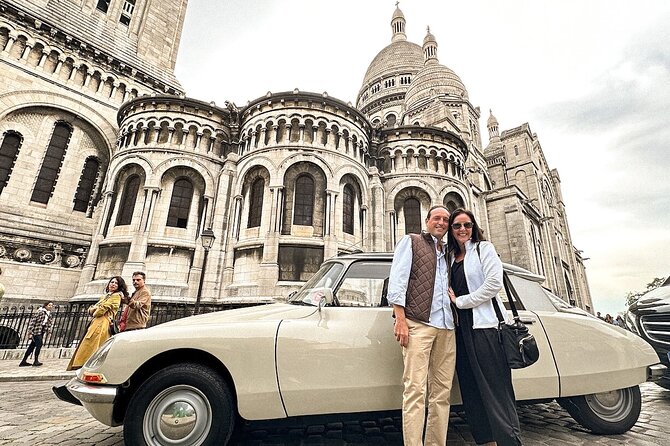
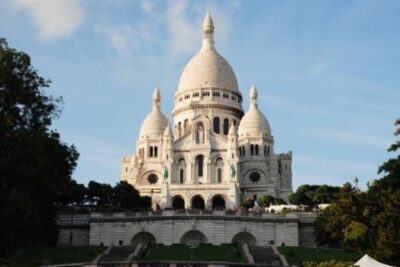
Sacré-Cœur is likely to be the visual high point of the tour. Its white domes rise above the city, and the view from Montmartre helps you understand Paris’s layout. If this is the part you most want to enjoy, tell Benjamin early and use the stop for the basilica and view rather than trying to cover every nearby street.
Same city, a completely different afternoon:
- Paris: Louvre Museum Timed-Entrance Ticket
★ 4.6 · 71,977 reviews - Disneyland® Paris 1-Day Ticket
★ 4.6 · 49,412 reviews - Paris: Versailles Palace and Gardens Full Access Ticket
★ 4.6 · 41,579 reviews - Paris: Evening River Cruise with Music
★ 4.4 · 22,721 reviews
The Île de la Cité and the Latin Quarter
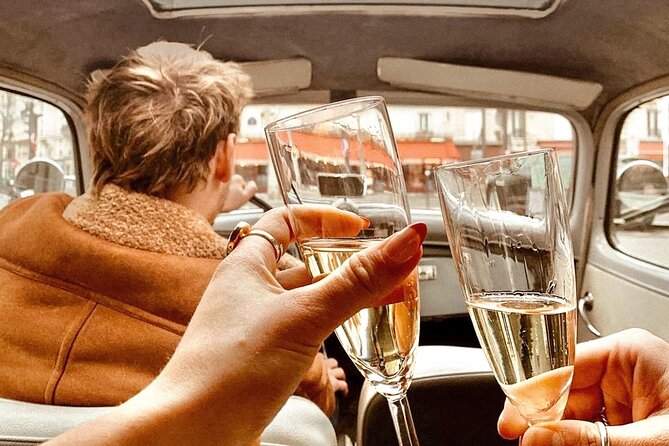
The tour crosses back toward the historic center, including Île de la Cité, the island at the heart of Paris. Notre-Dame receives a 15-minute stop. You can look at the Gothic exterior, discuss its long religious and architectural story, and take photographs from around the cathedral.
Nearby sights include Sainte-Chapelle, famous for its stained glass, and 36 Quai des Orfèvres, associated with Paris’s criminal investigation unit. The route may also pass Shakespeare and Company, the beloved English-language bookshop near the Seine. These are excellent places to return to on foot because the tour cannot provide enough time for interior visits.
Île Saint-Louis offers a quieter contrast, with narrow streets, old townhouses, and cafés. The Pont Neuf, Paris’s oldest standing bridge, and Place Dauphine add more views of the river and the historic center. The Seine itself is a constant part of the experience, with bridges and embankments appearing between districts.
The 15-minute Panthéon stop brings you into the Latin Quarter. The building is a grand neoclassical mausoleum honoring major French figures. Nearby, you may pass Saint-Étienne-du-Mont, the Sorbonne, Place de la Contrescarpe, Place de l’Estrapade, and an address linked with Ernest Hemingway’s Paris years.
This is a useful part of the tour for first-time visitors because the Latin Quarter contains several places that are easy to overlook when you focus only on the Eiffel Tower and Louvre. The drawback is that the district rewards slow walking. A drive gives you context, but you should return later for its cafés, churches, bookstores, and smaller streets.
Saint-Germain-des-Prés and the grand central districts
The route continues through the Left Bank toward Saint-Germain-des-Prés. You will see places linked with Paris’s literary and café culture, including Les Deux Magots, Café de Flore, the Abbey of Saint-Germain-des-Prés, and Rue de Buci.
These café names carry a strong cultural association, but this is not a café tasting tour. If you want to sit down for coffee, people-watch, or browse the food shops along Rue de Buci, plan a return visit. The car gives you a useful first look and lets Benjamin explain what makes the area different from the Latin Quarter.
The itinerary also includes Saint-Sulpice, the French Senate in the Palais du Luxembourg, and the Jardin du Luxembourg. The gardens are particularly worth noting. Their fountains, paths, statues, and chairs provide one of the best places in Paris for a slower afternoon after the tour.
On the Right Bank, the route may pass the Bourse de Commerce, Place des Victoires, Galerie Vivienne, the Palais Royal, and Place de Valois. Galerie Vivienne offers elegant covered passages with boutiques and cafés, while the Palais Royal combines formal gardens, arcades, and the striped columns by Daniel Buren.
You will also pass Place Vendôme and the Opéra Garnier. Place Vendôme is associated with luxury jewelry and grand façades, while the opera house is one of the city’s most ornate buildings. La Trinité and Parc Monceau add less obvious sights to the route, giving you ideas for future walks beyond the standard first-visit circuit.
What the three hours are really worth
The price is $480.44 per group of up to four people. Divided among four, that works out to about $120 per person, before considering the value of private transportation and a personal guide. For two people, the per-person cost is much higher, so the experience makes the most financial sense for a small group that wants comfort and convenience.
You are paying for more than a car ride. The package includes Benjamin as a private guide, a professional licensed driver with passenger insurance, bottled water, heating, comfortable seats, and drop-off at a location of your choice within the permitted parts of Paris. You also avoid arranging taxis between widely separated districts.
The price is harder to justify if you mainly want museum interiors or long time at individual monuments. The Louvre, Musée d’Orsay, Sainte-Chapelle, the Eiffel Tower, and the Arc de Triomphe all need more time than this tour provides. Think of the outing as a city orientation with photo stops, not as a substitute for admission tickets.
Traffic is the largest value question. One three-star experience specifically involved heavy traffic and difficulty hearing the guide. Benjamin’s response made clear that traffic is part of driving through Paris, and the three-hour schedule includes time lost on the road. You should book this knowing that the car cannot bypass congestion and that there is no microphone or audio system.
For the clearest narration, sit close to Benjamin and ask him to speak up if needed. If anyone in your group has hearing difficulties, this is an important consideration. The open car can also be affected by wind, city noise, and weather.
Pickup, timing, and practical details
Pickup and drop-off are available at many locations inside Paris, but not in the 3rd, 4th, 10th, 11th, 12th, 19th, or 20th arrondissements. Le Marais, Bastille, République, and Gare du Nord are specifically excluded. Confirm your hotel before booking, or use the suggested meeting points at Hôtel Crillon on Place de la Concorde or the Panthéon.
The recommended start window is between 10 a.m. and 4 p.m. This is intended to reduce the effect of traffic jams. You receive confirmation at booking, and the experience is offered in English.
Children under 10 cannot participate because the back seats do not have seat belts. Service animals are allowed, and most people can take part. Alcoholic drinks are not included, though they are available for purchase.
The tour requires good weather. If poor weather causes cancellation, you are offered another date or a full refund. You can cancel for a full refund up to 24 hours before the start time. The open-top design is a major attraction, but it also means you should dress for changing conditions.
Who should book this Paris car tour?
I would choose this for a first visit, especially if you have only a short stay and want to learn how the main districts fit together. It also suits families with children aged 10 and over, couples seeking a special car experience, and small groups that value a private guide over the lowest possible price.
It is a good opening activity because Benjamin can suggest places to revisit. After seeing Montmartre from the car, you may decide to return for a longer walk. After passing the Louvre, Musée d’Orsay, or Sainte-Chapelle, you can choose which one deserves your limited museum time.
I would not choose it as your only Paris sightseeing plan if you want substantial time inside monuments, quiet museum visits, or long meals. I would also think twice if anyone in your group needs amplified narration, since the lack of an audio system can make conversation difficult in traffic.
Should you book The Essentials of Paris?
Book it if you want a comfortable, private overview with a memorable vintage car, a wide route, and direct help from Benjamin. The strongest reasons are the classic Citroën DS, the small-group setting, the hotel pickup, and the chance to see major sights across Paris without organizing several taxi rides.
Skip it if the $480.44 price feels high for outside views and short stops, or if you would rather spend the same money on museum tickets and a longer walking tour. For many people, the best plan is to use this as a first-day orientation, then return on foot to the places that catch your interest.
FAQ
How long is the Citroën DS tour?
The experience lasts approximately three hours.
How many people can join the private tour?
The price covers one group of up to four people. Only your group participates.
Is hotel pickup included?
Yes. Pickup and drop-off are available at many locations inside Paris, with specific arrondissement and neighborhood exclusions. If your hotel is not available, you can meet at Hôtel Crillon on Place de la Concorde or at the Panthéon.
Are admission tickets included?
The tour lists free admission for the scheduled sightseeing stops, but it does not include interior visits or paid entry to attractions such as the Eiffel Tower, Louvre, Musée d’Orsay, Sainte-Chapelle, or the Arc de Triomphe.
Can children join the tour?
Children under 10 are not allowed because the back seats do not have seat belts. Service animals are allowed.
What happens if the weather is poor?
The experience requires good weather. If it is canceled because of poor weather, you will be offered another date or a full refund. You can also cancel for a full refund up to 24 hours before the start time.
Just added around Paris
- Private Paris Marche d’Aligre Walking Tour with Tastings★ 5.0 · 8 reviews
- Private Louvre Museum Tour for Kids & Families with Alberto or his team in Paris★ 5.0 · 41 reviews
- Private Highlights of Paris Tuk-Tuk Experience★ 5.0 · 26 reviews
- Paris Latin Quarter Walking Tour: History & Culture – Small Group★ 5.0 · 14 reviews
- Private Highlights of Paris Bike Tour★ 4.5 · 15 reviews
- Paris Musee d’Orsay PRIVATE TOUR with a Local Private Guide★ 5.0 · 41 reviews
- Private Half Day Historic Tour★ 5.0 · 58 reviews
- Pere Lachaise Cemetery Paris – Exclusive Guided Walking Tour★ 5.0 · 72 reviews
Paris Vintage Car Tours, compared.
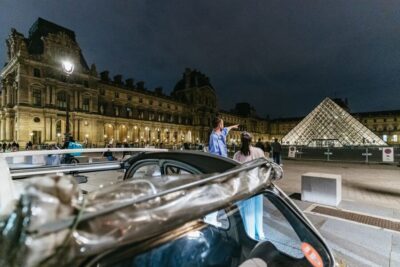
Discover Paris by Night in a Vintage Car with a Local
Read our review →
Paris Private Flexible Duration Guided Tour on a Vintage Sidecar
Read our review →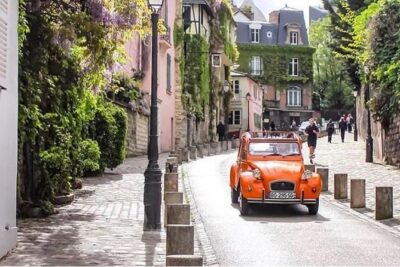
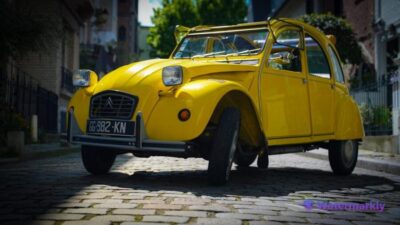
Paris Vintage Private City Tour on a Sidecar Motorcycle
Read our review →
Versailles Royal Palace & Gardens Private Tour by Golf Cart
Read our review →
Browse the lists this tour appears in