
Reviewed · PARIS ART MUSEUM TOURS
Rigoletto at the Jacquemart-André Museum
The unusual pleasure here is opera at arm’s length. Instead of watching a large production from a distant theater seat, you follow Rigoletto through the Jacquemart-André Museum’s elegant salons, with singers moving close to the audience. The small cast and trio of piano, violin, and cello give Verdi’s drama a direct, almost private feel.
I like the way the evening joins two Paris pleasures: a performance of one of opera’s strongest family dramas and a private look at the museum’s permanent collection after normal visiting hours. I also like the shorter, focused adaptation, which can make opera easier for a first-timer to follow. The main caution is the $348.07 price, plus the fact that sightlines and seating may not be equally good in every room.
Key points to know
- Rigoletto in museum salons: Follow the story through the first-floor rooms of the Jacquemart-André Museum rather than a conventional theater.
- Five principal roles: Hear Rigoletto, Gilda, the Duke of Mantua, Sparafucile, and Maddalena in a concentrated version of Verdi’s opera.
- Close-range music: A piano, violin, and cello replace a full orchestra, bringing the singers’ voices very near.
- Champagne at intermission: The drink gives the three-hour evening a distinctly Parisian pause.
- Private art viewing included: The ticket includes access to the museum’s prestigious permanent collection in its salons.
- Plan for a premium evening: The event costs $348.07 per person and begins at 8:30 p.m.
Rigoletto moves through the Jacquemart-André salons
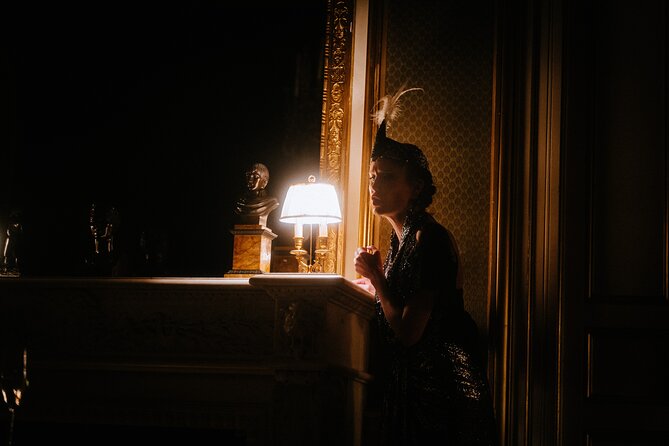
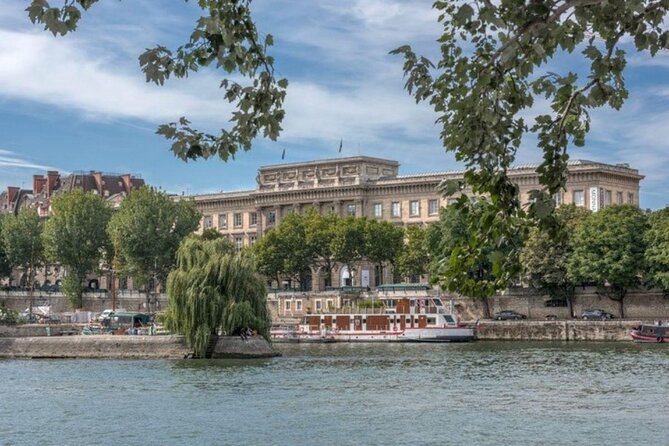
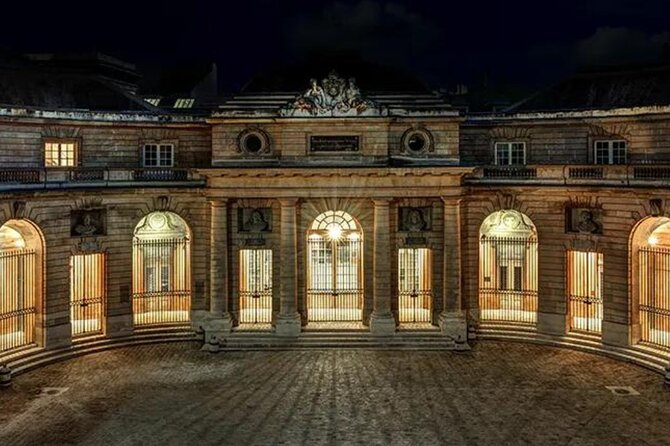
This is not a standard performance of Rigoletto in a grand opera house. The production takes the essential characters and story, then places them inside the Jacquemart-André Museum, the former home of Édouard André and Nélie Jacquemart.
You begin at the museum for an 8:30 p.m. start. The setting does much of the work before the first note. You are surrounded by private rooms, paintings, furnishings, and decorative details rather than rows of theater seats and a deep stage. The result is a production built around proximity.
The adaptation centers on five roles:
- Rigoletto, the baritone
- Gilda, the soprano
- The Duke of Mantua, the tenor
- Sparafucile, the bass
- Maddalena, the mezzo-soprano
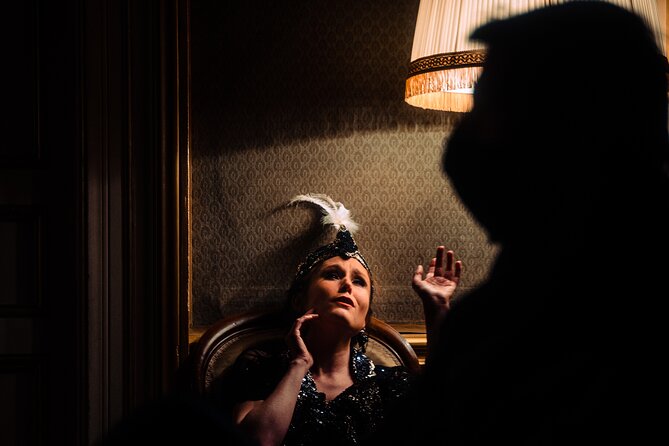
This is enough vocal power to carry the central conflict without asking you to keep track of a large chorus or a crowded supporting cast. Rigoletto’s love for his daughter, the Duke’s careless seduction, Gilda’s idealism, and the final plot of revenge remain at the heart of the evening.
For someone new to opera, this focused cast can be helpful. You have fewer names and storylines to sort out, and the singers are physically close enough that facial expression and gesture matter. For a seasoned opera fan, the attraction is different: you hear familiar music in a smaller acoustic space and watch the drama unfold at unusually close range.
More art museums in Paris:
- Paris: Orsay Museum and Rodin Museum Combo Entry Ticket
★ 4.4 · 470 reviews - Paris: Picasso Museum Ticket & Optional Seine River Cruise
★ 4.7 · 277 reviews - Paris: Rodin Museum Entry Ticket
★ 4.5 · 220 reviews
Patrizia di Paolo’s staging keeps the performance close
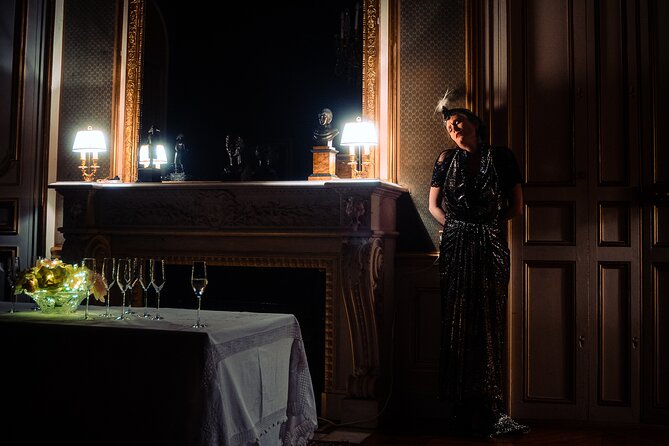
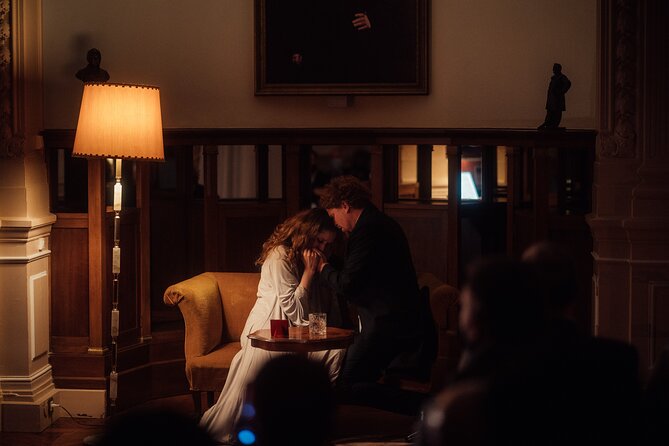
Patrizia di Paolo created the staging, which shifts the action between several museum rooms. The audience does not simply sit in one fixed auditorium while the singers perform far away. Some sections take place with you seated, while other passages bring the performers into the room around you.
That arrangement creates the evening’s strongest artistic feature. The singers are not tiny figures framed by a distant proscenium. Their voices and expressions reach you directly, and the action can feel like a private performance arranged for a small circle of people.
The production uses costumes from Venice’s Atelier Nicolao. That detail helps connect the show to the Italian tradition behind the opera, while the museum rooms supply an entirely different kind of visual setting. The contrast between historic interiors and theatrical costume is part of the appeal.
There is a practical tradeoff. A room designed for art and domestic life is not automatically a perfect theater. Sightlines can change depending on where you sit or stand. In one section, seating may be limited, and a crowded room can make it difficult to see the artists clearly. The second room has chairs, but you may still want a place near the front for the best view.
If standing for long stretches is difficult, this matters. Seating is available during parts of the evening, but not every section offers the same comfort. I would contact the provider before booking if you need dependable seating throughout.
A chamber ensemble replaces the opera orchestra
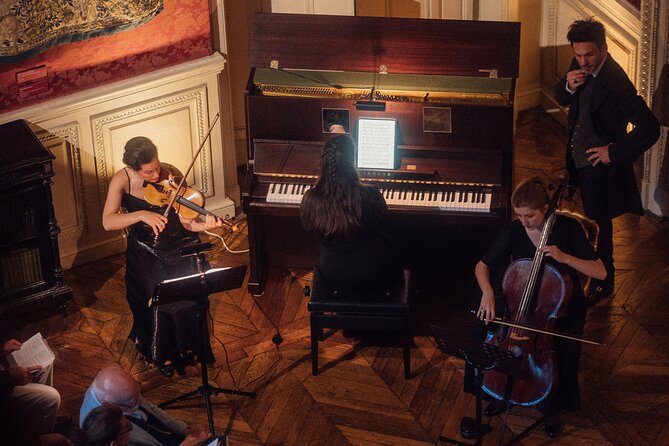
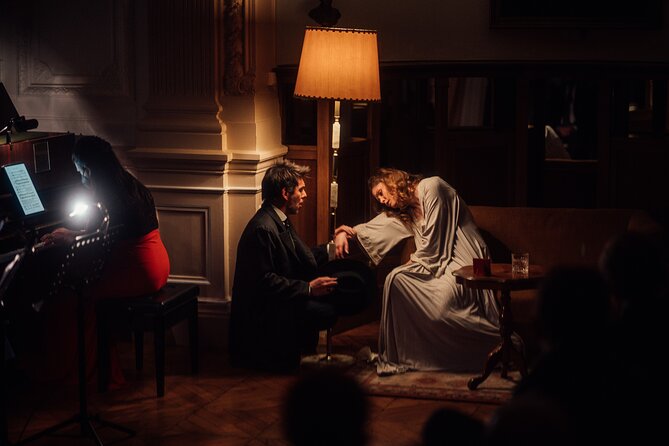
The musical accompaniment comes from three musicians: piano, violin, and cello. This is a major change from the full orchestral sound you would expect at the Opéra Bastille or another large house.
You will not hear the broad surge of a full orchestra filling a theater. Instead, the reduced arrangement leaves more space around the voices. The piano carries much of the musical structure, while the violin and cello add color and emotional weight. The smaller ensemble also fits the museum rooms better than a large orchestra could.
I like this format for a first opera because it keeps the vocal lines clear. You can pay attention to the words, the relationships, and the changing mood without being overwhelmed by a large production. If you already know Rigoletto from major opera houses, you should book this for intimacy and detail, not for orchestral scale.
The close acoustics may also expose more of the singers’ work. There is less distance between you and the performance, so the strength of the voices becomes an important part of the experience. The production has received particularly strong praise for the quality of the singing and for the way the small room makes each voice feel unusually present.
The museum collection adds a second experience
The ticket includes a private tour of the permanent collection in the first-floor salons. This is more than a decorative backdrop. The museum was built around the private world of Édouard André and Nélie Jacquemart, and the performance uses those rooms as its setting.
You have the chance to see the salons as part of an evening program rather than rushing through them during a daytime museum visit. Paintings, furnishings, and art objects become part of the atmosphere around the opera. The rooms give the evening a sense of place that a normal theater cannot reproduce.
The art viewing is also why this experience may work well for a couple or a small group with different interests. One person can come for Verdi, another for the museum, and both parts are built into the same night. You are not paying for a separate museum visit and a separate performance.
Still, keep the balance in mind. This is not a full museum tour with unlimited time to study every object. The art serves as part of the evening’s setting and private viewing. If your main goal is detailed art scholarship, visit the museum separately or allow another visit for a slower look.
Same city, a completely different afternoon:
- Paris: Louvre Museum Timed-Entrance Ticket
★ 4.6 · 71,977 reviews - Disneyland® Paris 1-Day Ticket
★ 4.6 · 49,412 reviews - Paris: Versailles Palace and Gardens Full Access Ticket
★ 4.6 · 41,579 reviews - Paris: Evening River Cruise with Music
★ 4.4 · 22,721 reviews
Champagne at intermission gives the evening its Paris rhythm
A glass of Champagne is served at intermission. It is a modest detail, but it changes the pace of the night. Instead of leaving the building, searching for a crowded bar, and trying to return on time, you pause among the museum rooms with a drink in hand.
The break also helps make the shorter adaptation feel like a complete evening rather than a compressed concert. You have a moment to reset before the next section and to take in the surroundings.
Do not expect a full dinner. The published experience specifies Champagne, and one account noted that small savory or sweet bites would have been welcome with it. If you need a meal, plan that separately before or after the 8:30 p.m. start. The listed duration is about three hours, so the night can run late enough that dinner timing deserves some thought.
The Champagne is best viewed as part of the setting and service, not as the reason to choose the event. The real value comes from the music, the museum, and the close staging.
What the $348.07 price really buys
At $348.07 per person, this is a costly night out. You are paying more than the price of a conventional concert ticket, so the question is not simply whether you like Rigoletto. The question is whether the combined experience is worth the premium.
The price includes the opera performance, the chamber ensemble, the Champagne intermission, and access to the museum’s permanent collection in a private evening setting. It also pays for the unusual scale of the production. Five singers and three musicians perform close to the audience in rooms not designed for mass entertainment.
I would consider the price easier to justify for a special occasion, a repeat visit to Paris, or an opera fan who has already seen standard theater productions. It is harder to recommend as a casual first choice for someone who mainly wants the lowest-cost way to hear Verdi.
The smaller cast can also be a value for first-time opera attendees. You do not need to commit to a huge, formal production with a long cast list and an imposing theater routine. The story is concentrated, the breaks make the evening feel manageable, and the museum gives you something to enjoy beyond the music.
On the other hand, do not pay this price expecting a full-scale opera house production. You will not get a large orchestra, a massive chorus, or a distant stage picture. You get access and intimacy, along with the setting of a prestigious Paris museum.
Comfort, clothing, and practical planning
The start time is 8:30 p.m., and the experience lasts about three hours. Make sure your evening plans leave enough time to reach the museum without rushing. The venue is near public transportation, so you can use Paris transit to get there, though the supplied information does not specify a particular station or route.
Evening dress is worth taking seriously. The setting is a prestigious museum, and the organizers have requested evening wear. You do not need to treat this like a royal gala, but polished clothing is the sensible choice. Dressing appropriately also helps the evening feel coherent rather than like a hurried stop between daytime sightseeing plans.
The experience is offered in English, and most people can participate. The main physical concern is the room arrangement. Parts of the performance may involve standing, and seating is not equally plentiful in every room. If you have mobility concerns, ask ahead about seating arrangements rather than assuming a chair will be available at every stage.
A mobile ticket is provided. Confirmation arrives within 48 hours of booking, subject to availability. Because the event is popular and is booked an average of 66 days ahead, last-minute planning may not be wise, especially if your Paris dates are fixed.
Free cancellation is available up to 24 hours before the local start time. If you cancel later, the payment is not refunded, and changes made within that final 24-hour period are not accepted.
Who will enjoy this version of Rigoletto
I would recommend it most strongly if you fit one of these profiles:
- You want a special Paris evening built around both art and music.
- You enjoy opera but prefer a close, small-scale production to a large theater.
- You are new to opera and want a more focused introduction to the form.
- You are marking an anniversary, birthday, or other important occasion.
- You have already seen Rigoletto in a traditional house and want a different way to hear it.
I would be more cautious if your priority is a full orchestra, a large chorus, or guaranteed theater-style seating. You should also think twice if the price would make the rest of your Paris budget uncomfortable.
The show’s intimate approach is its greatest strength and its clearest limitation. It can make the music feel immediate and personal, but it also means the room, seating, and sightline matter more than they would in a conventional auditorium.
Should you book Rigoletto at the Jacquemart-André Museum?
Book it if you see the evening as a complete Paris event rather than simply an opera ticket. The combination of Verdi, five principal singers, three chamber musicians, museum salons, private art viewing, and Champagne is genuinely unusual.
I especially like it for someone who wants to try opera without committing to a massive production. The focused story, close staging, and room-by-room movement give you a clear way into the drama. Just keep your expectations precise: this is an intimate adaptation, not a full opera-house spectacle.
At $348.07, I would reserve it for a night you want to remember. Check the seating situation if standing is difficult, dress for the setting, arrive ready for a late evening, and book well ahead if your schedule is firm. For the right audience, the museum setting may be as memorable as the final note.
FAQ
Where does Rigoletto take place?
The performance takes place in the Jacquemart-André Museum in Paris, using the salons on the first floor.
What time does the experience start?
The start time is 8:30 p.m.
How long does the evening last?
The experience lasts approximately three hours.
Is Champagne included?
Yes. A glass of Champagne is served during intermission.
What music and performers are included?
The adaptation focuses on Rigoletto, Gilda, the Duke of Mantua, Sparafucile, and Maddalena. The accompaniment is provided by piano, violin, and cello.
Can I cancel for a refund?
Yes. You can cancel up to 24 hours before the local start time for a full refund. Cancellations or changes made less than 24 hours before the start are not accepted and are not refunded.
Just added around Paris
- Private Paris Marche d’Aligre Walking Tour with Tastings★ 5.0 · 8 reviews
- Private Louvre Museum Tour for Kids & Families with Alberto or his team in Paris★ 5.0 · 41 reviews
- Private Highlights of Paris Tuk-Tuk Experience★ 5.0 · 26 reviews
- Paris Latin Quarter Walking Tour: History & Culture – Small Group★ 5.0 · 14 reviews
- Private Highlights of Paris Bike Tour★ 4.5 · 15 reviews
- Paris Musee d’Orsay PRIVATE TOUR with a Local Private Guide★ 5.0 · 41 reviews
- Private Half Day Historic Tour★ 5.0 · 58 reviews
- Pere Lachaise Cemetery Paris – Exclusive Guided Walking Tour★ 5.0 · 72 reviews
Paris Art Museum Tours, compared.
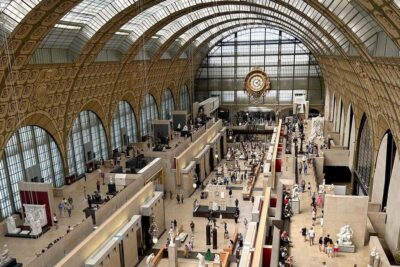
Orsay Museum and Rodin Museum Combo Entry Ticket
Read our review →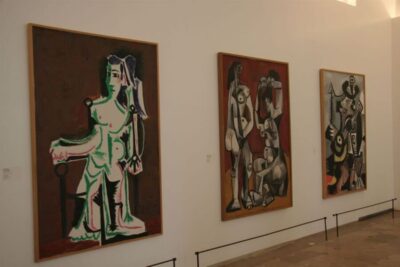
Picasso Museum Ticket & Optional Seine River Cruise
Read our review →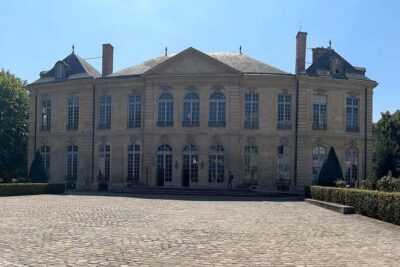
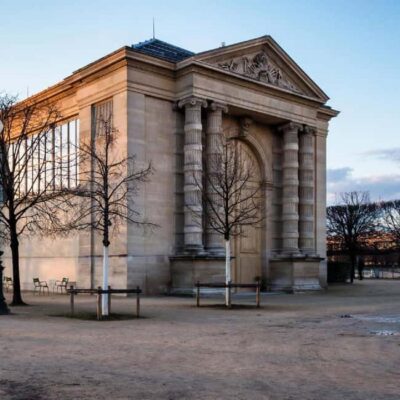
Musée de l’Orangerie Access With Seine River Cruise
Read our review →
Musée de l’Orangerie Flexible Entrance Ticket in Paris with Audio
Read our review →
Louis Vuitton Foundation Exterior Walking Tour and Premium Entry
Read our review →
Rodin Museum Skip-the-line Entry Ticket with Audio
Read our review →
Browse the lists this tour appears in