
Reviewed · MUSéE D’ORSAY TOURS
Family Tour at the Musée d’Orsay
The clever idea here is to turn the Musée d’Orsay into a treasure hunt, not a march past famous paintings. While you see Monet, Degas, Van Gogh, Gauguin, Rodin, and Cézanne, your children work through clues suited to their age. I like the no-line entry and the private format, which lets your guide adjust the pace instead of dragging the whole family through a fixed script. The drawback is the price: $702.93 for up to four people is a serious outlay for a two-hour museum visit.
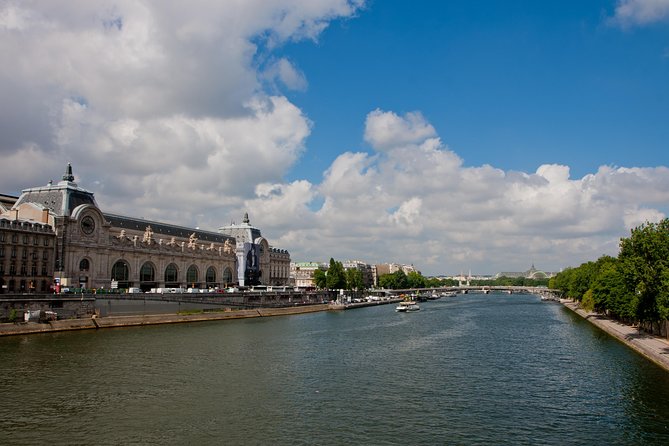
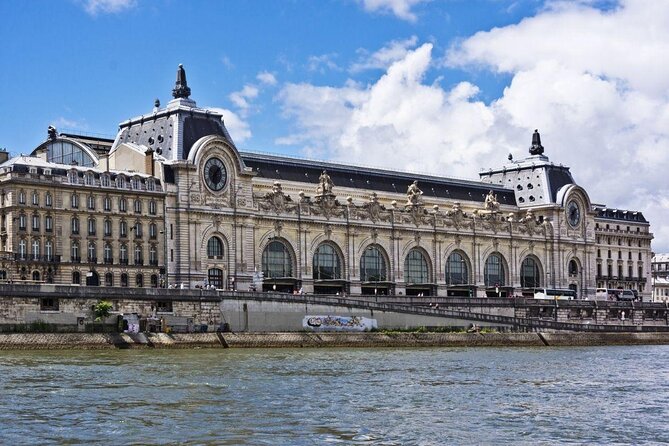
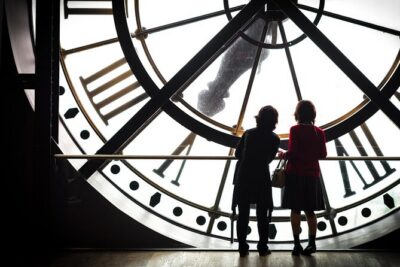
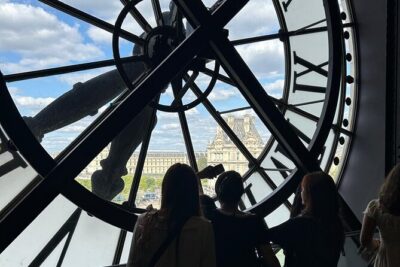
I also like the way this tour uses the building itself as part of the story. The huge clock, old railway-station structure, Paris rooftops, and museum cafés give children something to notice between paintings. Two hours is a sensible limit for young attention spans, but older children who want a detailed art lesson may find the visit too brief.
Key points to know before booking
- A private two-hour visit keeps the pace focused on your family and your children’s interests.
- Skip-the-line admission saves time at one of Paris’s most popular museums.
- Each child receives an activity booklet with puzzles and clues tied to the artworks.
- The Great Clock and former railway station make the building itself part of the adventure.
- Impressionist highlights include Monet, Degas, Cézanne, Van Gogh, and Gauguin, with explanations shaped around the children’s ages.
- A museum café stop and rooftop views add a relaxed finish to the art visit.
Starting beneath the Musée d’Orsay’s giant clock
You meet your guide in front of the Musée d’Orsay at 75007 Paris. The tour begins with skip-the-line tickets and an activity booklet for each child, so there is no need to spend the opening minutes standing in an entrance queue.
That matters with children. A long wait before the first painting can drain patience before the museum visit has even started. Here, you move inside quickly and begin with one of the building’s best visual clues: the enormous clock that recalls the site’s former life as a railway station.
The old station setting gives your guide an easy way to explain why the museum looks different from the Louvre or a modern gallery. Your children can look up, listen for the imagined movement of trains, and solve an early riddle connected to the Statue of Liberty. It is a good opening because it asks them to observe before asking them to study art.
The building also gives you useful pauses. You are not looking at paintings in one long blur. The architecture, clocks, terraces, and views help break the visit into small chapters.
More Musée d’Orsay Tours:
- Paris in a Day: Louvre or Orsay, Eiffel Tower, City Walk & Cruise
★ 5.0 · 1,956 reviews - Paris: Musée d’Orsay Skip-the-Line Tour with Expert Guide
★ 4.5 · 1,145 reviews - Musée d’Orsay Skip-the-Line Tour with Expert Guide
★ 4.8 · 1,088 reviews
Choosing stops around your children’s interests
This is a private activity for your party only, with a minimum of two people per booking and a price based on two adults and two children. The guide can therefore respond to the mood and interests of your own family.
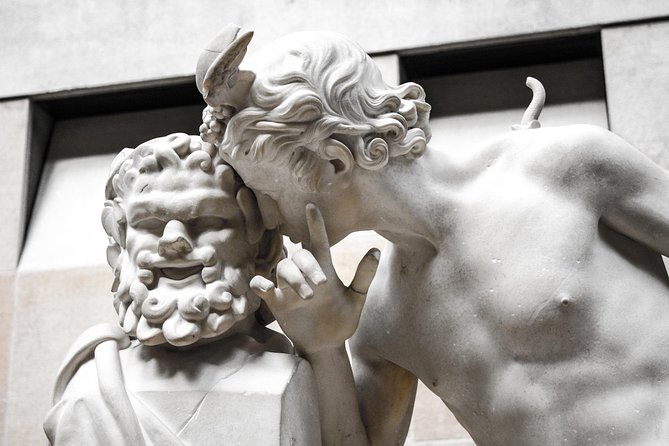
If your children like sculpture, you may stop at one of Rodin’s groups or at François Pompon’s Polar Bear. Those works offer a change from painted scenes and can be easier for younger children to discuss. You can ask what a sculpture feels like, how its surface was shaped, or why a simplified animal can still look full of movement.
That flexibility is more useful than it may sound. A child who is bored by one gallery may suddenly wake up at a sculpture, a clock, or a strange animal. Your guide can use that interest as a bridge to the next room rather than insisting on a rigid sequence.
The activity booklet gives children something concrete to do, but you should still expect an adult-led visit. This is not an unsupervised puzzle trail. The guide supplies the context, asks questions, and helps connect the clues to the art.
The Paris Opera, a phantom, and a little theater
A section of the museum explores the Paris Opera House, one of the major symbols of the period covered by the Musée d’Orsay, from 1848 to 1914. This gives your guide a chance to link painting, architecture, performance, and city life.
The Phantom of the Opera also enters the conversation through the river beneath the opera house. For children who enjoy stories, this can be a useful doorway into a period that might otherwise feel distant. The guide can separate legend from fact while keeping the subject lively.
I like this part because it shows that the museum is not only about individual canvases. Parisian art from this period was tied to theaters, public buildings, new entertainment, and changing city life. Children may understand a painting more easily when it connects to a place or story they already know.
The exact amount of time spent here depends on your group. If your children are eager to reach the Impressionist galleries, the guide can keep the Opera section short. If they enjoy costumes, theater, or spooky stories, it can become one of the more memorable stops.
The Impressionist galleries and their built-in questions
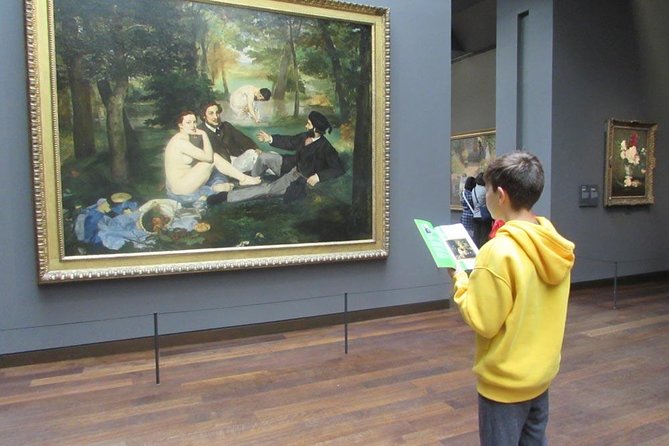
The Impressionist collection is the main event. You will see major works connected with Monet, Degas, Cézanne, Van Gogh, Gauguin, and other beloved artists of the period.
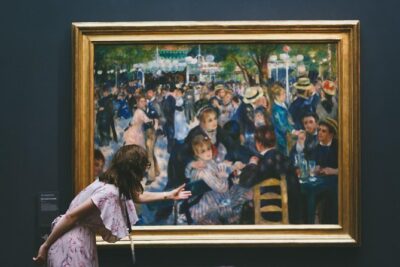
The guide does not simply point out famous names and move on. The children’s questions are built around small mysteries in the paintings. Who are the people in Monet’s Poppies? What makes Degas’s Little Dancer Aged Fourteen unusual? Did Cézanne really eat all those apples he painted?
These questions work because they begin with things children can see. A child may not care about the history of Impressionism, but that child can notice a face, a pose, an apple, or an odd detail. Once curiosity starts, the guide can explain the artist’s choices and the period’s changing ideas about art.
You will also have a chance to see Van Gogh’s Sunflowers and Gauguin’s Tahitian scenes. The tour is designed to cover the major must-see works without treating the museum like a checklist. Your guide adjusts the explanations to the children’s ages and understanding.
That age-based approach is one of the strongest reasons to consider this tour. A preteen can handle more detail than a six-year-old, while teenagers may respond better to questions about technique, rebellion, or the artist’s personal choices. The supplied information does not give a fixed age range, so you should tell the operator your children’s ages when arranging the visit.
More family-friendly days in Paris:
- Paris: Louvre Private Family Tour for Kids + Reserved Entry
★ 4.6 · 508 reviews - Paris Kids and Families Private Louvre Tour
★ 5.0 · 430 reviews - Paris Sightseeing Family Friendly Guided Electric Bike Tour
★ 5.0 · 405 reviews - Paris: Family-Friendly River Seine Guided Cruise
★ 4.3 · 359 reviews
Why the treasure hunt helps children stay involved
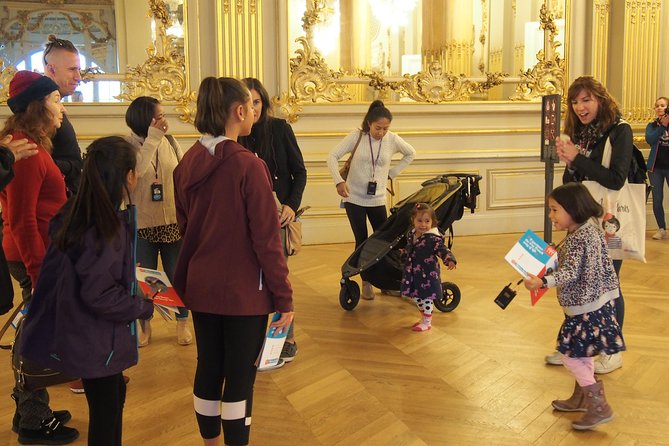
The booklet gives each child an active role. Instead of being told to be quiet and follow adults from room to room, children look for clues and solve puzzles linked to what they see.
This can be especially helpful during a museum-heavy Paris trip. One family used the Orsay visit with 12-year-old twins during a stretch of several museums, and the preteen-friendly clues kept them engaged. That detail suggests the format is not limited to very young children. It can also work for children who are already accustomed to museums but need a fresh reason to pay attention.
The booklet is not a substitute for the art. Its value is that it directs attention. Your child might first search for the answer to a clue, then notice color, posture, setting, or brushwork along the way.
The private format helps here. In a large public group, a guide has to move on when one child is fascinated and another is ready to leave. With only your party, you can pause for a question, shorten a gallery, or spend longer at a favorite work.
Views, rooftops, and a café pause
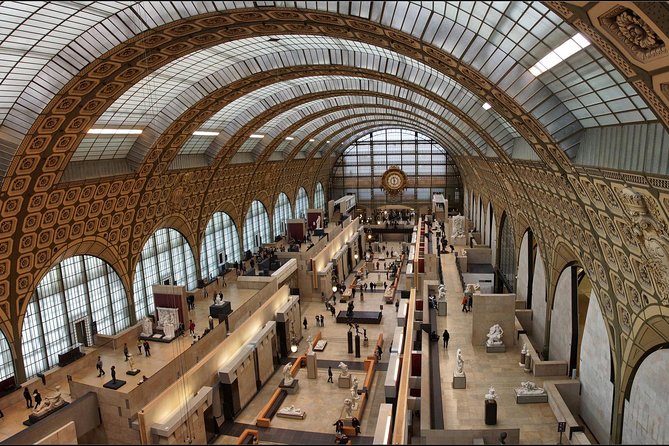
The museum offers attractive views of its architecture and Paris rooftops from terraces or lookouts. These spots provide a welcome change after time in the galleries and give children a chance to look outward rather than at another framed work.
The visit also includes time for a coffee break in one of the museum’s stylish cafés. Food, snacks, and alcoholic drinks are not included, so you pay for anything your family orders. The café stop is best viewed as a chance to rest and reset, not as part of the tour price.
The description also notes a ballroom. Seeing an elegant interior like this can help children picture the social world around the art. If the guide suggests imagining a 1900s waltz, that playful touch fits the family focus without turning the whole visit into a performance.
Keep in mind that the tour lasts about two hours. The café stop and viewpoints are part of the experience, but they also use time that could otherwise go to paintings. If your family has come specifically for an exhibition or a long list of artworks, ask your guide how to balance the stops.
What the $702.93 price really covers
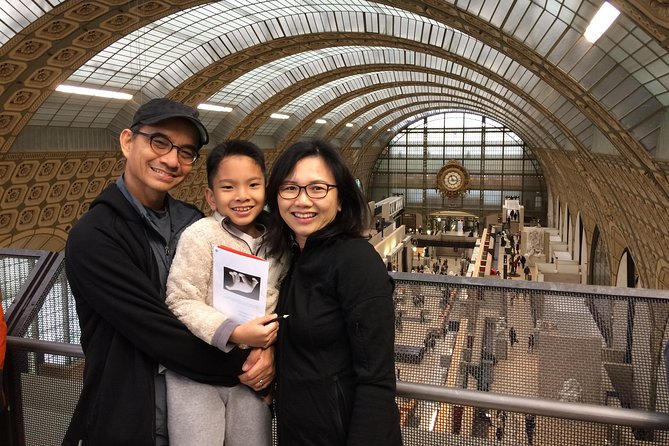
The price is $702.93 per group of up to four people. It includes the professional guide, entrance tickets, and an activity booklet for each child. The booking requires at least two people, and the stated rate applies to a family of two adults and two children.
That is expensive compared with entering a museum on your own. You are paying for privacy, a family-focused guide, skip-the-line access, and a planned route through a large collection. For a family that wants help keeping children interested, those features can save time and reduce the stress of deciding what to see.
The value is weaker if your children already enjoy museums and you are happy to explore independently. It is also less attractive if your family wants to spend half a day in the Orsay. This experience is built around a two-hour introduction, not an exhaustive museum study.
For a family of four, the cost is easier to justify than for two adults alone because the price is per group rather than per person. If you have more than four people, the supplied information does not state how additional participants are handled, so confirm the arrangements before booking.
Guide quality and family fit
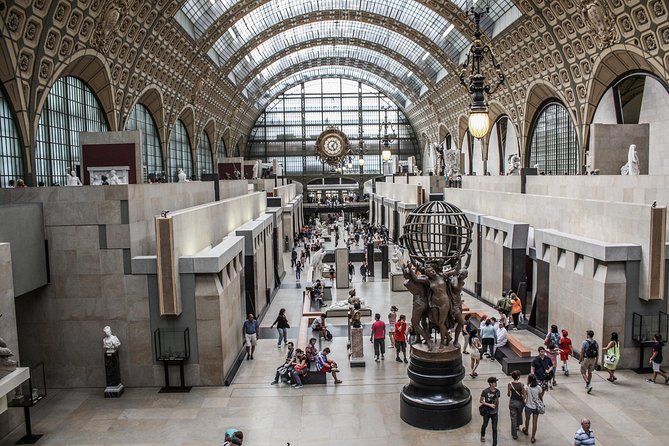
The operator is Meet the Locals. The available information names Camille as a guide for an Orsay family visit, while other family activities have included guides such as Nathalie and Sébastien. Guide assignment can vary, so do not assume a particular person will lead your tour unless the operator confirms it.
The most important point is the guide’s ability to speak at a child’s level. The tour is designed around age-appropriate explanations, riddles, and discussion rather than a standard adult art lecture.
It is also worth telling the operator about language needs. One family praised the company’s ability to arrange a Portuguese-speaking guide for its children on a wider Paris program, but this specific experience is offered in English. Do not assume another language is available for this museum tour without checking.
The tour requires a moderate level of physical fitness. You will be inside a large museum and moving between galleries, stairs, lookouts, or other areas as directed by the guide. The information does not provide a detailed accessibility plan, so ask directly if anyone in your group has mobility concerns.
Practical details that can affect your day
You meet at the Musée d’Orsay, and the activity ends back at the meeting point. Transportation to and from the attraction is not included, although bus tickets used during the tour may be included if needed.
Your booking confirmation arrives at the time of booking. Plan around the strict cancellation terms: you can receive a full refund only if you cancel at least three full days before the local start time. Changes made within that period are not accepted, and a late cancellation is not refunded.
Because this is a timed museum visit, arrive ready to meet the guide at the stated location. Bring only what your family needs for two hours, and allow extra time to reach the museum on your own. The no-line access helps once you meet the guide, but it does not remove the need to find the meeting point promptly.
Who should book this Musée d’Orsay tour
I would choose this tour for parents who want their children to see serious art without spending the whole visit saying, Just look at this painting. The booklet, clues, sculpture stops, and stories give children several ways into the museum.
It is also a good match for families on a packed Paris schedule. Two hours gives you a focused look at the Orsay without committing the entire day. The private format is useful when one child wants more time at a painting and another needs to move on.
I would hesitate if your main goal is a long visit to a temporary exhibition, a quiet adult art lecture, or the lowest possible entry cost. The tour prioritizes family engagement over exhaustive coverage, and the price reflects the private service.
FAQ
Where does the tour begin?
You meet your guide in front of the Musée d’Orsay at 75007 Paris, France.
Where does the activity end?
The tour ends back at the Musée d’Orsay meeting point.
How long does the tour last?
The experience lasts approximately two hours.
Is this a private tour?
Yes. Only your own party participates.
How many people does the listed price cover?
The $702.93 price applies to a group of up to four people, specifically two adults and two children. A minimum of two people is required to book.
Are museum admission tickets included?
Yes. Entrance tickets are included, along with a professional guide and one activity booklet for each child.
Is food included?
No. Food, snacks, and alcoholic beverages are not included. You can take a break at a museum café, but you pay for anything you order.
My call: a strong family choice if the price fits
Book this experience if you want a short, private, child-centered introduction to the Musée d’Orsay. The combination of skip-the-line entry, activity booklets, famous Impressionist works, building stories, and a café pause gives your family a clear plan without making the museum feel like school.
The main question is value. At $702.93 for up to four people, this is not a budget museum visit. But if a guide helps your children connect with Monet, Degas, Van Gogh, and the old railway-station building, the private format may be worth the premium. For families who want a relaxed first look at the Orsay and a better chance of keeping children engaged, it is a practical choice.
Just added around Paris
- Private Paris Marche d’Aligre Walking Tour with Tastings★ 5.0 · 8 reviews
- Private Louvre Museum Tour for Kids & Families with Alberto or his team in Paris★ 5.0 · 41 reviews
- Private Highlights of Paris Tuk-Tuk Experience★ 5.0 · 26 reviews
- Paris Latin Quarter Walking Tour: History & Culture – Small Group★ 5.0 · 14 reviews
- Private Highlights of Paris Bike Tour★ 4.5 · 15 reviews
- Paris Musee d’Orsay PRIVATE TOUR with a Local Private Guide★ 5.0 · 41 reviews
- Private Half Day Historic Tour★ 5.0 · 58 reviews
- Pere Lachaise Cemetery Paris – Exclusive Guided Walking Tour★ 5.0 · 72 reviews
Musée d’Orsay Tours, compared.
Paris in a Day: Louvre or Orsay, Eiffel Tower, City Walk & Cruise
Read our review →
Musée d’Orsay Skip-the-Line Tour with Expert Guide
Read our review →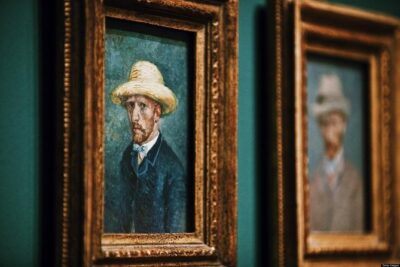
The Musée d’Orsay Guided Tour Orsay Museum Semi-Private 6ppl Max
Read our review →
Louvre & Musée d’Orsay Guided Museum Tour Semi-Private 6ppl Max
Read our review →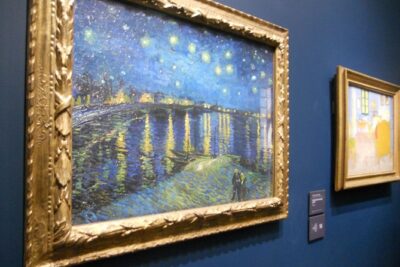
Orsay Museum – Exclusive Guided Tour (Reserved Entry Included)
Read our review →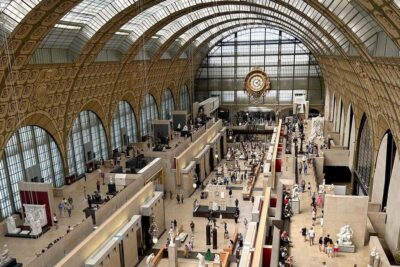
Orsay Museum and Rodin Museum Combo Entry Ticket
Read our review →Browse the lists this tour appears in