
Reviewed · LE MARAIS TOURS
Hidden Paris: Explore Medieval Marais on a Walking Tour
The best part of this afternoon walk is how quickly Paris changes character. You begin beside the modern Centre Pompidou, then turn into old lanes, Jewish quarter streets, quiet squares, churches, and the grand Place des Vosges. The Marais feels layered rather than staged, with today’s cafés and shops set among traces of medieval Paris.
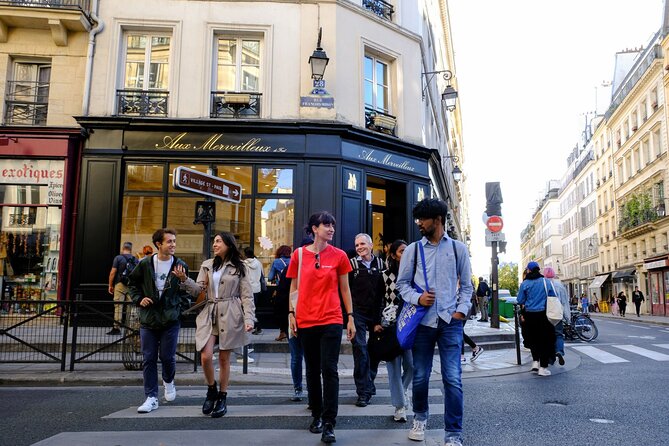
I like the small group size, capped at 12, and the way guides such as Benoit, Paloma, Linda, Camilla, and Vivien have made the neighborhood easy to understand without turning the walk into a lecture. I also like the simple French goûter, usually a sweet pastry or meringue, which gives the tour a pleasant local pause.
The main consideration is pace. You cover about 2 kilometers in two hours and stop at many places, so some visits are brief. This is a history and neighborhood walk with a snack, not a full food tour. Come ready to walk and listen, not to replace lunch.
Key details before you book
- Start beside the Centre Pompidou: Meet at 123 Rue Saint-Martin at 3 p.m., a convenient point for reaching the Marais by public transportation.
- Walk through several sides of the Marais: Expect medieval streets, the Stravinsky Fountain, Hôtel de Ville, Saint-Gervais, Rue des Rosiers, Place des Vosges, and the Bastille area.
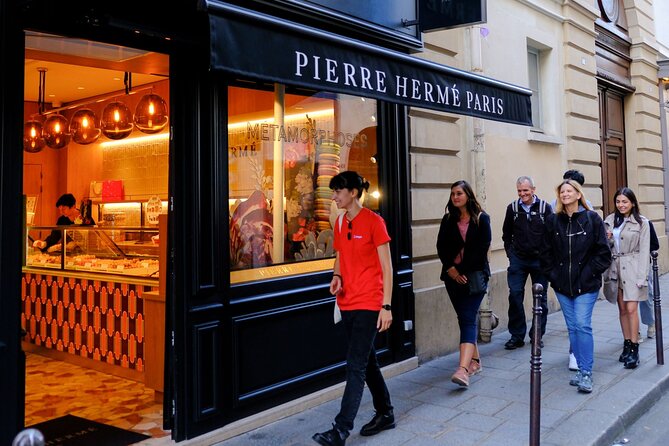
- A small sweet tasting is included: The treat may be a meringue called a merveilleux, a macaron, a pastry, or another local sweet depending on the day.
- The group is limited to 12 people: That makes it easier to ask questions and follow a guide through narrow streets.
- Allow two hours and about 2 kilometers: The route is manageable for most people, but the repeated stops mean you should wear comfortable shoes.
- The tour is best for first-time Marais explorers: You receive both historical context and tips for places to eat and continue your evening.
Starting at the Centre Pompidou
The meeting point at 123 Rue Saint-Martin puts you beside the Centre Pompidou, one of Paris’s most recognizable modern buildings. Its exposed pipes and bright exterior create a useful opening contrast: you are standing beside modern art, but the medieval Marais begins almost immediately nearby.
The opening explanation lasts about 10 minutes. That is enough time to meet your English-speaking guide, orient yourself, and understand why this part of Paris is worth exploring on foot. The Centre Pompidou itself is not included as an interior visit, so do not arrive expecting museum admission.
From here, your guide leads you into the Marais. The short distance between the meeting point and the older streets is part of the pleasure. You do not spend the afternoon crossing Paris by vehicle. Instead, the city unfolds block by block.
More Le Marais Tours:
- Award-Winning Paris French Bakery Experience — Le Marais, 4th Arr
★ 4.5 · 1,186 reviews - Paris Le Marais Food Tour With 10+ Tastings, Cheese, Wine & More
★ 5.0 · 985 reviews - Paris Le Marais District Original Food and Wine Tasting Tour
★ 4.5 · 880 reviews
What makes the Marais different
The Marais is one of the best-preserved medieval areas in central Paris. Its appeal is not one giant sight but the way old streets, courtyards, churches, shops, and public squares fit together.
A guide helps you notice details that are easy to miss when you walk alone. The area has been shaped by several communities and periods, including the medieval city, the Jewish quarter, French royal life, and the changes brought by the French Revolution.
You spend roughly 15 minutes in the Marais before moving to the next stop. That may sound short, but the route keeps returning to the neighborhood’s larger story. I find this useful if you are new to Paris and want a clear framework rather than a long architectural talk at a single building.
The tradeoff is that you will not examine every courtyard or enter every building. This is a guided introduction to the district, followed by time to return on your own.
Stravinsky Fountain and modern Paris
The Stravinsky Fountain provides one of the route’s more playful pauses. Its colorful, unusual sculptures sit near the Centre Pompidou and offer a sharp contrast to the old streets around them.
You have about 15 minutes here to hear about the fountain and take photographs. It is a good early stop because it keeps the tour from becoming a march through old buildings. The Marais is not frozen in the past, and this fountain makes that clear.
The stop is outdoors, so the experience depends on the weather. It is also primarily a viewing and explanation point rather than a long activity. If you like street art, public design, and modern Paris mixed with older neighborhoods, this is a useful part of the walk.
Hôtel de Ville and the darker side of Parisian history
The next stop is the Hôtel de Ville, Paris’s city hall. The building is impressive, but the surrounding square also carries a grim past. The esplanade was used for medieval executions, and the first beheading by guillotine took place here.
That detail changes how you read the square. Paris can look polished and elegant, but its public spaces often hold stories of punishment, protest, and political change. A guide can explain those events in a few clear minutes, giving the building more meaning than a photograph alone.
Again, the scheduled time is about 15 minutes. You will see the exterior and hear the historical background, but this is not an interior visit to city hall. Keep that distinction in mind if grand civic architecture is a major reason for booking.
More walking tours in Paris:
- Paris Top Sights Half Day Walking Tour with a Fun Guide
★ 5.0 · 2,893 reviews - Montmartre Hidden Gems and Scenic Highlights Walking Tour
★ 5.0 · 2,684 reviews - Montmartre Hill French Gourmet Food and Wine Tasting Walking Tour
★ 5.0 · 2,588 reviews - Paris Île de la Cité and Notre-Dame Walking Tour With Crypt
★ 5.0 · 2,272 reviews
Saint-Gervais and the afternoon sweet pause
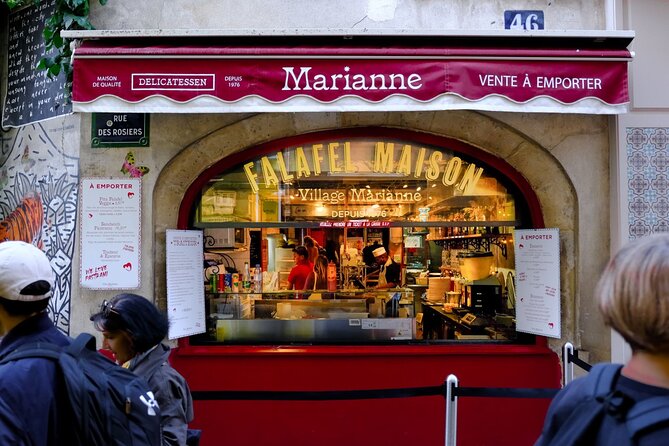
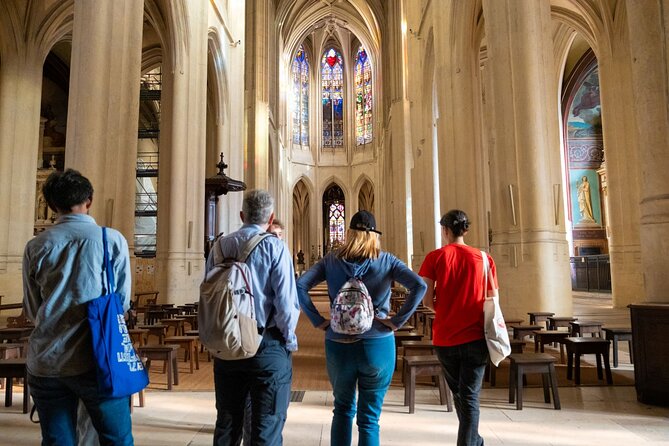
The Church of Saint-Gervais offers a chance to glimpse a beautiful church interior just behind the square. The stop is brief, but it gives the route a quieter mood after the open space around Hôtel de Ville.
This is also where the tour’s food element begins to make sense. You are offered a sweet treat connected with the French goûter, the late-afternoon snack that sits between lunch and dinner. The listed example is a merveilleux, a delicate meringue dessert.
The exact food experience can vary. Some tour accounts describe a macaron, a pastry, or a sweet from local shops, while other versions include cheese and wine. One account describes a tasting at a wine shop with bread, four cheeses, and red and white wine. That makes it wise to think of the food as a tasting component, not a fixed meal.
If you have dietary needs, vegetarian requirements can be accommodated. Additional food and drink are not included, so bring your appetite for dinner later rather than expecting a full meal during the walk.
Rue des Rosiers and the Jewish quarter
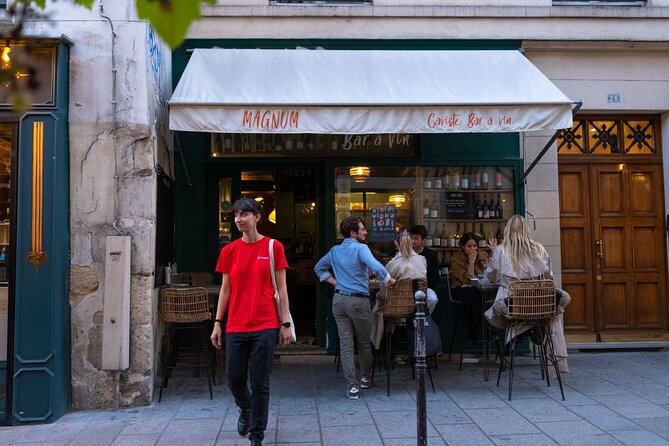
Rue des Rosiers is one of the most distinctive streets on the route. It sits at the heart of Paris’s Jewish community and is lined with falafel stands, delis, and other food shops.
This is where the tour connects neighborhood history with present-day life. Your guide can explain the area’s Jewish identity while pointing out the food businesses that give the street its current character. You may hear about well-known falafel shops, but the tour does not promise a falafel tasting.
That point matters. If you have seen this advertised in your imagination as a progressive meal through the Marais, adjust your expectations. You may receive one or more sweet or savory samples depending on the tour arrangement, but the supplied details specifically include a sweet local pastry and note that extra food costs are yours.
I like this stop because you can return to Rue des Rosiers later for your own meal. The guide’s recommendations may save you from wandering around hungry after the tour ends, though you should make your own choice about where to eat.
Place des Vosges and Victor Hugo
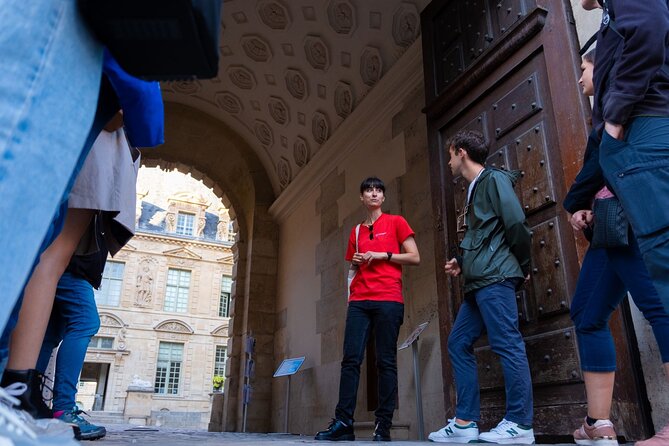
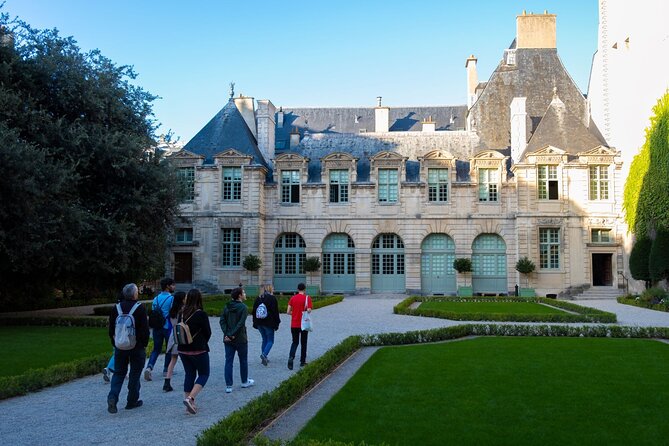
Place des Vosges is the visual high point of the walk. Paris’s oldest planned square is lined with elegant red-brick buildings and arcades, creating a calmer setting than the busy streets around the Centre Pompidou.
The square is also linked with Victor Hugo, France’s national writer. Your guide can place the square in the story of French literary and royal Paris, then give you time to look across the symmetrical arcades and gardens.
The stop is listed at about 15 minutes. That is enough to understand why the square matters and take in its design, but not enough for a long visit to the Maison de Victor Hugo. Museum entry is not included.
This is the place where I would slow down if I returned independently. During the tour, you need to stay with the group and keep to the route. Afterward, Place des Vosges makes a fine place to revisit at an easier pace.
From Place des Vosges toward Bastille
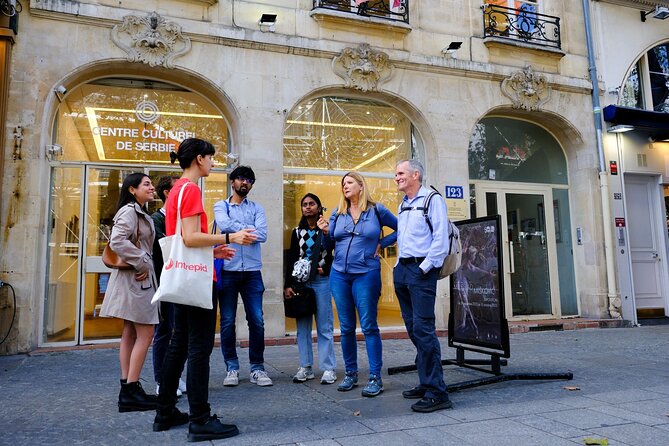
The route continues toward Place de la Bastille, the former prison captured on July 14, 1789. That event helped trigger the French Revolution, making Bastille one of the most important political symbols in Paris.
The modern square is not a preserved fortress. The prison is gone, and the area now connects with bars, restaurants, and evening streets. That makes the final stop practical as well as historical. You can use the guide’s suggestions to continue your night with dinner or drinks.
There is a small point to clarify before booking: the supplied end information identifies Place des Vosges and also refers to Place des Vosges/Bastille, while the route description presents Bastille as the final destination. I would confirm the exact ending point with the operator if you need to meet someone or catch transport immediately afterward.
The guides make a real difference
A neighborhood walk depends heavily on the person leading it. The strongest guide names associated with this experience include Benoit, Paloma, Linda, Camilla, Vivien, Celine, Cecilia, Sarah, Ellie, Daniel, and Mitch.
Benoit has been praised for making the medieval remains of Paris easy to follow. Paloma has led groups through the area’s historical sites with clear explanations. Linda is especially suited to people who want local suggestions mixed with stories about the streets, churches, gardens, and Jewish quarter.
Vivien and Camilla have also been singled out for friendly, engaging tours, while Cecilia has been praised for answering questions and making small route adjustments. These names do not guarantee who will lead your departure, but they show the sort of guide this experience is designed around: personal, conversational, and comfortable with questions.
One unusual possibility is a very small departure. If only one or two people book, the walk may feel close to a private tour, though you should not assume that will happen. The standard maximum is 12 people, which is already a reasonable size for narrow Paris streets.
How much food should you expect?
The food side needs careful explanation. The experience includes a sweet local pastry, and the central description points to a French goûter. Some departures have included several pastry stops, cheese, wine, bread, and tastings from local shops.
But the experience is not a substitute for lunch or dinner. One account describes a macaron, a kouignette, and a cheese and wine stop, while another expected more food and found the portions too limited for a full meal. The safest plan is to eat normally before the 3 p.m. start.
I see the tasting as a bonus that helps you connect food with place. It may introduce you to a shop or flavor you would not have found alone, then leave you free to choose a proper meal afterward. Wine and cheese may be available on some versions, but they should not be treated as guaranteed inclusions unless confirmed at booking.
Price, pace, and who gets the best value
At $55.87 per person, this is not the cheapest way to walk through the Marais. You can explore the streets and Place des Vosges without paying for a guide.
The value comes from the structure. In two hours, you receive an organized route, a local English-speaking guide, historical context, a sweet tasting, and suggestions for the rest of your stay. If you are visiting Paris for the first time, that combination can save time and help you return to the district with a better sense of direction.
The price makes less sense if you mainly want food. The tasting is modest, and extra food and drink cost more. It also may feel rushed if you want to linger at every church, square, or shop.
The tour suits adults, families, solo visitors, and anyone who prefers a social walk to exploring alone. Children under six can join free, and most people can take part. Service animals are allowed. The route covers about 2 kilometers, but you should still expect to remain on your feet for most of the two hours.
Timing your afternoon in Paris
The 3 p.m. start is well chosen for a late afternoon in the Marais. You see the neighborhood at a time when shops and food businesses are active, then finish with easy options for the evening.
I would avoid scheduling a major museum visit immediately afterward. The tour can run about two hours, and you may want time for photographs, questions, or a stop at Rue des Rosiers. The nearby bars and restaurants around the final section give you a natural next plan.
The experience is offered in English. It is also worth noting that one particularly small group arranged for a French-language tour with the guide, but that should not be expected as a standard feature. Book this as an English tour.
Should you book the Medieval Marais walk?
Book it if you want a compact introduction to one of Paris’s most interesting neighborhoods, with a real guide, a manageable walking distance, and a small taste of French pastry. It is especially useful early in your Paris stay, when local recommendations can shape the rest of your plans.
Skip it if you want a full meal, long museum visits, or plenty of free time at each stop. You can explore the Marais independently, but you will miss the connected story that ties the medieval streets, Jewish quarter, royal square, and Bastille together.
For most people, the tour offers good value as a guided orientation rather than a food excursion. Arrive ready for history, street details, and a sweet pause. Keep dinner plans for afterward, and you should get exactly what this walk does best: a clear, lively introduction to old Paris beyond the main monuments.
FAQ
How long is the Medieval Marais walking tour?
The tour lasts approximately two hours and covers about 2 kilometers, or 1.2 miles, on foot.
Where does the tour start?
The meeting point is 123 Rue Saint-Martin, 75004 Paris, near the Centre Pompidou. The start time is 3 p.m.
Where does the tour finish?
The route description finishes at Place de la Bastille after visiting Place des Vosges. The end information also lists Place des Vosges and Place des Vosges/Bastille, so confirm the exact ending point if it matters for your plans.
Is food included?
A sweet local pastry or similar tasting is included. Additional food and drinks are not included. Some departures may also feature cheese, wine, or other samples, but you should not treat those as a full meal.
How large is the group?
The tour has a maximum of 12 participants. Children under six may join free of charge.
Can the tour accommodate dietary requirements?
Vegetarian dietary requirements can be accommodated. The tour is offered in English, and service animals are allowed.
Just added around Paris
- Private Paris Marche d’Aligre Walking Tour with Tastings★ 5.0 · 8 reviews
- Private Louvre Museum Tour for Kids & Families with Alberto or his team in Paris★ 5.0 · 41 reviews
- Private Highlights of Paris Tuk-Tuk Experience★ 5.0 · 26 reviews
- Paris Latin Quarter Walking Tour: History & Culture – Small Group★ 5.0 · 14 reviews
- Private Highlights of Paris Bike Tour★ 4.5 · 15 reviews
- Paris Musee d’Orsay PRIVATE TOUR with a Local Private Guide★ 5.0 · 41 reviews
- Pere Lachaise Cemetery Paris – Exclusive Guided Walking Tour★ 5.0 · 72 reviews
- Paris Revolutionary Walking Tour: Iconic French Sights & Stories★ 5.0 · 11 reviews
Le Marais Tours, compared.
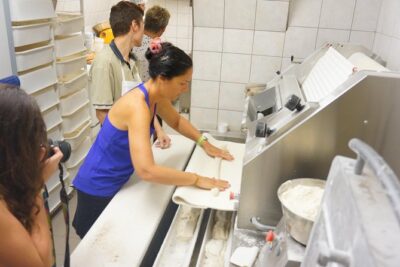
Award-Winning Paris French Bakery Experience — Le Marais, 4th Arr
Read our review →
Paris Le Marais Food Tour With 10+ Tastings, Cheese, Wine & More
Read our review →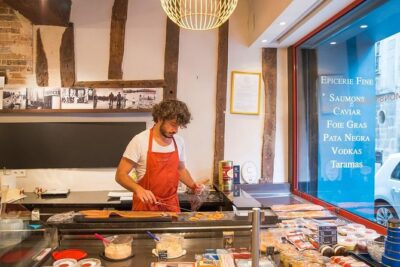
Paris Le Marais District Original Food and Wine Tasting Tour
Read our review →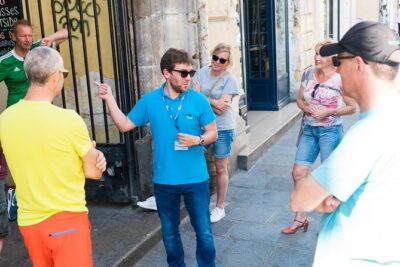
Paris Bike Tour Hidden Secrets in the Latin Quarter & Le Marais neighborhoods
Read our review →
Food and Wine Tasting Walking Tour in Le Marais
Read our review →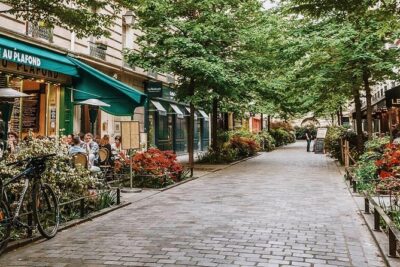
Le Marais District & Jewish Quarter Guided Walking Tour 12ppl Max
Read our review →
Le Marais/Paris – The Historic, Trendy, Jewish, LGBT district
Read our review →
Paris Le Marais Food & Wine Tour with Eating Europe
Read our review →Browse the lists this tour appears in