
Reviewed · LOUVRE MUSEUM TOURS
Louvre for Families
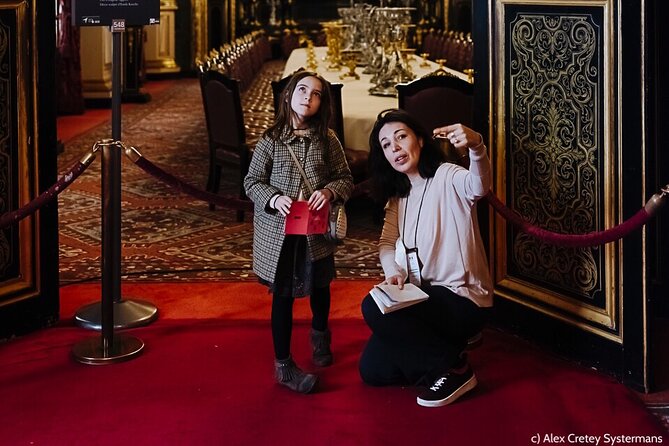
The best thing about this Louvre visit is its treasure-hunt format. Instead of asking children to trail behind while adults study paintings, the tour gives your family clues, riddles, and puzzles to solve together. The Mona Lisa and Venus de Milo become parts of an adventure, not just crowded photo stops.
I like the teamwork and the clear three-hour shape. I also like that the guide uses famous works to teach broad art ideas, so you leave with more than a list of names. The main consideration is cost: museum admission is extra for adults, and the activity is non-refundable after booking.
Key points
- A private group of up to six keeps the game focused on your family.
- Cecilia, also called Ceci, is praised for engaging young children and making art easier to follow.
- Riddles and puzzles turn major Louvre works into clues your family must interpret together.
- English, Spanish, and Italian tour options give you some language flexibility.
- Three hours inside the Louvre offers a useful introduction, though it is not a full museum survey.
- Audio transmission and an activity booklet support the guide’s explanations and family tasks.
A Louvre visit built around clues, not lectures
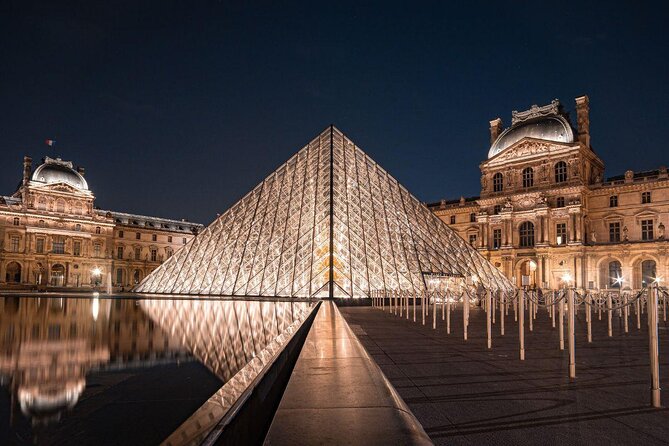
The Louvre can be a hard sell to children. Its scale is enormous, the galleries can feel formal, and the most famous works often sit behind thick crowds. This private family tour takes a smarter route: it gives everyone a job.
You and your children work as a small detective team. The guide presents clues and asks you to examine details, decode meanings, and solve puzzles linked to selected artworks. That approach matters because children are not simply told why a work is important. They are asked to look closely and reach an answer with the rest of the family.
The tour focuses on important works that mark changes in art history. The Mona Lisa and Venus de Milo are named highlights, but the experience also introduces different civilizations, royal dynasties, and the way art developed over time. You should expect a carefully selected route rather than an attempt to cover every wing and gallery.
That is the right choice for a three-hour family visit. The Louvre contains far too much for one afternoon. A focused selection gives your guide room to explain, ask questions, and keep younger minds involved.
More Louvre Museum Tours:
- Paris: Louvre Museum Timed-Entrance Ticket
★ 4.6 · 71,977 reviews - Paris: Louvre Guided Tour with Reserved Access & Boat Cruise
★ 4.3 · 16,353 reviews - Louvre Museum Masterpieces Guided Tour with Access
★ 4.5 · 12,023 reviews
Meeting at the Louvre and getting started
The meeting point is 2S Pl. du Carrousel, 75001 Paris, France. The tour is scheduled from Monday through Friday, 2:30 PM to 5:30 PM, and ends back at the meeting point.
You receive confirmation when you book, and the location is near public transportation. Since this is a private activity, only your own group takes part. The group limit is six people, which is especially useful for a family with children. The guide can keep the pace and questions aimed at your particular group rather than trying to manage a large mixed crowd.
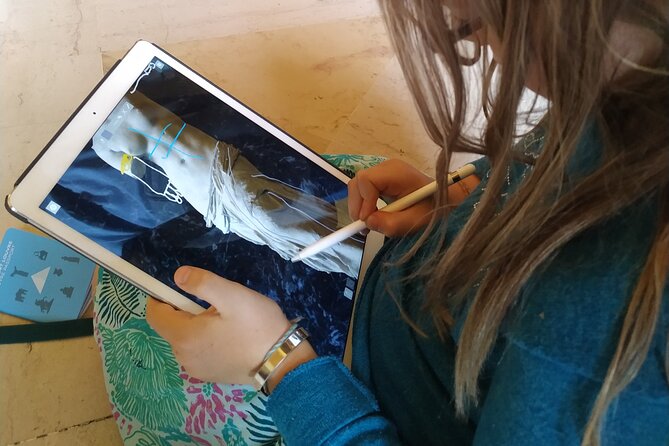
The experience includes an audio transmission system and a booklet of activities. The booklet gives the children something practical to do, while the audio equipment should help your group hear the guide in a busy museum setting. These are small details, but they can make a large museum visit less tiring.
You should plan on a moderate amount of walking and standing. The activity lasts about three hours, so comfortable shoes and a little patience are sensible. The tour is offered in English, Spanish, and Italian. Make sure the language you choose at booking is the one your family can follow most easily.
How the treasure hunt works
The central idea is simple. Your family receives questions, clues, and riddles connected to artworks in the Louvre. You then study the work, talk through the possible answer, and use the guide’s story to understand what you are seeing.
This method works well for children because it breaks the visit into short challenges. A painting is no longer just a large image on a wall. A sculpture is not only something adults pause beside. Each work becomes a problem to solve.
The family format also gives parents a useful model for future museum visits. You learn how to ask children what they notice, which details seem strange, and what a figure or symbol might mean. The stated aim is not simply to entertain young visitors for three hours. It is to help parents engage with art in other museums too.
That educational angle gives the tour lasting value. You may forget a few dates and names, but you can carry the questioning method into later museum visits. Ask your children to find repeated shapes, unusual clothing, expressions, objects, or signs of power. Those questions make art less remote.
The guide also connects the selected works to the Louvre’s former royal setting. Stories about the kings and dynasties that lived there add a human thread to the building. Children often respond better to rulers, secrets, and clues than to a long list of artistic periods.
Meeting the Mona Lisa and Venus de Milo
The Mona Lisa is an obvious stop, but the treasure-hunt format gives your family a reason to look beyond the famous smile. The guide uses the work as one of the major clues, encouraging you to study details and think about why it became such an important part of art history.
Do not expect a quiet, private encounter with this painting. The Mona Lisa is one of the Louvre’s busiest sights, and the tour description does not promise a separate viewing area or a way around crowds. Its value here is the guide’s interpretation and the activity around it, not a guaranteed moment of solitude.
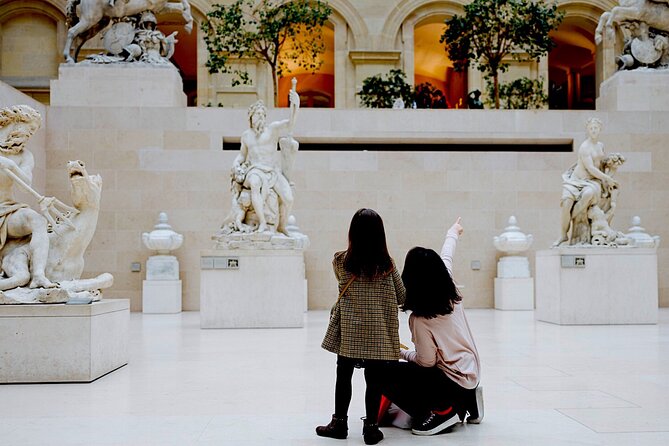
The Venus de Milo offers a different kind of lesson. A sculpture lets children think about pose, balance, missing parts, and the way a three-dimensional figure occupies space. The guide can use it to show how art changes across civilizations and periods.
These two works provide familiar anchors, but the tour is not limited to a greatest-hits checklist. The selected pieces are meant to show key stages in the development of art. You should expect the guide to use famous objects as doorways into wider ideas, rather than stopping at a quick photograph.
Same city, a completely different afternoon:
- Disneyland® Paris 1-Day Ticket
★ 4.6 · 49,412 reviews - Paris: Versailles Palace and Gardens Full Access Ticket
★ 4.6 · 41,579 reviews - Paris: Evening River Cruise with Music
★ 4.4 · 22,721 reviews - Paris: Eiffel Tower Entry Ticket with Optional Summit Access
★ 4.4 · 20,035 reviews
Why the guide matters for younger children
The clearest praise attached to this experience concerns Cecilia, also called Ceci. She is described as especially engaging with children, bringing artworks to life and keeping the visit both fun and educational. One family specifically noted that she held the attention of its youngest member.
That detail is important. A family tour succeeds or fails on the guide’s ability to change tone and pace. Children need direct questions, stories, and room to respond. Adults need enough context to feel that the admission money and three hours are worthwhile.
Cecilia’s role is not just to point out masterpieces. She leads the family through the challenges and helps connect each answer to a larger idea about art. That balance is likely to suit families with different ages and attention spans.
The activity has also received strong praise for making the visit pleasant and interesting for the whole family, including the youngest child. The language options add another practical advantage. You can choose English, Spanish, or Italian rather than asking children to follow a tour in a less familiar language.
Still, keep your expectations realistic. A child who dislikes puzzles or becomes tired in museums may not enjoy every part of a three-hour visit. The format helps, but it does not remove the walking, crowds, or sheer size of the Louvre.
What three hours can and cannot cover
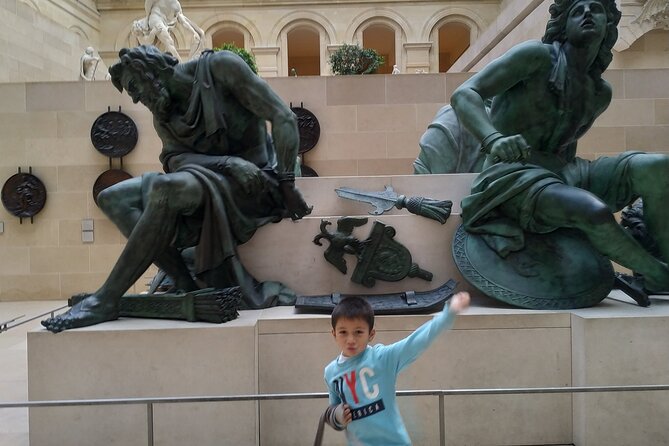
Three hours is enough time for a guided introduction to major parts of the Louvre. It is not enough to see the museum in any complete sense. That limit is actually helpful for families, since trying to see everything would turn the afternoon into a march.
The guide selects works for their importance in the development of art. You can expect stops that connect objects to different civilizations and periods, along with stories about the royal dynasties linked to the museum.
The exact sequence of galleries and artworks beyond the named Mona Lisa and Venus de Milo is not specified. That means you should not book this expecting a fixed checklist of every famous room. The strength of the activity lies in the guide-led challenges and the selected route.
A three-hour visit also leaves room for questions. In a large shared tour, the guide may need to keep moving. In a private group, your family can work through a puzzle together and ask for a simpler explanation when needed.
The tradeoff is that a private tour costs more than simply entering the museum and walking around with a guidebook. You are paying for a tailored family activity, a dedicated guide, and a format designed to hold children’s attention.
Price and the real value for a family
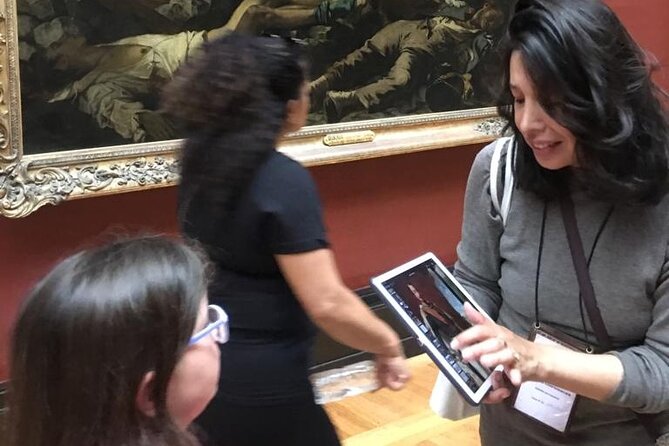
The price is $452.74 per group of up to six people. That is a group price, not a per-person rate, so the value improves when you have several family members sharing the booking. A full group of six pays considerably less per person than a smaller group of three.
Adult museum admission is not included. The stated adult entrance cost is €22, so you need to add that to your budget for each adult who requires a ticket. Admission is free for visitors under 18 and for EEA residents under 26, provided they show valid identification and proof of residency.
This extra ticket cost is easy to overlook. Check your family’s eligibility before booking, and remember that the private tour price and museum entry are separate expenses.
I see the price as reasonable for families who would otherwise struggle to make sense of the Louvre. You are not simply paying for facts. You are paying for a private structure that gives children a reason to look, talk, and take part.
The value is less clear for families with older children who already enjoy art museums and prefer to explore alone. In that case, a standard museum visit might offer more freedom for less money. The private treasure hunt is best when keeping children involved is a main goal.
Who will get the most from this experience
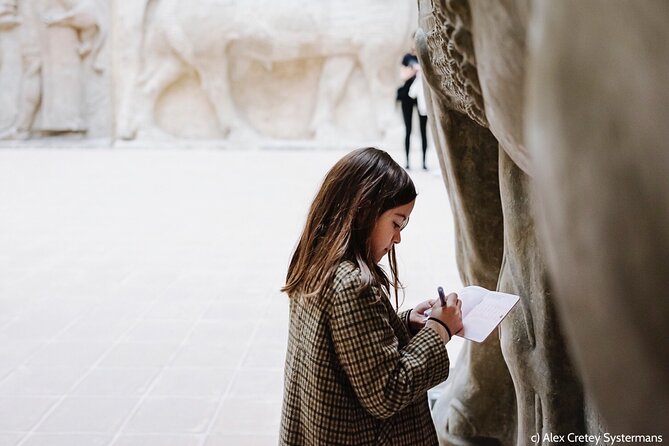
This tour suits families with children who enjoy stories, puzzles, and small challenges. It is also a strong choice for parents who want to introduce art without making the visit feel like school.
It should work well for a mixed-age family because the questions can be discussed together. Younger children can search for clues and details, while older children and adults can think about the larger meaning behind the works.
The private format helps if your family has its own pace. You are not sharing the guide with strangers, and the activity is designed only for your group. That can make it easier to pause, ask questions, or explain an idea to a child who needs more time.
You should think twice if your main aim is to see a large number of galleries. The three-hour session is focused on selected pieces and family learning. It is not a substitute for several days of independent Louvre visits.
A moderate level of physical fitness is expected. The experience takes place in a huge museum and lasts three hours, so children should be ready for walking and standing.
Practical details before you book
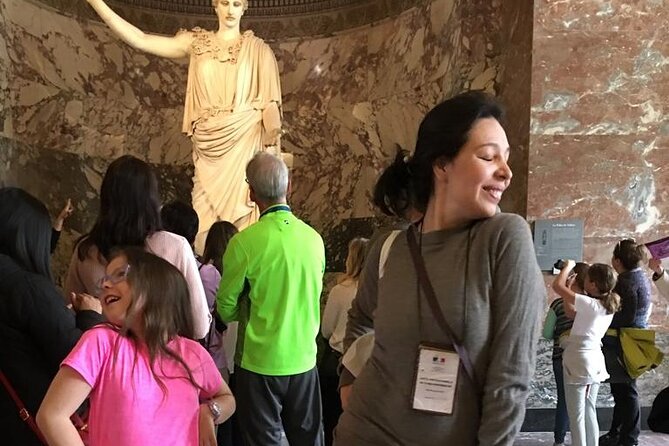
The activity is offered Monday through Friday in the listed afternoon slot, from 2:30 PM to 5:30 PM. That timing can fit well into a Paris day, but it leaves less flexibility than a tour with several daily departures.
The tour includes a mobile ticket, audio transmission, and a booklet of activities. The mobile ticket is convenient, but it does not mean museum admission is included. Adult entrance fees remain separate.
The activity is non-refundable and cannot be changed after booking. If your Paris plans are uncertain, that restriction deserves serious attention before you pay.
Only your group participates, and the maximum group size is six. The meeting point and ending point are both at 2S Pl. du Carrousel. Public transportation is nearby, which makes the location practical for reaching the Louvre.
The tour has a perfect 5 rating from five submitted ratings, with particular praise for Cecilia’s ability to keep children interested. That is a small sample, so I would treat it as encouraging evidence rather than a guarantee that every child will respond in the same way.
Should you book the Louvre family treasure hunt?
Book it if you want your children to do more than follow you through famous galleries. The riddles, teamwork, booklet, and stories give the Louvre a clear purpose, while Cecilia’s praised approach suggests a warm and engaging guide for young visitors.
The strongest case is a family of up to six that values a private setting and wants a guided introduction to major works. The price makes more sense when shared across a larger group, and the activity can save you from trying to invent your own child-friendly museum game.
Skip it if you want a flexible, low-cost visit or plan to cover a wide section of the museum at your own speed. Also check the extra adult admission, the weekday afternoon schedule, and the strict cancellation terms before committing.
For the right family, this is not just a way to see the Mona Lisa. It is a practical lesson in how to look at art together, which may be the most useful souvenir you take from the Louvre.
FAQ
How long does the Louvre family tour last?
The tour lasts approximately three hours, from 2:30 PM to 5:30 PM on the listed Monday through Friday schedule.
How many people can join the private tour?
The private activity is for your group only and allows up to six people.
Which languages are available?
Guided tours are offered in English, Spanish, and Italian.
Is Louvre admission included in the tour price?
No. The activity price does not include the €22 entrance ticket for adults. Admission is free for visitors under 18 and for EEA residents under 26 with valid identification and proof of residency.
What is included during the activity?
The experience includes a mobile ticket, audio transmission, and a booklet of activities.
Can I cancel or change the booking?
No. The experience is non-refundable and cannot be changed for any reason after booking.
Just added around Paris
- Private Paris Marche d’Aligre Walking Tour with Tastings★ 5.0 · 8 reviews
- Private Louvre Museum Tour for Kids & Families with Alberto or his team in Paris★ 5.0 · 41 reviews
- Private Highlights of Paris Tuk-Tuk Experience★ 5.0 · 26 reviews
- Paris Latin Quarter Walking Tour: History & Culture – Small Group★ 5.0 · 14 reviews
- Private Highlights of Paris Bike Tour★ 4.5 · 15 reviews
- Paris Musee d’Orsay PRIVATE TOUR with a Local Private Guide★ 5.0 · 41 reviews
- Private Half Day Historic Tour★ 5.0 · 58 reviews
- Pere Lachaise Cemetery Paris – Exclusive Guided Walking Tour★ 5.0 · 72 reviews
Louvre Museum Tours, compared.


Louvre Guided Tour with Reserved Access & Boat Cruise
Read our review →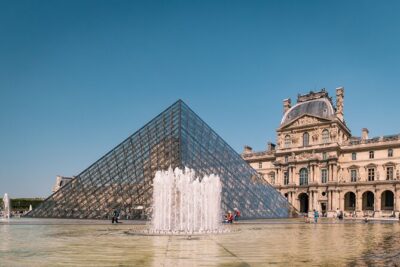
Louvre Museum Masterpieces Guided Tour with Access
Read our review →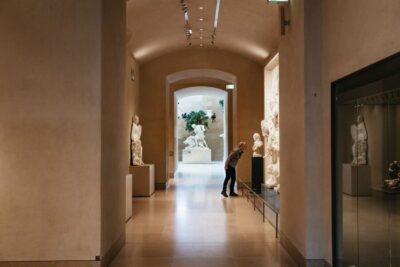
Louvre Museum Entry Ticket With Host and River Cruise
Read our review →
Priority Access Louvre with Host -Direct to Mona Lisa
Read our review →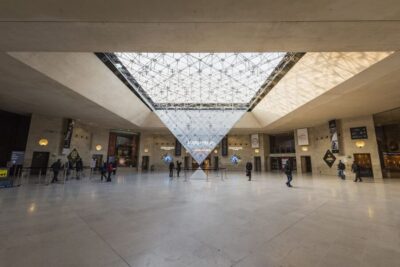
Mona Lisa & Louvre Masterpieces Tour with Reserved Access
Read our review →
Louvre Museum – Exclusive Guided Tour (Entry Included)
Read our review →
Louvre Reserved Ticket and River Cruise Combo
Read our review →Browse the lists this tour appears in