
Reviewed · PARIS PERFUME AND CRAFT WORKSHOPS
Craft a unique souvenir hat with Lady Gaga’s renowned hatmaker
The best part of this Paris workshop is that you do not simply buy a hat. You shape one yourself under the guidance of a designer whose work has been worn by celebrities including Lady Gaga. You choose the material, mold, color, crown, brim, and finishing touches, then leave with something made by your own hands.
I like the wide choice of materials and shapes, and I like that the finished hat can be genuinely wearable rather than a dusty souvenir. Fabrice, Marie, Mary, and Sara are among the instructors associated with the workshop, and the teaching is patient and practical. The main catch is that the class can run longer than the advertised three hours, and many decorative extras cost more.
Key points to know before you book
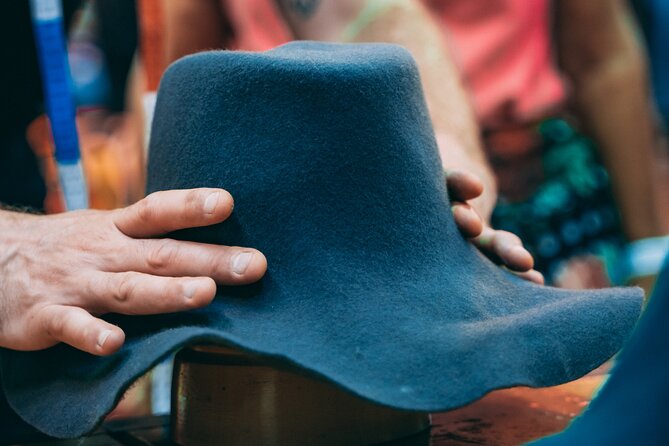
- You make the hat from start to finish: Choose the material, stretch it over a wooden block, steam it, shape it, and add trim.
- The atelier has celebrity credentials: The workshop is connected with a designer known for creating hats worn by Lady Gaga and other public figures.
- Language help is available: Instruction may be in French, but translation apps, gestures, demonstrations, and occasional English support help bridge the gap.
- The work is physical: Expect standing, pressing, pulling, hammering, pinning, and some elbow grease.
- Decorations may raise the final bill: Basic trim is included, but extra feathers, charms, buttons, scarves, and special details can cost more.
- Plan extra time: The official duration is about three hours, but some sessions last four hours or run late.
Making a Paris hat instead of buying one
At 25 Rue de Turbigo in the 2nd arrondissement, you enter Chapellerie MiniMe Paris, a working hat atelier and shop. The setting is part of the appeal. It is filled with unusual fashion pieces, colorful materials, samples, and decorative objects, so the first few minutes already feel different from a standard sightseeing stop.
You begin by meeting your instructor and taking in the available styles. This is not a class where everyone copies one model. You get to decide what suits you, from a fedora or trilby to a boater, capeline, cap, or another classic form.
The choice can be surprisingly difficult. There are around 30 colors of merino wool or rabbit felt, plus natural straw and other traditional or modern materials. Your instructor helps you think about color, shape, head size, and how you might actually wear the finished hat.
That last point matters. A dramatic hat may look wonderful on a display stand but spend the rest of its life in a closet. I would choose a color and shape that fits clothes you already own. Several participants left with hats they later wore around Paris, and one blue hat earned compliments the next day.
More perfume and craft workshops in Paris:
- Fragonard Paris: Mini Perfume Workshop
★ 4.5 · 1,924 reviews - Paris: 2-Hour Perfume Creation Workshop
★ 4.8 · 731 reviews - Paris: Perfume Creation Workshop
★ 4.8 · 289 reviews
Choosing felt, straw, color, and shape
Your first real decision is the material. Merino wool and rabbit felt offer a soft, moldable base for many classic hats. Natural straw creates a lighter, more summery look. The available colors range from practical neutrals to stronger shades, so you can make something discreet or theatrical.
Then you select a wooden hat block. This is the form that gives your hat its basic crown and brim. The block needs to suit both the style you want and the size of your head, and the instructor measures you to help get the fit right.
The wooden form is more than a prop. It controls the final proportions of the hat, so this is when your broad idea becomes a real object. A fedora and a capeline can begin with similar material but end up looking entirely different once the brim and crown take shape.
If you are visiting with a partner, friend, or family member, I suggest making different choices rather than trying to match. The workshop is more interesting when everyone creates a distinct piece. Children can participate, but they must be accompanied by an adult.
Steam, stretch, hammer, and pins
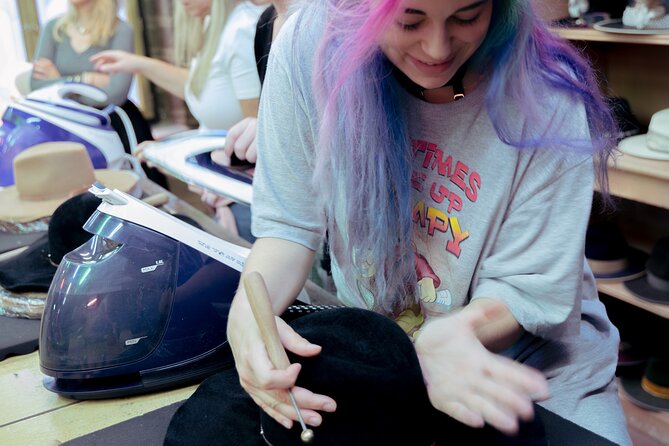
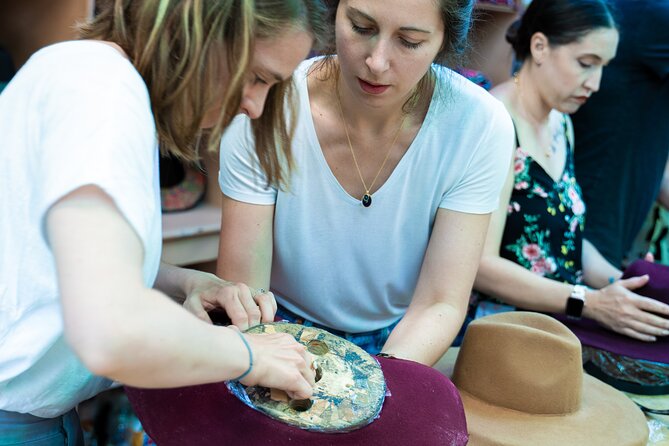
This is the hands-on heart of the class. You use water and steam to soften the material, then stretch it over the wooden block. Pins hold sections in place while you pull and press the felt or straw into position.
The process takes effort. You may use a hammer, work around the crown, and pull the material firmly over the form. It is not difficult in a technical sense, but it is more physical than many people expect. One participant described it as a workout, and that is a fair warning.
Most of the time is spent standing around a shared worktable. There are some places to sit, but this is not a relaxed craft session where you remain in a chair. Wear comfortable clothes and shoes, and bring water. Nothing substantial is provided during the workshop, although a drink may be offered on arrival in some sessions.
Your instructor demonstrates each stage and steps in when the material resists you. Fabrice has been praised for his humor and for helping participants through difficult moments. Other instructors, including Mary and Sara, have also been described as patient and attentive.
The material is eventually set with heat. As the shape firms up, the project begins to look like a real hat rather than a piece of fabric stretched over a block. You learn why professional hatmaking requires patience and careful control. A small change in tension can alter the brim or crown.
French instruction and translation support
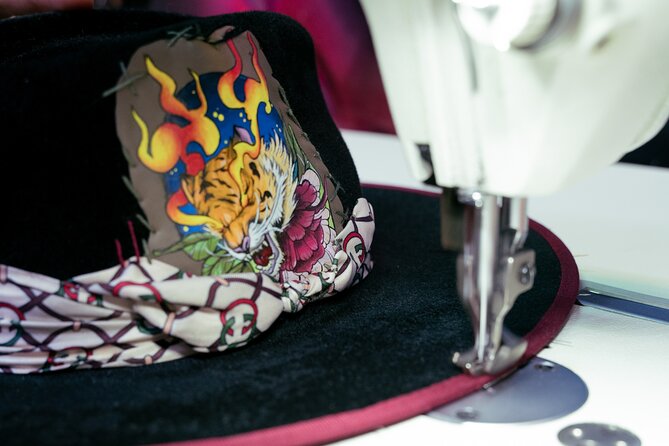
Language is the one part of this experience that can vary most from group to group. Some instructors speak English well enough for direct conversation. In other sessions, the main instruction is in French, with translation provided through an app and sometimes a Bluetooth speaker.
That arrangement has worked well for many people, but it is not identical to having a fluent English-speaking teacher beside you for every step. Translated instructions can be awkward or funny, and some participants have found that only key directions were translated.
Still, this is a visual class. You watch the demonstration, copy the movements, and receive individual help at the worktable. The process does not depend on long lectures. If you do not speak French, pay close attention when the instructor shows how to steam, stretch, and pin the material.
A bilingual member of the group may also help, but you should not count on that. I would book this confidently if you are comfortable learning by watching and doing. If you need detailed verbal instruction in English at every stage, the language mix may frustrate you.
Same city, a completely different afternoon:
- Paris: Louvre Museum Timed-Entrance Ticket
★ 4.6 · 71,977 reviews - Disneyland® Paris 1-Day Ticket
★ 4.6 · 49,412 reviews - Paris: Versailles Palace and Gardens Full Access Ticket
★ 4.6 · 41,579 reviews - Paris: Evening River Cruise with Music
★ 4.4 · 22,721 reviews
Decorating the hat at the atelier
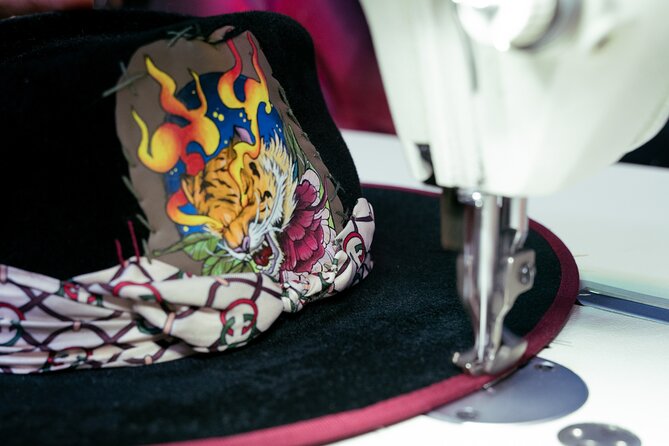
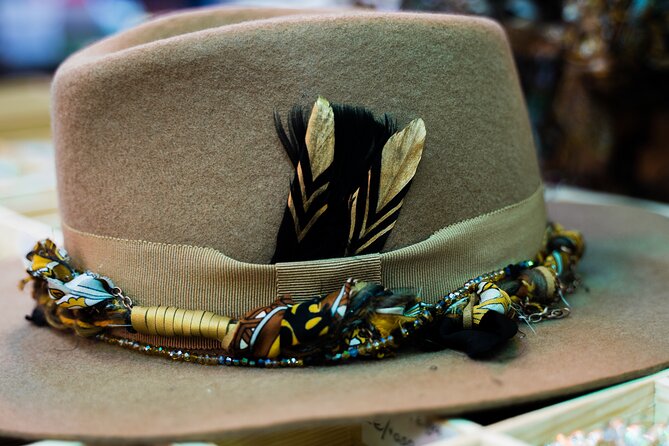
Once the base is shaped, you choose how to finish it. Ribbons, feathers, scarves, buttons, charms, and other decorative pieces are available. This is where the plain hat becomes personal.
The basic price does not cover every possible adornment. Several accounts indicate that a ribbon and a feather may be included, while additional pieces carry separate charges. Some buttons and designer details can be costly, with certain branded buttons priced at more than $100 each.
Set a decoration budget before you arrive. You do not need to spend heavily to make a good-looking hat. A tasteful ribbon, one feather, or a simple trim may be enough. If you want a theatrical piece with several charms and premium buttons, expect the price to rise.
The instructor handles sewing that requires a machine, such as attaching certain ribbons, buttons, or other details. You still make the key design decisions, but you are not expected to perform every technical sewing task yourself.
This stage can take longer than expected. Participants who add special brim edging or more elaborate trim have stayed from roughly 9 a.m. to 1 p.m. The official estimate is about three hours, but four hours is a sensible allowance, especially if the group is large or your decoration requires extra work.
Group size, space, and the pace of the class

The maximum group size is 10, though sessions can be smaller. A small group can give you more direct help, while a full class may mean waiting for the instructor to move from one person to the next.
The workroom is not a large studio. One account describes eight people sharing a small table, with limited seating and only one mirror for trying on sample styles. Conditions can feel hot, noisy, and crowded, particularly when the class is full.
That matters because shaping a hat requires room to move around the table. You may be carrying steaming material, handling tools, or waiting for space at a particular station. The instructor may be excellent, but one person can only help one participant at a time.
I would avoid scheduling a museum visit, dinner reservation, or train immediately afterward. The class may finish on time, but the work often takes longer than the three-hour estimate. A relaxed afternoon or evening is the safest plan.
There are lockers for personal belongings, though one account raised concerns about a locker being left open at the end of the class. Keep important documents and valuables secure, and check your locker before leaving. The meeting point is also the end point, so there is no second location to reach afterward.
Is $175.36 a good value?
The listed price is $175.36 per person. That is not a small amount for a three-hour activity, especially once you consider possible charges for decorations. The value depends on what you want from a Paris souvenir.
If your goal is the least expensive hat, this is not the right choice. Paris has many shops where you can buy headwear without paying for instruction, materials, and several hours of work. You also need to watch the add-on costs at the atelier.
If you want a personal object and a creative activity, the price makes more sense. You receive instruction, materials, access to professional tools, and a finished hat that reflects your choices. You also learn why a handmade hat costs more than a factory-made one.
The strongest value comes when you take part fully. You are not watching a designer make something while you pose for photographs. You steam, stretch, press, and shape the material yourself. That work gives the final hat meaning, and it helps explain the price of custom millinery.
I would set aside extra money for trim, but you can keep the final cost under control by choosing from the included options. Ask which decorations are covered before selecting anything special. That simple question can prevent an unwelcome surprise at the end.
Getting to Rue de Turbigo

The meeting point is 25 Rue de Turbigo, 75002 Paris, and the atelier is near public transportation. You receive confirmation when booking, and the activity begins and ends at the same address.
Allow enough time to find the entrance and get settled. This is a working shop rather than a major monument with an obvious ticket gate, so arriving rushed would make the opening decisions harder.
The 2nd arrondissement location works well for pairing the class with other central Paris plans, but do not try to squeeze in too much beforehand. Your material and style choices deserve attention, and the session may stretch past its expected finish.
Who will enjoy this workshop most?
I recommend it to people who like making things, fashion fans, and anyone who wants a souvenir with a story attached. It also suits couples and families because each person can create a different design.
It is a good choice for an older child or teenager with an adult, provided they are comfortable standing and following instructions. The class is interactive, so it gives families something to do together instead of simply moving from one display to another.
You should think twice if you dislike physical crafts, crowded workspaces, or flexible schedules. The work can be tiring, the class may be conducted mainly in French, and a full group can feel crowded.
It also may not suit someone looking for a polished luxury service. You are expected to do real work. The reward is not just the final hat, but the process of learning how it takes shape.
Cancellation and practical details
You can cancel up to 24 hours before the local start time for a full refund. Changes or cancellations made less than 24 hours before the start are not refunded, and changes inside that window are not accepted.
The activity requires a minimum number of participants. If that minimum is not met and the session is canceled, you are offered another date or experience, or a full refund.
The workshop is offered in English, but the actual teaching language may vary by instructor and group. Translation support has been used successfully, but you should be ready for demonstrations and French instruction. Most people can participate, and children must have an adult with them.
Should you book this Paris hat workshop?
Book it if you want to make something personal and do not mind getting your hands dirty. The most praised parts are the patient guidance, the wide selection of materials, the unusual atelier setting, and the satisfaction of leaving with a hat you shaped yourself.
Before booking, accept three facts: the class may last four hours, language support may rely on translation technology, and decorations can cost extra. Wear comfortable shoes, bring water, leave your afternoon open, and decide how much you want to spend on trim.
For a creative souvenir with real craft behind it, this is a strong Paris choice. For a quick, quiet, all-inclusive activity, choose something else.
FAQ
Where does the hat-making workshop take place?
The workshop takes place at Chapellerie MiniMe Paris, at 25 Rue de Turbigo, 75002 Paris, France. It starts and ends at the same meeting point.
How long does the workshop last?
The stated duration is about three hours. You should allow extra time because some sessions run closer to four hours, especially when participants add special finishing details.
What kinds of hats can I make?
You can choose from classic shapes such as a fedora, trilby, boater, capeline, or cap. Your instructor helps you select a shape, material, and wooden block suited to your design and head size.
What materials are available?
Options include around 30 colors of merino wool or rabbit felt, natural straw, and other traditional or contemporary materials. The available choices depend on the workshop selection.
Is the class taught in English?
The experience is offered in English, but some sessions are taught mainly in French. Translation apps, demonstrations, and individual assistance are used to help participants follow the process.
Are decorations included in the price?
Some basic decorations, such as a ribbon and feather, may be included. Extra feathers, scarves, charms, buttons, and other special details can cost more, so ask about prices before choosing additional pieces.
Just added around Paris
- Private Paris Marche d’Aligre Walking Tour with Tastings★ 5.0 · 8 reviews
- Private Louvre Museum Tour for Kids & Families with Alberto or his team in Paris★ 5.0 · 41 reviews
- Private Highlights of Paris Tuk-Tuk Experience★ 5.0 · 26 reviews
- Paris Latin Quarter Walking Tour: History & Culture – Small Group★ 5.0 · 14 reviews
- Private Highlights of Paris Bike Tour★ 4.5 · 15 reviews
- Paris Musee d’Orsay PRIVATE TOUR with a Local Private Guide★ 5.0 · 41 reviews
- Private Half Day Historic Tour★ 5.0 · 58 reviews
- Pere Lachaise Cemetery Paris – Exclusive Guided Walking Tour★ 5.0 · 72 reviews
Paris Perfume and Craft Workshops, compared.




Paris Create your Own Perfume Workshop with a Perfumer
Read our review →

Perfume Making Class and Guided Visit of Fragonard Perfume Museum
Read our review →
Design Luxury and Personalized Jewelry in Paris le Marais
Read our review →
Browse the lists this tour appears in