
Reviewed · NOTRE-DAME AND SAINTE-CHAPELLE TOURS
Medieval Paris: Notre Dame, Sainte Chapelle and Conciergerie
The best part of this tour is its setting: Île de la Cité, the island at the heart of Paris where the city’s medieval story comes alive in a compact, walkable area. In three hours, you move from the carved façade of Notre-Dame to Sainte-Chapelle’s walls of stained glass, then into the old royal palace and prison known as the Conciergerie.
I like the private format, which gives you room to ask questions and adjust the pace. I also like the way the tour connects grand architecture with human stories, from medieval kings and sacred relics to Marie Antoinette’s imprisonment. The main consideration is timing: the visit covers a lot, and Notre-Dame entry can involve a free reservation or a long walk-in queue during busy periods.
Key points to know before booking
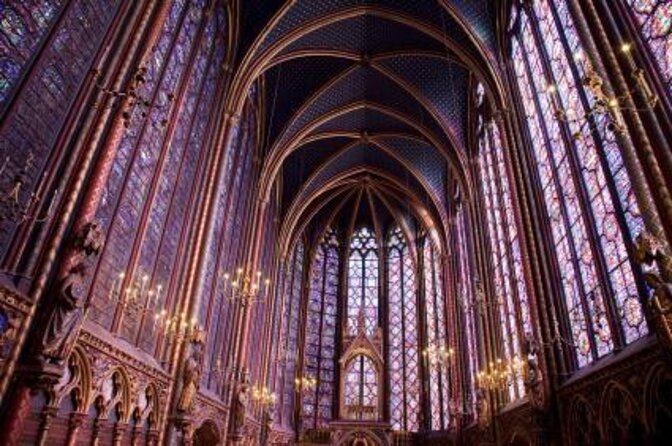
- Sainte-Chapelle gets the full treatment, including its lower and upper chapels and the royal relic linked to its construction.
- Notre-Dame is covered inside and out, with attention to its Gothic façade, gargoyles, restoration, and modern building methods.
- The Conciergerie adds a darker edge, with royal history, prison cells, and the French Revolution.
- The private group can include up to four people for $718.94, making the cost easier to justify for a small family or group.
- Guides are a major part of the experience, with Elise, Isabelle, Raphaëlle, Thomas, and others praised for clear English and lively storytelling.
- The tour lasts about three hours, and all three main sights are close enough to reach on foot.
Starting on Île de la Cité, the medieval heart of Paris
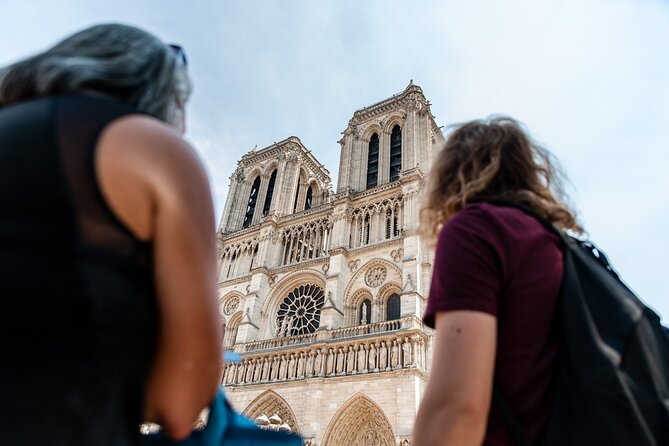
You meet your guide at Cité, 75004 Paris, in front of Notre-Dame. This is a practical starting point because Île de la Cité puts all the main sights within easy walking distance. You do not lose time crossing the city between stops.
The island was adopted as a home by the Parisii tribe more than 2,000 years ago and is often described as the historical center of Paris. Your guide uses that setting to explain how the city grew around the Seine and why this small island became so important.
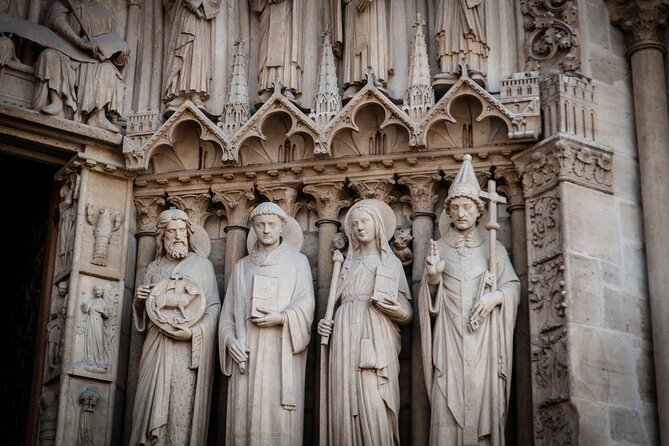
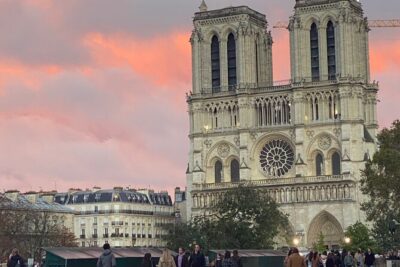
The first look at Notre-Dame is from outside. That gives your guide time to point out the details most people miss when they simply arrive, take a photo, and move on. You learn the difference between a gargoyle and a grotesque, while the stone façade becomes a kind of medieval picture book filled with carved figures and religious scenes.
The 2019 fire is part of the modern story of the cathedral. The tour explains the damage to the roof and spire, along with the continuing restoration. You also hear about the blend of old and new construction methods used to care for this famous building.
This opening section is especially useful if you enjoy architecture. You are not only looking at a large Gothic church. You are learning how to read its façade, understand its purpose, and notice the small details that give the building its character.
More Notre-Dame and Sainte-Chapelle Tours:
- Paris Île de la Cité and Notre-Dame Walking Tour With Crypt
★ 5.0 · 2,272 reviews - Paris: Eternal Notre-Dame VR Experience Ticket
★ 4.4 · 1,150 reviews - Paris: Notre-Dame Cathedral Exterior Tour & Free Entrance
★ 3.7 · 1,010 reviews
Sainte-Chapelle and the power of stained glass
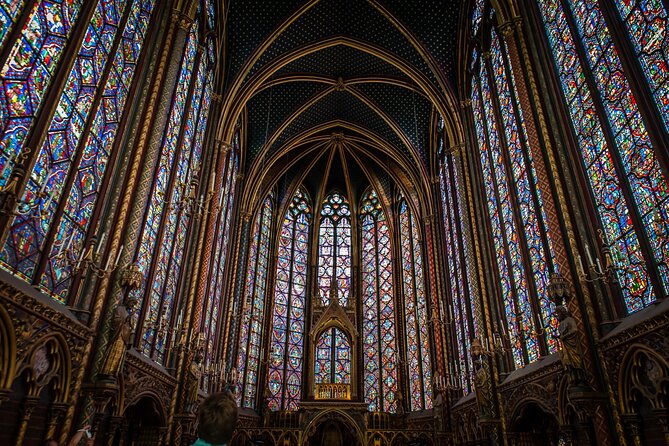
Sainte-Chapelle is the visual high point of the tour. Its upper chapel is famous for walls that seem to dissolve into stained glass, leaving only slender stone supports between the tall windows. The effect depends heavily on the light, but the chapel remains striking even when the day is gray.
Your guide explains the king behind this costly project and the important relic for which the chapel was built. That context matters. Without it, Sainte-Chapelle can look like a beautiful glass box. With the story, you see it as a royal statement of faith, wealth, and political power.
The visit includes both the lower and upper chapels. The distinction between them helps you understand how the building separated the earthly world from the divine space above. One part feels more grounded and intimate, while the upper chapel was designed to impress.
Plan on about an hour here. That is enough time to look closely at the windows, listen to the explanation, and ask questions without rushing through every panel. If you enjoy photography, this is likely to be the stop that fills your camera roll, although the guide’s commentary gives the pictures more meaning.
The tour’s private setup works well inside Sainte-Chapelle. You can ask about the images in the glass, the chapel’s purpose, or the people who commissioned it. Guides such as Elise and Isabelle have been praised for making the details easy to follow, and Isabelle used an iPad to show drawings and additional visual information during one visit.
The Conciergerie, from royal palace to feared prison
The Conciergerie changes the mood. This building began as part of a royal palace before becoming a prison. Its vaulted rooms and thick medieval spaces feel very different from Sainte-Chapelle’s glowing glass.
The Salle des Gens d’Armes is a major feature. It is described as the largest Gothic hall in the world, and its scale helps you picture the former palace complex. Your guide explains how the building functioned before its prison years, so you see more than a place associated only with the French Revolution.
The prison section shows how detainees lived according to social status. Some prisoners had better conditions, while others faced far harsher treatment. That contrast makes the building’s past more concrete than a simple list of dates and names.
Marie Antoinette’s final days receive particular attention. You retrace her connection to the prison and the journey that ended at the guillotine. The story gives the Conciergerie a personal focus, while the architecture provides the larger setting.
The scheduled visit is about 30 minutes, though the exact pace can depend on your guide and the group. One past visit ran longer because the guide continued answering questions. That flexibility is useful, but it also means you should keep an eye on the clock if you have a later booking.
If the Conciergerie is closed during your visit, the experience includes the Cluny Middle Ages Museum instead. That change preserves the medieval focus, though it is worth checking the plan close to your date if this site is a priority.
Returning to Notre-Dame after the story has been set
The tour returns to Notre-Dame for the final portion. By this point, you have seen the medieval island, the royal chapel, and the prison. That makes the cathedral feel less isolated. It becomes part of a much larger story about religion, monarchy, public life, and the changing city.
Your guide continues the discussion of gargoyles and the cathedral’s architecture, then explains what you can expect inside. The plan allows about 30 minutes for Notre-Dame.
Entry to Notre-Dame itself is free. You may reserve a free time slot through the cathedral’s official website, or you may try to walk in. The practical warning is simple: queues can be long during busy seasons and peak times. The tour’s guided service is separate from the cathedral’s free entry rules, so you should pay attention to the instructions given for your date.
The restored interior is the focus of this final visit. You see the results of the rebuilding work and the way modern restoration supports the cathedral’s older design. This is not simply a return to the same exterior you saw at the start. You now have more context for the structure and its survival.
The timing may feel a little tight if the cathedral queue is slow. Ask your guide about the best plan at the beginning of the tour, especially if your Notre-Dame visit requires a reserved slot. Guides have shown a willingness to help with current information and practical details, including checking updates with cathedral staff.
Same city, a completely different afternoon:
- Paris: Louvre Museum Timed-Entrance Ticket
★ 4.6 · 71,977 reviews - Disneyland® Paris 1-Day Ticket
★ 4.6 · 49,412 reviews - Paris: Versailles Palace and Gardens Full Access Ticket
★ 4.6 · 41,579 reviews - Paris: Evening River Cruise with Music
★ 4.4 · 22,721 reviews
What the private format adds
This is a private activity for your group alone, with a maximum of four people. That makes it a different product from a large walking tour. You can ask for clarification, linger over a favorite detail, or tailor the explanation for children.
One guide, Raphaëlle, was praised for adjusting the information to keep children interested. That is a useful sign for families, since medieval history can lose younger listeners when it becomes a string of dates and names. The sites themselves help, but the guide’s storytelling style matters just as much.
The guide lineup varies. Elise Girard is praised for her fluent English, friendly manner, and strong command of the sites. Isabelle is noted for using an iPad with drawings and visual material. Raphaëlle, Thomas, Malaïka, Anaïs, William, Stefanie, and others have also received strong marks for warmth, clarity, and enthusiasm.
That does not mean every guide will use the same approach. It does mean the company has several guides who can bring personal energy to the subject. If you have a special interest in architecture, royal history, the Revolution, or family-friendly explanations, mention it when booking or at the start.
Is $718.94 good value for four people?
The price is $718.94 per group of up to four. That is a large total if you are alone or traveling as a pair, but it becomes more reasonable when divided among four people. The cost includes admission to Sainte-Chapelle and the Conciergerie, along with the private guide.
For four people, the price works out to about $180 per person. You are paying for a dedicated guide rather than just entry tickets and an audio recording. The value depends on how much you want interpretation and flexibility. If you already know the history and prefer to move independently, the price may feel high.
For a family, two couples, or a small group that wants a focused introduction to medieval Paris, the calculation is better. You cover three major sites in about three hours, and the walking between them is easy. You also avoid spending time figuring out how the buildings connect historically.
The tour is often booked about 61 days ahead, so advance planning is sensible. That is especially true if you want a particular date or need to coordinate the visit with a free Notre-Dame entry slot.
Who will get the most from this tour?
I would choose this experience if you are especially interested in medieval architecture, French royal history, Gothic churches, or the French Revolution. It gives you a strong historical thread instead of treating each building as a separate photo stop.
It also suits first-time visitors who want a clear introduction to Île de la Cité. The sites are close together, and the route is easy to understand. You can get your bearings quickly while still seeing major landmarks.
Families may appreciate the private setup. The guide can adjust the level of detail and respond when children lose interest or become curious about a particular room, carving, or prison story.
I would think twice if you want a slow, specialist study of every stained-glass window or a long architectural lecture. Three hours passes quickly, and each site has enough material for a much longer visit. The tour gives you an intelligent overview, not an exhaustive examination of every object.
You should also factor in the emotional tone. Sainte-Chapelle is uplifting and visually dazzling, while the Conciergerie deals with imprisonment and executions. The contrast is part of the appeal, but it may not suit someone looking only for churches and beautiful views.
Practical details that shape the experience
The tour is offered in English and uses a mobile ticket. Confirmation arrives when you book. The meeting point is at Cité, and the activity finishes back at the meeting point.
Most people can take part, and the route stays within the Île de la Cité area. Wear comfortable shoes because the experience involves walking between sites and standing inside busy historic buildings.
Notre-Dame deserves the most planning. Admission is free, but the cathedral may require a free time slot or involve a long wait for walk-in entry. Since the tour includes guided access but does not control the cathedral’s public entry system, confirm the current procedure before you go.
You can cancel without penalty up to 24 hours before the start time. Changes or cancellations made less than 24 hours ahead are not refunded.
Should you book Medieval Paris?
Book it if you want a private, story-led introduction to the medieval center of Paris, especially if you are visiting as a group of up to four. The combination of Sainte-Chapelle’s stained glass, the Conciergerie’s prison history, and Notre-Dame’s restoration gives you a strong mix of beauty, power, faith, and human drama.
The clearest reason to book is the guide. Elise, Isabelle, Raphaëlle, Thomas, and the other named guides have been praised for making complicated history understandable and personal. The main caution is price for smaller groups, plus the need to plan Notre-Dame entry carefully.
For history-minded visitors, families, and anyone who wants more than a quick photograph at the cathedral, this is a well-focused way to spend three hours on Île de la Cité.
FAQ
How long does the Medieval Paris tour last?
The experience lasts about three hours. The planned schedule includes roughly one hour at Notre-Dame and Île de la Cité, one hour at Sainte-Chapelle, 30 minutes at the Conciergerie, and 30 minutes at Notre-Dame Cathedral.
Is the tour private?
Yes. Only your group participates, with a maximum of four people.
Is Notre-Dame admission included?
Entry to Notre-Dame is free for everyone. The tour provides guided access and information, but cathedral entry operates separately. You may reserve a free time slot through the cathedral’s official website or try walking in.
Do I need a reservation for Notre-Dame?
A free time slot may be booked through the official Notre-Dame website. You can also walk in, but queues may be long during busy periods and seasons.
What happens if the Conciergerie is closed?
The experience includes the Cluny Middle Ages Museum during Conciergerie closures.
Can I cancel for a full refund?
Yes, if you cancel at least 24 hours before the experience’s start time. Cancellations or changes made less than 24 hours in advance are not refunded.
Just added around Paris
- Private Paris Marche d’Aligre Walking Tour with Tastings★ 5.0 · 8 reviews
- Paris Latin Quarter Walking Tour: History & Culture – Small Group★ 5.0 · 14 reviews
- Private Louvre Museum Tour for Kids & Families with Alberto or his team in Paris★ 5.0 · 41 reviews
- Private Highlights of Paris Tuk-Tuk Experience★ 5.0 · 26 reviews
- Private Highlights of Paris Bike Tour★ 4.5 · 15 reviews
- Paris Musee d’Orsay PRIVATE TOUR with a Local Private Guide★ 5.0 · 41 reviews
- Private Half Day Historic Tour★ 5.0 · 58 reviews
- Pere Lachaise Cemetery Paris – Exclusive Guided Walking Tour★ 5.0 · 72 reviews
Notre-Dame and Sainte-Chapelle Tours, compared.
Paris Île de la Cité and Notre-Dame Walking Tour With Crypt
Read our review →

Notre-Dame Cathedral Exterior Tour & Free Entrance
Read our review →
Paris Highlights Bike Tour: Eiffel Tower, Louvre and Notre-Dame
Read our review →
Early Access Paris Notre Dame Cathedral Walking Tour
Read our review →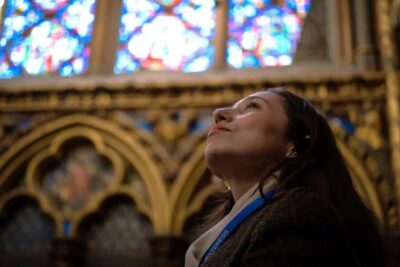
Sainte-Chapelle, Conciergerie, Notre Dame Guided Tour
Read our review →
Notre Dame Outdoor Tour with Sainte-Chapelle / Crypt.
Read our review →
Notre Dame Outdoor Walking Tour and Entrance to Sainte Chapelle
Read our review →Browse the lists this tour appears in