Reviewed · PRIVATE
Medieval Paris Private Tour
Paris reveals its medieval past best on foot, one stone, tower, and street at a time. This private tour links Notre-Dame, the Sorbonne, and the Latin Quarter with less obvious clues around Les Halles and Centre Pompidou.
I like the art historian guide and the private format. You can ask why a Gothic tower matters, how a medieval university worked, or what life was like around a public fountain. The drawback is clear: this is an outdoor walking tour, and several important interiors, including the Cluny Museum and Notre-Dame, are not part of the visit.
Key points to know before booking
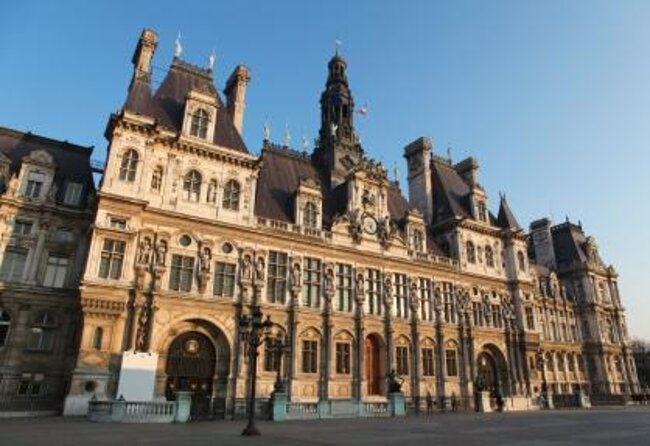
- A seven-stop walk through medieval Paris: The route covers the Cluny Museum, Notre-Dame, Sorbonne, Tour Saint-Jacques, Fountain of the Innocents, Centre Pompidou, and Hôtel de Ville.
- An art historian leads the way: Guides such as Amy and Caroline explain architecture, religion, education, public life, and the political role of Paris.
- A private group makes questions easy: The advertised price is $360.48 for up to six people, rather than a per-person charge.
- The tour stays outside major sites: You see and discuss the monuments, but museum admission and cathedral entry are not included.
- The route connects old and new Paris: Centre Pompidou becomes part of the medieval story, not a break from it.
- Plan for a steady two-hour walk: You need moderate physical fitness, and hotel pickup, food, and drinks are not included.
Why this route gives Paris a different starting point
Many first visits to Paris begin with famous names: Notre-Dame, the Sorbonne, the Latin Quarter, Les Halles. This walk changes the order in which you understand them. Instead of treating each sight as a separate photo stop, the guide connects them to the medieval city that grew around the Île de la Cité and the Seine.
The tour begins at 98 Boulevard Saint-Germain, a central meeting point in the Latin Quarter. It ends by the Stravinsky Fountain beside Centre Pompidou at 26 Rue Saint-Merri. That start and finish make sense geographically, since you move across a large section of central Paris rather than circling one small neighborhood.
You will spend about 20 minutes at most stops, with shorter visits at the Sorbonne and Centre Pompidou. That timing gives the guide room to explain the setting without turning the walk into a series of rushed photographs.
The private setup is especially useful here. Medieval Paris can raise more questions than a standard sightseeing tour has time to answer. You can ask about Gothic design, pilgrimage, university life, religion, sanitation, trade, or the way modern architects borrow from the Middle Ages.
Guides Amy and Caroline have both led this experience. Caroline is especially good at correcting modern assumptions about the years from 1100 to 1500, while Amy brings an easy mix of historical detail and humor. The guide assigned to your visit may differ, but the art historian background is central to the experience.
More private tours in Paris:
- Paris: Private Photoshoot at the Eiffel Tower
★ 4.7 · 2,636 reviews - Top Private Cruises in Paris with French Champagne and surprises
★ 5.0 · 1,553 reviews - Private Paris Airport Arrival Transfer – CDG & ORLY Airports
★ 4.5 · 1,119 reviews
Musée de Cluny, where the old city still feels close
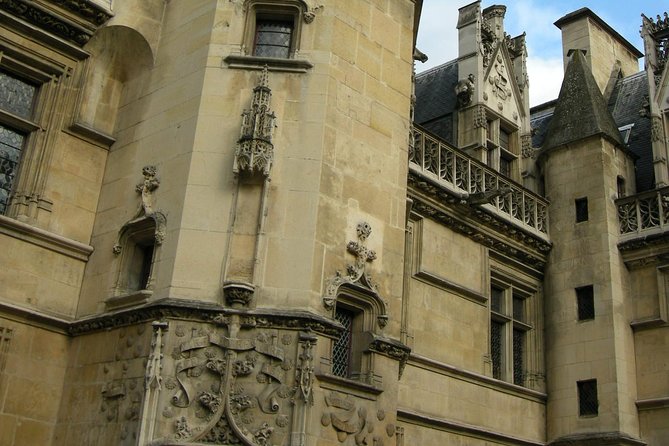
The Musée de Cluny is the first stop, with about 20 minutes devoted to the building and its medieval setting. You do not enter the museum, and that matters if you hoped to see its collection. Admission is not included because the interior would require a separate visit.
Even from outside, the site gives the guide a useful way to explain how medieval Paris was built and rebuilt. The building itself reflects the period under discussion, so the conversation begins with something tangible rather than a general lecture.
I would treat this stop as an introduction, not a museum visit. If you have time later, you can return to explore the Museum of the Middle Ages on your own, but the tour does not include that extension.
Notre-Dame from the Île de la Cité
Notre-Dame receives about 20 minutes of explanation from outside. Because the cathedral suffered a fire, it is not accessible as part of this experience, so you should not book the tour expecting an interior visit.
The guide places the cathedral on the Île de la Cité, the site tied to the earliest founding of Paris. That setting helps you see Notre-Dame as more than a famous Gothic church. It was part of the city’s religious, political, and urban center.
From the outside, look for the features your guide points out rather than simply taking the standard cathedral photograph. The value here comes from context: why the building took the form it did, how Gothic structures expressed religious ideas, and how the cathedral fit into medieval Paris.
The outdoor format also means weather can affect your enjoyment. Bring suitable shoes and clothing, since the explanation takes place on the street rather than in a quiet indoor gallery.
The Sorbonne and the medieval university
The Sorbonne stop lasts about 10 minutes, making it one of the shorter pauses. The focus is not a long interior tour. Instead, the guide explains the importance of the University of Paris and the role of universities during the Middle Ages.
This is a useful correction to the way many people think about old European universities. The word university can sound modern, but the medieval institution shaped religious debate, scholarship, and the social life of Paris in ways that still influence the city.
You will likely get more from this stop if you ask questions. A private guide can explain how the university affected the neighborhood and why the Latin Quarter became associated with learning. Ten minutes is enough for a sharp overview, but not enough for a full academic history.
Same city, a completely different afternoon:
- Paris: Louvre Museum Timed-Entrance Ticket
★ 4.6 · 71,977 reviews - Disneyland® Paris 1-Day Ticket
★ 4.6 · 49,412 reviews - Paris: Versailles Palace and Gardens Full Access Ticket
★ 4.6 · 41,579 reviews - Paris: Evening River Cruise with Music
★ 4.4 · 22,721 reviews
Tour Saint-Jacques and the world of pilgrimage
Tour Saint-Jacques receives about 15 minutes. The tower is a striking example of Flamboyant Gothic design and carries several layers of meaning. It was linked to pilgrims, but also to astrologers and alchemists in Paris.
That mixture makes the stop more interesting than a simple church-tower visit. You hear about formal religious practice alongside less official pursuits that occupied medieval minds. The tower also gives the guide a chance to explain how Gothic detail could become highly decorative and expressive.
The tour does not promise access to the tower. You view it from the route and learn why it mattered. For many people, this is one of the most distinctive stops because it connects architecture with pilgrimage and unusual corners of medieval intellectual life.
Fountain of the Innocents and daily life in Paris
The Fountain of the Innocents gets about 20 minutes, and this may be the best place to understand ordinary urban life. The subject is not only beauty. The guide also addresses the harsh and sometimes cruel conditions of medieval Paris.
A public fountain tells you about water, crowds, health, movement, and the basic demands of city life. It also brings the discussion down from kings and cathedrals to the people who lived, worked, traded, and struggled in the streets.
This is where the tour becomes especially useful for anyone who wants more than a parade of grand monuments. The fountain helps you picture a city that was attractive and inventive, but also difficult and unforgiving.
The surrounding area is modern in many ways, so do not expect an untouched medieval setting. The point is to learn how to recognize surviving symbols and architectural traces among later construction.
Centre Pompidou and medieval ideas in a modern building
Ending at Centre Pompidou may seem odd on a medieval tour. The building was designed as a symbol of modernity, but the guide explains how its ideas and forms draw from the medieval period.
This stop lasts about 15 minutes and shows how the past can appear in a building that looks radically new. It is a good reminder that historical influence does not always mean copying old stonework. Designers can borrow ideas about structure, display, public space, and the way a building announces itself.
The route ends beside the Stravinsky Fountain, at 26 Rue Saint-Merri. That gives you a clear finishing point near a major cultural area, though the tour does not include admission to Centre Pompidou or the fountain area as a separate attraction.
From here, you can continue exploring the Marais or the Les Halles area on your own. The tour explains that Les Halles served as Paris’s central marketplace as early as the 12th century, so the modern shopping district carries an older story beneath its current appearance.
Hôtel de Ville and the power of Paris
The Hôtel de Ville stop lasts about 15 minutes. Its Renaissance façade can make the site look later than it is, but the institution connected to it has deep medieval importance.
This is a good place to think about city government rather than only art and religion. Paris needed systems to manage trade, public order, commerce, and civic life. The guide explains why this site mattered to the medieval city, even though much of what you see today reflects later rebuilding.
The stop adds balance to the route. Notre-Dame represents religion, the Sorbonne represents learning, the marketplace represents commerce, and Hôtel de Ville represents civic authority. Together, they give you a working picture of Paris rather than a list of pretty buildings.
What the private format is worth
The price is $360.48 per group of up to six people. That works out to about $60 per person for a full group of six, or about $120 each for three people. For a couple, the per-person cost is high, but you are paying for a private two-hour guide rather than joining a large shared group.
The value improves if your group has a strong interest in history or art. You can keep the conversation focused, stop to ask questions, and benefit from explanations suited to your age group and background. Families may also appreciate not having to match the pace of strangers, though children must be accompanied by an adult.
Food, drinks, hotel pickup, and hotel drop-off are not included. Since the walk begins and ends in central Paris, you need to arrange your own way to Boulevard Saint-Germain and away from Rue Saint-Merri.
The booking information gives a maximum of 10 people per booking, while the stated price covers up to six. If your party has more than six, confirm the current group pricing before paying.
How to prepare for the two-hour walk
Wear comfortable shoes and expect a moderate level of physical activity. The experience moves between several central districts and includes outdoor standing at each stop.
Keep the schedule flexible around the tour. It is not wise to book a tight museum reservation immediately afterward, since walking time and questions can vary. The tour is approximately two hours, but you will want a little breathing room before the next fixed activity.
A rainy day will not erase the value of the history, but it can make the outdoor stops less pleasant. Bring weather protection and remember that the tour does not shift into museum interiors if conditions change.
If possible, eat before or after the walk. No food or drinks are provided, and the tour is designed around explanation rather than a café break.
One useful bonus is the local orientation at the end. Caroline once directed a group to a pleasant square on the Île de la Cité for lunch and a glass of wine, with the option of borrowing pétanque balls from the waiter. That sort of practical local suggestion is exactly the kind of benefit a private guide can add, though it is not a formal part of the tour.
Who will enjoy this Paris walk most
I would choose this tour if you want to understand how Paris developed rather than simply collect famous views. It suits adults who like architecture, art, religion, urban history, and the odd story about pilgrims or alchemists.
It is also a strong choice for a family or small group with mixed knowledge levels. You can ask for a simpler explanation, or push into more detail without worrying about slowing down a larger party.
The tour is less suitable if your main goal is entering monuments. You do not visit inside Musée de Cluny or Notre-Dame, and the other stops are viewed from the route. If interior access matters most, you should plan separate visits.
The experience also favors people who enjoy conversation. The walking itself is straightforward, but the point is the interpretation. You are not just moving from one landmark to another.
Should you book Medieval Paris Private Tour?
Book it if you want a compact, private introduction to the city between roughly 1100 and 1500, led by an art historian who can connect Gothic churches, universities, fountains, government, markets, and modern architecture.
The strongest reasons to go are the personal questions and tailored discussion, plus the route’s unusual link between medieval Paris and Centre Pompidou. The main reason to hesitate is the lack of interior access, especially at Notre-Dame and the Cluny Museum.
For a full group of six, the price is reasonable for a private guide. For one or two people, it is a more serious splurge, but the focused attention may justify it if medieval history is high on your Paris list. Book with at least 24 hours to spare if you want the option of a full refund should plans change.
FAQ
How long is the Medieval Paris Private Tour?
The tour lasts approximately two hours.
Where does the tour begin?
It begins at 98 Boulevard Saint-Germain, 75005 Paris, France.
Where does the tour end?
It ends at 26 Rue Saint-Merri, 75004 Paris, beside the Centre Pompidou and the Stravinsky Fountain.
Is Notre-Dame visited from inside?
No. Because the cathedral suffered a fire and is not accessible for this experience, the guide discusses Notre-Dame from outside.
Is admission to the Musée de Cluny included?
No. The tour discusses the building from outside, but does not enter the museum.
How much does the tour cost?
The stated price is $360.48 per group of up to six people. The additional booking information gives a maximum of 10 people per booking, so larger groups should confirm pricing before booking.
Is the tour private?
Yes. Only your group participates. An art historian guide leads the walk, and the advertised language is English.
What does the price include?
It includes a professional art historian guide. Food, drinks, hotel pickup, and hotel drop-off are not included.
Can I cancel for a full refund?
Yes, if you cancel at least 24 hours before the experience starts. Cancellations or changes made less than 24 hours before the start time are not refunded or accepted.
Just added around Paris
- Private Paris Marche d’Aligre Walking Tour with Tastings★ 5.0 · 8 reviews
- Private Louvre Museum Tour for Kids & Families with Alberto or his team in Paris★ 5.0 · 41 reviews
- Private Highlights of Paris Tuk-Tuk Experience★ 5.0 · 26 reviews
- Paris Latin Quarter Walking Tour: History & Culture – Small Group★ 5.0 · 14 reviews
- Private Highlights of Paris Bike Tour★ 4.5 · 15 reviews
- Paris Musee d’Orsay PRIVATE TOUR with a Local Private Guide★ 5.0 · 41 reviews
- Private Half Day Historic Tour★ 5.0 · 58 reviews
- Pere Lachaise Cemetery Paris – Exclusive Guided Walking Tour★ 5.0 · 72 reviews
Private, compared.

Top Private Cruises in Paris with French Champagne and surprises
Read our review →
Private Paris Airport Arrival Transfer – CDG & ORLY Airports
Read our review →
Paris Private Arrival Transfer from Charles de Gaulle (CDG) or Orly (ORY)
Read our review →
Private Montmartre Food Tour with Wine, Cheese & Pastries
Read our review →
Louvre Museum Timed Entry Ticket – Optional Private Guide
Read our review →