
Reviewed · PARIS PHOTO SHOOTS
Paris Photography Masterclass – Private Photography Lesson
Paris becomes a very different place when you stop merely collecting landmarks and start asking how to frame them. This private three-hour photography lesson turns a walk from Notre Dame to Place de la Concorde into a hands-on class in composition, exposure, and seeing familiar monuments from better angles.
I like two things right away. First, you get one-on-one help rather than a general lecture, and guides such as Clara, Michiru, Federica, William, and Alexander have adjusted lessons to suit complete beginners, experienced photographers, families, solo visitors, and even one iPhone user. Second, you cover a useful sweep of central Paris while learning, so the city itself becomes your classroom. The main consideration is price: at $205.59 per person, this makes the most sense if you want instruction, not simply a guided walk or a photo shoot.
Key points before you book
- Private instruction for up to four people: Your guide can focus on your camera, your goals, and your pace.
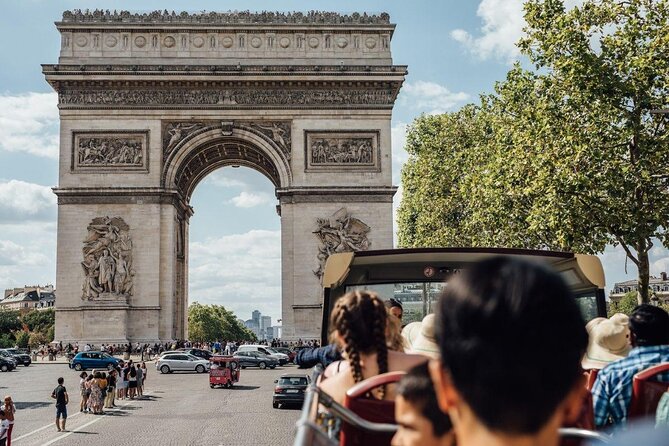
- Four major Paris photo settings: Photograph Notre Dame, the Louvre, the Eiffel Tower over the Seine, and Place de la Concorde.
- Useful for beginners and advanced shooters: Lessons can cover basic settings, composition, manual exposure, long exposures, and night photography.
- Morning through early evening departures: The selected time changes by date, so check carefully before booking.
- A walking lesson with no attraction admissions: You photograph the exteriors and public spaces, rather than entering the monuments.
- Bring your own camera: A DSLR is requested. A tripod may be available if arranged ahead of time.
What this Paris photography class really offers
This is not a standard sightseeing tour with a few camera tips added at the end. It is a private lesson built around moving through Paris and stopping to make photographs. You may work on camera settings at one stop, then shift to foreground, perspective, or timing at the next.
That distinction matters. If you want someone to take polished portraits of you in front of the Eiffel Tower, this may not be the right product. The focus is on helping you make better photographs yourself, though guides have also taken excellent pictures of participants during the walk.
The private format is the strongest feature. With no more than four people in a booking, the guide can look at your camera, answer questions as they arise, and change the lesson when you need more practice. Clara has helped beginners move beyond automatic settings, while Michiru encouraged one participant to shoot manually within the first hour. William has worked on cityscapes at night, and other guides have focused more on composition than technical settings.
You do not need to arrive as a serious photographer. The experience is designed for all levels. If you are new to photography, you might learn how aperture, shutter speed, and exposure affect an image. If you already understand your camera, you can spend more time on visual choices, low-light work, long exposures, or finding unusual viewpoints.
More photo shoots in Paris:
- Paris: Private Photoshoot at the Eiffel Tower
★ 4.7 · 2,636 reviews - Paris: Photoshoot Around Eiffel Tower with 55 Edited Photos
★ 4.8 · 702 reviews - Photo Session in Paris – Photographer at the Eiffel Tower
★ 5.0 · 422 reviews
Starting at Pont Marie and reaching Notre Dame
The meeting point is 3 Pont Marie in the 4th arrondissement, near public transportation. This is a sensible place to begin because you are close to the Seine and Notre Dame, with central Paris unfolding around you from the first steps.
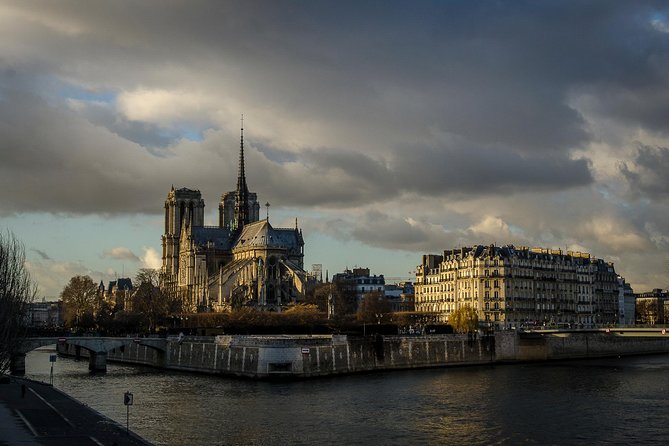
At Notre Dame, you photograph the cathedral from its public surroundings. The planned stop lasts about 30 minutes, which is enough time to try several compositions without turning the visit into a long architectural study.
A guide may ask you to consider how much sky to include, where to place the river or nearby structures, and how to use foreground elements to give a large building more depth. One especially useful lesson from the experience is the value of placing something in front of a monument. A foreground detail can keep a photograph of a famous building from looking flat or predictable.
You should know that admission is not part of the experience. The cathedral is a photographic stop, not an interior visit, and the same general idea applies to the other major sites.
The Louvre courtyard and pyramid
The Louvre section gives you one of Paris’s best settings for practicing lines, symmetry, reflections, and scale. You spend about 30 minutes around the courtyards and pyramid, working with a monument that can look entirely different depending on where you stand.
This is a good place to learn that the obvious angle is rarely the only angle. The pyramid, surrounding buildings, open space, and passing movement give you several ways to build a frame. A beginner can work on focus and exposure, while a more experienced photographer might explore balance, repetition, or a low-light approach if the timing is later in the day.
The Louvre also helps connect technical choices to visual intent. You might want a crisp architectural image, a wider scene showing the courtyard, or a photograph where people provide scale. Your guide can help you decide which camera settings suit that goal.
The drawback is that the time passes quickly. Thirty minutes is useful for focused practice, but it is not enough to exhaust a large site. The lesson is meant to keep moving through Paris, so you should not expect an extended Louvre photo session.
Eiffel Tower views over the Seine
The Eiffel Tower stop focuses on photographing the tower over the Seine, giving you a classic Paris subject with water and open space to work with. The setting is especially useful for learning how to frame a tall structure without making it dominate every inch of the image.
You may work on perspective, balance, and exposure as the guide helps you decide how much of the river, sky, or nearby architecture belongs in the frame. The experience does not promise a single perfect viewpoint, and that is part of its value. Your guide can help you search for a composition that suits your own camera and interests.
Several sessions described in the supplied material took place after dark or around sunset. Those time periods are particularly useful for city photography because changing light gives you a chance to compare exposures. Night sessions have included instruction on tripods, long exposures, aperture priority, manual settings, and cityscapes.
A tripod is available upon request, but it is not automatically included as a guaranteed feature. If you want to practice long exposures, arrange this before the session rather than assuming one will be waiting at the meeting point.
Same city, a completely different afternoon:
- Paris: Louvre Museum Timed-Entrance Ticket
★ 4.6 · 71,977 reviews - Disneyland® Paris 1-Day Ticket
★ 4.6 · 49,412 reviews - Paris: Versailles Palace and Gardens Full Access Ticket
★ 4.6 · 41,579 reviews - Paris: Evening River Cruise with Music
★ 4.4 · 22,721 reviews
Place de la Concorde and the walk toward the end
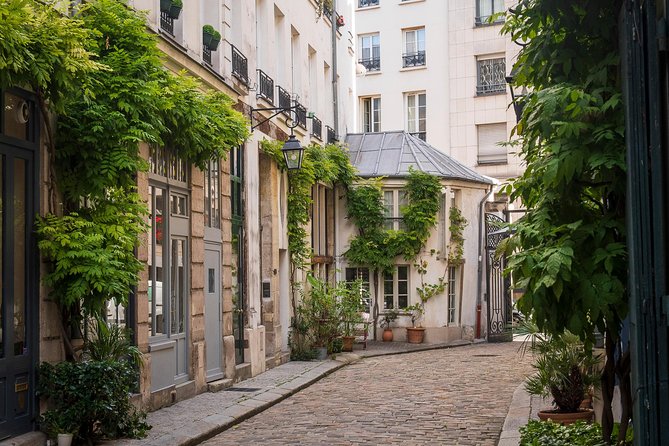
The final planned stop is Place de la Concorde, usually near the end of the walk. You may photograph the fountains or work toward views connected with the Champs Elysees. The tour typically finishes near Concorde, at Quai des Tuileries, though the exact end can vary with walking speed.
This stop gives you a chance to pull together what you have learned. Instead of simply pointing at another grand Paris landmark, you can make choices about foreground, leading lines, balance, and exposure with less prompting from the guide.
The route also gives you a practical overview of central Paris. You are not riding between separate attractions, and transportation to and from the sites is not included. That means you should be ready to walk for roughly three hours, with stops for instruction and photography.
The pace can be adapted because this is a private booking, but the walking element remains important. If you are tired, managing children, or dealing with poor weather, tell the guide early. One rainy session shifted toward the Palais Royal and Louvre area, with Metro use and a cafe stop helping the group cope with torrential rain. That example shows useful flexibility, but it also reminds you that weather can change the shape of the experience.
What you can learn in three hours
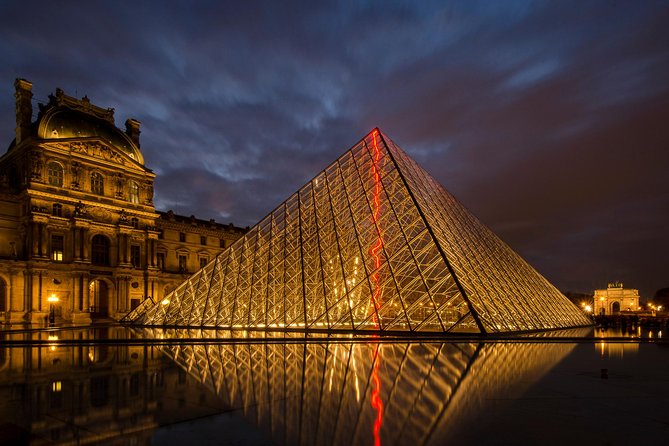
The teaching is practical rather than abstract. You are not just hearing definitions. You are making images, checking results, and getting corrections while the subject is in front of you.
Topics may include:
- Camera settings and exposure
- Aperture priority and manual shooting
- Composition and use of foreground elements
- Perspective and unusual viewpoints
- Low-light photography
- Long exposures with a tripod
- Cityscape photography after dark
- Using the native camera controls on an iPhone
The lesson changes according to your starting point. A beginner may need help locating basic settings and understanding why a photo looks too dark or too bright. Someone with more experience might want direct feedback on framing or help refining night work.
The private structure also lets you set a clear goal. You might want to learn your newly purchased camera, photograph Paris at night, create pictures suitable for printing, or simply stop relying on automatic mode. Guides have worked with each of those needs.
One participant used an iPhone 15 Pro Max rather than a DSLR and received advice on exposure and low-light controls. The official information asks you to bring your own DSLR, so a phone user should confirm suitability before booking. The experience can support phone photography in practice, but the stated equipment guidance is aimed at camera owners.
Daylight, evening, and night sessions
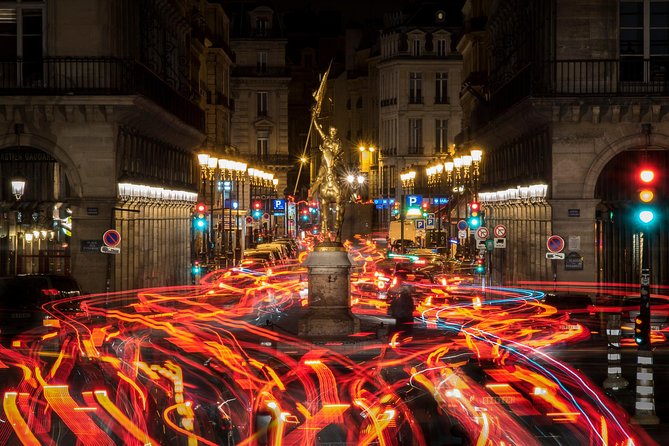
Departure times range from morning through early evening, depending on the selected date. That gives you useful control over the mood of your photographs, but it also means you must check the exact time before confirming your plans.
A morning session may give you cleaner light and a calmer start. An afternoon booking can work well for architectural detail and shifting light. An early evening or night session is the clearest choice if your main goal is long exposure, illuminated monuments, or cityscapes after dark.
Night photography has been a major strength of the teaching. You may work with a tripod, longer shutter speeds, exposure choices, and the challenge of keeping an image sharp in low light. Guides have also helped participants move from automatic shooting toward aperture priority or manual control.
Do not assume every booking is a night tour. The product includes several departure times, and the actual light conditions depend on your date and selected slot. If after-dark photography is your priority, choose the time with care.
Why the private format affects the value
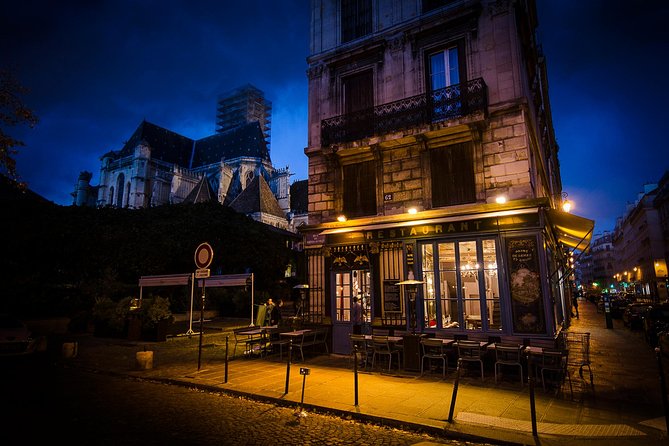
The listed price is $205.59 per person. That is a serious cost for a three-hour activity, especially if you are comparing it with a regular walking tour or a self-guided photo route.
The value improves when you use the lesson as instruction rather than entertainment. A guide can spend time correcting your settings, reviewing your goals, and helping you understand why one composition works better than another. That sort of attention is difficult to get in a large group.
The price also makes more sense for two or three people who share an interest in photography. The booking allows a maximum of four people, and group discounts are available. A family or couple can split the cost while still receiving a more personal lesson than a large class provides.
Still, you should be honest about what you want. If your main goal is to see the Louvre, Eiffel Tower, and Notre Dame with no interest in camera technique, you will probably get better value from a standard city walk. If you want to leave with stronger control of your camera and a set of photographs you understand how to repeat, the cost is easier to justify.
Weather, walking, and practical limits
The experience operates in all weather, so dress for the forecast. Rain does not automatically cancel the session, but it can change the route, shorten outdoor work, or make camera handling less comfortable.
Wear shoes suitable for a long city walk and bring protection for your camera. Food and drinks are not included. Transportation to and from the attractions is also not included, though the route is near public transportation.
You need to bring your own camera. The stated guidance asks for a DSLR, while the supplied experience examples show that an iPhone has also been used successfully. A tripod is available upon request, not as a standard inclusion.
Most people can take part, and no health restrictions are listed. Even so, the activity involves walking between several central Paris sites. If you have a specific mobility concern, ask before booking rather than relying on the general participation note.
Cancellation is free if you cancel at least 24 hours before the local start time. Changes or cancellations made inside that window are not accepted for a refund.
Who should book this lesson
I would choose this for a beginner who has a camera but rarely leaves automatic mode. It is also a strong fit for a serious amateur who wants help with night photography, composition, or city scenes.
Solo visitors can benefit greatly because the guide can focus on one person throughout the session. Couples and families can book together, though you should make sure everyone wants a photography lesson. One person can participate more actively while another walks along, but the value is highest when the group shares the same aim.
This is also useful for a short Paris visit. The route covers several major sights, and you can see a good portion of central Paris while learning how to photograph it. If you have only a few days in town, the lesson can combine sightseeing with a skill you will use after leaving France.
I would hesitate if you dislike walking, want interior visits to the monuments, or expect a dedicated portrait session. The emphasis is on your photography and the city as a subject.
Should you book the Paris Photography Masterclass?
Book it if you want personal instruction and are willing to practice as you walk. The best parts are the private attention, flexible teaching, and chance to work on real Paris scenes instead of classroom exercises. Guides such as Clara, Michiru, Federica, William, and Alexander have helped participants with everything from first camera settings to manual night photography.
Before booking, choose your departure time carefully, bring the camera you actually want to learn, and request a tripod if long exposures matter to you. At $205.59 per person, it is not a cheap way to see Paris. It is a focused photography lesson that happens to use Paris as its setting. For the right person, that combination can be worth far more than another quick snapshot at the Eiffel Tower.
FAQ
How long does the photography lesson last?
The experience lasts approximately three hours.
Where does the tour start?
It starts at 3 Pont Marie, 75004 Paris, France.
Where does the tour end?
It typically ends near Place de la Concorde, at Concorde, Quai des Tuileries. The exact end can vary based on walking speed.
How many people can join one booking?
A maximum of four people can be included in one booking, and only your group participates.
Is this suitable for beginners?
Yes. The lesson is suitable for beginners through advanced photography enthusiasts.
What camera should I bring?
You are asked to bring your own DSLR camera. A supplied experience example also involved an iPhone 15 Pro Max, but you should confirm suitability if you plan to use a phone.
Is a tripod included?
A tripod is available upon request. It is not listed as a standard inclusion, so arrange it ahead of time if you need one.
Are attraction admission tickets included?
The listed stops have free admission for this experience. The activity focuses on photographing the cathedral, Louvre courtyards and pyramid, Eiffel Tower views, and Place de la Concorde.
Does the tour operate in bad weather?
Yes. It operates in all weather conditions, so you should dress appropriately. Poor weather may affect the route and outdoor photography.
Can I cancel for a full refund?
Yes, if you cancel at least 24 hours before the experience start time. Cancellations or changes made less than 24 hours before the local start time are not accepted for a refund.
More perfume and craft workshops in Paris
- Fragonard Paris: Mini Perfume Workshop
★ 4.5 · 1,924 reviews - Paris Cooking Class and Lunch with Wine plus Market Visit Option
★ 5.0 · 1,024 reviews - Paris Croissant Small-Group Baking Class with a Chef
★ 5.0 · 910 reviews - Paris: Macaron Class at Galeries Lafayette
★ 4.3 · 905 reviews
Just added around Paris
- Private Paris Marche d’Aligre Walking Tour with Tastings★ 5.0 · 8 reviews
- Private Louvre Museum Tour for Kids & Families with Alberto or his team in Paris★ 5.0 · 41 reviews
- Private Highlights of Paris Tuk-Tuk Experience★ 5.0 · 26 reviews
- Paris Latin Quarter Walking Tour: History & Culture – Small Group★ 5.0 · 14 reviews
- Private Highlights of Paris Bike Tour★ 4.5 · 15 reviews
- Paris Musee d’Orsay PRIVATE TOUR with a Local Private Guide★ 5.0 · 41 reviews
- Pere Lachaise Cemetery Paris – Exclusive Guided Walking Tour★ 5.0 · 72 reviews
- Paris Revolutionary Walking Tour: Iconic French Sights & Stories★ 5.0 · 11 reviews
Paris Photo Shoots, compared.
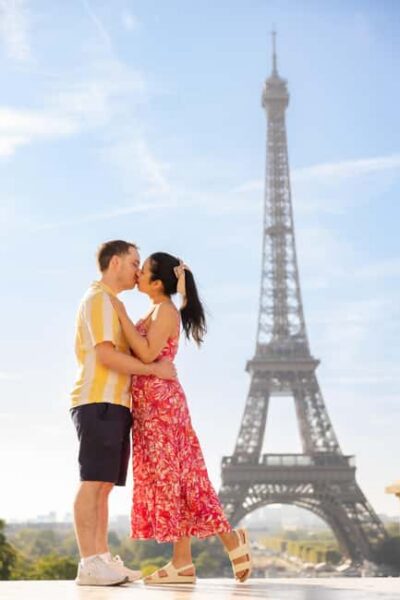
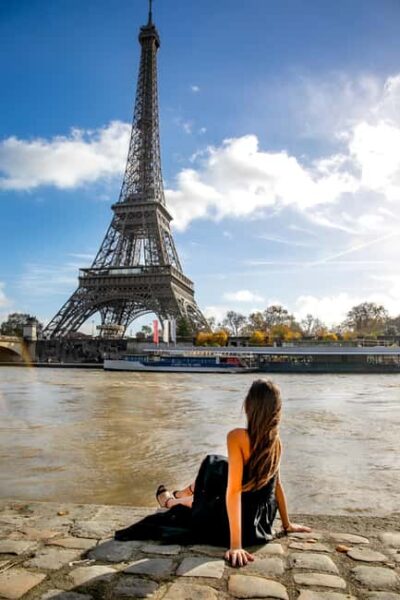
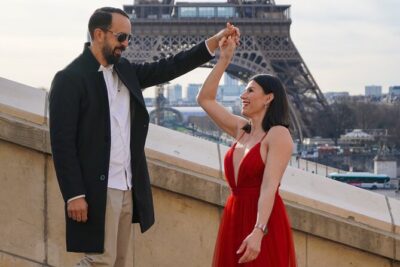
Photo Session in Paris – Photographer at the Eiffel Tower
Read our review →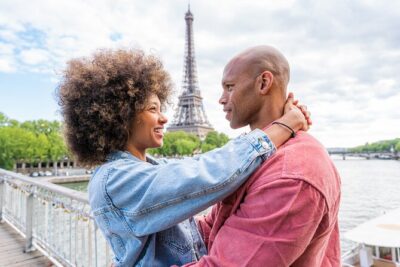
Private Guided Professional Photoshoot by the Eiffel Tower
Read our review →
Browse the lists this tour appears in