

Reviewed · PARIS ART MUSEUM TOURS
Paris: Orangerie Museum Skip-the-Line Entry and Guided Tour
The most memorable part of this two-hour Orangerie tour is not simply seeing Monet’s Water Lilies. It is watching an art historian connect Monet’s calm, floating world with the bold experiments of Matisse, Picasso, Cezanne, Renoir, and others. You enter through the Tuileries Gardens, bypass the regular entrance line, and let the guide give shape to a museum that can otherwise feel quick and easy to skim.
I like the small maximum of eight people per guide, which makes it easier to ask questions and hear the explanation in crowded rooms. I also like the human touch some guides bring to the Water Lilies rooms. Hugo, for example, has used Clair de Lune while visitors look at Monet’s paintings, creating a quiet pause that suits the space.
The main drawback is the price: $128 per person is a serious outlay for a two-hour museum visit, especially when temporary exhibitions are not included. The tour also involves a moderate amount of walking and is not suited to people with mobility impairments.
Key points at a glance
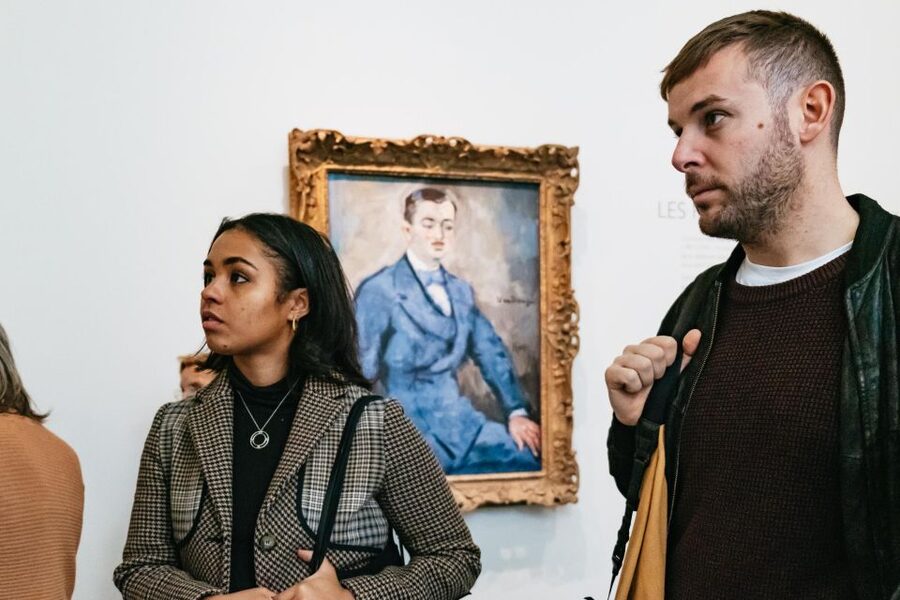
- Monet’s oval rooms: See the famous Water Lilies paintings displayed around you in the museum’s signature curved galleries.
- A clear art story: Follow the shift from Impressionism toward the bold forms and colors of early twentieth-century art.
- Small groups: The guide-to-group limit is eight people, with private options also available.
- Tuileries approach: Walk through one of central Paris’s most attractive gardens before reaching the former royal orangery.
- Several languages: Tours are offered in English, French, Russian, Italian, Spanish, and German.
- Strong guide-led experience: Guides such as Hugo, Malaika, Barbara, Sunday, Belen, and Lily have been praised for clear explanations and engaging storytelling.
Walking from the Tuileries to the Orangerie
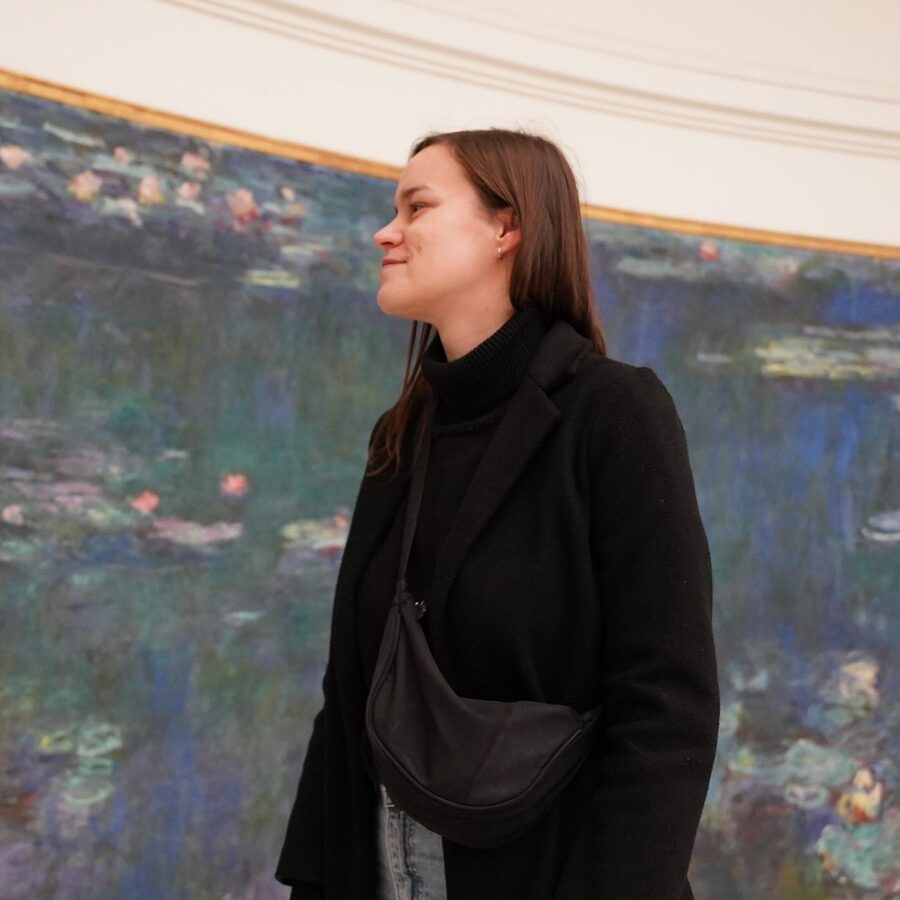
Your meeting point can change depending on the option you book, so check the exact instructions carefully. The tour finishes back at the meeting point, rather than at a separate drop-off location.
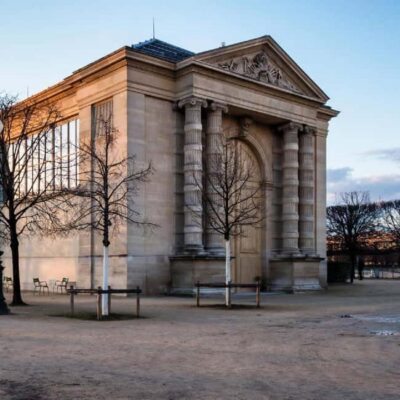
The approach through the Tuileries Gardens is part of the pleasure. The museum occupies a former orangery, a building once used to shelter the royal family’s orange trees during winter. That setting gives the visit a pleasing sense of place before you even see the first painting.
You should arrive dressed for the weather. The tour runs rain or shine, and the garden walk comes before the indoor portion. Bring a passport or other ID card, but leave luggage and large bags behind, since they are not allowed.
This opening walk also helps set the pace. You are not being rushed straight from a city street into a museum room. Instead, the guide can place the Orangerie within the Tuileries and explain how a practical royal building became one of Paris’s best-known homes for modern painting.
More art museums in Paris:
- Paris: Orsay Museum and Rodin Museum Combo Entry Ticket
★ 4.4 · 470 reviews - Paris: Picasso Museum Ticket & Optional Seine River Cruise
★ 4.7 · 277 reviews - Paris: Rodin Museum Entry Ticket
★ 4.5 · 220 reviews
Monet’s Water Lilies in the oval rooms
The Orangerie’s main event is Monet’s Water Lilies, displayed in the museum’s iconic oval rooms. The paintings wrap around the visitor, so you are not looking at a single canvas from a fixed point. You move through a sequence of broad, soft views in which water, reflections, plants, and light merge.
This is a good place to slow down. The paintings are large, quiet, and built for sustained looking. A guide can point out how Monet reduces the usual signs of a traditional scene, giving you water and atmosphere instead of a sharply framed view with a clear horizon.
Some rooms have rules requiring quiet or limiting conversation. That matters here. The guide may need to lower their voice or pause the explanation, and you should expect a little less talking in certain spaces. The silence is not a flaw. It is part of how the museum protects the mood of the paintings.
Hugo has received particular praise for pairing the Water Lilies with Clair de Lune. Music is not a standard promise of every departure, so do not book on the assumption that it will happen, but the detail shows how much the guide can shape the experience. A strong guide helps you look longer rather than simply naming the painter and moving on.
From Impressionist light to new ways of seeing
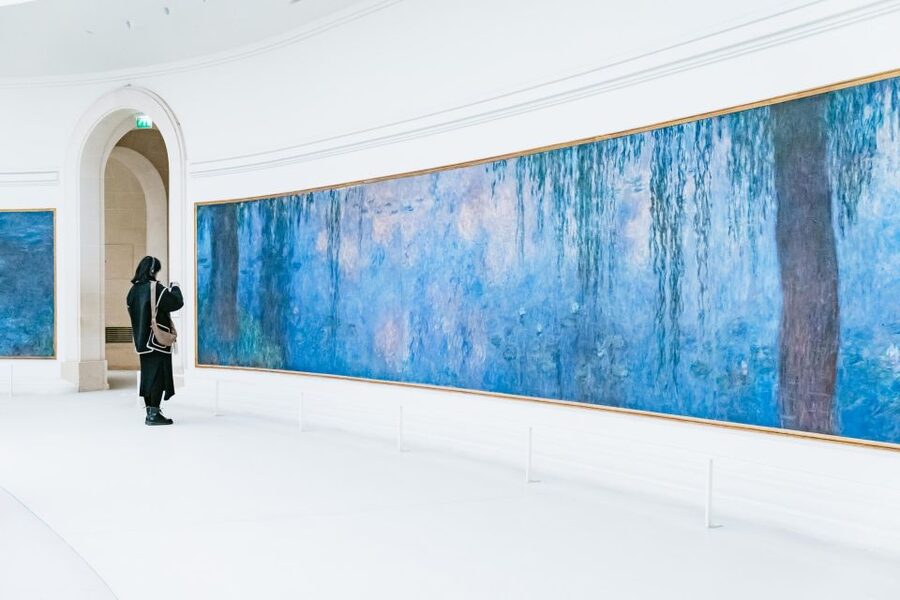
After Monet, the tour broadens into a story about the changes that shook French art in the nineteenth and early twentieth centuries. You see how artists moved away from older rules about finish, realism, and composition.
Renoir helps keep the Impressionist thread visible. His delicate brushwork and interest in people, light, and everyday beauty offer a useful contrast with later artists who preferred harder outlines or flatter areas of color. The point is not to rank one style above another. It is to see how one generation opened the door for the next.
Cezanne’s paintings of fruit and flowers bring a different kind of tension. A familiar still life becomes a study in structure, color, and the act of looking. Your guide can help you notice how the objects seem carefully arranged but not always locked into a perfectly stable world.
That is one reason this tour can work well for someone who likes art but does not always know what to look for. The guide supplies a set of questions: How is the scene organized? Where does the brushwork draw your eye? What has the artist left out? How does the painting challenge the work that came before it?
Matisse, Picasso, and the break with tradition
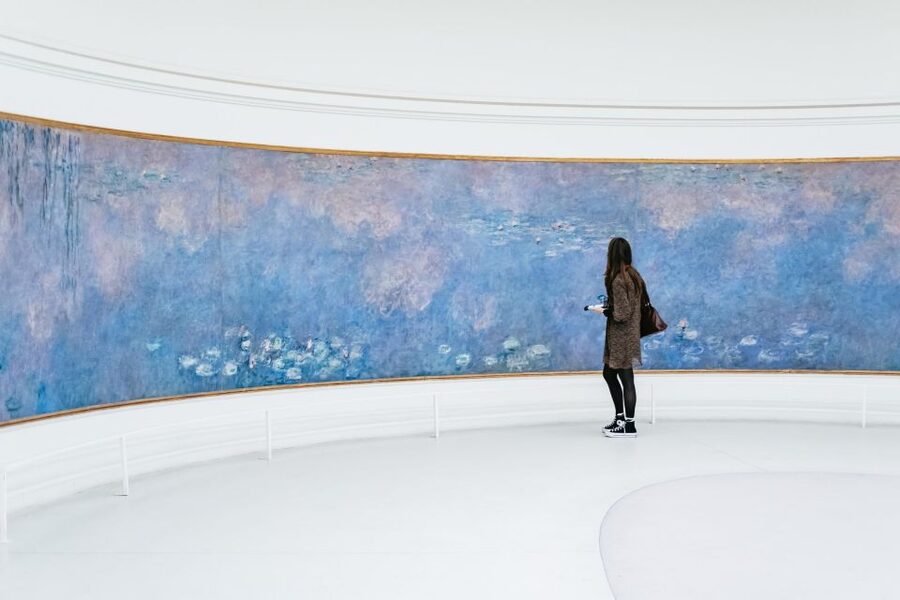
The Orangerie collection also follows the move toward more personal and experimental styles. Matisse’s portraits show his interest in color, shape, and an exotic visual language. His figures are not presented only as records of a face. They become arrangements of color and form, with a mood that can be more important than exact likeness.
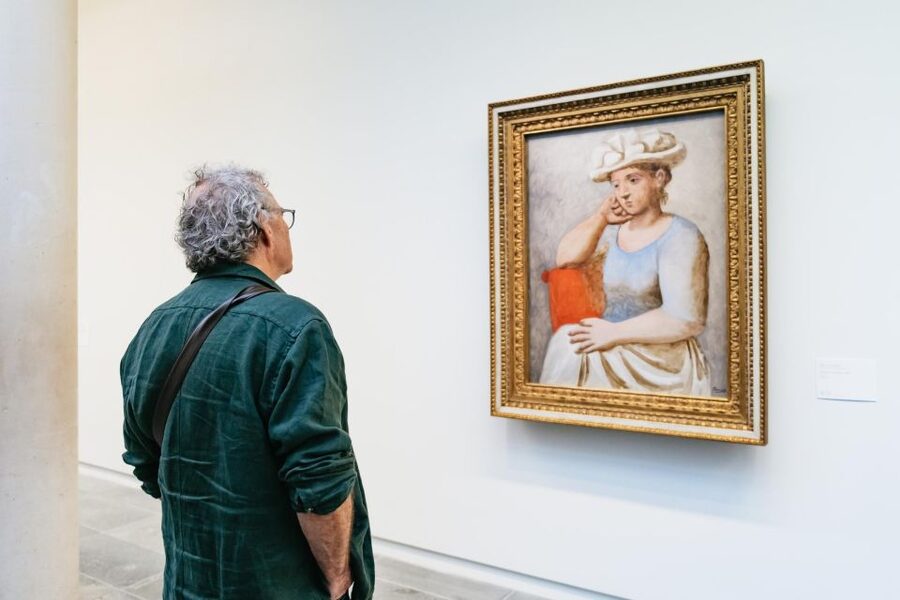
Picasso offers another shift. The tour traces different stages of his work through his interpretations of nude models. This gives you a practical way to see change across his career, rather than treating Picasso as one fixed style. The paintings become evidence of an artist testing what the human body can look like on a flat surface.
The guide’s role matters here. Sunday, one of the named guides, has been praised for explaining how the art changed the way people thought about painting. That is the useful scale for this visit. You are not only learning dates and names. You are seeing why these pictures once looked difficult, strange, or defiant to their audience.
Matisse and Picasso can also be challenging if you have younger children in your group. Barbara has been especially effective at drawing a nine-year-old into the paintings and the artists’ lives. That suggests the tour can suit families, but your experience will depend on the guide, the child, and the group pace.
Same city, a completely different afternoon:
- Paris: Louvre Museum Timed-Entrance Ticket
★ 4.6 · 71,977 reviews - Disneyland® Paris 1-Day Ticket
★ 4.6 · 49,412 reviews - Paris: Versailles Palace and Gardens Full Access Ticket
★ 4.6 · 41,579 reviews - Paris: Evening River Cruise with Music
★ 4.4 · 22,721 reviews
Modigliani, Utrillo, and the wider collection
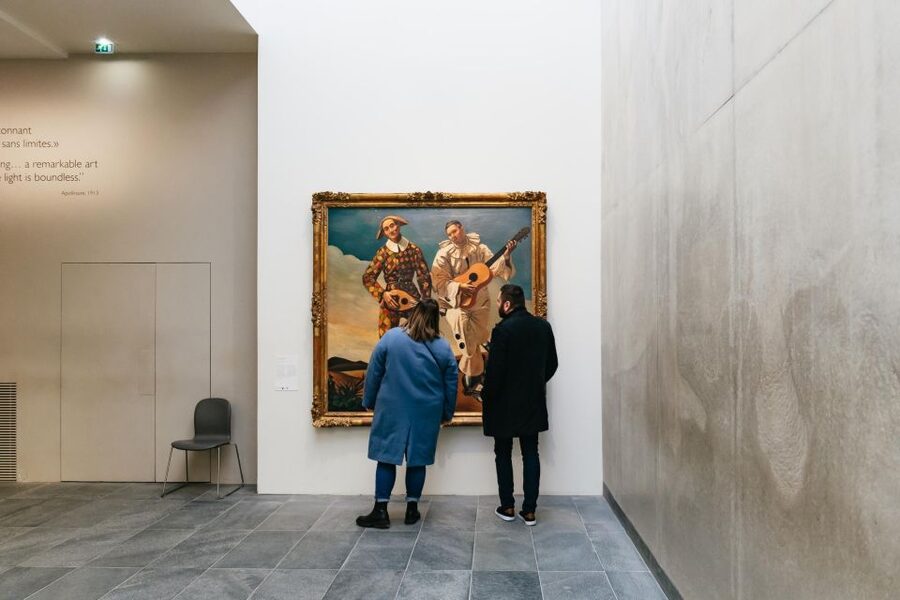
The museum’s story does not stop with the most famous names. Works by Modigliani and Utrillo help show how the ideas of the early modern period spread into different moods and subjects.
Modigliani’s portraits are immediately recognizable for their elongated forms and distinctive faces. Utrillo brings a more restrained view of urban subjects. Together with Renoir, Cezanne, Matisse, and Picasso, they make the collection feel less like a single school and more like a chain of responses.
That broad range is valuable because a short museum visit can otherwise become a greatest-hits parade. You see Monet, take a picture in your head, and leave. The guided route gives you a reason to connect the paintings. It makes the Orangerie feel like a chapter in a larger argument about what painting could do.
The exact collection on display can change during the year, and some rooms may occasionally be closed. Museum management can also cause an unexpected closure. If the opening is delayed by more than an hour, an alternative is offered, but refunds or discounts are not provided in those circumstances.
What the guide adds to a two-hour visit
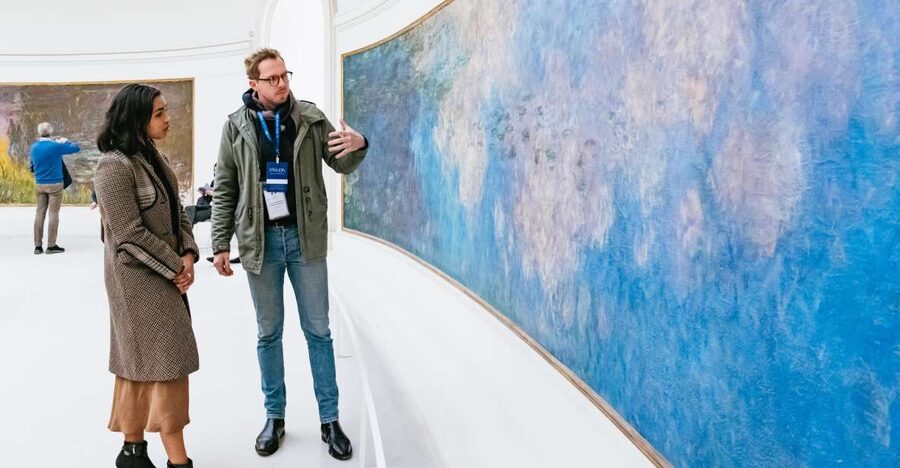
The tour is sold around the art historian, and that is where much of the value lies. The Orangerie is not a huge museum, but its works reward context. A guide can explain the artists’ place in their time, the role of patrons, and the conditions that shaped their work.
Z has been praised for taking time to explain both the art and the artists’ place in history. Malaika has been described as especially responsive to questions and attentive to the details of the venue. Belen and Lily have also been praised for clear, informed tours.
These details point to the right expectation: this is not a headset rental or a quick escort to the entrance. You are paying for interpretation and conversation. The benefit is greatest if you ask questions, compare works aloud, and tell the guide what kind of art interests you.
Language choice is another practical advantage. Live tours are available in English, French, Russian, Italian, Spanish, and German. Confirm your preferred language when booking, since the value of a history-heavy tour drops quickly if you are struggling to follow the explanation.
Is $128 a fair price?

At $128 per person, this is expensive for two hours. The ticket includes skip-the-line entry, the museum entrance fee, the art historian, and the guided visit, but not temporary exhibitions, drinks, food, or hotel transportation.
I would judge the price by the group format. If you join a small group capped at eight people, you are paying for a more personal explanation and a faster entrance, not just for a museum ticket. A private option costs more in principle, but it may make sense for a family or a pair of serious art fans who want to control the questions and pace.
For a casual visitor who is happy to read labels and spend a short time with Monet, the price is harder to defend. For someone who wants to understand how Impressionism changed into modern art, the guide can make the difference between recognizing famous names and actually seeing connections.
The skip-the-line feature has practical value, but it should not be the only reason you book. Lines and entry conditions can change. The strongest reason is the structured explanation in a small group, especially if this is your first serious look at the Orangerie.
Timing, walking, and group comfort
The activity lasts two hours, with starting times listed according to availability. Since the meeting place can vary, allow enough time to find it and do not rely on an improvised meeting arrangement.
There is a moderate amount of walking, including the route through the Tuileries and movement inside the museum. The semi-private tour is not suitable for people with mobility impairments. Contact the provider directly if you need specific information about walking or access requirements.
The group limit of eight helps with sound and attention. In a crowded museum, a large group can block a painting or leave you standing at the back while the guide speaks. A smaller group gives you a better chance to hear, ask, and move with the guide.
The semi-private tour requires at least two participants to run. If that minimum is not reached, an alternative date or a full refund is offered. Free cancellation is available up to 24 hours before the activity, and you can reserve now and pay later.
Who should book this Orangerie tour?
I would recommend it to first-time visitors who want a clear introduction to French modern art, couples who enjoy discussing paintings, and families who would benefit from a guide who can keep children involved. It is also a good choice if you find museum labels too thin or art history too scattered to follow on your own.
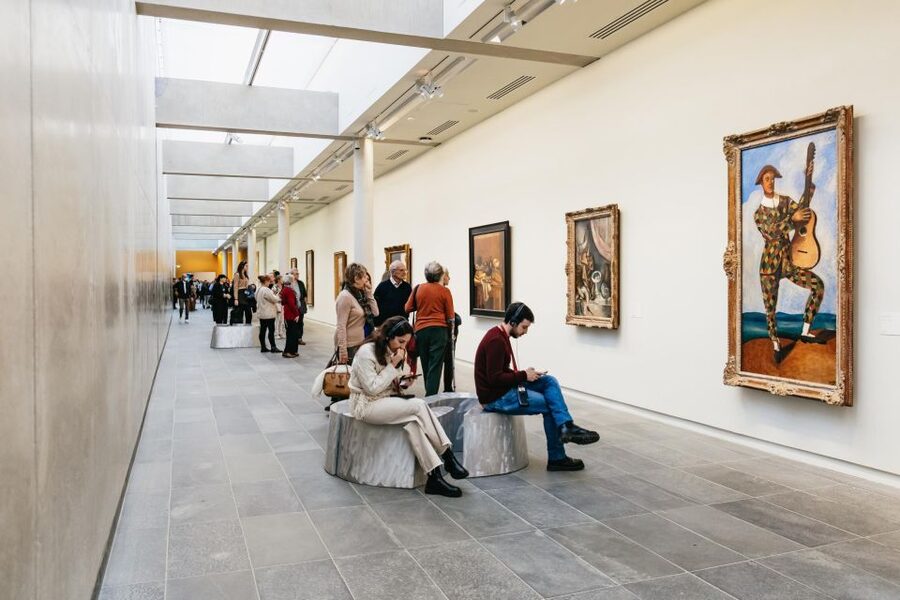
Art fans should consider the private option if they want to focus on particular artists. The tour covers a wide range, from Monet and Renoir to Matisse, Picasso, Modigliani, and Utrillo, so a private format may help you spend more time on the works that matter most to you.
I would skip it if your main goal is a slow, silent visit with no commentary, or if $128 feels too high for a two-hour museum stop. I would also avoid it if you have large bags or need a low-walking outing.
FAQ
How long does the Orangerie Museum tour last?
The tour lasts two hours. Starting times depend on availability.
What does the tour include?
It includes skip-the-line entrance to the Orangerie Museum, the entrance fee, an art historian guide, and the museum tour.
Is this a private tour or a group tour?
Private and small-group options are available. The tour has a maximum of eight people per guide.
Which languages are available?
Live guides are available in French, English, Russian, Italian, Spanish, and German.
Does the tour include temporary exhibitions?
No. Temporary exhibitions are not included.
Does the tour include hotel pickup and drop-off?
No. Hotel pickup and drop-off are not included. The activity ends back at the meeting point.
What should I bring?
Bring a passport or ID card and clothing suitable for the weather.
Can I bring luggage or a large bag?
No. Luggage and large bags are not allowed.
Is the tour suitable for someone with mobility impairments?
The semi-private tour involves a moderate amount of walking and is not suitable for people with mobility impairments. Contact the activity provider about specific mobility needs.
Should you book it?
Book this tour if you want the Orangerie explained rather than simply visited. The Water Lilies rooms are the star, but the real gain is the link from Monet’s loose brushwork to the sharper experiments of Matisse and Picasso. Choose the small-group format for value, or private touring if the collection is a major reason for your Paris visit. Skip it if you prefer to explore alone or want a cheaper, shorter museum stop.
More skip-the-line tickets in Paris
- Versailles: Skip-the-Line Tour of Palace with Gardens Access
★ 4.7 · 9,778 reviews - Versailles: Skip-the-Line Guided Palace Tour and Full Access
★ 4.6 · 5,214 reviews - Louvre Museum: Skip-the-Line Small Group Guided Tour
★ 4.6 · 3,960 reviews - From Paris: Versailles Skip-the-Line Tour & Gardens Access
★ 4.7 · 3,011 reviews
Just added around Paris
- Paris: The Da Vinci Code Walking Tour with a Local Guide★ 4.3 · 5 reviews
- Paris: Flea Market Insider’s Tour in Extra-Small Group★ 4.6 · 73 reviews
- Paris: Private Fashion Tour (Chanel, Dior, Sex & the City)★ 5.0 · 3 reviews
- Paris: Floral Earrings workshop★ 5.0 · 3 reviews
- PARIS: Family e-bike longtail renting★ 5.0 · 3 reviews
- Paris: Fashion History Walking Tour in the Heart of Paris★ 4.9 · 22 reviews
- Paris: Famous Monuments Cycling Tour★ 4.7 · 20 reviews
- Paris: private city tour with seine river cruise★ 4.8 · 28 reviews
Paris Art Museum Tours, compared.
Orsay Museum and Rodin Museum Combo Entry Ticket
Read our review →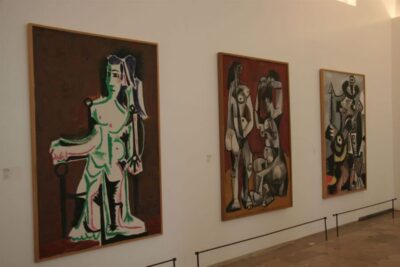
Picasso Museum Ticket & Optional Seine River Cruise
Read our review →
Musée de l’Orangerie Access With Seine River Cruise
Read our review →

Louis Vuitton Foundation Exterior Tour with Entry
Read our review →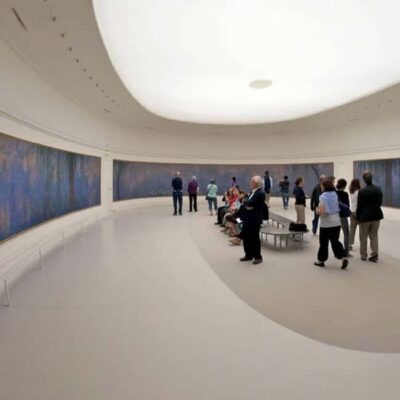
Musee d’ Orsay and l’Orangerie Combo With Seine River Cruise
Read our review →
Centre Pompidou Skip-the-Line Guided Museum Tour
Read our review →Browse the lists this tour appears in