
Reviewed · PARIS ART MUSEUM TOURS
Paris : Atelier des Lumières admission ticket
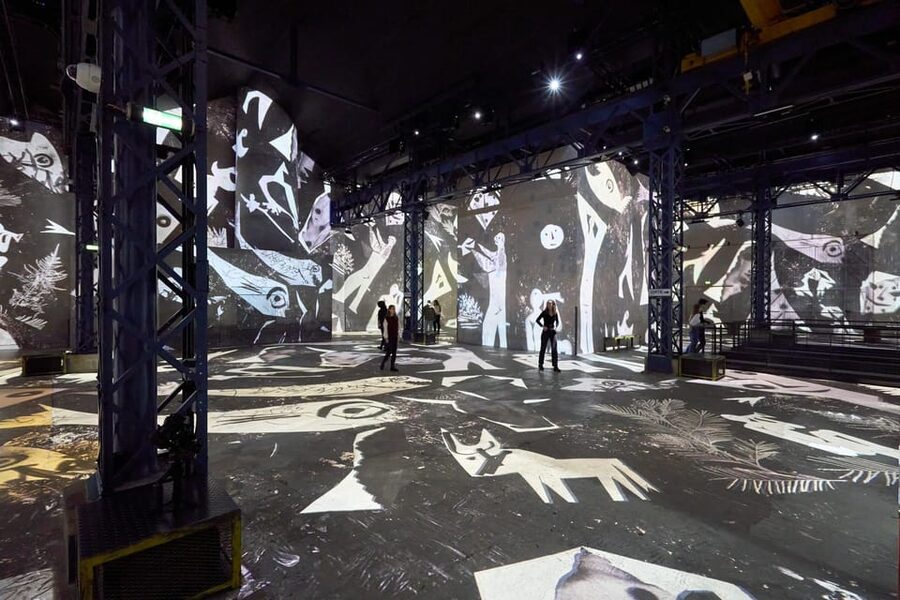
Picasso’s bullfights, Paris cabarets, Les Demoiselles d’Avignon, and Guernica appear across the walls and floors of a former foundry at Paris’s Atelier des Lumières. This is not a standard museum visit. Digital images move around you while music and changing light turn familiar paintings into a full-room art show.
I like the unusual setting, where old industrial architecture gives the art some grit, and I like the continuous broadcasts, which let you enter without rushing to catch one fixed performance. The main drawback is that projections can feel more like a visual spectacle than a close study of original paintings, so traditional museum lovers may prefer the Musée Picasso or Musée de l’Orangerie.
Key points to know before you book
- Two exhibitions share one ticket: See Picasso, art in motion and Le Douanier Rousseau, au pays des rêves during the same visit.
- The former foundry is part of the show: Large walls, floors, and industrial surfaces become the screen.
- You can watch at your own pace: The exhibitions run continuously rather than as a single guided tour.
- Picasso is shown across many periods: Expect bullfighting, Paris nightlife, Les Demoiselles d’Avignon, Guernica, and later work.
- Children get their own creative space: Atelier des Enfants introduces digital art to ages 4 to 12 through Rousseau-inspired activities.
- Plan around practical limits: The site is wheelchair accessible, but strollers, baby carriages, luggage, and large bags are not allowed.
From Paris foundry to digital art hall
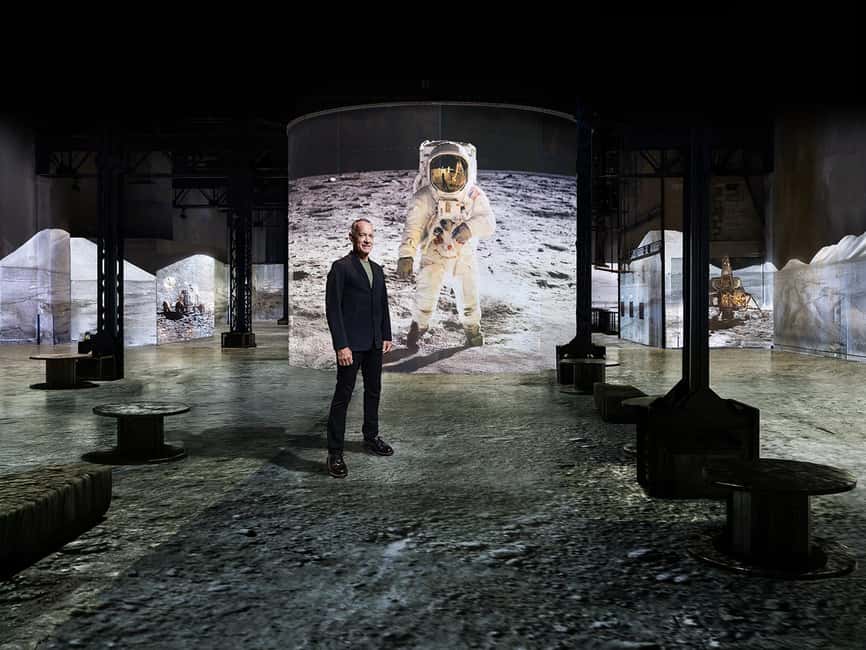
The first thing to understand is the building. Atelier des Lumières occupies a former foundry, and that industrial shell gives the visit a strong sense of place. Instead of walking from one framed painting to the next, you move through a large room where projected images cover the architecture around you.
That scale changes how you look at art. A small detail in a painting can become several meters high. A color can spread across an entire wall. The floor may also carry the projections, so you are not simply facing a screen at the front of a room.
I find this format best approached as a visual performance rather than a conventional museum display. You will not see the original canvases here, and the visit is not built around labels, galleries, or a guide explaining every work. Its strength is the way it lets you notice color, rhythm, repeated forms, and movement.
The exhibitions run continuously. That matters because you are not locked into a short presentation that begins at one exact minute. Check the available starting times when booking, then give yourself room to watch for a while, move around, and catch scenes you missed.
More art museums in Paris:
- Paris: Orsay Museum and Rodin Museum Combo Entry Ticket
★ 4.4 · 470 reviews - Paris: Picasso Museum Ticket & Optional Seine River Cruise
★ 4.7 · 277 reviews - Paris: Rodin Museum Entry Ticket
★ 4.5 · 220 reviews
Picasso, art in motion, from Spain to Paris
The Picasso presentation traces a broad route through the artist’s life and work, beginning with his native Spain and following his long connection with France. Rather than presenting one narrow period, it moves across several subjects and styles.
Bullfighting gives the show an early dramatic note. The bullring is not just a backdrop in Picasso’s work. It brings together danger, performance, spectators, and strong physical shapes. Projected at a large scale, those themes should read less like a quiet art lesson and more like a moving visual sequence.
The presentation then turns toward Parisian nightlife and cabarets. This is useful context because Picasso’s work was tied to the city’s changing artistic and social life. The digital format can link paintings and drawings through quick changes in color and composition, giving you a sense of how the artist’s interests shifted.
One major section focuses on Les Demoiselles d’Avignon, Picasso’s 1907 painting now held by the Museum of Modern Art in New York. Its angular bodies and fractured forms are especially suited to a projection show, where shapes can appear, break apart, and return in new combinations.
You also encounter Guernica, one of Picasso’s most forceful works. Its subject carries far more weight than a decorative digital display can fully provide, but the large-scale treatment can draw your attention to its crowded figures, sharp contrasts, and feeling of distress.
The presentation includes later work as well, including a 1958 portrait of a young girl after Cranach the Younger, made with gouge-engraved linoleum. That detail matters because it reminds you that Picasso did not work in one style or one medium. The show is at its best when it lets these changes sit beside one another without pretending they belong to a single neat period.
You should not expect a complete biography. The exhibition is a selected visual journey, not a lecture. If you want dates, detailed wall text, or a careful study of individual brushwork, a traditional museum will serve you better.
Rousseau, au pays des rêves
The second exhibition turns to Henri Rousseau, known as Le Douanier Rousseau, and to the early development of naive art in France. His work has a dreamlike quality, with plants, animals, and imagined settings that can feel both simple and strange.
Rousseau was self-taught, and the exhibition presents him as a painter who drew inspiration from careful observation of vegetation and animals. His sources included the greenhouses and menagerie of Paris’s Jardin des Plantes, rather than only distant places he may have imagined from afar.
That point gives the show a helpful layer of context. Rousseau’s pictures may look like pure fantasy, but they were connected to things he observed. Digital presentation can bring out the repeated leaves, dense foliage, and animal forms, allowing you to notice how much structure sits inside the apparent simplicity.
The title, au pays des rêves, signals the mood. Expect a gentler and more playful atmosphere than the Picasso presentation. The two programs make a good pairing because they offer different kinds of visual energy: Picasso brings sharp shifts, fractured forms, and social tension, while Rousseau brings a more childlike sense of discovery.
Still, the same caution applies. Projections show you reproductions and movement, not the texture of the original paint. If Rousseau’s brushwork is your main interest, seek out the original works elsewhere. If you want to see how his plants, animals, and imagined settings change when spread across a large room, this presentation offers something a standard gallery cannot.
How to make the most of continuous broadcasts
There is no fixed one-day itinerary inside the venue. Your admission is valid for one day, and the exhibitions have continuous broadcasts. That gives you flexibility, but it also means you should decide how much time you want to spend before you arrive.
I would avoid treating the visit as a quick photo stop. The show depends on repetition and changing sequences. A scene you see on arrival may look different in context after you have watched the rest of the presentation.
A practical approach is to enter, find a comfortable viewing position, and watch the program develop. Then move through the room to see how the projection changes across the walls and floor. If the first location does not give you the view you want, you can shift rather than waiting for a new admission slot.
Because the broadcasts are continuous, you can also arrive partway through and stay until a sequence comes around again. The available starting times still matter, so check them when you choose your date. No exact visit length is provided, and your ideal stay will depend on how closely you watch each program.
The open seven-day schedule is useful during a packed Paris visit. You can fit the center into a day of nearby sightseeing without needing to match a single weekly opening pattern. Even so, do not assume that an open schedule means unlimited flexibility with every time slot. Confirm availability before booking.
More tickets and entry passes in Paris:
- Paris: Louvre Museum Timed-Entrance Ticket
★ 4.6 · 71,977 reviews - Disneyland® Paris 1-Day Ticket
★ 4.6 · 49,412 reviews - Paris: Versailles Palace and Gardens Full Access Ticket
★ 4.6 · 41,579 reviews - Paris: Eiffel Tower Entry Ticket with Optional Summit Access
★ 4.4 · 20,035 reviews
Atelier des Enfants for ages 4 to 12
Families get an extra part of the experience through Atelier des Enfants, a space for children ages 4 to 12. It introduces digital art through a playful, interactive setting connected to Rousseau.
The idea is simple and worthwhile: children do not only watch an exhibition, they become creators of one. That gives younger visitors a role in the visit and may make the larger presentation easier to appreciate.
This space is included with admission, so you do not need to add a separate ticket for it. Children under 2 are not suited to the activity, and the site does not allow baby strollers or baby carriages. If you are visiting with a small child, plan your day around those restrictions rather than assuming you can bring all family equipment inside.
Older children may enjoy the contrast between the giant projections and the hands-on area. Adults can take in the main exhibitions while knowing there is a dedicated place designed for younger visitors. The exact balance of time will depend on your family, but this is one of the stronger reasons to choose Atelier des Lumières for a mixed-age group.
What the $20 ticket is really buying
At about $20 per person, the ticket is reasonably priced for a major Paris art experience, especially because it includes two current exhibitions and Atelier des Enfants. You are paying for an art presentation that uses the whole building, not for access to a collection of original paintings.
The value is strongest if you enjoy atmosphere, music, motion, and large-scale images. It also works well when you want something less formal than a conventional museum. The continuous format adds value because you can watch without following a guide or hurrying through a fixed tour.
The price may feel less worthwhile if your goal is close examination of brushstrokes, original frames, or extensive historical information. The digital format changes the art, and that change is the point. It is not a substitute for seeing Picasso or Rousseau’s original work in a museum.
With a rating of 4.5 from 91 reviews, the experience has a strong overall response. I would read that as a sign that the format connects with many people, while still keeping your own taste in mind. Some people want an art show that surrounds them. Others want a quiet room and one painting at a time.
Practical limits you should know
Atelier des Lumières is wheelchair accessible, which makes the venue usable for visitors with mobility needs. The available information does not specify every detail of the accessible route or facilities, so contact the provider if you need a particular arrangement.
Leave luggage and large bags behind. Strollers, baby strollers, and baby carriages are not allowed inside. This is especially important for families arriving with a full day’s equipment or for anyone visiting between hotels and other sights.
The experience is not suitable for people with epilepsy. That warning matters because the format uses moving digital projections and changing light. Anyone with concerns about flashing or rapidly changing images should take the warning seriously.
You can cancel up to 24 hours in advance for a full refund. A reserve-now-and-pay-later option is also available, which can help if your Paris schedule is still changing. These policies add flexibility, but they do not remove the need to check the specific availability and starting time you select.
Who should book Atelier des Lumières?
I would recommend it to you if you want an art visit with a strong visual effect, if you enjoy seeing familiar artists presented in a new way, or if you are looking for a family-friendly stop that is not another traditional gallery.
It is particularly well suited to:
- First-time Paris visitors who want an easy introduction to Picasso and Rousseau
- Families with children ages 4 to 12
- Art lovers interested in how digital technology changes the way paintings are seen
- Visitors who prefer a flexible, continuous presentation
- Anyone drawn to unusual buildings and large-scale visual shows
I would be more cautious if you want original artworks, detailed labels, or a quiet scholarly visit. You may leave with a strong impression of the artists’ colors and themes, but not with the same close understanding you get from standing before an original canvas.
Should you book it?
Book Atelier des Lumières if you want to feel surrounded by art rather than simply look at it from a few feet away. The former foundry, two contrasting exhibitions, continuous presentations, and included children’s space make the $20 ticket a fair buy for the right audience.
Skip it if digital projection feels like a distraction from painting itself. For everyone else, check the starting times, leave bags and strollers behind, and give the Picasso and Rousseau programs enough time to develop. The best part is not rushing through both exhibitions. It is letting the room change your sense of scale and attention.
FAQ
Where is Atelier des Lumières located?
Atelier des Lumières is in the Île-de-France region of France, in Paris.
How much does admission cost?
Admission costs $20 per person.
What exhibitions are included?
Admission includes Picasso, art in motion and Le Douanier Rousseau, au pays des rêves.
Is the ticket valid for more than one day?
The ticket is valid for one day.
Do the exhibitions run at one fixed time?
No. The exhibitions have continuous broadcasts, but you should check availability for the starting times offered on your chosen date.
Is Atelier des Lumières open every day?
Yes. The venue is open seven days a week.
Is Atelier des Enfants included?
Yes. Access to Atelier des Enfants is included with admission.
What ages is Atelier des Enfants designed for?
Atelier des Enfants is designed for children ages 4 to 12.
Is the venue wheelchair accessible?
Yes. Atelier des Lumières is wheelchair accessible.
Can I bring a stroller or large bag?
No. Baby strollers, baby carriages, luggage, and large bags are not allowed.
Is the experience suitable for children under 2?
No. The activity is not suitable for children under 2.
Is it suitable for people with epilepsy?
No. The activity is not suitable for people with epilepsy.
Can I cancel my booking?
Yes. You can cancel up to 24 hours in advance for a full refund.
Can I reserve now and pay later?
Yes. A reserve-now-and-pay-later option is available.
Just added around Paris
- Paris: The Da Vinci Code Walking Tour with a Local Guide★ 4.3 · 5 reviews
- Paris: Flea Market Insider’s Tour in Extra-Small Group★ 4.6 · 73 reviews
- Paris: Private Fashion Tour (Chanel, Dior, Sex & the City)★ 5.0 · 3 reviews
- Paris: Floral Earrings workshop★ 5.0 · 3 reviews
- Paris: Fashion History Walking Tour in the Heart of Paris★ 4.9 · 22 reviews
- PARIS: Family e-bike longtail renting★ 5.0 · 3 reviews
- Paris: Famous Monuments Cycling Tour★ 4.7 · 20 reviews
- Paris: private city tour with seine river cruise★ 4.8 · 28 reviews
Paris Art Museum Tours, compared.
Orsay Museum and Rodin Museum Combo Entry Ticket
Read our review →
Picasso Museum Ticket & Optional Seine River Cruise
Read our review →
Musée de l’Orangerie Access With Seine River Cruise
Read our review →
Louis Vuitton Foundation Exterior Tour with Entry
Read our review →
Orangerie Museum Skip-the-Line Entry and Guided Tour
Read our review →
Musee d’ Orsay and l’Orangerie Combo With Seine River Cruise
Read our review →
Centre Pompidou Skip-the-Line Guided Museum Tour
Read our review →Browse the lists this tour appears in