
Reviewed · LOUVRE MUSEUM TOURS
Paris: Best of the Louvre Guided Tour with Pre-booked Ticket
The smartest thing about this Louvre tour is its small six-person limit. The museum is enormous, crowded, and easy to mishandle on your first visit. A guide such as Flo, Jerome, Patrick, or Matteo can keep you moving while explaining why the famous works matter, not simply pointing at them.
I like the timed entry and the clear route through the palace. I also like that you see more than the Mona Lisa: Greek sculpture, Italian Renaissance painting, French art, Napoleon’s apartments, and the Louvre’s long transformation from fortress to royal residence. The drawback is pace. Two hours is a highlights tour, not a full museum day, and the price is high if you only want to wander in alone.
Key points to know before booking
- Maximum six people: A tiny group makes it easier to hear the guide, ask questions, and stay together in crowded galleries.
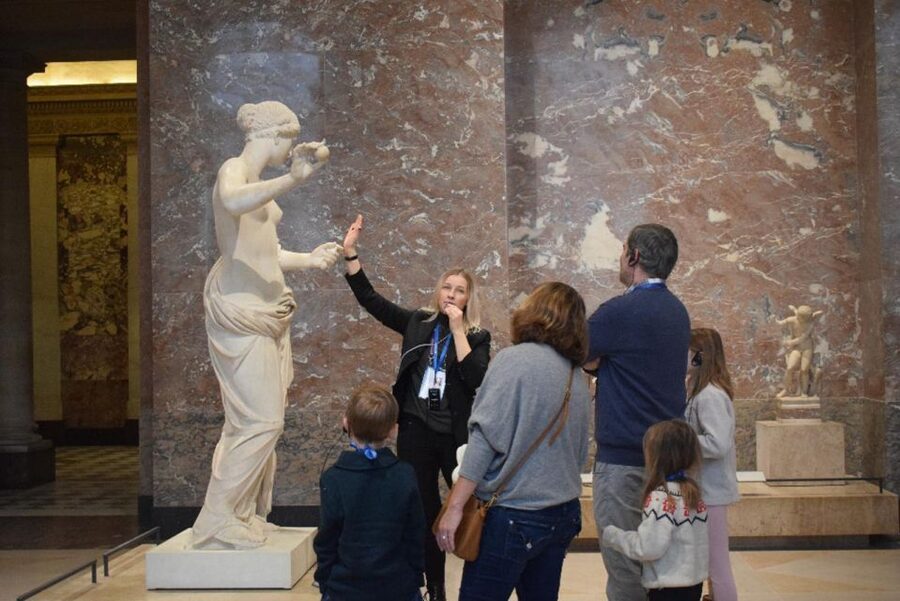
- The three famous ladies: The route includes Venus de Milo, Leonardo’s Mona Lisa, and Winged Victory of Samothrace.
- A useful first visit: Your guide gives you a map in your head, then you can decide what deserves more time.
- Timed entry included: You still pass through security, but a pre-booked ticket avoids the usual ticket-buying line.
- Two hours, brisk pace: Expect a focused run through major rooms and artworks rather than a leisurely museum day.
- No re-entry after the tour from January 2026: Plan your coffee, lunch, and extra gallery time carefully.
Why a guide helps inside the Louvre
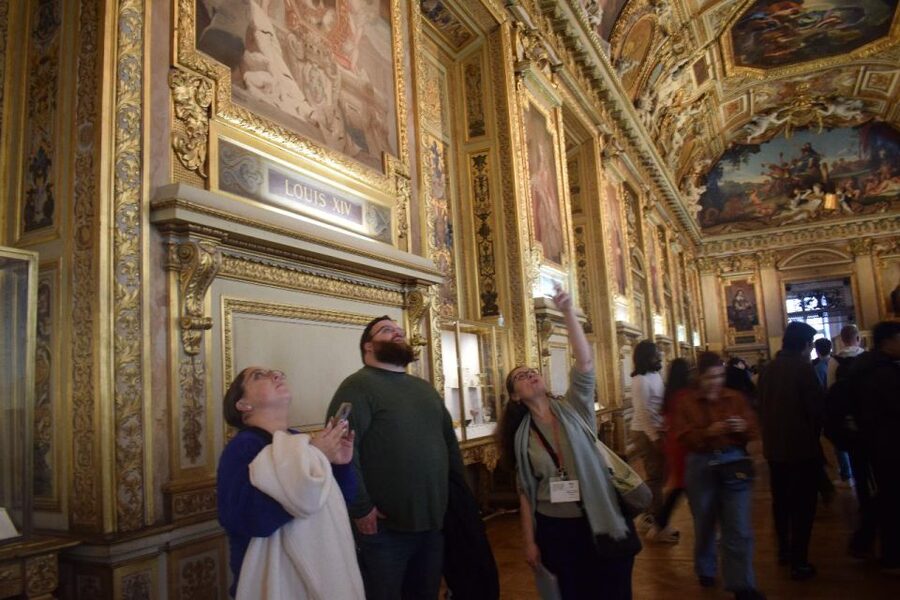
The Louvre is not one tidy gallery. It is a former royal palace with about 800 years of changes layered into its rooms, courtyards, stairways, and collections. You can easily spend half an hour just trying to work out where you are, then discover that the painting or sculpture you wanted is on another floor.
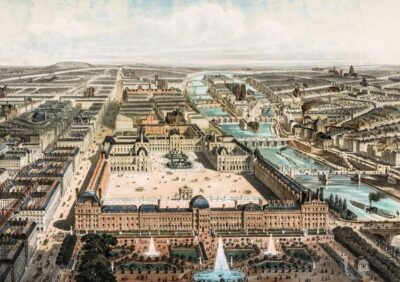
This is where the tour earns its keep. Your guide gives you a route and a story. You see how a medieval fortress became a Renaissance residence, how French kings enlarged the complex, and how later emperors added their own stamp. The Pyramid provides the modern entrance, but the museum around it still carries the weight of a palace.
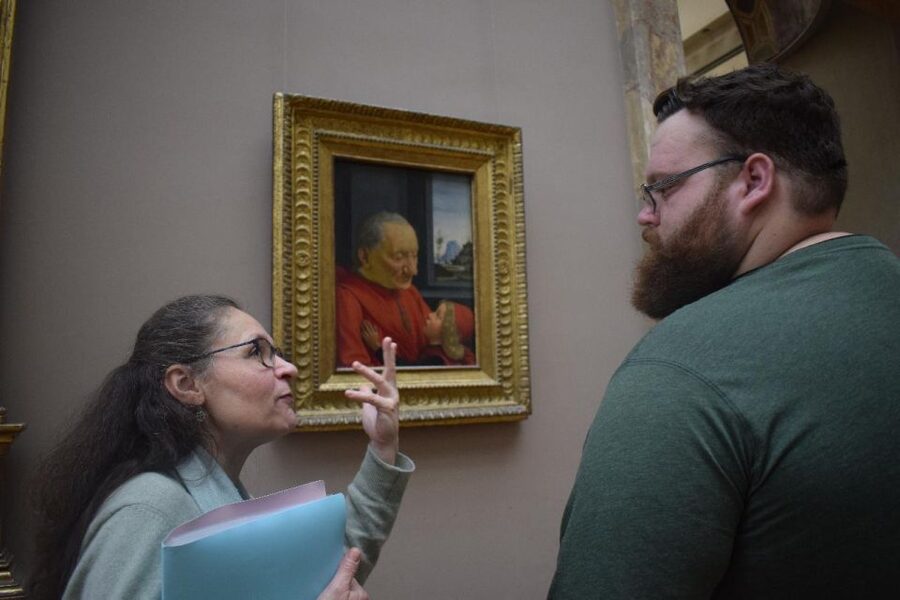
The guide’s job is not only to find famous objects. It is to explain what you are looking at. A good explanation can turn a familiar face in a painting into a lesson in power, religion, technique, or French politics. Guides on this tour have been praised for combining facts with humor and for answering questions instead of delivering a stiff speech.
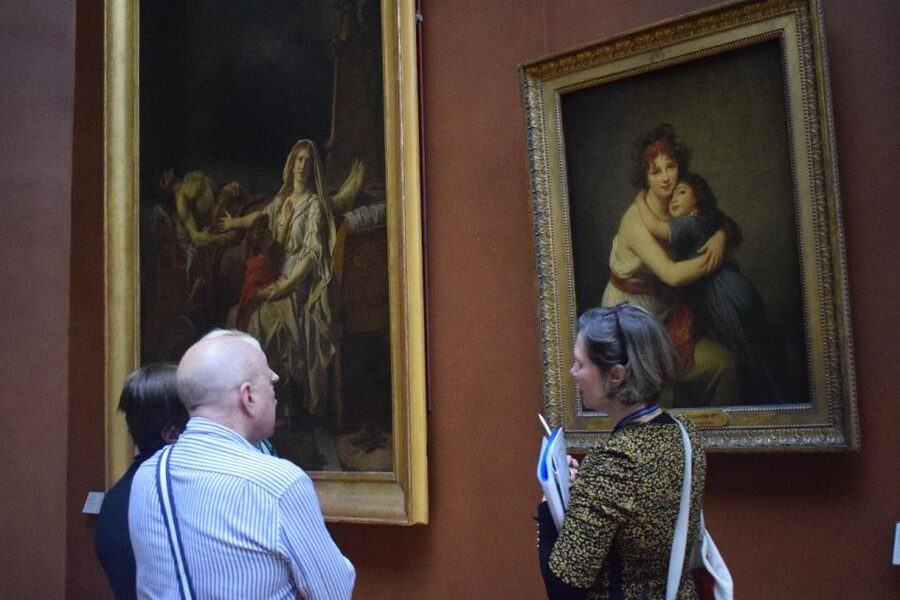
The small group matters. With six people or fewer, you are more likely to hear the guide clearly and get a direct answer. Some groups are even smaller. One booking had only three people, which made conversation easy. Audio devices have also been provided when needed, a real help when the galleries are noisy.
More Louvre Museum Tours:
- Paris: Louvre Museum Timed-Entrance Ticket
★ 4.6 · 71,977 reviews - Paris: Louvre Guided Tour with Reserved Access & Boat Cruise
★ 4.3 · 16,353 reviews - Louvre Museum Masterpieces Guided Tour with Access
★ 4.5 · 12,023 reviews
Meeting at Place Colette
The meeting point is Place Colette, between Le Kiosque des Noctambules and the Comédie-Française. Look for the colorful glass-ball sculpture and a guide holding a sign marked Connecting France.
This is a practical meeting spot because it is near the Louvre but not inside the museum’s confusing entry area. Give yourself enough time to find the sculpture and identify your guide. A meeting-point change has been communicated by WhatsApp and text in at least one case, so check your messages before setting out.
The tour begins outside with a pass by the Louvre Pyramid. You do not spend the main part of the tour studying the Pyramid, but seeing it first helps you understand the museum’s present-day entrance and its striking contrast with the palace facades around it.
Bring comfortable shoes. You cannot bring oversize luggage, large bags, backpacks, or baby strollers. You also need a passport or identity card. The activity is not suitable for wheelchair users or people with mobility impairments, so check that limitation before paying.
Getting past the entrance and into the route
The ticket is timed and included in the $130 price. You still go through security, so skip-the-line does not mean walking straight past every checkpoint. It means you use a separate entry arrangement instead of buying a standard ticket at the museum.
That distinction matters at the Louvre. A delayed entry can eat into a short visit, while a pre-booked time gives the guide a better chance of getting the group inside together. Once through security, the guide leads you through the museum rather than leaving you to find the first gallery yourself.
The tour lasts two hours. That sounds short for a museum with more than 35,000 works, and it is. The goal is not to cover every department. The goal is to give you a strong first look at the pieces most likely to matter to you, along with enough background to continue alone if you have time.
The pace can be brisk, especially when the museum is crowded. That is not a flaw in itself. A moving route is often the only way to see the major works in a two-hour window. Still, you should not expect long, quiet stretches in front of every painting.
Venus de Milo and the Louvre’s sculpture route
The Venus de Milo is one of the main stops. This ancient Greek sculpture is famous for its missing arms, graceful pose, and calm expression, but the useful part of seeing it with a guide is the context around it. You get more than a photograph. You get help noticing how the figure is positioned and why it has remained such a powerful image.
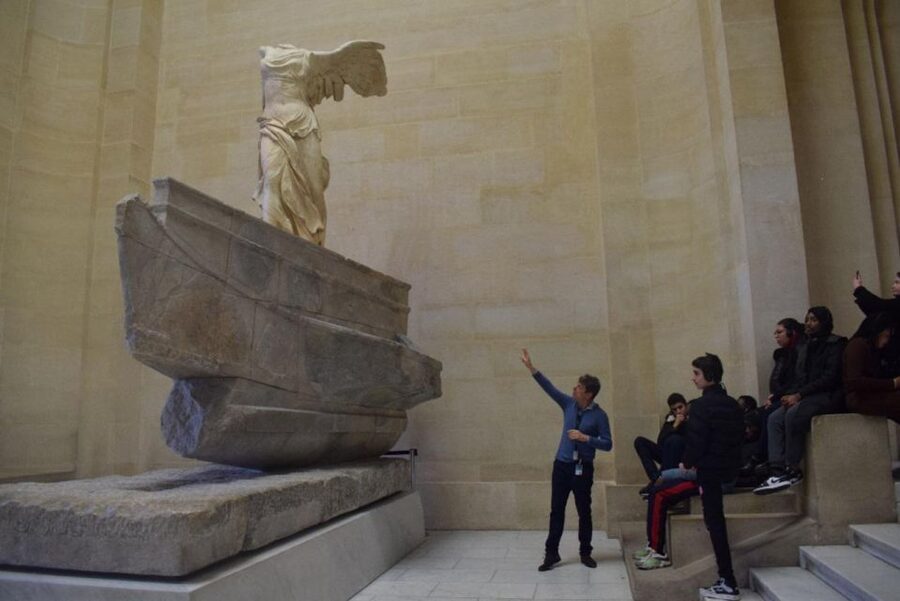
The route also includes Winged Victory of Samothrace, one of the Louvre’s most dramatic sculptures. Its placement on a grand staircase gives it force before you even study the details. A guide can help you look at the sense of movement, the folds of the clothing, and the way the sculpture was designed to be seen from below.
These stops show why a highlights tour should not become a Mona Lisa dash. The Louvre’s sculptures give you a different kind of experience from its paintings. They occupy space, work with light, and often depend on your movement through the room.
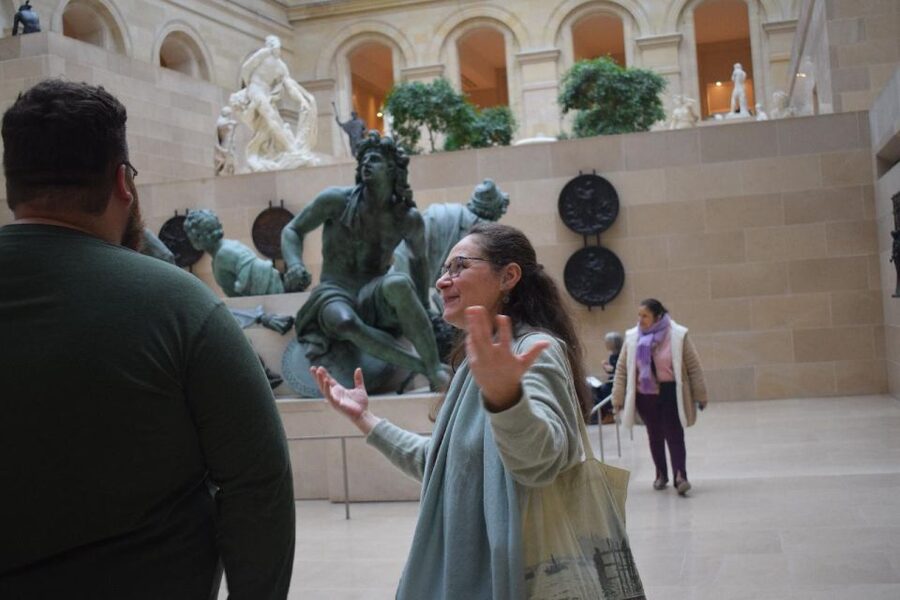
The guide may also point out sculpture in courtyards and other major objects along the route. One group saw Napoleon’s apartments as well, so the exact path can include a strong mix of art, architecture, and royal display. The precise order may change with crowd levels and museum operations.
More tickets and entry passes in Paris:
- Disneyland® Paris 1-Day Ticket
★ 4.6 · 49,412 reviews - Paris: Versailles Palace and Gardens Full Access Ticket
★ 4.6 · 41,579 reviews - Paris: Eiffel Tower Entry Ticket with Optional Summit Access
★ 4.4 · 20,035 reviews - Paris: Moulin Rouge Cabaret Show Ticket with Champagne
★ 4.7 · 16,088 reviews
The Mona Lisa without losing the rest of the museum
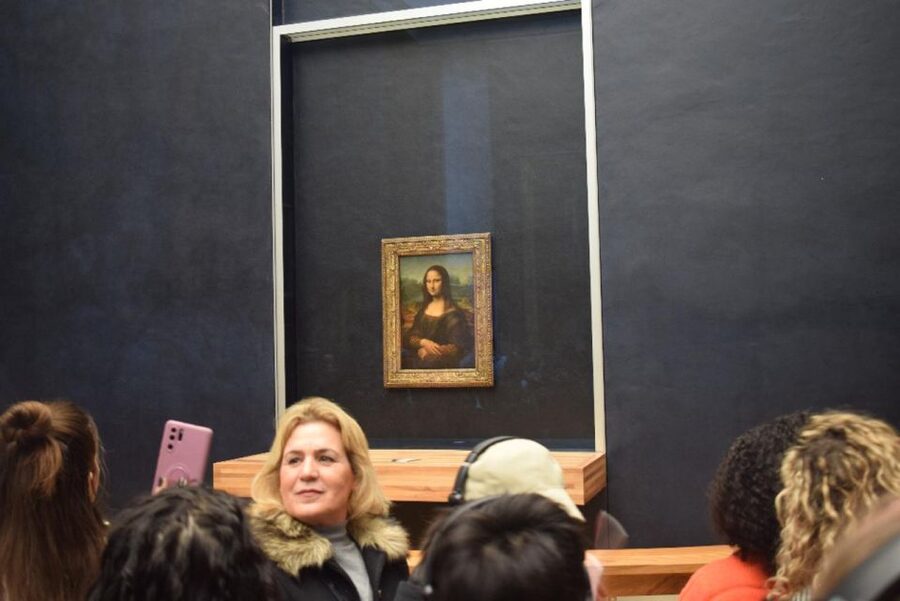
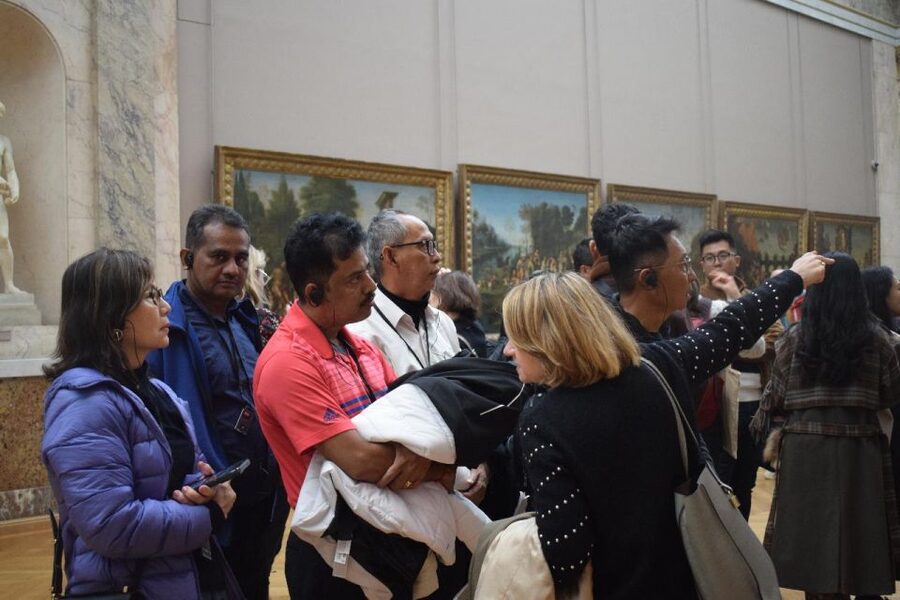
Of course, you will see Leonardo da Vinci’s Mona Lisa. The room is a major crowd magnet, and the experience is rarely quiet or solitary. A guide helps you get there efficiently and gives you a sensible way to look at the painting despite the people and the pressure to move along.
The value here is not just reaching the famous portrait. It is learning how to place it within the larger collection. Leonardo’s work is part of the Italian Renaissance story, and the guide also brings in artists such as Caravaggio and Botticelli.
One practical detail matters: the route may put the Mona Lisa early enough that you see it before an unexpected closure or disruption. During one museum visit affected by a jewelry theft, the group was fortunate to have reached it first. That is not something you can plan around, but it shows why a well-organized route can help when conditions change.
You should keep your expectations realistic. The Mona Lisa is smaller than many first-time visitors expect, and the room can feel hectic. Your guide cannot remove the crowd. What the guide can do is save you from wandering through several corridors while trying to find it.
French painting, Italian Renaissance, and Napoleon’s apartments
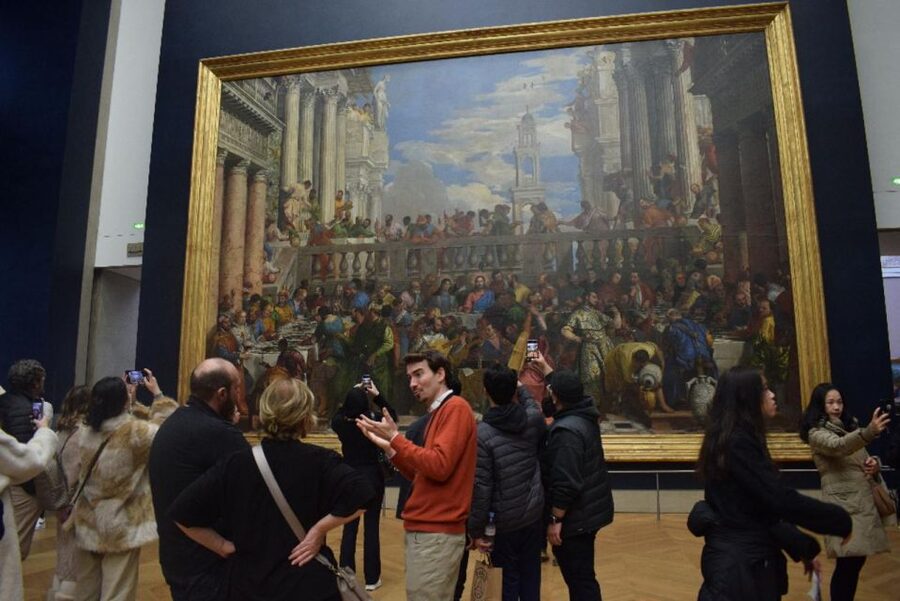
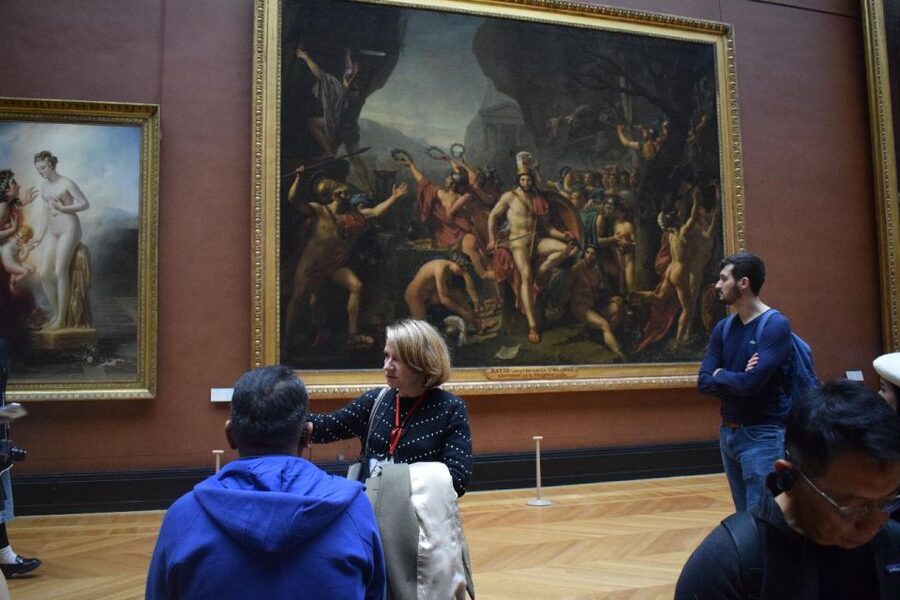
The tour brings together several art traditions rather than keeping you in one narrow department. You can expect French paintings, Italian Renaissance works, Greek sculpture, and selected decorative rooms.
That variety is one of the best reasons to choose this route. You get a quick sense of how broad the Louvre is. The paintings can show you changes in composition, religious subjects, portraiture, and drama. The sculptures bring another set of questions about the body and movement. The palace rooms show how art was used to display wealth and authority.
Géricault is among the French artists included. His work gives the guide a chance to discuss the powerful scale and emotion found in 19th-century French painting. Caravaggio and Botticelli represent very different moments in Italian art, while Leonardo anchors the Renaissance portion with the museum’s most famous portrait.
Napoleon’s apartments add a welcome change of pace. Here, the focus shifts from individual paintings to interiors, furnishings, ceremony, and imperial taste. One group described these rooms as especially beautiful. You may find them just as memorable as the headline artworks because they let you see how rulers wanted power to look.
The route can also include exquisite jewelry and tapestries, depending on the guide’s plan and current access. That variety helps prevent the tour from becoming a checklist of three famous objects.
The three ladies of the Louvre
The tour’s shorthand for the three ladies is useful: Venus, Mona Lisa, and Nike, or Winged Victory. They come from different cultures, periods, and artistic traditions, yet they form a clear spine for a first visit.
Venus de Milo represents ancient Greek sculpture. The Mona Lisa brings you to Leonardo and the Italian Renaissance. Winged Victory connects sculpture with movement, monument, and the drama of the grand staircase.
You do not need an art degree to appreciate the contrast. I like this framework because it gives you three strong memory points. If the Louvre feels overwhelming, you can use those works to organize what you saw around them.
Your guide can then add the less famous pieces that make the museum feel like a collection rather than a celebrity parade. This is where the personal style of the guide matters. Patrick has been praised for mixing history, humor, and interpretation. Jerome is known for building a clear historical story around the objects. Marine has been especially effective at moving groups through heavy crowds while covering paintings, sculptures, tapestries, jewelry, and imperial rooms.
Guides vary, but the strongest pattern is clear: the experience depends heavily on who leads your group. Flo, Clara, Victor, Matteo, Vincent, and Floriane are among the guides singled out for humor, care, strong English, and clear explanations.
Is $130 a fair price?
At $130 per person, this is not a budget way to enter the Louvre. A solo visitor who already understands the museum and has plenty of time may prefer a standard admission ticket and a self-guided plan.
The price becomes easier to defend if you value time and direction. You get a timed museum ticket, a guide, skip-the-line arrangements, and a maximum group size of six. You also avoid spending your first hour learning the building’s layout.
For a family, the value can be even clearer. Children and teenagers may lose interest in a giant museum without a plan. A short route with stories, famous objects, and a guide who can adjust explanations gives them a better chance of staying engaged. One family with children aged eight and ten enjoyed the format, and a 14-year-old was reported to have liked the fast, informative pace.
I would book it if the Louvre is a priority and your Paris schedule is tight. I would not book it simply because you want a quiet, slow look at one department. For that, a general admission visit with a carefully chosen gallery plan may suit you better.
Two hours, then your own Louvre plan
The tour ends after two hours, but the experience is meant to give you a starting point for further looking. Your guide points out areas worth returning to and helps you understand what you have just seen.
There is an important change from January 2026: you cannot re-enter the Louvre after the guided tour ends. Earlier advice about leaving for coffee and coming back no longer applies. If you want to continue independently, plan to remain inside and explore before exiting.
This rule changes how I would schedule the day. Eat beforehand, carry only what is permitted, and do not assume you can step outside for lunch and use the same ticket again. The tour operator may be able to help if a problem occurs, but you should plan on one continuous museum visit.
The tour is also not a complete half-day visit by itself. Two hours gives you a strong overview, but you will not see every wing or collection. If you want more time, choose a start time that leaves room afterward and stay inside once the guided portion finishes.
Who should book this Louvre tour?
I would recommend it most strongly to first-time visitors, families, people with limited time, and anyone who finds large museums confusing. It is also a good fit if you want the famous works but would like their setting and background explained.
The tour suits several language needs. Live guides are available in English, French, German, Spanish, Italian, Arabic, and Chinese. Private and small-group options are available, though the standard small group is capped at six.
I would think twice if you need step-free access, use a wheelchair, or cannot manage a brisk walking route. The activity is specifically not suitable for wheelchair users or people with mobility impairments.
Flexible booking helps. You can cancel up to 24 hours in advance for a full refund, and reserve now while paying later. Those policies reduce some risk, but they do not change the main decision: are you paying for entry alone, or for a clear and efficient first look at a very large museum?
Should you book it?
Book this tour if the Louvre is high on your Paris list and you want to see the major works without fighting the building on your own. The six-person limit, timed ticket, and guides who bring humor and context are the strongest reasons to choose it.
Skip it if you have several days for the Louvre, enjoy detailed solo study, or want the lowest possible entry cost. For everyone else, $130 buys more than access. It buys a route, a useful introduction, and a better chance of leaving with a sense of what you actually saw.
FAQ
How long does the Louvre tour last?
The guided tour lasts two hours. It is designed as a focused introduction to the museum’s main works and rooms.
What artworks are included?
The route includes the Mona Lisa, Venus de Milo, Winged Victory of Samothrace, Napoleon’s coronation, French paintings, Greek sculptures, Italian Renaissance works, and selected art by Leonardo da Vinci, Caravaggio, Botticelli, and Géricault.
Is museum entry included?
Yes. The activity includes a timed ticket to the Louvre Museum and skip-the-line arrangements through a separate entrance. You still need to pass through security.
How large is the group?
The small-group tour has a maximum of six people. Private options are also available.
Where is the meeting point?
Meet at Place Colette, between Le Kiosque des Noctambules, the colorful glass-ball sculpture, and the Comédie-Française. Your guide will hold a sign marked Connecting France.
What languages are available?
Live guides are available in English, French, German, Spanish, Italian, Arabic, and Chinese.
Can I re-enter the Louvre after the tour?
No. From January 2026, visitors cannot re-enter the Louvre after leaving at the end of the tour. Plan to remain inside if you want to continue exploring independently.
What should I bring, and what is not allowed?
Bring a passport or identity card and comfortable shoes. Oversize luggage, large bags, backpacks, and baby strollers are not allowed.
Just added around Paris
- Paris: The Da Vinci Code Walking Tour with a Local Guide★ 4.3 · 5 reviews
- Paris: Flea Market Insider’s Tour in Extra-Small Group★ 4.6 · 73 reviews
- Paris: Private Fashion Tour (Chanel, Dior, Sex & the City)★ 5.0 · 3 reviews
- Paris: Floral Earrings workshop★ 5.0 · 3 reviews
- Paris: Fashion History Walking Tour in the Heart of Paris★ 4.9 · 22 reviews
- PARIS: Family e-bike longtail renting★ 5.0 · 3 reviews
- Paris: Famous Monuments Cycling Tour★ 4.7 · 20 reviews
- Paris: private city tour with seine river cruise★ 4.8 · 28 reviews
Louvre Museum Tours, compared.

Louvre Guided Tour with Reserved Access & Boat Cruise
Read our review →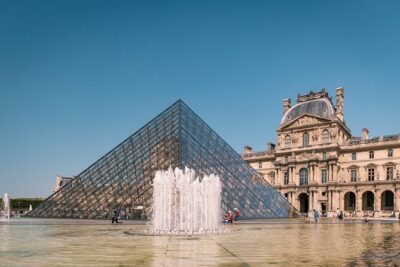
Louvre Museum Masterpieces Guided Tour with Access
Read our review →
Louvre Museum Entry Ticket With Host and River Cruise
Read our review →
Priority Access Louvre with Host -Direct to Mona Lisa
Read our review →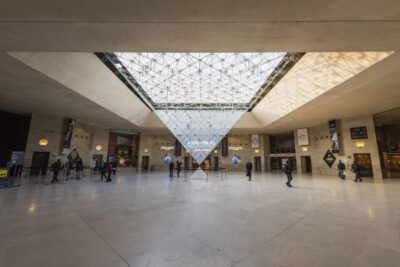
Mona Lisa & Louvre Masterpieces Tour with Reserved Access
Read our review →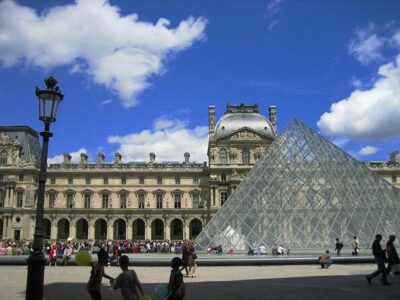
Louvre Museum – Exclusive Guided Tour (Entry Included)
Read our review →
Louvre Reserved Ticket and River Cruise Combo
Read our review →Browse the lists this tour appears in