
Reviewed · SEINE RIVER CRUISES
Paris: Big Bus Hop-On Hop-Off Tour with Optional Cruise
Paris is easiest to understand from above street level, and this open-top double-decker route gives you a quick first look at the Eiffel Tower, Louvre, Notre Dame, Arc de Triomphe, and grand boulevards without asking you to master the Metro on day one. The optional Seine cruise adds a different view of the city from the water.
I like the frequent buses, which usually run every 10 to 20 minutes, and the useful app showing routes and bus locations in real time. I also like the freedom to ride the full loop, then hop off when a museum, garden, or monument catches your eye. The catch is Paris traffic: the full circuit takes about 2 hours and 15 minutes, and a 24-hour ticket does not mean buses run late into the evening.
Key points to know before you go
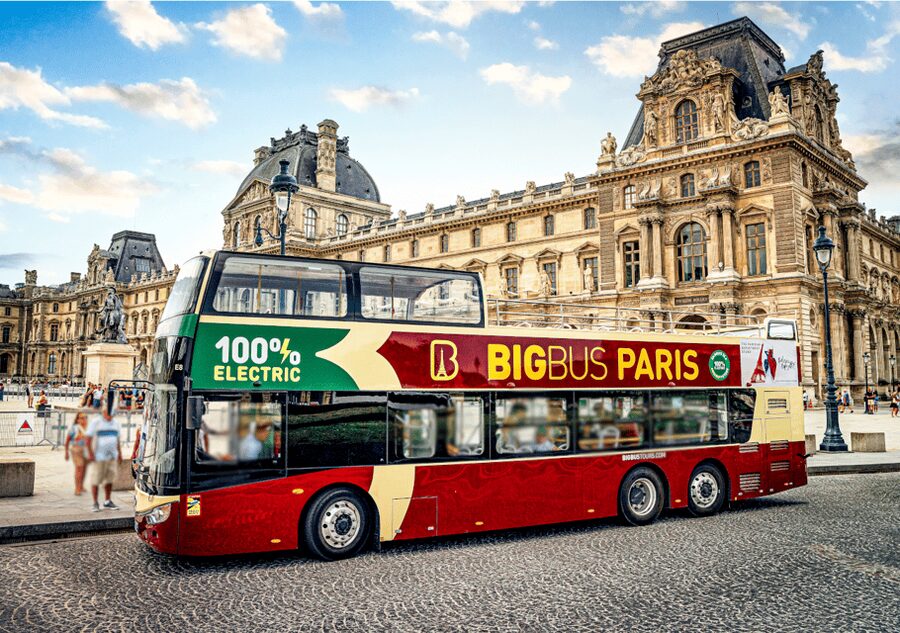
- The complete loop takes about 2 hours and 15 minutes, making the first circuit useful for getting your bearings.
- Ten main stops put you near sights including the Louvre, Notre Dame, Musée d’Orsay, Eiffel Tower, Invalides, and Opéra Garnier.
- Buses generally arrive every 10 to 20 minutes, though traffic and full buses can affect the wait.
- The Seine cruise leaves near the Eiffel Tower, from Pontoon No. 3 at Port de la Bourdonnais.
- A 48-hour pass is better for museum stops, while a 24-hour pass works well for a quick overview.
- The upper deck offers the best views, but the lower deck has shelter, air conditioning, and wheelchair access.
Why this bus works well for a first day in Paris
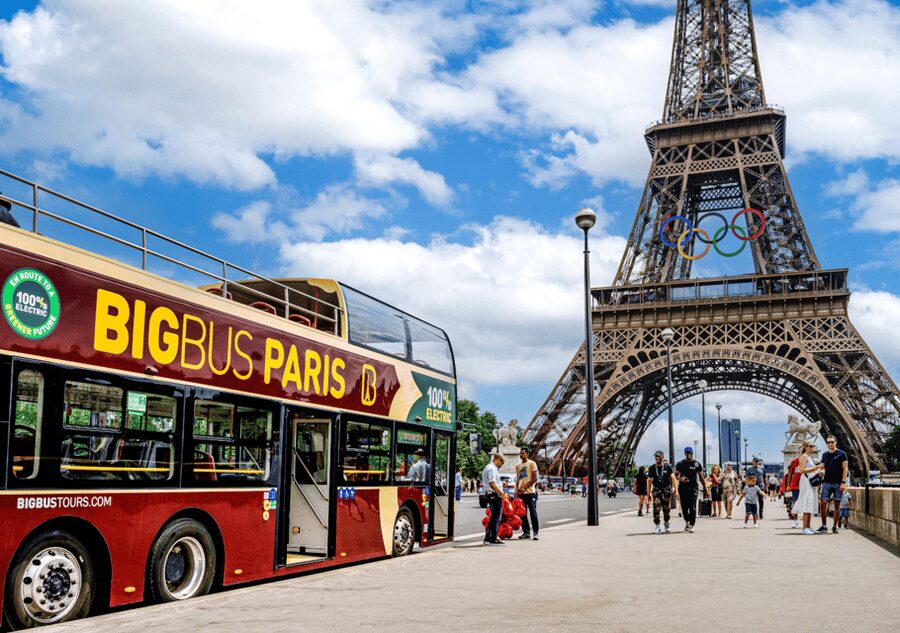
Paris rewards walking, but its famous sights are spread across a large area. The Big Bus route links the river, grand avenues, Left Bank museums, royal squares, and the Eiffel Tower without making you change trains or study a transit map.
I would use the first ride as an orientation loop. Stay on for the major sights, listen to the multilingual audio guide, and note where you want to return. This is especially useful if you have only one or two days in Paris and want to see the city before committing your limited time to individual museums.
The bus also gives you a break from walking. Paris sightseeing can mean long distances between the Louvre, Notre Dame, the Champs-Élysées, and the Eiffel Tower. Sitting upstairs with a clear view can be a pleasant part of the day rather than just transportation between attractions.
The audio guide covers the route in Chinese, English, French, German, Italian, Korean, Portuguese, Russian, and Spanish. Drivers speak English, French, German, Italian, Portuguese, and Spanish. Headphones are provided, and the onboard Wi-Fi and route app add practical help.
More hop-on hop-off bus tours in Paris:
- Paris: Tootbus Hop-on Hop-off with optional river cruise
★ 4.3 · 11,924 reviews - Paris Big Bus Hop-On Hop-Off Tour with Optional River Cruise
★ 4.0 · 6,534 reviews - Paris: Hop-On Hop-Off Seine Cruise Pass with 9 Stops
★ 4.4 · 5,645 reviews
The route from the Louvre to Notre Dame
The main starting point is the Big Bus information center at 11 Avenue de l’Opéra, though you can begin at any stop. Starting here makes sense if you are near the Palais-Royal, the Louvre, or Opéra Garnier.
The bus passes the Palais-Royal, a former royal complex with arcaded walkways and a quiet garden. You may prefer to save this for a walking stop later, since the bus gives only a passing view.
Next comes the Louvre and Pont des Arts. The Louvre stop is handy for the museum entrance area, but do not confuse a bus ticket with museum admission. The bus lets you reach the Louvre, not skip its security line or reserve a timed entry.
Pont des Arts gives you a pleasant river setting and access to the Seine. From here, the route continues toward Notre Dame, passing through some of the most historic parts of central Paris.
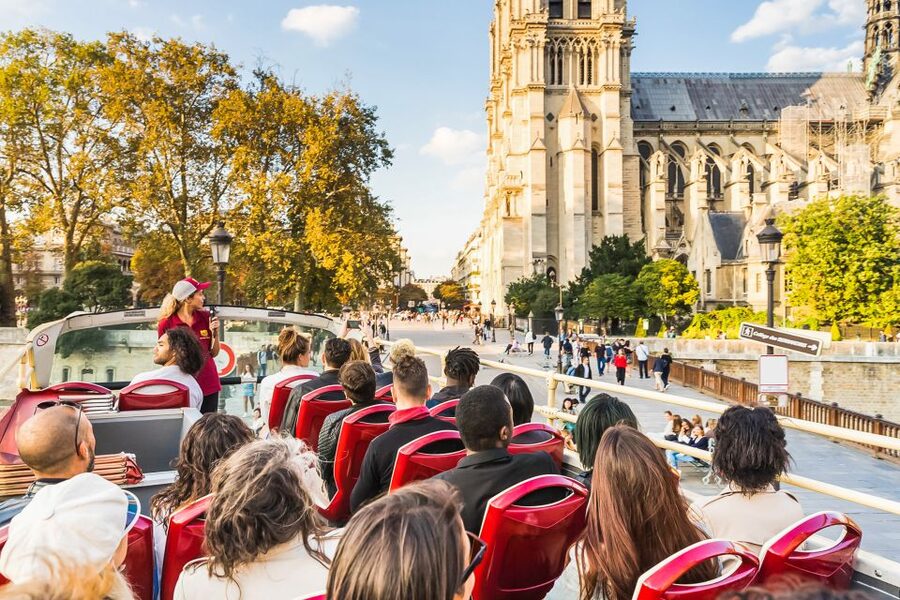
At the Notre Dame stop on Rue Lagrange, you are close to the cathedral and the Île de la Cité. This is one of the best places to hop off because you can combine the cathedral area with river walks and nearby streets on foot. Allow extra time here if you want more than a quick photograph.
The route then reaches the Musée d’Orsay on the Left Bank. The stop is at 58 Place Henry de Montherlant, near the former railway station that now houses one of Paris’s most important collections of Impressionist art. If the museum is on your list, a 48-hour pass gives you more breathing room than trying to fit it into a single bus day.
From the Musée d’Orsay to the Champs-Élysées
After the Musée d’Orsay, the bus passes the Palais Bourbon, home of France’s National Assembly. You will see the grand formal side of Paris here, with broad avenues and imposing stone buildings.
The bus then passes the Tuileries Garden, one of the easiest places to pair with a walking break. You can get off near the Louvre or continue toward Place de la Concorde, depending on which direction the bus is running and where you want to spend time.
Place de la Concorde is known for its wide open space, fountains, and obelisk. It also marks the transition from the museum district to the Champs-Élysées. From the top deck, this stretch gives you a strong sense of Parisian planning: long views, formal gardens, and grand avenues lined up toward major monuments.
The Champs-Élysées stop is at 156 Avenue des Champs-Élysées. This is a useful hop-off point for shopping, people-watching, or walking toward the Arc de Triomphe. The avenue is broad and heavily trafficked, so the bus saves your feet, but it does not eliminate street crossings or the need to walk once you get off.
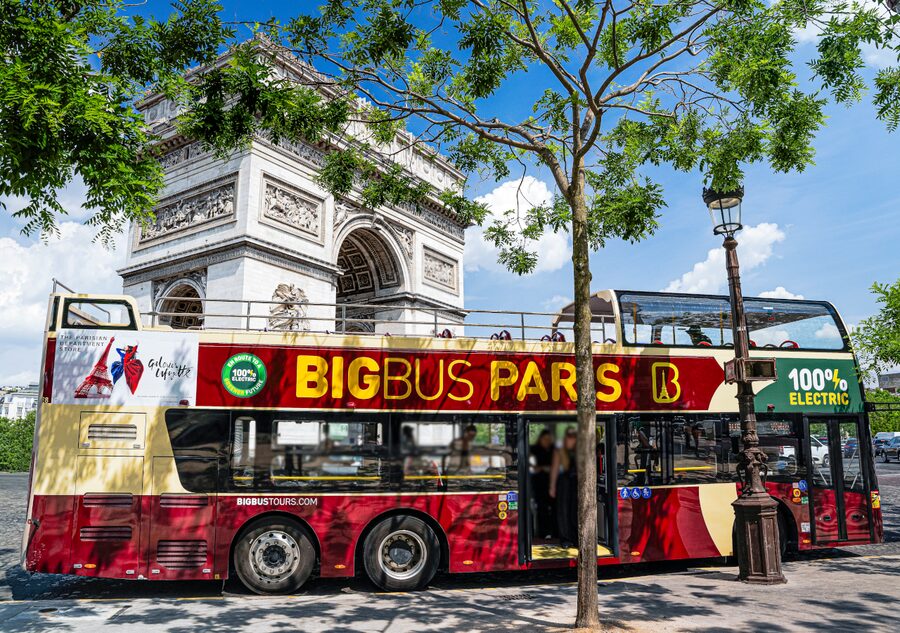
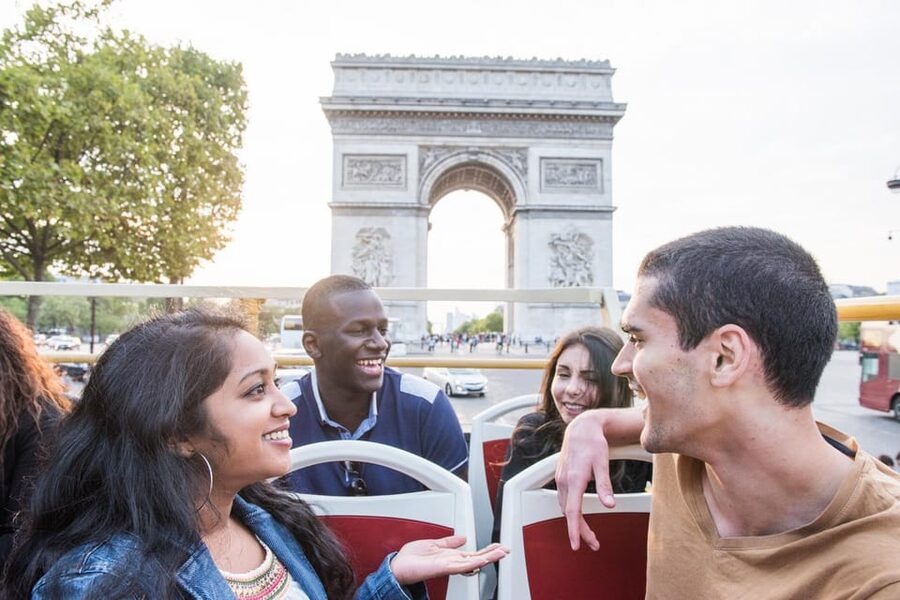
The Arc de Triomphe is one of the route’s most memorable sights. The bus circles the area, giving you a dramatic view of the monument from street level and above. If you want to visit the top, check the separate admission arrangements before you go. The roundabout is busy, and the bus may move slowly here, but that delay can work in your favor for photographs.
Grand Palais, Iéna, and the Eiffel Tower

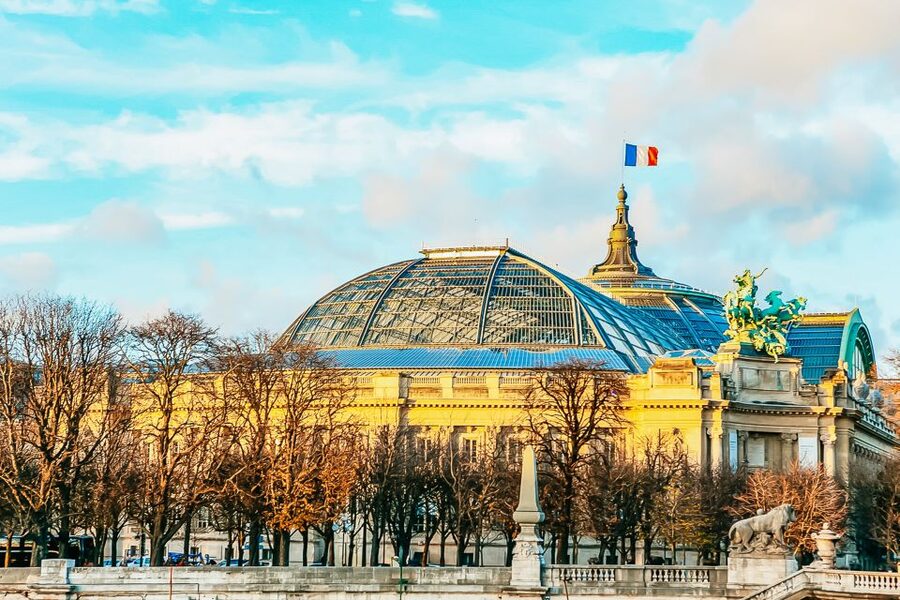
The route continues past the Grand Palais and Petit Palais along Avenue Winston Churchill. These exhibition halls sit near the Seine and the Champs-Élysées, making this a good area for art, architecture, and a walk across the river.
The Iéna stop brings you closer to the Palais de Chaillot and the Trocadéro area. This is an important stop if you want one of the classic views toward the Eiffel Tower. The route information lists Iéna at Avenue Iéna, while the Eiffel Tower stop is near Quai Branly.
The Eiffel Tower stop is at Quai Branly, Entrance 2. It is also the most useful place to combine the bus tour with the optional river cruise. The boat departs from Pontoon No. 3 at Port de la Bourdonnais, close to the bus stop.
Expect the Eiffel Tower area to be the busiest part of your day. If you plan to go up the tower, reserve that separately and leave enough time for security, elevators, and queues. The bus is best used here as a way to arrive, orient yourself, and continue after your tower visit.
The route also passes the Champ de Mars, the broad park beneath the Eiffel Tower. From the bus, you get a quick view of the lawns and tower structure. Hop off if you want to walk across the park, take photographs, or rest before returning to the route.
More Seine river cruises:
- Paris: Evening River Cruise with Music
★ 4.4 · 22,721 reviews - Paris: Louvre Guided Tour with Reserved Access & Boat Cruise
★ 4.3 · 16,353 reviews - Paris: Seine Cruise & Crepe Tasting near the Eiffel Tower
★ 4.4 · 11,231 reviews - Paris: Seine River Panoramic Views Dinner Cruise
★ 4.3 · 10,611 reviews
École-Militaire, Invalides, and Opéra Garnier
The bus passes École-Militaire and continues to Les Invalides at 2 Avenue de Tourville. Invalides is a strong stop for military history, grand architecture, and the domed church associated with Napoleon’s tomb.
This area is worth more than a quick glance from the upper deck. If you plan to visit the complex, use the 48-hour ticket so you are not forced to choose between Invalides and another major museum on the same day.
The route then heads back toward Place Vendôme and Palais Garnier. Place Vendôme is known for its elegant architecture and luxury shops, while Opéra Garnier offers one of Paris’s most ornate interiors.
The Opéra stop is opposite 15 Rue Scribe. It is a convenient final stop if you are staying near the department stores or want to explore the opera house area. The bus returns to the Louvre information center at 11 Avenue de l’Opéra.
Keep in mind that the route is designed as a loop, not a point-to-point shuttle. If you are only trying to move from the Eiffel Tower to the Louvre, the bus may take longer than a taxi or Metro ride. Its value comes from the views, commentary, and ability to hop off at several places, not from speed.
Choosing between the 24-hour and 48-hour passes
The listed price is about $43 per person, with the exact cost depending on the option selected. At that price, the bus makes the most sense if you plan to ride several sections, complete the full loop, and stop at multiple areas. It is less convincing if you only need one short transfer.
A 24-hour pass suits a short stay. You can ride the full circuit, get off at one or two key sights, and use the bus again later. One practical plan is to start late in the afternoon, complete the loop, then use the pass the next morning for your chosen stops.
A 48-hour pass is the better choice if you want to visit museums, spend time at Notre Dame, stop at the Eiffel Tower, and take breaks. It reduces the pressure to rush through the Louvre, Musée d’Orsay, Invalides, or the Arc de Triomphe.
The word 24-hour can be misleading if you expect night service. The last departure from Stop 1 is listed at 17:30, and buses generally do not continue late into the evening. Check the day’s schedule before planning a dinner or evening monument visit.
Adding the one-hour Seine cruise
The cruise is operated by Les Bateaux Parisiens and leaves from Pontoon No. 3 at Port de la Bourdonnais, near the Eiffel Tower stop. Departures are scheduled every 45 minutes from 10:30 in the morning until 21:00, with more frequent departures on weekends, when boats run every 30 minutes.
From the river, you get a calmer view of Paris’s bridges, quays, monuments, and riverside façades. The cruise commentary explains the landmarks, giving you a second way to understand the city after hearing the bus audio guide.
Plan this part carefully. The boat is not at the Louvre or Notre Dame. You need to reach the Eiffel Tower area, and the wait can be long at busy times. One booking experience included a wait of more than an hour and a half, so do not attach the cruise to a tight museum reservation.
For a senior or anyone with mobility concerns, the cruise may add extra stairs and walking compared with staying on the bus. The buses have ramps for wheelchair access, but the river portion has its own access conditions. Confirm the current arrangement if accessibility is central to your plans.
Comfort, weather, and practical details
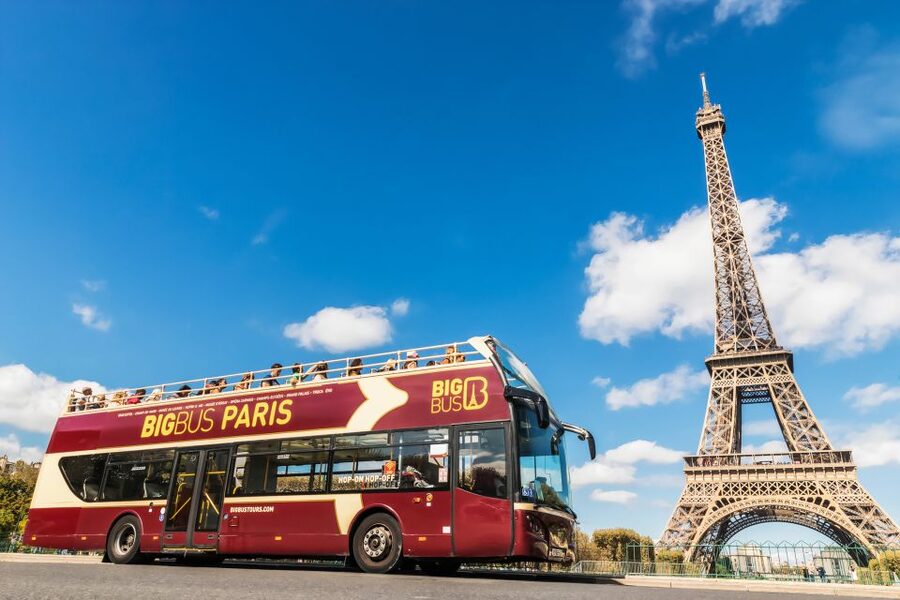
The upper deck gives you the best views and makes the tour feel like sightseeing rather than transport. In cold weather, it can be very chilly, even when the sky looks clear. Some upper-deck seats are covered, and the lower level offers shelter and air conditioning in warmer weather.
Rain does not automatically ruin the ride. Covered seating is available, but you should still bring a layer and expect wind. In good weather, the upper deck can fill up, especially around the Arc de Triomphe and Eiffel Tower. If no seat is available, you may need to wait for the next bus.
The buses are wheelchair accessible with ramps. Small dogs are allowed on the lower level. Headset jacks can occasionally fail, so test your audio early and tell staff if the commentary is not working.
Download the free app before you begin. It shows the route, stop locations, and real-time bus positions. The app matters because some stops are not directly in front of the attraction they serve. One useful example is the Eiffel Tower area, where you need to follow the stop location toward the tower and cruise pier.
Who will get the most from this Paris tour?

I would recommend it most for a first visit, a short stay, families, older visitors, and anyone who wants an easy overview before tackling Paris on foot. It also suits you if you like deciding as you go rather than booking every hour in advance.
It is less ideal if your main goal is fast transportation or quiet exploration. Paris traffic can make a short distance take a long time, and the route does not replace admission tickets for the Louvre, Eiffel Tower, Musée d’Orsay, or other attractions.
The audio guide is clear and useful for basic context, but it is not the same as a small walking tour with a live guide. You will hear information while passing the sights, then need to explore on your own after hopping off.
Should you book the Big Bus Paris tour?
Book it if you want a simple way to see the major monuments, especially during a short visit. The route covers the Louvre, Notre Dame, Musée d’Orsay, Champs-Élysées, Arc de Triomphe, Grand Palais, Eiffel Tower, Invalides, and Opéra Garnier, while the app and frequent buses make the day easier to manage.
Choose the 48-hour option if you want real museum time or prefer a slower pace. Add the cruise if you can tolerate possible waiting and want a different view of Paris from the Seine.
Skip it if you already know Paris well, prefer the Metro, or plan to spend each day inside a few specific museums. For a first orientation, though, this is a practical $43 introduction to the city, with enough flexibility to make it more than a simple sightseeing loop.
FAQ
Where can I start the Big Bus Paris tour?
You can begin at any Big Bus stop along the route. The main information center is at 11 Avenue de l’Opéra, and other listed stops include the Louvre, Notre Dame, Musée d’Orsay, Champs-Élysées, Grand Palais, Iéna, Eiffel Tower, Opéra Garnier, and Invalides.
How long does the full bus route take?
The complete circuit takes about 2 hours and 15 minutes. Traffic can make the ride take longer at busy times.
How often do the buses run?
Buses are scheduled approximately every 10 to 20 minutes. Actual waits can vary because of traffic, full buses, or delays.
What time does the last bus leave?
The last tour departs from Stop 1 at 17:30. Check the current daily schedule before planning evening activities.
Is the Seine cruise included?
The one-hour Seine cruise is included only if you select the option that includes it. It departs near the Eiffel Tower from Pontoon No. 3 at Port de la Bourdonnais.
How often does the Seine cruise depart?
Cruises depart every 45 minutes from 10:30 to 21:00. On weekends, departures are scheduled every 30 minutes.
Is the bus wheelchair accessible?
Yes. All buses have a ramp for wheelchair access. The river cruise has separate access arrangements, so confirm those details if needed.
Are audio guides available in languages other than English?
Yes. The digital audio guide is available in Chinese, English, French, German, Italian, Korean, Portuguese, Russian, and Spanish.
Can I bring a dog on the bus?
Small dogs are allowed, but they must remain on the lower level of the bus.
Just added around Paris
- Paris: The Da Vinci Code Walking Tour with a Local Guide★ 4.3 · 5 reviews
- Paris: Flea Market Insider’s Tour in Extra-Small Group★ 4.6 · 73 reviews
- Paris: Private Fashion Tour (Chanel, Dior, Sex & the City)★ 5.0 · 3 reviews
- Paris: Floral Earrings workshop★ 5.0 · 3 reviews
- Paris: Fashion History Walking Tour in the Heart of Paris★ 4.9 · 22 reviews
- PARIS: Family e-bike longtail renting★ 5.0 · 3 reviews
- Paris: Famous Monuments Cycling Tour★ 4.7 · 20 reviews
- Paris: private city tour with seine river cruise★ 4.8 · 28 reviews
Seine River Cruises, compared.
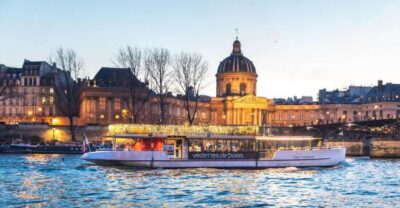
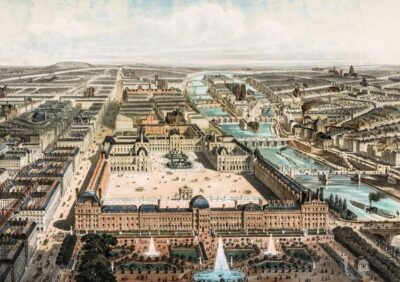
Louvre Guided Tour with Reserved Access & Boat Cruise
Read our review →
Tootbus Hop-on Hop-off with optional river cruise
Read our review →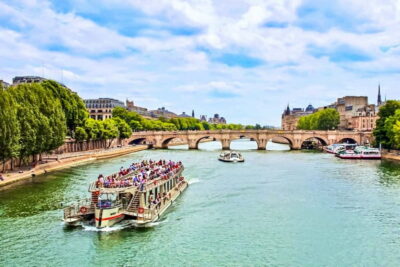
Seine Cruise & Crepe Tasting near the Eiffel Tower
Read our review →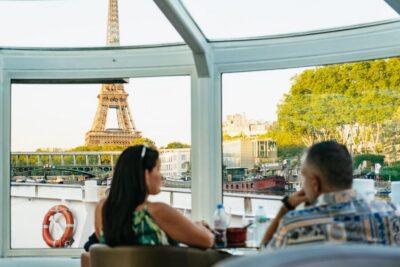
Louvre Museum Entry Ticket With Host and River Cruise
Read our review →
Eiffel Tower Access by Elevator & Seine River Cruise
Read our review →
3-Course-Dinner Cruise on the Seine with live music
Read our review →Browse the lists this tour appears in