Reviewed · TOURS
Art nouveau Paris tour
Art Nouveau Paris is best understood from the street, where curling ironwork, ceramic tiles, carved stone, and strange symbols turn ordinary buildings into works of art. This private two-hour walk connects the style to the Belle Époque, the Eiffel Tower, old cafés, and even occult societies.
I like the small private format, which gives you room to stop and study details instead of being rushed past them. I also like the focus on Jules Lavirotte, whose buildings on Avenue Rapp offer some of the most playful façades in Paris. The main drawback is time: two hours gives you a sharp introduction, not a full survey of Parisian Art Nouveau.
Key points to know
- Ceramic Hotel: See one of Paris’s most eye-catching façades, where colorful ceramic work helps explain the style’s love of craft and display.
- Avenue Rapp: Study flamboyant houses designed by Jules Lavirotte, a major figure in Parisian Art Nouveau.
- Art Nouveau symbolism: Your guide explains the ideas, social changes, and influences behind the flowing lines and decorative forms.
- Eiffel Tower connection: The tour links the tower to the same period of experimentation and modern design.
- Private English or French tour: You meet one guide for your group, with Boris among the guides who lead the experience.
- Easy two-hour walk: The route is designed for close looking rather than strenuous exercise, though comfortable shoes still make sense.
Why Paris Art Nouveau Looks So Different
Art Nouveau appeared in Paris at the turn of the 19th and 20th centuries. It was new by design, breaking away from the strict historical styles that had dominated architecture for years.
The movement borrowed from plants, flowers, insects, new Gothic ideas, decorative arts, and modern technology. Its lines often curve instead of running straight. Doors, balconies, windows, and signs were treated as part of one visual design rather than as separate pieces.
That matters because Art Nouveau was not simply a way to decorate a building. It was an attempt to create a fresh style for a changing age. Paris was modernizing, new materials were opening new options, and wealthy clients wanted homes and businesses that looked fashionable and different.
On this walk, you do not just look at façades and tick off addresses. You learn why certain shapes appear again and again, how architecture reflected social ideas, and how the style moved from its early roots into a more confident period.
I find this approach more useful than a basic architecture walk. If you already know Paris monuments, Art Nouveau gives you another way to read the city. A doorway that might otherwise take five seconds becomes the starting point for a conversation about art, class, technology, and belief.
Other Paris outings people book alongside this one:
- Paris: Louvre Museum Timed-Entrance Ticket
★ 4.6 · 71,977 reviews - Disneyland® Paris 1-Day Ticket
★ 4.6 · 49,412 reviews - Paris: Versailles Palace and Gardens Full Access Ticket
★ 4.6 · 41,579 reviews
Starting at the Eiffel Tower Area
The meeting point is in front of the Franprix store at the corner of Rue de l’Université and Avenue de la Bourdonnais. Look for the guide carrying a red canvas tote bag.
This is a practical starting point because the area places you close to the Eiffel Tower and several important examples of late 19th-century design. Still, allow time to find the exact corner. The meeting point is a store rather than a grand monument, and the busy streets around the tower can make a precise rendezvous harder if you arrive at the last minute.
The Eiffel Tower is an important part of the story, even though it is not usually labeled an Art Nouveau building in the same way as a decorated apartment house. Its iron structure represented modern engineering, new materials, and a willingness to challenge older ideas about what a major Paris landmark should look like.
Your guide explains the connection between the tower and the wider cultural world that produced Art Nouveau. This helps put the architecture in context. You see that the period was not only about elegant curves and expensive façades. It was also about industrial progress, experimentation, and arguments over taste.
The tower can draw your attention away from smaller buildings, so a guide is useful here. Art Nouveau often rewards close looking. A narrow doorway, a railing, or a pattern above a window may tell you more about the period than the famous structure you first came to see.
The Ceramic Hotel and the Art of the Façade
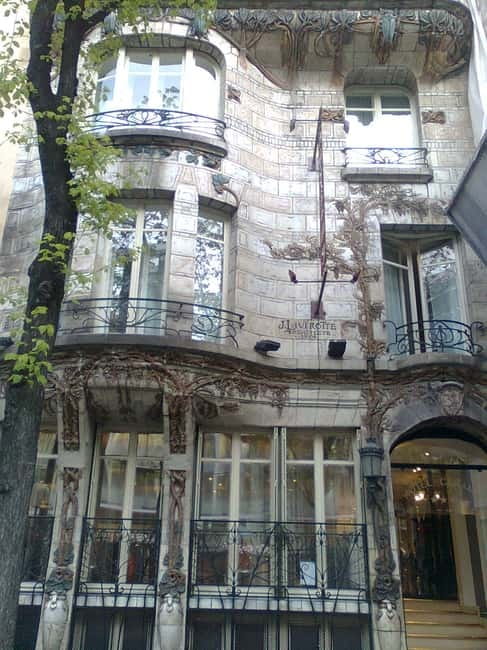
The Ceramic Hotel is one of the central stops. Its façade is famous for its bold use of ceramic decoration, a material that allowed architects to bring color and surface texture into urban buildings.
This is a strong stop for anyone who thinks architecture means stone, brick, and plain geometry. Ceramic surfaces could be shaped, colored, and arranged in ways that made the building feel almost like a piece of sculpture. The effect is theatrical, but it also shows how Art Nouveau brought different crafts together.
The building helps explain why the style appealed to wealthy clients. A highly decorated façade signaled taste and money. It also gave architects a chance to show that a private home or hotel could have the visual drama of a public monument.
Your guide can help you separate the style’s surface beauty from its larger meaning. Art Nouveau was meant to be elegant, but it was also innovative. The same building can look playful at first and technically ambitious once you know what to examine.
You should plan to spend a little time looking upward and across the full façade. Details near the entrance are easy to notice, while upper floors and decorative patterns can disappear if you only glance at street level. Since this is an outdoor walk, the quality of your experience depends partly on the weather and on how much time you are willing to spend looking closely.
Jules Lavirotte on Avenue Rapp
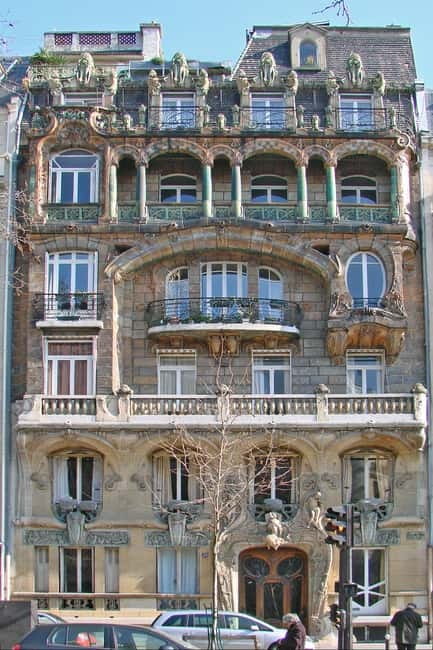
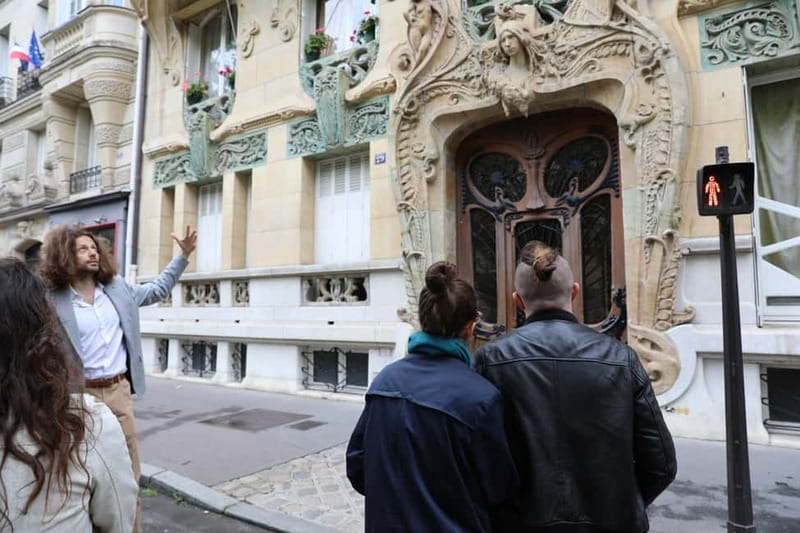
Avenue Rapp provides the tour’s most flamboyant architectural moment. Here you see houses associated with Jules Lavirotte, an architect known for pushing Art Nouveau toward bold, highly personal designs.
Lavirotte’s work is useful because it shows how far the style could go. These are not quiet buildings that blend into the street. Their façades use decoration as a main event, with unusual forms and elaborate surfaces that invite a second look.
This stop also makes the private nature of the tour valuable. You can ask why one building feels restrained while another seems almost theatrical. You can ask how the architect used materials, how the façade was organized, and why wealthy owners chose such striking designs.
I would not expect every building on the route to appeal to you equally. Art Nouveau can be refined, eccentric, heavy, or almost comic, depending on the architect and client. That variety is part of the point, but anyone seeking only classic Parisian stone façades may find the Lavirotte buildings too showy.
For architecture fans, though, Avenue Rapp is a fine reason to book. It gives you a direct look at the style’s willingness to reject safe choices. Bring a phone or camera, but remember that photography does not always capture the full effect of a façade. The best view may require stepping back and taking in the whole building.
Same city, a completely different afternoon:
- Paris: Evening River Cruise with Music
★ 4.4 · 22,721 reviews - Paris: Eiffel Tower Entry Ticket with Optional Summit Access
★ 4.4 · 20,035 reviews - Paris: Eiffel Tower Summit or Second Floor Access
★ 4.3 · 17,248 reviews - Paris: Louvre Guided Tour with Reserved Access & Boat Cruise
★ 4.3 · 16,353 reviews
The Theosophical Society and Art Nouveau Symbolism
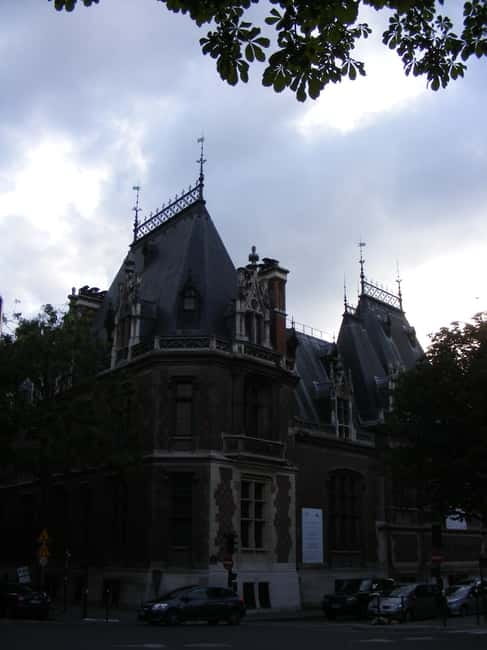
The Theosophical Society of Paris building adds an unusual turn to the route. It connects Art Nouveau with spiritual and philosophical interests that were circulating in Paris at the time.
This is where the tour moves beyond architecture as decoration. Art Nouveau designers drew on natural forms, but they also worked in a period fascinated by symbolism, unseen forces, new spiritual movements, and alternative belief systems. Buildings connected with such groups offer a different way to understand the era’s taste.
The stop is especially useful if you like cultural connections. You are not only asking what a building looks like. You are asking what its design may have suggested to the people who commissioned, built, or entered it.
The phrase occult societies can sound more dramatic than the building itself, so keep your expectations sensible. The value lies in the connection between architecture, symbolism, and the intellectual climate of the period. Your guide provides the framework that makes the stop meaningful.
A self-guided walk could show you the façade, but it would be harder to understand why it belongs in a story about Art Nouveau. This is one of the clearest examples of the tour’s purpose: linking physical details to the ideas behind them.
From Early Roots to the Mature Style
The tour follows Art Nouveau from its beginnings into its mature period. That chronological structure gives the walk a clear shape.
You begin with the roots of the movement, then see how its ideas developed into more confident and decorative forms. Along the way, your guide points out different sources of inspiration and explains how Art Nouveau affected later periods.
This is not a route built only around famous façades. It is a lesson in change. You can compare styles, notice repeated motifs, and see how architects adapted the movement to different buildings and social settings.
One especially useful theme is the link to new Gothic architecture. The style did not appear from nowhere. It grew out of earlier debates about historical design, craftsmanship, and the search for something that felt modern without abandoning artistic detail.
That background also explains why Art Nouveau faded. Its expensive decoration and handcrafted approach did not suit every budget or later design preference. The tour’s value comes partly from showing Art Nouveau as one stage in a larger story, not as an isolated fashion.
The guide’s manner matters here. Boris received specific praise for explaining the principles of French Art Nouveau alongside its historical setting and social issues. That combination is what you want from this route. Names and dates alone will not make the walk memorable. You need someone who can show how the pieces fit together.
Picasso’s Drinking Dens and the Social Side of the Style
The itinerary also points toward favorite drinking places associated with Picasso and other artists. This brings the period down from grand façades to ordinary social life.
Art Nouveau was linked to elegant hotels, wealthy homes, cafés, and gathering places. Those settings reveal who used the style and how it fit into Parisian culture. The movement was not confined to architects. It was part of a larger world of artists, patrons, writers, and people looking for new ways to live and socialize.
The Picasso connection adds a useful reminder: the streets around these buildings were part of a working artistic city, not a museum district frozen in time. Artists saw the same new façades, visited cafés, and reacted to the changing city in their own ways.
Do not expect a full food or nightlife tour. Food and drinks are not included, and the experience is focused on architecture and cultural history. Think of these drinking dens as context rather than scheduled tasting stops.
If you want to continue afterward, the end point is back at the original meeting point. That makes it easy to plan a separate café stop, museum visit, or return to the Eiffel Tower area, but the tour itself does not provide refreshments.
What Two Hours Can Realistically Cover
Two hours is enough for a focused introduction. It is also short enough to fit into a busy Paris itinerary, especially if you want to combine it with nearby sightseeing.
The walking is described as not strenuous, and the route is built around viewing buildings rather than covering a large distance quickly. Still, you will be on city streets for the full experience. Wear comfortable shoes and be ready to stop often.
A private group makes two hours more productive. If one façade interests you, you can ask about it. If you already know a little about Art Nouveau, you can request more detail. If the subject is new to you, the guide can explain basic ideas without having to serve a large mixed group.
The tradeoff is cost. At $171 per person, this is not a budget walking tour. The price makes the most sense for people who value a private guide, specialist subject matter, and the freedom to ask questions. It is harder to justify if you only want a quick list of pretty buildings or a general introduction to Paris.
The tour provider, Paris in Person Private Tours, was selected among the top 10 small tour operators in Europe in an industry award program. That does not guarantee a perfect match for every visitor, but it supports the idea that this is a specialist operation rather than a basic scripted walk.
The average rating is 4.7 from 10 reviews, with especially strong praise for the guides’ professionalism, clear explanations, and ability to connect individual façades with wider cultural ideas. Boris is one guide named in the feedback, and his calm, detailed approach seems well suited to this subject.
Who Should Book This Art Nouveau Walk
I would recommend this tour to you if you enjoy architecture, design, social history, or unusual corners of Paris. It is also a good choice if you have already seen the main monuments and want a more focused subject.
You will get the most from it if you are willing to look closely and listen to explanation. Art Nouveau is not always obvious from a passing glance. The point is not simply to see an ornate building, but to understand why it was designed that way.
This is less suitable for very young children unless they already enjoy buildings and visual detail. The route has no food included, no major indoor attraction described, and no activity designed to keep restless children occupied.
It also may not suit you if you want a fast-paced tour with many stops. The walk favors close observation and discussion. That slower rhythm is a benefit for architecture fans, but it may feel too specialized if you want a broad introduction to Paris.
The tour is offered in English or French. It returns to the meeting point, and cancellation is free up to 24 hours before the start. You can also reserve now and pay later, which helps if your Paris schedule is still changing.
Should You Book It?
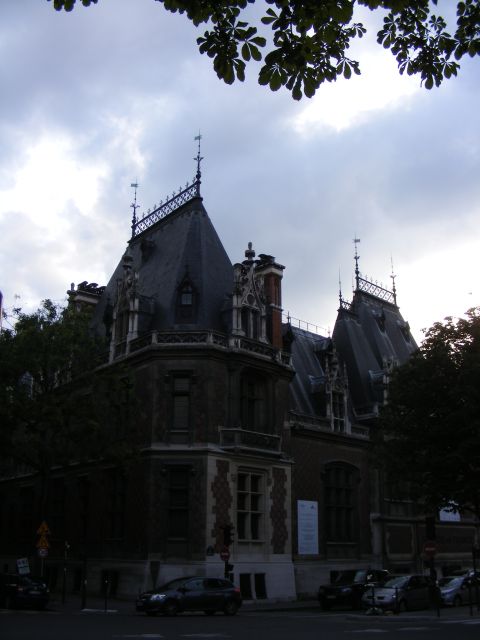
Book this private Art Nouveau walk if you want to understand the style rather than simply photograph it. The Ceramic Hotel, Lavirotte’s Avenue Rapp façades, the Theosophical Society building, the Eiffel Tower connection, and the Picasso-era cafés create a varied route in only two hours.
At $171 per person, the price is justified mainly by the private format and specialist guide. If those matter to you, this is a focused and worthwhile use of time. If you prefer low-cost sightseeing or a broad city overview, choose a less specialized walk.
My practical advice is to book it early in your Paris plans, then use what you learn to notice Art Nouveau details elsewhere in the city. That is the real payoff: after the tour, Parisian doors, balconies, signs, and façades begin to look less like background and more like clues.
FAQ
How long is the Art Nouveau Paris tour?
The tour lasts two hours. Starting times are available when you check the schedule.
Is this a private tour?
Yes. The activity is offered for a private group rather than as a large shared walking tour.
Which languages are available?
The tour is available with a live guide in English or French.
Where does the tour meet?
Meet in front of the Franprix store at the corner of Rue de l’Université and Avenue de la Bourdonnais. Look for the guide with the red canvas tote bag.
Where does the tour end?
The walk ends back at the original meeting point.
Are food and drinks included?
No. Food and drinks are not included in the activity.
Just added around Paris
- Paris: The Da Vinci Code Walking Tour with a Local Guide★ 4.3 · 5 reviews
- Paris: Flea Market Insider’s Tour in Extra-Small Group★ 4.6 · 73 reviews
- Paris: Private Fashion Tour (Chanel, Dior, Sex & the City)★ 5.0 · 3 reviews
- Paris: Floral Earrings workshop★ 5.0 · 3 reviews
- Paris: Fashion History Walking Tour in the Heart of Paris★ 4.9 · 22 reviews
- PARIS: Family e-bike longtail renting★ 5.0 · 3 reviews
- Paris: Famous Monuments Cycling Tour★ 4.7 · 20 reviews
- Paris: private city tour with seine river cruise★ 4.8 · 28 reviews
Tours, compared.
Louvre Guided Tour with Reserved Access & Boat Cruise
Read our review →
Big Bus Hop-On Hop-Off Tour with Optional Cruise
Read our review →
Louvre Museum Masterpieces Guided Tour with Access
Read our review →
Skip-the-Line Tour of Palace with Gardens Access
Read our review →
Mona Lisa & Louvre Masterpieces Tour with Reserved Access
Read our review →
Paris Big Bus Hop-On Hop-Off Tour with Optional River Cruise
Read our review →
Louvre Museum – Exclusive Guided Tour (Entry Included)
Read our review →