

Reviewed · PARIS
Behind the Scenes of the Roland Garros Stadium
Roland Garros is more than a tennis stadium. This 90-minute tour takes you through the parts television never shows: the players’ tunnel, changing rooms, press rooms and presidential stand. You follow the route players take toward the clay court, then see the tournament from the working side.
I like the way the tour connects famous names with real places, from Rafael Nadal’s plaque to the stairs near the court entrance. I also like the practical group size, capped at 30, and the chance to visit the stadium shop before or after the tour. The main drawback is that access can change on event days, and the meeting point can be hard to find.
Key points before you book
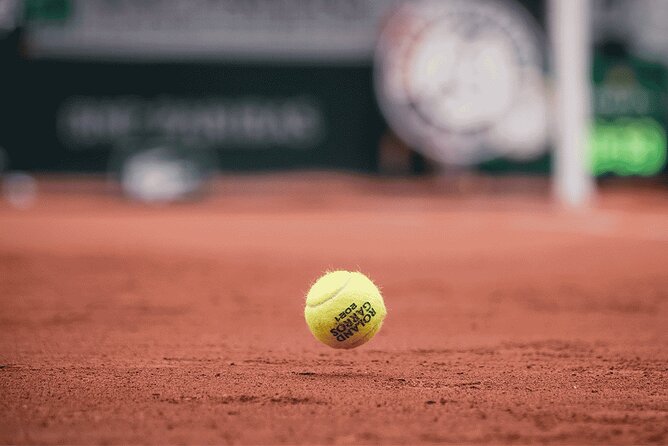
- Follow the players’ route: See the corridor leading from the changing rooms toward the clay court.
- Visit working spaces: The tour includes the press rooms, locker rooms and presidential stand.
- Expect about 90 minutes: You will be on your feet, with stairs and walking throughout.
- Plan your arrival carefully: You must arrive 15 minutes early. Latecomers are not accepted.
- Allow for changing access: Events or stadium activity can close certain areas on the day.
- Best for serious tennis fans: The experience is strongest if names, trophies and tournament routines mean something to you.
Why Roland Garros feels different from a normal stadium tour
Many sports tours lead you to a grandstand, a trophy case and a photo spot. Roland Garros offers something more personal: you see the route that players and officials use before the match begins. The corridor from the changing rooms toward the court gives the visit a clear story. You are not only looking at a stadium. You are tracing the steps from preparation to performance.
The tour also gives you access to spaces built for different parts of the tournament machine. The locker rooms belong to the players. The press rooms belong to journalists. The presidential stand belongs to dignitaries and invited guests. Each room shows a different side of the French Open, and together they explain why the event needs far more than a court and a crowd.
I especially like that the tour can bring tennis history down to a human scale. You might hear about Nadal, Federer, Graf and other major names while standing in the same areas used by competitors and reporters. One especially memorable detail is Rafael Nadal’s plaque, which has become an important stop for many fans.
Other Paris outings people book alongside this one:
- Paris: Louvre Museum Timed-Entrance Ticket
★ 4.6 · 71,977 reviews - Disneyland® Paris 1-Day Ticket
★ 4.6 · 49,412 reviews - Paris: Versailles Palace and Gardens Full Access Ticket
★ 4.6 · 41,579 reviews
The players’ corridor and Court Philippe-Chatrier

The most meaningful section is the passage leading toward the clay court. This is where the tour turns from a building visit into a sports experience. You see the route players take before entering the arena, with the anticipation of the match just ahead.
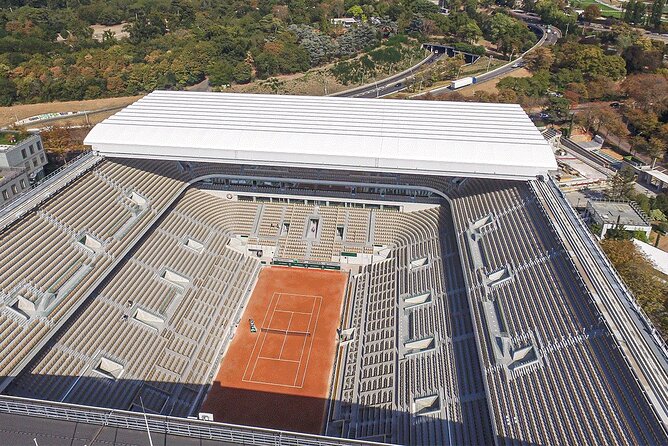
The main court is Court Philippe-Chatrier, the stadium’s central show court. Depending on the day, you may have a clear view of the court or find part of it covered by a platform because another event is taking place. Access is not guaranteed to every section, so I would treat the court view as an important possibility, not an absolute promise.
Some tour groups have been allowed close to the clay surface, while the official access rules can vary. Do not count on stepping onto the court itself. The value is in seeing the player route and understanding how the stadium is arranged, even if the surface is off limits.
The court can also be less dramatic outside tournament season. You will not have the packed stands, match noise or players competing in front of you. In return, you get a calmer look at the spaces that are normally hidden behind the television image.
Locker rooms, press rooms and the presidential stand
The locker rooms show the practical side of professional tennis. This is where players prepare, wait and recover away from the public eye. The changing rooms are not simply another stadium room. They help you picture the part of a player’s day that happens before the walk onto court.
The press rooms offer a different perspective. After a match, players move from the court into a world of microphones, questions and official statements. Seeing that setting makes the tournament feel like a large international workplace, not just a sporting contest.
The presidential stand provides another change of viewpoint. It is connected to the formal side of Roland Garros, where important visitors watch the event. The tour’s appeal comes from moving between these three worlds: players, press and official guests.
Guides can add the details that signs often cannot. Lionel, one guide praised for an interactive tour, is noted for sharing information in an engaging way. Other guides have told stories about major champions and the tournament’s operation. The quality can depend on the individual guide, so the experience is best when your guide brings energy and tennis interest to the route.
What the tour tells you about tennis history
Roland Garros is closely tied to clay-court tennis, and the tour uses the site to explain that tradition. You may see statues, trophies, plaques and displays connected with French tennis and major champions. These stops give context to the court you see on television every spring.
The personal details can be especially rewarding. One visitor brought a Vilas wooden racquet connected with Guillermo Vilas’s 1977 title run and noticed Tony Trabert’s name near the court entrance. You may not have that same connection, but the point is useful: look closely at stairways, plaques and names rather than simply moving from room to room.
Rafael Nadal fans have an extra reason to book. His career at Roland Garros is a major part of the stadium’s modern identity, and the plaque dedicated to him is a popular highlight. If your interest centers on Nadal, you will likely find the tour more satisfying than a general Paris sports visit.
The tour is not only about Nadal, though. Stories can also touch on Federer, Graf and other champions. For me, this makes the visit worthwhile for someone who follows tennis across different eras, not just one player.
Same city, a completely different afternoon:
- Paris: Evening River Cruise with Music
★ 4.4 · 22,721 reviews - Paris: Eiffel Tower Entry Ticket with Optional Summit Access
★ 4.4 · 20,035 reviews - Paris: Eiffel Tower Summit or Second Floor Access
★ 4.3 · 17,248 reviews - Paris: Louvre Guided Tour with Reserved Access & Boat Cruise
★ 4.3 · 16,353 reviews
A realistic look at the 90-minute route
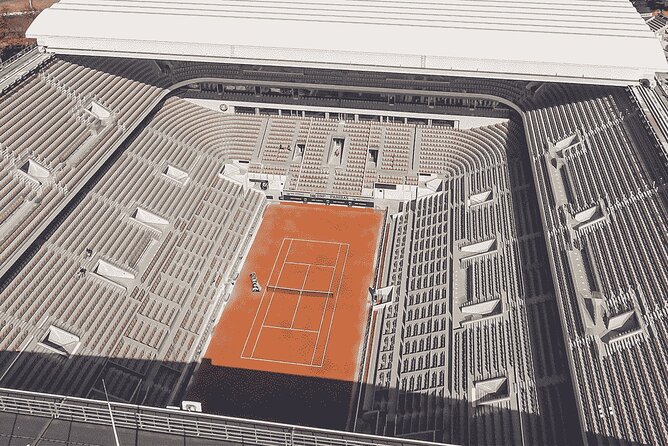
The advertised duration is about one hour and 30 minutes. A full visit may include a fair amount of walking and stairs, so comfortable shoes are a smart choice. This is not a sit-down museum tour, and you should expect to remain on your feet for much of the time.
The route normally moves through the main behind-the-scenes areas rather than every court on the grounds. You should expect the press rooms, changing rooms, presidential stand and players’ corridor. You might also see the central stadium and displays connected with the tournament.
One limitation is that the smaller stadiums and outer courts may not be included. If you want a broad look at every court, this may feel narrow. If you want access to spaces reserved for players and tournament staff, the focused route makes more sense.
The exact sequence can change because Roland Garros remains an active venue. Some spaces may be unavailable because of an event or other stadium activity. That is a normal condition of touring a working sports site, but it is worth accepting before you pay.
Finding the entrance at 1 Avenue Gordon Bennett
The tour starts at 1 Avenue Gordon Bennett in the 16th arrondissement and ends at the Roland-Garros boutique at 2 Avenue Gordon Bennett. The site is near public transportation, but the entrance arrangement deserves attention.
I would arrive at least 15 minutes early, as required. The instructions direct you toward the stadium entrance, but signs outside may not make the tour meeting point obvious. Some visitors have had trouble at Gate 36 and were unsure whether to wait outside or go toward the shop.
The practical move is to give yourself extra time and ask staff where the guided tour check-in is as soon as you arrive. Do not assume a security guard will know the tour details. The start can feel less polished than the tour itself.
Late arrival is a serious issue here. Latecomers are not accepted, and no refund is available if you miss the start. Paris traffic, a delayed taxi or a wrong turn near the grounds can quickly become expensive, so build in a cushion.
The tour ends at the boutique rather than at the original entrance. That is convenient if you want to browse after the visit, but use the restroom before the guide departs. Access back into the stadium may not be allowed once the tour has finished, and the shop may not have restroom facilities.
The stadium shop and the value of the visit
The price is about $25.77 per person. For a 90-minute guided experience at one of the world’s best-known tennis venues, I consider that a fair price if you care about tennis. You are paying for access to areas that ordinary sightseeing around Paris will not provide, plus a guide who can explain the player route and tournament spaces.
The value is weaker for someone with little interest in tennis. The tour does not include food, drinks or transfers, and it is not a general Paris attraction with a long list of unrelated sights. Its worth comes from the access and the stories.
The stadium shop is open from 9:30 a.m. to 6:30 p.m., so you can browse before or after the tour when opening hours fit your schedule. A 10 percent merchandise discount has been offered with the visit, which can help if you already plan to buy Roland Garros clothing or souvenirs. The shop can easily become an expensive extra, especially for fans who cannot attend the French Open itself.
The booking pattern also matters. This experience is often reserved around 50 days ahead, so I would not leave it until the last moment if your Paris dates are fixed. The group limit of 30 keeps the tour from becoming enormous, though it is still large enough that staying close to the guide matters.
Guide quality and the importance of group discipline
A good guide can make this tour memorable. The best guides explain the route, add stories about champions and keep the group moving without making the visit feel rushed. Lionel has been singled out for an interactive style, and multilingual guides may sometimes help people who do not fit neatly into one language group.
The experience is offered in English, but group arrangements can change. On one occasion, English speakers joined a French-language group led by a guide who also spoke English. If you are booking specifically for an English tour, check the language details carefully on your confirmation.
There have also been reports of late starts and guides who did not engage well with the group. One particularly poor experience involved people becoming separated from the guide. I would stay near the front, listen for instructions and make sure everyone in your party remains together at doors and stairways.
This is useful advice even with a strong guide. The route includes corridors and access points, and a large group can spread out quickly. The tour works best when you treat it like a moving guided visit, not a place to wander independently.
Who should book this Roland Garros experience
I would recommend it first to people who already follow tennis. You do not need to know every champion, but the tour has more impact when you recognize the names, understand the player routine and care about the French Open.
It also suits fans who have attended Roland Garros during the tournament and want to see what happens away from the public courts. The atmosphere is quieter outside the competition, but the behind-the-scenes access can fill in the parts you missed from the stands.
Families with tennis-playing children may enjoy it as well. Young players can see the route from changing room to court and connect the professional game with the practical spaces behind it. The tour is not presented as a children’s activity, though, and the walking and stairs may be tiring for some people.
I would think twice if your main goal is to see every court or experience the noise of the French Open. You may not visit the smaller stadiums and outer courts, and event preparations can limit access to the main court. For a broad grounds tour, this may not be enough.
Should you book the Roland Garros tour?
Book it if you want the player’s side of Roland Garros: the changing rooms, press rooms, presidential stand and corridor to Court Philippe-Chatrier. The visit gives you a clearer sense of how the tournament works and why the venue matters.
I would book well ahead, arrive early, wear comfortable shoes and keep your expectations flexible about the exact route. If access is changed on the day, the tour may lose one of its strongest visual moments, but the behind-the-scenes spaces and tennis stories can still make the $25.77 worthwhile.
Skip it if you are not interested in tennis, need a completely predictable sightseeing schedule or want a full tour of every court on the grounds. For a tennis fan in Paris, though, this is one of the more focused ways to get behind the television image without paying tournament-ticket prices.
FAQ
How long does the Roland Garros tour last?
The tour lasts approximately one hour and 30 minutes. It includes walking and stairs, so comfortable shoes are recommended.
What areas can I visit?
The tour provides access to the press rooms, changing rooms, presidential stand and the corridor leading players toward the clay court. Some areas may be inaccessible because of stadium activity on the day.
Is the tour offered in English?
Yes. English is one of the available tour languages. Group language arrangements can vary, so check your booking confirmation carefully.
Where does the tour start and end?
The tour starts at 1 Avenue Gordon Bennett, 75016 Paris. It ends at the Roland-Garros boutique at 2 Avenue Gordon Bennett, 75016 Paris.
How early should I arrive?
You must arrive 15 minutes before the scheduled start. Latecomers will not be accepted, and no refund is available if you miss the tour.
Can I cancel for a refund?
You can cancel up to 24 hours before the experience for a full refund. Cancellations or changes made less than 24 hours before the start time are not refunded.
Just added around Paris
- Private 1 – hour Tour: Eiffel Tower,Champs-Elysées Arc DE Triomphe★ 5.0 · 7 reviews
- Private Tour to Mont St-Michel and Honfleur from Paris★ 4.5 · 5 reviews
- Paris with a Tuk Tuk – Private 2-Hour TukTuk Tour★ 4.5 · 34 reviews
- Private Tour of Saint Germain des Pres★ 5.0 · 44 reviews
- Tripa Paris Pubcrawl / Bar Tours★ 5.0 · 16 reviews
- Paris city tour with private guide★ 5.0 · 9 reviews
- Paris Private Tour with Tuktukyourcity★ 4.5 · 38 reviews
- Private Mont Saint-Michel Trip by Mercedes from Paris with Lunch★ 4.0 · 10 reviews