
Reviewed · LE MARAIS TOURS
Discovering Le Marais: Guided Walking Tour of Paris
Le Marais is best understood on foot, one narrow street and old courtyard at a time. This private two-hour walk brings you from Village Saint-Paul and Place des Vosges to Rue des Rosiers, two historic churches, Centre Pompidou, and the Stravinsky Fountain. Guides such as Teresa and Pascal have earned especially warm praise for their friendly, attentive approach.
I like the private format, since you can shape the walk around your interests instead of following a fixed crowd. I also like the mix of famous sights and quieter corners, including Impasse des Arbalétriers and the church of Notre-Dame-des-Blancs-Manteaux. The main drawback is time: eleven stops in two hours means short visits, and the walk is better for orientation than for lengthy sightseeing inside each place.
Key points to know before booking
- Private and customizable: Your group has its own guide, with no unrelated participants joining the walk.
- A strong Le Marais sampler: The route combines Place des Vosges, Rue des Rosiers, Village Saint-Paul, churches, courtyards, and modern art.
- Guides praised by name: Teresa and Pascal received particularly strong personal feedback for their warmth and professionalism.
- Two hours goes quickly: Expect photo stops and outdoor explanations rather than long interior visits.
- Public transport is included: The activity covers walking and public transport unless you choose an option that changes this arrangement.
- Good value for a small group: At $46 per person, the price is most appealing when shared by several people who want a private introduction to Le Marais.
Why Le Marais works so well for a walking tour

Le Marais rewards a guide because its best details are easy to miss. You can see a grand square, a medieval-looking lane, a Jewish bakery street, a Gothic church, and a daring modern building within a fairly small area. The pleasure comes from connecting those sights, not simply ticking them off.
The district also gives you a useful introduction to several sides of Paris. There is aristocratic architecture around Place des Vosges, a strong Jewish and cultural identity around Rue des Rosiers, old religious buildings near Rue des Blancs-Manteaux, and contemporary art at Centre Pompidou.
A private guide makes a difference here. You can ask why a street matters, pause for photographs, or spend more time on architecture if that interests you. If you are more curious about food, local neighborhoods, or later sightseeing, the guide can also offer advice for the rest of your stay.
The walk is conducted in English, French, Italian, or Spanish. The group is private, and the activity is wheelchair accessible. Since the route includes streets, squares, and public transport, you should still tell the operator about your needs when booking so the customized plan can suit your group.
More Le Marais Tours:
- Award-Winning Paris French Bakery Experience — Le Marais, 4th Arr
★ 4.5 · 1,186 reviews - Paris Le Marais Food Tour With 10+ Tastings, Cheese, Wine & More
★ 5.0 · 985 reviews - Paris Le Marais District Original Food and Wine Tasting Tour
★ 4.5 · 880 reviews
Starting at 26 Rue du Renard
The meeting point at 26 Rue du Renard places you close to major central Paris sights. It is a practical starting point for reaching Centre Pompidou, Notre-Dame Cathedral, and the streets of Le Marais.
The area around the meeting point can feel busy, so allow enough time to locate your guide. Once everyone is together, the walk quickly moves into the district’s layered streets and squares.
The starting point is useful for a first or second day in Paris. You can use the guide to get your bearings, then return later to explore the places that caught your attention. It also works well near the end of a trip if you want local suggestions before filling your remaining hours.
Village Saint-Paul and the calm side of Le Marais

Village Saint-Paul is an early taste of the district’s quieter character. Its courtyards and connected lanes feel removed from the larger avenues, even though the neighborhood sits in central Paris.
Expect a guided visit and time for photographs rather than a long stop. The guide’s explanation is the key value here, since a quick look at old facades does not tell you why the area matters or how it fits into Le Marais.
I would pay attention to the transition from the street into the inner spaces. Paris often hides its most pleasant corners behind plain entrances, and Village Saint-Paul gives you a chance to notice that pattern early in the walk.
Place des Vosges and its balanced design
Place des Vosges is one of the most satisfying stops on the route. Its regular arcades, symmetrical brick facades, and central garden make it easy to understand at a glance.
A guide can point out how the square differs from the crooked lanes nearby. That contrast gives the walk a clearer shape: Le Marais is not one single style, but a collection of different periods and urban plans.
The stop is also a good photo opportunity. You can walk beneath the arcades, look across the garden, and take in the repeated architecture without needing a long explanation. Since the schedule allows roughly twelve minutes at each listed stop, do not expect a detailed visit to every surrounding building.
More walking tours in Paris:
- Paris Top Sights Half Day Walking Tour with a Fun Guide
★ 5.0 · 2,893 reviews - Montmartre Hidden Gems and Scenic Highlights Walking Tour
★ 5.0 · 2,684 reviews - Montmartre Hill French Gourmet Food and Wine Tasting Walking Tour
★ 5.0 · 2,588 reviews - Paris Île de la Cité and Notre-Dame Walking Tour With Crypt
★ 5.0 · 2,272 reviews
Hôtel de Ville library and the public face of Paris
The bibliothèque de l’hôtel de ville de Paris adds a civic and cultural note to the route. It places the neighborhood beside the institutions of Paris rather than treating Le Marais as only a collection of old homes and churches.
This stop is likely to be appreciated most by visitors interested in architecture, public buildings, and the way Paris preserves its cultural identity. The planned visit is short, so think of it as an exterior look and a chance to hear context from your guide.
You may also find this a useful point to ask practical questions about the city. The guide is not only there to recite facts. The format encourages you to ask what else to see, where to spend an afternoon, and how to connect this district with nearby sights.
Rue des Rosiers and the neighborhood’s Jewish identity
Rue des Rosiers is one of the most distinctive streets on the route. It is closely tied to the Jewish quarter of Le Marais, giving the walk a cultural focus that differs from the grand squares and church facades.
The street is a good place to notice how food, religion, language, and local commerce shape a neighborhood. The tour does not include food or drinks, so plan your own snack separately if you want to stop for something to eat.
That exclusion is not necessarily a problem. It keeps the walk moving and leaves you free to return later for a meal or pastry. Still, if tasting Paris is your main goal, this tour is not a food tour. You are paying for a private guide and neighborhood interpretation, not included refreshments.
Impasse des Arbalétriers and the pleasure of a small lane
Impasse des Arbalétriers offers the sort of brief discovery that makes a walking tour worthwhile. An impasse is a dead-end lane, and this one gives you a more intimate view of old Le Marais than a broad avenue can provide.
Stops like this are easy to miss when you explore alone. You might pass nearby without realizing that a narrow entrance leads to a place worth seeing. The guide helps you notice the physical details and understand why the lane belongs on the route.
This is also where the private format earns its keep. A large group can make a tiny lane awkward, while a small private party can pause for photographs and questions without blocking the experience for others.
Notre-Dame-des-Blancs-Manteaux and Église des Billettes
The two churches bring a strong architectural and religious element to the walk. Notre-Dame-des-Blancs-Manteaux and Église des Billettes help show how Le Marais developed around religious institutions as well as residences and commercial streets.
The route includes a guided visit and sightseeing at both places, but the short timing matters. You should expect an introduction to each church, a look at its exterior and possibly accessible interior areas, and an explanation of its place in the neighborhood. The available information does not promise extended interior access, so do not book this as a church-focused tour.
I like having both churches included because they break up the outdoor street walk. They also give you a chance to compare different forms of Parisian religious architecture. If one building particularly interests you, ask your guide whether the route can spend more time there.
Rue Sainte-Croix de la Bretonnerie
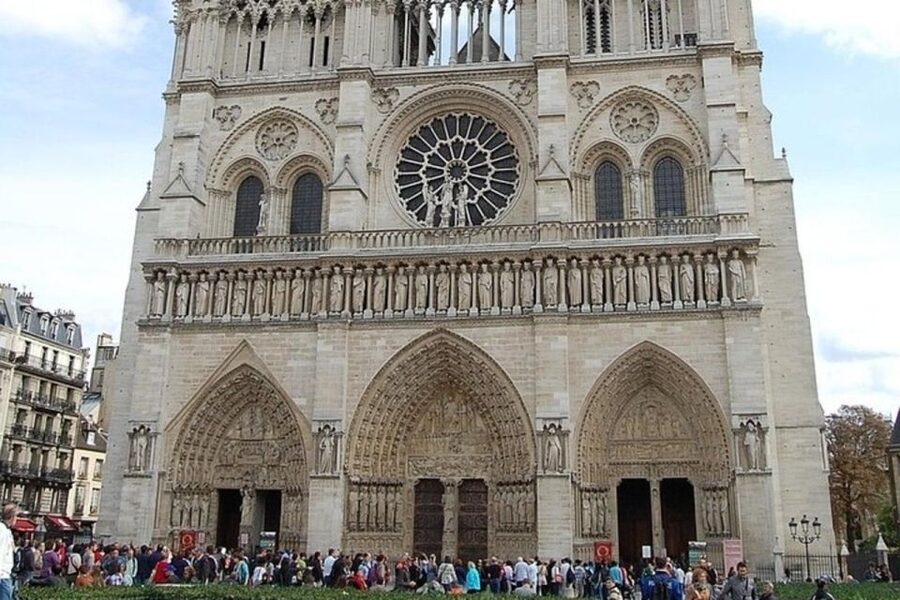
Rue Sainte-Croix de la Bretonnerie links several themes found across Le Marais. It is a useful street for seeing how historic buildings, shops, local life, and changing social identities share the same urban space.
The guide’s role is especially useful here. A street can look ordinary until someone explains its past or points out a detail above eye level. Look at doorways, upper floors, signs, and the shape of the buildings rather than only photographing the pavement-level shops.
Because this is a private walk, you can ask for practical advice as you go. If you want to return for shopping, food, architecture, or more neighborhood wandering, this is the sort of place where a guide’s local suggestions can save time.
Centre Pompidou and the shock of modern Paris
Centre Pompidou provides the route’s boldest visual contrast. Its modern design looks very different from the churches, courtyards, and historic facades you have just seen.
The tour includes a stop for photographs and a guided explanation, but admission to the museum is not listed as included. Help with booking tickets for desired visits is available, which can be useful if you want to add a museum visit before or after the walk.
Do not assume this experience includes a full tour of the Centre Pompidou’s galleries. The supplied plan treats it as a sightseeing stop, not an extended museum visit. If modern art is your main reason for coming, arrange extra time and confirm ticket details separately.
Even from outside, the building makes an effective final contrast before the fountain. It shows that Le Marais is not frozen in the past. Old streets and contemporary cultural life sit close together.
Stravinsky Fountain and the walk’s final note
The Stravinsky Fountain is the planned final stop. Its abstract sculptures provide a playful finish after the historic churches and traditional streets.
The description for the activity notes renovation through 2023, so you should confirm the fountain’s current condition before booking if seeing it is important to you. Construction or restricted access can change what you actually see at the site.
Even with that limitation, the location remains useful because it sits near Centre Pompidou and other central attractions. You can continue sightseeing afterward, use public transport, or ask your guide for ideas nearby.
What two hours really gives you
The tour lists eleven places, with roughly twelve minutes associated with each stop. That schedule tells you how to use the experience: treat it as a guided introduction, not a slow museum visit.
You will get a broad look at Le Marais, frequent opportunities for photographs, and explanations that connect the stops. You will not have time to linger at every church, browse every courtyard, or explore Centre Pompidou in depth.
I would choose this length if you have limited time in Paris or want a clear first look at the district. If you already know Le Marais well, the customizable format becomes more important. Ask the guide to focus on a particular interest instead of trying to give equal time to every listed stop.
The walk includes public transport as well as walking, except where a selected option changes the arrangement. That helps link the start and finish without making you cover every stretch on foot, though the exact transport details are not specified.
Guide quality and the private format
The strongest personal feedback centers on the guides’ attitude. Teresa is described as professional and attentive, while Pascal is praised for making a walk of more than two hours feel easy and enjoyable. Other comments highlight a guide who was available for questions and made the experience engaging.
Those comments point to the most important variable in a private tour: the person leading it. A good guide can adjust the pace, explain what catches your eye, and turn a simple street corner into a useful piece of Paris. The overall rating is 4.4 from 22 ratings, with several five-star responses and one notably critical three-star response describing a friendly but less professional experience.
That mixed note is worth taking seriously. The experience is not a self-running audio guide, so the quality of your day depends partly on the assigned guide. The private format gives you privacy and flexibility, but it does not remove that human element.
Is $46 a fair price?
At $46 per person, the value depends on group size. For one person, the price is reasonable for a private two-hour walk in central Paris, but it is not the cheapest way to see the neighborhood. For two or more people, the price becomes easier to justify because you are sharing a dedicated guide rather than joining a large group.
You are paying for more than the list of sights. The useful parts are the route planning, the ability to ask questions, the local suggestions, and the chance to adjust the experience around your interests. If you would otherwise wander without context, the fee can save time.
The lack of included food and drinks keeps the price clear. You should budget separately for anything you want to eat on or after the walk. Ticket assistance is available for desired visits, but attraction admission itself is not listed as included.
Who should book this Le Marais walk?
I would recommend it to first-time Paris visitors who want a neighborhood introduction without committing to a full-day tour. It also suits families or small private groups that prefer to ask their own questions and set their own pace.
The tour is a good match for you if you want:
- A short orientation in Le Marais
- A private English, French, Italian, or Spanish-speaking guide
- A mix of famous sights and less obvious lanes
- Help planning what to see next in Paris
- A wheelchair-accessible activity with a customizable format
I would choose something else if you want a dedicated food tour, a full Centre Pompidou visit, or lengthy interior time at the churches. The two-hour schedule favors range over depth.
Should you book it?
Book this walk if you want a friendly, private introduction to Le Marais and value personal advice more than a long visit inside any single sight. The combination of Place des Vosges, Rue des Rosiers, old churches, Village Saint-Paul, Centre Pompidou, and the Stravinsky Fountain gives you a well-rounded first look.
Before booking, confirm the fountain’s current access and decide which interests you want the guide to prioritize. At $46 per person, it is strongest for couples, families, and small groups who will make use of the private format. If you prefer to explore slowly and independently, use the route as a guide for your own walk instead.
FAQ
How long does the Le Marais walking tour last?
The tour lasts two hours. The schedule includes multiple sightseeing and photo stops, so the pace is fairly active.
Is this a private tour?
Yes. The activity is for a private group, with no unrelated participants joining your party.
Which languages are available?
The guide can conduct the tour in English, French, Italian, or Spanish.
Is the tour wheelchair accessible?
Yes, the activity is listed as wheelchair accessible.
Does the price include food or drinks?
No. Food and drinks are not included.
Does the tour include Centre Pompidou admission?
Centre Pompidou is a sightseeing stop, but museum admission is not listed as included. The team can help book tickets for desired visits.
What is the cancellation policy?
You can cancel up to 24 hours in advance for a full refund. You can also reserve now and pay later, which keeps your plans flexible.
Just added around Paris
- Paris: The Da Vinci Code Walking Tour with a Local Guide★ 4.3 · 5 reviews
- Paris: Flea Market Insider’s Tour in Extra-Small Group★ 4.6 · 73 reviews
- Paris: Private Fashion Tour (Chanel, Dior, Sex & the City)★ 5.0 · 3 reviews
- Paris: Floral Earrings workshop★ 5.0 · 3 reviews
- Paris: Fashion History Walking Tour in the Heart of Paris★ 4.9 · 22 reviews
- PARIS: Family e-bike longtail renting★ 5.0 · 3 reviews
- Paris: Famous Monuments Cycling Tour★ 4.7 · 20 reviews
- Paris: private city tour with seine river cruise★ 4.8 · 28 reviews
Le Marais Tours, compared.
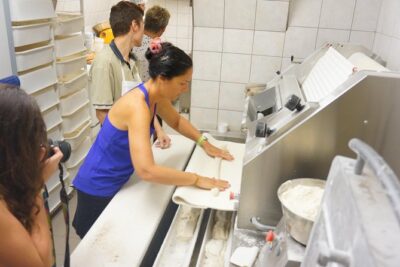
Award-Winning Paris French Bakery Experience — Le Marais, 4th Arr
Read our review →
Paris Le Marais Food Tour With 10+ Tastings, Cheese, Wine & More
Read our review →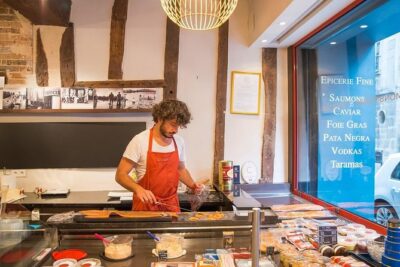
Paris Le Marais District Original Food and Wine Tasting Tour
Read our review →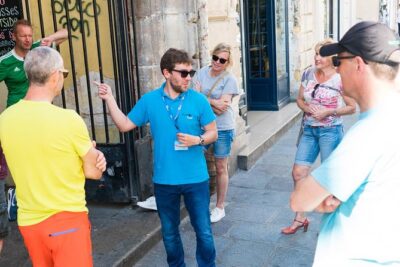
Paris Bike Tour Hidden Secrets in the Latin Quarter & Le Marais neighborhoods
Read our review →
Food and Wine Tasting Walking Tour in Le Marais
Read our review →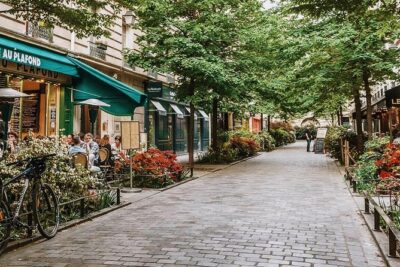
Le Marais District & Jewish Quarter Guided Walking Tour 12ppl Max
Read our review →
Le Marais/Paris – The Historic, Trendy, Jewish, LGBT district
Read our review →
Paris Le Marais Food & Wine Tour with Eating Europe
Read our review →Browse the lists this tour appears in