
Reviewed · GIVERNY AND MONET’S GARDEN DAY TRIPS
Giverny Monet House and Gardens Skip the line Walking tour
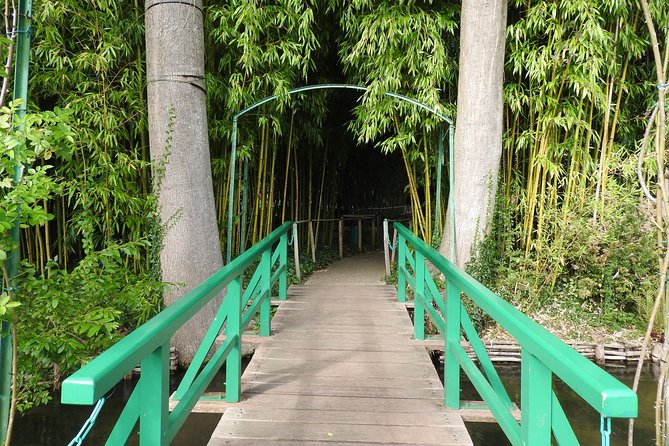
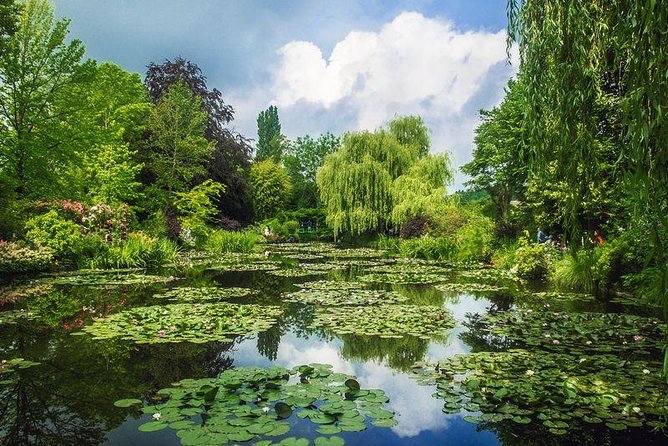
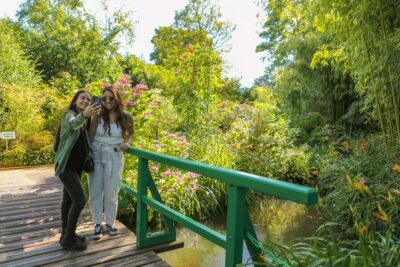
Monet’s garden is the real star here. The Japanese bridge, lily pond, weeping willows, and flower beds look remarkably close to the paintings, though the crowds can make this peaceful setting feel less peaceful. You visit the house, garden, and village in about two hours, with entrance included.
I like the skip-the-line entry, especially during the busy spring and summer months. I also like the village walk, which gives you a sense of why Monet stayed in Giverny for so many years. Guides such as Bertrand, Bernard, Marine, and Mwamiri have been singled out for lively storytelling and good group management.
The main caution is that the experience depends heavily on the guide and the crowd level. The group is meant to be capped at 15, but one poorly organized departure reportedly had 22 people and translation delays. Arrive 15 minutes early, and do not expect a quiet garden at peak times.
Key points to know before booking
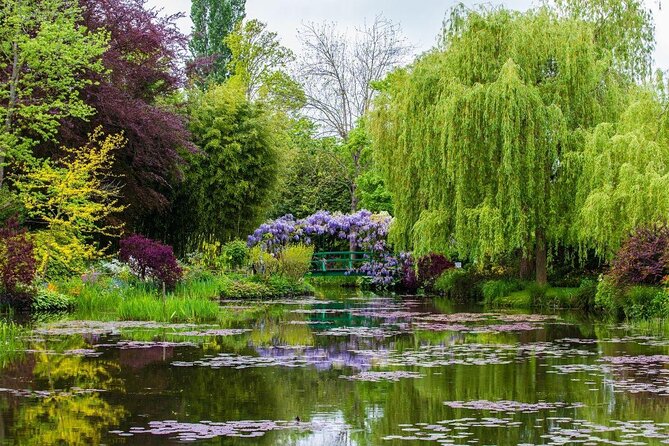
- Monet’s Japanese-style gardens are the highlight: See the bridge, water lilies, willows, and flower beds connected to his most famous paintings.
- Skip-the-line access saves time: Enter Monet’s house and gardens through a special entrance rather than waiting in the regular line.
- The village walk adds context: Learn about Monet’s years in Giverny and the artists who gathered around him.
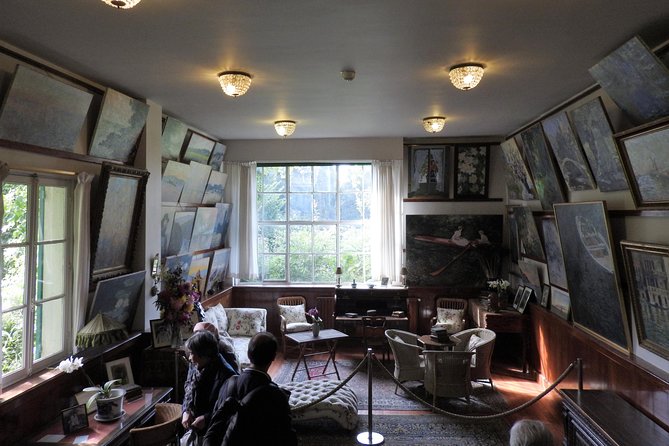
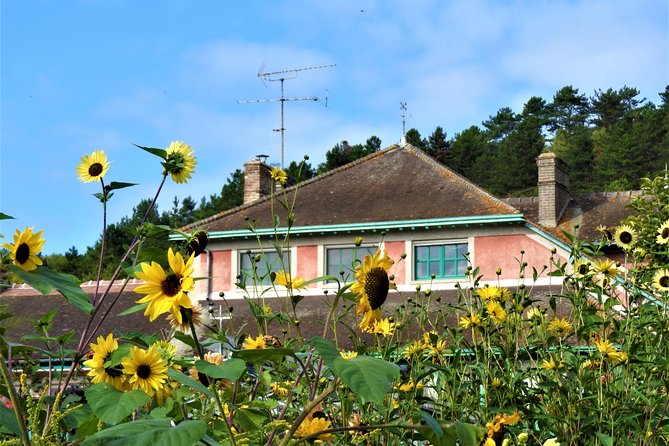
- The house has original character: Expect a cheerful kitchen, the pink exterior, and Monet’s collection of Japanese prints, not a gallery of his original paintings.
- The guide can make or break the visit: Bertrand, Bernard, Marine, and Mwamiri received especially warm praise for clear, engaging tours.
- The $63.86 price buys structure and entry: It is useful if you want help with the site and line, but less attractive if you prefer exploring at your own pace.
Why Monet’s garden feels different from a museum visit
At Monet’s house in Giverny, you are not simply looking at a painting behind glass. You are walking through the setting that supplied many of Monet’s ideas, colors, and subjects. The connection is immediate: flowers fill the beds, the pond reflects the bridge, and the willows hang over the water much as they do in his paintings.
That said, do not come expecting to see a major collection of original Monet paintings. The house and gardens are the attraction. The original artworks are held in museums, while the house includes replicas and Monet’s furnishings.
I find this distinction important. If you want to study original canvases, this is not the right stop. If you want to understand how Monet worked and why the garden became such a central subject, Giverny offers something a museum cannot.
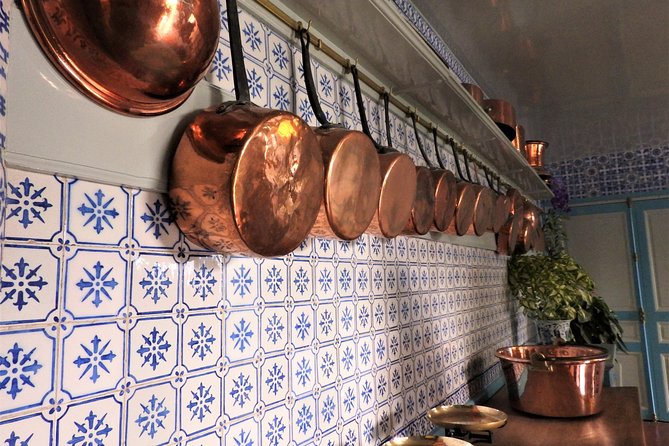
The visit also gives you a look at Monet’s domestic life. The house has a cheerful kitchen and a collection of 18th and 19th century Japanese prints. Those prints help explain the Japanese influence seen in the garden, especially around the bridge and pond.
More Giverny and Monet’s Garden Day Trips:
- From Paris: Giverny Day Trip with Audio Guide or Live Guide
★ 4.3 · 2,372 reviews - From Paris: Giverny, Monet’s House, & Gardens Half-Day Trip
★ 4.5 · 2,174 reviews - Versailles Palace and Giverny Monet House Visit with Lunch
★ 4.0 · 1,948 reviews
Start with Giverny village and Monet’s story
The meeting point is La Capucine Giverny at 80 Rue Claude Monet. You meet the local guide there before beginning a walking tour through the village.
This opening section is short, but it matters. Monet lived in Giverny from 1883 until his death in 1926, and the village became associated with an artists’ colony. By 1887, artists including John Singer Sargent, Paul Cézanne, and Mary Cassatt had connections to the area around Monet.
A good guide turns those names into a story rather than a list. Bernard has been praised for filling in gaps even for people who already know a fair amount about Monet. Mwamiri has been appreciated for keeping the group together and adding plenty of background. Marine has been noted for telling stories while watching out for the group.
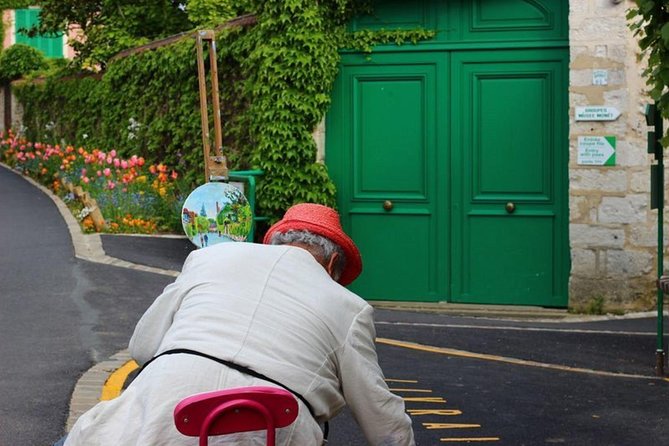
You also have the chance to see Giverny as more than a gate leading to the garden. It is a small village with its own atmosphere, and the walk helps place Monet’s home in its local setting.
The village portion does have one limitation: the tour is only about two hours overall. That leaves time for an introduction, the house, and the gardens, but not a long, leisurely exploration of every corner of Giverny.
Enter Monet’s house through the special entrance
After the village walk, the guide takes you to Monet’s house and gardens. The special entrance is one of the most practical reasons to book this tour. Lines can become long, especially when flowers are at their best or during school holidays.
Skipping the line does not mean the property will be empty. Once inside, you still share the gardens and house with many other people. The advantage is that you spend less of your limited time waiting outside and more of it inside the property.
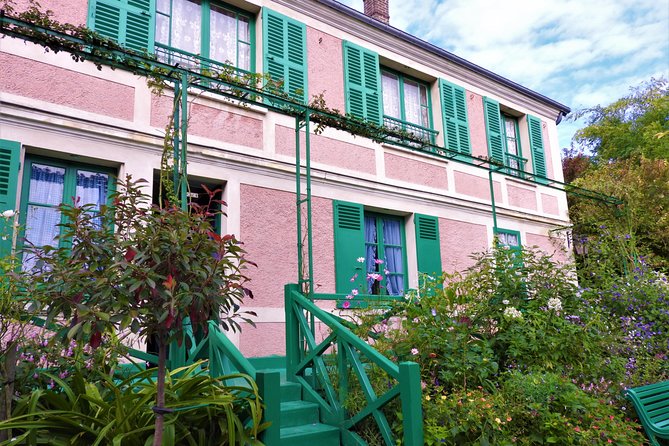
The house itself is modest compared with the fame of its former owner. Its appeal comes from the preserved furnishings, the pink facade, and the sense of place. The kitchen is particularly cheerful, with colorful details that contrast with the more formal image many people have of an Impressionist painter.
Monet’s Japanese print collection is another worthwhile feature. It gives you a direct link between his interest in Japanese art and the garden design. A guide can help you notice those links, which are easy to miss if you simply move from room to room.
The house can feel crowded. You may need patience as groups move through the rooms, and you should not expect to stop everywhere for as long as you like. The guide’s job is mainly to explain and organize the visit, not to give you unlimited time inside each room.
Walk through the gardens behind the paintings
The gardens are where this experience earns its price. From April through October, the beds can include roses, hollyhocks, poppies, and honeysuckle. The exact display changes with the season, so the garden you see in May will not look like the garden you see in October.
May is a particularly strong choice if you want abundant flowers. One family visiting in early May found the garden full of color, with plenty of photo opportunities. Spring holidays can also bring heavy crowds, so good flowers and quiet paths rarely arrive together.
The Oriental Water Gardens provide the most recognizable scenes. The Japanese bridge, water lilies, and weeping willows are the features most closely tied to Monet’s paintings. You can stand near the pond and see why he returned to the same subjects again and again.
Photography is a major part of the appeal. You will have many chances to frame the bridge, flowers, paths, and water. Still, keep your expectations realistic. The property can be crowded enough that other people appear in your pictures, and the garden may feel more like a popular attraction than a private retreat.
October can still be rewarding, especially on a mild day. Some flowers may be past their best, but autumn visits can still offer color and striking photographs. One useful point is that October is not automatically a poor time to go, although the garden will not have the same flower display as late spring.
Rain does not necessarily ruin the experience. The paths and plants have a different mood in wet weather, and the house provides a welcome change of pace. You will want comfortable shoes and clothing suited to the forecast, since the tour involves walking outdoors.
More walking tours in Paris:
- Paris Top Sights Half Day Walking Tour with a Fun Guide
★ 5.0 · 2,893 reviews - Montmartre Hidden Gems and Scenic Highlights Walking Tour
★ 5.0 · 2,684 reviews - Montmartre Hill French Gourmet Food and Wine Tasting Walking Tour
★ 5.0 · 2,588 reviews - Paris Île de la Cité and Notre-Dame Walking Tour With Crypt
★ 5.0 · 2,272 reviews
How the two-hour format affects your visit
Two hours is enough for a guided introduction to the village, the house, and the major garden areas. It is not enough for a slow, unstructured day at Giverny.
The guide keeps the visit moving, which is useful when the property is busy. You get the main story, the key rooms, and the famous garden views without having to work out the route yourself. After the guided portion, some departures leave you with free time to explore the village, but the stated activity ends back at the meeting point.
This format suits you if you want a clear overview and do not want to manage admission on your own. It is less suitable if you want to sit quietly beside the pond, sketch, or examine every room at length.
The small-group design should help. The tour is advertised for a maximum of 15 people, a reasonable size for a walking tour. Yet one account described a 22-person group with French and English translation taking place at the same time. That appears to have been an organizational problem rather than the intended format, but it is worth keeping in mind.
Headsets were also an issue for one departure. When a group stretches into a long line, people at the back can lose the guide’s commentary. On another departure, the guide spoke without a headset and offered little explanation. These reports make the guide assignment important.
Is $63.86 good value?
At $63.86 per person, the tour is not the cheapest way to see Giverny. You are paying for more than admission, though. The price includes a local guide, entrance to Monet’s house and gardens, and the convenience of special entry.
I see the value in three situations. First, you are visiting during a busy period and want to avoid standing in a long admission line. Second, you care about Monet’s life and want help connecting the house, village, and garden. Third, you are making your first visit and would rather have someone handle the route and timing.
The value is weaker if you are comfortable arranging admission yourself and prefer to explore alone. One unhappy customer felt that arriving early and touring independently would have been better. That can be true for visitors who dislike group pacing or already know the site well.
The guide quality matters more than the price alone. A strong guide, such as Bertrand, Bernard, Marine, or Mwamiri, can add useful stories and keep the group moving through a crowded property. A weak guide can leave you wondering why you paid for a guided visit.
Getting to the meeting point
Pickup and drop-off are not included. You need to make your own way to La Capucine Giverny, 80 Rue Claude Monet, and arrive at least 15 minutes before the scheduled start.
If you come from Paris by public transportation, one reported route used a train to Vernon followed by a shuttle to Giverny. The shuttle detail is easy to overlook, so plan that part carefully. The tour starts promptly, and late arrivals risk missing the group.
Parking can also be difficult. One attempted visit involved a long search for a parking place and blocked cars near the site, ending without entry. If you drive, give yourself extra time and do not treat the meeting time as the time to begin looking for a space.
The mobile ticket is useful for keeping your booking details on your phone. Service animals are allowed, and the activity is near public transportation. Most people can take part, though the walking and outdoor portions may be tiring if you have mobility concerns.
Who should book this Giverny tour?
I would choose this tour for a first visit to Giverny, especially if Monet is an important part of your trip. It works well for people who want the major sights explained clearly, appreciate help with the entrance process, and prefer a compact two-hour visit.
Families may also like it. The flowers and water garden offer plenty to look at, and one family found that children enjoyed taking pictures throughout the grounds. The guide can give younger visitors a story to follow instead of leaving them to read signs.
Art lovers will get the most from the historical background, but you do not need to be an Impressionist expert. The garden is beautiful on its own, and the house gives the visit a personal angle.
I would hesitate if you strongly prefer independent sightseeing, want several hours for photography, or are visiting mainly to see original Monet paintings. You may also want to reconsider a peak date if crowds frustrate you.
The activity has free cancellation up to 24 hours before the scheduled start. Cancellations made less than 24 hours ahead are not refunded, and changes in that period are not accepted. The activity also requires a minimum number of participants, so a cancellation by the operator can lead to another date, another experience, or a full refund.
Should you book it?
Book this tour if you want the garden, house, and village tied together by a guide, and if skipping the entrance line is worth paying for. The strongest part is the chance to see Monet’s Japanese bridge, pond, flowers, and home with useful context rather than as isolated sights.
Choose your date carefully. May offers a strong flower display but can bring large crowds. October may be quieter and still attractive, though some blooms will have faded. Arrive early, confirm the meeting point, and treat the two hours as a guided introduction rather than a full day at Giverny.
For a first visit, the tour is a sensible choice, provided you accept that the guide quality and crowd conditions can vary.
FAQ
How much does the Giverny Monet House and Gardens tour cost?
The tour costs $63.86 per person.
How long does the tour last?
The activity lasts approximately two hours.
What does the tour include?
It includes a local tour guide and entrance fees to Monet’s house and gardens.
Does the tour include transportation?
No. Pickup and drop-off are not included. You must make your own way to the meeting point.
Where does the tour begin?
It begins at La Capucine Giverny, 80 Rue Claude Monet, 27620 Giverny, France.
Where does the tour end?
The activity ends back at the meeting point.
Does the tour skip the entrance line?
Yes. The tour uses a special entrance to bypass the regular lines at Monet’s house and gardens.
How many people can join the group?
The activity is advertised with a maximum of 15 participants.
Can I cancel for a full refund?
Yes. You can cancel for a full refund at least 24 hours before the scheduled start time. Cancellations within 24 hours are not refunded.
More skip-the-line tickets in Paris
- Versailles: Skip-the-Line Tour of Palace with Gardens Access
★ 4.7 · 9,778 reviews - Versailles: Skip-the-Line Guided Palace Tour and Full Access
★ 4.6 · 5,214 reviews - Louvre Museum: Skip-the-Line Small Group Guided Tour
★ 4.6 · 3,960 reviews - From Paris: Versailles Skip-the-Line Tour & Gardens Access
★ 4.7 · 3,011 reviews
Just added around Paris
- Private Paris Marche d’Aligre Walking Tour with Tastings★ 5.0 · 8 reviews
- Private Louvre Museum Tour for Kids & Families with Alberto or his team in Paris★ 5.0 · 41 reviews
- Private Highlights of Paris Tuk-Tuk Experience★ 5.0 · 26 reviews
- Paris Latin Quarter Walking Tour: History & Culture – Small Group★ 5.0 · 14 reviews
- Private Highlights of Paris Bike Tour★ 4.5 · 15 reviews
- Paris Musee d’Orsay PRIVATE TOUR with a Local Private Guide★ 5.0 · 41 reviews
- Private Half Day Historic Tour★ 5.0 · 58 reviews
- Pere Lachaise Cemetery Paris – Exclusive Guided Walking Tour★ 5.0 · 72 reviews
Giverny and Monet’s Garden Day Trips, compared.
Giverny Day Trip with Audio Guide or Live Guide
Read our review →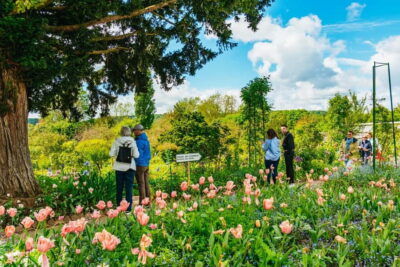
Giverny, Monet’s House, & Gardens Half-Day Trip
Read our review →
Giverny Monet’s Home and Gardens Half Day Tour from Paris
Read our review →
Giverny Small-Group Half Day Trip with Monet’s Gardens from Paris
Read our review →
Giverny and Versailles Palace Guided Day Trip
Read our review →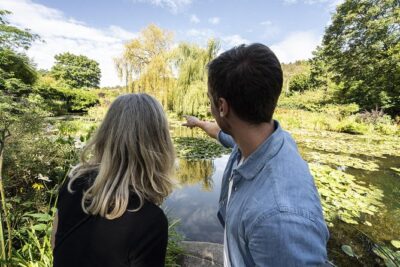
Giverny and Monet’s House Half Day Trip from Paris Guide or Audio
Read our review →
Giverny and Versailles Small Group Day Trip from Paris with Lunch
Read our review →
Browse the lists this tour appears in