

Reviewed · LES INVALIDES AND NAPOLEON TOURS
Les Invalides: Napoleon’s Tomb & Army Museum Entry
Les Invalides gives you two very different Paris experiences in one grand setting: the glittering Dome Church, where Napoleon’s enormous red porphyry tomb sits below a gilded cupola, and a sprawling military museum that moves from medieval armor to the World Wars. I like the freedom to enter anytime between 10 AM and 6 PM, and I like that one ticket covers several museums rather than just the tomb.
The main drawback is scale. A rushed two-hour visit will leave major sections untouched, and the ticket must be shown again at different museum entrances. This is also a non-refundable booking, so choose your day carefully.
Key points to know before you go

- Napoleon’s tomb is the visual highlight: The Dome Church is ornate, calm, and worth seeing even if military history is not your main interest.
- The Army Museum is much larger than expected: Plan at least three hours, or most of a day if you want to see the World War collections properly.
- Your ticket covers several sites: Entry includes the permanent collections, temporary exhibitions, the Plans-Reliefs Museum, and the Order of the Liberation Museum.
- Flexible timing helps: You can enter during the valid day and, according to the stated access, leave for lunch before returning.
- The collection spans centuries: Expect armor, swords, cannons, uniforms, paintings, photographs, personal belongings, films, and digital displays.
- Bring patience for the layout: You may need to rescan your ticket at each section, and some areas are not fully convenient for people with limited mobility.
Why Les Invalides is more than Napoleon’s tomb
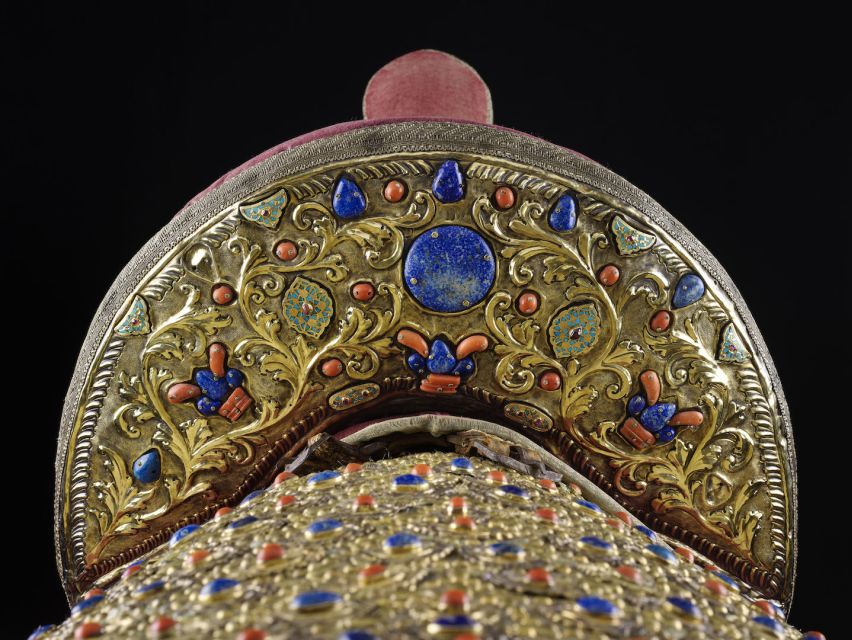
Most people arrive because of Napoleon. That makes sense. His tomb is the site’s most famous sight, and the Dome Church has the kind of visual impact that can make even a quick visit worthwhile.
But the Army Museum gives Les Invalides its real weight. The former Hôtel National des Invalides was created by Louis XIV to house veterans and wounded soldiers. Today, the complex connects royal warfare, Napoleon’s campaigns, the French Resistance, and the two World Wars under one roof.
I would not treat this as a quick monument stop. It is a full museum visit with a famous tomb attached. The collection includes more than 500,000 objects, so you need to decide how much ground you want to cover before you walk in.
The setting helps. The buildings, courtyards, church, and long galleries give the visit a strong sense of place. Even before you read a label, you are walking through a monument tied to France’s military institutions and royal past.
More Les Invalides and Napoleon Tours:
- Paris: Aura Invalides Immersive Experience Entry Ticket
★ 4.7 · 3,360 reviews - Paris Entrance Ticket to the Aura Invalides Immersive Show
★ 4.0 · 174 reviews - Paris: Napoleon’s Tomb & Invalides Small Group Guided Tour
★ 4.6 · 51 reviews
Entering the Dome Church and Napoleon’s tomb
Make the Dome Church your first stop if Napoleon is your main reason for coming. The church is usually the moment that makes the price feel easy to justify.
The gilded dome is visible from a distance, but the interior is more impressive than the exterior suggests. Beneath it, Napoleon’s tomb is surrounded by ornate architectural detail and a sequence of crypts. It is deliberately grand, reflecting the emperor’s power and the image he wanted France to remember.
You can look down toward the tomb from above before moving through the lower areas. That change in viewpoint matters. From one level, the tomb reads as a giant centerpiece. From another, the church feels like a formal memorial built around it.
You do not have to admire Napoleon as a person to appreciate the site. The monument raises questions about power, ego, military glory, and national memory. One visitor described Napoleon as an egotistical narcissist while still admitting that the building and legacy were remarkable. That is a fair way to approach the tomb: admire the architecture, then think critically about the man it celebrates.
The church is also a good stop for visitors who are not committed museum fans. If you only have limited time, you can see the tomb and one or two galleries without trying to conquer the entire complex.
From medieval armor to the kings of France
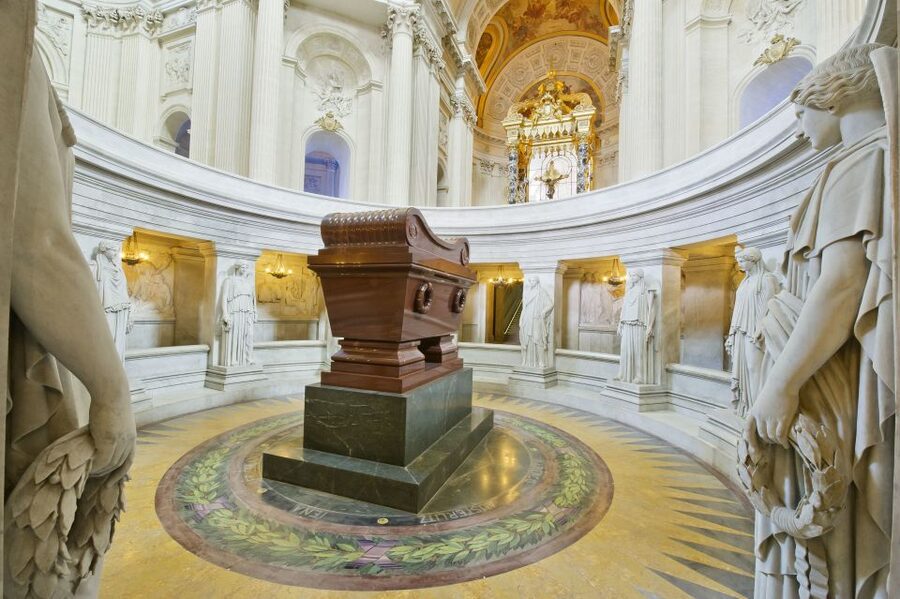
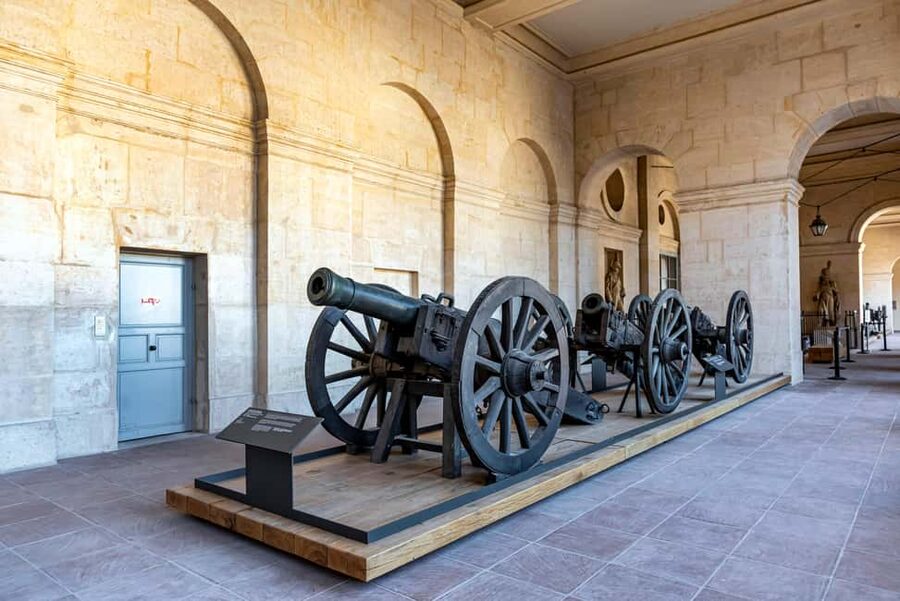
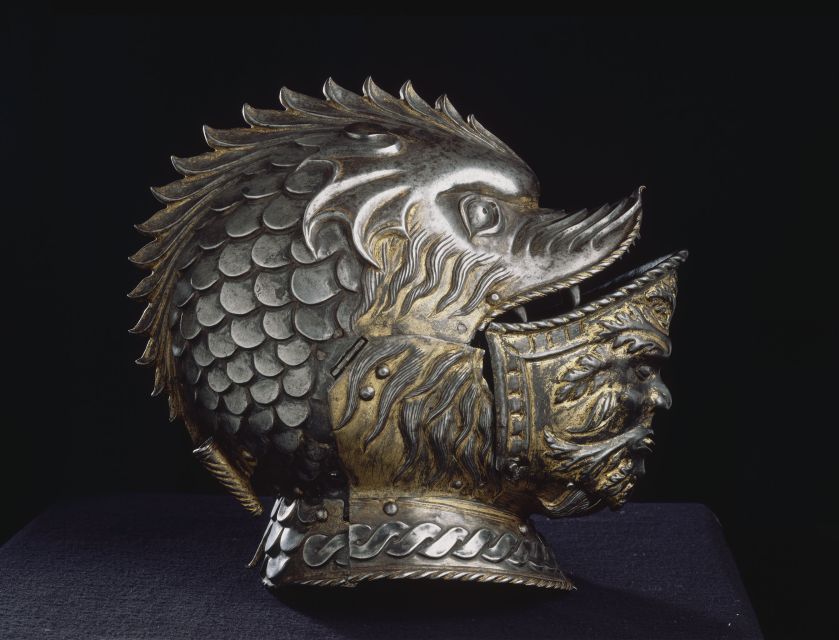
The older collections form one of the museum’s most approachable sections. You will see armor and weapons linked with the kings of France, along with swords, helmets, shields, and other military objects.
This area works well for families because the objects are easy to understand at a glance. A suit of armor is more immediate than a long written panel. Children can spot the shape and function of weapons, while adults can follow the changing technology and decoration across the centuries.
The display is not only about combat. Armor can show rank, wealth, ceremony, and personal style. Weapons can tell you about changing tactics and the growing power of organized armies. Paintings and personal objects help place those items in the lives of real people.
You will also find cannons, uniforms, and paintings that broaden the story beyond individual knights or kings. The collection moves from personal protection to national warfare, which makes the early galleries a useful introduction before you reach Napoleon and modern France.
Napoleon, empire, and the military state
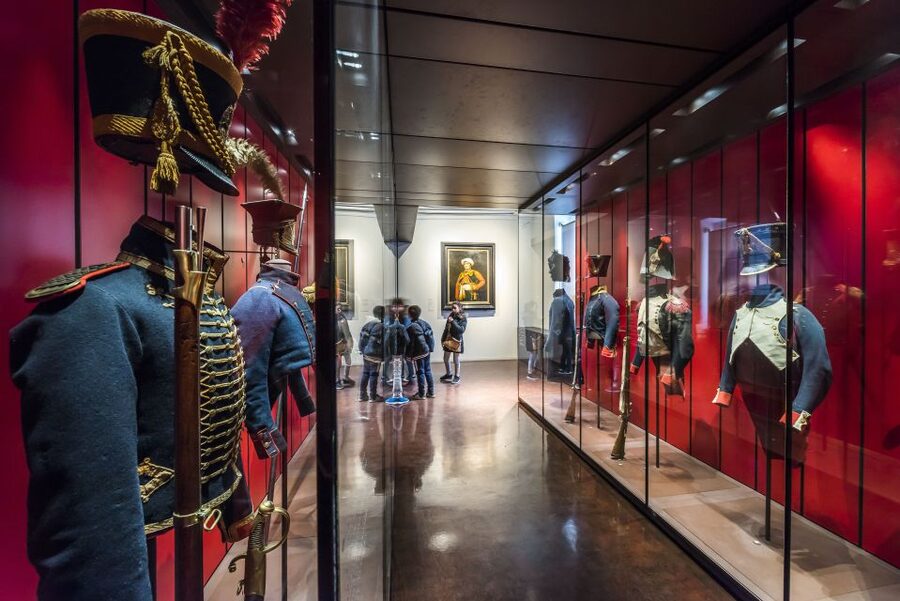
The Napoleon section gives you a closer look at the period that transformed France and much of Europe. You can expect weapons, uniforms, paintings, and objects tied to major figures and campaigns.
This part can become crowded in your mind if you do not pace yourself. Napoleon’s career involved many battles, shifting alliances, and a large cast of people. The museum gives you plenty of material, but the experience works best when you choose a few themes rather than trying to memorize every date.
Look for the contrast between official glory and the practical business of war. Portraits and ceremonial objects present Napoleon as a ruler. Uniforms, weapons, and campaign material show the harder side of military life.
Interactive digital experiences add useful context. Devices and screens can help explain battles that are difficult to grasp from maps alone. If you prefer objects to technology, you can skip some of these features, but they are useful when a campaign or troop movement feels confusing.
The museum also presents France’s military story from a French point of view. That does not make every interpretation complete, but it does give you a chance to consider how a country presents its victories, defeats, leaders, and sacrifices.
More art museums in Paris:
- Paris: Louvre Museum Timed-Entrance Ticket
★ 4.6 · 71,977 reviews - Louvre Museum Masterpieces Guided Tour with Access
★ 4.5 · 12,023 reviews - Paris: Louvre Museum Entry Ticket With Host and River Cruise
★ 4.6 · 9,926 reviews - Louvre Museum – Exclusive Guided Tour (Entry Included)
★ 5.0 · 6,296 reviews
The World War collections need serious time
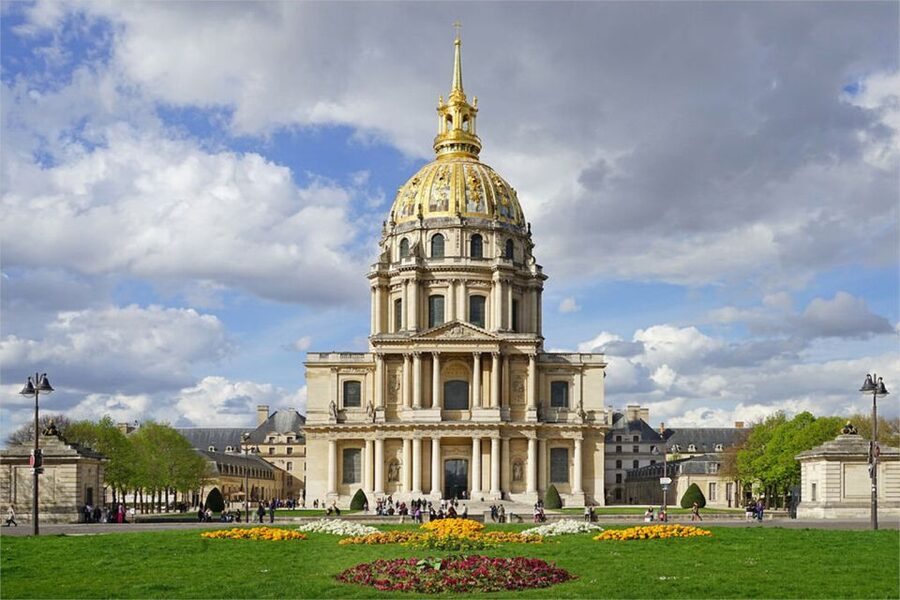
The First and Second World War sections are among the strongest reasons to allow a half day. The displays include uniforms, weapons, photographs, films, documents, and other objects that make the conflicts feel less abstract.
The World War galleries are not just a room of tanks or a line of medals. They give you a larger sequence of events, with material that helps explain how ordinary people and soldiers experienced the conflicts. Films and interactive elements are especially helpful for teenagers and anyone who wants more than a quick look at labels.
The Second World War material includes the French Resistance and the role of partisans. This section also gives attention to the women who took part, an important reminder that wartime resistance was not carried out only by men in uniform.
If your interests center on the twentieth century, head here early enough to avoid having to rush at closing time. One visitor who had only three hours still wanted to return because so much remained unseen. That is a common problem at Les Invalides: the museum rewards time, but the building can quietly consume your schedule.
Take short pauses. Seating is available throughout the museum, which helps if you have children or tired legs. The site can also be a sensible indoor choice on a very hot day, though you will still be walking a great deal.
Two smaller museums included with your ticket
Your admission also covers the Museum of Plans-Reliefs. Its scale models show fortified towns and military sites in a way that ordinary maps cannot. These models are useful for seeing how geography, walls, roads, and rivers affected military planning.
The Museum of the Order of the Liberation focuses on the French Resistance and the liberation of France. It gives the modern sections a more personal and political focus, with objects connected to people who fought, organized, and suffered during the Second World War.
Temporary exhibitions are included too, though their subject matter can change. This is one reason I would not assume that a previous visit tells you exactly what you will see on a return trip.
Because the site contains several museums, keep your ticket with you. Staff may ask you to show or rescan it when you enter each part of the complex. It can feel repetitive, but it prevents confusion about which areas your admission covers.
How much time should you allow?
For the Dome Church and Napoleon’s tomb alone, you can spend less than a full day. For a sensible overview of the Army Museum, allow at least three hours.
If you want to see the early armor galleries, Napoleon, both World Wars, the Resistance displays, the Plans-Reliefs Museum, the Order of the Liberation Museum, and temporary exhibitions, set aside four to five hours or more. A full day is not excessive.
The flexible one-day validity is a real advantage. You can arrive in the morning, visit several sections, leave for lunch, and return later the same day if access conditions allow. This is much better than trying to maintain concentration through a long, unbroken museum session.
The access hours are listed as 10 AM to 6 PM from the Esplanade des Invalides. The Place Vauban access begins at 2 PM and continues to 6 PM. Tills close 30 minutes before the museum, so do not arrive at the last moment and expect to complete the whole complex.
Closed dates are January 1, May 1, and December 25.
Is the $20 admission good value?

At $20 per person, this is good value if you plan to use the ticket for more than Napoleon’s tomb. You are paying for access to multiple museums, permanent collections, temporary exhibitions, and the Dome Church in one complex.
The value is weaker only if you are certain you will stay for a very short visit. In that case, the tomb may be your main reward, while much of the admission remains unused. Still, the Dome Church alone is a memorable sight, and the price is modest compared with many major Paris attractions.
The ticket is not a guided tour. A multimedia guide can be purchased on-site for €5, and guided tours are not included. If you want dates, names, and military context explained as you go, the audio option may be worth adding.
Some guided experiences connected with the site have featured guides such as Nelly, Yazid, and Marcela, but do not assume a guide is part of this entry ticket. Check exactly what your booking includes before you go.
Access, families, and practical comfort

The attraction is listed as wheelchair accessible, but the layout is not fully convenient in every area. Some older architectural spaces and the amount of walking can make the visit tiring. Cloakrooms are available, and seating throughout the museum helps you take regular breaks.
Children under 18 enter the museum free, but they still need a ticket or access pass. EU citizens under 26 also qualify for free admission, with the required access pass collected from the museum office before entry.
Family activities are offered on Saturdays and Sundays at 11 AM and 2:30 PM in French, subject to availability. These cost €7 per child on-site and are not included in the standard admission.
The collection can work well for mixed-age families. Younger children may focus on armor, cannons, and weapons, while older children and teenagers often get more from the World War and Resistance displays. Keep expectations realistic: the sheer size of the site can wear out even interested children.
Bring water, especially in warm weather. Snacks are available, but the museum is large enough that a simple food and rest plan will make the day easier.
How to make the most of your visit
I would use this order:
- Start with the Dome Church and Napoleon’s tomb.
- Move through the medieval and royal armor galleries.
- Visit the Napoleon collections.
- Take a break before the World War sections.
- Finish with the Resistance, Order of the Liberation, Plans-Reliefs, and any temporary exhibition that interests you.
This order moves from the most famous sight to the broader historical collections. If your priority is the World Wars, reverse the plan and visit those galleries first while your attention is fresh.
Do not feel obliged to read every label. Choose a few objects in each room and ask what they show about military life, national power, technology, or memory. You will get more from the museum by following those questions than by racing from case to case.
Keep your ticket in an easy-to-reach place. You may need it more than once inside the complex. Also, allow extra time for finding the correct entrance, especially if you arrive during a busy period.
Who should book Les Invalides?
This is an excellent choice for anyone interested in Napoleon, French history, the World Wars, weapons, architecture, or major Paris monuments. It also suits families with school-age children, especially if you break the visit into manageable sections.
I would be more cautious if you dislike military museums or have only one spare hour. The tomb is beautiful, but the full ticket makes most sense when you have time for the galleries.
Should you book this experience?
Yes, if you can give Les Invalides at least three hours. The combination of Napoleon’s tomb, the gilded Dome Church, royal armor, World War displays, Resistance material, and military models gives you far more than a single monument visit.
Book it for the flexible one-day access and the number of museums included. Skip it only if your schedule is too tight to explore beyond the tomb, or if you need a guided experience rather than self-directed entry. For most history-minded visitors, this is one of Paris’s strongest indoor attractions and a worthwhile use of half a day.
FAQ
How long is the Les Invalides ticket valid?
The ticket is valid for one day. Check the available starting times when booking, and use the access hours listed for the site.
What time can I enter Les Invalides?
Access from the Esplanade des Invalides is listed from 10 AM to 6 PM. Access from Place Vauban is listed from 2 PM to 6 PM.
Does the ticket include Napoleon’s tomb?
Yes. Admission includes the Dome Church, where Napoleon’s tomb is located.
Which museums are included?
The ticket includes the permanent collections, the Dome Church, the Museum of Plans-Reliefs, the Museum of the Order of the Liberation, and temporary exhibitions.
Is a guided tour included?
No. A guided tour is not included. A multimedia guide can be purchased on-site for €5.
Can I leave and return on the same day?
The ticket is valid for one day, and the site information allows flexible use during that day. Keep your ticket with you because it may be checked again at different sections.
Are children admitted free?
Admission is free for people under 18, but they still need a ticket or access pass. EU citizens under 26 can also enter free with the required access pass collected from the museum office.
Is Les Invalides wheelchair accessible?
The activity is listed as wheelchair accessible. However, some areas may not be fully disability friendly, so the large site and older architecture may require extra planning.
When is Les Invalides closed?
The site is closed on January 1, May 1, and December 25. The tills close 30 minutes before the museum closes.
Just added around Paris
- Paris: The Da Vinci Code Walking Tour with a Local Guide★ 4.3 · 5 reviews
- Paris: Flea Market Insider’s Tour in Extra-Small Group★ 4.6 · 73 reviews
- Paris: Private Fashion Tour (Chanel, Dior, Sex & the City)★ 5.0 · 3 reviews
- Paris: Floral Earrings workshop★ 5.0 · 3 reviews
- Paris: Fashion History Walking Tour in the Heart of Paris★ 4.9 · 22 reviews
- PARIS: Family e-bike longtail renting★ 5.0 · 3 reviews
- Paris: Famous Monuments Cycling Tour★ 4.7 · 20 reviews
- Paris: private city tour with seine river cruise★ 4.8 · 28 reviews
Les Invalides and Napoleon Tours, compared.

Aura Invalides Immersive Experience Entry Ticket
Read our review →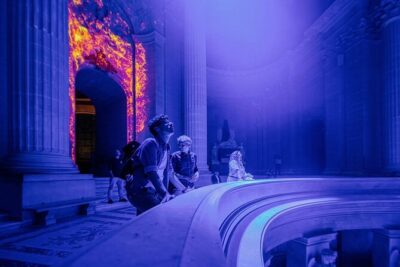
Paris Entrance Ticket to the Aura Invalides Immersive Show
Read our review →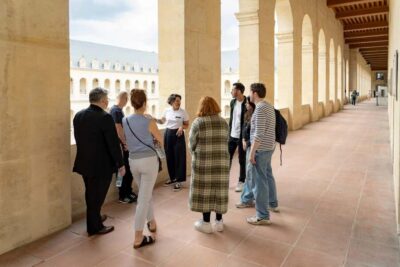
Napoleon’s Tomb & Invalides Small Group Guided Tour
Read our review →

Pairs: The Opera to Hotel des Invalides Guided Walking Tour
Read our review →Browse the lists this tour appears in