
Reviewed · NORMANDY D-DAY DAY TRIPS
Normandy D-Day Beaches with Juno Beach, bunkers & Canadian Cemetery from Paris
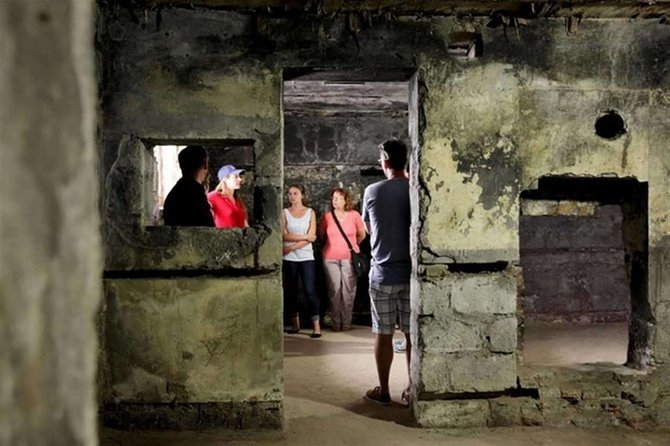
Juno Beach is not just another Normandy stop. This tour follows the Canadian story of D-Day, from the shoreline where troops landed to the cemetery where many never came home. You also enter two German bunkers normally closed to the public, a rare and memorable part of the day.
I like the eight-person limit, which makes it easier to ask questions and hear personal stories from guides such as Julian, Brune, Clément, Olivier, Mathieu, and HP. I also like the careful mix of beach, museum, battlefield sites, and cemetery rather than spending the entire day inside one exhibition.
The drawback is the clock. You spend about 12 hours on the road and at the sites, yet Normandy offers more history than one day can hold. Some visitors wanted longer at Juno Beach or the museum, while another felt the museum visit was too long, so your guide and the group pace will matter.
Key points to know before booking
- Two restricted German bunkers are visited with an official Juno Beach Centre guide.
- The tour is built around Canadian history, including Juno Beach, Canada House, Beny-sur-Mer, and the Ardenne Abbey.
- Eight people maximum keeps the minivan setting more personal than a large coach tour.
- The day begins at 7:00 a.m. in Paris and usually returns in the evening.
- Lunch is on your own in Courseulles-sur-Mer, so budget extra and use the one-hour break wisely.
- The cemetery and Ardenne Abbey add emotional weight beyond the usual beach visit.
Why Juno Beach deserves a full day from Paris
Many Normandy day trips try to cover several landing beaches. This one takes a narrower path, and that is its strength. The focus stays on the Canadian role at Juno Beach and on the nearby places that explain what happened after the landing.
You begin with a long drive from Paris, but the small van changes the feel of the journey. There are only eight places, and the guide can mix wartime background with conversation and quiet time. Several guides have been praised for using old photographs, explaining troop movements, and adding personal stories instead of reciting dates.
This is still a long day. The departure point is Dada12, 12 Avenue des Ternes, in Paris’s 17th arrondissement, at 7:00 a.m. The tour ends back there. One family reported arriving around 7:40 p.m., which gives you a useful sense of the day’s length.
At $290.36 per person, this is not a cheap outing. Still, the price includes round-trip air-conditioned transport, a driver-guide, the Juno Beach Centre admission, and the special bunker visit. A private car and separate admissions could cost more, while a large coach trip might cost less but provide less personal attention. I see the value here in the small group and the Canadian focus, not simply in the number of stops.
More Normandy D-Day Day Trips:
- Normandy D-Day Sites & Cemetery Day Trip from Paris with Lunch
★ 5.0 · 6,877 reviews - Normandy D-Day Small-Group Day Trip with Omaha Beach, Cemetery & Cider Tasting
★ 5.0 · 2,786 reviews - Normandy D-Day Beaches and American Cemetery Day Trip from Paris
★ 4.5 · 2,673 reviews
Walking the sand at Juno Beach
The first major stop puts you directly on Juno Beach. You have about 30 minutes to walk the sand and look out toward the water where Canadian troops came ashore on June 6, 1944.
The beach itself is open and free to visit, but the experience depends heavily on the explanation around it. A guide can help you understand the difficulty of landing here, the movement inland, and the difference between seeing a calm beach today and imagining it under fire.
Thirty minutes is enough to stand on the shore, take in the scale of the place, and listen to an introduction. It is not enough for a long solitary walk. If the beach is your main reason for booking, keep your expectations realistic. The tour has many other stops, and this is one part of a larger story.
I like the decision to visit the beach before the museum and bunker tour. You get a physical sense of the setting first, then the indoor exhibits can add names, maps, and detail to what you have just seen.
Canada House in Bernières-sur-Mer
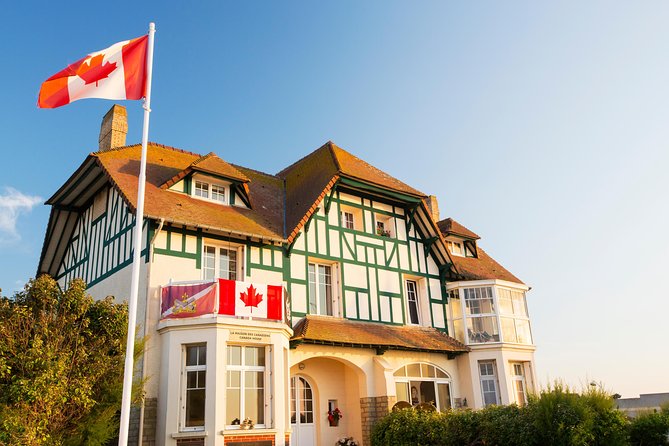
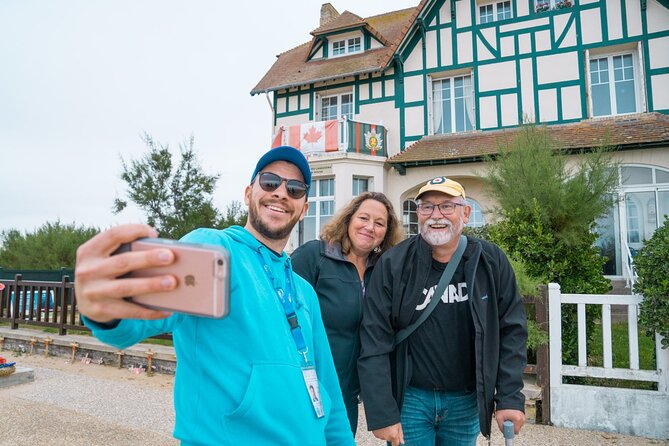
The short drive to Bernières-sur-Mer brings you to Canada House, often described as the first house liberated in Normandy. It is one of those modest places that can make military history feel close and human.
The building does not need a long visit to make an impression. Its importance comes from its location and from the fact that it survived the first hours of the invasion. You will have roughly 30 minutes here, enough for photographs and an explanation of what happened in the village.
This stop has caused some practical confusion for at least one visitor, who said the guide missed Canada House. That is worth noting because the tour schedule is tight and the exact order can depend on the day. If Canada House matters especially to you, ask your guide early to confirm when you will see it.
Entering the German bunkers at Juno Beach Centre
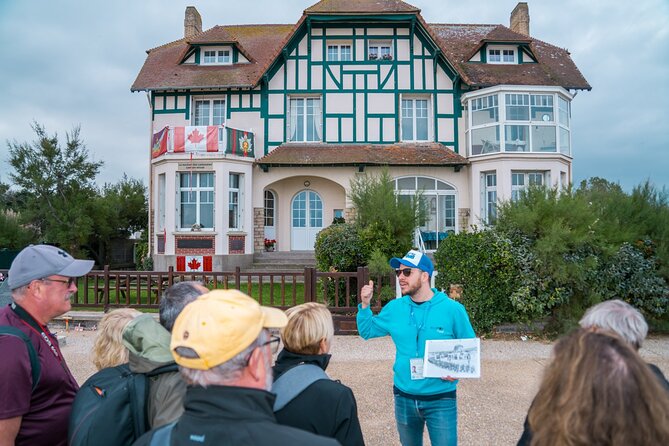
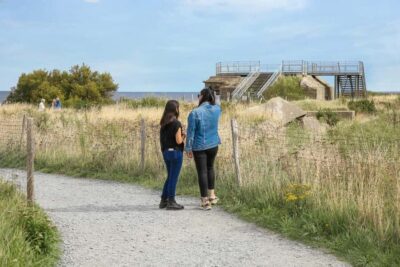
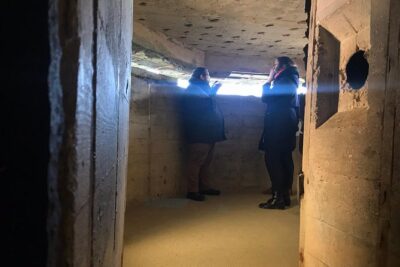
The bunker visit is one of the strongest reasons to choose this tour over a basic beach transfer. With an official Juno Beach Centre guide, you enter two German bunkers that are closed to the general public.
This is a separate guided portion lasting about 45 minutes. You are not simply looking at concrete structures from outside. You get a closer look at the defensive position and a better feel for how the German fortifications fit into the shoreline.
The bunker visit also gives the day some variety. You move from open beach to a confined wartime structure, then back to the museum. The change helps the history register in physical terms.
The tour operator’s own guide normally prepares you before the Juno Centre portion begins. One particularly useful approach described by a participant involved a binder of historical images and a clear introduction before meeting the Centre’s guide. That kind of preparation matters because it gives you something to look for inside the bunkers.
The official Centre guide leads this section, while your Paris guide handles the wider day. That division can work well, since the local guide brings site-specific detail and your main guide keeps the Canadian campaign connected to the rest of the itinerary.
Same city, a completely different afternoon:
- Paris: Louvre Museum Timed-Entrance Ticket
★ 4.6 · 71,977 reviews - Disneyland® Paris 1-Day Ticket
★ 4.6 · 49,412 reviews - Paris: Versailles Palace and Gardens Full Access Ticket
★ 4.6 · 41,579 reviews - Paris: Evening River Cruise with Music
★ 4.4 · 22,721 reviews
Spending an hour inside the Juno Beach Centre
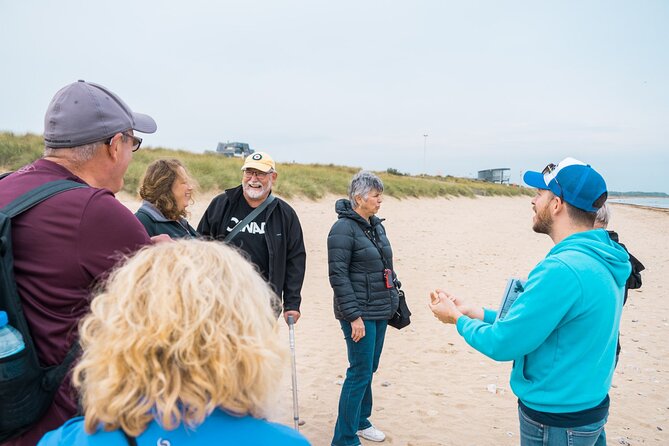
The museum visit lasts about an hour. It is described as the most complete museum treatment of the Canadian landings in Normandy, with displays that place the military action alongside the lives and choices of the people involved.
Expect maps, photographs, objects, and explanations of Canada’s role in the invasion. A film is also part of the museum experience, and it has been described as especially moving. The displays are laid out in a modern, attractive way, which helps you work through difficult material without feeling lost.
One hour gives you a solid introduction but not time to read every panel. That is important. Some people would gladly spend longer here, while others felt the museum took too much of the day. Both reactions make sense. If you read every caption, you will need more than the scheduled hour. If you prefer the main story, the allotted time should give you a useful overview.
I would use the museum hour with a plan. Pay attention to the Canadian units, the sequence of the landing, and the personal accounts. Do not try to absorb every display. The beach and cemetery will supply the quiet reflection that a museum cannot.
Lunch and free time in Courseulles-sur-Mer
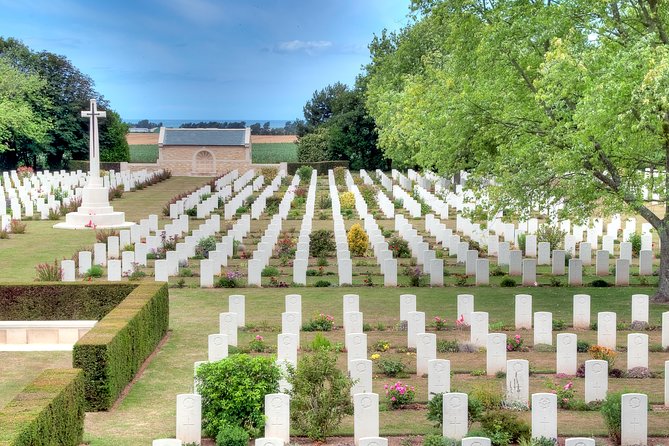
Courseulles-sur-Mer provides a one-hour break for lunch. Food is not included, so bring extra money and be ready to choose your own meal.
This is more than a practical pause. It gives you a chance to see a little of the seaside town, pick up food, or simply sit down after the morning’s sites. One useful tip is to consider buying something from a local grocery shop and using the remaining time to walk around, rather than spending the whole hour in a restaurant.
The limitation is clear: one hour goes quickly. A participant wanted about 15 more minutes to visit two shops. You may need to choose between a leisurely meal and a short look around town. If you want both, keep lunch simple.
Because the day is carefully timed, do not count on extending the break. Your guide must still reach the cemetery and inland sites before the return drive to Paris.
A quiet visit to Beny-sur-Mer Canadian War Cemetery
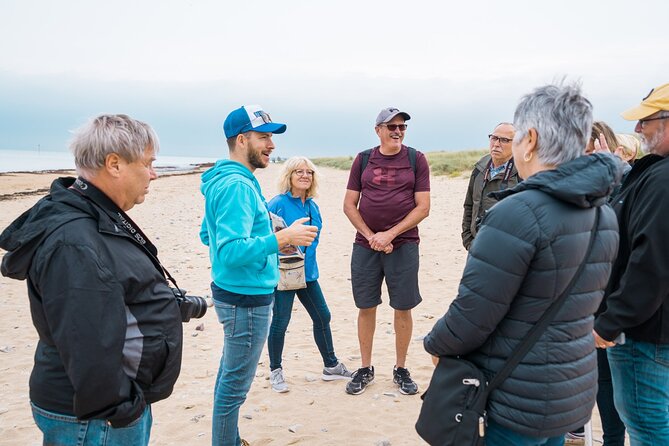
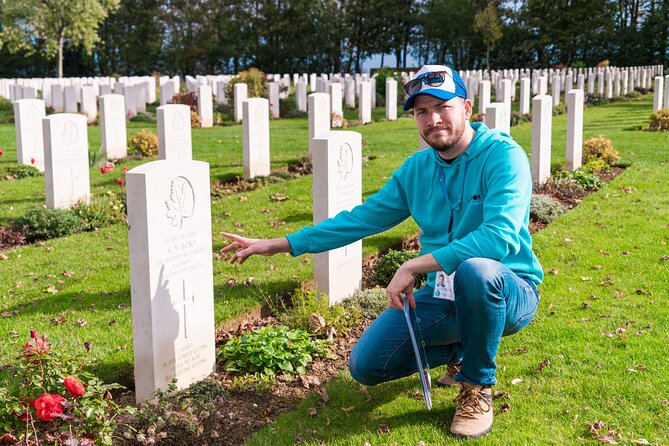
The Beny-sur-Mer Canadian War Cemetery is one of the most moving stops. You have about 30 minutes to walk among the graves and pay your respects to the Canadian soldiers buried there.
The cemetery is peaceful, carefully kept, and emotionally direct. There is no need for a long explanation to understand what the rows of graves mean, but a good guide can help connect the names to the campaign you have been following all day.
This stop can be especially important if your family has a Canadian military connection. One person used the visit to find a grandfather’s grave, turning an already serious day into a deeply personal one. If you have a family name to look for, prepare the details before leaving Paris, though the tour schedule may limit how long you can search.
Half an hour is enough to walk through a section and pause, but not enough to study every grave. The cemetery is best approached slowly and respectfully, even within the fixed timetable.
Hell’s Corner and the furthest Canadian advance
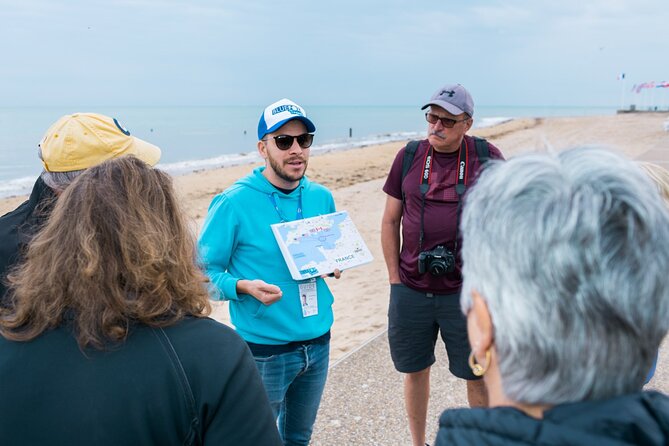
At Villons-les-Buissons, the tour stops at Hell’s Corner, identified as the furthest inland advance made by Canadian troops on D-Day. It is about five miles from Caen.
This is a useful counterpoint to the beach. You are no longer looking at the first minutes of the landing. You are considering how far the troops moved after coming ashore and how the battle changed as it moved inland.
The stop lasts about 15 minutes, so expect a brief explanation rather than a long walk or a large museum visit. Its value comes from the sequence: beach, village, defenses, museum, cemetery, then the advance inland. Taken together, the stops show that D-Day was not only a shoreline operation.
The executions at Ardenne Abbey
The final historical stop is Ardenne Abbey, where 20 Canadian soldiers were illegally executed in June 1944 by members of the Hitler Youth. The visit lasts about 20 minutes.
This is a difficult place, and the tour does not treat it as a casual photo stop. The site adds a darker chapter to the day, showing the danger Canadian soldiers faced after the landings and the brutality of the fighting beyond the beach.
The short visit is probably appropriate for the subject. You have time to hear what happened, see the setting, and reflect before beginning the journey back to Paris. It also prevents the schedule from becoming even longer.
The small van, guides, and pace of the day
The maximum group size is eight. That is a major practical advantage on a day with many stops. You can hear the guide without a microphone, ask follow-up questions, and move in and out of the minivan more quickly than a large group.
The vehicle is air-conditioned, though one report described a problem on a particularly hot 30-degree day. That appears to be an exception, but it is a reminder that comfort can depend on the vehicle assigned that day. Dress for changing weather, since the tour operates in all conditions.
Guide quality matters greatly here. Julian has been praised for bringing historical photographs and explaining the Canadian viewpoint. Brune has been noted for personal stories and careful pacing. Clément, Olivier, Mathieu, Enzo, and HP have also been singled out for clear explanations, friendly conversation, and strong knowledge of D-Day.
The experience is not identical with every guide. One person found the English difficult to follow and felt the day was disorganized, while another felt the driver was more focused on lunch and getting back to Paris than on the museum. Those are fair cautions. A small group does not automatically guarantee a perfect guide or perfect timing.
Most people aged seven and older can take part. You should be comfortable with a full day, outdoor walking, museum time, and a long ride each way. There is no special mobility information provided, so ask the operator if you need specific assistance.
Who will value this Juno Beach tour most
I would choose this tour if you want the Canadian side of Normandy rather than a broad sweep of every major landing beach. It suits Canadians, families with military connections, and anyone who wants the story told through Juno Beach, Canadian graves, and nearby Canadian sites.
It also works for first-time Normandy visitors who want a guided introduction without joining a large coach. The guide’s commentary is important because several locations are simple places with little to see unless someone explains their role.
You may want another option if your priority is having hours at one beach, reading every museum panel, or exploring at your own pace. You may also find the schedule tiring if you dislike early starts and long return journeys.
Booking, cancellation, and useful preparation
The tour is offered in English and uses a mobile ticket. Confirmation is provided when you book. You can cancel for a full refund up to 24 hours before the start time, but changes or cancellations inside that window are not accepted.
Wear shoes suited to beach sand and outdoor stops. Bring a layer for the coast, even if Paris is warm, and plan for rain since the tour runs in all weather. Carry money for lunch, and consider a quick grocery purchase in Courseulles-sur-Mer if you want more time to walk around.
The meeting point is Dada12, 12 Avenue des Ternes. Since departure is at 7:00 a.m., arrive with time to spare. The long drive is part of the bargain, so bring water and anything that helps you rest between explanations.
Should you book this tour?
Book it if you want a Canadian-focused day at Juno Beach with a small group, restricted bunker access, a strong museum stop, and time at Beny-sur-Mer Canadian War Cemetery. The combination gives you both military context and quiet places for reflection.
I would not book it expecting a relaxed beach holiday or unlimited museum time. This is a full, tightly planned day from Paris, and the return can be close to 8:00 p.m. At $290.36, the price makes the most sense if you value the eight-person van, the included admissions, and the Canadian emphasis.
For Canadians, families tracing wartime service, and anyone drawn to the human cost of D-Day, this is a worthwhile use of one day in France. Just accept the long ride, protect your museum priorities, and confirm the day’s timing with your guide.
FAQ
How long does the tour last?
The tour lasts approximately 12 hours, beginning at 7:00 a.m. and ending back at the Paris meeting point in the evening.
Where does the tour start?
It starts at Dada12, 12 Avenue des Ternes, 75017 Paris, France.
How many people can join the tour?
The tour has a maximum of eight people.
Is transportation included?
Yes. Round-trip transportation from Paris is provided in an air-conditioned minivan, with a driver-guide.
Is lunch included?
No. You have about one hour of free time for lunch in Courseulles-sur-Mer, but food is not included in the tour price.
What places are visited?
The route includes Juno Beach, Canada House in Bernières-sur-Mer, the Juno Beach Centre, Courseulles-sur-Mer, Beny-sur-Mer Canadian War Cemetery, Hell’s Corner at Villons-les-Buissons, and Ardenne Abbey.
Can you enter the German bunkers?
Yes. An official Juno Beach Centre guide leads you into two German bunkers that are closed to the public.
Is the tour offered in English?
Yes. The tour is offered in English.
What is the minimum age?
The minimum age is seven years old. The tour operates in all weather, so you should dress appropriately.
Just added around Paris
- Paris: The Da Vinci Code Walking Tour with a Local Guide★ 4.3 · 5 reviews
- Paris: Flea Market Insider’s Tour in Extra-Small Group★ 4.6 · 73 reviews
- Paris: Private Fashion Tour (Chanel, Dior, Sex & the City)★ 5.0 · 3 reviews
- Paris: Floral Earrings workshop★ 5.0 · 3 reviews
- Paris: Fashion History Walking Tour in the Heart of Paris★ 4.9 · 22 reviews
- PARIS: Family e-bike longtail renting★ 5.0 · 3 reviews
- Paris: Famous Monuments Cycling Tour★ 4.7 · 20 reviews
- Paris: private city tour with seine river cruise★ 4.8 · 28 reviews
Normandy D-Day Day Trips, compared.

Normandy D-Day Sites & Cemetery Day Trip from Paris with Lunch
Read our review →
Normandy D-Day Small-Group Day Trip with Omaha Beach, Cemetery & Cider Tasting
Read our review →
Normandy D-Day Beaches and American Cemetery Day Trip from Paris
Read our review →
Normandy D-Day Sites Guided Day Trip with Lunch
Read our review →
Normandy D-Day Landing Beaches Small-Group Day Trip from Paris
Read our review →
Normandy 2Days Trip Landing Beaches and Mont St Michel from Paris
Read our review →Browse the lists this tour appears in