
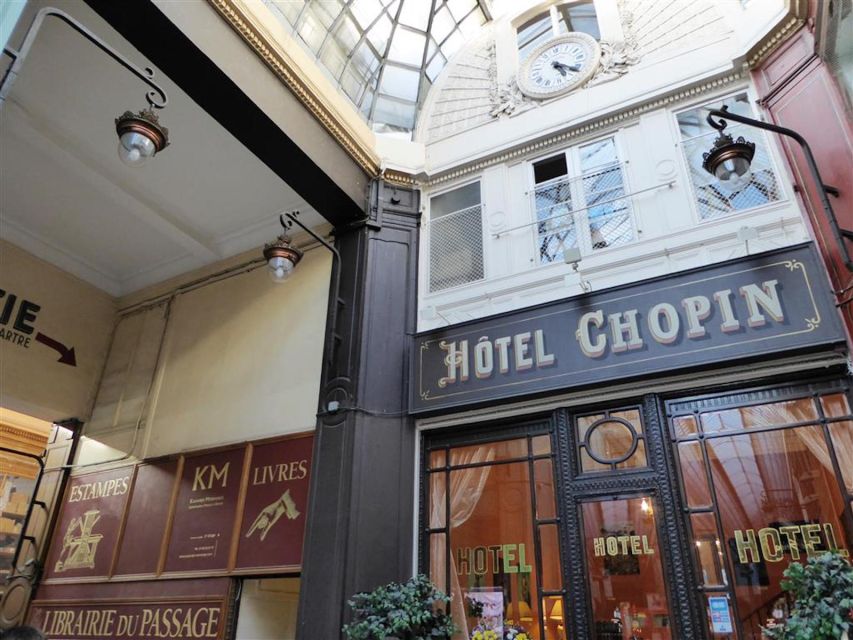
Reviewed · PARIS COVERED PASSAGES TOURS
Paris: 2-Hour Passages Private City Tour in German
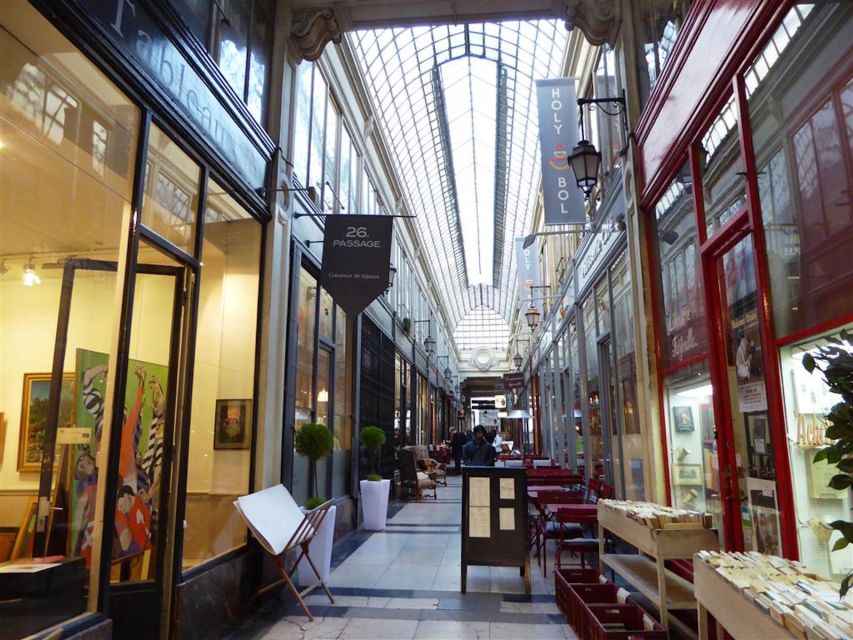
Paris’s covered passages are easy to miss, even when you are walking through central Paris. This private walk leads you from Le Peletier through three handsome arcades and onward to Palais-Royal, showing you a quieter side of the city that many people never find.
I like the small private format, which gives you room to ask questions, and the focus on Paris in the early 19th century rather than on the usual postcard sights. I also like the two-hour length: long enough for a clear story, short enough to fit around a museum or an evening booking.
The main consideration is language. This tour is offered in German only, and food, hotel pickup, tips, and entrance fees are not included. You will also walk from one passage to the next, so comfortable shoes matter.
Key points to know before you book
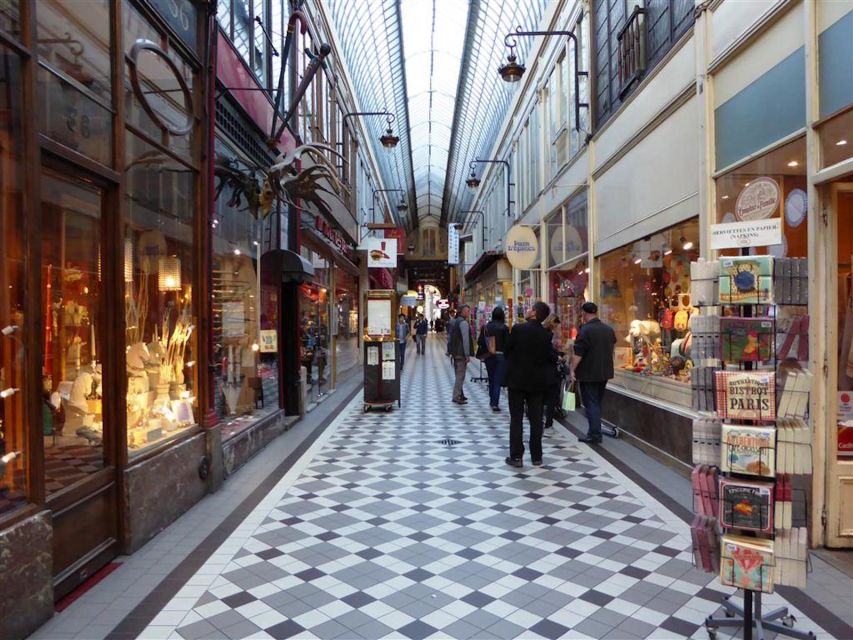
- Three historic passages in one walk: See Passage Verdeau, Passage Jouffroy, and Passage des Panoramas in a single route.
- A private German-speaking guide: The group format lets you ask questions and keep the pace personal.
- A different Paris story: Learn how the passages answered the problems of early 19th-century Paris before department stores took over.
- A useful two-hour route: Start at Metro Le Peletier and finish near Palais-Royal, a practical shape for a day of sightseeing.
- A good choice for repeat visitors: You get an unusual central Paris experience instead of another standard monument circuit.
Why Paris’s passages are worth two hours
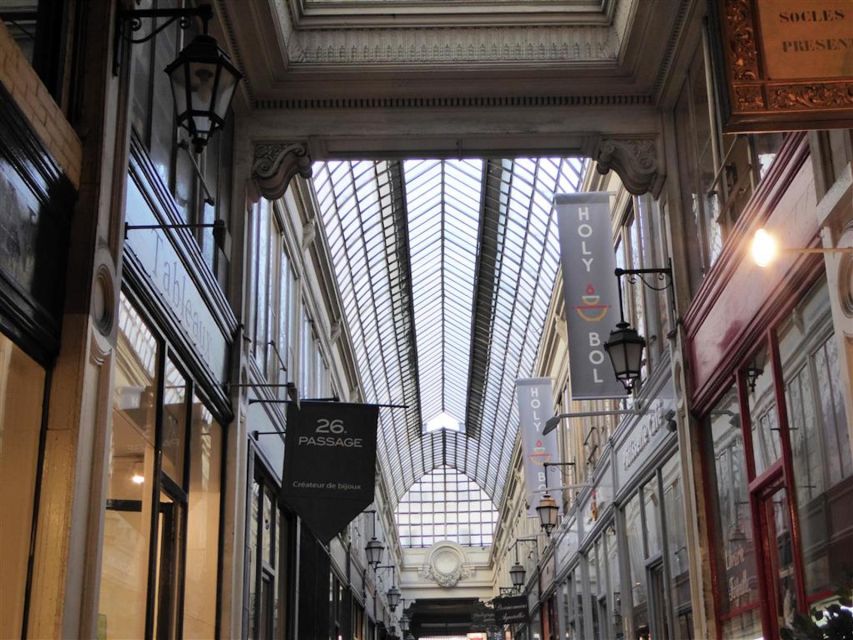
Paris is famous for grand avenues, grand museums, and grand buildings. Its covered passages tell a smaller story.
These arcades were built for a city that was still dirty, crowded, and less polished than the Paris you see today. They offered protected routes through the city, with shops and services gathered beneath glass and iron roofs. In that sense, they were early versions of the department store, or grand magasin, before the large retail palaces became the fashion.
That background gives the tour a useful purpose. You are not simply walking through pretty corridors and taking pictures of tiled floors. You are seeing how Paris adapted to changing habits, new commerce, and the needs of city life.
I like this kind of sightseeing because the places are modest in scale. A covered passage does not ask you to spend half a day inside it. You can look up at the roof, notice the shopfronts, listen to a few stories, and keep moving.
The route also gives you a break from the heavy traffic and broad streets of central Paris. The passages are not always silent, and they are not sealed-off museums. They remain part of the city, with shops and businesses using them today.
More covered passages walks in Paris:
- Paris: Covered Passages Walking Tour
★ 4.6 · 128 reviews - Paris Covered Passages Walking Tour plus Seine Cruise Option
★ 5.0 · 118 reviews - Escape Game in the Covered Passages in Paris
★ 5.0 · 79 reviews
Starting at Le Peletier and entering Passage Verdeau
The meeting point is outside Metro station Le Peletier on Line 7. Look for the guide carrying a HelpTourists bag.
This is a practical place to begin because the walk starts in the northern part of the passage district. From here, you move toward Passage Verdeau, the first listed stop on the route.
At the beginning, your guide can set the scene for the entire walk. Paris in the early 19th century was not yet the carefully planned capital that many people picture. The passages offered shelter and a more orderly way to shop and move through parts of town.
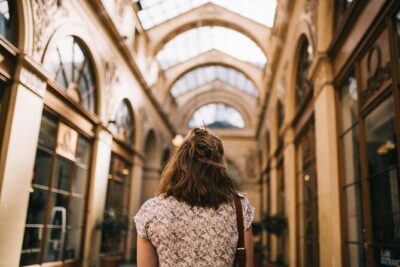
Passage Verdeau is especially useful as an opening stop because it eases you into the theme. You get a sense of how a covered arcade creates a different mood from the street outside. The route is not built around a single famous monument, so your attention shifts to details: the roof, the proportions of the walkway, the shop fronts, and the link between commerce and city design.
Do not expect an attraction with a long list of formal exhibits. The interest here comes from the setting and the explanation. A guide can point out connections that are easy to miss if you are walking alone.
Passage Jouffroy and the appeal of a covered arcade
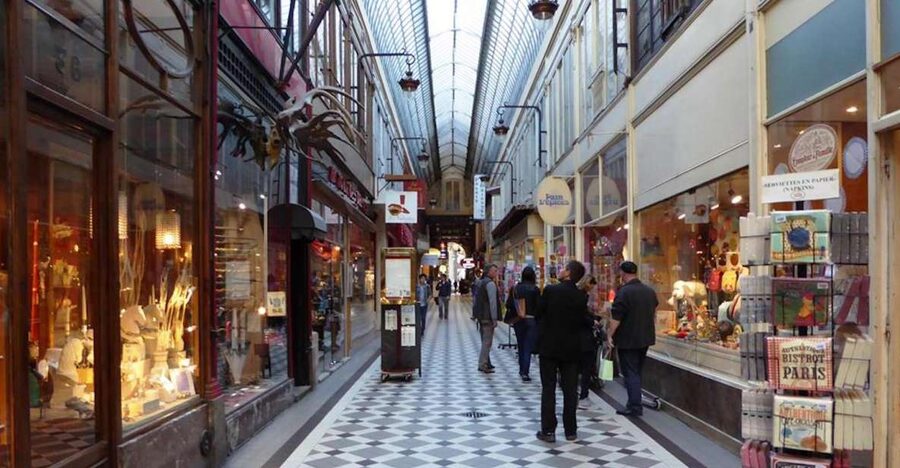
From Passage Verdeau, the route continues to Passage Jouffroy. Together, these first two arcades make the history easier to follow.
Passage Jouffroy helps show why these places became appealing. A covered route could protect shoppers from bad weather and offer a more comfortable setting than the surrounding streets. It also grouped stores and services close together, creating an early form of organized shopping.
The charm comes from the contrast. Outside, you are in the busy center of Paris. Inside, the scale changes. The passage feels more enclosed, more decorative, and more focused on browsing.
This is a good point to ask questions if you are curious about how the passages relate to modern Parisian shopping. The tour is private, so you do not have to save your question for the end or compete with a large group.
The practical limit is that the activity remains a walking tour. You are not promised time to shop, sit down, or stop at a particular business. If you want to eat or browse at length, plan to do that after the tour.
Passage des Panoramas and the oldest part of the route
The third passage is Passage des Panoramas. It gives the tour another chance to show how these arcades developed as part of the city’s commercial life.
By this point, the route has a clear rhythm. You see a passage, hear how it fits into Paris’s urban changes, and then step back onto the street before entering the next one. That pattern keeps the two hours moving and prevents the experience from becoming a long lecture in one corridor.
Passage des Panoramas is also a reminder that the passages were not designed as isolated curiosities. They were part of a network of city movement and shopping. Their value came from being useful as well as attractive.
I would pay attention to the transitions between the passages. The street sections help you compare the protected arcades with the open city around them. You begin to understand why these places could feel special in the 19th century without being separate from everyday Paris.
The route is likely to suit you if you enjoy architecture, social history, and small details. It may be less satisfying if you want major interiors, famous paintings, or a fast checklist of monuments.
More two-hour experiences in Paris:
- The Père Lachaise Cemetery: Guided 2-Hour Small-Group Tour
★ 4.7 · 1,065 reviews - Paris: 2-Hour Perfume Creation Workshop
★ 4.8 · 731 reviews - Paris Louvre: 2-Hour Private Tour for Groups or Families
★ 4.6 · 639 reviews - Paris Montmartre: 2-Hour City Tour in German
★ 4.9 · 299 reviews
The Grands Boulevards connect the passages to modern Paris
After the covered passages, the walk continues through the Grands Boulevards. This section gives the tour a wider urban setting.
The boulevards help explain the relationship between the passages and the changing city around them. The passages offered a sheltered, compact shopping experience, while the boulevards represented a larger and more open form of urban movement.
Your guide uses this part of the walk to connect the smaller arcades with Paris as a whole. That connection matters because the passages can otherwise seem like decorative corridors with no larger purpose.
I like the route design here. You do not simply visit three enclosed spaces and stop. You move through a district where the history of shopping, street life, and city planning is visible at different scales.
The Grands Boulevards section may also be the least visually consistent part of the experience. The appeal depends on the guide’s explanation and your interest in the district, not on one dramatic viewpoint.
Finishing in the Palais-Royal Quarter
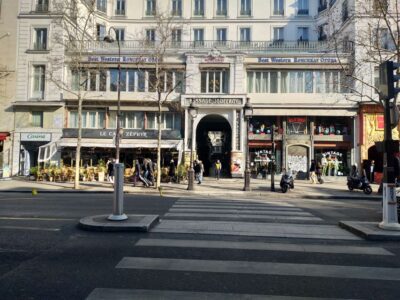
The final section takes you through the Palais-Royal Quarter, ending at Palais-Royal.
This is a satisfying finish because the route moves from relatively tucked-away passages toward one of central Paris’s best-known historic areas. You finish with a sense of how the passages fit into the city rather than leaving after a single isolated stop.
The end point is useful for planning the rest of your day. You can make Palais-Royal your next stop, continue toward nearby central sights, or simply use the area as a place to pause after the walk.
Keep in mind that the tour does not include admission to any paid attraction. The activity is an outdoor walking experience through the passages, boulevards, and quarter named in the route.
The finish at Palais-Royal also gives the tour a clean shape. You start at Metro Le Peletier and end in a different central area, rather than returning to the starting point. That matters if you are building a full day around neighborhoods instead of heading back to your hotel.
What the private format adds
The price is $94 per person. That is not the cheapest way to see Paris, especially since the tour lasts two hours and does not include food, admission fees, hotel pickup, or tips.
Still, the value depends on what you want from the outing. You are paying for a private group, a German-speaking guide, and a focused route that is difficult to appreciate fully without context. If you have already seen the Eiffel Tower, Louvre, and Notre-Dame area, this offers a more unusual subject.
A private tour can also be good value for a family or small group that wants to stay together. You can ask about the passages, shopping history, and local details without following a large crowd.
The experience is less compelling if you are looking only for famous sights or if you prefer exploring independently. The passages are open city spaces, and you can visit them on your own. The guide’s role is to explain why they matter and connect the stops into one story.
The tour has a rating of 4.9 from 30 reviews, and the strongest praise focuses on the guide, the amount of information, the friendly mood, and the two-hour length. Jörg described the duration as ideal, while Margrit found that Solene helped reveal another side of Paris. Joachim’s point is especially useful: the route brings together details you may not pick up by walking alone.
German guidance and the role of Solene
The tour is conducted in German, with a live German-speaking guide. That makes it a natural choice if you prefer receiving historical explanations in German rather than trying to follow a French or English tour.
Solene is one of the guides associated with the experience. Her approach is described as friendly and detailed, with attention to connections between the places rather than isolated facts.
That style matters on this particular walk. The passages are not difficult to enter, but their story can feel scattered without someone explaining how they relate to early 19th-century Paris and the later rise of department stores.
You should book this only if German works comfortably for you. The activity does not offer a choice of languages, and there is no indication that the guide will switch to English or French during the tour.
Who will enjoy this Paris passage walk
I would recommend this experience to you if you enjoy finding a less obvious side of a major city. It is especially suitable for:
- German-speaking visitors who want a private format
- Repeat visitors looking for a new central Paris route
- People interested in architecture, shopping history, and urban change
- Couples, families, or small groups who prefer asking questions
- Visitors who want a compact activity between larger sightseeing plans
It can also work well early in a Paris stay. The walk introduces a central district and finishes near Palais-Royal, giving you useful bearings for later exploration.
I would be more cautious if you have limited time in Paris and have not yet seen the city’s major landmarks. The passages are appealing, but they should probably come after your essential sights unless this quieter subject is exactly what interests you.
The tour is also not designed for a food-focused outing. Food is not included, and there is no promise of a tasting stop. You can plan a meal before or after the walk, but that will be separate from the activity.
Timing, walking, and practical details
The experience lasts two hours and operates from Monday through Saturday. Starting times can vary, so check availability when you book.
Meet at Metro station Le Peletier on Line 7. Look for the guide with a HelpTourists bag, and allow enough time to find the correct station exit and gather before the walk begins.
Hotel pickup is not included. You make your own way to Le Peletier, then follow the route toward Palais-Royal.
Wear comfortable shoes. The tour moves through several locations and includes street walking between the passages. The exact pace may depend on the group and the guide, but two hours gives the outing a focused rather than rushed feel.
Tips are not included, and any entrance fees would be extra. The supplied details do not identify a required paid entrance on the route, but you should still keep those costs separate from the $94 price.
You can cancel up to 24 hours before the start for a full refund. The reserve-now, pay-later option also helps if you are still arranging a Paris schedule.
Should you book this private German tour?
Book it if you want a small-scale Paris story instead of another tour of famous monuments. The three passages, Grands Boulevards, and Palais-Royal create a compact route with a clear theme, and the German-speaking guide adds value through explanation and local context.
The strongest reasons to book are the private format, the unusual route, and the well-judged two-hour length. Solene’s friendly, detailed style is a plus if she leads your group.
Skip it if you need hotel pickup, food, a multilingual guide, or a major attraction included in the price. At $94 per person, this is a specialty walking tour, not a low-cost orientation walk.
For the right visitor, it is a smart way to see Paris from another angle: not through grand monuments, but through the covered shopping arcades that helped shape the city’s modern commercial life.
FAQ
Where does the tour begin?
The tour begins at Metro station Le Peletier on Line 7. Look for the guide carrying a HelpTourists bag.
Where does the tour end?
The tour finishes at Palais-Royal in the Palais-Royal Quarter.
How long does the experience last?
The private city tour lasts two hours.
What language is the tour offered in?
The tour is offered in German with a live German-speaking guide.
Is this a private tour?
Yes. The activity is organized for a private group.
Which Paris passages are included?
The route includes Passage Verdeau, Passage Jouffroy, and Passage des Panoramas.
Does the tour include food?
No. Food is not included.
Is hotel pickup provided?
No. You must make your own way to the meeting point at Le Peletier.
Are tips and entrance fees included?
No. Tips and entrance fees are not included in the price.
Which days does the tour operate?
The city tour takes place from Monday through Saturday.
Just added around Paris
- Paris: The Da Vinci Code Walking Tour with a Local Guide★ 4.3 · 5 reviews
- Paris: Flea Market Insider’s Tour in Extra-Small Group★ 4.6 · 73 reviews
- Paris: Private Fashion Tour (Chanel, Dior, Sex & the City)★ 5.0 · 3 reviews
- Paris: Floral Earrings workshop★ 5.0 · 3 reviews
- Paris: Fashion History Walking Tour in the Heart of Paris★ 4.9 · 22 reviews
- PARIS: Family e-bike longtail renting★ 5.0 · 3 reviews
- Paris: Famous Monuments Cycling Tour★ 4.7 · 20 reviews
- Paris: private city tour with seine river cruise★ 4.8 · 28 reviews
Paris Covered Passages Tours, compared.
Paris Covered Passages Walking Tour plus Seine Cruise Option
Read our review →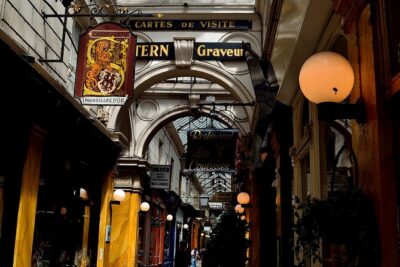
German private Walking Tour through Montmartre & Passages
Read our review →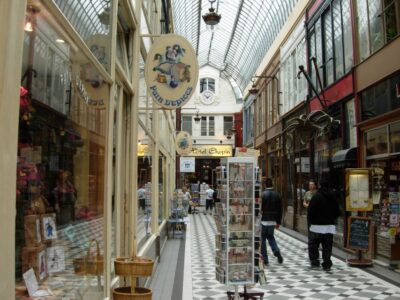
Browse the lists this tour appears in