
Reviewed · PARIS CHOCOLATE TOURS
Paris: 45-minute Chocolate Making Workshop at Choco-Story
The best part of this Paris experience is the chance to leave with a 250 to 300 gram chocolate creation that you designed yourself. You also get two good extras: a chocolate tasting and admission to three floors of Choco-Story, where exhibits trace chocolate from South America to modern France. The French and English instruction makes the session easy to follow, too.
I like the generous amount of chocolate and the fact that children and adults can work side by side. I also like the short format, which fits neatly into a busy Paris day. The catch is that this is mainly a chocolate decorating workshop, not a full lesson in making chocolate from cacao beans. You use prepared, melted chocolate rather than tempering and producing it from scratch.
Key points to know before booking
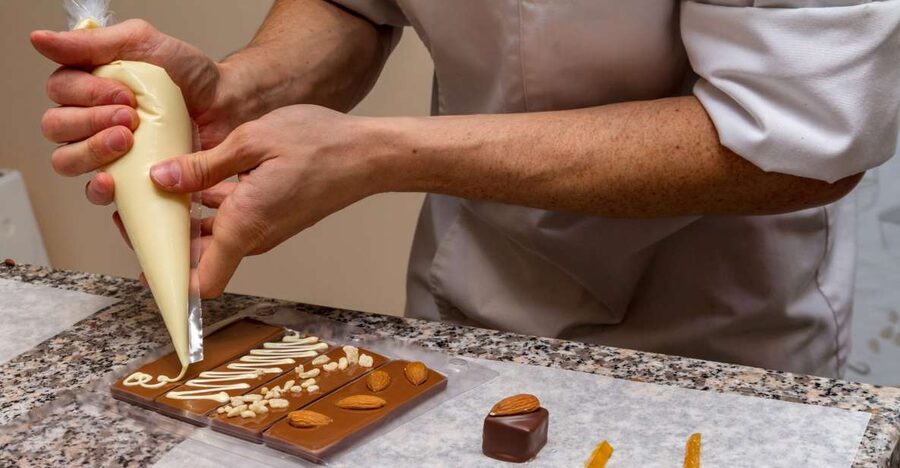
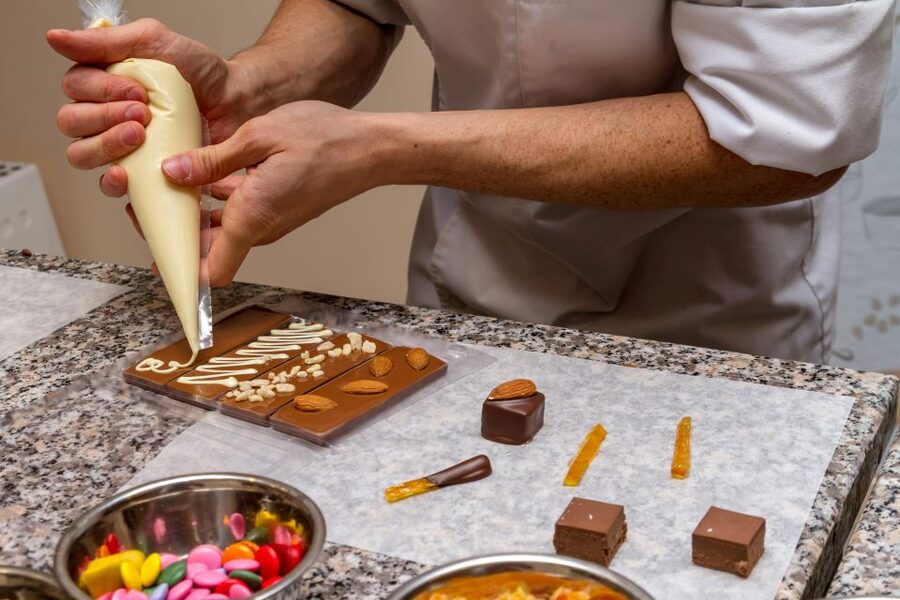
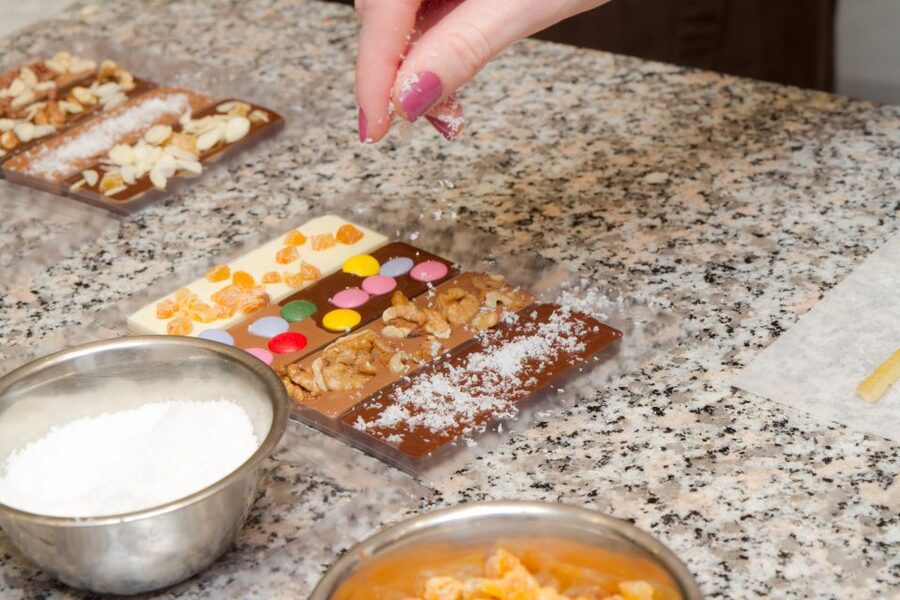
- You decorate a large chocolate bar: Choose a shape, add designs, and finish it with toppings such as orange strips, marshmallows, hazelnut cubes, and mini-tablets.
- The workshop lasts 45 minutes: It is lively and hands-on, but some people find the pace quick.
- You keep the results: Take home your chocolate creations and a Choco-Story apron.
- Museum admission is included: Allow extra time for three floors of displays, a virtual demonstration, and chocolate tasting.
- The class is bilingual: Instruction is offered in French and English, with instructors such as Stephen and Stefan praised for helping mixed-language groups.
- Arrive early: You must be at Musée du Chocolat, 28 Boulevard de Bonne Nouvelle, at least 15 minutes before the start. Late arrival is not accepted, and the booking cannot be refunded.
A short, hands-on taste of Paris chocolate
At $58 per person, this is not a bargain-basement museum ticket. You are paying for a packaged experience: a guided activity, a substantial amount of chocolate, an apron, tasting, a virtual presentation, and museum admission. If you value the take-home treats, the price feels more reasonable. If you want a serious confectionery lesson, you may find the cost harder to justify.
The workshop is held at Le Musée Gourmand du Chocolat Choco-Story, at 28 Boulevard de Bonne Nouvelle in the 10th arrondissement. It works especially well on a rainy afternoon, for a family break, or as a light activity between sightseeing stops. The central location also makes it easy to pair with other Paris plans, though you should not cut the timing close because the class starts promptly.
The activity is suitable for children aged seven and older. Younger children cannot join the workshop, and the pace means that very young participants would likely struggle to keep up even if they could enter. Adults do not need to feel out of place. Solo adults, couples, birthday groups, and hen parties have all found the format enjoyable.
More chocolate and dessert tours in Paris:
- Paris: Entrance Ticket to the Chocolate Museum
★ 4.1 · 1,105 reviews - A Morning in Paris Food Tour: Croissants, Baguettes & Chocolate
★ 5.0 · 556 reviews - Paris: Chocolate & Patisserie Walking Tour with Tastings
★ 4.8 · 397 reviews
What you actually make in the 45-minute class
Set aside the phrase chocolate making if you expect to roast cacao, temper couverture, or learn professional pastry methods. Here, the chocolate has already been prepared. Your work is to shape, dip, decorate, and flavor it.
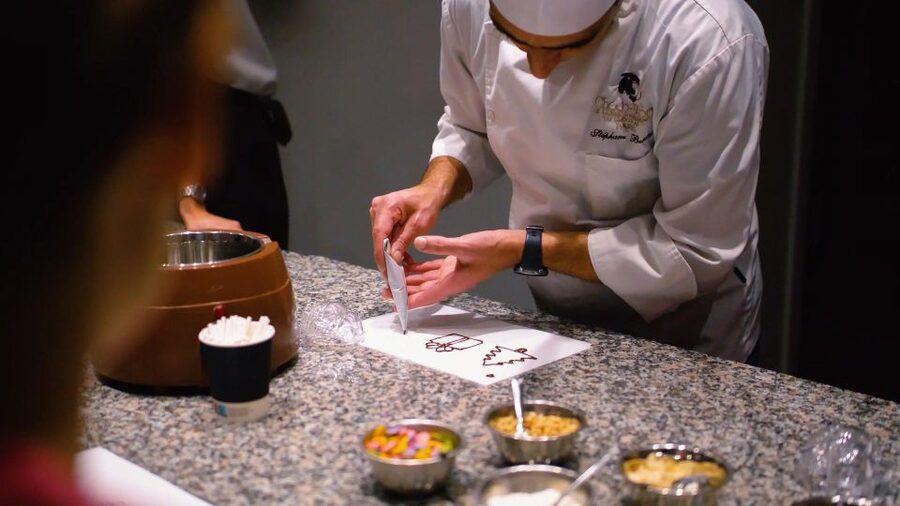
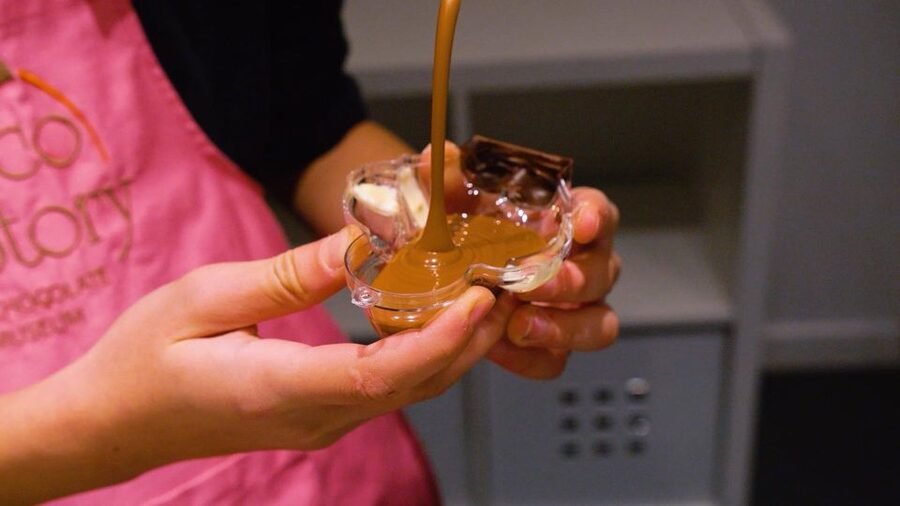
A chocolatier demonstrates each stage before you try it. You might work with a mold to create a chocolate bar, then add decorations and toppings. Other elements can include orange strips, marshmallows, hazelnut pieces, coconut, colorful sweets, and small chocolate tablets. Some sessions also include dipping treats into melted chocolate, then rolling or sprinkling them with toppings.
That distinction matters. This is closer to a creative chocolate workshop than a technical class. You will learn how to handle and decorate chocolate, but you will not leave knowing how to select cacao, control temperatures, temper chocolate, or build filled bonbons from raw ingredients.
For many people, that is exactly the right level. You get the fun parts without a long lecture or a lengthy wait for chocolate to set. The class gives children a clear task and lets adults play along. Several families have enjoyed working together, while solo participants have also found it comfortable despite the family-heavy setting.
The 45-minute length keeps the activity manageable. It is long enough to make several items and short enough for a child who would lose interest in a longer class. Still, the clock matters. A few participants have found the process rushed, especially when the instructor needs to repeat directions for late arrivals.
The role of the chocolatier
The instructor makes a big difference here. The format relies on clear demonstrations, quick explanations, and help at the worktable. Instruction is available in French and English, and bilingual guidance has worked well for mixed groups.
In sessions led by Stephen and Stefan, the instructor has been praised for keeping both language groups involved and helping children when they needed assistance. That is useful in a class where several people may be working with sticky chocolate, toppings, and molds at once.
Do not expect a private lesson. You are part of a group, and the chocolatier must keep everyone moving at the same pace. The focus is on showing you what to do, then letting you try it. If you want personal coaching on advanced methods, this will feel basic. If you want a friendly introduction with a visible result at the end, the setup works well.
The workshop can get messy, which is part of its charm. You are handling melted chocolate and toppings rather than watching a chef work behind glass. The included apron helps protect your clothes and makes a nice souvenir, especially for children.
Choosing designs, shapes, and toppings
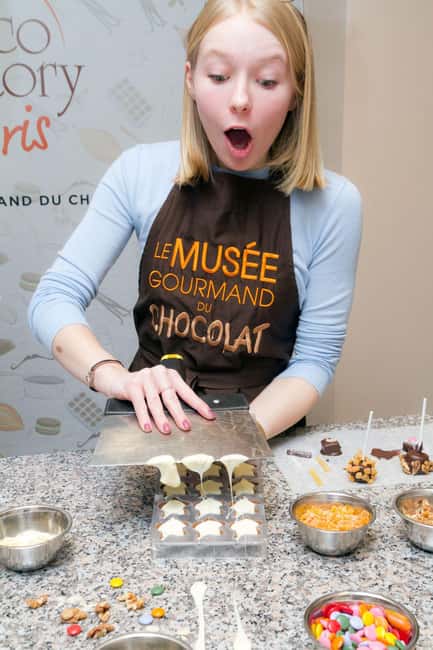
The creative choice is the strongest part of the activity. You can decide how your bar looks and select from the toppings set out for the class. Orange and hazelnut give you a more grown-up flavor direction, while marshmallows, mini-tablets, and colorful sweets appeal to children.
The exact combination depends on what is offered during your session, but the basic idea is consistent: start with the chocolate, select a shape or mold, then build the decoration yourself. You get a personal result rather than a standard souvenir chosen from a museum shop.
This also gives you a small taste of how presentation changes chocolate. A simple bar can look quite different once you add stripes, pieces, and contrasting textures. The activity is not a technical course, but it does encourage you to think about flavor and appearance.
One limitation is that the range of shapes may feel modest if you are hoping to create elaborate Paris-themed chocolates. One suggestion has been to add more molds, such as hearts, stars, Eiffel Towers, wine bottles, or other distinct shapes. If the exact design matters to you, book this for the creative process, not for a guaranteed catalog of molds.
Same city, a completely different afternoon:
- Paris: Louvre Museum Timed-Entrance Ticket
★ 4.6 · 71,977 reviews - Disneyland® Paris 1-Day Ticket
★ 4.6 · 49,412 reviews - Paris: Versailles Palace and Gardens Full Access Ticket
★ 4.6 · 41,579 reviews - Paris: Evening River Cruise with Music
★ 4.4 · 22,721 reviews
Taking home 250 to 300 grams of chocolate
The take-home portion is where the value becomes easier to judge. You receive roughly 250 to 300 grams of chocolate, which is a generous amount for a 45-minute activity. You also receive the Choco-Story apron.
That quantity can stretch well beyond the day of the class. Families have taken their chocolate back to their accommodation and eaten it over the rest of their Paris stay. It also gives you something more personal than a packaged bar from a shop.
Plan for the weather, especially in summer. A participant on a hot, sunny day found that some chocolate melted because it was carried in clear plastic bags. Keep your creations out of direct sun and avoid leaving them in a warm car. The supplied packaging may not provide much insulation.
The chocolate is meant to be eaten, not treated as a fragile museum object. Expect imperfections. A crooked decoration or uneven topping is part of the appeal, and children will care more about making it than producing a professional finish.
Three floors at Choco-Story
The museum adds useful context to what could otherwise be a quick craft session. Across three floors, Choco-Story explains chocolate’s origins in South America and follows its development into the product you know today. The displays cover the history of chocolate and its influence in France.
You will also find a virtual demonstration and a chocolate tasting. These features help connect the hands-on class with the larger story. After working with chocolate yourself, it is easier to notice the steps involved in turning cacao into a finished sweet.
The museum is designed to hold a child’s attention better than a traditional text-heavy collection. Expect chocolate-themed displays and interactive learning rather than a quiet art museum atmosphere. Children can enjoy the visual side while adults pick up more background about chocolate production and its place in French food culture.
Allow more than the 45-minute class if you want to see the museum properly. The advertised experience lasts two hours overall, including the workshop and museum visit, but your exact pace is up to you. A quick walk through will give you the main ideas. A slower visit gives the exhibits time to register.
The museum is not a replacement for a specialist chocolate tour or a working factory visit. It is a compact educational stop paired with a practical activity. That combination makes it particularly useful for families who want something more active than looking at displays alone.
Who will enjoy this most
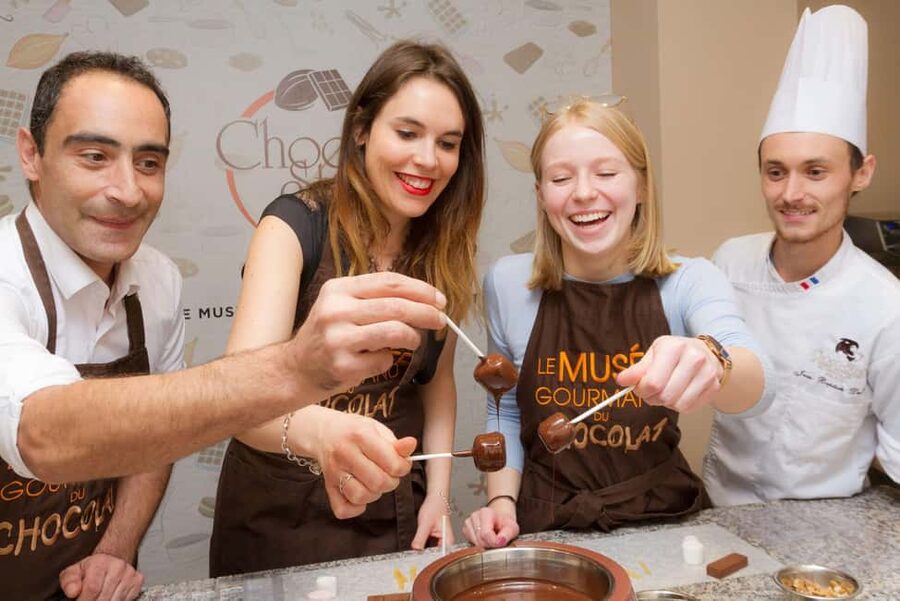
I would recommend this to families with children aged seven and older, especially if you want an activity that does not consume half a day. The 45-minute class offers a clear beginning and end, and the museum adds time without forcing you into a long guided tour.
It also suits couples, friends, birthday groups, and hen parties. The decorating stage gives a group something to do together, and the finished chocolate can become part of the occasion. Adults who enjoy food but do not want a formal cooking lesson should find the tone easygoing.
Solo adults can join without needing a partner. You may be surrounded by families, but the work is individual and the instructor explains each step to the whole group. The activity has enough structure that you do not need to arrive with a plan.
I would be more cautious if you are seeking professional chocolate skills. The workshop does not cover chocolate quality, tempering, fillings, storage, or advanced confectionery technique in detail. It is also not ideal if you dislike sweets, since chocolate is the central attraction from start to finish.
Timing, meeting point, and practical cautions
Your meeting point is Musée du Chocolat, 28 Boulevard de Bonne Nouvelle, 75010 Paris. Check the available start times when booking, then plan to arrive at least 15 minutes early.
This is not a flexible drop-in class. Late arrivals are not accepted, and the ticket is non-refundable. That rule is important because the chocolatier demonstrates the process in sequence. Arriving after the first stage can leave you behind and force the instructor to repeat instructions for the whole group.
The class is offered in French and English. If your group includes both languages, the instructor can explain the steps across the room, though the pace may feel brisk when switching between languages.
The experience is listed as two hours, with a 45-minute workshop included. You can use the remaining time for the museum, tasting, and virtual demonstration. Do not assume that every minute is guided. The museum portion gives you freedom to move at your own speed.
Cancellation is not available for this activity, so confirm your Paris schedule before paying. With a strict start time, it is wise to avoid booking this immediately after another timed attraction on the other side of the city.
Is the $58 price fair?
The price makes sense if you count the whole package. You receive the workshop, a large amount of chocolate, an apron, tastings, the virtual demonstration, and museum entry. For a family, the take-home chocolate can turn the class into a shared souvenir as well as an outing.
The value is weaker if you are measuring it only by instruction time. Forty-five minutes is brief, and the lesson is about decoration rather than chocolate production. One participant found the cost somewhat high, while others felt the amount of chocolate and museum access made it worthwhile.
I would treat this as a food activity plus a museum visit, not as a professional class. That framing keeps expectations in line with what you receive. You are paying for a playful Paris experience with a tangible result, not a qualification in confectionery.
Should you book Choco-Story’s workshop?
Book it if you want a family-friendly activity with plenty of chocolate to take home, a short hands-on class, and a museum that gives the sweets some context. It is especially useful on a rainy day or when children need a break from churches, monuments, and long walks.
Book it for the decorating, not for making chocolate from scratch. Arrive early, protect your finished treats from heat, and leave enough time for the three museum floors.
Skip it if you want advanced technique, a slow chef-led lesson, or a serious study of cacao. For everyone else, this is a cheerful and practical way to spend two hours in Paris, with an apron and a large bag of homemade-looking chocolate to prove you did more than simply eat it.
FAQ
How long does the entire Choco-Story experience last?
The listed duration is two hours. The hands-on chocolate workshop itself lasts 45 minutes, with museum admission, tasting, and a virtual demonstration included.
How much chocolate can I take home?
You can take home approximately 250 to 300 grams of chocolate that you decorate during the workshop.
Is the workshop suitable for children?
Children under seven cannot join. Children aged seven and older can participate, and the activity is designed for both children and adults.
Is instruction available in English?
Yes. The instructor languages are French and English.
What is included in the price?
The package includes the 45-minute chocolate workshop, a Choco-Story apron, chocolate tasting, a virtual demonstration, and admission to Le Musée Gourmand du Chocolat Choco-Story.
What happens if I arrive late?
You must arrive at least 15 minutes before the workshop. Late arrivals are not accepted, and the ticket is non-refundable.
More perfume and craft workshops in Paris
- Fragonard Paris: Mini Perfume Workshop
★ 4.5 · 1,924 reviews - Paris Cooking Class and Lunch with Wine plus Market Visit Option
★ 5.0 · 1,024 reviews - Paris Croissant Small-Group Baking Class with a Chef
★ 5.0 · 910 reviews - Paris: Macaron Class at Galeries Lafayette
★ 4.3 · 905 reviews
Just added around Paris
- Paris: The Da Vinci Code Walking Tour with a Local Guide★ 4.3 · 5 reviews
- Paris: Flea Market Insider’s Tour in Extra-Small Group★ 4.6 · 73 reviews
- Paris: Private Fashion Tour (Chanel, Dior, Sex & the City)★ 5.0 · 3 reviews
- Paris: Floral Earrings workshop★ 5.0 · 3 reviews
- Paris: Fashion History Walking Tour in the Heart of Paris★ 4.9 · 22 reviews
- PARIS: Family e-bike longtail renting★ 5.0 · 3 reviews
- Paris: Famous Monuments Cycling Tour★ 4.7 · 20 reviews
- Paris: private city tour with seine river cruise★ 4.8 · 28 reviews
Paris Chocolate Tours, compared.

A Morning in Paris Food Tour: Croissants, Baguettes & Chocolate
Read our review →
Chocolate & Patisserie Walking Tour with Tastings
Read our review →
Paris Chocolate, Macaron & Pastry Food Tour: 10 Gourmet Tastings
Read our review →
Discover Brussels and Bruges & Optional Chocolate Tasting
Read our review →

Browse the lists this tour appears in