
Reviewed · ARC DE TRIOMPHE AND CHAMPS-ÉLYSéES TOURS
Paris Champs-Élysées 2-Hour Private Walking Tour
The best part of this tour is that it treats the Champs-Élysées as more than a glossy shopping strip. You begin at Place de la Concorde, then walk through layers of royal planning, Napoleon’s ambition, 19th-century Paris, art, cafés, and today’s luxury stores before reaching the Arc de Triomphe.
I like the private format, since your guide can shape the conversation around your interests. I also like the route’s range: grand monuments sit beside the old café and drinking culture linked with Picasso and other artists. The main consideration is pace. Two hours gives you a useful introduction, not time for museum interiors or a leisurely stop at every address.
Key points
- Place de la Concorde begins the story: See the Luxor Obelisk, Hôtel de Crillon, and one of Paris’s finest neoclassical urban spaces.
- The avenue has an unexpected past: Learn how a former park once drew bars and modest theaters before becoming a luxury boulevard.
- Both Palais buildings are included: The Grand Palais and Petit Palais now house museums and add an art-minded stop to the walk.
- Avenue Montaigne changes the mood: Compare the Champs-Élysées with Paris’s more polished luxury-shopping quarter.
- Picasso’s Paris enters the route: Your guide points out drinking places tied to artists and the city’s café culture.
- The private tour keeps things flexible: English, French, and Serbo-Croatian are available, with a guide carrying a red canvas tote at the meeting point.
Why this avenue deserves a guided walk
The Champs-Élysées is easy to visit on your own, but it is also easy to misunderstand. You can stroll past fashion shops, cinemas, fast-food outlets, and souvenir stands without seeing why this long avenue matters so much to Paris.
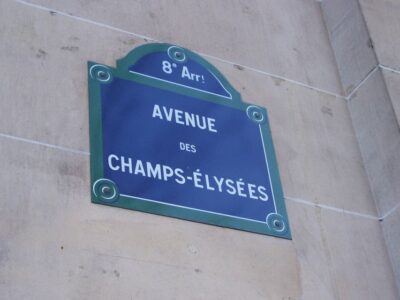
A guide gives the route a clear shape. You start with Roman mythology and the name Champs-Élysées, then move into the avenue’s connection with French royal planning, Napoleon, and the great redesign of 19th-century Paris. The walk then brings the story into the present, where shopping, tourism, museums, and major public celebrations share the same axis.
I like this approach because it puts the famous views into context. You are not just collecting pictures of monuments. You are watching one part of Paris change from a simple park with bars and third-rate theaters into one of the world’s best-known urban addresses.
The private setting also matters. Your guide is not trying to satisfy a large mixed group. You can ask about architecture, Napoleon, Parisian cafés, luxury shopping, or the city’s artistic past and spend more time on the subjects that interest you. The available languages are English, French, and Serbo-Croatian.
More Arc de Triomphe and Champs-Élysées Tours:
- Paris: Arc de Triomphe Entry with Seine Cruise
★ 4.5 · 758 reviews - Arc de Triomphe Priority Tickets – Optional Private Guide
★ 4.0 · 313 reviews - Paris: Arc de Triomphe Ticket & Big Bus Hop-on Hop-off Tour
★ 4.4 · 145 reviews
Starting beneath the Luxor Obelisk
The meeting point is in front of the obelisk at Place de la Concorde. Look for a guide carrying a red canvas tote bag. This is a practical meeting place, since the monument is large and easy to identify, but arrive with enough time to orient yourself in this broad open square.
Place de la Concorde is one of the most important stops on the walk. Its design shows how Paris used open space, symmetry, and grand views to express power. The square is a neoclassical masterpiece of planning, with wide sightlines leading toward the Champs-Élysées and other major parts of the city.
The Luxor Obelisk gives the square an extra layer. It came from ancient Egypt, so it looks older and more exotic than the surrounding French architecture. Your guide connects the monument with the larger story of Paris, where Roman references, royal ambition, revolutionary memory, and imperial pride often share the same street.
Nearby, Hôtel de Crillon adds another architectural marker. You should think of this opening section as an orientation to Paris’s grand scale. The square is less about entering a single attraction and more about understanding how the city uses monuments and open space to direct your eye.
From former park to famous avenue
As you move onto the Champs-Élysées, the guide explains the avenue’s surprising earlier life. Before its reputation for luxury shops and major events, this was a simple park area with bars and modest theaters.
That change is one of the strongest reasons to take the walk with a guide. On your own, the avenue can feel like a finished product. The historical explanation reminds you that Paris is always being remade. A place that now suggests prestige once served a much rougher and more casual purpose.
The name also links the avenue to Roman mythology. That gives the route a symbolic quality, though you do not need to know classical mythology in advance. The guide uses the name as a starting point for discussing how Paris has borrowed old ideas to give new streets and monuments a sense of importance.
You will see both sides of the avenue in a literal and historical sense. One side is the public, ceremonial Paris of monuments, broad views, and national celebrations. The other is the commercial and social Paris of cafés, shops, theaters, artists, and daily life.
Grand Palais and Petit Palais
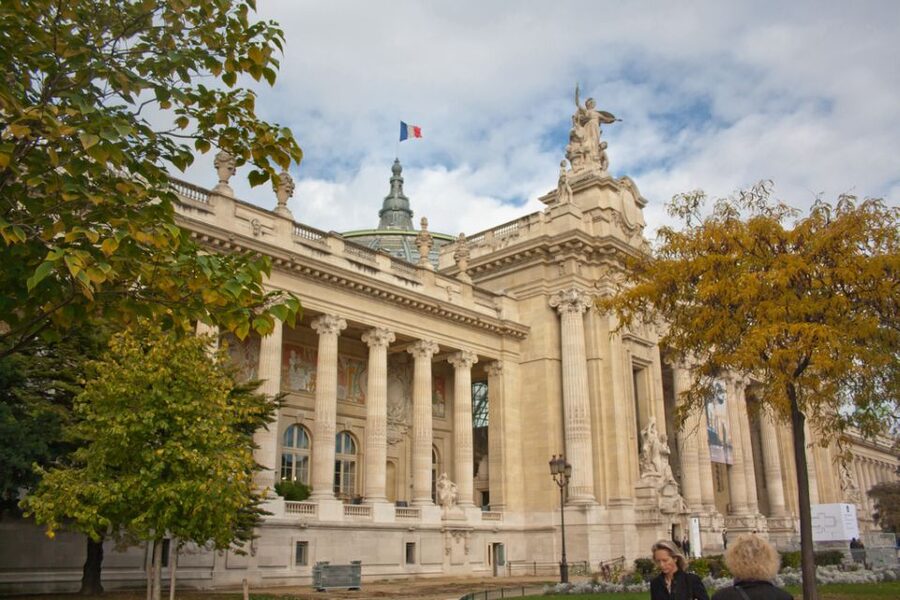
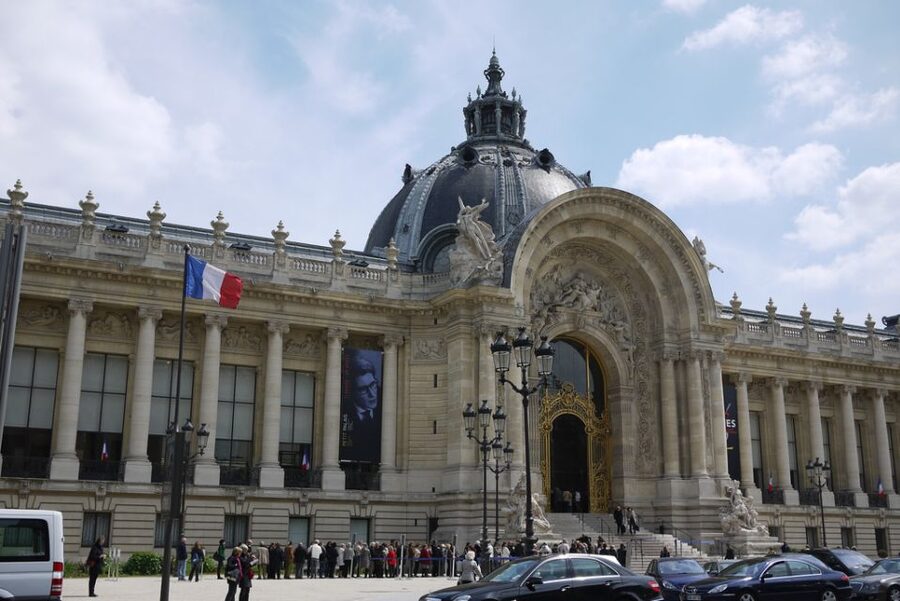
The Grand Palais and Petit Palais make this more than a shopping walk. Both are now museums, and their monumental exteriors provide a sharp contrast with the commercial activity farther along the avenue.
The Grand Palais is especially striking as a large civic exhibition building. Even if your two-hour walk does not include museum admission, its presence helps explain Paris’s long interest in art, public display, and architecture on a grand scale.
The Petit Palais offers a more compact counterpoint. Together, the two buildings create a useful architectural pair, and a guide can help you notice their different character rather than treating them as two impressive façades to photograph and forget.
Plan your expectations carefully. The tour includes the sites as part of the walking route, but the supplied details do not promise time inside the museums or admission tickets. If you want to see an exhibition, arrange that separately and do not assume the walking tour covers it.
For many people, this is an advantage. You get the setting and the story without using the whole tour inside one building. If museum interiors are your main reason for coming, however, you may want a separate visit.
More walking tours in Paris:
- Paris Top Sights Half Day Walking Tour with a Fun Guide
★ 5.0 · 2,893 reviews - Montmartre Hidden Gems and Scenic Highlights Walking Tour
★ 5.0 · 2,684 reviews - Montmartre Hill French Gourmet Food and Wine Tasting Walking Tour
★ 5.0 · 2,588 reviews - Paris Île de la Cité and Notre-Dame Walking Tour With Crypt
★ 5.0 · 2,272 reviews
A look toward Avenue Montaigne
Avenue Montaigne adds a change of tone. It is associated with Paris’s luxury-shopping world, and it helps you compare two famous addresses rather than treating the Champs-Élysées as the only important boulevard nearby.
The contrast is useful. The Champs-Élysées is broad, public, and tied to national ceremony. Avenue Montaigne feels more focused on fashion and high-end retail. A guide can explain how these neighboring streets serve different roles in the city’s image and economy.
This part of the walk will appeal most if you like design, fashion, or the social side of Paris. You do not need to buy anything to appreciate the area, and food and drink are not included in the tour price. Consider the stores and façades part of the sightseeing rather than an automatic shopping stop.
Ladurée is another recognizable address on the route. The famous macaron shop gives you a chance to see a classic Parisian brand in its natural setting. You may purchase something on your own, but the tour includes only the guide, not food or drink.
Picasso, cafés, and the social life of Paris
The route also reaches beyond monuments. Your guide introduces drinking places associated with Picasso and other figures from Paris’s artistic past.
This detail gives the walk a more human scale. Grand squares tell you how governments wanted Paris to look. Cafés and drinking places tell you where artists, writers, and ordinary city life found room to develop. The two stories belong together.
The supplied details do not name specific cafés or promise a sit-down stop, so treat this as a guided look at the city’s social history rather than a food tour. You can ask your guide for clarification if a particular address interests you, but plan to pay separately for anything you order.
I like this part because it prevents the avenue from feeling like a string of official monuments. Picasso’s connection to Paris helps bring the cultural side of the city into the walk, even if you are mainly following the grand route from Concorde to the Arc de Triomphe.
Finishing at Napoleon’s Arc de Triomphe
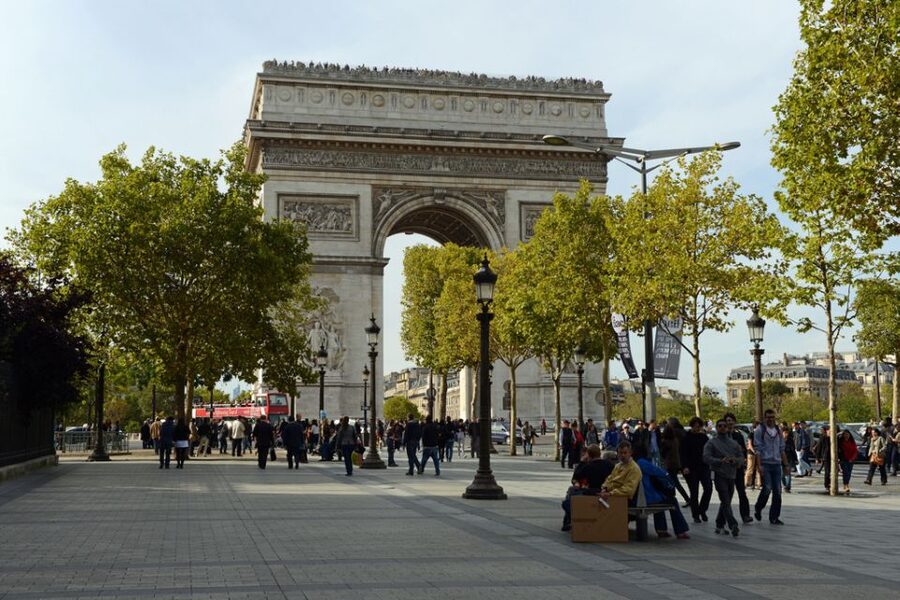
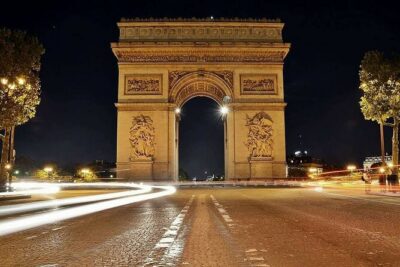
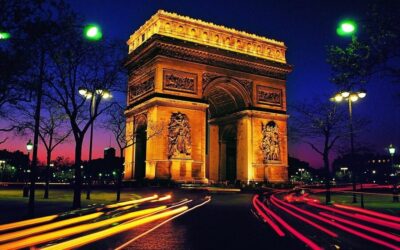
The tour ends at the Arc de Triomphe, the monolithic monument tied closely to Napoleon. After the open square at Concorde and the long avenue, arriving here gives the route a strong visual finish.
The arch is not simply a decorative endpoint. It represents military ambition, national memory, and the way Napoleon used monumental building to shape his public image. The guide places it within the wider story of Paris, linking the emperor with the avenue and the city’s 19th-century development.
This final stop also helps you understand the Champs-Élysées as a processional route. Place de la Concorde, the avenue, and the Arc de Triomphe form a powerful sequence. You see how Paris was designed to make distance, movement, and authority feel monumental.
The tour does not include admission to the Arc de Triomphe, so do not count on climbing to the roof or visiting the interior as part of the two-hour experience. If that is on your wish list, plan it as a separate activity after the walk.
What $176 per person gets you
At $176 per person, this is not a budget sightseeing stroll. The price makes the most sense for people who value a private guide and want an efficient introduction to one of Paris’s central routes.
You are paying for personal attention, a fixed two-hour itinerary, and interpretation that connects sites many people see separately. A standard self-guided walk can show you the obelisk, palaces, avenue, and arch. It cannot answer your questions or adjust the emphasis as you go.
The value is stronger for a first visit or a short stay. If you have only a few days in Paris, the tour gives you a fast orientation to the city’s ceremonial center and leaves you with useful ideas for later visits.
The value is weaker if you already know the Champs-Élysées well, dislike shopping districts, or want extensive museum time. It is also less suitable if you expect a food tasting, since food and drink are not included.
The operator, Paris in person private tours, was selected among the top 10 small tour operators in Europe from 26,000 companies in the 2025 Arival TourReview Spotlight Awards. That recognition provides helpful context about the company’s standing, though it does not replace checking the exact tour details before booking.
The published rating is 4.8 from three reviews. One verified booking from December 2019 describes the tour as a strong introduction to Paris and a good way to begin a vacation. That fits the tour’s main strength: orientation and context. The sample is small and dates from before current travel conditions, so use the rating as one signal, not the whole decision.
Timing, weather, and access
Two hours is a sensible length for this route. It is long enough to connect the main sights without taking half a day, but short enough to fit around a museum visit, lunch, or another Paris appointment.
The walk operates rain or shine. Bring suitable clothing and shoes, since the experience remains outdoors even in poor weather. A wet day may make the broad views less appealing, but the monuments and historical explanations still form the core of the tour.
The activity is listed as wheelchair accessible. If you need particular assistance, confirm the route details when booking, since the available information does not specify every surface, crossing, or restroom arrangement.
Cancellation is flexible up to 24 hours before the start for a full refund, and you can reserve now and pay later. Those terms are useful when your Paris schedule is still changing.
Who should book this walk?
I would recommend it to first-time visitors who want to understand the Champs-Élysées rather than simply photograph it. It also suits families and private groups that prefer asking their own questions instead of following a large public tour.
Art and architecture fans will appreciate the Grand Palais, Petit Palais, Picasso connections, and the change from neoclassical planning to luxury retail. History-minded visitors will get the most from the Roman mythology, Napoleon, and 19th-century Paris material.
It is less ideal for someone seeking a relaxed café experience, a shopping appointment, or a full museum tour. The pace is built around seeing several major places in two hours, not lingering over one.
Should you book the Paris Champs-Élysées walk?
Book it if you want a short private introduction to Paris’s grand central axis, with more substance than a simple photo walk. The combination of Concorde, the obelisk, Hôtel de Crillon, both Palais buildings, Avenue Montaigne, Ladurée, Picasso’s café world, and the Arc de Triomphe gives you a well-shaped overview.
Skip it if you mainly want museum admission, included tastings, or a long stop inside each landmark. At $176 per person, the tour needs to earn its price through the guide’s explanations and your ability to shape the conversation. For a first day in Paris, that can be worthwhile. For a repeat visitor, book only if the private format and historical angle match what you want to explore.
FAQ
Where does the tour meet?
The meeting point is in front of the obelisk at Place de la Concorde.
How will I recognize the guide?
The guide will be carrying a red canvas tote bag.
How long does the tour last?
The walking tour lasts two hours.
Is the tour private?
Yes. It is offered for a private group.
Which languages are available?
Live guiding is available in English, French, and Serbo-Croatian.
Is the tour wheelchair accessible?
The activity is listed as wheelchair accessible.
Does the tour operate in bad weather?
Yes. Tours operate rain or shine.
Are food and drinks included?
No. Food and drinks are not included.
Does the tour include museum admission?
The route includes the Grand Palais and Petit Palais as principal sites, but the provided details do not list museum admission as an inclusion.
Can I cancel for a refund?
You can cancel up to 24 hours in advance for a full refund.
More two-hour experiences in Paris
- The Père Lachaise Cemetery: Guided 2-Hour Small-Group Tour
★ 4.7 · 1,065 reviews - Paris: 2-Hour Perfume Creation Workshop
★ 4.8 · 731 reviews - Paris Louvre: 2-Hour Private Tour for Groups or Families
★ 4.6 · 639 reviews - Paris Montmartre: 2-Hour City Tour in German
★ 4.9 · 299 reviews
Just added around Paris
- Paris: The Da Vinci Code Walking Tour with a Local Guide★ 4.3 · 5 reviews
- Paris: Flea Market Insider’s Tour in Extra-Small Group★ 4.6 · 73 reviews
- Paris: Floral Earrings workshop★ 5.0 · 3 reviews
- Paris: Private Fashion Tour (Chanel, Dior, Sex & the City)★ 5.0 · 3 reviews
- Paris: Fashion History Walking Tour in the Heart of Paris★ 4.9 · 22 reviews
- PARIS: Family e-bike longtail renting★ 5.0 · 3 reviews
- Paris: Famous Monuments Cycling Tour★ 4.7 · 20 reviews
- Paris: private city tour with seine river cruise★ 4.8 · 28 reviews
Arc de Triomphe and Champs-Élysées Tours, compared.
Arc de Triomphe Priority Tickets – Optional Private Guide
Read our review →
Arc de Triomphe Ticket & Big Bus Hop-on Hop-off Tour
Read our review →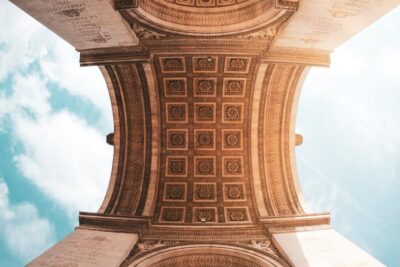
Arc de Triomphe Rooftop: Unveil History & Breathtaking Views
Read our review →
3-Hour Private Tour from Champs Élysées to Montmartre
Read our review →Browse the lists this tour appears in