
Reviewed · PARIS PERFUME AND CRAFT WORKSHOPS
Paris: Couture workshop, upcycle your own jacket
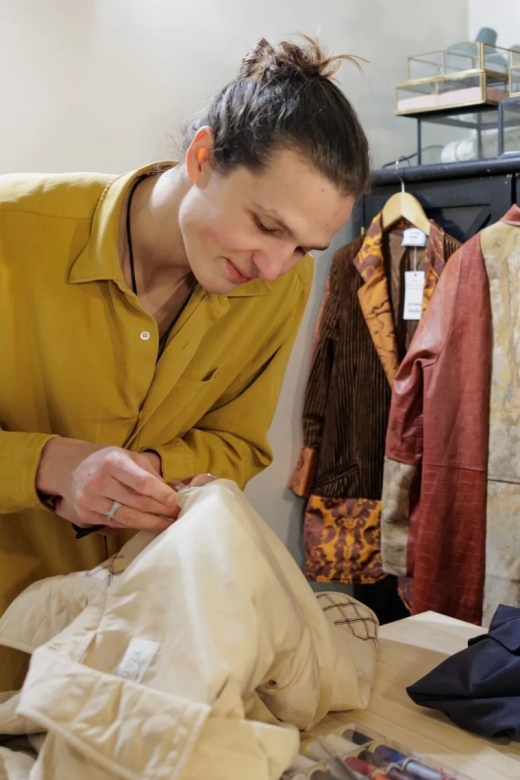
A forgotten jacket gets a second life in this hands-on Paris workshop. Near Montmartre, designer Tara helps you turn a thrifted jacket into something personal, using fabric cutoffs from luxury fashion houses and three simple couture techniques: patchwork, cutout, and embroidery.
I like the small group size, limited to five people, and the fact that you leave with a finished jacket rather than a souvenir that gathers dust. I also like the choice built into the class: you can use a jacket supplied by the atelier or bring one from home. The main consideration is that three hours can pass quickly, especially if you want a highly detailed design.
Key points
- Create a wearable souvenir: You take home the jacket you remake during the class.
- Work with Paris fashion materials: Fabric cutoffs from luxury design houses are available for your design.
- Learn three techniques: Try patchwork, cutout, embroidery, or combine them.
- Get personal instruction: Tara leads the workshop in English or French and offers hands-on guidance.
- Keep the group intimate: No more than five participants share the atelier.
- Plan for a creative afternoon: The workshop lasts three hours and costs $170 per person.
A Paris fashion workshop with something to wear home
Many Paris activities leave you with a photo, a pastry, or a bottle of perfume. This one gives you a jacket. That difference matters. You are not simply watching a designer work. You are making choices, handling materials, and changing a garment that already has a past.
Tara welcomes you into her Paris atelier, a short distance from Montmartre. Her work centers on creative, sustainable fashion, so the lesson begins with the basic idea behind upcycling: a good garment does not need to be thrown away just because it feels old or plain.
I find that idea especially useful in a city so closely tied to fashion. Paris style can seem expensive and distant from everyday life. Here, the focus shifts from buying a perfect new piece to seeing possibilities in something already made.
The workshop suits curious adults and children aged 10 and older who enjoy making things with their hands. You do not need to arrive with a fashion background, but you should be ready to make design decisions and spend time sewing, cutting, and arranging fabric.
More perfume and craft workshops in Paris:
- Fragonard Paris: Mini Perfume Workshop
★ 4.5 · 1,924 reviews - Paris: 2-Hour Perfume Creation Workshop
★ 4.8 · 731 reviews - Paris: Perfume Creation Workshop
★ 4.8 · 289 reviews
Entering Tara’s atelier near Montmartre
The meeting point is a black door marked with the code A5961. The workshop takes place in Building A on the second floor. Keep those directions handy, since this is an atelier meeting rather than a large, obvious tourist attraction with a prominent street sign.
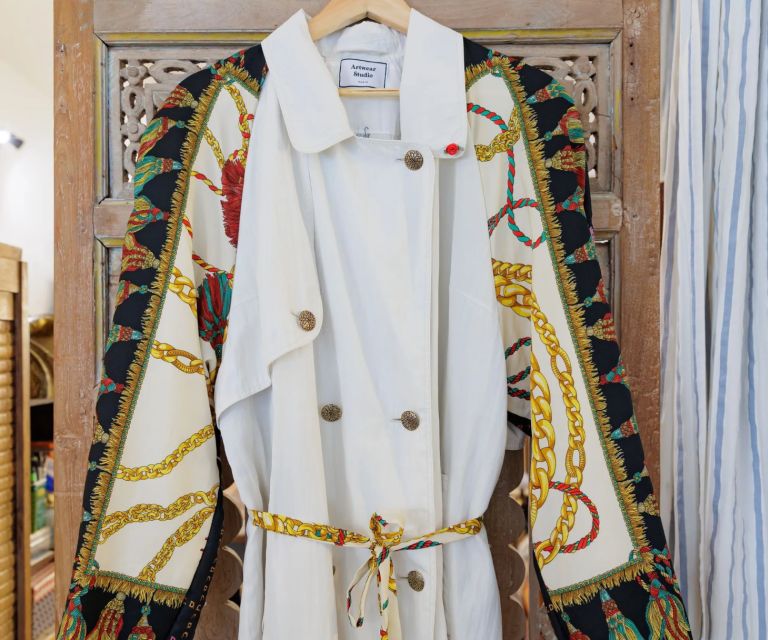
Once inside, Tara introduces you to her approach to upcycling and shows you examples of her own creations. This opening is more than a quick hello. It gives you a sense of how discarded or overlooked materials can become deliberate design details.
You will see fabric cutoffs gathered from luxury design houses. These remnants may have had no use in their original production process, yet they can become patches, accents, or embroidery material. The atelier also has jackets selected from thrift stores in different sizes.
That selection helps solve one common problem with clothing workshops: finding something that actually fits. You choose the jacket that will become your project, rather than being handed one random garment. You may also bring your own jacket if you already have a piece in mind.
If you bring a jacket, choose one you are willing to alter. The purpose of the class is to change it, not simply decorate it lightly. An old denim, cotton, or similar casual jacket may give you a clear starting point, but the supplied details do not promise a specific fabric type, so let Tara guide you when you arrive.
Choosing your jacket and design direction
The first real decision is the jacket itself. This is where your project begins to feel personal. A plain jacket gives you a clean surface for bold details. A jacket with existing wear, fading, or small imperfections may give you more character to work with.
I like that you are not restricted to one preset pattern. The workshop allows you to focus on one technique or combine all three. That freedom is useful for different skill levels.
If sewing is new to you, you might choose a simple patchwork design or a small embroidered detail. If you already sew, you can bring together cutout shapes, fabric pieces, and stitching for a more complex result. Tara can help you understand what will work on the garment you select.
The supplied materials also encourage a less predictable design. Instead of picking from a narrow set of identical craft-store fabrics, you work with assorted fashion remnants. The result can feel more individual because the materials themselves vary.
Still, creative freedom comes with a small challenge. You must make choices. If you arrive hoping for a fully prepared template, this may feel loose. If you enjoy experimenting, the open format is one of the strongest parts of the class.
Learning patchwork, cutout, and embroidery
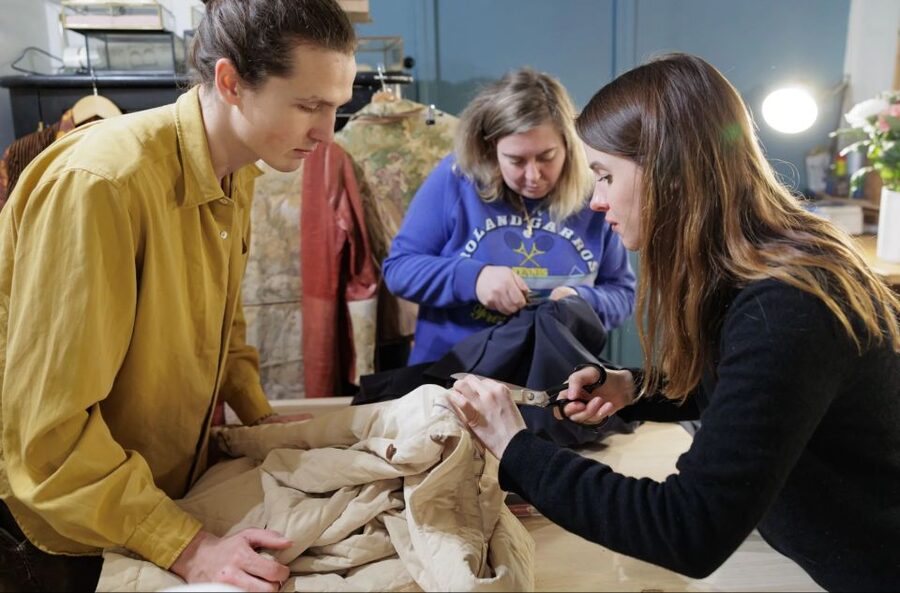
Tara teaches three techniques during the workshop. You can use one or blend them together.
Patchwork lets you attach different pieces of fabric to the jacket. It is a good choice if you want to add color, texture, or a graphic arrangement. You can place pieces across a sleeve, shoulder, back, or front panel, depending on the jacket and your plan.
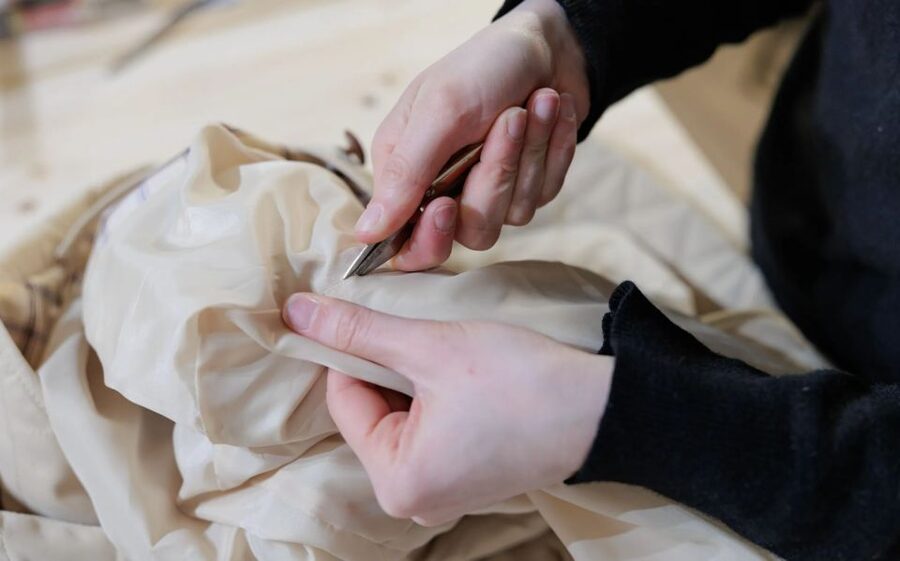
Cutout work changes the shape or surface of the garment. This technique can create a more graphic look, but it also calls for care. You will want to think about where the cut is placed and how it affects the jacket. Tara’s guidance matters here, since an exciting idea still needs to make sense on the finished piece.
Embroidery adds stitched detail. It can be used on its own for a quieter design or combined with fabric patches and cutout sections. Embroidery also gives you a way to make the jacket feel more personal without covering a large area.
You do not have to master every method. The class is designed so that you can select the techniques that fit your interest and confidence. That makes it easier to leave with a jacket that feels intentional rather than overloaded with every possible decoration.
Past participants singled out the hands-on cutting and sewing as a major part of the appeal. One participant described transforming a recycled jacket into something unique and special. That is a useful way to understand the workshop: it is not a demonstration with a little activity added at the end. Your own cutting and sewing form the core of the experience.
Same city, a completely different afternoon:
- Paris: Louvre Museum Timed-Entrance Ticket
★ 4.6 · 71,977 reviews - Disneyland® Paris 1-Day Ticket
★ 4.6 · 49,412 reviews - Paris: Versailles Palace and Gardens Full Access Ticket
★ 4.6 · 41,579 reviews - Paris: Evening River Cruise with Music
★ 4.4 · 22,721 reviews
Three hours of patient, personal instruction
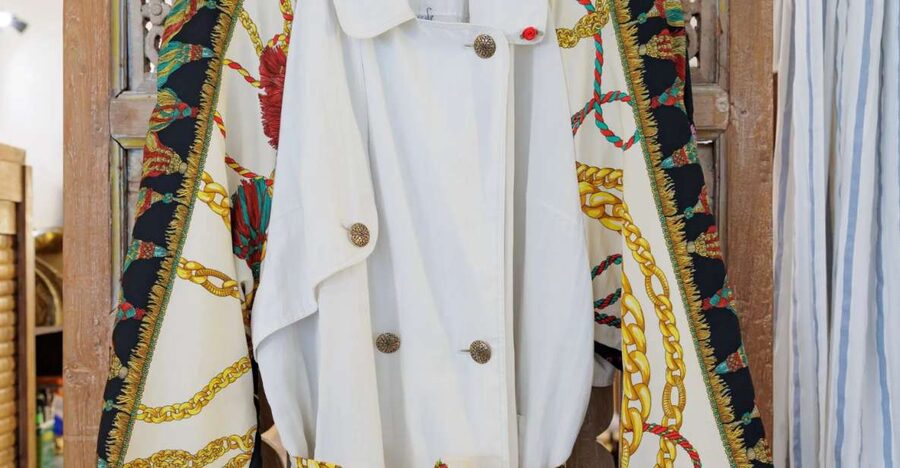
The workshop lasts three hours. That is enough time to choose a jacket, learn the methods, plan a design, and begin turning the idea into a finished garment. It is also short enough to fit into a Paris visit without taking an entire day.
The small group limit helps. With no more than five participants, Tara has room to move between projects and answer questions. Sewing and cutting are easier to learn when someone can look at your actual jacket instead of giving only general instructions.
The personal teaching style is important here. Several comments about the experience highlight Tara’s patience, skill, and kindness. That praise fits the format: upcycling involves choices that are hard to undo, so calm advice is valuable when you are deciding where to cut or place a patch.
Classes are offered in English and French. You can select the language that makes technical instruction easiest for you. Since the work is visual and hands-on, you will also be able to follow through demonstration and direct practice, but clear communication still matters when you are learning sewing techniques.
Three hours may feel generous at first. Once you begin arranging materials, however, the time can disappear. If you want an intricate design, arrive with a rough idea. A color preference, a favorite motif, or one part of the jacket you want to change can help you get started.
Why the sustainable angle matters
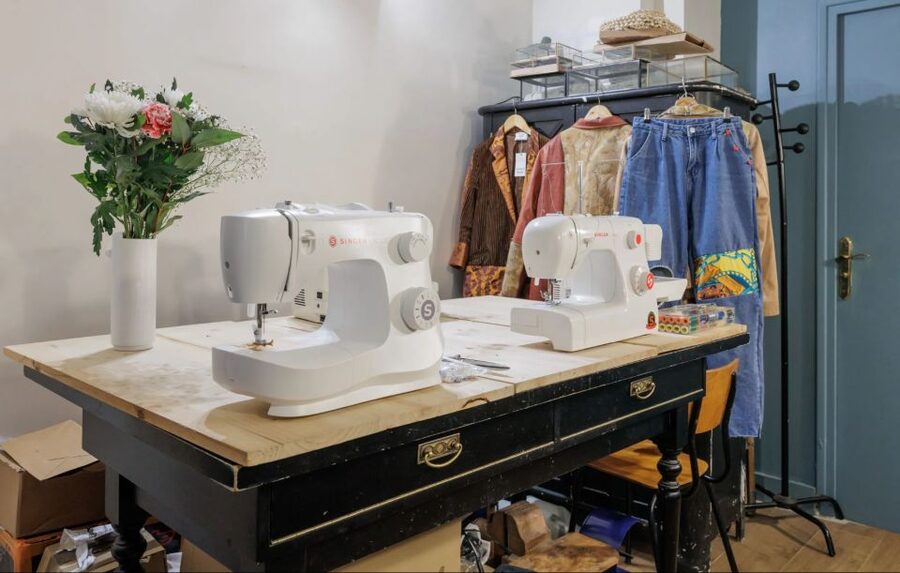
Upcycling is not just a theme attached to the class. It shapes the materials and the work itself. You are using a vintage jacket and giving it a new purpose, while fabric remnants from luxury fashion houses become part of the design.
That lesson has practical value beyond this one afternoon. You learn to look at clothing differently. A worn section may become a place for a patch. A plain back may become a canvas. Fabric that seems too small for a new garment can still provide a strong accent.
I also appreciate that the result is meant to be durable and wearable. The goal is not a temporary craft project. You leave with a custom piece that can become part of your wardrobe.
The workshop does not promise a full course in garment construction or professional tailoring. You are learning selected couture techniques in a short session, not completing an extended fashion-school program. For that reason, the value lies in the combination of instruction, materials, a jacket, and a finished personal item.
Is $170 a fair price?
At $170 per person, this is not a cheap craft activity. The price makes more sense when you count what is included: three hours with an established designer, a vintage jacket, and the materials needed to customize it.
You are also paying for a small class. A group limited to five people offers more direct help than a large workshop, especially when everyone is working on a different garment. The finished jacket gives the experience lasting value, assuming you are happy to wear the piece afterward.
The price will suit you best if you want a creative activity rather than a standard sightseeing stop. If you are mainly looking for a low-cost way to fill an hour, this is probably too expensive. If you want a personal Paris memory tied to fashion and sustainability, the cost is easier to justify.
The choice to bring your own jacket can also affect the value. Using a garment from your own closet may make the result more meaningful, while selecting one at the atelier keeps the activity simple and gives you access to a piece chosen for upcycling.
Who should book this workshop?
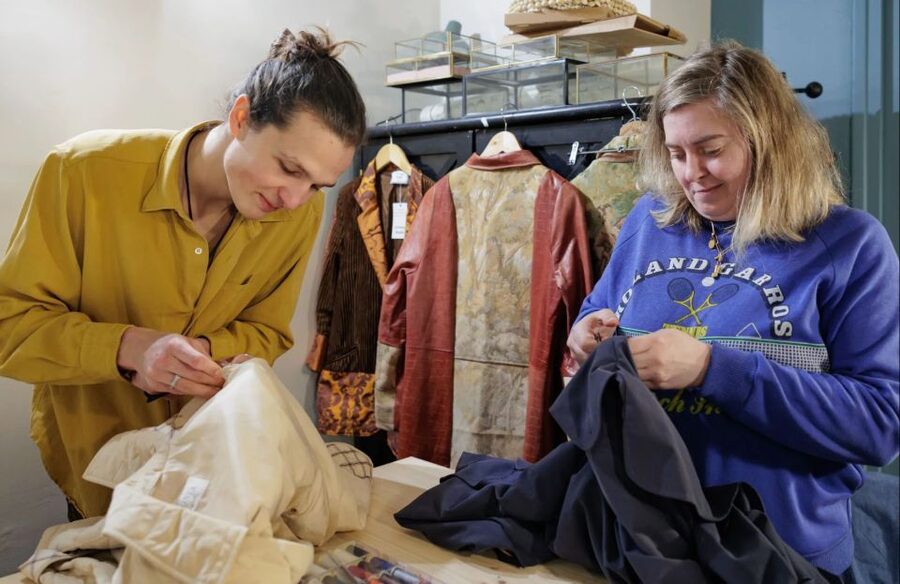
I would recommend it to anyone who enjoys fashion, sewing, design, or thoughtful souvenirs. It is especially well suited to people who want to make something rather than watch a guide talk.
It can work for a parent and child aged 10 or older, friends traveling together, or a solo visitor who likes meeting a small group around a shared project. The English and French instruction makes it accessible to a wider range of visitors.
You should book it if you like creative freedom and do not mind making decisions as you go. You should think twice if you want a polished professional garment with every detail completed for you. Tara guides the process, but your own choices and handiwork shape the final jacket.
The experience also fits nicely into a Montmartre day. The location gives the workshop a Paris fashion setting, but the activity itself is quiet and focused rather than a tour of monuments. Plan it for a time when you can concentrate instead of rushing to the next attraction.
Practical details before you go
The class meets at the black door with code A5961, in Building A on the second floor. Keep the access information with you, since you will need it to find the atelier.
The workshop is available in English and French and is limited to five participants. Children under 10 are not accepted. The activity lasts three hours, so wear something comfortable enough for sitting and working with fabric, although the supplied information does not specify a dress code.
You can use a jacket provided by the atelier or bring your own. If you bring one, choose a garment you are comfortable cutting and changing. The goal is transformation, and the original jacket will not remain exactly as it was.
Free cancellation is available up to 24 hours before the activity for a full refund. You can also reserve now and pay later, which helps if you are still arranging your Paris schedule.
Should you book it?
Book this workshop if you want a small, personal fashion experience and like the idea of taking home something you helped create. Tara’s patient instruction, the limited group size, and the mix of luxury fabric remnants with vintage jackets give the class a clear identity.
The strongest reason to go is the hands-on result. You do not simply learn about sustainable fashion. You practice it by cutting, sewing, arranging, and reshaping a real jacket.
Skip it if you are looking for a quick, inexpensive activity or if you dislike open-ended creative work. At $170, the class asks for a real commitment of both money and attention. For the right person, though, it offers a far more personal souvenir than another item bought in a Paris shop.
FAQ
How long does the upcycling workshop last?
The workshop lasts three hours.
Where does the workshop take place?
It takes place at Tara’s Paris atelier near Montmartre, at the black door with code A5961, in Building A on the second floor.
What techniques will I learn?
You will learn patchwork, cutout, and embroidery techniques. You can focus on one method or combine all three.
Is a jacket provided?
Yes. A vintage jacket is included, and you choose the piece you want to upcycle. You may also bring your own jacket.
Is the workshop offered in English?
Yes. Tara teaches in English and French.
Are children allowed to participate?
Children under 10 are not suitable for this activity.
Just added around Paris
- Paris: The Da Vinci Code Walking Tour with a Local Guide★ 4.3 · 5 reviews
- Paris: Flea Market Insider’s Tour in Extra-Small Group★ 4.6 · 73 reviews
- Paris: Private Fashion Tour (Chanel, Dior, Sex & the City)★ 5.0 · 3 reviews
- Paris: Floral Earrings workshop★ 5.0 · 3 reviews
- Paris: Fashion History Walking Tour in the Heart of Paris★ 4.9 · 22 reviews
- PARIS: Family e-bike longtail renting★ 5.0 · 3 reviews
- Paris: Famous Monuments Cycling Tour★ 4.7 · 20 reviews
- Paris: private city tour with seine river cruise★ 4.8 · 28 reviews
Paris Perfume and Craft Workshops, compared.


Paris Create your Own Perfume Workshop with a Perfumer
Read our review →

Fragonard Paris – Mini Perfume workshop – only in Spanish
Read our review →Browse the lists this tour appears in