
Reviewed · LE MARAIS TOURS
Paris: Guided tour of Marais in German
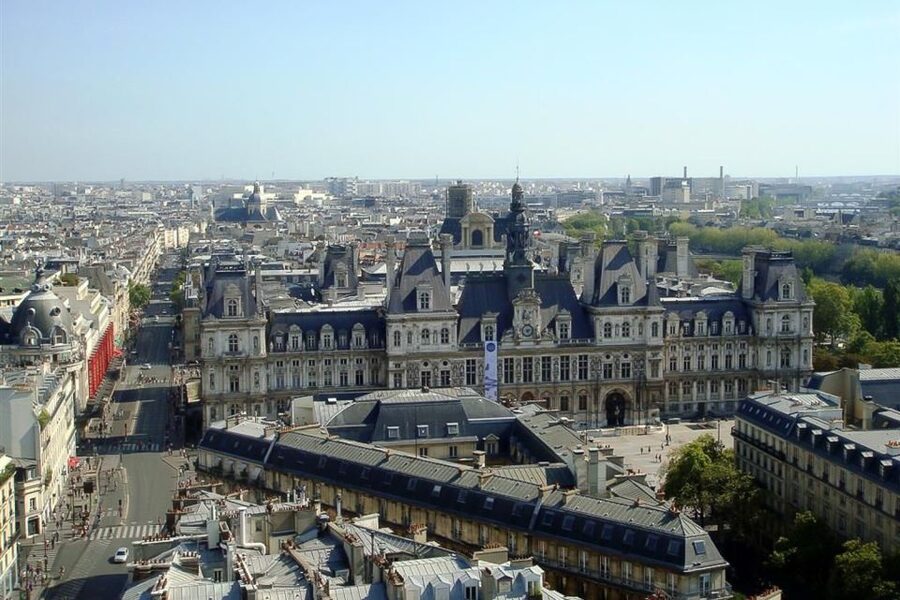
The best part of this Marais tour is its mix of Jewish Paris and aristocratic Paris. In two hours, you move from Hôtel de Ville and Centre Pompidou to Rue des Rosiers, Place des Vosges, and the last traces of medieval Paris. It gives you a clear sense of how one former marsh became one of central Paris’s most layered districts.
I like the private German-language format, especially if you want to ask questions or need a patient guide for children. I also like the focus on townhouses from the 16th and 17th centuries, details that are easy to miss when you walk the Marais alone. The main drawback is time: two hours allows for a strong introduction, not a slow visit inside museums or a full study of every street.
Key points to know before booking
- German-speaking private guide: Guides named Lucy, Marie-Elene, Katharina, Solène, and Marilena have led recent tours.
- Jewish Marais included: Rue des Rosiers is a central stop, with attention to the quarter’s Jewish life.
- Grand historic residences: You’ll see well-preserved city palaces and the oldest city palace on the route.
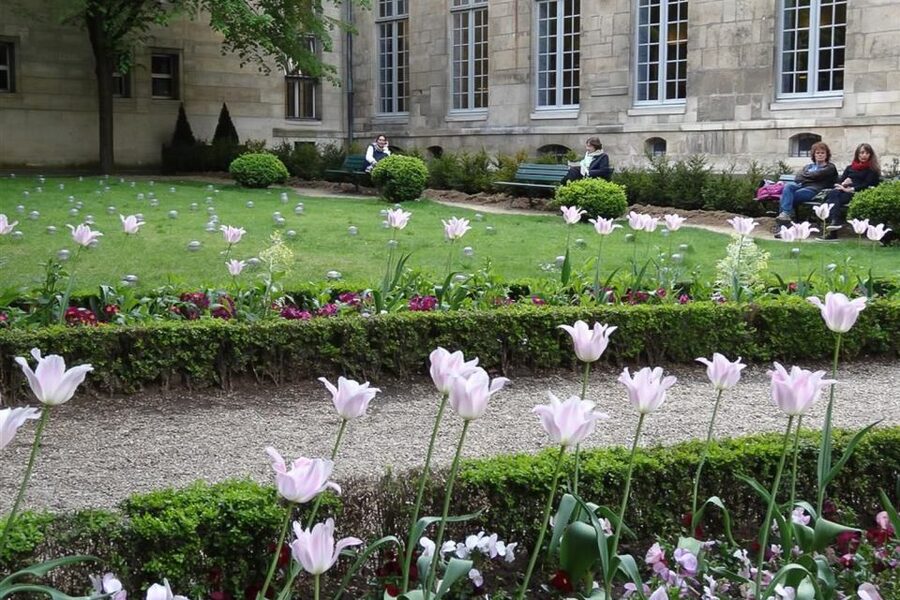
- Major Paris landmarks: The walk begins at Hôtel de Ville and includes Centre Pompidou, Place des Vosges, and Musée Carnavalet.
- Two-hour walking introduction: The route returns to 31 Rue de Rivoli, with no entrance tickets or food included.
- Private group value: The listed price is $94 per person, but the tour is reserved for your group alone.
Why the Marais works so well as a walking tour
The Marais is a good place to learn Paris in layers. It began as former swampland outside the medieval city, then changed as Paris grew. By the 16th and 17th centuries, wealthy families built handsome urban residences here. Later, the area became closely tied to Jewish life, and today its streets carry several parts of Parisian identity at once.
That variety gives the tour a useful rhythm. You are not looking at one monument for two hours. Instead, you are moving between public buildings, former aristocratic homes, a famous square, museum architecture, Jewish streets, and medieval remnants.
I like this kind of introduction because it explains why the Marais looks different from many other parts of Paris. Large townhouses sit behind plain street fronts. Narrow lanes open onto formal squares. A modern cultural building appears near older stonework. The guide’s job is to connect those pieces so the neighborhood does not feel like a random collection of pretty views.
The German language also matters. You can follow dates, names, and historical changes without working through a second language. Several recent guides, including Lucy, Solène, Marilena, Katharina, and Marie-Elene, have received praise for clear German, patience, humor, and the ability to adjust the walk to questions.
More Le Marais Tours:
- Award-Winning Paris French Bakery Experience — Le Marais, 4th Arr
★ 4.5 · 1,186 reviews - Paris Le Marais Food Tour With 10+ Tastings, Cheese, Wine & More
★ 5.0 · 985 reviews - Paris Le Marais District Original Food and Wine Tasting Tour
★ 4.5 · 880 reviews
Starting at Hôtel de Ville on Rue de Rivoli
The meeting point is in front of the Basket4Ballers store at 31 Rue de Rivoli, beside Hôtel de Ville. This is a practical central location and an easy place to identify, but take a moment to find the exact store rather than simply waiting somewhere near the broad square.
Hôtel de Ville, Paris’s City Hall, is an important first stop because it gives the walk a sense of scale. You begin with a major civic building before turning into the more intimate streets of the Marais. The contrast is useful: public Paris first, then the smaller lanes and courtyards of the historic quarter.
The tour returns to this same address at the end. That helps you plan the rest of your day, since you do not need to arrange a separate pickup or figure out where the walk finishes.
This is a walking experience, so wear comfortable shoes. The supplied details do not give a distance or a transport plan, but the stops are spread across the 3rd and 4th arrondissements. You should expect to be on foot for most of the two hours.
Centre Pompidou and the old meeting the new
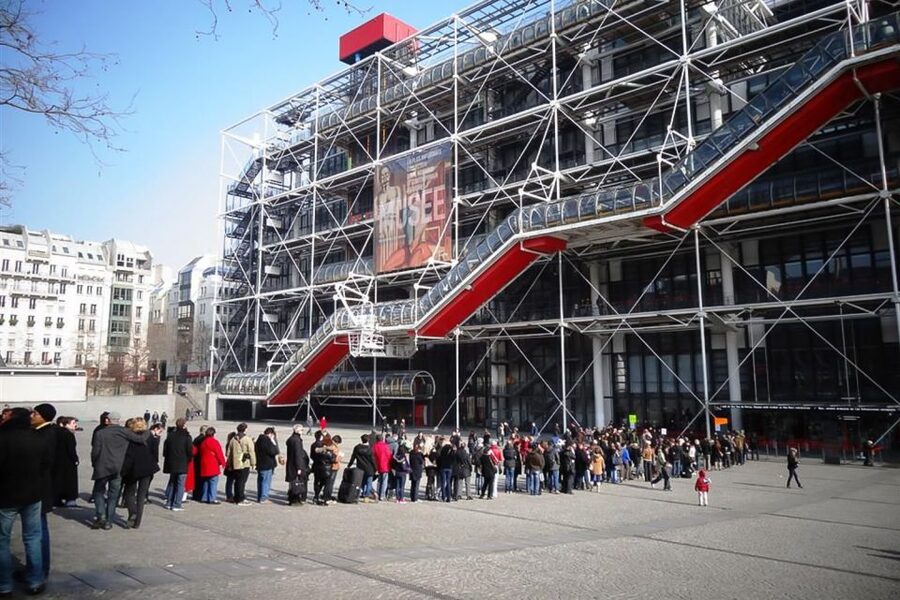
Centre Pompidou is one of the tour’s early stops. Its unusual exterior makes it a useful counterpoint to the historic Marais. Even without an admission ticket, the building gives your guide a chance to explain how this part of Paris combines old streets with modern cultural life.
The activity does not include entrance tickets, so you should not assume that the guided stop includes access to the museum. The itinerary describes a guided visit to Centre Pompidou, but the practical point is clear: budget separately if you want to go inside.
For me, the value of this stop is not only the building itself. It sets up one of the main ideas of the walk. The Marais is not a preserved stage set. It is an active Paris district where contemporary life shares space with old residences, historic religious connections, and medieval remains.
If you are hoping for a full museum tour, this experience will feel too short. If you want to understand how Centre Pompidou fits into the surrounding quarter, it works better.
Place des Vosges, Paris’s formal historic square
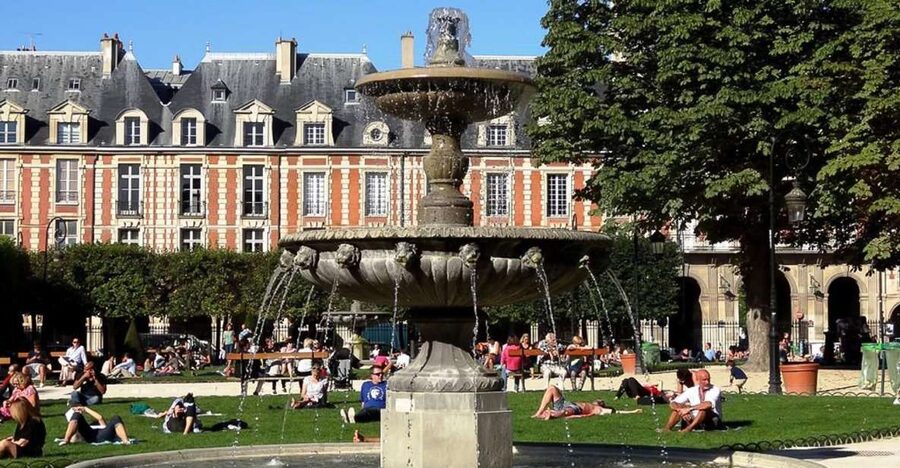
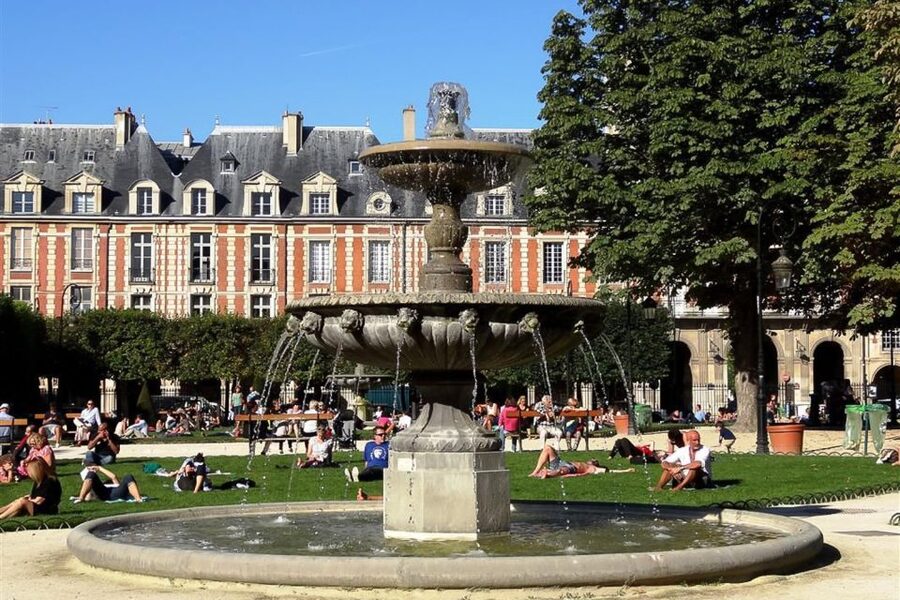
Place des Vosges is likely the visual centerpiece of the walk. It is described as the oldest square in Paris, and its regular architecture gives you a sharp contrast with the winding streets nearby.
A guide can help you notice the design rather than simply taking a photo and moving on. The square’s repeated façades and arcades create a calm, ordered setting. That design reflects a different period of urban planning from the medieval lanes seen later in the walk.
The square also helps explain the social history of the Marais. This was an area where wealthy residents built large homes close to the center of power. The tour places that story beside the Jewish quarter, making clear that the district’s identity is broader than one landmark or one community.
You should allow yourself a little time to look up at the surrounding buildings. The tour is only two hours, so the guide will keep the group moving, but Place des Vosges rewards a slower glance. If you have never seen it before, this is one place where a quick explanation can make the architecture much easier to read.
More guided tours in Paris:
- Paris: Louvre Guided Tour with Reserved Access & Boat Cruise
★ 4.3 · 16,353 reviews - Louvre Museum Masterpieces Guided Tour with Access
★ 4.5 · 12,023 reviews - Louvre Museum – Exclusive Guided Tour (Entry Included)
★ 5.0 · 6,296 reviews - Versailles: Skip-the-Line Guided Palace Tour and Full Access
★ 4.6 · 5,214 reviews
Musée Carnavalet and the city palaces of the Marais
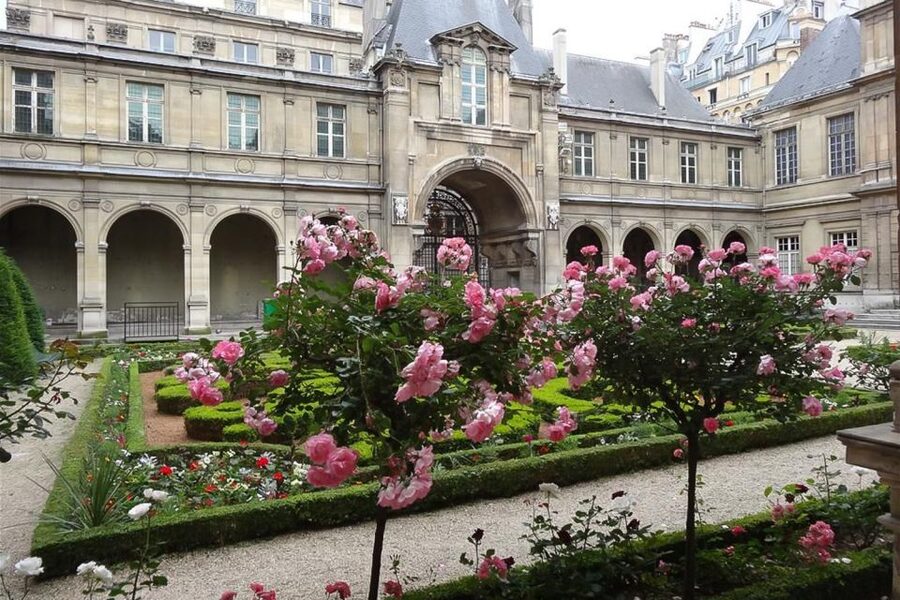
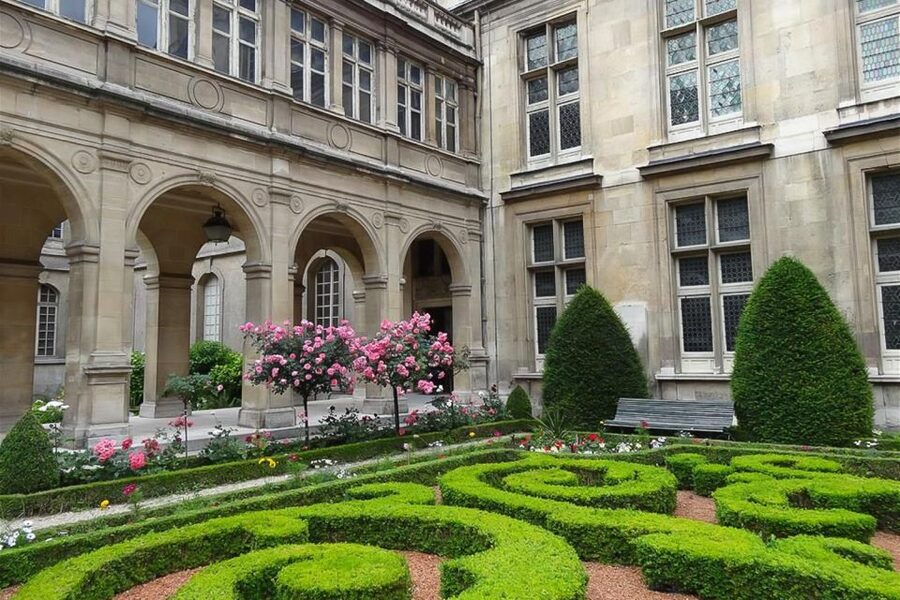
Musée Carnavalet is another guided stop. The important feature here is the setting as much as the museum name. The Marais has an unusually large number of preserved city palaces, often called hôtels particuliers, from the 16th and 17th centuries.
These were not royal palaces in the grand countryside sense. They were substantial urban residences built for powerful families. Their scale can be easy to miss because many are tucked behind walls, gates, or less imposing street entrances.
The route includes the oldest city palace. That detail gives the walk a concrete anchor for understanding the district’s architecture. Instead of hearing only a broad statement about wealthy Parisians, you get a specific building type and a specific place to look at it.
The Musée Carnavalet stop should not be confused with a full museum visit. Entrance tickets are not included, and the experience is designed as a guided walk. If you want to spend time with the museum’s collections, plan a separate visit.
I like this arrangement for a first introduction. You get context without giving up the rest of the neighborhood to an indoor stop. The tradeoff is that art and museum enthusiasts may want more time than the schedule allows.
Rue des Rosiers and Jewish life in the Marais
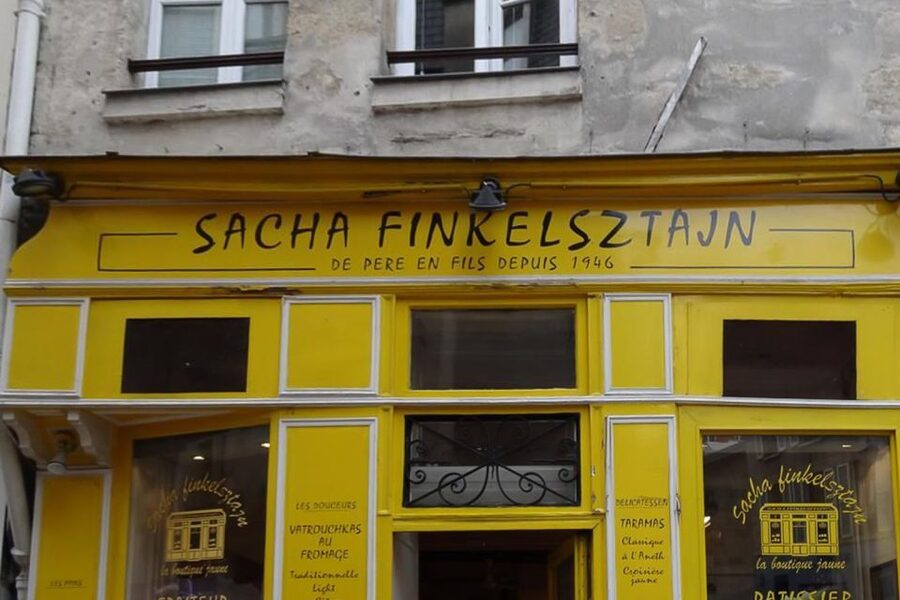
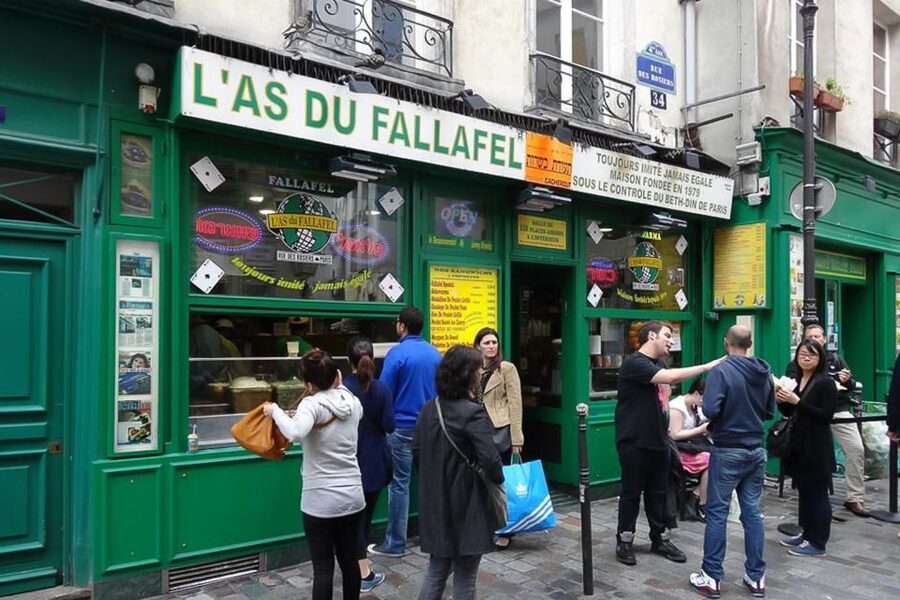
Rue des Rosiers is the most direct connection to Jewish life on this route. It is one of the best-known Jewish streets in Paris and gives the tour a more personal social focus after the civic and architectural stops.
The value of this part of the walk is the chance to see the Marais as a living neighborhood, not only as a display of old buildings. Your guide can place the street within the wider story of Jewish Paris and explain why this area remains important.
The tour description points to a large part of the 3rd and 4th arrondissements, not only one street. That means Rue des Rosiers is a key stop within a wider route, rather than the entire subject of the walk.
Food and drinks are not included. You may have time for a small purchase or a restroom break, since one recent account described useful short stops along the route, but you should not treat the tour as a food tour. If you want to eat in the area, plan that before or after the two-hour walk.
This section may be especially useful for German-speaking families who want historical context in clear language. One guide, Katharina, was praised for patiently answering a young child’s many questions. That suggests the format can work well when children need explanations in smaller pieces rather than a long lecture.
The final medieval traces
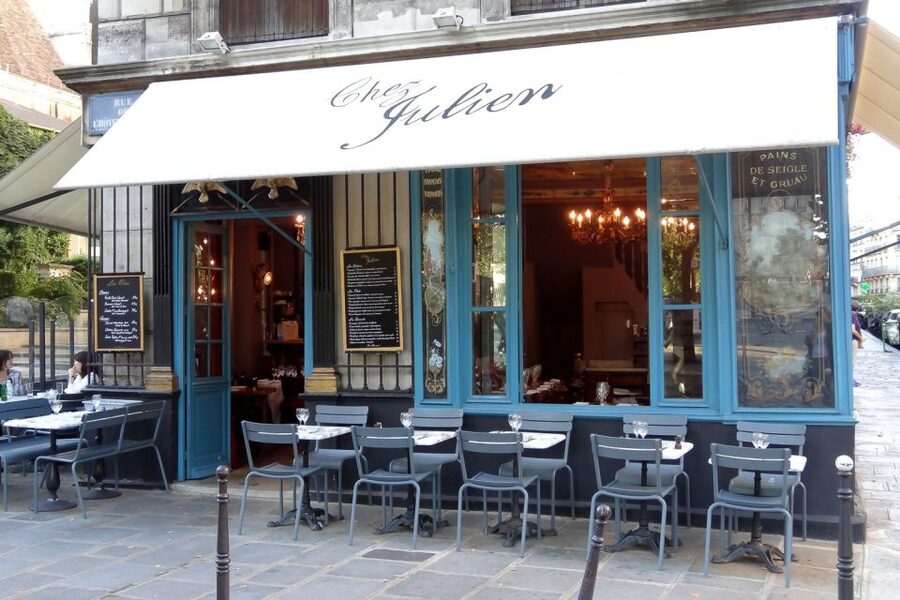
The tour ends with the last traces of medieval Paris. This is a smart way to finish because the walk has already moved through several later periods. You begin near modern civic Paris and Centre Pompidou, see the formal world of the city palaces, visit the Jewish quarter, and then return to the older roots of the district.
The phrase medieval traces does not mean you should expect a large medieval monument or a museum-style reconstruction. The supplied details do not specify the exact remains. Think of this as a chance to notice surviving fragments and street patterns that point back to an earlier Paris.
A good guide makes such evidence easier to see. Without explanation, an old wall, narrow passage, or irregular building line can look like background detail. With context, it becomes part of the story of how the city changed.
This is also where the two-hour limit becomes most obvious. You will receive an overview rather than a specialist examination of medieval Paris. For most first-time visitors, that is a fair exchange. You leave with a map in your head and can return later to the spots that caught your attention.
What the private German format is worth
The price is $94 per person. That is not a bargain if you are comparing it with a large group walking tour, but the comparison is not quite fair. This is a private tour for your group, and the price is quoted per person even though the guide is reserved for your party.
The strongest value comes from flexibility. You can ask about the parts that interest you, stop for clarification, and keep the conversation in German. Recent guide feedback highlights exactly those points: Lucy was described as friendly and sensitive to the group, Solène as able to show surprising corners even to people who had visited Paris before, and Marilena as offering useful small stops along the way.
The private format may be particularly worthwhile for:
- Families with children who need questions answered at their own pace
- Couples who prefer not to join a large group
- German-speaking visitors who want detailed explanations without switching languages
- First-time visitors who want a broad orientation before exploring alone
- Returning Paris visitors who want a neighborhood-focused walk
The price is harder to justify if you only want a short stroll through Rue des Rosiers or Place des Vosges. You can see those areas without a guide. The added cost pays for structure, language, historical connections, and a private conversation.
Children under 12 can participate free of charge. Since the price is listed per person and the tour is private, check the final booking details carefully to see how the child policy applies to your group.
Guide style and the strongest praise
The most consistent praise concerns the guides’ personal manner, German ability, and willingness to answer questions. Lucy, Marie-Elene, Katharina, Solène, and Marilena are named in recent feedback, so guide assignment may vary.
You should expect a human, conversational walk rather than an audio-guide routine. Specific comments describe humor, patience, insider tips, good background knowledge, and attention to individual questions. One German-speaking couple particularly valued getting a local perspective at the start of a Paris stay.
That last point is useful. Booking this near the beginning of your visit can help you understand the Marais before returning on your own. You may also pick up ideas for where to pause, shop, or explore later.
Still, guide personality can vary. The high overall rating of 4.8 from 98 reviews is encouraging, but no private tour is identical from one guide to the next. The experience depends partly on the person assigned and partly on how actively you ask questions.
Timing, comfort, and practical limits
Two hours is enough for a brisk introduction. It is not enough for long museum visits, extended meals, or a relaxed examination of every palace and medieval remnant.
The meeting point and finish at 31 Rue de Rivoli make the route simple to fit into a day of sightseeing. You will need to account for walking between stops, and you should arrive ready to stay on your feet.
No food, drinks, or admission tickets are included. That keeps the price focused on the guide, but it also means you should plan any meal, coffee, or museum entry separately.
Free cancellation is available up to 24 hours before the activity for a full refund. You can also reserve now and pay later, which is useful when your Paris schedule is still shifting. Starting times vary, so check availability for the date you want.
Should you book this Marais walk?
Book it if you want a private German-language introduction to one of Paris’s most varied quarters. The combination of Jewish life, grand city residences, Place des Vosges, Centre Pompidou, Musée Carnavalet, and medieval remains gives you more range than a simple photo walk.
It is also a good choice for families and couples who value questions and personal attention. The patient handling of children and the repeated praise for guides’ German make the format especially practical for German-speaking groups.
Skip it if your priority is entering museums, eating your way through Rue des Rosiers, or spending a full afternoon on one architectural period. The two-hour route is an overview, and entrance tickets are extra.
For most visitors, I would place it early in a Paris stay. You get the neighborhood’s basic structure, learn what deserves a second look, and finish back at Hôtel de Ville with the rest of the city still open to you.
FAQ
Where does the Marais tour begin?
The meeting point is in front of the Basket4Ballers store at 31 Rue de Rivoli, by Hôtel de Ville.
Where does the tour finish?
The tour returns to 31 Rue de Rivoli.
How long does the guided walk last?
The tour lasts two hours.
What language is the tour offered in?
The live tour guide speaks German.
Is this a private tour?
Yes. The tour is for your group only, although the listed price is quoted per person.
What locations are included?
The route includes Centre Pompidou, Place des Vosges, Musée Carnavalet, Rue des Rosiers, Hôtel de Ville, and sightseeing connected with medieval Paris.
Does the price include museum entrance?
No. Entrance tickets are not included.
Are food and drinks included?
No. Food and drinks are not included.
Can children join the tour?
Yes. Children under 12 years old can participate free of charge.
Can I cancel for a full refund?
Yes. You can cancel up to 24 hours in advance for a full refund.
Just added around Paris
- Private Paris Marche d’Aligre Walking Tour with Tastings★ 5.0 · 8 reviews
- Private Louvre Museum Tour for Kids & Families with Alberto or his team in Paris★ 5.0 · 41 reviews
- Private Highlights of Paris Tuk-Tuk Experience★ 5.0 · 26 reviews
- Paris Latin Quarter Walking Tour: History & Culture – Small Group★ 5.0 · 14 reviews
- Private Highlights of Paris Bike Tour★ 4.5 · 15 reviews
- Paris Musee d’Orsay PRIVATE TOUR with a Local Private Guide★ 5.0 · 41 reviews
- Private Half Day Historic Tour★ 5.0 · 58 reviews
- Pere Lachaise Cemetery Paris – Exclusive Guided Walking Tour★ 5.0 · 72 reviews
Le Marais Tours, compared.
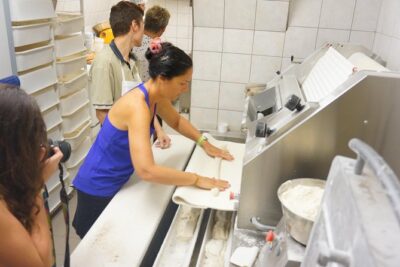
Award-Winning Paris French Bakery Experience — Le Marais, 4th Arr
Read our review →
Paris Le Marais Food Tour With 10+ Tastings, Cheese, Wine & More
Read our review →
Paris Le Marais District Original Food and Wine Tasting Tour
Read our review →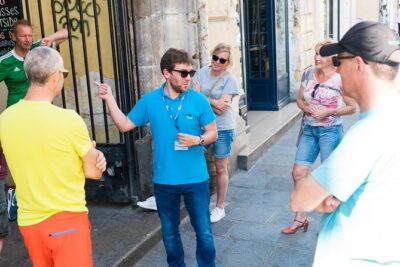
Paris Bike Tour Hidden Secrets in the Latin Quarter & Le Marais neighborhoods
Read our review →
Food and Wine Tasting Walking Tour in Le Marais
Read our review →
Le Marais District & Jewish Quarter Guided Walking Tour 12ppl Max
Read our review →
Le Marais/Paris – The Historic, Trendy, Jewish, LGBT district
Read our review →
Paris Le Marais Food & Wine Tour with Eating Europe
Read our review →Browse the lists this tour appears in