
Reviewed · LOUVRE MUSEUM TOURS
Paris: Louvre Masterpieces Tour with Pre-Reserved Tickets
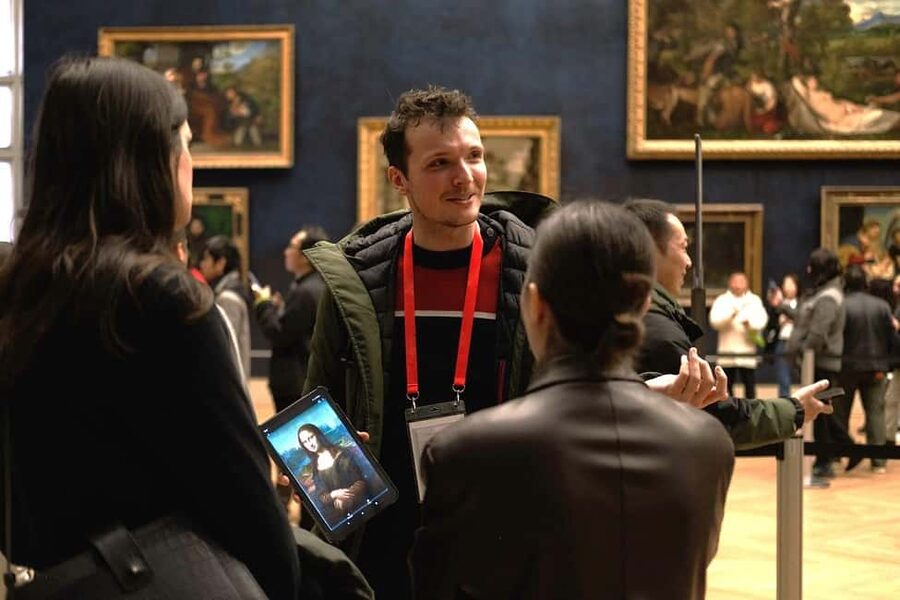
The smartest part of this Louvre visit is its six-person limit. In a museum this vast, a small group lets you hear the guide, ask questions, and move through crowded rooms without losing the thread. The pre-reserved ticket also gets you past the outdoor ticket queue, though everyone still faces security.
I like the clear route through famous works, especially the Mona Lisa, Venus de Milo, Winged Victory, and The Wedding Feast at Cana. I also like that your ticket lets you remain inside after the two-hour tour, giving you time to see rooms the guide could not cover.
The main drawback is the price, $152 per person, and two hours is only enough for a focused introduction. This is not the tour for slowly studying every gallery. Arrive early, too. Timed tickets can expire within five to ten minutes, and late arrivals may not be admitted.
Key points to know before booking
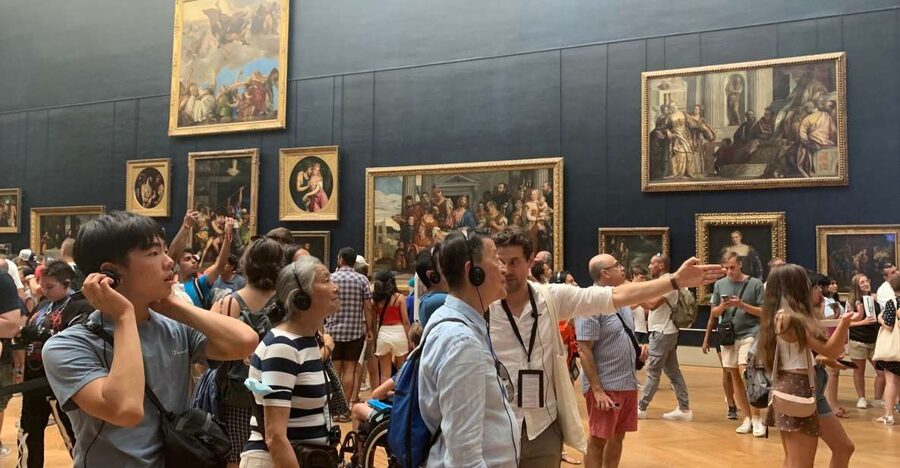
- Six people is the practical sweet spot: The small group makes it easier to hear explanations and move through crowded galleries.
- The route covers famous European art: Expect the Mona Lisa, Venus de Milo, Winged Victory, The Raft of the Medusa, Liberty Leading the People, and more.
- The guide does the museum navigation: This matters at the Louvre, where even finding the right wing can consume valuable time.
- You can stay after the tour: Continue exploring on your own with the same museum ticket.
- Security is still required: Reserved entry avoids the regular ticket line, not the museum’s security checks.
- The meeting point is easy to find: Meet outside Café Le Nemours near Palais Royal Metro, exit 5, Place Colette.
Why a small Louvre tour makes sense
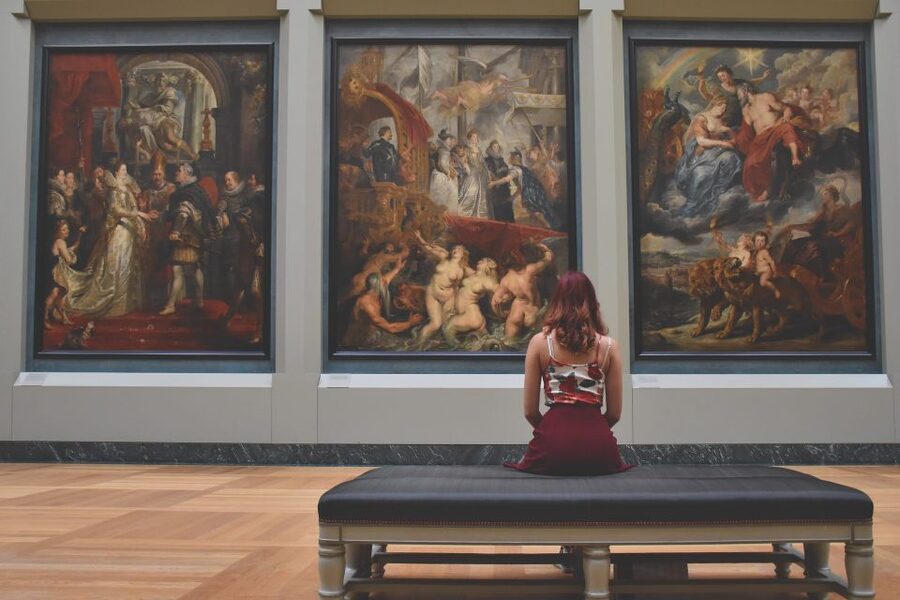
The Louvre is not simply a large museum. It is a former royal palace with miles of galleries and tens of thousands of works. On your first visit, the hardest question is often not what to see, but how to get from one famous object to the next.
This tour gives you a plan. Your licensed Louvre guide leads you through eight departments and a selected group of works from the museum’s enormous collection. You are not expected to memorize every room or make sense of the floor plan alone.
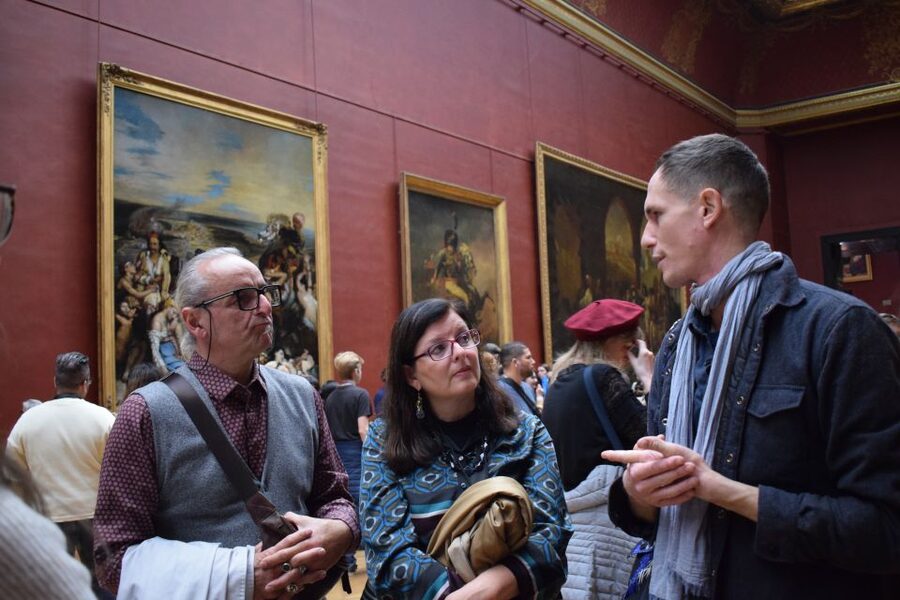
The six-person format is especially useful at the Mona Lisa, where crowds can make conversation difficult. A small group also means you can ask why a work matters, what details to notice, or how one period connects with another. Several guides, including Jerome, Matteo, Ashkan, Maryam, Laura, Yseult, and Iason, have been praised for making the art clear, lively, and easy to follow.
Do not expect the exact same guide or precisely the same spoken route every time. The works listed here form the focus, but the pace and emphasis can shift with crowds, room access, and the interests of your group. That flexibility is one of the benefits of a human guide, though it also means the experience is not a fixed audio tour.
More Louvre Museum Tours:
- Paris: Louvre Museum Timed-Entrance Ticket
★ 4.6 · 71,977 reviews - Paris: Louvre Guided Tour with Reserved Access & Boat Cruise
★ 4.3 · 16,353 reviews - Louvre Museum Masterpieces Guided Tour with Access
★ 4.5 · 12,023 reviews
Meeting at Café Le Nemours
The meeting point is in front of Café Le Nemours, a short walk from the Louvre. The nearest Metro stop is Palais Royal, and you should use exit 5, Place Colette. When you come out, turn around and Café Le Nemours is visible nearby.
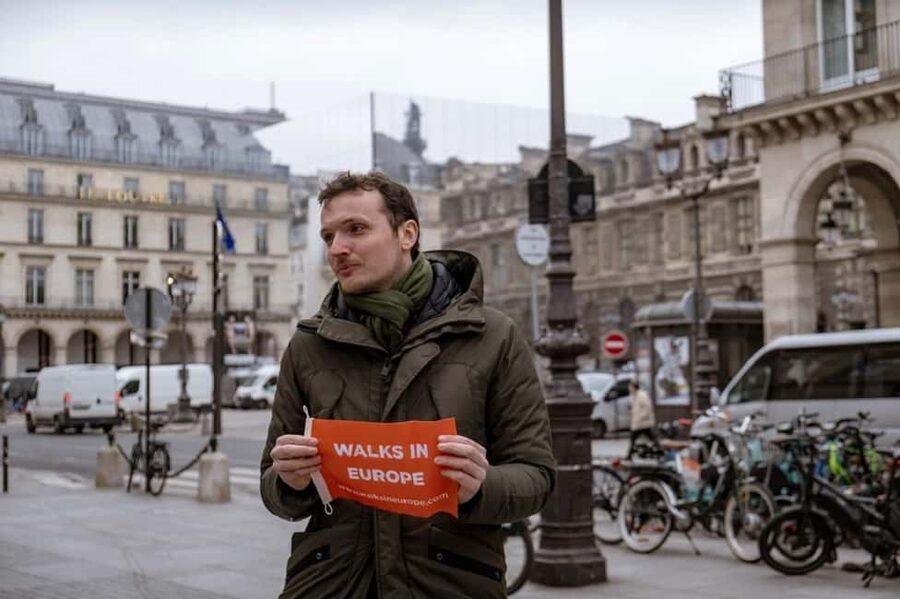
Look for a guide holding a sign marked Walks In Europe. I would build in extra time for this meeting. Paris traffic can slow taxis and buses, and the tour cannot accept you once it has started.
You need valid identification for entry and security checks. Leave large bags and luggage at your accommodation. Umbrellas and mobility scooters are also not allowed under the stated rules, so pack lightly and avoid arriving with anything that could delay you at the entrance.
This starting point also gives you a useful moment to get organized. Have your booking information ready, check that everyone has identification, and use the restroom before entering if needed. Once the group begins moving, the Louvre’s scale makes casual stops less convenient.
The Pyramid and the transition into the Louvre
The glass Louvre Pyramid is included as a pass-by point rather than a full guided stop. Even so, it helps establish the setting. The pyramid marks the modern entrance to a museum housed in buildings that began as a medieval fortress and later became a royal residence.
Your guide handles the transition from the meeting area toward the museum entrance and the reserved admission process. The key benefit is avoiding the regular ticket-buying queue. That can save a great deal of time during busy periods.
Reserved admission does not mean instant entry. Every person still goes through security, and that line may be long in high season. Keep this distinction in mind when planning your day. The ticket helps with admission logistics, but it does not remove every wait.
Timed tickets are strict. The information provided says they may expire within five to ten minutes, so arriving at Café Le Nemours early is not just a suggestion. It is part of making the reservation work.
The Louvre’s essential route in two hours
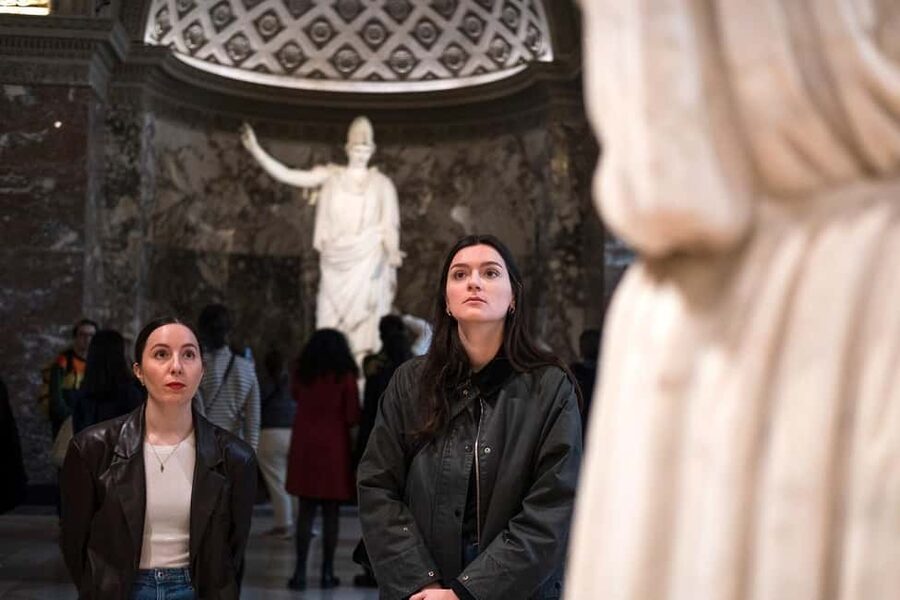
Once inside, the guide leads you through a carefully limited selection rather than trying to cover the entire museum. That is the right approach. A rushed attempt to see everything would leave you with a list of names and no sense of why the works matter.
The route includes major pieces from Italian Renaissance painting, French Romanticism, neoclassical sculpture, and the Louvre’s grand architectural spaces. Your guide explains the stories behind the works and points out details that are easy to miss when you are looking only for famous names.
The two-hour length is well judged for a first orientation. It is long enough to develop a sense of the museum, but short enough that you still have energy to continue alone. I would not choose this format if your only goal is to spend an entire day in one department. I would choose it if you want a strong foundation before exploring independently.
More tickets and entry passes in Paris:
- Disneyland® Paris 1-Day Ticket
★ 4.6 · 49,412 reviews - Paris: Versailles Palace and Gardens Full Access Ticket
★ 4.6 · 41,579 reviews - Paris: Eiffel Tower Entry Ticket with Optional Summit Access
★ 4.4 · 20,035 reviews - Paris: Moulin Rouge Cabaret Show Ticket with Champagne
★ 4.7 · 16,088 reviews
The Mona Lisa and Italian Renaissance painting
The Mona Lisa is the stop most people expect, and the guide takes you to Leonardo da Vinci’s famous portrait. The room can be crowded, and your viewing position may depend on the conditions that day. A guide helps by getting you to the correct area and providing context instead of leaving you to search through the crowd.
The tour also includes The Wedding Feast at Cana, Paolo Veronese’s enormous painting opposite the Mona Lisa. This is an important counterpoint to Leonardo’s small portrait. Where the Mona Lisa draws attention through restraint and mystery, Veronese fills the canvas with architecture, figures, color, and ceremony.
The contrast makes the Italian Renaissance section more meaningful. You see two very different ways artists handled scale, storytelling, and power. Several visitors singled out The Wedding Feast at Cana as a highlight, which makes sense. It is easy to overlook when all eyes are fixed on Leonardo.
Michelangelo’s Slaves add sculpture to the Italian portion of the route. These unfinished figures invite questions about intention, process, and the relationship between a block of stone and the human form. Your guide can connect them with the wider development of Renaissance art and explain why unfinished work can still be so compelling.
Venus de Milo and Winged Victory
The Venus de Milo is one of the Louvre’s best-known ancient sculptures. The missing arms are part of its identity, but a good explanation moves beyond the familiar image and helps you look at posture, balance, and the way the sculpture is displayed.
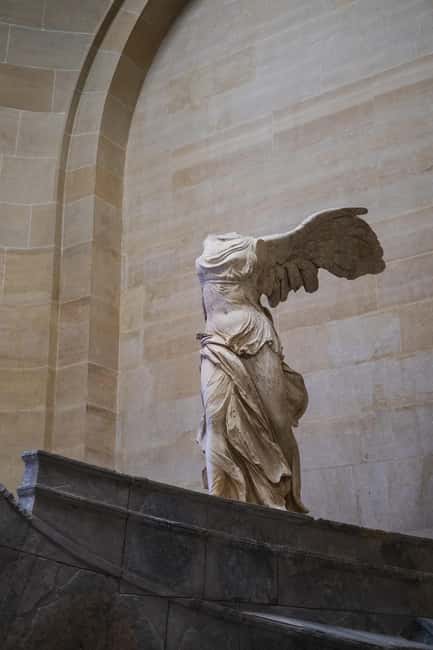
Winged Victory of Samothrace is another essential stop. Set at the top of a grand staircase, it is one of the museum’s most dramatic presentations. The sculpture’s forward movement and windblown clothing create a strong sense of action, even though the head and arms are missing.
These two sculptures also show how much the building shapes the experience. You are not viewing objects in neutral storage rooms. Stairs, ceilings, corridors, and ceremonial spaces affect how the works feel. A guide who understands both the collection and the building can make that connection clear.
The route may move quickly through these areas because they are popular. Stay close to your guide and keep your questions for natural pauses. With only six people, the group can usually gather more easily than a large tour, but the galleries can still be crowded.
French Romanticism and paintings of power
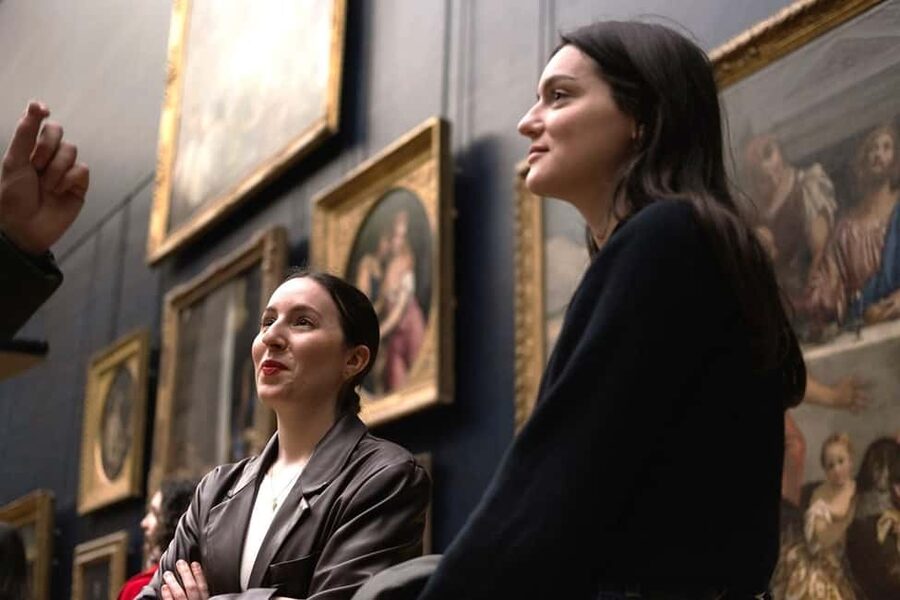
The French paintings give the tour a strong historical and political turn. The Raft of the Medusa by Théodore Géricault presents a disaster with raw force. The painting is not just a large dramatic canvas. It raises questions about government failure, public responsibility, and the way art can confront current events.
Liberty Leading the People by Eugène Delacroix carries a different kind of energy. Its central figure became a lasting symbol of revolution and the French Republic. Your guide can help you read the gestures, figures, and political symbols rather than treating the painting as a simple patriotic image.
The Coronation of Napoleon shifts the mood again. Jacques-Louis David’s huge composition is polished, formal, and carefully arranged. It shows how art could support authority and shape the public image of a ruler.
Together, these works give you more than a parade of famous paintings. They show how French art handled disaster, revolution, ceremony, and political power. The historical explanations are particularly useful if French history was not part of your school background.
Neoclassical sculpture and the Louvre’s grand interiors
Psyche Revived by Cupid’s Kiss by Antonio Canova brings a softer, more graceful mood to the route. Its flowing forms and emotional subject contrast with the force of Géricault and Delacroix. Look for the way the figures are arranged to create movement and tenderness in polished marble.
The Caryatids offer another change of pace. These sculpted female figures serve as architectural supports, linking decoration with structure. The work is a good reminder that the Louvre itself is part of the story. You are moving through former royal spaces, not a purpose-built modern gallery.
The Salon Carré adds an elegant architectural setting to the visit. Rooms like this can be easy to pass through without noticing, particularly when you are racing toward the Mona Lisa. A guide slows the moment down just enough to explain how the museum’s interiors frame the collection.
One useful feature of this route is that it moves between objects and spaces. You see individual masterpieces, but you also gain a sense of how the palace developed and why the Louvre feels grand on such a large scale.
Staying inside after the guide finishes
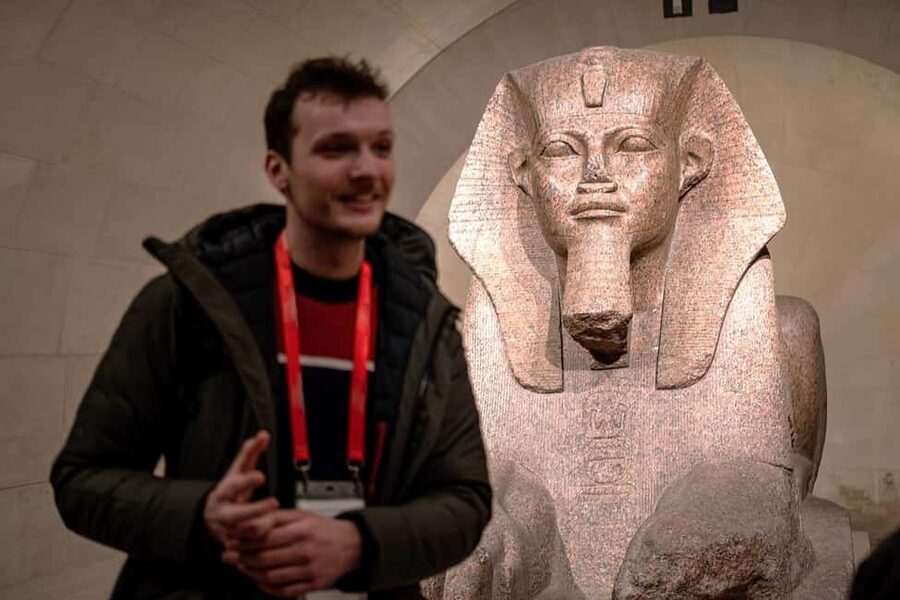
The tour ends after two hours, but your museum visit does not have to end there. You may remain inside and continue at your own pace with the pre-reserved ticket.
This is a major part of the value. A guided introduction solves the hardest navigation problem, while the remaining time lets you follow your own interests. You might return to a painting you want to inspect more closely, spend time in a department not covered by the route, or visit Napoleon’s apartments, which one guide recommended to a participant as a quieter and attractive area.
Plan your energy carefully. The Louvre can become tiring, especially after a brisk route through crowded rooms. If you have a special painting in mind, tell your guide early. One guide was able to help a group include a requested work outside the main route, though you should treat that as a possibility rather than a promise.
Your ticket can be used only once, and you cannot re-enter after leaving one of the museum wings. Do not exit casually if you intend to keep exploring. Ask your guide about the practical boundaries before separating from the group.
Is $152 a fair price?
At $152 per person, this is a premium museum visit. You are paying for reserved admission, a two-hour licensed guide, and a group limited to six people. The price is harder to justify for someone who already knows the Louvre well and feels comfortable navigating it alone.
For a first visit, the value is easier to see. The Louvre’s size can turn a day into a frustrating search for signs, staircases, and famous rooms. A guide can put the major works in context and reduce the time lost to orientation.
The strongest value comes from the combination of guided time and independent time afterward. You are not paying for a guide who leaves as soon as the tour ends and a separate ticket that expires immediately. You receive a focused introduction, then freedom to continue.
The result depends heavily on the person leading your group. Guides such as Matteo, Jerome, Ashkan, Iason, and Maryam have been praised for clear teaching, humor, personal attention, and strong art knowledge. The company assigns the guide, so you should not book expecting a particular person unless the booking system confirms that choice.
Who should book this Louvre tour?
I would recommend it for a first-time Louvre visitor who wants the major works without spending half the morning lost. It also suits families, since several guides have kept children aged 10 and 11 involved with stories, questions, and humor.
It works well for couples and small groups who value conversation. A six-person limit gives you a better chance to ask questions than a large group tour, and a private option may be available if you want the visit tailored more closely to your party.
It is less suitable for a visitor with mobility impairments or someone using a wheelchair, since the activity is specifically listed as unsuitable for those needs. It is also a poor choice if your main goal is a slow, specialized study of one department.
The tour is offered in English and German. Private and small-group formats are available, but the stated semi-private format is limited to six people. If more people book together, the larger party may be split into groups of six at the meeting point.
Cancellation is free up to 24 hours before the activity, and you can reserve now and pay later. The Louvre may close without warning because of strikes, and the stated terms say there is no refund in that situation. That is an unusual risk worth understanding before you book.
Final decision: book it for orientation, not total coverage
Book this tour if you want the Louvre’s essential masterpieces explained by a real guide, prefer a small group, and value the ability to keep exploring afterward. The route gives you the Mona Lisa, Venus de Milo, Winged Victory, major French paintings, Italian Renaissance works, and several important sculptures without asking you to master the whole museum in one morning.
Skip it if you already know the Louvre layout, want to spend hours in a single specialist department, or need a fully accessible visit. At $152, the price only makes sense when the guide’s navigation and interpretation will save you time and make the art more meaningful.
For most first-time visitors, I like the balance: two focused hours with a guide, then the freedom to follow your own interests. Just arrive early, pack light, bring identification, and remember that reserved entry still includes security.
FAQ
Where does the Louvre tour meet?
Meet in front of Café Le Nemours. The nearest Metro station is Palais Royal. Use exit 5, Place Colette, then turn around when you come out and you will see the café.
How do I identify the guide?
The guide will be holding a sign with Walks In Europe written on it.
How long does the activity last?
The guided Louvre visit lasts two hours. You may remain inside the museum and continue exploring after the guided portion ends.
Which artworks are included?
The route includes the Mona Lisa, Venus de Milo, Winged Victory of Samothrace, The Wedding Feast at Cana, Michelangelo’s Slaves, The Raft of the Medusa, Liberty Leading the People, The Coronation of Napoleon, Psyche Revived by Cupid’s Kiss, The Caryatids, and the Salon Carré.
Is museum entry reserved?
Yes. The tour includes pre-reserved Louvre tickets and access through a separate entrance. You still need to pass through museum security, and that line can be long during high season.
Can I stay in the Louvre after the tour?
Yes. You may remain inside after the two-hour guided visit and explore independently with your ticket.
What languages are available?
The live tour is offered in English and German.
What should I bring, and what is not allowed?
Bring a valid passport or identification card. Luggage, large bags, umbrellas, and mobility scooters are not allowed.
Is the tour suitable for wheelchair users?
No. The activity is listed as unsuitable for people with mobility impairments and wheelchair users.
Just added around Paris
- Paris: The Da Vinci Code Walking Tour with a Local Guide★ 4.3 · 5 reviews
- Paris: Flea Market Insider’s Tour in Extra-Small Group★ 4.6 · 73 reviews
- Paris: Private Fashion Tour (Chanel, Dior, Sex & the City)★ 5.0 · 3 reviews
- Paris: Floral Earrings workshop★ 5.0 · 3 reviews
- Paris: Fashion History Walking Tour in the Heart of Paris★ 4.9 · 22 reviews
- PARIS: Family e-bike longtail renting★ 5.0 · 3 reviews
- Paris: Famous Monuments Cycling Tour★ 4.7 · 20 reviews
- Paris: private city tour with seine river cruise★ 4.8 · 28 reviews
Louvre Museum Tours, compared.
Louvre Guided Tour with Reserved Access & Boat Cruise
Read our review →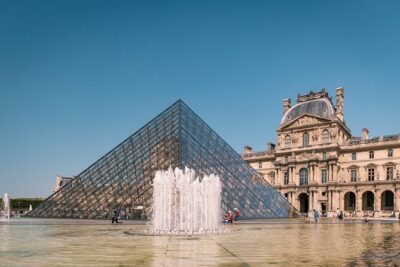
Louvre Museum Masterpieces Guided Tour with Access
Read our review →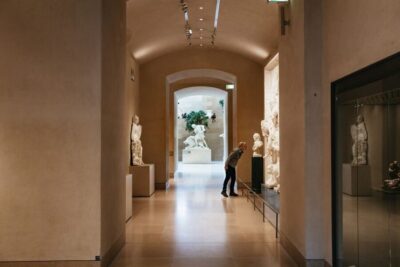
Louvre Museum Entry Ticket With Host and River Cruise
Read our review →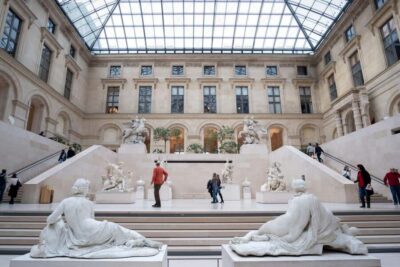
Priority Access Louvre with Host -Direct to Mona Lisa
Read our review →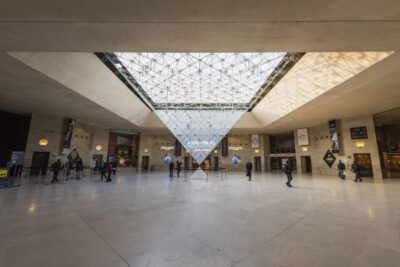
Mona Lisa & Louvre Masterpieces Tour with Reserved Access
Read our review →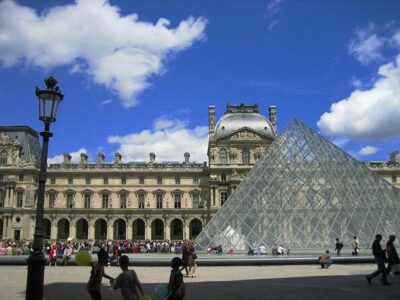
Louvre Museum – Exclusive Guided Tour (Entry Included)
Read our review →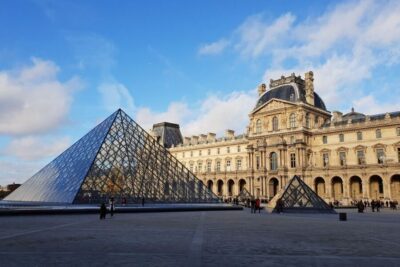
Louvre Reserved Ticket and River Cruise Combo
Read our review →Browse the lists this tour appears in