
Reviewed · MONTMARTRE AND SACRé-CœUR TOURS
Paris: Montmartre Highlights Walking Tour with a Local Guide
Montmartre is more than Sacré-Cœur and a quick photo at the Maison Rose. This walking tour takes you through the old village streets, artists’ addresses, courtyards, vineyards, and cabaret corners that give the hill its character. The strongest part is the storytelling, especially when guides such as Yazid, Sylvia, or Jean Baptiste connect Picasso, Van Gogh, Dalida, Aznavour, and Toulouse-Lautrec to the actual streets beneath your feet.
I like the small groups of up to 16 and the way the route mixes famous stops with quieter lanes. I also like the practical finish near Place du Tertre, with tips for visiting Sacré-Cœur on your own. The main consideration is pace: the route is not a hard hike, but it does involve cobblestones, slopes, and extended standing, so it is not suitable for wheelchair users or people with mobility impairments.
Key points at a glance
- Artists’ Montmartre in one walk: Visit the Bateau-Lavoir, Moulin de la Galette, Maison Rose, and Place du Tertre.
- Stories beyond the standard postcard: Hear about artists, singers, resistance, revolution, cabarets, and neighborhood eccentrics.
- A genuinely local feel: Guides bring personal energy, photos, music, and useful Paris advice rather than simply reciting dates.
- Family-friendly format: The tour can work well for children, with an interactive style and manageable walking pace.
- Good value at $34: For 140 minutes with a live English-speaking guide, the price is reasonable for a first visit.
- Plan for the ground: Wear proper shoes, carry some cash, and leave oversized luggage behind.
Why Montmartre works best on foot
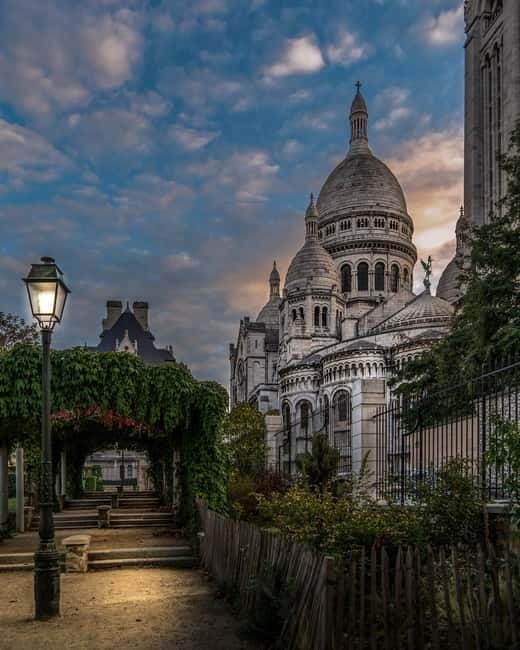
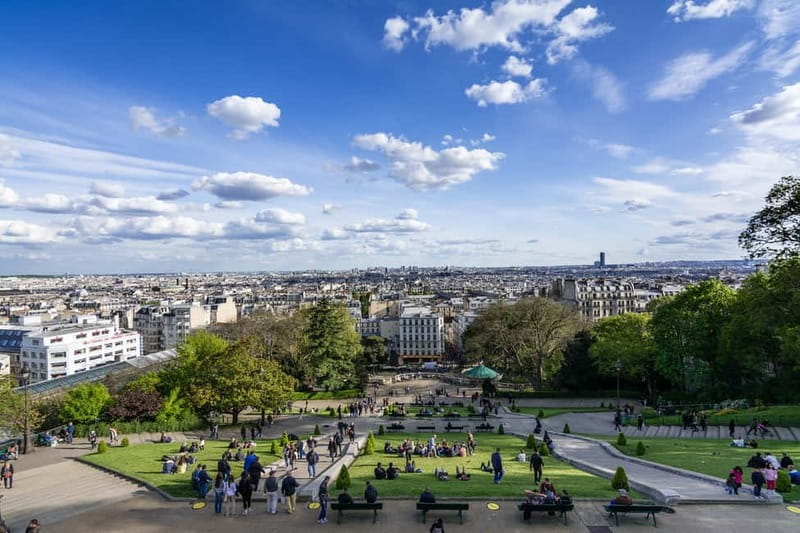
Montmartre sits on a hill, but its appeal is not found in one grand monument. It comes from the change of mood as you leave the broad view below Sacré-Cœur and turn into narrow streets lined with old houses, cafés, studios, and small squares.
A guide helps you read those streets. Without one, you can photograph the Moulin de la Galette or Maison Rose and move on without understanding why they matter. With the right guide, the neighborhood becomes a sequence of human stories: painters trying to make a living, singers shaping Parisian culture, rebels using the hill as a refuge, and cabaret performers turning local oddities into art.
This is why I see the tour as more than a sightseeing walk. It is especially useful if you are visiting Montmartre for the first time, but it can also add detail if you have already seen Sacré-Cœur and want to understand the area beneath the familiar sights.
The group size is capped at 16 people. That is large enough to create a pleasant shared outing, but still small enough for a guide to answer questions and keep the group together in narrow lanes. The experience is conducted in English.
More Montmartre and Sacré-Cœur Tours:
- Montmartre Hidden Gems and Scenic Highlights Walking Tour
★ 5.0 · 2,684 reviews - Montmartre Hill French Gourmet Food and Wine Tasting Walking Tour
★ 5.0 · 2,588 reviews - Paris: Montmartre Cheese, Wine & Pastry Guided Walking Tour
★ 4.8 · 2,255 reviews
Starting below Sacré-Cœur at Place Saint-Pierre
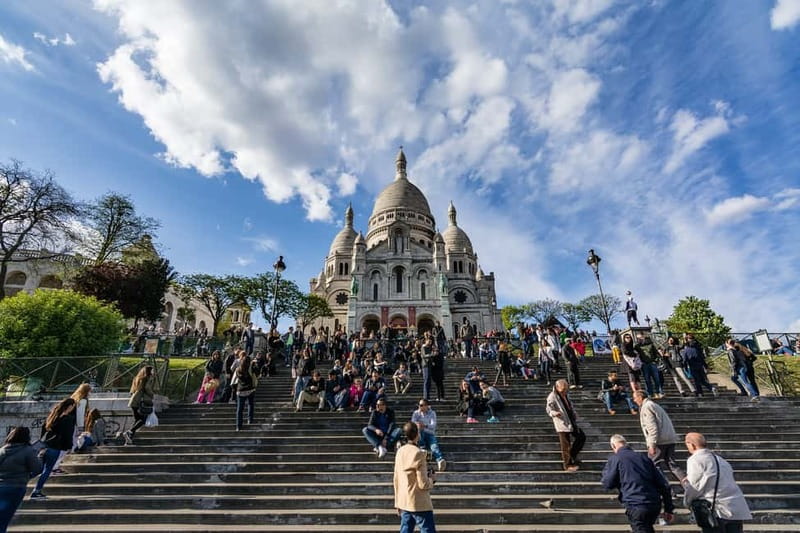
The meeting area is at Place Saint-Pierre, beneath the basilica. Look for Paris Tours Experiences near the carrousel, where the guide will be waiting.
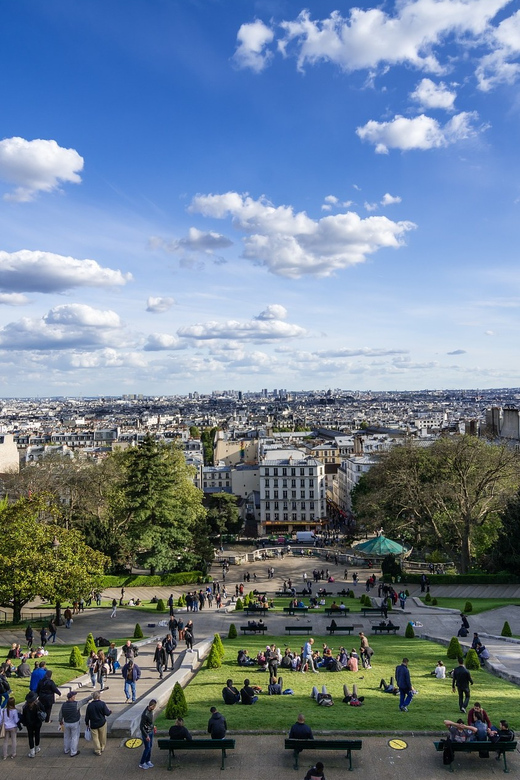
This is a useful starting point because you begin with an immediate sense of Montmartre’s geography. The basilica rises above you, while the city opens out below. Your guide uses this first view to explain the area and set up the stories that follow.
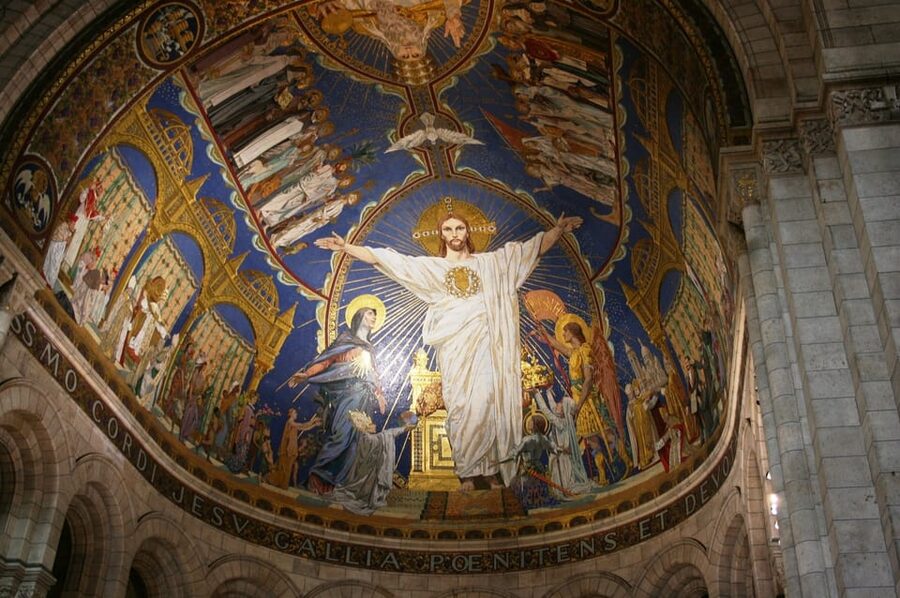
Do not expect a long interior visit to Sacré-Cœur as part of the guided walk. Instead, the tour places the basilica in context and gives you advice for exploring it afterward. That arrangement makes sense for a walking tour focused on the neighborhood, though you should allow extra time if entering Sacré-Cœur is important to you.
The tour lasts about 140 minutes. The route includes cobblestones and some uphill or downhill walking, but one detailed account describes the climb as limited and accommodating for the group. Still, comfortable shoes are essential. Montmartre is not the place for slick soles or flimsy sandals.
The Wall of Love and Montmartre’s romantic side
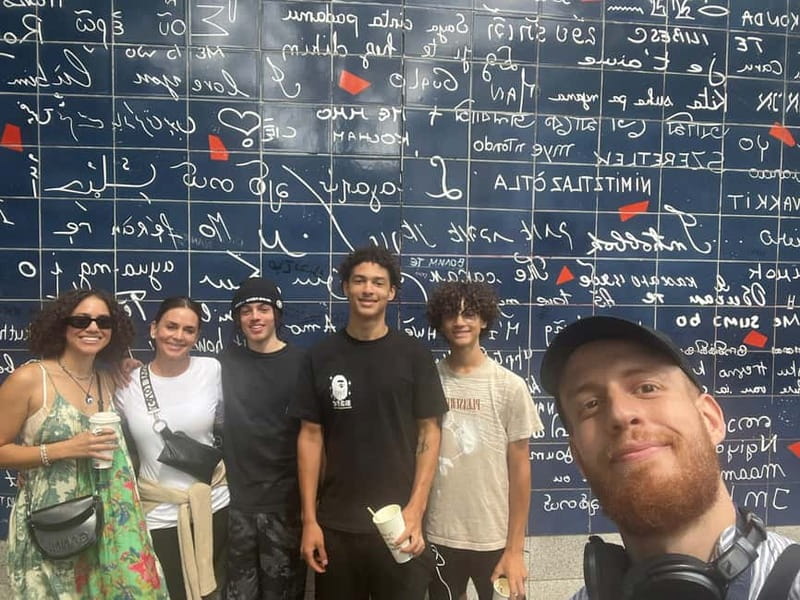
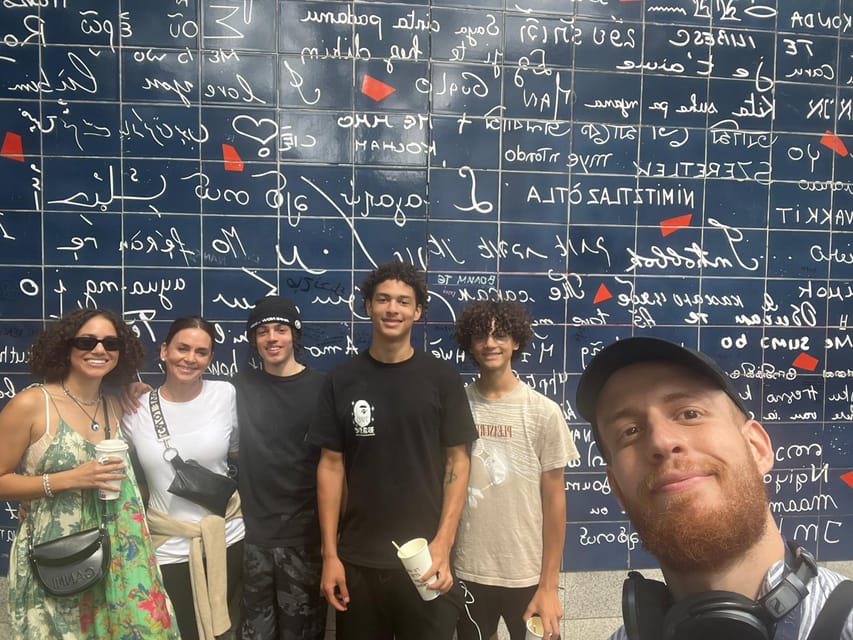
The Wall of Love is one of the early stops. It displays the words I love you in 311 versions across many languages.
It is an easy place to photograph, but the guide gives it more purpose than a quick picture. The wall introduces Montmartre as a district that has always traded in romance, performance, art, and sentiment. It also creates a relaxed point early in the walk, before the route turns more firmly toward the artists who made the neighborhood famous.
Expect about 30 minutes around this part of the walk, including explanation and questions. The exact timing can vary, especially if the group is engaged or the guide is answering questions. Some guides use photos or music to make the stories more lively, so the experience is not limited to buildings and dates.
This is also a good moment to ask your guide for ideas about cafés or places to return to later. The strongest guides on this tour appear to enjoy making personal recommendations, not simply moving the group from one stop to the next.
Bateau-Lavoir, where modern art changed direction
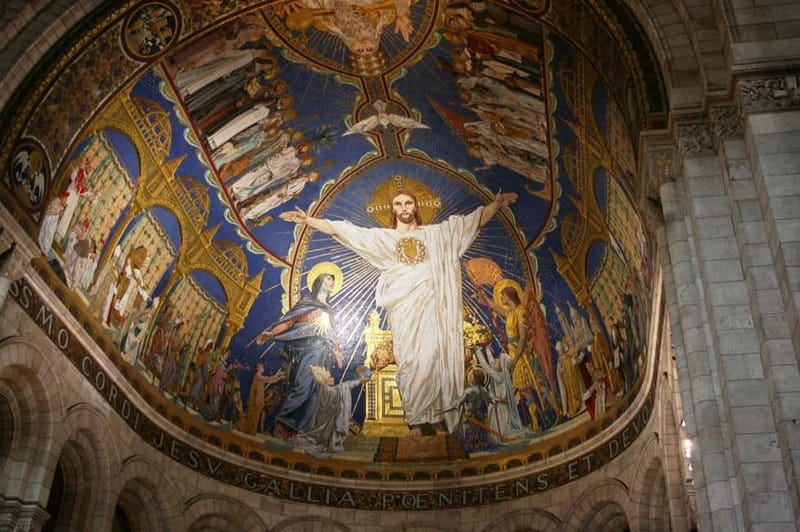
The Bateau-Lavoir is one of the most important stops for anyone interested in art. Picasso, Modigliani, and other artists lived and worked here, and the place is tied to the development of modern art.
You will not be entering an active artist studio as part of the experience. The value comes from standing at the location and hearing how the building and its residents helped shape Montmartre’s reputation. The guide explains the relationship between the artists and the neighborhood, rather than treating Picasso as an isolated name from a textbook.
This section will appeal most to people who enjoy art history, but the storytelling also reaches beyond painting. The walk brings in figures such as Van Gogh, Salvador Dalí, Toulouse-Lautrec, Dalida, Edith Piaf, and Charles Aznavour. That broader mix matters because Montmartre was not created by painters alone. Music, nightlife, theater, and popular culture all helped form its identity.
One point to note: this can feel like an art-history tour in disguise. That is a strength if you want substance, but it may feel talk-heavy if you prefer a quick photo walk. One detailed experience found the information fascinating but felt that the guide sometimes talked longer than expected. If you want a quiet stroll with little explanation, this is probably not your ideal format.
More city highlights tours in Paris:
- Bateaux Parisiens Seine River Gourmet Dinner & Sightseeing Cruise
★ 4.5 · 6,930 reviews - Paris Seine River Hop-On Hop-Off Sightseeing Cruise by Batobus
★ 4.0 · 3,411 reviews - Paris Top Sights Half Day Walking Tour with a Fun Guide
★ 5.0 · 2,893 reviews - Bateaux Parisiens Seine River Gourmet Lunch & Sightseeing Cruise
★ 4.5 · 2,680 reviews
Moulin de la Galette and the world of impressionism
The Moulin de la Galette is both a photo stop and a doorway into Montmartre’s rural past. It was once a real windmill and later became an icon in impressionist painting.
Your guide explains how the windmill moved from working machinery to artistic symbol. That shift captures one of Montmartre’s key changes: the hill was once associated with village life, mills, farms, and open ground, then became a magnet for painters, performers, and city visitors.
The stop is not just about reproducing a famous painting. It helps you compare the old image of Montmartre with the district you see today. The streets are more crowded and commercial than they once were, but small details still connect the present neighborhood with its earlier village feel.
Plan on standing outside for the explanation and taking photographs. As with the other stops, the guide’s interpretation is the main attraction. The building alone will not take long to see, but the story gives it weight.
Maison Rose and the quieter side streets
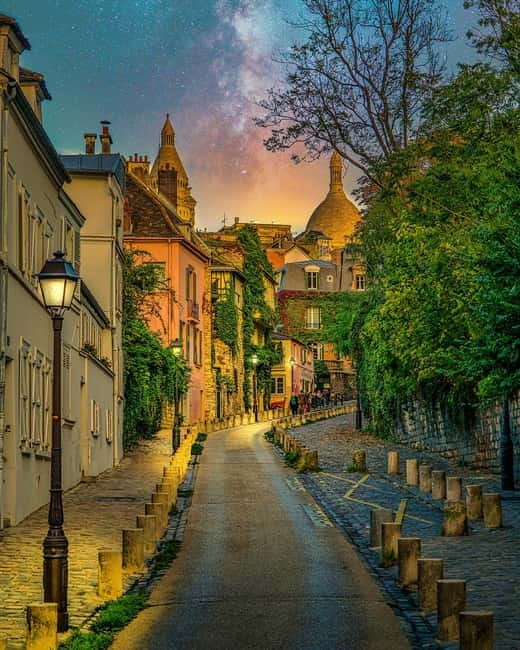
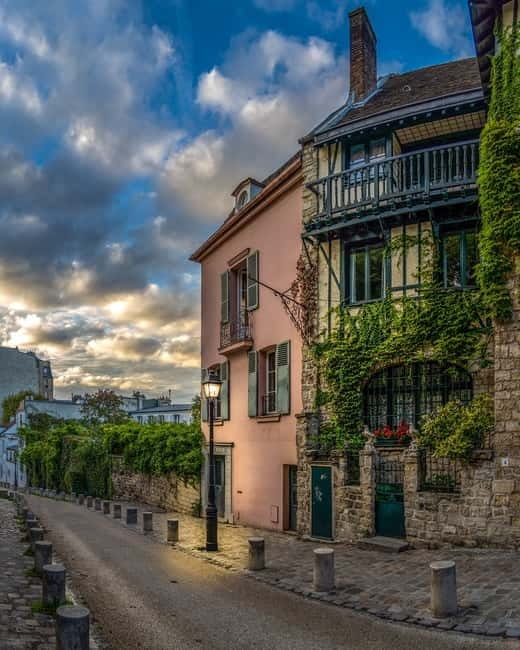
Maison Rose is one of Montmartre’s most photographed buildings. Its pink exterior and corner position make it instantly recognizable, and it is an obvious place for a group photo.
The tour treats it as more than a social-media backdrop. You hear about its place in the neighborhood and then move toward less familiar corners, including old cabarets, courtyards, passageways, and the local vineyard area.
That change is important. The most famous Montmartre views are concentrated in a few streets, and those streets can feel crowded. The quieter sections show you why the neighborhood remains appealing beyond its best-known façades. You might find that the smaller lanes, rather than the major landmarks, provide the clearest sense of the old village.
The tour also includes family pictures taken by the guide at different spots. That is a useful extra if you are traveling with children or as a group and want everyone in the frame. It is not a professional photo session, but it means you do not have to rely entirely on passing strangers for pictures.
You should bring cash. Food is not included, and the route may pass places where you want to stop later, but the tour itself does not provide a meal or tasting.
Place du Tertre and the final artist square
The walk ends at Place du Tertre, where artists continue to paint and draw in the open air. This is the right place to finish because it brings the story back to Montmartre’s current artistic life.
The square is also one of the busiest and most commercial parts of the district. It can feel crowded, and the artists’ stalls are aimed at visitors, so do not expect an untouched village square. Still, it remains a useful place to watch portraits being made and to consider how the area’s artistic tradition has changed.
The planned photo stop here is shorter, around 15 minutes. The official information also says the activity ends back at the meeting point, while the route description places the finish at Place du Tertre. Because those details do not perfectly match, confirm the exact end point with your guide when you arrive.
From Place du Tertre, you receive tips for visiting Sacré-Cœur independently. The timing is convenient if you want to go inside the basilica after the walk, though the guided experience itself focuses on the streets and stories around it rather than an interior tour.
What the guides add to the experience
The guide can make or break a neighborhood walk, and the strongest comments about this experience focus on personality as much as information.
Yazid is repeatedly praised for his energy, humor, and ability to connect art, music, and local history. His approach may include photographs, music, and small surprises, such as explaining that Dalí designed the Chupa Chups logo. He also appears comfortable adjusting the pace and speaking with children.
Sylvia is described as friendly, fluent in English, entertaining, and generous with her time. Her style seems well suited to people who want an easy pace and frequent fun facts. Jean Baptiste is noted for combining serious education with a down-to-earth manner and encouraging the group to see Montmartre through a Parisian point of view.
Of course, you cannot choose a specific guide from the information provided. The names give you a useful sense of the standard to hope for, not a guarantee of who will lead your departure. The consistent qualities to look for are enthusiasm, storytelling, and a willingness to answer questions.
Is $34 a fair price?
At $34 per person, the tour offers about two hours and 20 minutes of guided walking in one of Paris’s most layered districts. For a small group, a live English-speaking guide, family photos, and several major landmarks, I consider that a fair price.
The value depends on what you want. If you only need directions to Sacré-Cœur and Maison Rose, you can walk Montmartre for free. You will save money, but you will miss the stories connecting the Bateau-Lavoir, Moulin de la Galette, singers, painters, and old cabarets.
If you enjoy context and prefer not to spend your first hour guessing which lanes matter, the fee makes good sense. The tour also helps you use the rest of your day better. You can return to a café, revisit a photo spot, or enter Sacré-Cœur with a clearer idea of where you are.
Free cancellation up to 24 hours before the start and the option to reserve now and pay later make the booking less rigid. Those policies are useful for a Paris schedule that may change, but you should still check the available starting times before planning the rest of your day.
Who should book this Montmartre walk?
I would recommend it to first-time visitors who want more than the standard basilica photo. It is also a good choice for culture lovers, photographers, families, and anyone curious about the artists and singers associated with the district.
Children can join, and the route is described as adapted for kids. A lively guide can make the stories accessible, especially when the walk includes music, photos, humor, or simple visual details.
You should think twice if you have significant mobility limits. The tour is not suitable for wheelchair users or people with mobility impairments. Cobblestones, slopes, and standing at outdoor stops are part of the experience.
It may also be a poor fit if you dislike long explanations. The guide may spend considerable time on art, music, and local stories. That is the reason to book this walk, but it is also the main thing to consider.
Practical advice before you go
Wear comfortable clothes and shoes with reliable grip. Montmartre’s streets are attractive but not always smooth, and you will be walking for more than two hours.
Bring cash, especially if you want to buy something during or after the walk. Food is not included, and the tour does not replace a meal break.
Leave oversized luggage elsewhere. Large bags make narrow streets and crowded squares harder to manage, and they are specifically not allowed.
Arrive at the stated meeting area near the carrousel at Place Saint-Pierre and look for the Paris Tours Experiences guide. Since the end-point information is described in two ways, ask where the walk will finish before setting up a tight reservation afterward.
Should you book it?
Book this tour if you want Montmartre explained through people and stories rather than seen as a string of picture stops. The Bateau-Lavoir, Moulin de la Galette, Maison Rose, Wall of Love, and Place du Tertre give you the landmarks, while the guide supplies the connections between Picasso, Dalí, Van Gogh, Dalida, Aznavour, and the neighborhood itself.
At $34, the format is a good deal for a 140-minute small-group walk, particularly if you are new to Paris. Choose it with comfortable shoes, room in your schedule, and an appetite for art history. Skip it only if you need step-free access, want a very short photo outing, or prefer to explore without a steady stream of explanation.
FAQ
How long does the Montmartre walking tour last?
The tour lasts 140 minutes, or about two hours and 20 minutes. Starting times vary, so check availability when booking.
What language is the tour conducted in?
The live tour guide speaks English.
What places are visited?
The route includes Place Saint-Pierre, the Wall of Love, Bateau-Lavoir, Moulin de la Galette, Maison Rose, and Place du Tertre. The walk also passes vineyards, courtyards, old cabarets, and passageways.
Is Sacré-Cœur visited during the tour?
The walk begins beneath Sacré-Cœur and ends near Place du Tertre, with advice for visiting the basilica independently. An interior guided visit is not included in the stated tour details.
Is the tour suitable for children?
Yes. The walk is described as adapted for children, and guides may use humor, photos, music, and interactive stories to keep the experience engaging.
Is the tour suitable for wheelchair users?
No. The experience is not suitable for wheelchair users or people with mobility impairments. Comfortable shoes are recommended because the route includes walking through Montmartre’s streets and lanes.
More walking tours in Paris
- Paris Île de la Cité and Notre-Dame Walking Tour With Crypt
★ 5.0 · 2,272 reviews - Paris in a Day: Louvre or Orsay, Eiffel Tower, City Walk & Cruise
★ 5.0 · 1,956 reviews - Paris City Center Free Walking Tour (Tip-Based)
★ 5.0 · 1,340 reviews - Paris: Dark History and Ghostly Guided Walking Tour
★ 4.7 · 1,000 reviews
Just added around Paris
- Paris: The Da Vinci Code Walking Tour with a Local Guide★ 4.3 · 5 reviews
- Paris: Flea Market Insider’s Tour in Extra-Small Group★ 4.6 · 73 reviews
- Paris: Private Fashion Tour (Chanel, Dior, Sex & the City)★ 5.0 · 3 reviews
- Paris: Floral Earrings workshop★ 5.0 · 3 reviews
- Paris: Fashion History Walking Tour in the Heart of Paris★ 4.9 · 22 reviews
- PARIS: Family e-bike longtail renting★ 5.0 · 3 reviews
- Paris: Famous Monuments Cycling Tour★ 4.7 · 20 reviews
- Paris: private city tour with seine river cruise★ 4.8 · 28 reviews
Montmartre and Sacré-Cœur Tours, compared.

Montmartre Hidden Gems and Scenic Highlights Walking Tour
Read our review →
Montmartre Hill French Gourmet Food and Wine Tasting Walking Tour
Read our review →
Montmartre Cheese, Wine & Pastry Guided Walking Tour
Read our review →
Sacré-Coeur and Montmartre Tour with Expert Guide
Read our review →
Private Montmartre Food Tour with Wine, Cheese & Pastries
Read our review →
Paris Montmartre Food Tour – A Full French Meal by Do Eat Better
Read our review →
Hidden Montmartre: Paris’ Secret Streets Walking Tour
Read our review →
Paris Montmartre Food & Wine Tour with Eating Europe
Read our review →Browse the lists this tour appears in