
Reviewed · PARIS STREET ART TOURS
Paris Street Art, smartphone audioguided tour
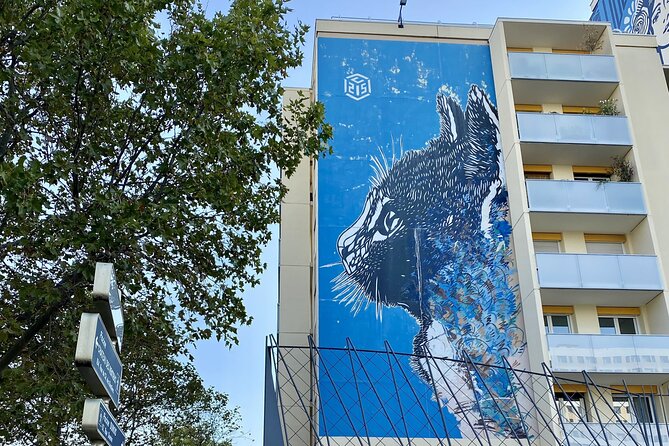
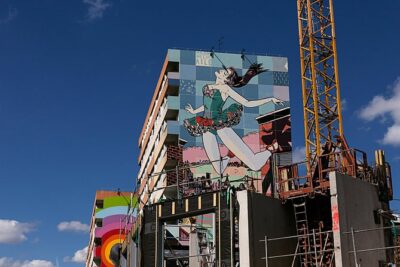
Paris’s 13th arrondissement has become an open-air gallery, with giant murals rising along ordinary streets and apartment blocks. This smartphone tour takes you from Place d’Italie toward Boulevard Vincent Auriol, explaining the artists, the neighborhood, and the business model behind modern street art. The automatic GPS commentary is the clever part: the story starts as you reach each work.
I like two things right away. First, you can walk at your own pace rather than keep up with a group. Second, the tour gives context to art you might otherwise pass without noticing, including Obey’s tribute to victims of the 2015 Paris attacks and works by C215, DFace, Invader, David de la Mano, and Pantonio.
The main limitation is coverage. The route lasts about an hour to an hour and a half, and one stop suggests that the 13th arrondissement holds more art than the tour can include. Plan extra time to wander after the audio route if you want to see more.
Key points at a glance
- Automatic audio at each artwork: Commentary begins through the Rewind app when you reach the correct location.
- A focused 13th arrondissement route: The walk starts at Paris’s 13th arrondissement town hall and ends on Rue Dunois.
- Big-name street artists: Expect works connected with Obey, C215, DFace, Invader, David de la Mano, Pantonio, and Zabou.
- More than a mural checklist: The commentary explains how street art took root here and how the art’s commercial model works.
- Flexible timing: Pause for a café, shop, snack, or photo stop, then restart at the point where you stopped.
- Good value for independent walkers: At $11.85 per person, the tour costs less than many guided walks while still giving you a planned route and commentary.
Why the 13th arrondissement is the right place for street art
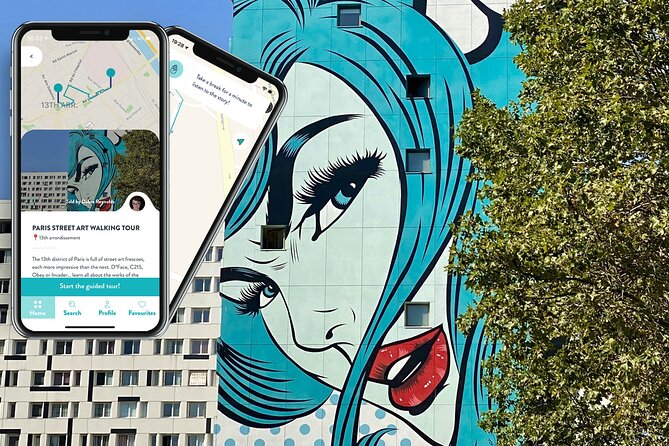
If you picture Paris as Haussmann boulevards, old stone façades, and grand monuments, the 13th arrondissement gives you another side of the city. Here, large-scale murals turn blank walls into public art. The paintings are not tucked inside a museum or limited to a small gallery district. They are part of the streets you walk through.
That setting matters. You see how the works relate to apartment buildings, corners, squares, and everyday city life. A giant mural can change the feel of an otherwise plain block, and the walk helps you notice that change.
The tour also looks at the less romantic side of street art. You learn how this art became connected to business and property owners, and why the 13th arrondissement developed into a major center for large frescoes. That discussion adds useful balance. Street art is not only spontaneous painting done under cover of darkness. Much of what you see in this part of Paris involves commissions, permissions, artists, and an economic structure that has helped public art grow.
I especially like this focus because it gives you a way to read the neighborhood. You are not simply collecting photographs of colorful walls. You are seeing how a district uses art to shape its identity.
More self-guided and audio tours in Paris:
- From Paris: Giverny Day Trip with Audio Guide or Live Guide
★ 4.3 · 2,372 reviews - Paris: Catacombs Entry & Seine River Cruise with Audio Guide
★ 4.4 · 1,150 reviews - From Paris: Versailles Palace Self Guided & Gardens tickets
★ 4.4 · 1,100 reviews
Starting at Place d’Italie and the Paper Planes fresco
The route begins at the town hall of the 13th arrondissement, at 1 Place d’Italie. This is a practical starting point near public transportation, and it gives you a clear place to begin before moving into the mural route.
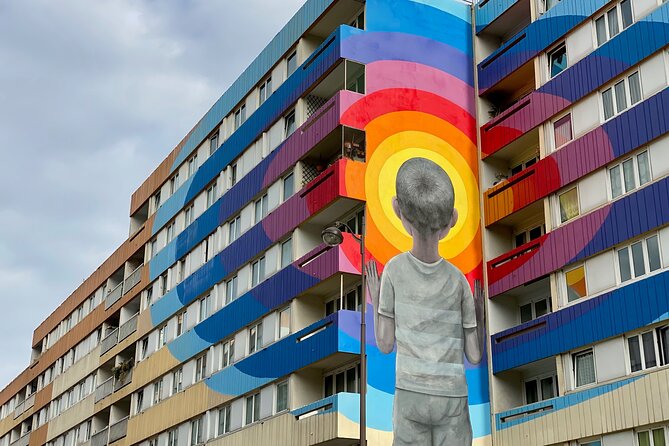
One of the first featured works is Paper Planes by Zabou. The stop receives about 15 minutes of attention, which suggests that the audio does more than point out the painting and name its creator. You get time to look at the work while hearing an explanation of its details and place within the wider street-art route.
This is a good opening stop because it introduces the scale of the art. You may expect a few small tags or painted shutters, then find yourself looking at a major wall-sized composition. Give yourself time to stand back. Large murals can be hard to take in from close range, especially in a narrow street.
The tour’s automatic audio is useful here. You do not need to keep checking a printed guide to match the right wall with the right explanation. The app is designed to begin the commentary when you reach the location, so you can keep your attention on the building and the artwork.
Rue Pinel explains the business behind the paint
At Rue Pinel, the tour shifts from looking at individual works to explaining how street art became part of the 13th arrondissement’s public identity. This stop lasts about 10 minutes.
That change of subject is important. Many art walks focus only on artists and visual style. This one also asks why so many large murals appeared in this district and how the projects are financed or organized. You get a better sense of the relationship between artists, property, public space, and commerce.
For you, this means the tour works well even if you know little about street art. You do not need to arrive with a list of artists or a working knowledge of mural culture. The commentary gives you a basic framework before the route presents more major works.
It also keeps the experience from becoming a parade of names. You hear about the people who make the art, but you also consider the system that allows a huge wall to become part of a neighborhood. That is one of the more useful parts of the route.
Place Pinel brings together major works
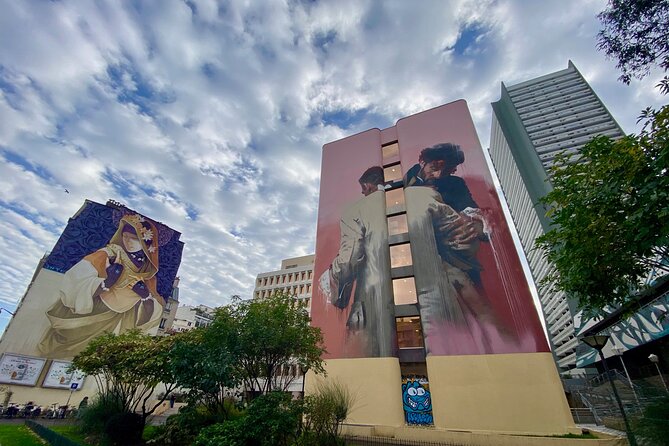
Place Pinel offers another 10-minute stop, with several substantial works by internationally known street artists. A square is a good place to pause because it lets you compare pieces rather than view each mural in isolation.
The app directs your attention to the works and provides the background as you look. You can stop for photographs without worrying that a group has moved on. If you need more time with one mural, you have it.
This is also where the independent format feels particularly practical. A live walking guide may need to follow a fixed schedule, while this experience lets you adjust the pace. You can listen, look, take photographs, and continue when ready.
The tradeoff is that you need to manage your own attention. The app gives directions and audio, but you still need to look around carefully and follow the map. Keep your phone charged and avoid rushing through the commentary. The art is large, and a quick glance rarely does it justice.
More street art tours in Paris:
- Belleville Street Art Tour with an Artist
★ 5.0 · 237 reviews - Montmartre Street Art Tour with an Artist
★ 5.0 · 144 reviews - Street Art tour in Paris – Discover Paris murals !
★ 5.0 · 130 reviews - Paris: Graffiti and Street Art Workshop
★ 4.7 · 108 reviews
Obey’s memorial work adds a serious note
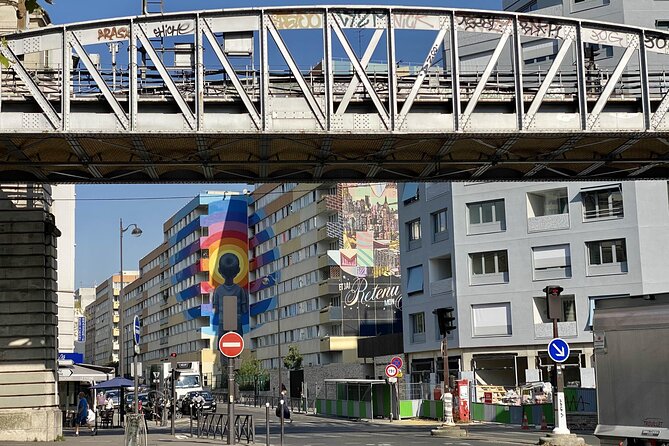
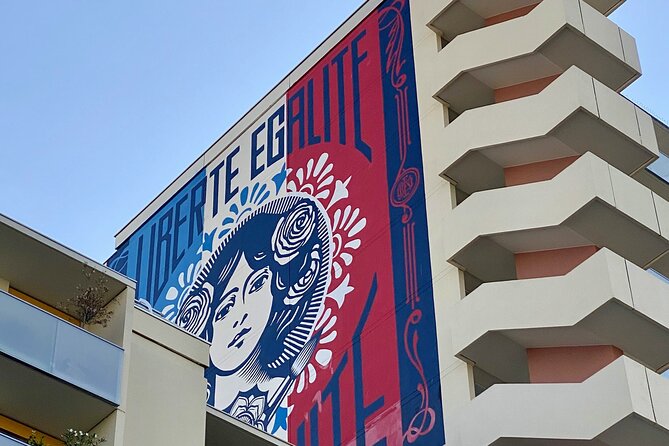
The stop dedicated to Obey focuses on a tribute to the victims of the 2015 terrorist attacks in Paris. This is one of the route’s more serious moments.
The work shows how public art can carry memory as well as decoration. A mural may brighten a street, but it can also mark grief, solidarity, and a shared event. Hearing the story while standing in front of the work gives the painting more weight than a quick photograph alone.
This stop also provides a useful counterpoint to the playful or highly graphic pieces elsewhere on the route. Street art is not one fixed style or mood. It can be colorful, political, personal, commemorative, or commercial.
You may want to give yourself extra quiet time here. The audio lasts about 10 minutes, but the subject may deserve more than a quick stop before moving on.
Boulevard Vincent Auriol is the main art stretch
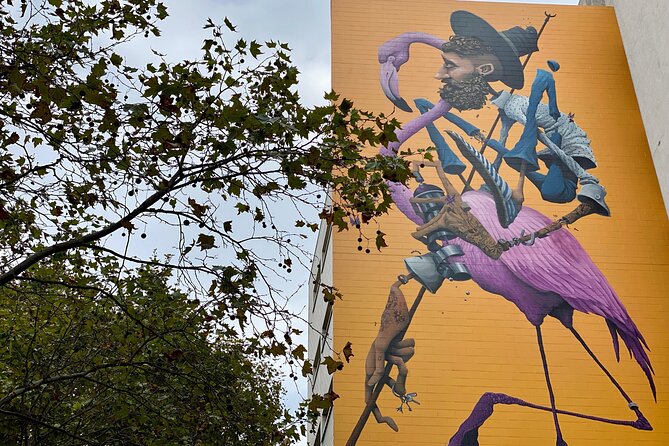
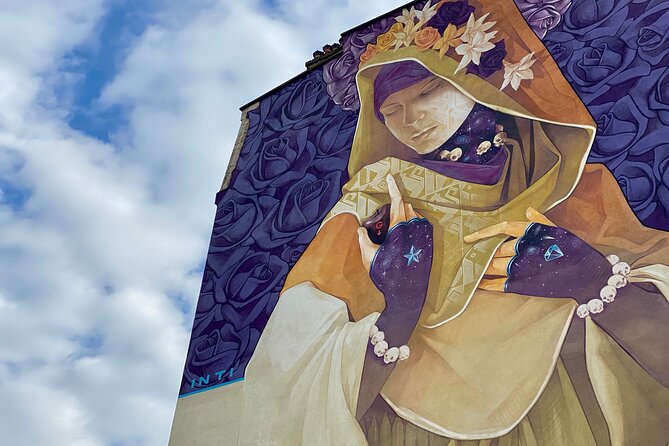
The longest part of the route is along Boulevard Vincent Auriol, with about 30 minutes devoted to large murals by artists including DFace, C215, Obey, David de la Mano, Pantonio, and Invader.
This is the heart of the walk. Rather than seeing one isolated fresco, you move through an extended run of public art. The variety of artists keeps the route from feeling repetitive. Different approaches to color, portraiture, line, scale, and subject appear along the way.
C215 is known here through the route’s artist selection, while Invader brings a very different visual language from a monumental painted wall. DFace, Obey, David de la Mano, and Pantonio add further range. You do not need to memorize every name. The point is to see how many distinct artistic voices can occupy the same district.
The GPS system should be most useful on this longer section. It provides clear audio directions and a map showing where to go in real time. If you take a wrong turn, the integrated location feature is designed to guide you back to the route.
Still, treat the map as a helpful aid, not a reason to stare at your phone. Look up often. The murals are the main event, and the surrounding streets are part of the experience too.
How the Rewind app changes the walking experience
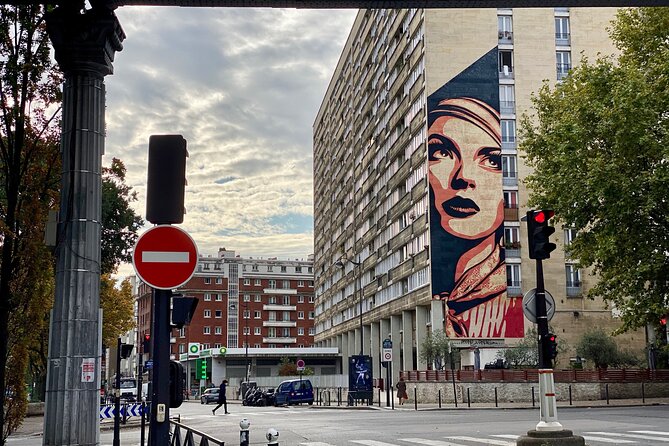
The Rewind format sits between a guided tour and a self-guided walk. You get a planned route, spoken explanations, and navigation, but no fixed departure time or group pace.
The audio commentary triggers automatically at the correct places. That removes one common problem with self-guided sightseeing: constantly checking whether you are standing in front of the right building. When the system works as intended, the explanation arrives at the moment you need it.
You can also pause the tour for a snack, a shop, a café stop, or a photograph. When you resume, the route continues from where you stopped. This makes the experience easy to fit around a day in Paris.
The route is listed as taking about one hour to one hour and 30 minutes. The difference depends on how long you spend looking at the murals and how often you pause. If you listen carefully and take photographs, plan on the longer end.
A private format also means only your group participates. That gives you control over the pace and avoids the awkwardness of joining strangers. It does not provide the back-and-forth of a live guide, however. If you enjoy asking spontaneous questions, a traditional guided walk may suit you better.
What the $11.85 price buys you
At $11.85 per person, this is a low-cost way to get structure and commentary in a part of Paris that you might not otherwise visit. Every stop is free to enter, so your payment goes toward the route design, app access, navigation, and recorded guidance rather than admission to a museum or monument.
I see the value most clearly if you are an independent visitor. You receive enough direction to avoid wandering without purpose, plus explanations that help you understand the art. The price is also reasonable for a private activity, since your group is not combined with other participants.
The value is less clear if you already plan to spend several hours exploring the 13th arrondissement on your own. The area contains more street art than the route can cover, so you may want to continue walking after the official end at 78 Rue Dunois.
That is not a major flaw. It simply means the tour works best as an introduction. Use it to learn the main story and see a selection of major works, then explore further if the subject catches your interest.
Practical details before you go
The tour operates daily from 7:00 a.m. to 6:00 p.m., according to the stated operating period. One comment about access describes the visit as available at any time, but you should follow the hours shown when you book, since operating details can change.
You start at the town hall of the 13th arrondissement and finish at 78 Rue Dunois. The route is near public transportation, and most people can participate. Service animals are allowed.
Because the tour depends on a smartphone, prepare before setting off. Make sure your phone has enough battery, and keep the map available so you can follow the directions. The tour is designed to prevent you from getting lost, but a charged phone remains essential for any GPS-based walk.
Wear comfortable shoes. The duration is short compared with a full-day city tour, but you are still walking between several streets, squares, and mural sites. Leave room in your schedule for photographs and for the extra works you may notice along the way.
You can cancel without penalty up to 24 hours before the start time for a full refund. Cancellations or changes made within 24 hours are not refunded or accepted.
Who will like this street-art walk
I would recommend this experience to you if you enjoy city walks, public art, photography, or seeing a part of Paris beyond the usual sights. It is also a good choice if you want an introduction to street art without committing to a long lecture or a full museum visit.
First-time street-art visitors should find the structure helpful. You get artist names, explanations, directions, and a story about the district. The route is also suitable for people who prefer not to follow a large group.
Families and small private groups may appreciate the ability to pause. You can stop when someone needs a break, then continue without holding up other participants.
Art specialists may find the route too short if they already know the 13th arrondissement well. The same is true if your main goal is to see every mural in the district. In that case, use this walk as an introduction and add your own exploration afterward.
Should you book it?
Book this tour if you want a low-cost, flexible introduction to Paris street art, with automatic audio and clear directions. The strongest parts are the giant murals, the explanation of how the 13th arrondissement became a street-art center, and the freedom to move at your own pace.
Skip it if you want a live guide, extended discussion, or a complete survey of every artwork in the neighborhood. The route covers a selected group of works, not the entire district.
For most visitors, the best plan is simple: take the audio walk, listen closely at the main stops, then keep exploring around Boulevard Vincent Auriol and Rue Dunois after the official route ends. At $11.85, it gives you a useful starting point without taking over your day.
FAQ
Where does the Paris street-art tour begin?
It begins at the town hall of the 13th arrondissement of Paris, at 1 Place d’Italie, 75013 Paris, France.
Where does the tour end?
The route ends at 78 Rue Dunois in the 13th arrondissement.
How long does the tour take?
The expected duration is about one hour to one hour and 30 minutes.
How much does the experience cost?
The listed price is $11.85 per person.
How does the audio guide work?
The audio commentary is provided through the Rewind app on your smartphone. It is designed to start automatically when you reach each artwork, while the map and GPS provide directions.
Can I pause the tour?
Yes. You can pause for a café, shop, snack, or photographs, then resume where you stopped.
Is the tour private?
Yes. Only your group participates in the activity.
What is the cancellation policy?
You can cancel at least 24 hours before the start time for a full refund. Cancellations or changes made less than 24 hours before the start time are not refunded or accepted.
Just added around Paris
- Private Paris Marche d’Aligre Walking Tour with Tastings★ 5.0 · 8 reviews
- Private Louvre Museum Tour for Kids & Families with Alberto or his team in Paris★ 5.0 · 41 reviews
- Private Highlights of Paris Tuk-Tuk Experience★ 5.0 · 26 reviews
- Paris Latin Quarter Walking Tour: History & Culture – Small Group★ 5.0 · 14 reviews
- Private Highlights of Paris Bike Tour★ 4.5 · 15 reviews
- Paris Musee d’Orsay PRIVATE TOUR with a Local Private Guide★ 5.0 · 41 reviews
- Private Half Day Historic Tour★ 5.0 · 58 reviews
- Pere Lachaise Cemetery Paris – Exclusive Guided Walking Tour★ 5.0 · 72 reviews
Paris Street Art Tours, compared.

Street Art tour in Paris – Discover Paris murals !
Read our review →
Street Art Walking Tour with a Street Artist Guide
Read our review →
Browse the lists this tour appears in