
Reviewed · PARIS
Paris: VR Experience “L’Horizon de Khéops”
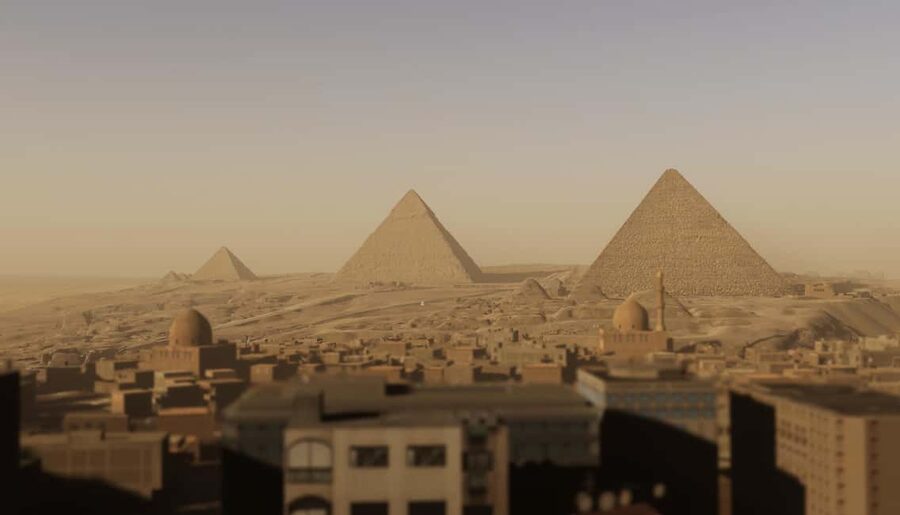
A sunrise over the Giza Necropolis is a fine way to begin a Paris afternoon. At L’Horizon de Khéops, you walk freely through a huge virtual version of ancient Egypt, first as a giant figure crossing the sands, then at human scale near the Sphinx and Great Pyramid. I like the mix of learning and play, and I like that the program takes you into spaces usually closed to the public. The main catch is simple: 45 minutes may feel short once the virtual world has your attention.
I also like the clear French and English setup, the welcoming host service, and the strong visual design. The script gives the journey a cultural purpose rather than making it just a digital thrill ride. Still, the computer-generated images are not perfect, so visitors expecting movie-level detail may notice a few rough edges.
Key points at a glance
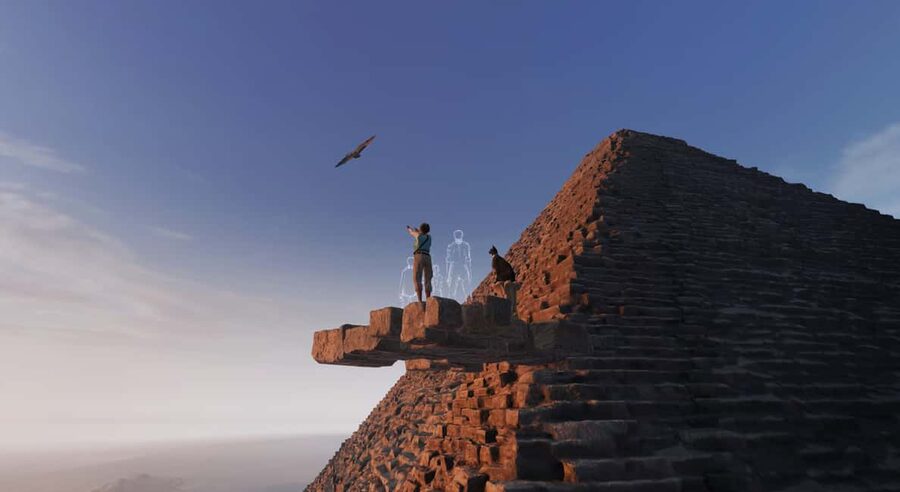
- A free-roam Giza setting: Walk through a 1,000-square-meter space instead of standing still in front of a screen.
- A guided ancient-Egypt journey: Follow a virtual guide from sunrise over the necropolis to a night visit at the Great Pyramid.
- Realistic images and a strong script: The best parts combine visual scale with useful historical context.
- A 45-minute VR program: The full visit lasts about one hour, with most of that time spent in the virtual world.
- French and English support: The host or greeter can assist in either language.
- Important health limits: The activity is not suitable for children under eight, people with heart problems, or people with epilepsy.
Beginning at sunrise over the Giza Necropolis
The program opens as the sun rises above Giza, home of Egypt’s three Great Pyramids. That opening matters because it gives you a sense of place before the technology takes over. You are not simply looking at a pyramid from one angle. You begin with the wider setting, including the sandy plateau, the tombs, and the famous monuments gathered together.
The first part introduces the mastabas, the flat-roofed tombs built for members of royal families and the inner circles of deceased rulers. This is a useful detail, since the pyramids can easily swallow up the rest of Giza in the popular imagination. The mastabas help show that the necropolis was a large funerary center, not just three enormous stone shapes.
I like this start because it gives the program an educational backbone. You get visual scale, but you also get a little social context. The virtual setting shows that the royal burial grounds included many other people and structures around the pyramids.
You should expect the presentation to be broad rather than a long archaeological lecture. The program is made for a general audience, families with older children, and visitors who want a memorable introduction to ancient Egypt. If you already know a great deal about Egyptian archaeology, the information may feel fairly basic.
Other Paris outings people book alongside this one:
- Paris: Louvre Museum Timed-Entrance Ticket
★ 4.6 · 71,977 reviews - Disneyland® Paris 1-Day Ticket
★ 4.6 · 49,412 reviews - Paris: Versailles Palace and Gardens Full Access Ticket
★ 4.6 · 41,579 reviews
Walking the sands as a giant avatar
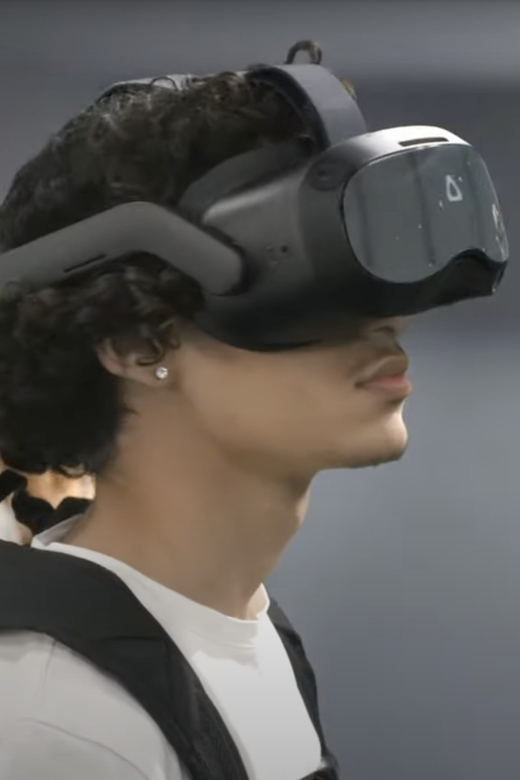
One of the more unusual touches is your first viewpoint. You and the other participants begin as giant avatars, walking across the eternal sand of the Giza Plateau. This change of scale gives you a strong sense of how large the site is, and it makes the first steps feel playful rather than like a standard museum lesson.
Free movement is the key feature here. You are equipped with a VR headset and can walk through a 1,000-square-meter area. That physical space lets the virtual world feel larger than a seated headset program. You can look around, move with the group, and take in the monuments from different angles.
The giant-avatar idea also works as a quick lesson in proportion. When you are larger than the monuments, the pyramid and surrounding tombs appear as part of a grand setting. Later, the program brings you closer to the structures, where their scale feels more human and immediate.
There is one practical point to keep in mind. Free movement makes the program more active than a normal film or museum display, but it does not turn the visit into a long walking tour. The listed VR portion lasts 45 minutes, and the entire appointment lasts about one hour. Some sections may leave you wishing for more time to look around.
Meeting the Sphinx up close
From the plateau, the journey leads you toward the Great Sphinx. This is one of the most recognizable monuments in Egypt, yet a virtual setting can offer something a photograph cannot: a changing point of view. You can approach it within the digital scene and see it as part of the Giza site rather than as an isolated image.
The Sphinx section is likely to appeal to visitors who want the sense of approaching a monument without the limits of a single viewing platform. The program’s scale and movement help connect the Sphinx to the rest of the necropolis.
I would not treat this as a substitute for standing beside the real Sphinx. A digital recreation cannot give you the physical texture of the stone, the heat of the sun, or the feel of being in Egypt. What it can do is place the monument inside a carefully arranged story, then let you move through that story.
The visual quality receives particular praise for its realism, though it is not flawless. You may notice that some details look more computer-generated than others. That is a fair trade-off for the ability to explore a place that is far away and, in some areas, closed to ordinary public access.
The VIP night visit to the Great Pyramid
The final major stage takes you to the foot of the Great Pyramid at night. This is a smart change in mood. After the bright beginning at sunrise and the broad movement across the plateau, the night setting gives the pyramid a more dramatic presence.
The promise of a VIP visit is not that you receive special access to the real Egyptian site. Instead, the virtual program takes you into spaces and viewpoints that are presented as unavailable to the public in ordinary circumstances. That distinction is worth understanding before you book.
The night visit also gives the program a clear ending. You move from the wider necropolis to the Sphinx, then finish at the best-known pyramid. The sequence feels like a proper expedition rather than a loose collection of digital scenes.
This is where the script matters most. Strong visuals alone can become tiring, but a clear narrative gives you reasons to pay attention. The program aims to be cultural as well as entertaining, and that balance is one of its biggest strengths.
Same city, a completely different afternoon:
- Paris: Evening River Cruise with Music
★ 4.4 · 22,721 reviews - Paris: Eiffel Tower Entry Ticket with Optional Summit Access
★ 4.4 · 20,035 reviews - Paris: Eiffel Tower Summit or Second Floor Access
★ 4.3 · 17,248 reviews - Paris: Louvre Guided Tour with Reserved Access & Boat Cruise
★ 4.3 · 16,353 reviews
How realistic is the VR?
The best praise for L’Horizon de Khéops centers on its realistic images, good 3D presentation, and well-written script. You should expect a convincing sense of place, particularly when the scenery opens up and you can see the monuments in relation to one another.
At the same time, the imagery is still digital. Some scenes may look highly convincing, while others may show the limits of current VR graphics. That does not ruin the program, but it helps set the right expectation. Think of it as an interactive historical presentation with strong visual effects, not a perfect photographic copy of Egypt.
The program works because it uses VR for things VR does well: scale, movement, changing viewpoints, and access to places you cannot normally enter. It is less useful if you want a slow study of inscriptions, stonework, or archaeological detail.
I find the educational angle especially valuable for visitors who will not be traveling to Egypt. You get a basic understanding of how the monuments relate to one another and why the Giza Plateau mattered. It can also work as a preview for a future Egypt trip, though it should not replace a museum visit or archaeological reading.
A one-hour activity at $37
At about $37 per person, this is not a cheap filler activity. The value depends on how much you enjoy VR and how useful you find a guided cultural presentation. You are paying for the equipment, the large free-roam space, the prepared story, and a 45-minute program rather than for admission to a conventional gallery.
For a first-time VR user, the price may feel reasonable because the format is more active than watching a documentary. You are part of the scene, and the large space gives the program room to work. For a visitor who already has access to high-end VR at home, the cost may feel less attractive unless the ancient-Egypt subject and shared setting appeal to you.
The short duration is both a strength and a weakness. One hour fits neatly into a busy Paris schedule, and it leaves room for another museum or meal. On the other hand, the virtual visit can feel over just as you are getting comfortable with the headset and movement.
The strongest value comes from the combination of entertainment and learning. If you want an hour of passive amusement, other attractions may suit you better. If you want a compact cultural activity with a memorable setting, the price is easier to justify.
Who should book this experience?
I would recommend L’Horizon de Khéops to adults, older children, and teenagers who enjoy technology but still want a cultural reason for using it. It is especially useful on a rainy Paris day or for a group with different interests. One person can enjoy the history, another can enjoy the special effects, and both can share the same program.
It also suits visitors who have already seen several traditional museums and want a change of pace. The free-roam format gives you something to do with your body, not just your eyes. The French and English support makes it practical for an international group.
Children under eight cannot take part. The activity is also not suitable for people with heart problems or epilepsy. Those limits should be taken seriously, since VR can be physically demanding for some people even when the activity lasts less than an hour.
The experience may be less suitable for visitors who dislike headsets, motion-based digital programs, or simulated environments. If you are prone to discomfort with VR, ask the host about the setup before starting. The provided information confirms wheelchair accessibility, but it does not give further details about the exact movement arrangement, so anyone needing specific assistance should check ahead.
Making the most of your visit
Keep your expectations focused. This is a 45-minute virtual expedition, not a full day of Egyptian history. Go in ready to notice the changing scale, the movement from sunrise to night, and the way the program links the mastabas, Sphinx, and Great Pyramid.
Pay attention to the narration as well as the images. The script is part of what gives the visit value, and the historical details help keep the technology from becoming a simple visual show.
If possible, allow the full hour rather than planning another appointment immediately afterward. The VR program itself is listed at 45 minutes, but you may want a little breathing room before moving on. Starting times vary, so check availability when booking.
The experience allows free cancellation up to 24 hours in advance for a full refund, and you can reserve now while paying later. Those options are useful in Paris, where weather, transport, and museum plans can change during the day.
Should you book L’Horizon de Khéops?
Book it if you want a short, polished VR program that gives ancient Egypt a sense of scale and movement. The realistic images, cultural script, large walking area, and access to otherwise restricted virtual spaces make it more than a quick arcade-style attraction.
Skip it if you want detailed archaeology, real stone monuments, or a long visit. The graphics have some limits, and 45 minutes may feel brief. For most visitors who are curious about Egypt and open to new ways of seeing history, though, this is a smart Paris activity, especially when you want something educational without committing to a half-day museum visit.
FAQ
How long does L’Horizon de Khéops last?
The full activity lasts about one hour. The virtual reality portion lasts 45 minutes.
How much does the experience cost?
The listed price is $37 per person.
What language is the experience offered in?
The host or greeter can assist in French or English.
Where does the virtual journey take place?
The program recreates the Giza Necropolis in Egypt, including the mastabas, the Sphinx, and the Great Pyramid.
Can I walk during the VR experience?
Yes. You can move freely through a 1,000-square-meter space while wearing the virtual reality headset.
Is the activity wheelchair accessible?
Yes, the experience is listed as wheelchair accessible.
Are young children allowed to participate?
No. The activity is not suitable for children under eight years old.
Can I cancel my booking?
Yes. You can cancel up to 24 hours in advance for a full refund. You can also reserve now and pay later.
Just added around Paris
- Private 1 – hour Tour: Eiffel Tower,Champs-Elysées Arc DE Triomphe★ 5.0 · 7 reviews
- Private Tour to Mont St-Michel and Honfleur from Paris★ 4.5 · 5 reviews
- Private Tour of Saint Germain des Pres★ 5.0 · 44 reviews
- Tripa Paris Pubcrawl / Bar Tours★ 5.0 · 16 reviews
- Paris with a Tuk Tuk – Private 2-Hour TukTuk Tour★ 4.5 · 34 reviews
- Paris city tour with private guide★ 5.0 · 9 reviews
- Paris Private Tour with Tuktukyourcity★ 4.5 · 38 reviews
- Private Mont Saint-Michel Trip by Mercedes from Paris with Lunch★ 4.0 · 10 reviews