
Reviewed · LOUVRE MUSEUM TOURS
The Louvre: art and love.
The Louvre: art and love takes an unusual route through one of Paris’s most familiar museums. Instead of simply checking off the Mona Lisa and other famous works, you’ll look at how Eros, pain, and power shaped Western art, including the overlooked role of BDSM and Catholic martyr imagery.
I like the focus on about fifteen works, which leaves time for real discussion rather than a rushed parade of paintings. I also like that Barbara and Boris bring humor and serious art knowledge to ideas that can sound intimidating. The main drawback is the price: at $345.72 per person, this is a costly three-hour visit, even with museum admission included.
Key points to know before booking
- About fifteen carefully chosen works: The route includes famous masterpieces and older works missed by the main tourist paths.
- A serious look at BDSM in art: The theme connects bondage, domination, sadomasochism, religious suffering, and artistic power.
- Barbara and Boris guide the visit: Their style combines clear explanations, humor, and open discussion.
- Private experience: Only your group participates, so the conversation can stay focused on your interests.
- Meet at the Arc du Carrousel: You enter the Louvre together from the area between the museum and the Tuileries Gardens.
- About three hours with admission included: The tour can finish inside the museum, allowing you to continue on your own.
A different way to read the Louvre
The Louvre can feel like a giant catalogue of famous names. You walk, stop, take a photo, and move on before the work has had time to say much. This tour takes a narrower path. It asks you to look at the force behind the image: desire, submission, control, sacrifice, and the pain that has long been presented as beautiful or holy.
That gives the visit a clear purpose. You are not just seeing paintings and sculpture. You are asking why certain subjects were commissioned, why certain bodies are shown suffering, and how religious beliefs helped shape what Western artists were allowed, encouraged, or expected to show.
The BDSM theme is not treated as a cheap shock tactic. It is used as a way to discuss power and eroticism in art. That distinction matters. The tour connects modern ideas about bondage, domination, and sadomasochism with older images of religious suffering, physical restraint, martyrdom, and devotion.
You should still know what you are booking. This is an adult-minded cultural tour with frank discussion of sex, desire, pain, and Catholic imagery. It is not a standard introductory Louvre tour, and it is not designed mainly to cover every famous room.
More Louvre Museum Tours:
- Paris: Louvre Museum Timed-Entrance Ticket
★ 4.6 · 71,977 reviews - Paris: Louvre Guided Tour with Reserved Access & Boat Cruise
★ 4.3 · 16,353 reviews - Louvre Museum Masterpieces Guided Tour with Access
★ 4.5 · 12,023 reviews
Meeting Barbara and Boris at the Arc du Carrousel
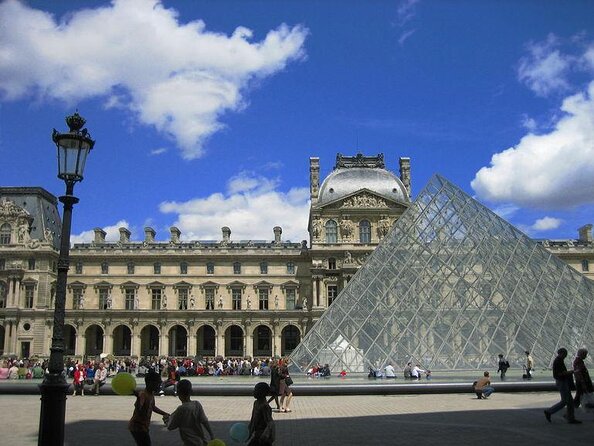
The meeting point is the Arc du Carrousel, between the Louvre and the Tuileries Gardens. This is a practical choice because you meet outside and enter the museum together rather than trying to find a guide somewhere inside the vast complex.
The supplied meeting information also gives the location as V86M+M4 Paris and V86M+M45 Paris, France. Keep the exact meeting instructions handy on your phone. The Arc du Carrousel is the key landmark to use when getting your bearings.
Barbara and Boris are the guides named for this experience. Their approach, based on the available descriptions of the tour, is conversational rather than stiff. Barbara brings a strong interest in art and culture, while both guides use humor to make difficult ideas easier to discuss.
That tone is useful here. Religious symbolism, martyrdom, erotic imagery, and sadomasochism can quickly become heavy or overly academic. A guide who can explain the ideas clearly, then give you room to react, makes the visit feel more like a thoughtful conversation than a lecture.
The tour is private, so only your group participates. That matters more than it might on a normal sightseeing walk. You can ask a direct question, disagree with an interpretation, or spend a little longer on a work without worrying about a large group waiting behind you.
About fifteen works, not a race through the museum
The route centers on around fifteen masterpieces. Some are well known. Others are older works that many first-time visitors pass without a second look.
That number is one of the strongest features of the plan. The Louvre is too large for a meaningful survey in three hours. Fifteen works give Barbara and Boris room to explain context, point out details, and connect one subject to another.
You should not expect a complete tour of the museum. You may miss galleries that matter to you, and the exact works shown are not specified in the available information. If your main goal is a broad introduction to the Louvre, a classic highlights tour may suit you better.
For this theme, though, selectivity makes sense. A work needs time if you are going to consider the pose of a body, the role of the viewer, the treatment of suffering, or the difference between religious devotion and erotic control.
The route also gives attention to works outside the busiest tourist paths. That can change the feel of the museum. You are not simply following the crowd toward the most photographed objects. You are being asked to notice how less famous pieces support the larger story.
Catholic martyrdom and the beauty of suffering
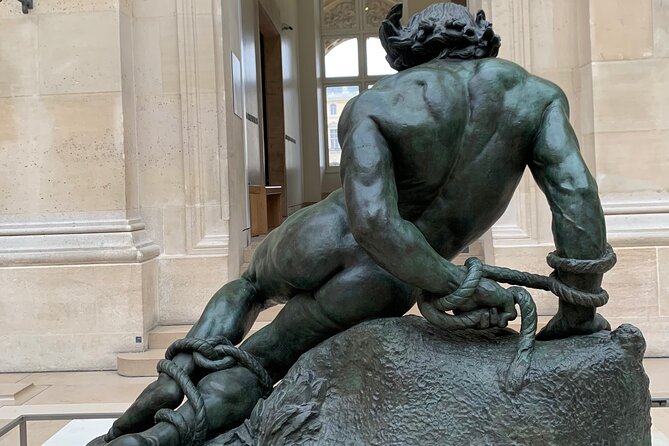
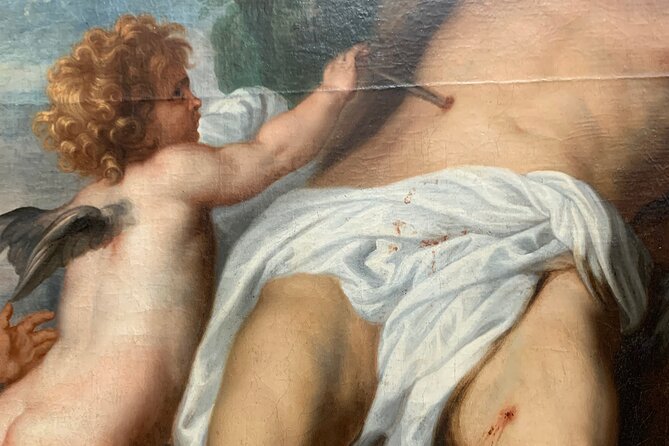
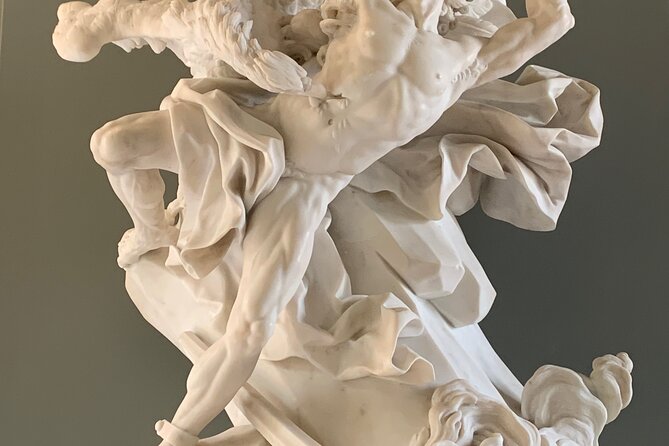
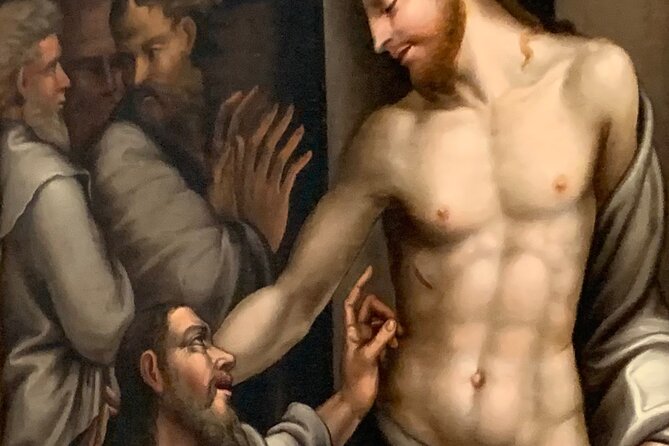
One of the tour’s central ideas is the link between Catholicism, martyrdom, and the veneration of pain. For centuries, Christian art presented suffering bodies as proof of faith, courage, and spiritual commitment.
That creates a complicated visual language. Wounds can signal holiness. Submission can signal virtue. A body in distress can be shown with beauty, tenderness, or even a kind of sensual appeal. The tour asks you to examine those choices rather than treating them as simple religious decoration.
This is where the visit can offer something useful even if you have no special interest in BDSM. It gives you a way to read religious art with more care. You can ask who has power, who is watching, who is suffering, and why the scene was considered worthy of admiration.
The subject also helps explain the word passion. In modern speech, passion usually suggests romantic or sexual feeling. In religious and artistic contexts, it can refer to suffering, especially the suffering of Christ. That overlap between desire, devotion, and pain is one of the ideas this tour aims to clarify.
You may find some of the material challenging. The point is not to make suffering seem simple or attractive. It is to show how Western art has repeatedly placed pain, beauty, faith, and desire close together.
Same city, a completely different afternoon:
- Disneyland® Paris 1-Day Ticket
★ 4.6 · 49,412 reviews - Paris: Versailles Palace and Gardens Full Access Ticket
★ 4.6 · 41,579 reviews - Paris: Evening River Cruise with Music
★ 4.4 · 22,721 reviews - Paris: Eiffel Tower Entry Ticket with Optional Summit Access
★ 4.4 · 20,035 reviews
How the BDSM theme changes your view
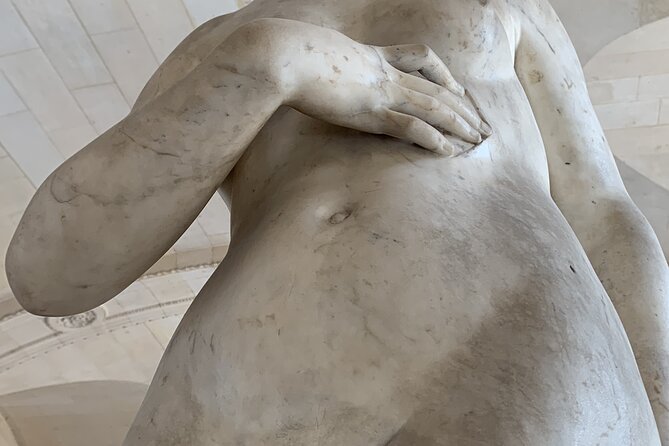
The tour’s most unusual feature is its treatment of BDSM as an overlooked force in the history of art and culture. That does not mean every work is presented as explicit sexual material. Rather, the guides use BDSM to frame questions about restraint, command, submission, punishment, and pleasure.
This can make familiar images feel less settled. A scene you once read as purely devotional may also raise questions about the role of the body and the viewer. A figure presented as a victim may also be shown with unusual beauty or dignity. A powerful figure may be defined not only by strength, but by the ability to control another person.
The approach works best if you are willing to consider more than one reading. Art rarely comes with a single fixed meaning, and the guides encourage discussion of the ideas they present. That interactive element is important. You are not expected to accept every interpretation without thought.
The subject is provocative, but the tone is not meant to be crude. The available comments about the visit describe clear explanations, subtle humor, and comfort with sophisticated ideas. That combination should help if you are curious but unsure how explicit or academic the experience will feel.
Still, I would not book this if you want a quiet, traditional art lesson with no adult themes. The entire point is to look at the Louvre through a less conventional lens.
Why the discussion matters as much as the objects
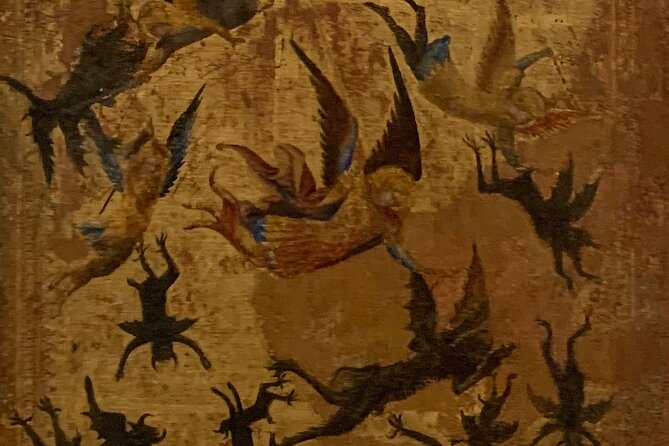
Many museum tours provide facts, dates, and names. Those details have value, but they can also leave you looking without really seeing. This experience puts interpretation first.
You are encouraged to discuss the ideas presented. That makes the tour a good fit for people who enjoy conversation and do not mind pausing to think. It also means the experience may feel different for each private group, since questions and reactions can shape the exchange.
I like that the focus is not limited to what is famous. A major museum often trains you to look only for the best-known names. Here, less prominent old masters have a role. They help show how artistic themes develop across periods and how some subjects fall out of the main tourist story.
The humor matters, too. Without it, a tour about Catholic suffering, erotic power, and sadomasochism could become grim or overly formal. Barbara and Boris are described as using jokes while keeping the explanations clear. That balance can make complex material easier to absorb during a long museum visit.
Three hours inside an overwhelming museum
The listed duration is about three hours, with admission included. That is enough time for a focused route, but not enough to see the Louvre in full.
You should arrive ready to concentrate. Fifteen works may sound modest in a museum this large, yet each stop can carry several layers of meaning. The pace will likely feel slower than a highlights walk, especially when the group discusses symbolism and interpretation.
The tour may end inside the museum. This is useful because you can continue exploring independently after the guided portion. You might want to see other galleries, return to a familiar masterpiece, or simply take a break before deciding what to do next.
The end point is also described as back at the meeting point, so confirm the practical arrangement when you book or meet the guides. The supplied information specifically notes that the tour can end in the museum, giving you freedom to continue your visit on your own.
The museum is near public transportation, and most people can participate. Service animals are allowed. No special physical requirements are given, so if you have a concern about walking, standing, or museum access, ask the provider before booking.
Is $345.72 per person good value?
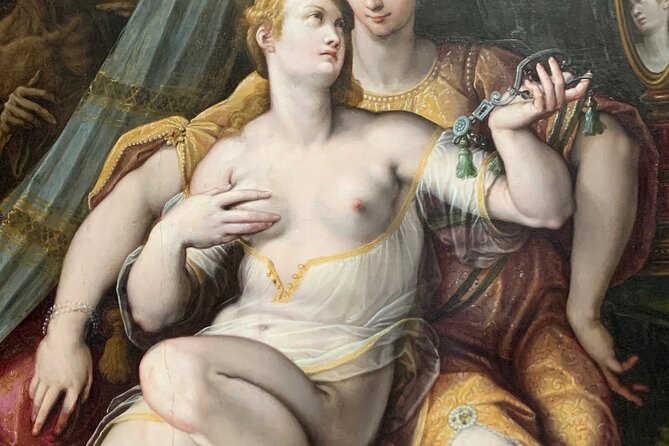
At $345.72 per person, this is expensive for a three-hour museum visit. The price makes the most sense for someone who wants a private, specialist discussion rather than a basic introduction to the Louvre.
Admission is included, which removes one extra expense. The private format also gives you the guides’ full attention, and the tour is built around a specific subject rather than a general list of highlights.
That said, value depends heavily on your interest in the theme. If you mainly want to see the Mona Lisa, Venus de Milo, and other standard sights, you may find the cost hard to justify. You could spend less on a general group tour and still see more famous works.
If you are drawn to the connection between art, religion, desire, and power, the price becomes easier to understand. You are paying for a particular interpretation and a conversation shaped around your group, not only for entry to the building.
For couples, friends, or small private groups who already know the Louvre, this can give a familiar museum a new purpose. The experience is also a better fit for repeat visitors than for someone who has never learned the museum’s basic layout and wants a broad overview.
Who should book this Louvre visit?
I would consider this tour if you enjoy art that raises uncomfortable questions. It suits people who like cultural history, symbolism, gender and power studies, religious imagery, or frank discussion of sexuality.
It may also work well for someone who has visited the Louvre before and wants a fresh angle. The route’s attention to overlooked works means you are less likely to spend the entire time repeating the standard checklist.
The private setup suits groups with shared interests. You can ask questions that might feel too specific in a large tour, and the conversation can remain focused on the parts that catch your attention.
I would skip it if you want a family-friendly introduction, a quick tour of the top masterpieces, or a visit centered on photography. The themes are adult and sometimes provocative, and the high price rewards commitment to the subject.
Book at least 24 hours before the start time if your plans are uncertain. You can cancel for a full refund up to that point. Cancellations within 24 hours are not refunded, and changes made inside that period are not accepted.
My take on Barbara and Boris’s art-and-love route
The best reason to book this experience is its point of view. It turns the Louvre from a collection of famous objects into a place where desire, devotion, authority, and suffering have been pictured again and again.
I also value the balance of famous and overlooked works. About fifteen stops is a sensible number for a serious three-hour conversation, and the option to continue inside the museum gives you useful freedom afterward.
The price remains the clear warning. At $345.72 per person, this is not an easy casual add-on. But if the theme speaks to you, and you prefer a private discussion with Barbara and Boris to a standard highlights route, it offers a focused way to see the Louvre with fresh eyes.
FAQ
How long does The Louvre: art and love last?
The tour lasts approximately two to three hours. The itinerary lists the Louvre visit as three hours.
What is included in the price?
Museum admission is included. The listed price is $345.72 per person, and the experience provides a mobile ticket.
Where do I meet the guides?
You meet at the Arc du Carrousel, between the Louvre Museum and the Tuileries Gardens. The supplied location codes are V86M+M4 Paris and V86M+M45 Paris, France.
Who leads the tour?
The experience is provided by Barbara and Boris. The tour information and available comments identify both guides by name.
Is this a private tour?
Yes. Only your group participates in the activity.
Can I continue visiting the Louvre afterward?
Yes. The tour can end inside the museum, allowing you to continue exploring independently.
What is the cancellation policy?
You can cancel at least 24 hours before the local start time for a full refund. Cancellations or changes made less than 24 hours before the start time are not accepted, and the amount paid is not refunded.
Just added around Paris
- Private Paris Marche d’Aligre Walking Tour with Tastings★ 5.0 · 8 reviews
- Private Louvre Museum Tour for Kids & Families with Alberto or his team in Paris★ 5.0 · 41 reviews
- Private Highlights of Paris Tuk-Tuk Experience★ 5.0 · 26 reviews
- Paris Latin Quarter Walking Tour: History & Culture – Small Group★ 5.0 · 14 reviews
- Private Highlights of Paris Bike Tour★ 4.5 · 15 reviews
- Paris Musee d’Orsay PRIVATE TOUR with a Local Private Guide★ 5.0 · 41 reviews
- Private Half Day Historic Tour★ 5.0 · 58 reviews
- Pere Lachaise Cemetery Paris – Exclusive Guided Walking Tour★ 5.0 · 72 reviews
Louvre Museum Tours, compared.
Louvre Guided Tour with Reserved Access & Boat Cruise
Read our review →
Louvre Museum Masterpieces Guided Tour with Access
Read our review →
Louvre Museum Entry Ticket With Host and River Cruise
Read our review →
Priority Access Louvre with Host -Direct to Mona Lisa
Read our review →
Mona Lisa & Louvre Masterpieces Tour with Reserved Access
Read our review →
Louvre Museum – Exclusive Guided Tour (Entry Included)
Read our review →
Louvre Reserved Ticket and River Cruise Combo
Read our review →Browse the lists this tour appears in