
Reviewed · PARIS HOP-ON HOP-OFF BUS TOURS
Paris: Discovery Hop-On Hop-Off and Paris by Night Tour
Paris is at its most useful from the top deck of a bus when you first arrive. This Tootbus experience links the Opera, Louvre, Notre-Dame, Latin Quarter, Champs-Elysées, and Eiffel Tower, then adds a two-hour night circuit when the monuments are lit.
I like the freedom to get off near a museum or neighborhood instead of piecing together every connection yourself. I also like the five included walking tours, including routes around the Eiffel Tower, Montmartre, fashion, and Emily-themed Paris.
The catch is traffic. Day buses can move slowly, and long waits at stops can eat into your sightseeing time. The recorded commentary is light and family-friendly, but it may not satisfy you if you want detailed history.
Key points at a glance
- See Paris twice: Use the daytime bus for practical sightseeing, then return for a two-hour ride through illuminated Paris.
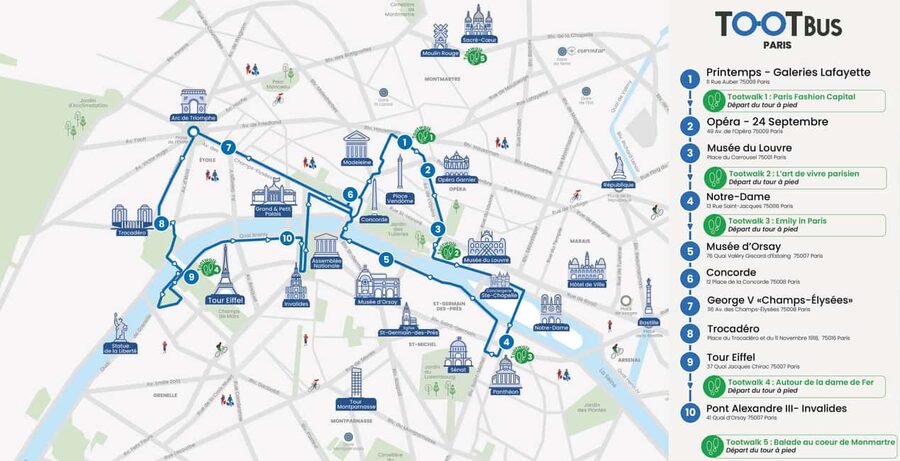
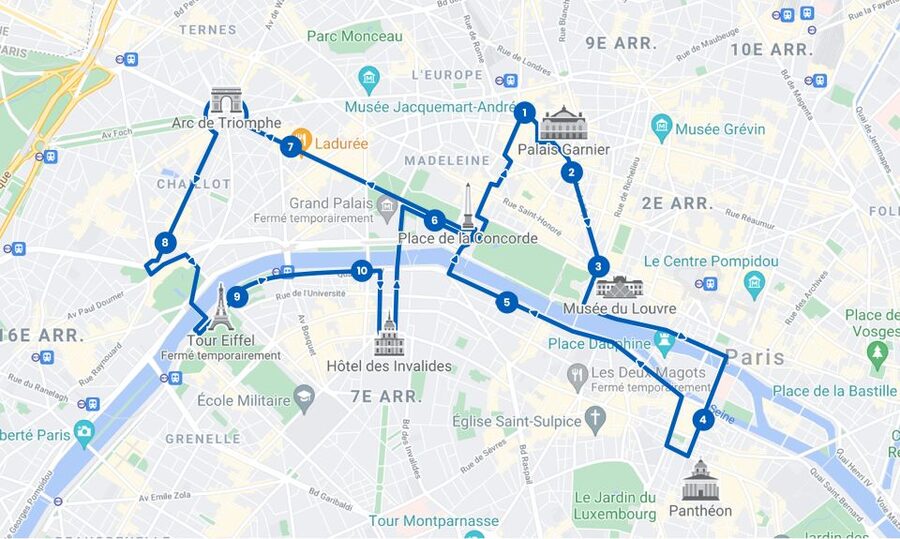
- Start at ten useful stops: The route covers Opera, the Louvre, Notre-Dame, the Eiffel Tower, Pont Alexandre III, and Les Invalides.
- Add five walking tours: Explore areas such as Montmartre, the Eiffel Tower, fashion districts, and locations connected with Emily.
- Track the next bus: The Tootbus app includes a where is my bus feature, which helps when traffic changes the schedule.
- Bring the children: Audio commentary is available in ten languages, with a separate English and French children’s version.
- Plan around daylight hours: Service generally begins at 9:30 AM, with the final departure ranging from 5:00 PM to 7:00 PM depending on the season.
What this Paris bus pass really gives you
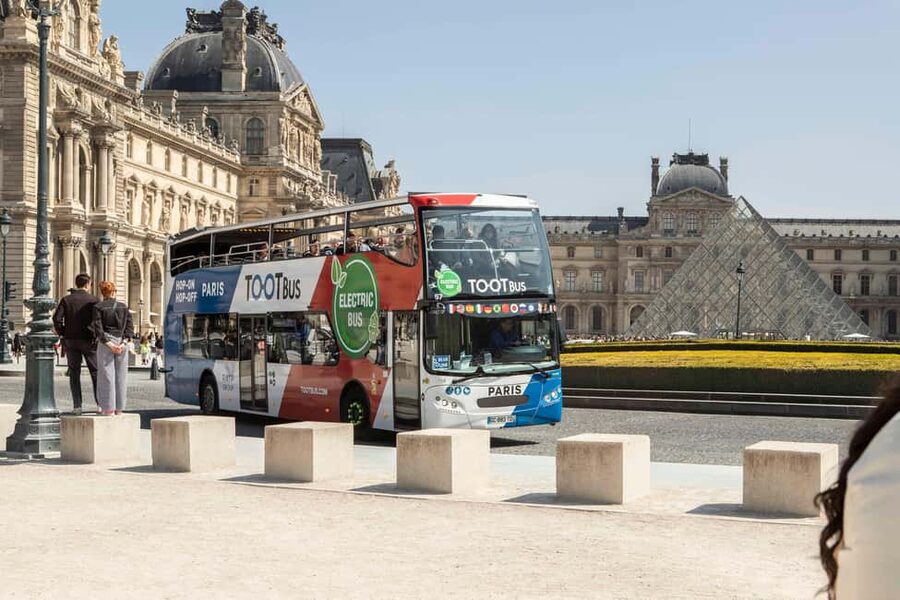
The main product is a hop-on hop-off day pass valid for one, two, or three days, depending on the option you choose. You can board at any designated stop and get off when a museum, church, plaza, or neighborhood catches your eye.
The second part is a separate night tour lasting about two hours. It follows a panoramic route rather than acting as late-night transport. You stay on board and watch Paris roll past under lights, with the Eiffel Tower as the visual high point.
At $65 per person, the value depends on how actively you use it. One day alone can be expensive for simple transportation, especially since the Metro is usually faster for longer cross-city trips. The price makes more sense if you use the bus as a sightseeing ride, take several walking tours, and include the night circuit.
The pass is particularly useful for a first visit, a short stay, or a family group that wants an easy overview before choosing which places deserve more time. I would not treat it as a replacement for the Metro or a museum ticket. It is a sightseeing framework, not an all-purpose Paris transport pass.
More hop-on hop-off bus tours in Paris:
- Paris: Big Bus Hop-On Hop-Off Tour with Optional Cruise
★ 4.4 · 13,279 reviews - Paris: Tootbus Hop-on Hop-off with optional river cruise
★ 4.3 · 11,924 reviews - Paris Big Bus Hop-On Hop-Off Tour with Optional River Cruise
★ 4.0 · 6,534 reviews
Beginning at Opera and the grands magasins
The main starting point is at 23 Boulevard des Capucines, near Opera and the grand department stores Printemps Haussmann and Galeries Lafayette. This is a practical place to begin because you are already close to major shopping streets and the Palais Garnier.
The bus passes the ornate Opera House, whose grand facade is one of the best early views on the route. You can stay on for a quick orientation ride, or use this area as your first stop if you want department stores, cafes, and the broad boulevards around the Opera district.
The nearby bus stop is also the departure point listed for the daytime circuit. Since traffic can affect arrival times, the app is worth checking before you walk to the curb. The printed stop information and the live bus feature should be treated as companions, especially during busy periods.
Louvre, Notre-Dame, and the historic center
The Louvre stop is listed at Place du Carrousel, though the pickup point has been relocated to the Comédie-Française at 3 Avenue de l’Opéra until further notice. Check the current location before setting out. This is one of the most useful stops for combining a bus ride with serious sightseeing.
The Louvre is far too large for a quick visit. If you plan to enter, give it a separate block of time and use the bus only to get there or continue afterward. From the top deck, the long approach through the former royal district helps you understand the scale of the complex better than a rushed walk through its courtyards.
The Notre-Dame stop, at 13 Rue Saint-Jacques, places you near the Île de la Cité and the historic center. Notre-Dame itself is the obvious draw, but Sainte-Chapelle is also nearby and deserves attention for its stained glass. The stop also makes it easy to walk into the Latin Quarter.
This is one area where getting off pays off. The streets around the cathedral, river, bookshops, and old university quarter are better explored on foot than from a moving bus. Allow extra time here, because traffic and pedestrian congestion can make the next bus less predictable.
The Latin Quarter, Panthéon, and Luxembourg
The Panthéon and Luxembourg stop is at Place Edmond Rostand. It gives you access to the Latin Quarter, the Panthéon, and the Luxembourg Gardens.
I like this part of the route because it offers a break from the grand monuments. The Latin Quarter has a more lived-in feel, with narrow streets, student energy, and plenty of places to stop for a meal. Luxembourg Gardens provide a calmer setting if you need a pause from traffic and crowds.
The Panthéon is a strong choice if you want a major historical building without committing several hours to a huge museum. The bus stop is also well placed for a short walk through the quarter before you continue toward the Seine.
The practical warning is simple: do not try to cover the Latin Quarter, Luxembourg Gardens, Panthéon, and Notre-Dame in one quick hop-off. Pick one focus, then return to the route when you are ready.
More evening tours in Paris:
- Paris: Big Bus Panoramic Night Tour by Open-Top Bus
★ 4.4 · 4,168 reviews - Paris: Discover Paris by Night in a Vintage Car with a Local
★ 4.6 · 1,058 reviews - Paris by Night Walking Tour: Ghosts, Mysteries and Legends
★ 4.5 · 924 reviews - Paris Big Bus Open Top Panoramic Night Tour
★ 4.0 · 874 reviews
Musée d’Orsay and the Seine-side views
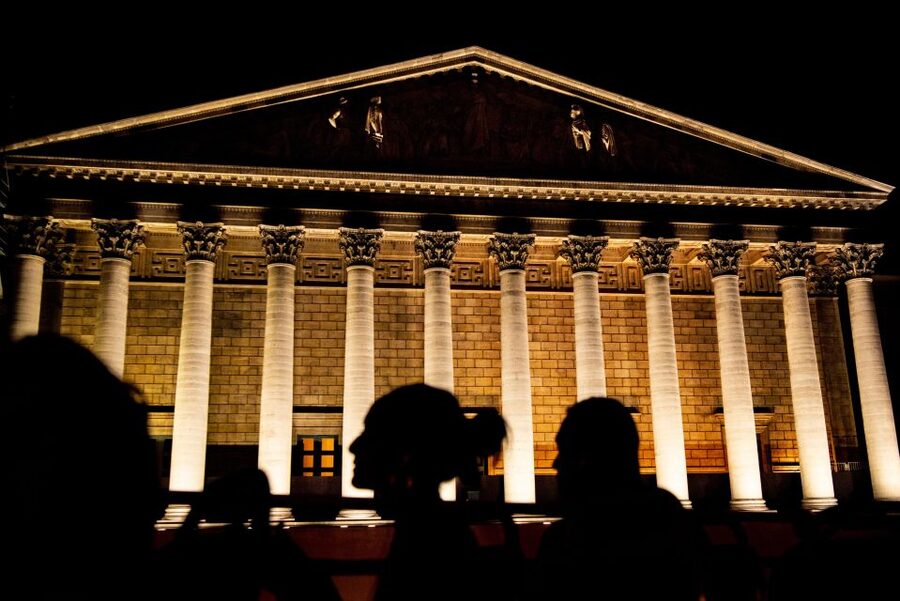
The Musée d’Orsay stop is at 76 Quai Valéry Giscard d’Estaing. The museum occupies a former railway station and is especially known for its Impressionist collection. Even if you do not enter, the riverfront position gives you a fine view of central Paris.
This stop is a good pairing with the Louvre, though I would not visit both museums in a single short day unless you are very selective. Use the bus for the broad picture, then choose one museum for a focused visit.
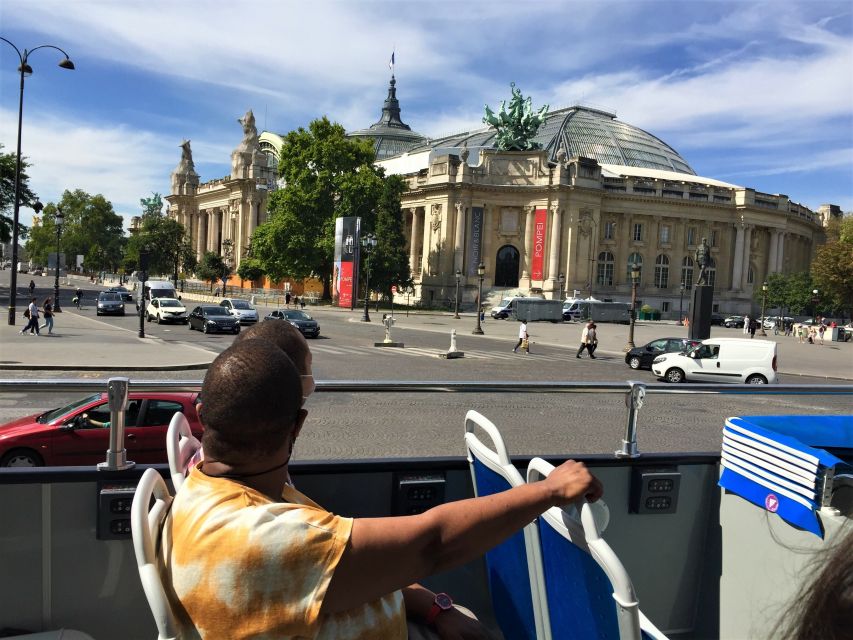
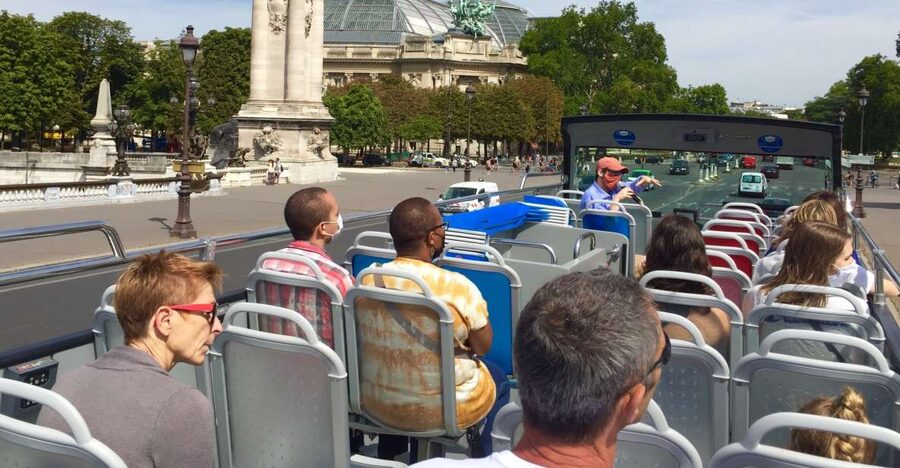
The route along the Seine is one of the best places to remain on board. You get changing views of bridges, quays, and monumental buildings without needing to navigate several crossings. The open top gives you a better angle for photos, but it also leaves you exposed to sun, wind, and rain. Bring a layer even on a mild day.
Concorde, the Champs-Elysées, and the Lido
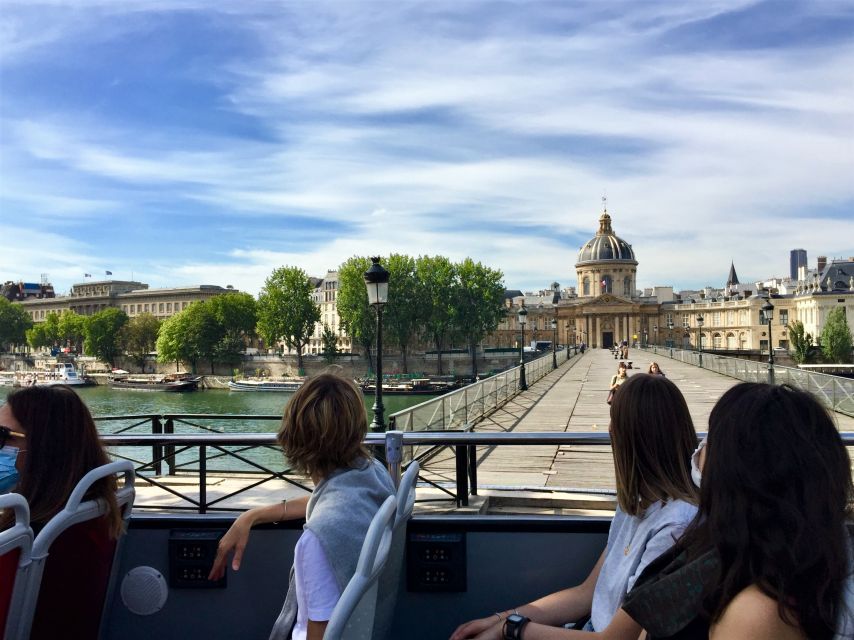
Place de la Concorde is a major transition point between the river, the Tuileries, the Champs-Elysées, and the city’s grand western axis. The bus stop is at 12 Place de la Concorde.
From here, the route continues along the Champs-Elysées toward the Arc de Triomphe. This stretch is impressive from the upper deck because the avenue’s length and scale are hard to grasp at street level. It is also one of the busiest parts of the city, so do not count on a perfectly timed ride.
The bus passes the Paris Lido, once a famous cabaret address on the avenue. The route does not include admission, so consider this a drive-by landmark rather than a full attraction stop.
If shopping is your goal, get off and explore. If your goal is simply to see the grand axis, stay aboard and save your walking time for the Eiffel Tower or Montmartre.
Trocadéro and the Eiffel Tower
The Trocadéro stop is at 1 Place du Trocadéro, while the Eiffel Tower stop is at 69 Quai Jacques Chirac. Both offer different ways to experience Paris’s most recognizable monument.
Trocadéro is the classic viewpoint, with an open approach toward the tower and broad photo angles. The Eiffel Tower stop puts you closer to the structure and the surrounding riverfront. I would choose Trocadéro for the first look and the tower stop if you have a timed visit or want to walk around its base.
The bus ride itself is useful here because it shows how the tower relates to the Seine, nearby bridges, and the wider city. If you plan to go up the tower, reserve that separately. This pass provides the route and the view, not tower entry.
The night circuit also makes the Eiffel Tower a key moment. One German-language review praised the timing of reaching the tower for its light display. The exact timing can vary, but the evening route is built around seeing the monuments illuminated, and the tower is the obvious payoff.
Pont Alexandre III and Les Invalides
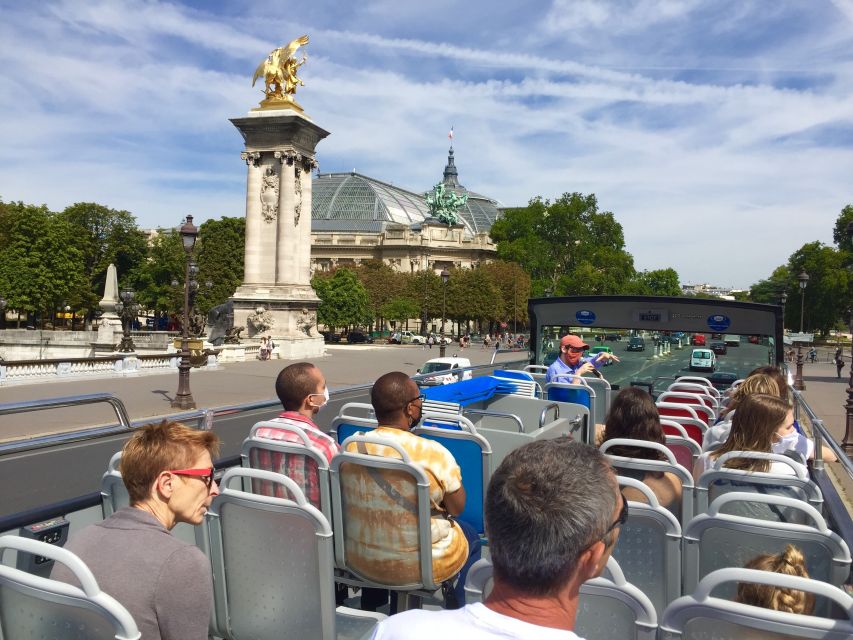
The final listed stop is Pont Alexandre III and Les Invalides, at 41 Quai d’Orsay. Pont Alexandre III is one of Paris’s most ornate bridges, with gilded details and wide views across the Seine.
Les Invalides, with its large golden dome, is another strong stop for a walk or a museum visit. The area is less frantic than the Champs-Elysées and offers a fine change of pace after the busier central sights.
This section also helps explain why a hop-on hop-off pass can be useful. You can cover a long riverfront stretch, then get off at a location that would take more effort to reach on foot. Just remember that the return route may take time during heavy traffic.
Five walking tours add real value
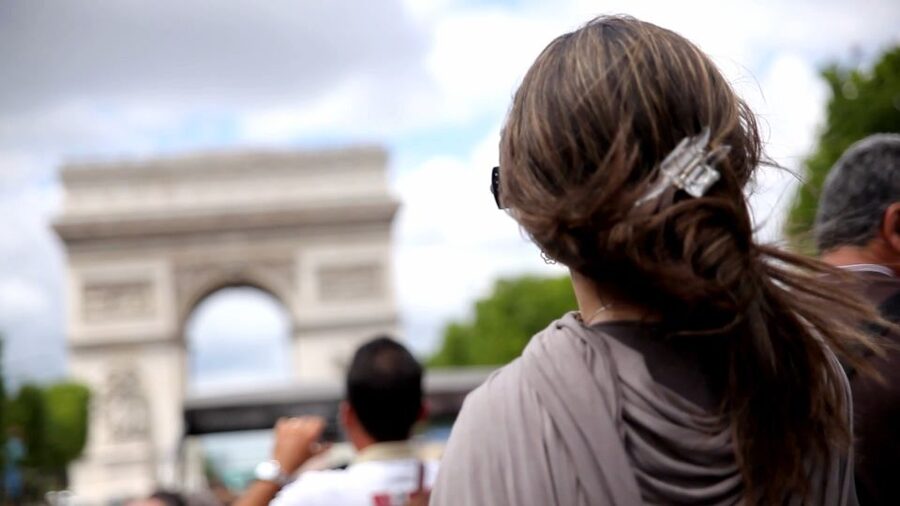
The included walking tours are an important part of the package. The listed themes include Around the Eiffel Tower, Emily, Fashion, and Montmartre, with a fifth route also included in the program.
These walks change the pace. The bus gives you an overview, but a walking route lets you notice street details, side lanes, shopfronts, and the shape of a neighborhood. That is especially useful in Montmartre, where a bus cannot reproduce the feeling of moving through the hilltop streets.
The Emily walk will appeal to anyone interested in the Paris settings associated with the television series. The fashion route fits the department-store and luxury-shopping side of the city. The Eiffel Tower walk can help you orient yourself before or after a visit to the monument.
I would use these walks as short neighborhood introductions, not as substitutes for a full guided tour. The supplied information does not name individual walking guides, so you should expect the main sightseeing commentary to come through the recorded system rather than a named live guide.
The two-hour night tour from the Louvre
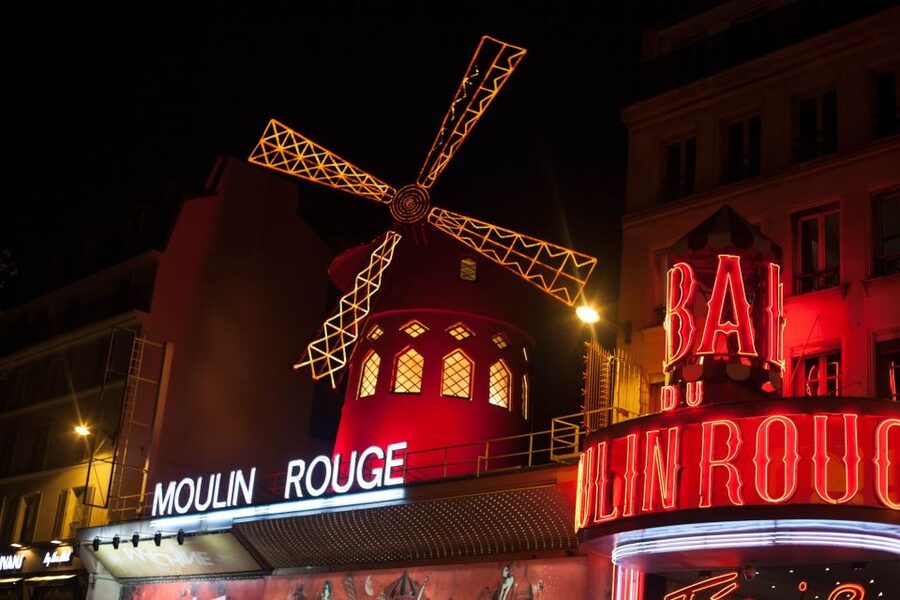
The night tour departs from Place du Carrousel du Louvre, near the Louvre stop. You should arrive 20 minutes before the scheduled departure, and the exact time appears on your e-ticket.
Unlike the day service, this is a stay-on-board ride. The route passes the Opera area, Louvre, Notre-Dame, Latin Quarter, Musée d’Orsay, Concorde, Champs-Elysées, Lido, Eiffel Tower, Pont Alexandre III, and Les Invalides before returning to the Louvre area.
Paris changes character after dark. Stone facades pick up warm light, bridges become bright frames across the Seine, and the major monuments are easier to read as a single city scene. The open top is the reason to choose this over simply taking a taxi at night, though the upper deck can be cold.
The night ride received especially strong praise for organization, friendly staff, and the pleasure of seeing the city lit up. That is the clearest strength of the package. If you can take only one part of the experience, I would choose the night tour for atmosphere and use ordinary public transport for daytime movement.
Audio commentary, children, and the limits
Recorded commentary is available in Spanish, Chinese, English, French, German, Italian, Japanese, Arabic, Portuguese, and Russian. Children’s commentary is available in English and French.
The tone is designed to be easy to follow, not academic. That works well when you want short facts while watching the city pass by, or when children need something to keep them engaged. One French-language rating suggested that the music could use more variety.
The more serious criticism concerns the content. One Spanish-language review found the narration too thin and too focused on jokes and casual monologue. The same complaint applied to the night ride, where the commentary was repeated rather than freshly recorded for the evening route.
So set your expectations correctly. You are buying a moving orientation with recorded information, not a detailed lecture on Parisian art and history. If you want depth, use the ride to identify places, then explore them with a museum guide, book, or more specialized tour.
Timing, traffic, and the Tootbus app
Approximate daytime service begins at 9:30 AM. From October 27, 2025 through March 29, 2026, the last departure from stop one is around 5:00 PM. From March 30 through June 28, 2026, it is around 6:30 PM. From June 29 through September 27, 2026, it is around 7:00 PM.
Buses are expected about every 10 to 15 minutes in the first period, and about every 7 to 10 minutes in the summer period. These are estimates, not guarantees. Paris traffic can change the rhythm, and one poor experience involved an incorrect meeting point and a bus that did not arrive as expected.
Use the Tootbus app to check the live bus position and current updates. Keep the latest stop information on your phone, particularly for the Louvre relocation and the night departure point. The daytime pass is valid only on the date booked, even if you select an option lasting more than one day.
All buses are wheelchair accessible. Children up to age three ride free on a parent’s lap, while child rates apply from ages four through twelve.
Who gets the best value from this tour
This is a good fit if you are visiting Paris for the first time and want a clear orientation without planning every street connection. It also suits families, since the children’s audio option and open-top views give younger riders something to do between stops.
It works well for anyone with limited walking ability, although you should still allow extra time for boarding and traffic. The accessible buses help, but the city stops themselves can remain busy and crowded.
I would be more cautious if you already know Paris well or care most about reaching places quickly. The Metro will usually make better use of your time for cross-city journeys. The day route is best when you want to look out the window, not when you need a guaranteed fast arrival.
Should you book the Paris Discovery and Night Tour?
Book it if you want a broad first look at Paris, plan to use several stops, and value the two-hour illuminated ride. The night tour is the strongest part, while the daytime pass gives you a flexible way to connect major sights and neighborhoods.
At $65, the package earns its keep when you use the walking tours and make the night circuit part of your plan. It is less convincing as a simple bus transfer or as a substitute for detailed guiding.
My practical plan would be this: take one full daytime loop early in your stay, choose two or three stops for proper visits, use one or two walking routes, then reserve the evening ride for Paris after dark. Keep the app open, allow for traffic, and treat the recorded commentary as a helpful introduction rather than the final word.
FAQ
How long is the night tour?
The night tour lasts about two hours and returns to the Louvre area.
Where does the night tour depart?
It departs from Place du Carrousel du Louvre, near stop two. The departure time is shown on your e-ticket, and you should arrive 20 minutes early.
How long is the daytime pass valid?
The available pass is valid for one, two, or three days, depending on the option booked. The ticket is valid only on the date or dates specified in the booking.
What languages are available for the audio guide?
Audio commentary is available in Spanish, Chinese, English, French, German, Italian, Japanese, Arabic, Portuguese, and Russian.
Is there audio commentary for children?
Yes. A children’s audio guide is available in English and French.
Is the bus wheelchair accessible?
Yes. All buses are wheelchair accessible.
Just added around Paris
- Private Paris Marche d’Aligre Walking Tour with Tastings★ 5.0 · 8 reviews
- Private Louvre Museum Tour for Kids & Families with Alberto or his team in Paris★ 5.0 · 41 reviews
- Private Highlights of Paris Tuk-Tuk Experience★ 5.0 · 26 reviews
- Paris Latin Quarter Walking Tour: History & Culture – Small Group★ 5.0 · 14 reviews
- Paris Musee d’Orsay PRIVATE TOUR with a Local Private Guide★ 5.0 · 41 reviews
- Private Highlights of Paris Bike Tour★ 4.5 · 15 reviews
- Private Half Day Historic Tour★ 5.0 · 58 reviews
- Pere Lachaise Cemetery Paris – Exclusive Guided Walking Tour★ 5.0 · 72 reviews
Paris Hop-On Hop-Off Bus Tours, compared.

Big Bus Hop-On Hop-Off Tour with Optional Cruise
Read our review →
Tootbus Hop-on Hop-off with optional river cruise
Read our review →
Paris Big Bus Hop-On Hop-Off Tour with Optional River Cruise
Read our review →
Hop-On Hop-Off Seine Cruise Pass with 9 Stops
Read our review →
Paris Seine River Hop-On Hop-Off Sightseeing Cruise by Batobus
Read our review →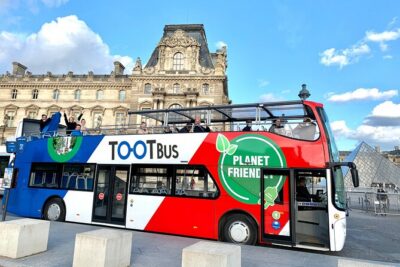
Paris Tootbus Hop-On Hop-Off Bus Tour (Optional Cruise)
Read our review →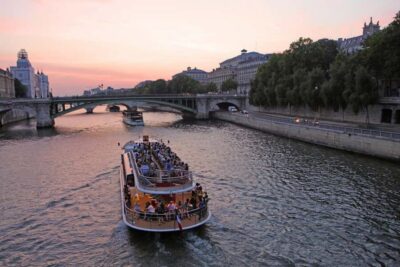
Hop-on Hop-off Bus Tour & Seine Cruise Bundle Tour
Read our review →Browse the lists this tour appears in