

Reviewed · LES INVALIDES AND NAPOLEON TOURS
Paris: Invalides Dome – Skip-the-Line Guided Museum Tour
Paris’s gold dome hides one of the city’s most focused history visits. Inside the Musée de l’Armée and the church beneath it, you move from Louis XIV’s care for wounded soldiers to Napoleon’s grand ambitions, final defeat, and elaborate tomb. The story has scale, but a good guide keeps it human.
I like the small maximum of eight people, which gives you a fair chance to ask questions. I also like the way the guide links the building, the cathedral, Napoleon’s tomb, and the museum displays into one story instead of leaving you to wander through a huge collection alone. The main drawback is the price, $128 per person for two hours, and the tour involves a moderate amount of walking.
Key points to know before booking
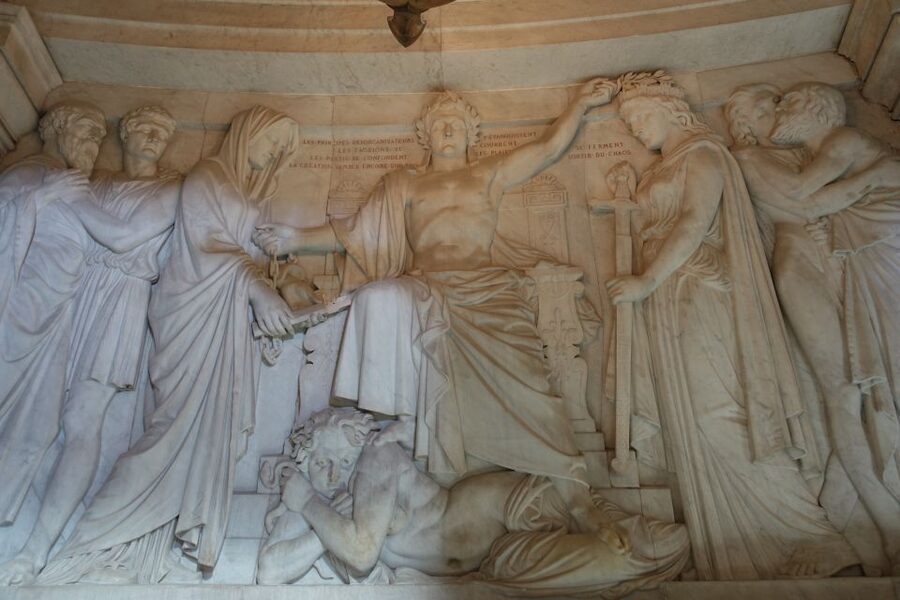
- Napoleon’s tomb is the visual centerpiece: See his monument beneath the gold dome, along with the graves of people close to him.
- Louis XIV’s veteran hospital comes first: The tour explains why Invalides was built and how it served former soldiers.
- Small groups keep the visit personal: Each guide leads no more than eight people, with private options available.
- The guide makes the difference: Florent, Mathieu, Anatole, Daniel, and Taylor have each been praised for clear explanations, strong storytelling, and thoughtful answers.
- The museum is much larger than two hours: A guide helps you focus on Napoleon, major military episodes, and the most useful displays.
- Plan for practical limits: Large bags are not allowed, some rooms require quiet, and the semi-private option is not suitable for wheelchair users or people with walking disabilities.
Starting in the Invalides courtyard
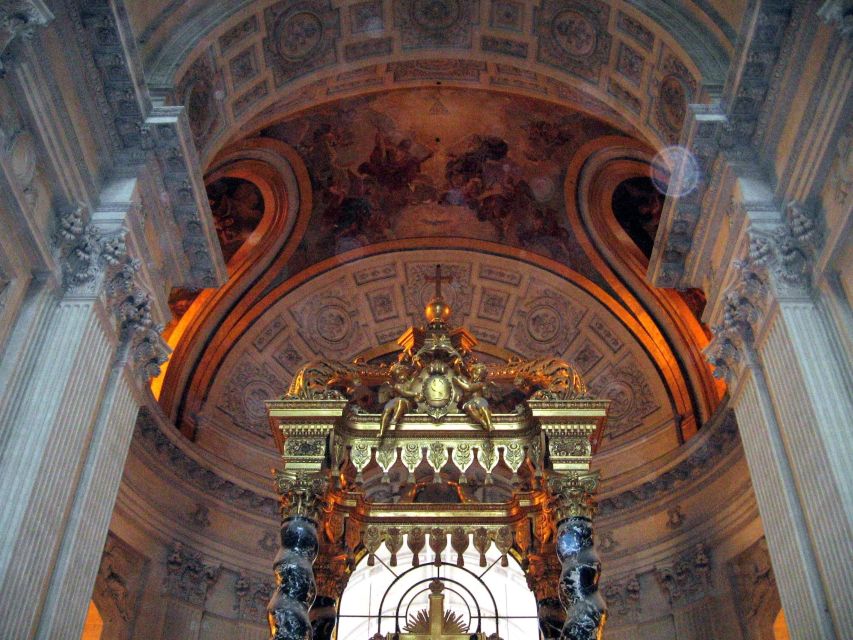
Your visit begins in the broad courtyard of Les Invalides, where the building’s military purpose becomes clear before you enter. This was not first designed as a monument to Napoleon. King Louis XIV created it in the 17th century as a hospital and home for soldiers returning from battle.
That opening matters. It gives you the right frame for the site. Invalides is not only about victory parades and famous commanders. It also speaks to the cost of war, the men who came back injured, and the royal effort to care for veterans.
Your guide uses the courtyard to explain the building’s origins and its place in French military history. That is especially useful if you know Napoleon’s name but little about the system that came before him. Louis XIV, often called the Sun King, strengthened France’s army and helped make military power a central part of royal rule.
The courtyard also gives you a moment to get your bearings. Invalides contains several museums and rooms, so entering without a plan can turn into a long march through displays. A guide helps you understand what you are seeing and why it matters.
More Les Invalides and Napoleon Tours:
- Les Invalides: Napoleon’s Tomb & Army Museum Entry
★ 4.6 · 9,185 reviews - Paris: Aura Invalides Immersive Experience Entry Ticket
★ 4.7 · 3,360 reviews - Paris Entrance Ticket to the Aura Invalides Immersive Show
★ 4.0 · 174 reviews
The church built for former soldiers
The next major stop is the church Louis XIV built for the troops housed at Invalides. Its religious purpose and military setting sit side by side, creating one of the site’s most striking contrasts.
The church offered former soldiers a place for worship and rest after combat. At the same time, its grand design reflects royal power and France’s military pride. Your guide connects those two ideas, showing how the building served both the people who fought and the king who sent armies into battle.
Pay attention to the tombstones and graves around this section. The tour includes time to stroll past artistic burial monuments, which add a more personal note to the formal architecture. These memorials help shift the focus away from famous names alone and toward the many people tied to France’s wars.
Some rooms require quiet or limit the right to speak. That means your guide may pause or keep commentary brief in certain areas. This is not a flaw in the tour, but it does mean the visit will not be one continuous lecture from doorway to doorway.
Beneath the gold dome: Napoleon’s tomb
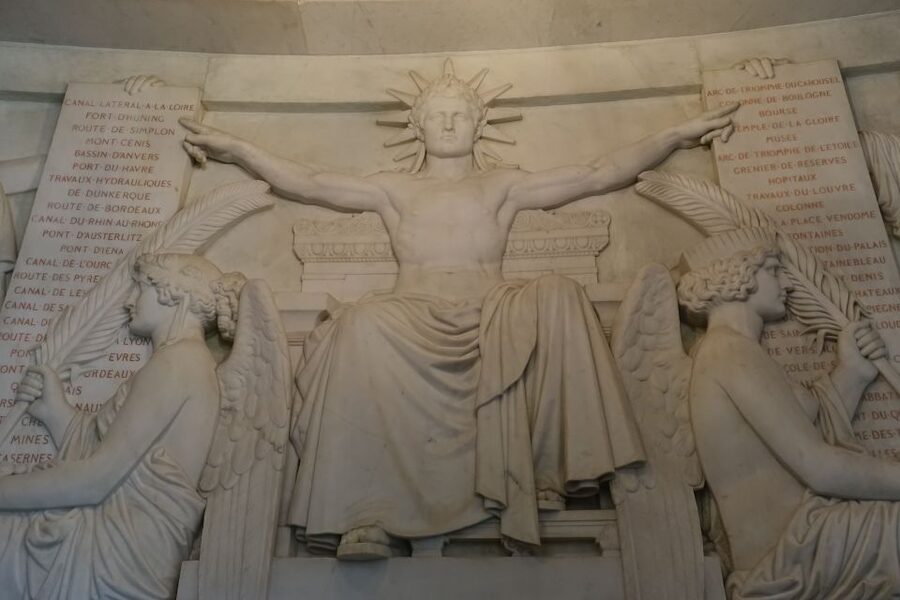
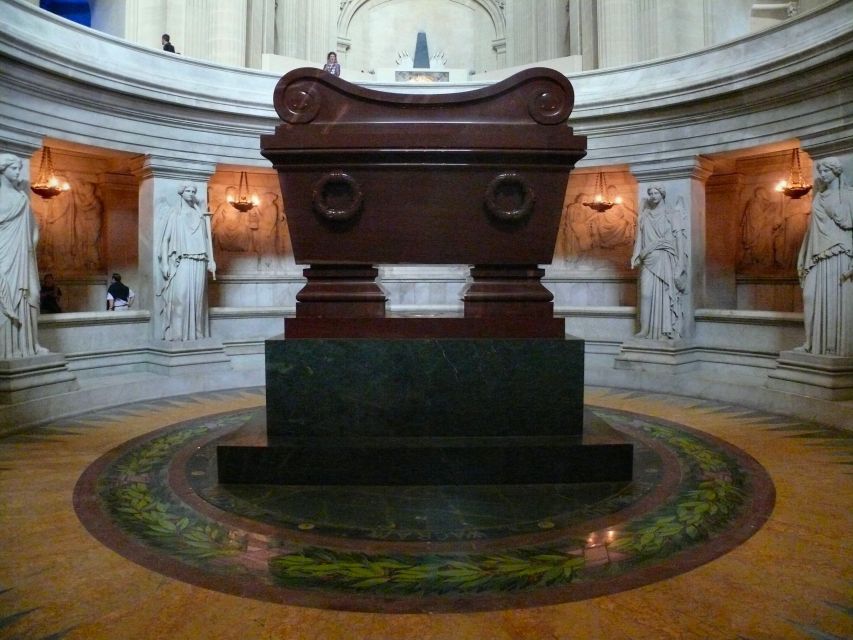
Napoleon’s tomb is the emotional center of the visit. His remains lie beneath the magnificent gold dome, surrounded by ornate decoration that presents him as a leader worthy of national memory.
The setting is deliberately grand. Napoleon was a brilliant general and an audacious emperor who helped shape France’s image of military greatness. Yet his story also includes overreach, defeat, and exile. Your guide explains that full arc rather than treating him as a simple hero.
Seeing the tomb in person gives the story a physical anchor. You are no longer dealing only with dates and battle names. You are looking at the place chosen to preserve Napoleon’s memory and project a particular idea of France.
The tour also includes tombs connected to Napoleon. These help place him within a wider family and political circle. The effect is useful because it shows that his story did not exist in isolation. Power, loyalty, succession, and memory all sit around the central monument.
I would not expect the tomb area to feel quiet or understated. It is an ornate homage to Napoleon, and the architecture makes a strong argument about his importance. If you prefer a more critical or stripped-back presentation, listen closely to the guide’s explanation of his defeats and exile. That balance keeps the visit from becoming simple military worship.
Making sense of the Musée de l’Armée
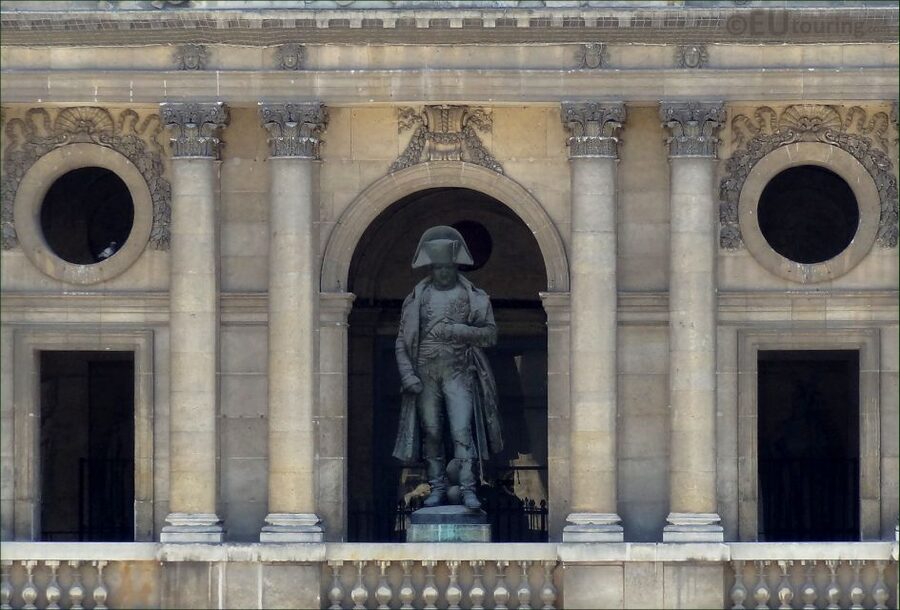
After the church and tomb, you spend time in the museum. This is where the tour earns its keep for many people. The collections are extensive, and two hours is not enough to see everything carefully.
You may encounter military artifacts, recreated scenes, and maps that trace Napoleon’s victories and defeats. These displays give shape to campaigns that can otherwise blur together. Maps are especially helpful because they let you follow the movement of armies and see how ambition turned into military risk.
The guide’s role is to select rather than rush. Anatole, for example, is noted for focusing on the parts of Invalides that best matched the group’s interests. That is an important skill here. A guide who tries to cover every gallery may leave you with a list of objects but no clear story.
The strongest version of this tour links military events to the evolution of France. Daniel has been praised for explaining how military history connected with the country’s changing political life and major figures. That approach gives you more than a sequence of battles. It shows why those battles mattered.
The museum also helps you see Napoleon beyond his famous stature. Artifacts and maps reveal planning, success, setbacks, and the limits of his power. The result is a more grounded portrait of a man who could win spectacularly but ultimately pushed too far.
More art museums in Paris:
- Paris: Louvre Museum Timed-Entrance Ticket
★ 4.6 · 71,977 reviews - Louvre Museum Masterpieces Guided Tour with Access
★ 4.5 · 12,023 reviews - Paris: Louvre Museum Entry Ticket With Host and River Cruise
★ 4.6 · 9,926 reviews - Louvre Museum – Exclusive Guided Tour (Entry Included)
★ 5.0 · 6,296 reviews
Why the guide matters so much
This is a guide-led visit, not simply a faster way through the entrance. Your experience will depend heavily on the person leading it.
Florent has earned praise for making the subject informative and engaging, while Mathieu has been especially effective with families and younger history fans. One family chose the visit for a 13-year-old who loved history, and Mathieu answered questions with patience and care.
Taylor is noted for adding background that helped turn a first visit into something more than a quick look at the building. That is exactly the problem a guided tour should solve. Without context, you might notice the dome, the tomb, and a few impressive objects, then leave with only a loose sense of what the site means.
Anatole’s strength is selecting the most worthwhile parts of a vast museum and adding anecdotes. Daniel brings together military events and the wider development of France. These examples suggest that you should tell your guide what interests you early on. If Napoleon matters most, say so. If you prefer architecture, royal history, or military technology, that information can help shape the emphasis.
The advertised languages are English, French, German, Russian, Spanish, and Italian. Private and small-group formats are available, and the group size is capped at eight people per guide. That limit is valuable in rooms where a large crowd would make questions and conversation difficult.
Is two hours enough?

Two hours is enough for a guided introduction to the main story, not enough for every collection at Invalides. That distinction is important when you decide how to plan your day.
You can expect a focused route through the courtyard, the church, Napoleon’s tomb, related tombs, and selected museum displays. The guide keeps the visit moving, so you should leave with a clear outline of Louis XIV’s role, the purpose of Invalides, Napoleon’s rise, and his eventual downfall.
If you want to examine every uniform, weapon, map, and gallery at your own pace, you will need additional time beyond the tour. The museum is too large for a complete visit in a single two-hour route.
I see the short duration as a benefit if you have limited time in Paris. It gives you a strong introduction without taking over an entire day. It also leaves room for another museum or neighborhood afterward.
The $128 price and what it buys
At $128 per person, this is not a bargain admission ticket. You are paying for more than entry: skip-the-line access, a professional art historian guide, and a private or small-group format.
The value depends on how much help you want with the museum. If you already know Napoleonic history well and enjoy reading labels alone, the cost may be hard to justify. You could prefer a self-guided visit and spend longer with the displays that interest you.
For a first visit, the price makes more sense. Invalides has enough material to overwhelm you, and the guide gives structure to the building and collection. You also avoid spending part of your visit figuring out which rooms best explain Napoleon and which can wait.
Skip-the-line access matters most on a busy day, though it does not remove every possible delay. Museum management can occasionally close areas without warning, and some collections change during the year. If an opening is delayed by more than an hour, an alternative is provided, but a refund or discount is not available in that situation.
Walking, bags, and other practical details
You should bring a passport or ID card. Large bags and suitcases are not allowed, so do not arrive with your main luggage or a bulky shopping bag.
Expect a moderate amount of walking. The route moves through an outdoor courtyard, religious spaces, tomb areas, and museum galleries. Wear shoes you can comfortably use for a two-hour walking visit.
The semi-private tour is not available for people with walking disabilities or wheelchair users. Wheelchair tours may be possible by request, so you need to arrange that in advance rather than assume the standard tour can accommodate it.
The meeting point can vary depending on the option you book, and the activity ends back at the meeting point. Check your booking details carefully and provide a mobile phone number and email address that work during your time in Paris.
You can cancel up to 24 hours before the tour for a full refund, and the reserve-now, pay-later option keeps you from paying at the time of booking. The semi-private tour needs at least two participants to run. If that minimum is not met, an alternative date or full refund is offered.
Who will enjoy this Invalides visit most?
I would recommend this tour to you if Napoleon, French kings, military history, or grand monuments are high on your Paris list. It also suits families with a history-minded teenager, since a good guide can turn dates and campaigns into a clear story.
It is a sensible choice for a first visit to Invalides, especially if you have only a few hours. The guide helps you avoid spending your limited time on less important galleries.
You may want another plan if you prefer a quiet, independent museum visit. The $128 cost is aimed at visitors who value explanation and access, not simply entry. It is also not the best match if walking is difficult and you cannot arrange a suitable private or wheelchair format.
Should you book it?
Book this tour if you want Napoleon’s tomb and the main Invalides story explained by a guide who can answer questions and choose the strongest museum displays. The small group limit is a real advantage, and the guide names associated with the experience, including Florent, Mathieu, Anatole, Daniel, and Taylor, have been praised for storytelling, patience, and historical clarity.
Skip it if you are content to explore independently, need a low-cost museum visit, or want enough time to examine every gallery. For most first-time visitors who want context rather than a quick look at a gold dome, the focused two-hour format makes the price easier to defend.
FAQ
How long does the Invalides guided tour last?
The tour lasts two hours. Starting times vary, so check availability when selecting your date.
How much does the tour cost?
The listed price is $128 per person.
What does the tour include?
It includes museum entrance fees, skip-the-line access, a professional art historian guide, and a walking tour. Private and small-group options are available.
Will I see Napoleon’s tomb?
Yes. The itinerary includes Napoleon’s tomb beneath the gold dome, along with tombs connected to him.
How many people can join each guide?
Each guide leads a maximum of eight people.
Which languages are offered?
Guiding is available in German, English, Russian, Spanish, Italian, and French.
Is the tour suitable for wheelchair users?
The semi-private tour is not available for wheelchair users or people with walking disabilities. Wheelchair tours are available only on request, so you should arrange this in advance.
Can I bring a large bag or suitcase?
No. Large bags and suitcases are not allowed.
What happens if the museum closes unexpectedly?
Museum management may close areas without advance notice. If the opening is delayed by more than one hour from the scheduled start, an appropriate alternative is provided. The activity does not provide refunds or discounts in that situation.
More skip-the-line tickets in Paris
- Versailles: Skip-the-Line Tour of Palace with Gardens Access
★ 4.7 · 9,778 reviews - Versailles: Skip-the-Line Guided Palace Tour and Full Access
★ 4.6 · 5,214 reviews - Louvre Museum: Skip-the-Line Small Group Guided Tour
★ 4.6 · 3,960 reviews - From Paris: Versailles Skip-the-Line Tour & Gardens Access
★ 4.7 · 3,011 reviews
Just added around Paris
- Private Paris Marche d’Aligre Walking Tour with Tastings★ 5.0 · 8 reviews
- Private Louvre Museum Tour for Kids & Families with Alberto or his team in Paris★ 5.0 · 41 reviews
- Private Highlights of Paris Tuk-Tuk Experience★ 5.0 · 26 reviews
- Paris Latin Quarter Walking Tour: History & Culture – Small Group★ 5.0 · 14 reviews
- Private Highlights of Paris Bike Tour★ 4.5 · 15 reviews
- Paris Musee d’Orsay PRIVATE TOUR with a Local Private Guide★ 5.0 · 41 reviews
- Pere Lachaise Cemetery Paris – Exclusive Guided Walking Tour★ 5.0 · 72 reviews
- Paris Revolutionary Walking Tour: Iconic French Sights & Stories★ 5.0 · 11 reviews
Les Invalides and Napoleon Tours, compared.

Les Invalides: Napoleon’s Tomb & Army Museum Entry
Read our review →
Aura Invalides Immersive Experience Entry Ticket
Read our review →
Paris Entrance Ticket to the Aura Invalides Immersive Show
Read our review →
Napoleon’s Tomb & Invalides Small Group Guided Tour
Read our review →
Napoleon’s Tomb and the Invalides Small-Group Guided Tour
Read our review →
Napoleon Bonaparte: Life & Legacy Guided Tour + Visit to his Tomb
Read our review →
Napoleon Walking Tour with Les Invalides & Tomb Entry
Read our review →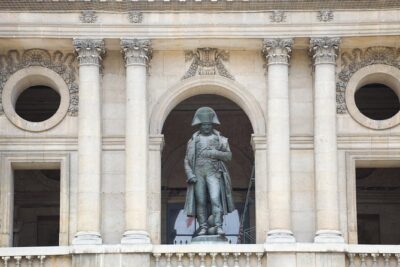
Paris Napoleon Walking Tour with an Historian Guide
Read our review →Browse the lists this tour appears in