
Reviewed · MONTMARTRE AND SACRé-CœUR TOURS
Paris : Montmartre highlights walking tour
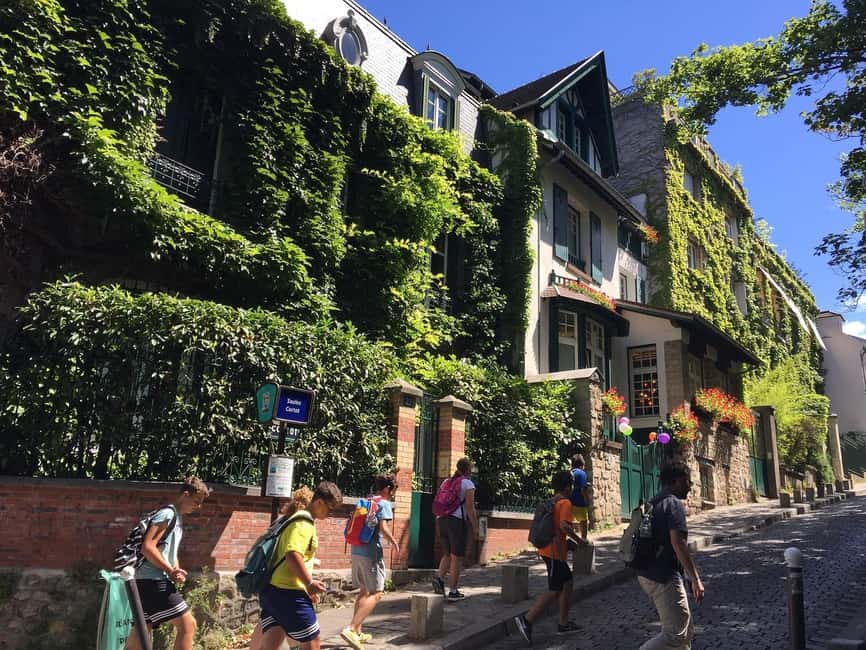
Montmartre is Paris with its sleeves rolled up: a hill of artists, cabarets, old windmills, painted cafés, and lanes that still feel apart from the grand boulevards below. This walk takes you from the Moulin Rouge to Sacré-Coeur Basilica, linking the famous sights with stories about Picasso, Van Gogh, Lautrec, and the neighborhood’s bohemian past.
I like the small groups, capped at 10, and the way the route strings together places you might otherwise see as unrelated photo stops. I also like that guides such as Sammy, Samy, and Diana are praised for giving people time to ask questions and take pictures. The main consideration is the hill: this is not a flat stroll, and it is not suitable for wheelchair users or people with mobility impairments.
Key points at a glance
- Start at Place Blanche: Meet near the Blanche metro exit, beside the Moulin Rouge, and look for the guide’s green booklet and green badge.
- A clear artistic thread: The route connects the Moulin Rouge, Moulin de la Galette, Lapin Agile, Place du Tertre, and the painters who made Montmartre famous.
- Small English-speaking group: No more than 10 participants makes it easier to hear the guide and ask questions.
- A good photo-to-story balance: Each main stop allows about 10 minutes for explanation and pictures.
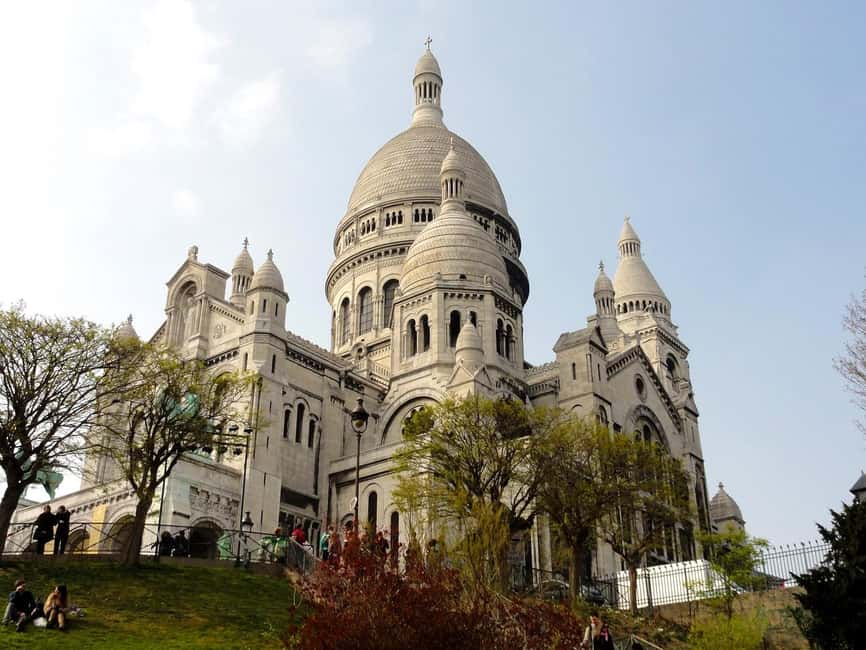
- Finish above Paris: The tour ends at Sacré-Coeur, with wide views toward the Eiffel Tower, Notre Dame, and Montparnasse Tower.
- Bring proper shoes: Streets rise toward the basilica, and comfortable footwear will make the walk much easier.
From Place Blanche into old Montmartre
Your meeting point is near the exit of Blanche station on Metro line 2, close to the Moulin Rouge. This is a useful starting place because you begin at one of Montmartre’s best-known entertainment landmarks, then gradually move away from the busy boulevard and into the hilltop district.
Look for a guide carrying a green booklet and wearing a green badge. The tour is conducted in English, and the group is limited to 10 people. That size matters in Montmartre, where narrow pavements and crowded corners can make a large group awkward.
The route lasts 105 minutes. It is brisk enough to cover a good part of the neighborhood, but the advertised stops allow time for short explanations and photographs rather than a long visit inside each site. You should think of this as an orientation walk with local stories, not a museum tour or a full basilica visit.
More Montmartre and Sacré-Cœur Tours:
- Montmartre Hidden Gems and Scenic Highlights Walking Tour
★ 5.0 · 2,684 reviews - Montmartre Hill French Gourmet Food and Wine Tasting Walking Tour
★ 5.0 · 2,588 reviews - Paris: Montmartre Cheese, Wine & Pastry Guided Walking Tour
★ 4.8 · 2,255 reviews
Moulin Rouge and the theatrical side of Paris
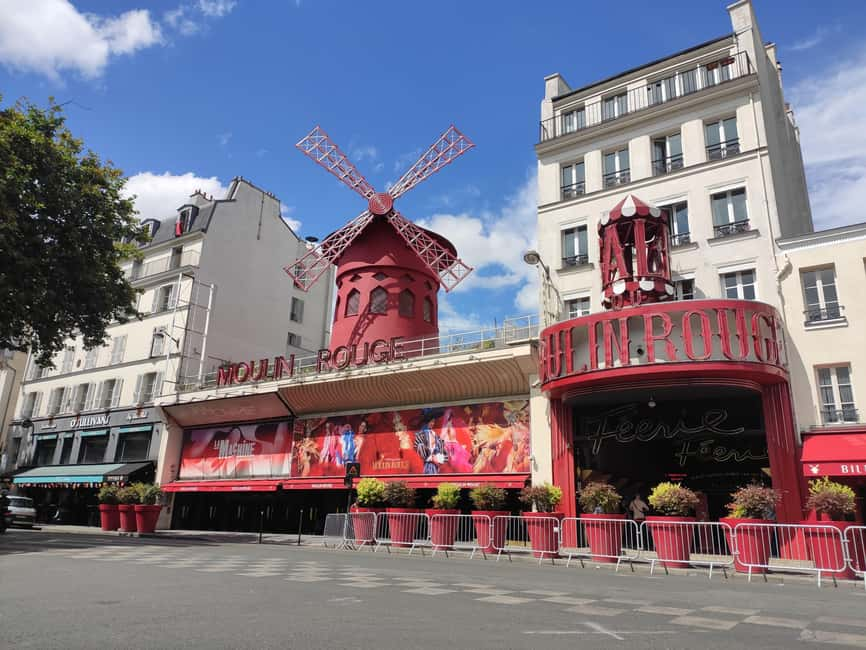
The first stop is the Moulin Rouge, where you get roughly 10 minutes for a guided explanation and photographs. The famous red windmill is easy to recognize, but the guide helps place it within Montmartre’s wider cabaret culture.
This is also a practical opening stop. The Moulin Rouge sits on a lively commercial street, while the rest of the walk climbs into quieter residential lanes. Beginning here gives you a clear sense of the contrast between the showy entertainment district and the old artists’ quarter above it.
Do not expect a performance or entry to the cabaret. The stop is for sightseeing and context. If you want to attend a show separately, you would need another booking.
The Wall of Love and Montmartre’s softer side
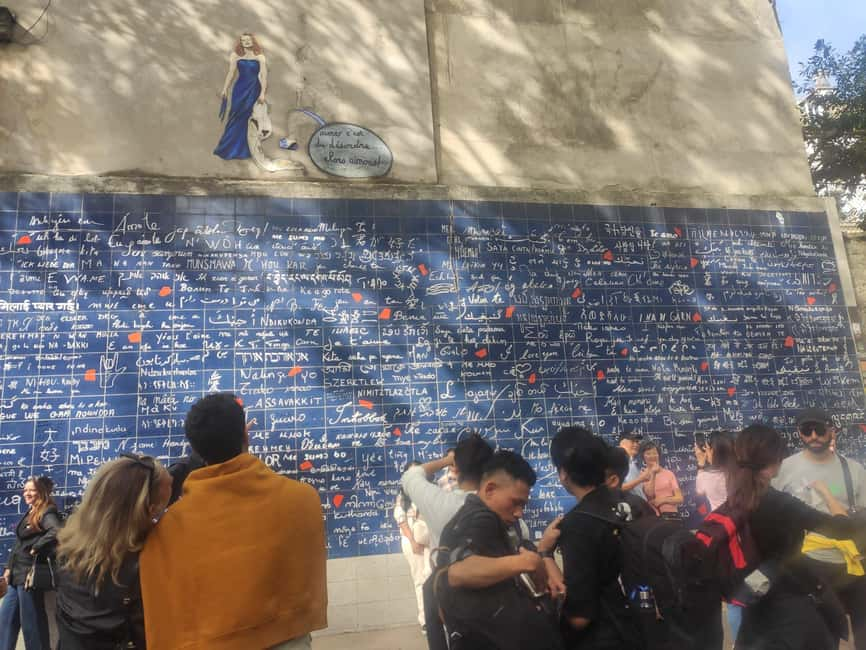
From the Moulin Rouge, the walk continues to Le Mur des Je T’aime, or the Wall of Love. This is a popular picture stop, but it also gives the guide a chance to talk about Montmartre as a meeting place for people from many countries.
The wall contains the words I love you in numerous languages. It is a compact stop, so you will not spend a long time there. Still, it breaks up the route nicely and offers something different from the cabaret and art references that dominate the rest of the walk.
You may want to have your camera ready before the group arrives. Ten minutes goes quickly when everyone wants a picture.
Moulin de la Galette and the painters’ Montmartre
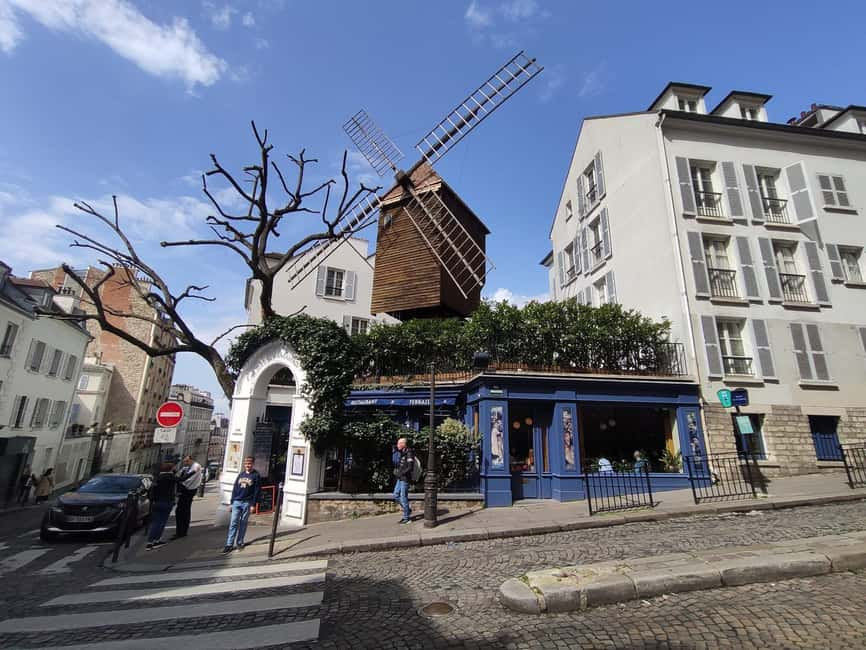
The Moulin de la Galette brings the tour back to the district’s old windmills and artistic identity. Montmartre once had working mills, and the surviving windmill helps explain why this hillside looked so different from central Paris.
The area is also tied to artists including Picasso, Van Gogh, and Toulouse-Lautrec. The useful part of having a guide here is not simply hearing a list of famous names. You get a sense of how the same streets became associated with painters, nightlife, cafés, and the image of Montmartre that still attracts people today.
The stop is another 10-minute photo and explanation break. Since the walk covers many locations, you will hear the story in short sections rather than through one long lecture. That format suits you if you prefer moving through a neighborhood while learning as you go.
More city highlights tours in Paris:
- Bateaux Parisiens Seine River Gourmet Dinner & Sightseeing Cruise
★ 4.5 · 6,930 reviews - Paris Seine River Hop-On Hop-Off Sightseeing Cruise by Batobus
★ 4.0 · 3,411 reviews - Paris Top Sights Half Day Walking Tour with a Fun Guide
★ 5.0 · 2,893 reviews - Bateaux Parisiens Seine River Gourmet Lunch & Sightseeing Cruise
★ 4.5 · 2,680 reviews
Dalida’s statue and a neighborhood landmark
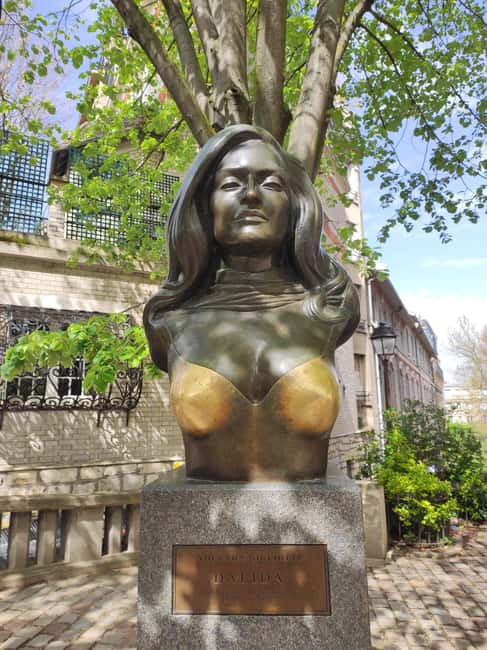
The statue of Dalida is one of the route’s more unusual stops. It is a simple landmark, but it connects Montmartre with a later generation of music and popular culture, rather than only with nineteenth-century painters.
This stop also shows the range of the tour. You are not being led only to the most famous postcard sights. The route includes small points of interest that make the neighborhood feel more personal and lived-in.
Your guide may use photographs or visual material while telling stories. Samy, in particular, has been praised for bringing pictures to accompany his explanations. That can help when the modern street scene does not immediately reveal what once occupied the site.
La Maison Rose and the postcard view
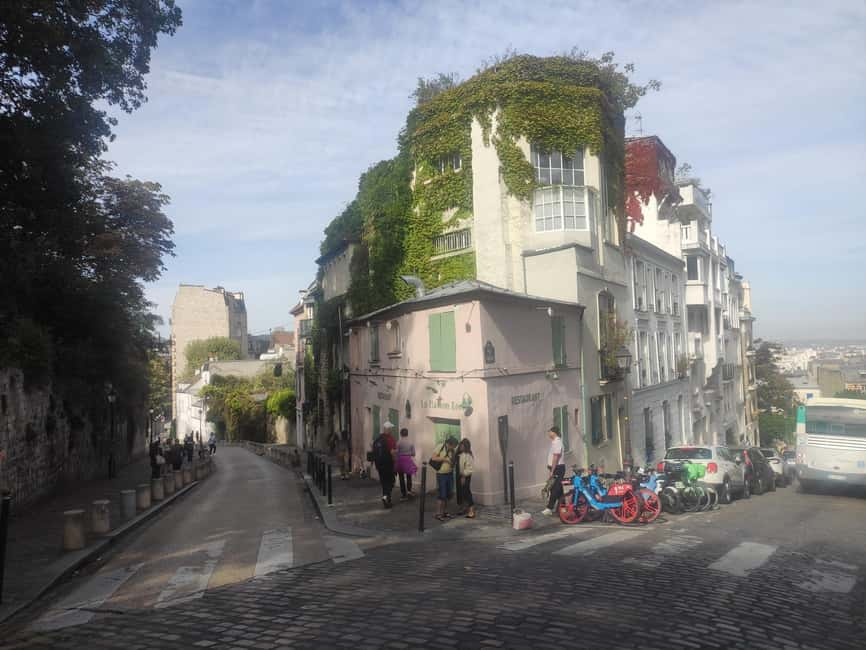
La Maison Rose is one of Montmartre’s most recognizable buildings. Its pink exterior and corner setting make it a natural picture stop, and you will have about 10 minutes here for photographs and a guided explanation.
This is one of those places where a guide adds value because the picture alone tells you very little. The building is attractive, but the story of its place in Montmartre’s artistic image gives the stop more weight.
Expect other people with cameras around the same area. Montmartre’s best-known corners are popular, and a small group helps you keep moving without losing the guide.
Lapin Agile and the old cabaret tradition
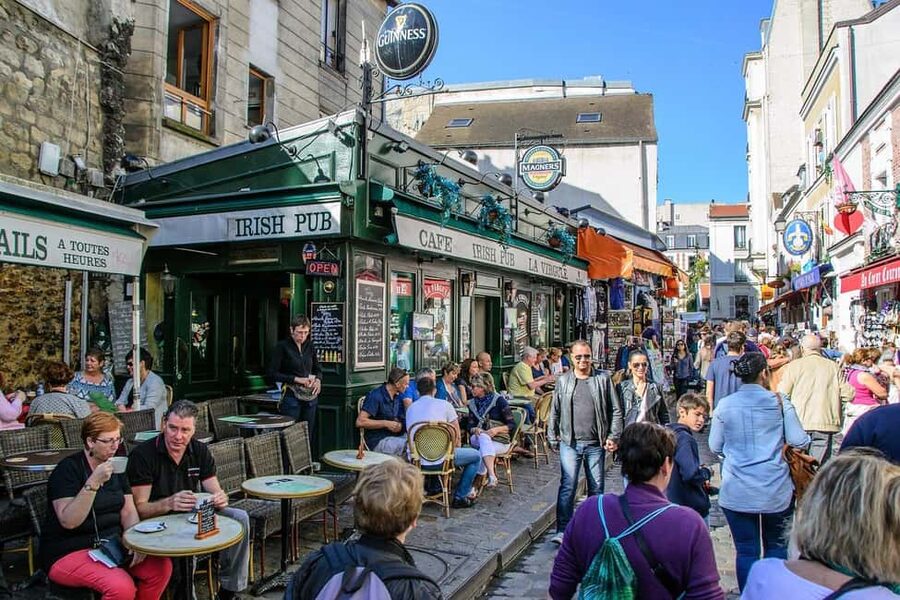
Lapin Agile is another important link to Montmartre’s cabaret past. Unlike the grand scale of the Moulin Rouge, it represents a more intimate side of the neighborhood’s entertainment history.
The walk uses the stop to show that Montmartre’s artistic life was not limited to studios and galleries. Cabarets, cafés, singers, painters, and writers all formed part of the district’s appeal. That mix is one reason the neighborhood feels different from Paris’s formal museum quarter.
Again, this is a guided exterior stop rather than a meal or cabaret visit. Food and drinks are not included anywhere on the tour, so plan a café break before or after the walk if you want one.
Place du Tertre and the working artist tradition
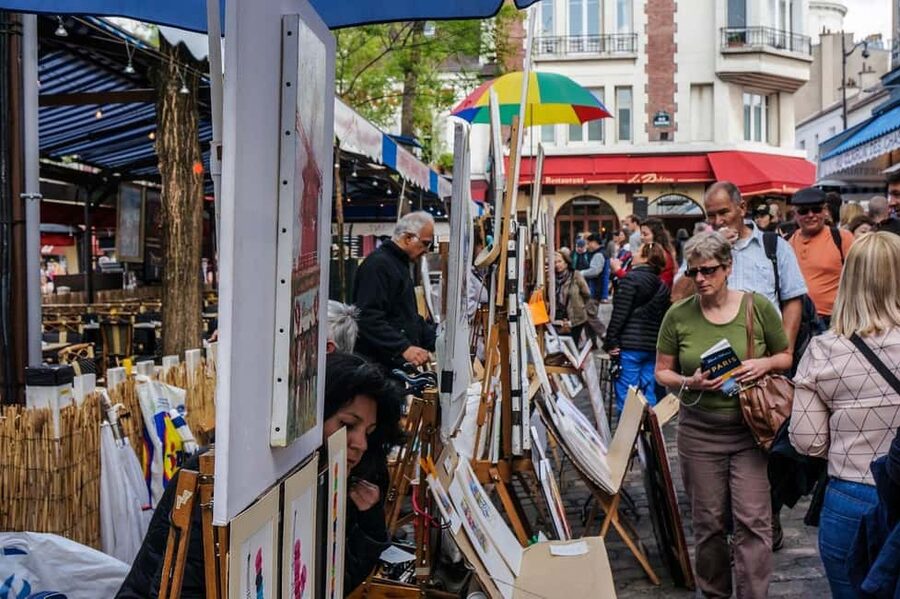
Place du Tertre is the social center of the route. Painters display their work around the square, and you can see how the tradition of selling art in Montmartre remains part of the neighborhood’s identity.
This is an important place to slow down mentally, even though the tour itself keeps a steady pace. You get a chance to look at the artwork, watch the square, and connect the present-day scene with the painters discussed earlier.
The square can be crowded, and it is not a quiet gallery. If you want to browse every artwork or commission a portrait, you may need to return later on your own. The tour gives you an introduction and time for pictures, not an extended shopping visit.
The guide’s role is especially useful here. A good explanation can help you distinguish between the tourist image of Montmartre and the longer artistic story behind it. Feedback about Sammy and Diana repeatedly highlights their friendly approach, clear stories, and willingness to answer questions.
The climb to Sacré-Coeur Basilica
The final major stop is Sacré-Coeur Basilica, located at the top of Montmartre. The walk becomes more demanding as you approach the hilltop, so comfortable shoes are essential. Anyone uncomfortable with slopes, stairs, or extended walking should think carefully before booking.
The basilica is the tour’s grand visual finish. Its white domes rise above the city, and the surrounding steps provide one of Paris’s broadest open views. From the hill, you can look toward major landmarks including the Eiffel Tower, Notre Dame, and Montparnasse Tower.
The advertised stop includes a guided explanation, sightseeing, and scenic views on the way. The tour ends at the Basilique du Sacré-Coeur de Montmartre rather than returning you to Place Blanche. That is useful because you can stay at the hilltop, visit the basilica on your own, or continue exploring Montmartre after the guide departs.
The time listed for the basilica stop is about 10 minutes. That is enough for an introduction and photographs, but it may not be enough if you want a long interior visit or quiet time on the steps. Treat the ending as a handoff to the rest of your day.
What the guide adds to the walk
The route includes many places you could technically find on a map. The value comes from having someone explain why they matter and how they connect.
The strongest praise is directed at the guides’ personal style. Sammy and Samy are described as friendly, patient, chatty, and generous with information. Diana is also singled out for sharing interesting stories and keeping the walk relaxed. Several people had very small groups, sometimes only two or five participants, which allowed the guide to adapt the conversation and answer more questions.
That small-group format is worth considering when you compare this walk with a cheaper large-group option. A group of 10 is still social, but it is small enough that you should be able to hear the guide and take part in the discussion. The exact experience can vary with the number booked on your date.
The English-only format is straightforward. If you want the tour in another language, this is not the right choice. If English works for you, the short explanations and frequent stops keep the material manageable.
Is $29 a fair price?
At $29 per person, this is reasonably priced for a guided walk lasting about 105 minutes. You are paying for a live English-speaking guide, a small group, and a route that links nine notable stops instead of leaving you to plan the order yourself.
The value is best if this is your first proper look at Montmartre. You get the main landmarks, the artistic backstory, and a view from Sacré-Coeur in less than two hours. You also finish in a useful place for continuing your sightseeing.
The price is less compelling if you already know Montmartre well or want extended time inside the basilica. This is not an entry ticket, food tour, cabaret show, or private walk. It is a guided introduction to the district.
You can cancel up to 24 hours ahead for a full refund, and the reserve-now-pay-later option allows you to keep your plans flexible. Those terms are helpful if your Paris schedule is still changing.
Who should book this Montmartre walk?
I would recommend it to first-time Paris visitors who want a clear introduction to Montmartre without spending half a day planning a route. It also suits solo visitors and couples who like asking questions, taking pictures, and moving at a moderate pace.
Families with older children may enjoy the variety of stops, especially the windmills, painted houses, street artists, and city views. The 105-minute length is short enough to fit into a busy Paris day.
You should be comfortable walking uphill. The tour is not suitable for wheelchair users or people with mobility impairments, and the route does not promise a flat or step-free experience.
It is also a good choice if you want your guide to do more than recite dates. The best fit is someone like Sammy, Samy, or Diana, who can adjust the pace and explain the neighborhood through stories and pictures.
Should you book it?
Book this walk if you want Montmartre’s main sights arranged into one easy story, with an English-speaking guide and a small group. The strongest reasons are the route’s variety, the helpful guides, and the finish at Sacré-Coeur with views across Paris.
Skip it if you need wheelchair access, want a long interior visit at the basilica, or prefer exploring entirely on your own. For most first-time visitors who have comfortable shoes and about two hours to spare, $29 is a sensible way to get your bearings in one of Paris’s most characterful districts.
FAQ
How long does the Montmartre walking tour last?
The tour lasts 105 minutes, or about one hour and 45 minutes.
Where does the tour begin?
It begins near the exit of Blanche metro station on Metro line 2, close to the Moulin Rouge.
How do I identify the guide?
Look for a guide carrying a green booklet and wearing a green badge.
Where does the tour finish?
The walk finishes at the Basilique du Sacré-Coeur de Montmartre.
What language is the tour conducted in?
The tour is conducted in English.
How large is the group?
The group is limited to 10 participants.
What sights are included?
The route includes the Moulin Rouge, the Wall of Love, Moulin de la Galette, Dalida’s statue, La Maison Rose, Lapin Agile, Place du Tertre, and Sacré-Coeur Basilica.
Is food or drink included?
No. Food and drinks are not included.
What should I bring?
Bring comfortable shoes for the uphill walking route.
Is the tour suitable for wheelchair users?
No. The tour is not suitable for wheelchair users or people with mobility impairments.
More walking tours in Paris
- Paris Île de la Cité and Notre-Dame Walking Tour With Crypt
★ 5.0 · 2,272 reviews - Paris in a Day: Louvre or Orsay, Eiffel Tower, City Walk & Cruise
★ 5.0 · 1,956 reviews - Paris: Montmartre Highlights Walking Tour with a Local Guide
★ 4.9 · 1,668 reviews - Paris City Center Free Walking Tour (Tip-Based)
★ 5.0 · 1,340 reviews
Just added around Paris
- Private Paris Marche d’Aligre Walking Tour with Tastings★ 5.0 · 8 reviews
- Private Louvre Museum Tour for Kids & Families with Alberto or his team in Paris★ 5.0 · 41 reviews
- Private Highlights of Paris Tuk-Tuk Experience★ 5.0 · 26 reviews
- Paris Latin Quarter Walking Tour: History & Culture – Small Group★ 5.0 · 14 reviews
- Private Highlights of Paris Bike Tour★ 4.5 · 15 reviews
- Paris Musee d’Orsay PRIVATE TOUR with a Local Private Guide★ 5.0 · 41 reviews
- Private Half Day Historic Tour★ 5.0 · 58 reviews
- Pere Lachaise Cemetery Paris – Exclusive Guided Walking Tour★ 5.0 · 72 reviews
Montmartre and Sacré-Cœur Tours, compared.

Montmartre Hidden Gems and Scenic Highlights Walking Tour
Read our review →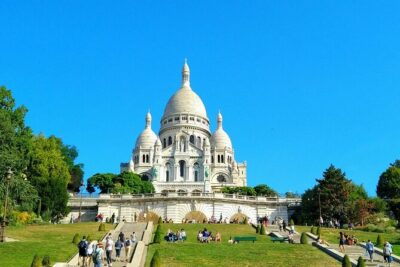
Montmartre Hill French Gourmet Food and Wine Tasting Walking Tour
Read our review →
Montmartre Cheese, Wine & Pastry Guided Walking Tour
Read our review →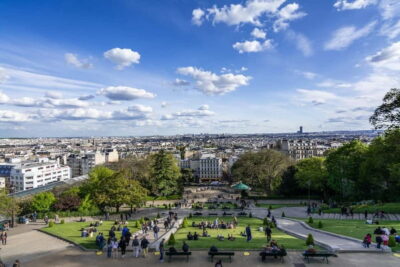
Montmartre Highlights Walking Tour with a Local Guide
Read our review →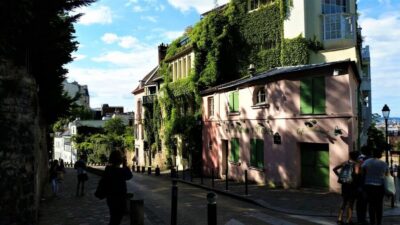
Sacré-Coeur and Montmartre Tour with Expert Guide
Read our review →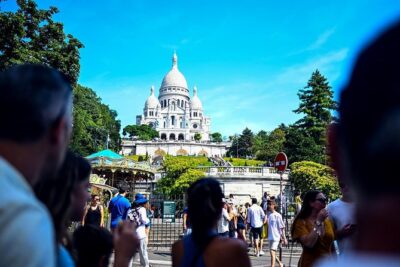
Private Montmartre Food Tour with Wine, Cheese & Pastries
Read our review →
Paris Montmartre Food Tour – A Full French Meal by Do Eat Better
Read our review →
Hidden Montmartre: Paris’ Secret Streets Walking Tour
Read our review →Browse the lists this tour appears in