
Reviewed · MONTMARTRE AND SACRé-CœUR TOURS
Paris: Montmartre Walking Tour with Sacré-Cœur Basilica
Montmartre tells its story in layers: cabaret at the Moulin Rouge, film fame at Café des Deux Moulins, artists at Bateau-Lavoir, and old village charm around Sacré-Cœur. I like the way this two-hour walk links famous sights with small corners, including Dalida’s former home and the Clos Montmartre vineyard. I also like the finish, with open Paris views from the basilica hill.
The main consideration is the pace. You cover many places in two hours, and Montmartre is hilly, with uneven streets and steps. The guide leaves you at Sacré-Cœur rather than joining you inside, so this suits you best if you are happy to explore the church independently.
Key points at a glance
- Moulin Rouge to Sacré-Cœur: Follow a clear route from Blanche Metro through Montmartre’s best-known sights.
- Artists and film locations: See Van Gogh’s former home, Bateau-Lavoir, Café des Deux Moulins, and the I Love You Wall.
- Dalida’s Montmartre: Stop at Place Dalida and see the home of the famous French-Italian singer.
- Village atmosphere: Pass the Clos Montmartre vineyard, Moulin de la Galette, La Maison Rose, and Lapin Agile.
- English guide: Guides named Perkin and Pierre have received especially warm comments for their effort and presentation.
- Practical finish: The tour ends at Sacré-Cœur, with time for you to enter and look around without the guide.
Starting beneath the Moulin Rouge at Blanche
The meeting point is in front of Blanche Metro station on Line 2, at 59 Boulevard de Clichy. Look for a guide carrying a flag with The Perfect Vacation logo. This is a simple place to find, and it puts you directly at the southern edge of Montmartre.
Your first sight is the Moulin Rouge. The tour passes the cabaret for about 10 minutes rather than entering it. That matters when you compare this walk with a cabaret show or backstage visit: you are getting neighborhood context and an exterior look, not a performance.
The Moulin Rouge gives the walk an energetic beginning. Its red windmill is easy to spot, and the surrounding Boulevard de Clichy has long been tied to Paris nightlife and entertainment. Your guide uses the area as a doorway into Montmartre, then turns away from the main boulevard toward quieter streets.
The meeting area can be lively, so arrive with enough time to find the flag and settle in. You do not need a meal or drink included in the price, and none is provided, so eat beforehand or plan a stop after the walk.
More Montmartre and Sacré-Cœur Tours:
- Montmartre Hidden Gems and Scenic Highlights Walking Tour
★ 5.0 · 2,684 reviews - Montmartre Hill French Gourmet Food and Wine Tasting Walking Tour
★ 5.0 · 2,588 reviews - Paris: Montmartre Cheese, Wine & Pastry Guided Walking Tour
★ 4.8 · 2,255 reviews
Amélie, Rue Lepic, and Van Gogh’s former home
From Blanche, the route heads into the streets that made Montmartre a favorite setting for painters, writers, and filmmakers. One early stop is Café des Deux Moulins, known for its role in the film Amélie. The tour passes by rather than arranging a meal there, so think of it as a location stop and photo opportunity.
The route then follows Rue Lepic. This street gives you a better sense of Montmartre as a neighborhood rather than a chain of monuments. It is also where you visit Van Gogh’s house, referring to the place where Vincent van Gogh once lived.
I like this part because it connects the modern film version of Montmartre with the older artistic one. You get a familiar movie setting, then a real address tied to a major painter. The guide’s storytelling is important here. A past booking specifically praised Perkin for making a strong effort and having good ready knowledge, while Pierre was also singled out positively.
Do not expect a museum visit inside Van Gogh’s home. The information describes a visit to the house, but it does not promise interior access or an exhibition. The value is in seeing the location and understanding how the street fits into Montmartre’s artistic story.
The I Love You Wall and Montmartre’s softer side
The walk continues to Le Mur des Je t’aime, or the I Love You Wall. This mural presents the words I love you in more than 250 languages. It is one of the tour’s more relaxed stops, with a clear visual appeal that works well for photographs.
This is also a useful pause in a route filled with names, dates, and artistic connections. You can take in the mural without needing specialist knowledge. Photography is encouraged during the tour, but you should respect private property and keep the group moving.
The wall is not a grand monument in the usual Paris sense. That is part of its charm. It gives the route a modern, human touch before the tour turns back toward Montmartre’s old studios, singers, windmills, and village lanes.
Picasso at Bateau-Lavoir and Dalida’s Place
One of the most important artistic stops is La Bateau-Lavoir. This former artists’ studio was a gathering place for Picasso and other creative figures. The tour visits the site, giving you a look at one of the addresses that helped define Montmartre’s place in modern art.
The stop is best understood through the guide’s explanation. The building itself may not provide the theatrical impact of a major gallery, but its importance comes from the people who worked and met there. A guide can turn an ordinary-looking doorway or facade into a useful piece of the neighborhood story.
Next comes the home of Dalida, followed by a photo stop at Place Dalida. Dalida was a major French-Italian singer, and the square named for her has become one of Montmartre’s most recognizable small public spaces.
This is a strong part of the walk if you enjoy music history as much as painting. It also breaks up the usual Picasso and Van Gogh focus. The information supplied for the tour says you see her house and stop at the square, but it does not promise entry into the home. Expect an exterior visit and time for photographs.
More walking tours in Paris:
- Paris Top Sights Half Day Walking Tour with a Fun Guide
★ 5.0 · 2,893 reviews - Paris Île de la Cité and Notre-Dame Walking Tour With Crypt
★ 5.0 · 2,272 reviews - Paris in a Day: Louvre or Orsay, Eiffel Tower, City Walk & Cruise
★ 5.0 · 1,956 reviews - Paris: Montmartre Highlights Walking Tour with a Local Guide
★ 4.9 · 1,668 reviews
Moulin de la Galette and La Maison Rose
The route then passes Moulin de la Galette, a windmill that once served as a dance hall. This is a classic Montmartre image: a working windmill turned social meeting place, now surrounded by the city.
You will not be attending a dance there on this tour. Instead, the guide places it in the context of old Montmartre, when the area had a more village-like feel and people came to its dance halls for an evening out.
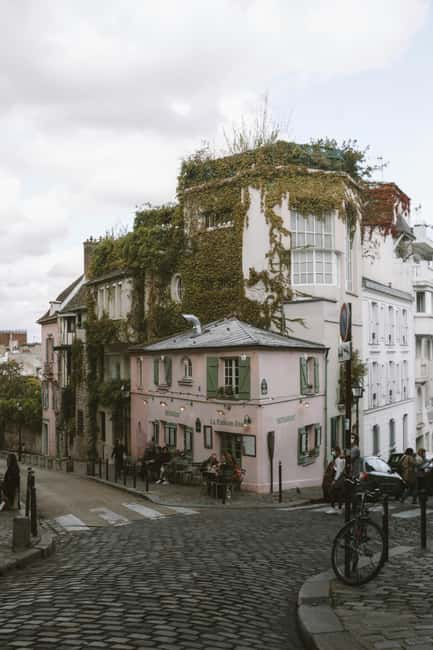
La Maison Rose follows, or appears nearby in the route. Its pink facade is one of the most photographed sights in Montmartre and has long attracted local artists. The tour strolls by rather than including a meal, so you can enjoy the exterior without building the schedule around a restaurant booking.
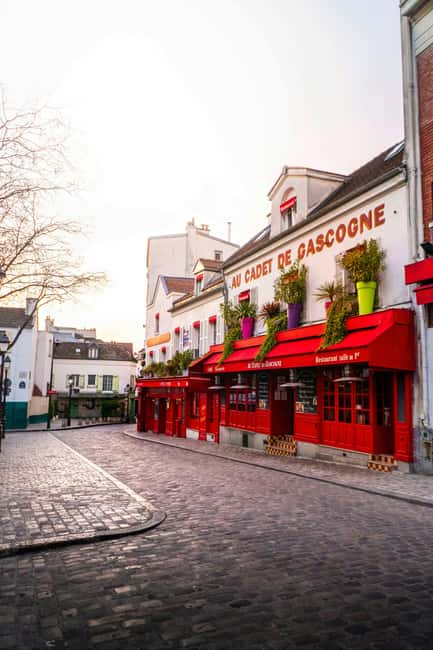
There is also a pass-by at a local restaurant. Since food and drinks are not included, treat this as part of the neighborhood walk rather than a tasting stop. If you want to eat in Montmartre, arrange that separately after the tour, when you are no longer watching the clock.
Clos Montmartre and Lapin Agile
The Clos Montmartre vineyard is one of the route’s most unusual features. It is a working vineyard in the middle of Paris, still producing wine. The tour passes by the vines, showing you a part of Montmartre that is easy to miss when you focus only on Sacré-Cœur and the famous cafes.
The vineyard is not presented as a wine tasting. That distinction is useful: this is a sightseeing stop, not a food-and-drink experience. Still, it adds a welcome surprise to the walk and helps explain why Montmartre can feel like a former village even inside a major capital.
The route also visits or passes by Lapin Agile Cabaret, one of the last places associated with traditional Montmartre nightlife. Like the Moulin Rouge, it is an exterior and neighborhood stop rather than a cabaret show. Its value comes from seeing how the area’s artistic and nightlife traditions continue in recognizable locations.
At this stage, the route has covered a lot of ground. You have seen cinema, painting, music, dance halls, a vineyard, and cabaret. That variety is the tour’s main strength, but it also explains why the guide must keep a steady pace.
Place du Tertre and the final climb
The tour heads toward Place du Tertre, where artists gather to sell their work. This square is one of Montmartre’s most famous meeting points, and it can feel crowded, especially around the central Paris sightseeing hours.
You will see artists working and offering pieces for sale, but the experience does not include an art purchase or a portrait. Take care with your belongings in busy areas, as the tour itself advises. Keep your camera and wallet secure while you look around.
From Place du Tertre, the route continues to the Basilica of the Sacred Heart of Paris, better known as Sacré-Cœur. The final approach involves uphill walking, so comfortable shoes are not optional advice here. Montmartre’s slopes can make a short distance feel longer, especially if the weather is warm or the pavement is wet.
The guide finishes at the basilica and does not accompany you inside. This arrangement gives you freedom to enter at your own pace, but you should understand what you are buying: guided interpretation ends outside. Your visit inside Sacré-Cœur is self-guided.
The Sacré-Cœur payoff
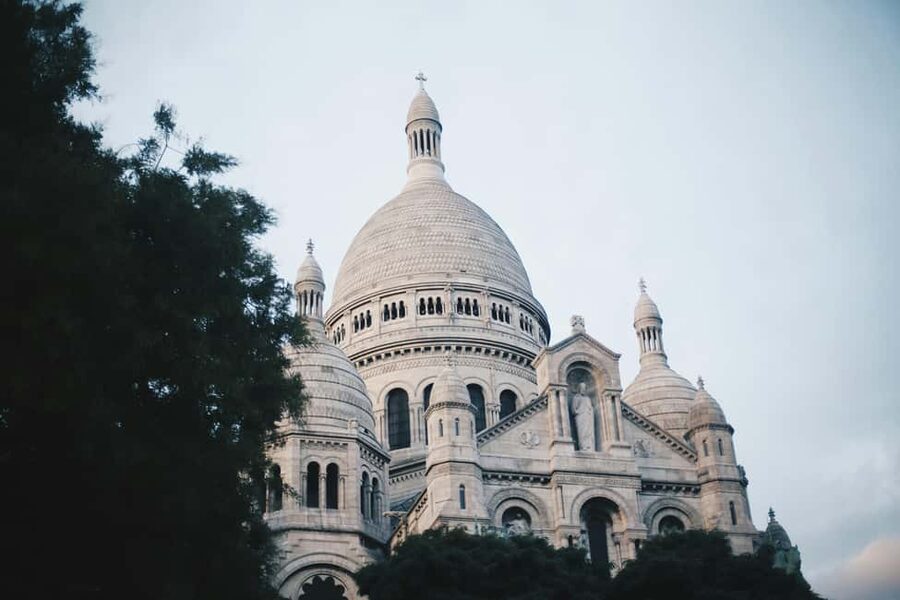
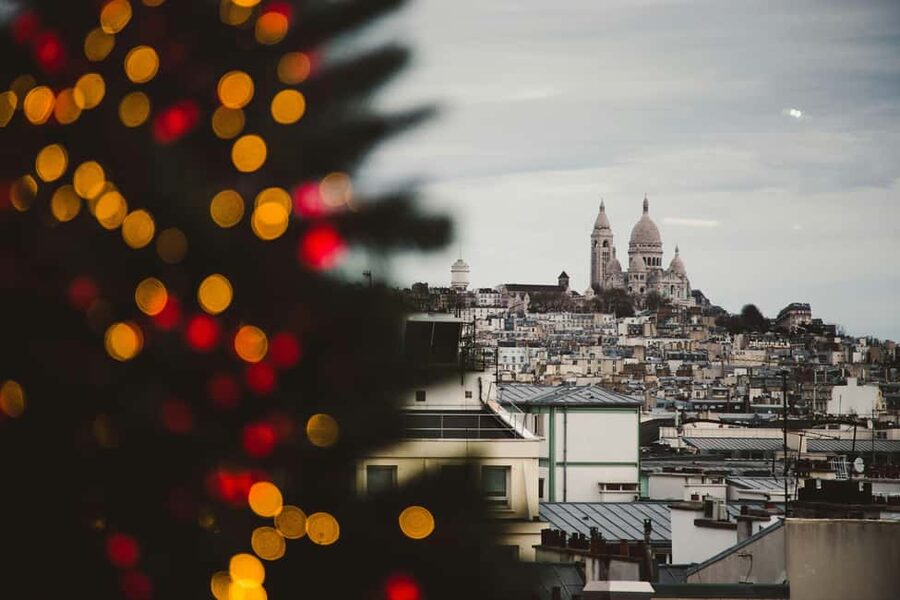
Sacré-Cœur is the visual reward at the end of the route. From the hill, you get broad views across Paris. The panorama is especially useful after walking through narrow streets, because it lets you see the city in one wide sweep.
The basilica itself is one of Paris’s most recognizable landmarks. The tour includes reaching the site, but not a guided interior visit. If you want a detailed explanation of the church’s interior, you will need to explore independently using the information available on site or arrange another activity.
I like this ending because it does not force you straight onto another scheduled stop. Once the guide leaves, you can enter the basilica, spend time at the viewpoint, or remain in the Montmartre area. The tradeoff is that you need to manage the last part yourself.
Is $46 a fair price for two hours?
At $46 per person, this is not the cheapest way to walk around Montmartre. You can visit many of the exterior sights without paying for a tour. The fee makes sense if you want one person to connect the places and explain why Van Gogh, Picasso, Dalida, film locations, cabaret, and the vineyard belong in the same neighborhood story.
The walk includes a long list of stops in a compact period. You are paying for the route, the English commentary, and the time saved in finding places such as Bateau-Lavoir, Dalida’s home, Clos Montmartre, and Lapin Agile.
The value is weaker if you want interior access, food, drinks, or a slow photography walk. The Moulin Rouge, Café des Deux Moulins, La Maison Rose, Moulin de la Galette, and Lapin Agile are passed from outside. Sacré-Cœur is also self-guided inside.
For a first visit to Montmartre, I consider the price reasonable if the guide keeps the stories clear and the group moving. Comments about Perkin’s effort and ready knowledge, along with the positive note about Pierre, suggest that guide quality can be an important part of the experience. The overall rating is 4.5 from five ratings, a small sample, so I would treat it as a useful signal rather than a guarantee.
Who should book this Montmartre walk?
This tour suits you if you want a fast introduction to Montmartre’s artistic and popular culture. It works well for first-time visitors, film fans, people interested in Van Gogh and Picasso, and anyone who wants Sacré-Cœur paired with more than a simple church visit.
It is also a good fit if you prefer a walking route with a clear start and finish. Beginning at Blanche and ending at Sacré-Cœur gives the experience a natural uphill shape. You do not need to solve the neighborhood’s layout on your own.
You should think twice if hills are difficult for you, if you need frequent breaks, or if you prefer fully guided interior visits. The tour is not suitable for people over 95, and the walking conditions call for practical shoes and weather-appropriate clothing.
The tour is offered in English, and audio recording is not allowed. Alcohol and drugs are prohibited. Keep personal belongings secure, especially around busy public squares.
Free cancellation is available up to 24 hours before the start for a full refund. You can also reserve now and pay later, which helps if your Paris schedule is still shifting.
Should you book it?
Book this walk if you want the stories behind Montmartre’s famous streets, not just a photograph of Sacré-Cœur. The best parts are the range of stops: Dalida’s square, Van Gogh’s former home, Bateau-Lavoir, the vineyard, and the old cabaret addresses.
Skip it if your priority is entering every landmark or spending a long time at one place. This is a brisk, exterior-focused introduction, with a self-guided finish at the basilica. Wear good shoes, arrive at Blanche Metro ready for an uphill route, and you will get a useful first look at one of Paris’s most characterful neighborhoods.
FAQ
Where does the Montmartre walking tour begin?
The tour begins in front of Blanche Metro station on Line 2, at 59 Boulevard de Clichy. The guide carries a flag with The Perfect Vacation logo.
Where does the tour end?
The tour ends at the Basilica of the Sacred Heart of Paris, also called Sacré-Cœur.
How long does the walking tour last?
The tour lasts two hours.
What language is the tour offered in?
The live tour guide speaks English.
Does the guide enter Sacré-Cœur with the group?
No. The guide drops you at Sacré-Cœur, and you explore the basilica inside on your own.
Is the Moulin Rouge included?
The tour passes the Moulin Rouge for about 10 minutes. Entry to the cabaret is not included.
Will I visit Van Gogh’s home?
The route includes a visit to Van Gogh’s house, referring to the place where he once lived. The provided details do not promise interior access.
Are meals and drinks included?
No. Meals and drinks are not included.
Should I wear special clothing?
Wear comfortable shoes and dress for the weather. The route includes uphill walking.
Can I cancel the booking?
Yes. You can cancel up to 24 hours in advance for a full refund. You can also reserve now and pay later.
Just added around Paris
- Private Paris Marche d’Aligre Walking Tour with Tastings★ 5.0 · 8 reviews
- Private Louvre Museum Tour for Kids & Families with Alberto or his team in Paris★ 5.0 · 41 reviews
- Private Highlights of Paris Tuk-Tuk Experience★ 5.0 · 26 reviews
- Paris Latin Quarter Walking Tour: History & Culture – Small Group★ 5.0 · 14 reviews
- Private Highlights of Paris Bike Tour★ 4.5 · 15 reviews
- Paris Musee d’Orsay PRIVATE TOUR with a Local Private Guide★ 5.0 · 41 reviews
- Pere Lachaise Cemetery Paris – Exclusive Guided Walking Tour★ 5.0 · 72 reviews
- Paris Revolutionary Walking Tour: Iconic French Sights & Stories★ 5.0 · 11 reviews
Montmartre and Sacré-Cœur Tours, compared.

Montmartre Hidden Gems and Scenic Highlights Walking Tour
Read our review →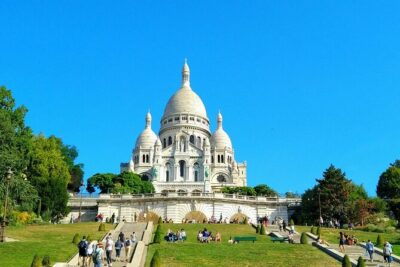
Montmartre Hill French Gourmet Food and Wine Tasting Walking Tour
Read our review →
Montmartre Cheese, Wine & Pastry Guided Walking Tour
Read our review →
Montmartre Highlights Walking Tour with a Local Guide
Read our review →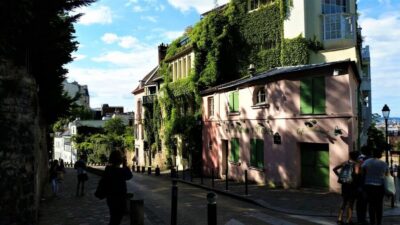
Sacré-Coeur and Montmartre Tour with Expert Guide
Read our review →
Private Montmartre Food Tour with Wine, Cheese & Pastries
Read our review →
Paris Montmartre Food Tour – A Full French Meal by Do Eat Better
Read our review →
Hidden Montmartre: Paris’ Secret Streets Walking Tour
Read our review →Browse the lists this tour appears in