
Reviewed · PARIS WALKING TOURS
Paris: Treasure Hunt & Walking Tour “Marie Curie’s secret”
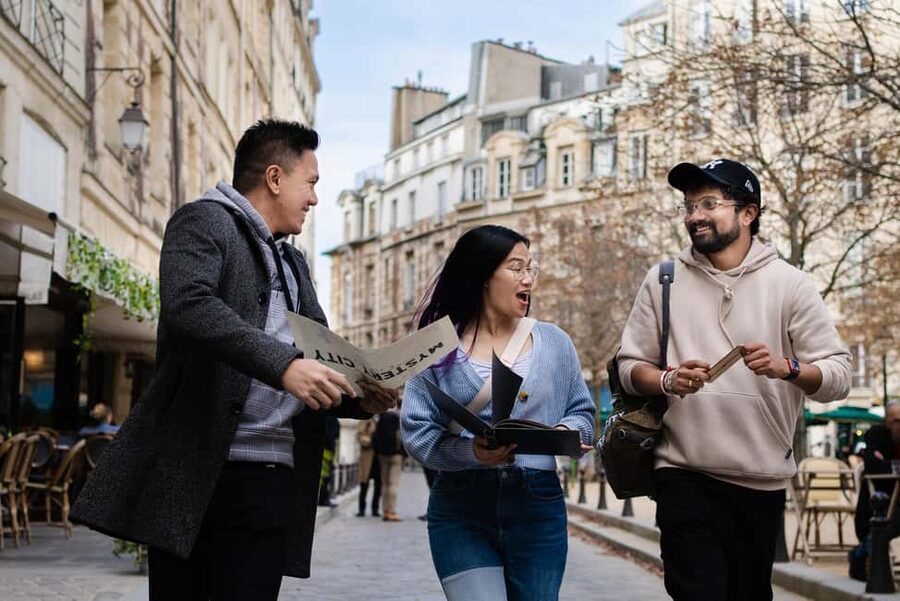
Marie Curie’s secret weapon is the hook here, but the real appeal is the chance to explore central Paris with a backpack of physical clues instead of staring at a phone. You follow a treasure map, search for clues around famous sights, and solve puzzles tied to a wartime story involving French soldiers leaving the city.
I like the hands-on props, including maps, books, boxes, and tools, and I like the flexible format: your private group can play at its own pace or turn the walk into a friendly contest. The drawback is that the storytelling may feel light if you want detailed facts about Paris or Marie Curie.
Key points to know
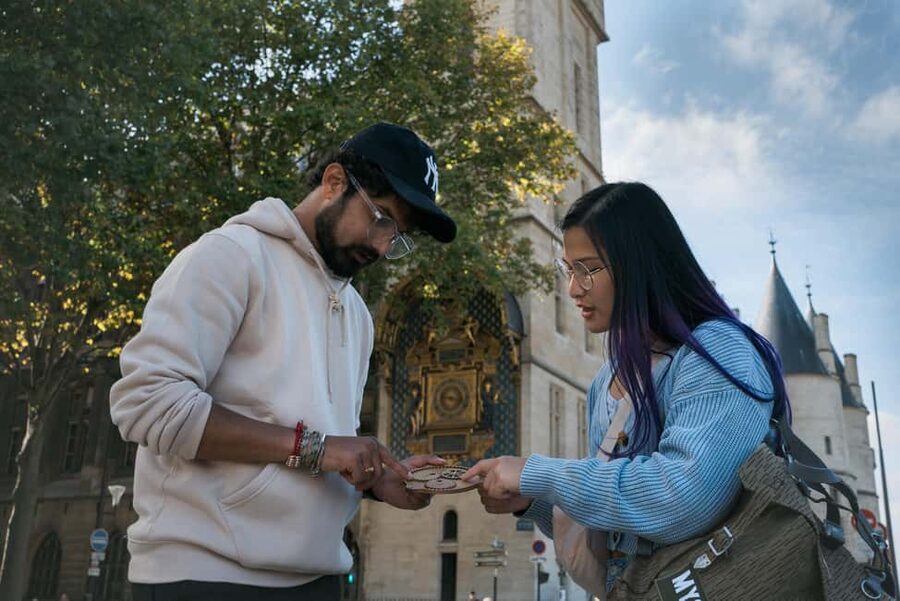
- A real backpack of game materials: You receive treasure maps, books, boxes, and tools rather than an app-based game.
- A central Paris route: The walk begins at Play-In, 59 Rue de Rivoli, and takes you past major city attractions before returning to the same point.
- A Marie Curie mystery: Your mission is to find a secret weapon left behind by France’s most famous scientist as soldiers leave for the battlefield.
- A private two-hour activity: Your group plays together, making it a good fit for families, friends, and special celebrations.
- French or English play: A host or greeter can provide the experience in either language.
- Best for puzzle fans: The game offers fun challenges, but the history content is fairly brief rather than lecture-like.
A Paris mystery that gets you walking
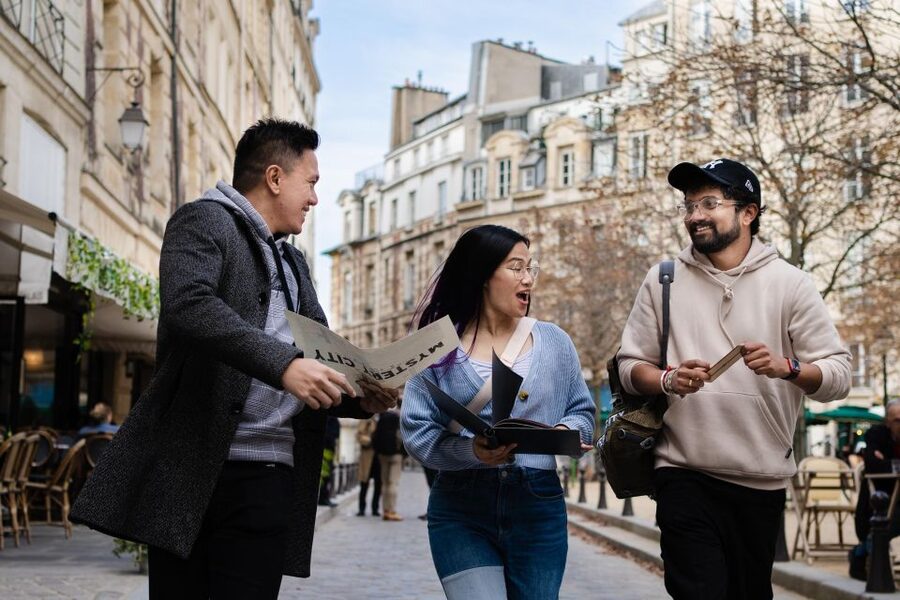
This activity turns central Paris into a game board. You do not sit in a room waiting for clues or follow instructions through an app. Instead, you collect a backpack and use its contents as you walk from one point to the next.
The story gives the route its purpose. French soldiers are leaving Paris in taxis for the battlefield, and you receive a special mission: locate the secret weapon left behind by Marie Curie. The setup adds a little drama without asking you to dress up or play a complicated character.
I like this kind of sightseeing because it gives you a reason to pay attention. A regular walk through Paris can become a blur of grand buildings, sculptures, bridges, and monuments. Here, you look more closely because the next answer may depend on something in front of you.
The activity lasts two hours, which is long enough to make the outing feel substantial but short enough to fit into a busy Paris schedule. It begins and ends at Play-In, at 59 Rue de Rivoli. That simple arrangement matters. You do not need to arrange a taxi from a distant finish point or guess where your group will separate.
More escape games and treasure hunts in Paris:
- Who Killed Victor ? Escape Game at Père Lachaise Cemetery
★ 4.8 · 258 reviews - Escape game in Montmartre
★ 5.0 · 247 reviews - Escape Hunt Paris, Escape Game
★ 4.5 · 122 reviews
Starting at 59 Rue de Rivoli
Your group meets at Play-In, 59 Rue de Rivoli. Once inside, tell one of the shopkeepers that you are there to play the Mystery City Game. They provide what you need to get started.
The opening includes a chat with a French soldier, who explains how to collect the backpack. This gives the first moments a story-based feel rather than making the activity seem like a standard walking tour with a few riddles attached.
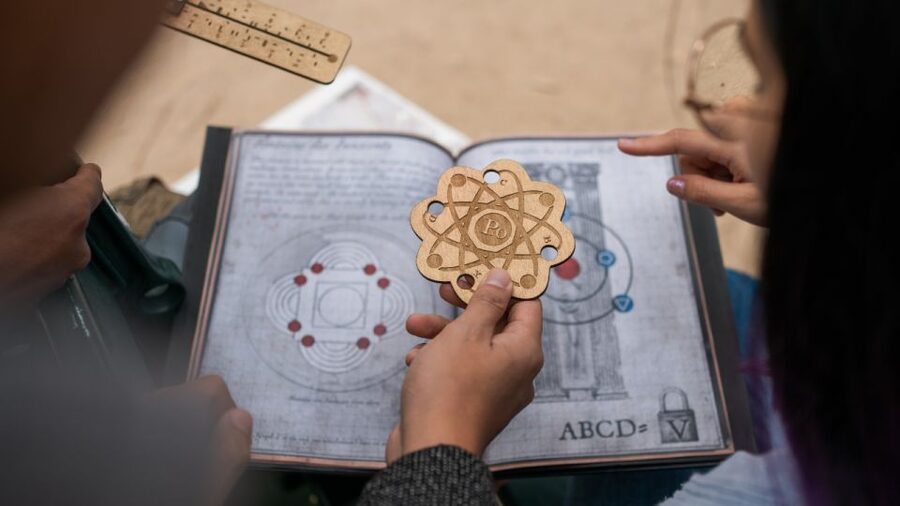
The backpack contains the working parts of the game. Expect treasure maps, boxes, books, and attractive tools. These objects are not just decoration. They are designed to make you handle clues, search for answers, and work as a group.
That physical quality is one of the strongest reasons to choose this activity. Children can hold the map and help inspect the objects. Adults can divide up the puzzles. Nobody needs to keep a phone charged, open the right app, or squint at a small screen while walking.
The instructions say the game is available in French and English. You should confirm your preferred language when booking, especially if your group is mixed-language.
Following the treasure map through central Paris
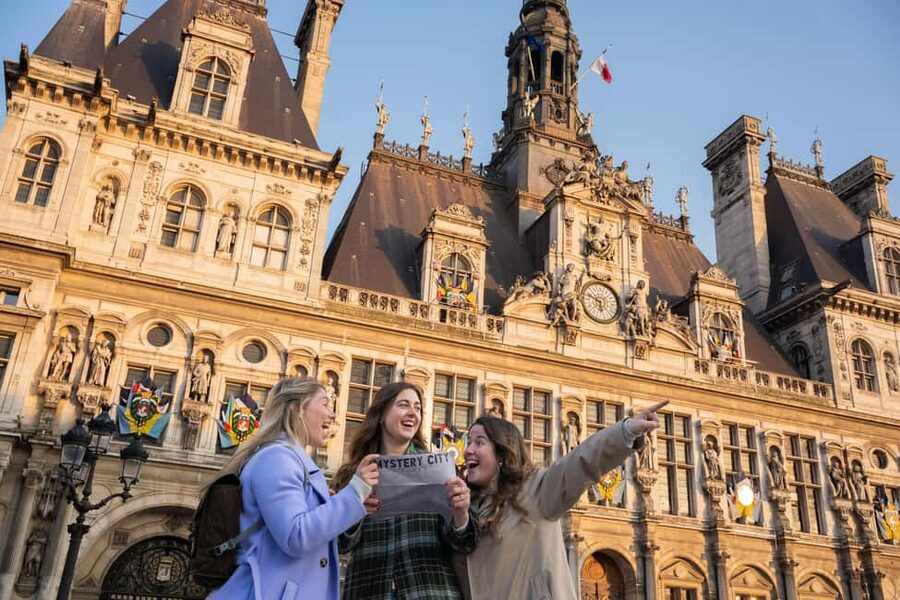
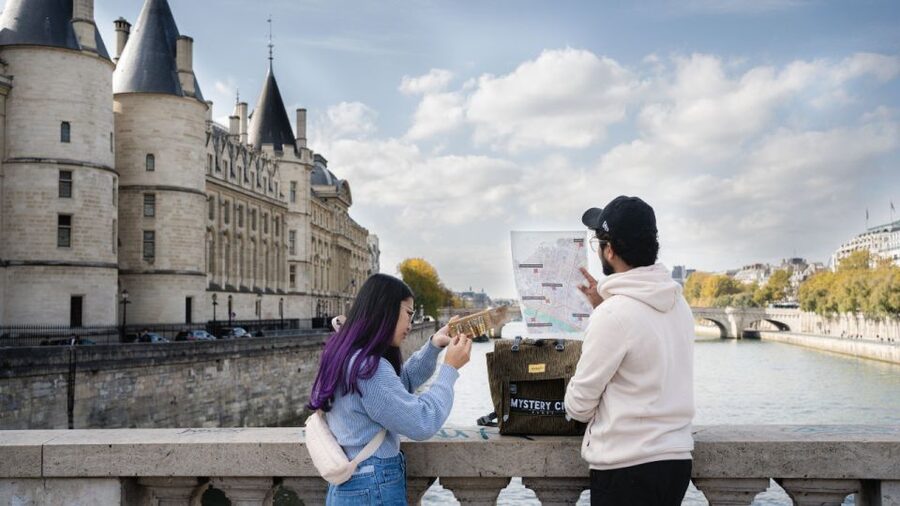
Once the game begins, you follow the map through the city center. The exact sequence of sights is not specified, so you should think of this as a guided puzzle route through major Paris attractions rather than a fixed monument-by-monument tour.
The route is meant to bring you to well-known city sites and monuments while you solve challenges. That combination gives the walk a useful rhythm. You have a goal at each stage, then a chance to look up and appreciate the place around you.
I especially like the way this format works for people who have only one day in Paris. You are not spending two hours in a sealed game room. You are moving through the city and seeing major sights at the same time.
There is a tradeoff. A puzzle route cannot give every monument the attention of a dedicated city tour. You may stop to solve a clue, take in the setting, and move on rather than receive a long explanation about architecture or politics.
Keep that distinction in mind when choosing. The experience uses Paris as its playing field. It is not designed to replace a detailed historical tour.
What the Marie Curie story adds
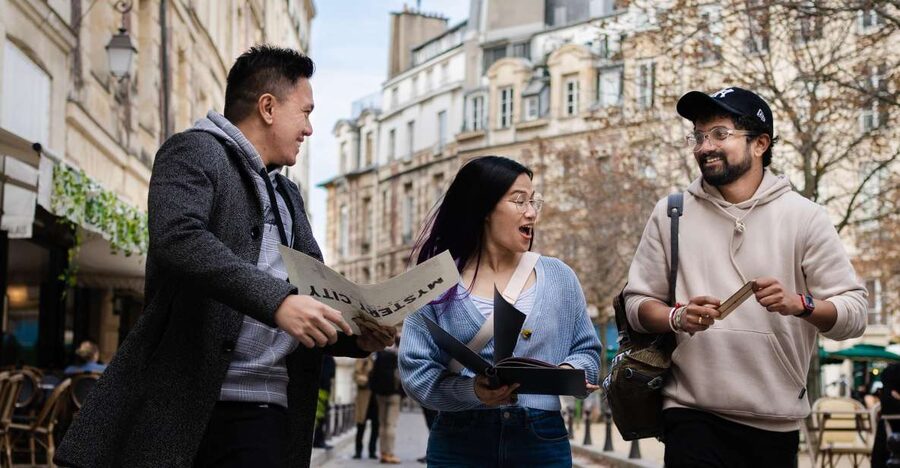
Marie Curie is a strong figure for this kind of mystery. Her work connects science, France, and wartime service, giving the game a serious thread beneath the treasure-hunt format.
The mission asks you to find a secret weapon she left behind. The plot also includes soldiers departing Paris in taxis for the battlefield. That gives your group a clear reason to move through the city and handle the clues.
You will learn true stories connected with the city’s past, but the historical material appears to support the game rather than lead it. If you want dates, long explanations, and a full account of Curie’s life, this will likely feel too light.
That is not necessarily a flaw. Families often prefer a story that keeps the game moving. A six-year-old is unlikely to enjoy a long lecture, but can help find a sculpture or work through a mysterious challenge. Children around age 10 can take a more active role in reading maps and solving puzzles.
The experience has been enjoyed by groups with children aged 10 and 6, with both children taking part in locating sculptures and handling the challenges. That makes the family appeal more than a marketing label. Still, adult help may be needed for reading, abstract clues, or keeping the group organized.
More walking tours in Paris:
- Paris Top Sights Half Day Walking Tour with a Fun Guide
★ 5.0 · 2,893 reviews - Montmartre Hidden Gems and Scenic Highlights Walking Tour
★ 5.0 · 2,684 reviews - Montmartre Hill French Gourmet Food and Wine Tasting Walking Tour
★ 5.0 · 2,588 reviews - Paris Île de la Cité and Notre-Dame Walking Tour With Crypt
★ 5.0 · 2,272 reviews
How the puzzles and props work together
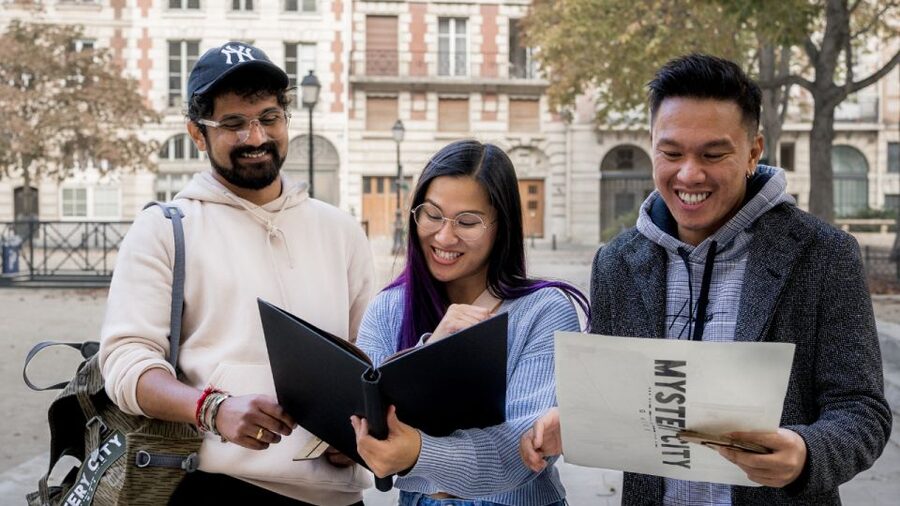
The game uses physical materials rather than an app. That changes the mood in a good way. Your group can spread out a map, open a box, examine a book, and test the tools as you work toward the next answer.
The puzzles are meant to be solved while walking. Some may direct you toward a particular place, object, or sculpture. Others may require your group to combine information from more than one item in the backpack.
You can play at your own pace or make it competitive. A relaxed group can stop to look at the monuments and talk through the clues. A competitive group can divide the tasks and see who spots the answer first.
I would choose the relaxed approach for a family. The youngest player can help search for visual details, while older children and adults handle reading and deduction. For a bachelorette party or weekend with friends, the competitive option may add energy.
The props also help create a shared activity. Everyone has something to do, which is useful for groups with different interests. One person may enjoy the history, another the map, and another the puzzle mechanics.
The main limitation is that the quality of the outing depends on how much your group enjoys solving problems together. If one person takes over every clue, the others may become spectators. Set a simple rule at the start: give everyone a turn with the map, books, and tools.
What the history content is really like
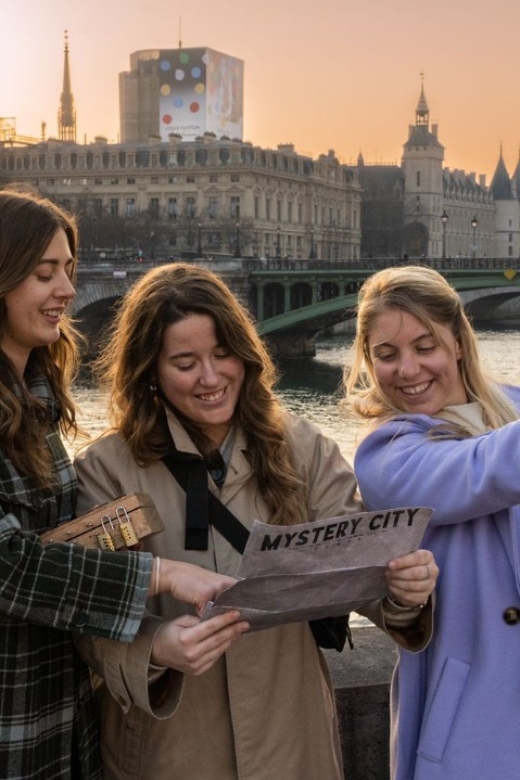
The activity promises true stories from Paris history and information connected to Marie Curie. You should expect short pieces of context woven into the mission, not a formal talk from a historian.
That approach works best when you want to keep moving. You can learn something about the city while seeing its monuments, then return to the puzzle before your attention fades.
The weaker point is the storytelling. The route and props may be appealing, but the historical explanations can feel thin. If your main goal is to understand Paris in detail, pair this activity with a conventional walking tour or museum visit.
I would not book this as your only history experience in Paris. I would book it as a different way to spend two hours, especially if your group needs an activity that mixes sightseeing with play.
This is also worth considering for repeat visitors. Someone who has already seen the main monuments may enjoy having a new reason to walk through central Paris. The game asks you to inspect places instead of simply photographing them.
Why the two-hour length matters
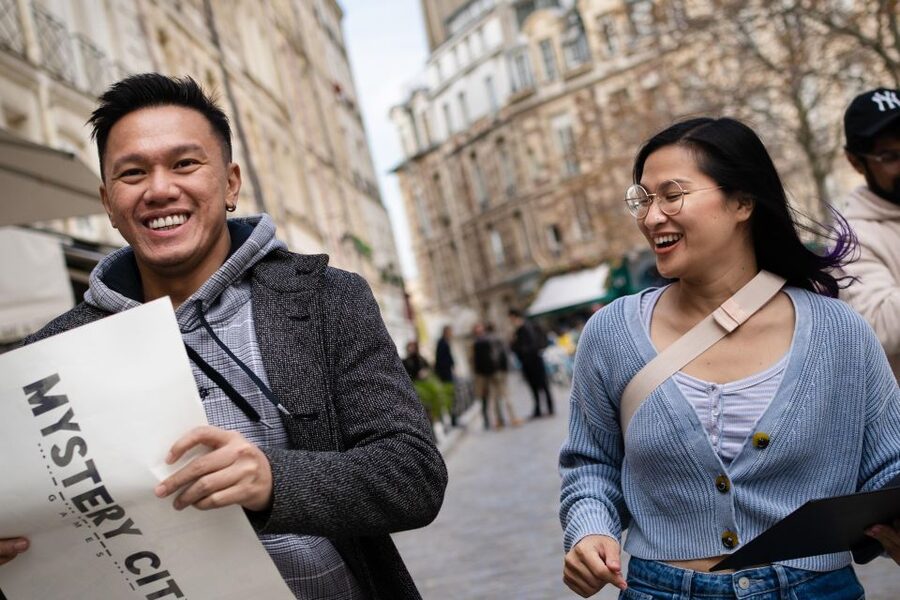
Two hours is a practical length for this experience. It gives you enough time to reach several sights and work through a sequence of clues without taking over your entire day.
You can schedule it around lunch, a museum visit, or another central Paris plan. Food and drinks are not included, so plan those separately. Transportation to Play-In is also not included, and your group is responsible for reaching 59 Rue de Rivoli.
The start and finish at the same address make the timing easier. You can leave your next plan from the point where you began rather than trying to calculate a new meeting location.
Do not expect the activity to cover all of Paris. It focuses on the city center and selected attractions along the game route. If your sightseeing list includes far-flung neighborhoods, you will need separate plans and transport.
The game is private, so your group does not have to solve clues alongside strangers. That can make the pace more comfortable, particularly for families or groups celebrating together.
Is $28 a fair price?
At $28 per person, the value depends on how you use it. You are paying for a two-hour private group activity with a prepared story, physical props, a walking route, and historical material.
For a family, the price can compare well with a standard attraction ticket, especially because the activity keeps both adults and children involved. The physical map and tools give the group something to share, rather than paying for an experience where one person listens and everyone else waits.
For friends or a party, the value comes from the structure. You get a planned outing that gives the group a common goal and plenty of room for joking, competition, and teamwork.
The price is less compelling if you want a deep history lesson or a highly detailed guided tour. You may get more historical information from a museum guide or dedicated walking tour, but you will not get the same puzzle-based format.
The free cancellation option allows you to cancel up to 24 hours ahead for a full refund. You can also reserve now and pay later, which helps if your Paris schedule is still shifting.
Who will enjoy this most
I would recommend the game to families with school-age children, groups of friends, and parties looking for an unusual way to see central Paris.
It is particularly suitable for:
- Families who want children to take an active role in sightseeing
- Friends who enjoy riddles, treasure hunts, and friendly competition
- Groups celebrating a bachelorette party or weekend together
- Visitors with one open afternoon who want to combine monuments and entertainment
- People who prefer paper maps and physical props to app-based games
I would be more cautious if you dislike puzzles, need a fully narrated tour, or want detailed facts at every stop. The route can show you important Paris sights, but the game remains the main event.
The activity is also best for a group willing to cooperate. You may need to pause, reread a clue, or try more than one approach. That is part of the fun, but it can frustrate anyone who wants a fast, straightforward walk.
Practical tips for a smoother game
Arrive ready to begin at Play-In on Rue de Rivoli and tell a shopkeeper you are there for the Mystery City Game. The shop staff provide the backpack and starting materials.
Choose your language in advance. The game is offered in French and English, and the host or greeter can work in either language.
Give every member of your group a role. One person can carry the map, another can inspect the tools, and someone else can keep track of the clues. Children can help search for sculptures or visual details.
Leave time for the puzzles. If you rush from one attraction to the next, you lose the main point of the activity. At the same time, remember that this is a two-hour game, so avoid turning every stop into a long sightseeing break.
Plan food and drinks before or after the game since they are not included. Also plan your route to the start point, since transportation is not part of the booking.
Should you book Marie Curie’s secret?
Book it if you want Paris sightseeing with a job to do. The physical maps and props make the experience more social than an app game, and the private format lets your group choose between a relaxed family pace and a competitive challenge.
I would especially recommend it for families with children, friend groups, and anyone with only a short window for central Paris. The puzzles and sculpture searches give younger participants a real role.
Skip it if your top priority is detailed history or a fully guided explanation of Marie Curie’s life. The historical storytelling may feel too brief for that purpose.
At $28, this is a fair choice for a two-hour private activity that combines city sights, teamwork, and a clear story. Treat it as an entertaining sightseeing game, not as your main Paris history lesson, and you are likely to get the most from it.
FAQ
Where does the Paris treasure hunt begin?
It begins at Play-In, located at 59 Rue de Rivoli in Paris.
Where does the activity finish?
The game ends back at the same meeting point at Play-In.
How long does the experience last?
The activity lasts two hours. Starting times depend on availability.
What languages are available?
The game is available in French and English.
Is this an app-based game?
No. The activity uses physical treasure maps, books, boxes, and tools provided in a backpack.
Is the group private?
Yes. The activity is offered for a private group.
What is included in the price?
The price includes treasure maps, boxes, beautiful tools, and true stories from the city’s history.
Can I cancel for a refund?
Yes. You can cancel up to 24 hours in advance for a full refund. You can also reserve now and pay later.
Just added around Paris
- Private Paris Marche d’Aligre Walking Tour with Tastings★ 5.0 · 8 reviews
- Private Louvre Museum Tour for Kids & Families with Alberto or his team in Paris★ 5.0 · 41 reviews
- Private Highlights of Paris Tuk-Tuk Experience★ 5.0 · 26 reviews
- Paris Latin Quarter Walking Tour: History & Culture – Small Group★ 5.0 · 14 reviews
- Private Highlights of Paris Bike Tour★ 4.5 · 15 reviews
- Paris Musee d’Orsay PRIVATE TOUR with a Local Private Guide★ 5.0 · 41 reviews
- Private Half Day Historic Tour★ 5.0 · 58 reviews
- Pere Lachaise Cemetery Paris – Exclusive Guided Walking Tour★ 5.0 · 72 reviews
Paris Walking Tours, compared.

Paris Top Sights Half Day Walking Tour with a Fun Guide
Read our review →
Montmartre Hidden Gems and Scenic Highlights Walking Tour
Read our review →
Montmartre Hill French Gourmet Food and Wine Tasting Walking Tour
Read our review →
Paris Île de la Cité and Notre-Dame Walking Tour With Crypt
Read our review →
Montmartre Cheese, Wine & Pastry Guided Walking Tour
Read our review →
Paris in a Day: Louvre or Orsay, Eiffel Tower, City Walk & Cruise
Read our review →
Montmartre Highlights Walking Tour with a Local Guide
Read our review →
Browse the lists this tour appears in