

Reviewed · MONTMARTRE AND SACRé-CœUR TOURS
Paris: Small Group Moulin Rouge & Sacré Cœur Montmartre Tour
Montmartre gives you Paris in a compact, uphill package: the red windmill of Moulin Rouge, old cafés, artist addresses, village-like streets, and the white Basilica of Sacré-Cœur. I like that this walk connects famous sights with smaller places such as the House of Van Gogh and the Wall of Love. I also like that the guide points out cafés and restaurants, so you leave with ideas for continuing the evening.
The main drawback is the pace and terrain. You have only two hours to cover a hill, cobblestones, several historic stops, and Sacré-Cœur, so this is an introduction rather than a full study of Montmartre. The tour is also not suitable for wheelchair users, and food, drinks, and tips are extra. At the listed $2.27 per person, the value looks unusually strong, but check the final booking price and available departure time before you commit.
Key points to know before you book
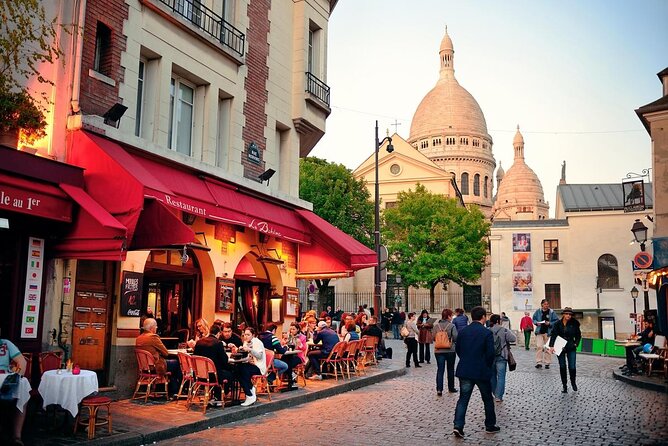
- Moulin Rouge begins the story: Meet near Blanche Metro Station, directly across from the famous cabaret.
- Daniel may be your guide: The experience is offered in English, and Daniel is described as speaking both French and English well and helping with photos.
- The route links art and film: See Café des Deux Moulins from Amélie, the House of Van Gogh, Bateau Lavoir, Maison Rose, and other well-known Montmartre places.
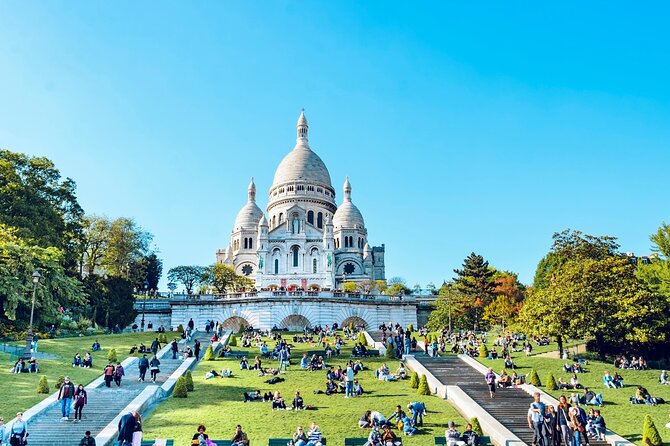
- Sacré-Cœur is the finish: The walk climbs to the basilica, gardens, fountain, and panoramic views over Paris.
- The route is uphill: Expect cobbled streets and stairs or climbs, with no wheelchair access.
- You return to the starting point: The activity ends back near the Moulin Rouge meeting area.
Meeting at Blanche and the Moulin Rouge
Your meeting point is easy to identify if you use Metro Line 2. Get off at Blanche Station, then, after exiting, look to the left side of the road. You will see Five Guys and Starbucks across from the Moulin Rouge. Wait in front of Starbucks.
This is a practical place to begin. The Moulin Rouge is hard to miss, and the metro puts you close to the action without requiring a long walk through unfamiliar streets. Still, give yourself enough time to find the correct exit and meeting spot. The instructions specifically ask you to wait at Starbucks, not at the cabaret entrance.
The tour ends at the same meeting point. That makes planning easier. You can continue into Montmartre afterward, return to the metro, or arrange a meal nearby. Since the walk finishes near the Moulin Rouge rather than at Sacré-Cœur, you should not assume the final stop is the best place to catch your next connection.
More Montmartre and Sacré-Cœur Tours:
- Montmartre Hidden Gems and Scenic Highlights Walking Tour
★ 5.0 · 2,684 reviews - Montmartre Hill French Gourmet Food and Wine Tasting Walking Tour
★ 5.0 · 2,588 reviews - Paris: Montmartre Cheese, Wine & Pastry Guided Walking Tour
★ 4.8 · 2,255 reviews
Moulin Rouge and Montmartre’s theatrical side
The Moulin Rouge is the natural opening scene. Its red windmill and cabaret reputation introduce the entertainment side of Montmartre, a district long linked with singers, painters, writers, performers, and nightlife.
You will mainly see the exterior during this walking tour. There is no cabaret show or ticket to the interior included, so book this experience for the neighborhood context rather than for a Moulin Rouge performance. That distinction matters. A visitor hoping to watch the famous revue will need a separate ticket and a different evening plan.
From here, the route moves away from the busy boulevard and into the hill streets. The appeal is the change in mood. You begin beside one of Paris’ best-known entertainment venues, then walk into quieter lanes and older buildings associated with the district’s creative past.
Cobblestones, artists, and old Montmartre addresses
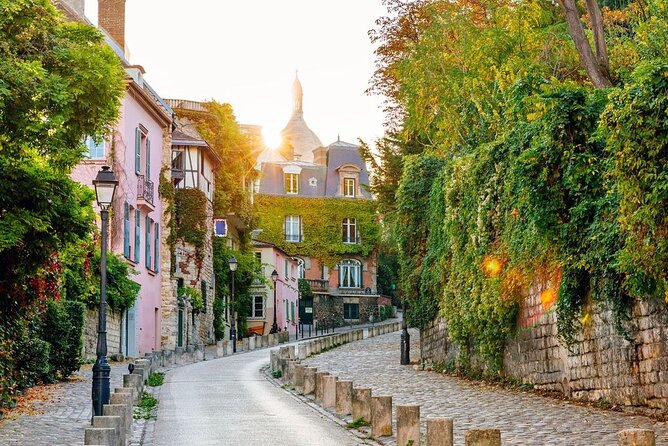
Montmartre is best understood on foot. The route takes you through cobbled streets and past apartments where artists once lived and worked. These addresses give the neighborhood more meaning than a quick photo stop at Sacré-Cœur alone.
The guide’s role is important here. A building can look ordinary until you learn who lived or worked there. This tour is designed to point out those links, helping you connect the streets with the painters, singers, and other artistic figures who made Montmartre famous.
You should expect an outdoor walking lesson, not a museum visit. The experience does not include entry to galleries, studios, or private buildings. Its value comes from seeing the setting and hearing the stories while moving through the actual streets.
The route also includes suggestions for cafés and restaurants. That is useful in Montmartre, where many places look inviting but your time and budget may be limited. You can ask the guide for ideas during the walk, then decide where to stop after the tour.
Café des Deux Moulins and the Amélie connection
One of the more appealing stops is Café des Deux Moulins, known to many people from the film Amélie. Even if you have not seen the movie, the café gives you a clear example of how modern film has added another layer to Montmartre’s identity.
The stop is worth treating as a photo and orientation point rather than expecting a full film-themed attraction. The café is part of the neighborhood, not a separate attraction included with the walking fee. Food and drinks are not included, so you can choose to return later if you want to sit down.
The House of Van Gogh adds another artistic address to the route. Together, these locations show two sides of Montmartre: the district as a real place where artists lived, and the district as a setting that later became famous through cinema.
More Moulin Rouge and Cabaret Shows:
- Paris: Moulin Rouge Cabaret Show Ticket with Champagne
★ 4.7 · 16,088 reviews - Paris: Dinner Show at the Moulin Rouge
★ 4.8 · 3,333 reviews - Paris: Crazy Horse Cabaret Show
★ 4.7 · 2,726 reviews - Seine Dinner Cruise, Eiffel Tower Access and Moulin Rouge Show
★ 4.0 · 2,310 reviews
Place des Abbesses and the Wall of Love
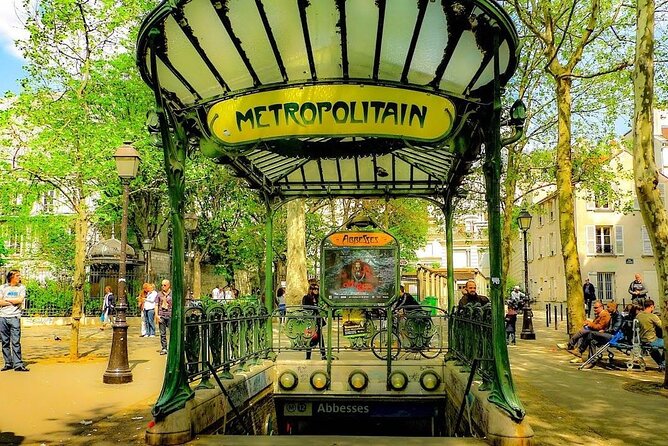
Place des Abbesses gives the walk a useful pause before the higher climb. Here you find one of Paris’ oldest surviving churches and the Wall of Love, a large work covered with the words I love you in many languages.
The square also helps you see how Montmartre works as a neighborhood, not just as a collection of postcard sights. Cafés, streets, public art, and historic buildings meet here. You can take photographs, listen to the guide, and catch your breath before the route continues upward.
The Wall of Love is a quick stop, but it has broad appeal. Couples may enjoy it, and families can use it as an easy photo point. It is also a reminder that this tour is not focused only on painters and architecture. It includes places tied to popular culture and everyday Paris.
Because the full walk lasts two hours, stops may be fairly brief. If you want long café time or careful photography at every location, you may feel rushed. If you prefer a guided overview that keeps moving, the timing should suit you better.
Bateau Lavoir, Maison Rose, and the last vineyard
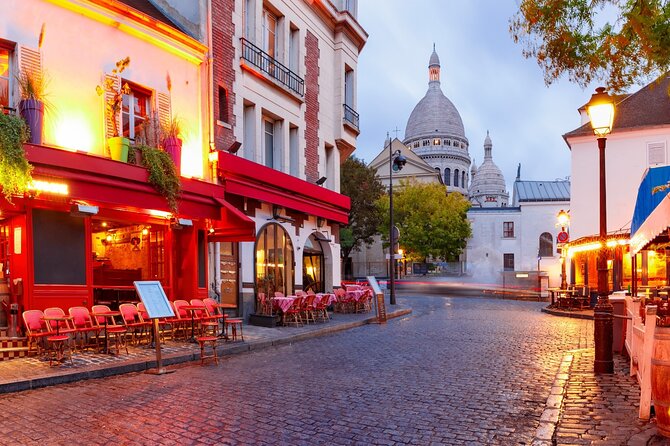
The route continues to several classic Montmartre locations, including Bateau Lavoir, Maison Rose, and the area’s last vineyard. These places help explain why Montmartre still feels different from the grand boulevards and formal monuments elsewhere in Paris.
Bateau Lavoir is linked with artists and studio life. Maison Rose is one of the district’s most recognizable painted buildings. The vineyard adds a surprising rural note to a city neighborhood. None of these stops replaces a museum or formal historic site, but together they create a strong sense of place.
You will want comfortable shoes for this section. Cobblestones can be uneven, and the route keeps gaining height. The walk is not described as strenuous, but it is not flat, either. Anyone with limited mobility should take the accessibility warning seriously.
The vineyard is also a good example of why a guide helps. Without local explanation, it is simply a small patch of vines on a Paris hill. With context, it becomes part of Montmartre’s long effort to preserve its village character.
Place du Tertre and the artist square
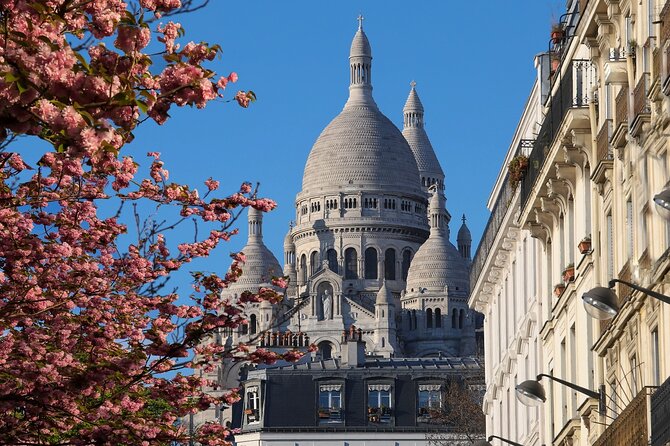
Place du Tertre is one of Montmartre’s best-known gathering places. It is associated with artists, portrait painters, cafés, and the district’s public creative life.
This is a lively stop, but it can also be crowded and tourist-oriented. That is not a reason to skip it. Instead, go with the right expectation. You are seeing one of Montmartre’s signature places, not a quiet secret corner untouched by tourism.
The guide can help you read the square beyond its surface. Look at how the painters work in the open, how the cafés frame the space, and how the square connects to the surrounding lanes. If you want to buy artwork or sit for a portrait, that would be separate from the tour and would require extra time.
Since the tour returns to the Moulin Rouge area, you can come back to Place du Tertre later if you want a slower look. The guided visit gives you the basic orientation first.
The climb to Sacré-Cœur
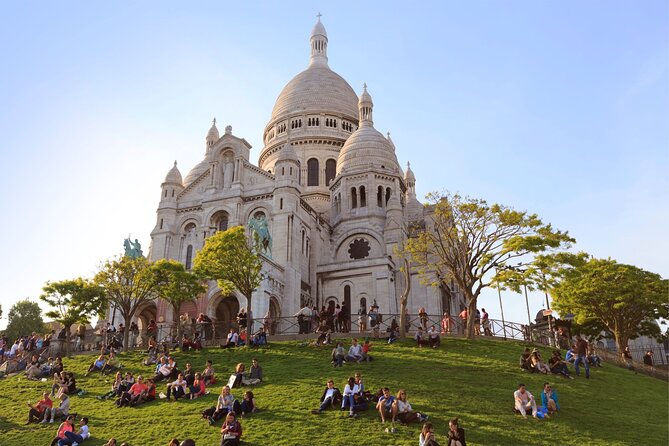
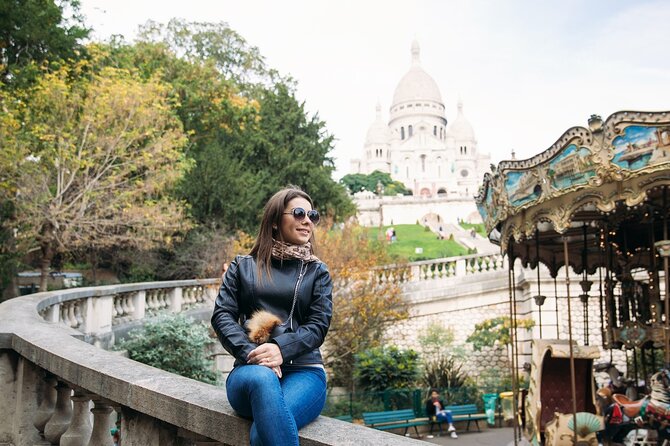
The final major section takes you uphill to the Basilica of Sacré-Cœur. The ascent is part of the experience. Montmartre means mountain village, and the route makes you feel that rise rather than simply dropping you at the top by taxi.
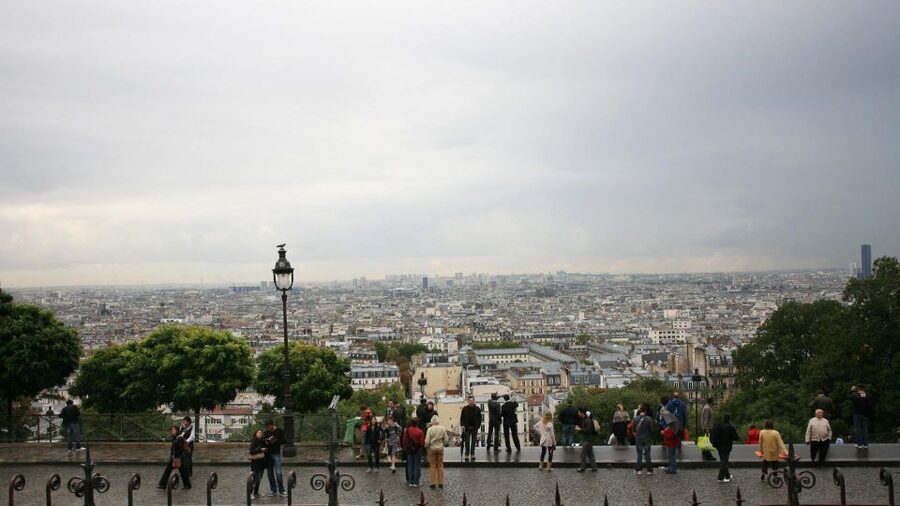
At the basilica, you can see statues of French heroes, gardens, and a fountain. The open setting gives you room to look back over the city after the narrower streets below.
The panoramic view is one of the strongest reasons to choose this tour. From the hill, Paris spreads out beneath you, and the view can rival the famous outlook from the Eiffel Tower. The two sights offer different pleasures. The Eiffel Tower gives you the tower itself and a view from within the city’s landmark. Sacré-Cœur gives you a broad sweep of Paris with the Eiffel Tower included in the distance.
The basilica is the endpoint of the sightseeing route, but the supplied details say the activity finishes back at the original meeting point. Ask the guide about the return arrangement at the start so you understand how the group will get back after the basilica visit. The route description emphasizes climbing to Sacré-Cœur, while the meeting information confirms that the activity ends near Blanche.
How the two-hour format affects the experience
Two hours is enough to cover the main story of Montmartre, but not enough to explore every lane or spend long periods inside each stop. I see this as a useful first look, especially if your Paris schedule is tight.
The route has a clear shape: cabaret, artist streets, cafés and film locations, public squares, famous buildings, then the basilica and city view. That structure keeps the walk from becoming a random list of addresses.
You should arrive ready to keep moving. There is no food or drink included, and the tour is outdoors. Wear shoes that handle cobblestones, bring water if you need it, and allow time for the hill.
The experience is offered with a live English-speaking guide. Daniel is specifically associated with the tour, and his guidance is described as friendly, passionate, and clear in both French and English. He also offers to take photographs, a useful touch if you are traveling alone or want everyone in your group included.
Price, tips, and what is not included
The listed price is $2.27 per person. At that amount, a guided two-hour walk through one of Paris’ most famous districts would be exceptional value, so I would check the booking page carefully for the current price, date, and starting time before making plans.
The professional guide and walking tour are included. Food and drinks are not, so budget for a café or meal separately. Tips are also not included and are cash only. If Daniel leads your walk and provides the kind of clear explanations and photo help described, carry cash so you can tip at the end.
The option to reserve now and pay later can help if your itinerary is still changing. Free cancellation is available up to 24 hours before the activity for a full refund. Those terms are useful, but the walking route itself should remain your main reason for booking.
Who should book this Montmartre walk?
I would choose this tour if you want a quick, guided introduction to Montmartre and prefer local stories to wandering without a plan. It suits first-time Paris visitors, film fans who want to see the Café des Deux Moulins, and art lovers interested in the places connected with painters and singers.
It also works well for anyone who wants Sacré-Cœur plus the streets below it in one outing. You get the basilica view without treating the hill as an isolated monument.
I would be more cautious if you want a slow photography walk, a long meal, or an in-depth art tour. The itinerary covers many stops in two hours. People who use wheelchairs should not book this route, since it is specifically not suitable for wheelchair users and includes hills and cobblestones.
Should you book it?
Book this walk if you want Montmartre explained in a compact route, with Moulin Rouge, artist addresses, Amélie locations, Place du Tertre, and Sacré-Cœur all tied together. The city view, the café suggestions, and Daniel’s reported help with photographs add practical value.
Skip it if you already know Montmartre well or want to spend the day inside museums and cafés. For a first visit, though, the low listed price, short duration, English guide, and strong mix of landmarks make it an easy way to get your bearings before exploring the hill on your own.
FAQ
How long does the Montmartre tour last?
The walking tour lasts two hours. Check availability for the exact starting time.
Where does the tour begin?
Meet near Blanche Metro Station, using Metro Line 2. After exiting, look to the left side of the road. The meeting point is in front of Starbucks, across from the Moulin Rouge and near Five Guys.
Where does the activity end?
The activity ends back at the original meeting point near Blanche and the Moulin Rouge.
Is the tour offered in English?
Yes. The experience includes a live English-speaking guide. Daniel is specifically associated with the tour and is described as speaking French and English well.
Is food or drink included?
No. Food and drinks are not included in the activity price.
Are tips included?
No. Tips are not included, and the tour information specifies that tips are cash only.
Is the route suitable for wheelchair users?
No. The activity is not suitable for wheelchair users. The walk includes cobbled streets and an uphill route toward Sacré-Cœur.
Just added around Paris
- Private Paris Marche d’Aligre Walking Tour with Tastings★ 5.0 · 8 reviews
- Private Louvre Museum Tour for Kids & Families with Alberto or his team in Paris★ 5.0 · 41 reviews
- Private Highlights of Paris Tuk-Tuk Experience★ 5.0 · 26 reviews
- Paris Latin Quarter Walking Tour: History & Culture – Small Group★ 5.0 · 14 reviews
- Private Highlights of Paris Bike Tour★ 4.5 · 15 reviews
- Paris Musee d’Orsay PRIVATE TOUR with a Local Private Guide★ 5.0 · 41 reviews
- Private Half Day Historic Tour★ 5.0 · 58 reviews
- Pere Lachaise Cemetery Paris – Exclusive Guided Walking Tour★ 5.0 · 72 reviews
Montmartre and Sacré-Cœur Tours, compared.

Montmartre Hidden Gems and Scenic Highlights Walking Tour
Read our review →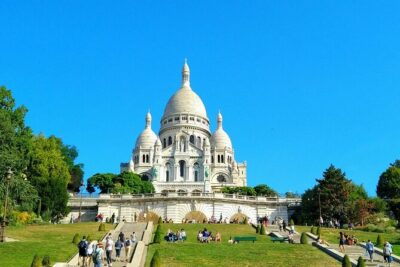
Montmartre Hill French Gourmet Food and Wine Tasting Walking Tour
Read our review →
Montmartre Cheese, Wine & Pastry Guided Walking Tour
Read our review →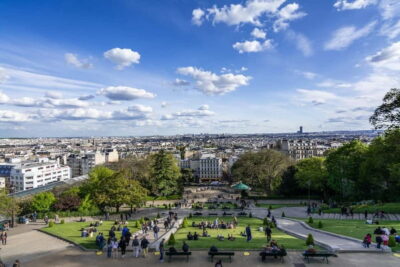
Montmartre Highlights Walking Tour with a Local Guide
Read our review →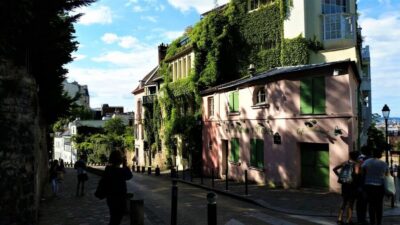
Sacré-Coeur and Montmartre Tour with Expert Guide
Read our review →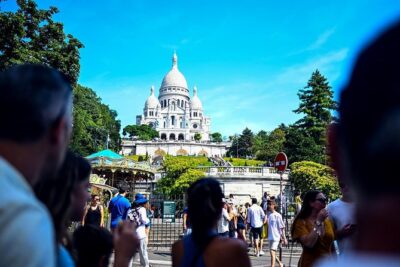
Private Montmartre Food Tour with Wine, Cheese & Pastries
Read our review →
Paris Montmartre Food Tour – A Full French Meal by Do Eat Better
Read our review →
Hidden Montmartre: Paris’ Secret Streets Walking Tour
Read our review →Browse the lists this tour appears in