

Reviewed · MUSEUMS
Paris: Ticket Entrance to Science Experiences Museum
Science Experiences turns science into a 90-minute trip through space, the ocean depths, the center of Earth, and the strange rules of quantum physics. The route uses video mapping, virtual reality, and multisensory displays rather than a traditional museum full of cases and labels.
I like the broad range of subjects and the way the course works for children and adults together. I also like the family appeal: a 6-year-old and an 11-year-old both found plenty to enjoy. The main drawback is that some parts rely more on watching and listening than doing, and a few displays may not work perfectly.
Key points to know before booking
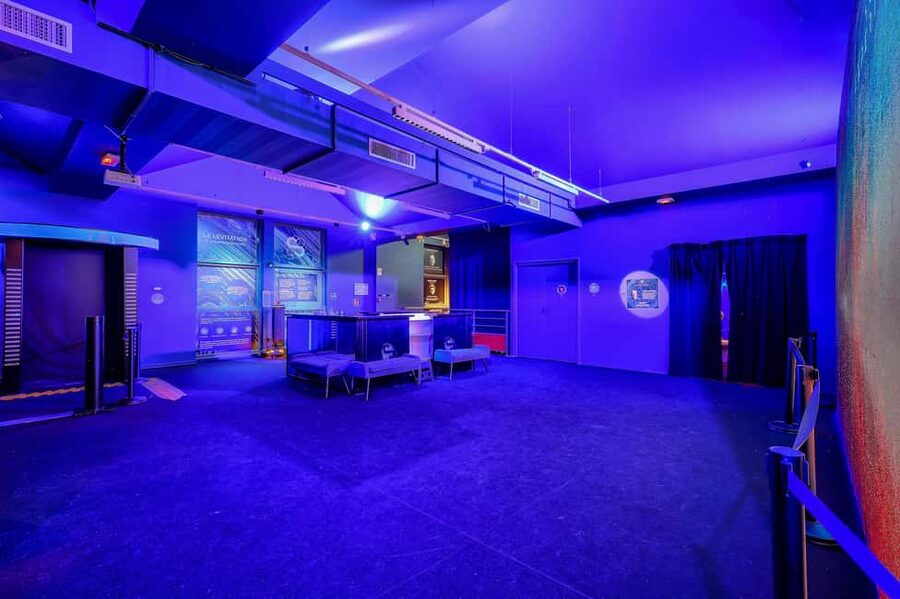
- Four big science themes: Move from the edges of the universe to the depths of the abyss, through Earth’s center, then into quantum physics.
- A short, structured visit: The full route takes about 90 minutes, making it easy to fit into a day in Paris.
- Strong family appeal: The mix of visuals, sound, and simple scientific ideas can work well for children from about school age upward.
- Extra-cost options: Virtual reality simulators and an audio guide are not included in the basic admission.
- Some watching, not constant testing: The experience is educational and entertaining, but not every section offers an experiment you can operate yourself.
- Bercy Village setting: You are visiting an indoor attraction in the Bercy Village area, not a conventional science museum with a large collection of objects.
A science trip with a clear sense of movement

Science Experiences is designed as a route, not a collection of unrelated exhibits. You pass from room to room, with each space presenting a different scientific subject through projected images, sound, guided explanation, and interactive technology.
That format gives the visit a story. You begin at the borders of the universe, travel down toward the ocean abyss, pass through the center of Earth, and finish with quantum physics. It is a playful order, moving from the biggest scale imaginable to the very small and strange.
I like that progression because it gives a 90-minute visit a sense of purpose. You are not simply looking at one screen after another without context. At its best, the experience encourages you to connect ideas about distance, matter, energy, and the limits of human understanding.
The scientific content has been developed with input from a committee of experts. That does not turn the attraction into a university lecture, and it is not meant to. The goal is to make difficult subjects approachable through entertainment. You should expect broad explanations and visual impressions rather than detailed technical study.
More art museums in Paris:
- Paris: Louvre Museum Timed-Entrance Ticket
★ 4.6 · 71,977 reviews - Louvre Museum Masterpieces Guided Tour with Access
★ 4.5 · 12,023 reviews - Paris: Louvre Museum Entry Ticket With Host and River Cruise
★ 4.6 · 9,926 reviews
From the edges of the universe to the abyss
The first part of the route looks outward, toward the universe. The supplied description does not give a precise list of planets, stars, or galaxies shown, so I would not book this expecting a detailed astronomy exhibition with named objects and long scientific labels.
Instead, you can expect a large-scale visual introduction to space. Projection and sound are central to the effect. This is the kind of presentation that can help a child grasp the enormous size of the universe before encountering more complex ideas later in the visit.
The route then shifts toward the depths of the ocean. This change in scale is one of the more appealing features of the experience. Space and the abyss seem unrelated at first, but both present environments that are difficult for people to reach directly. The attraction uses that contrast to make science feel like a journey into places beyond normal daily experience.
You might find the ocean section especially effective if you respond to atmosphere and sound. You may find it less satisfying if you want equipment, specimens, or a large number of hands-on tests. One important point is clear from the available information: the visit is not built around constant physical experimentation.
Earth’s center and the power of visual effects
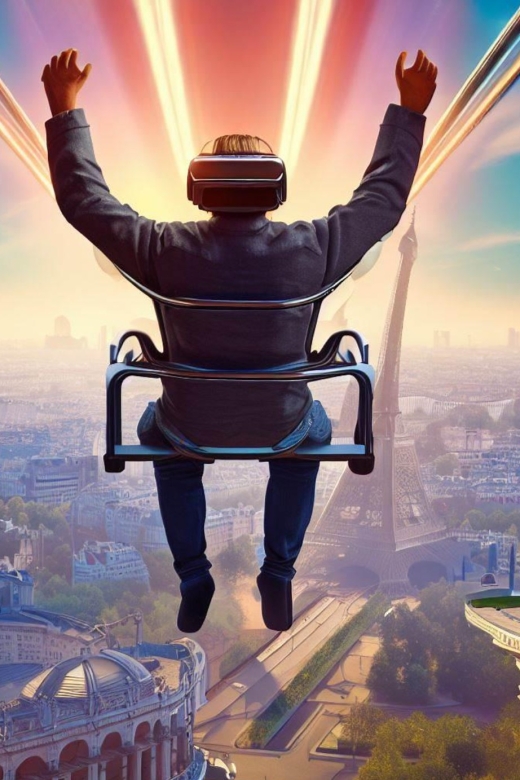
The next stage takes you toward the center of Earth. This is another subject that benefits from a visual format. A conventional label can explain layers beneath the ground, but projected images and changing environments can give you a better sense of scale and depth.
The attraction uses video mapping and multisensory presentations to create its effects. In plain terms, images are projected across surfaces while sound and other sensations help shape the room. The result is closer to an educational show than a standard gallery.
That distinction matters. If you enjoy film, movement, and guided presentation, the format should keep your attention. If you prefer to read quietly at your own pace, the pace of the rooms may feel less comfortable.
One practical issue is that the route can contain several things competing for your attention. You may be reading a sign, listening to an audio guide, and trying to follow an instructor at the same time. That can make it hard to absorb every point. I would focus on the main explanation rather than trying to catch every label.
Some equipment has also been reported as not working during the experience. That is not a reason to dismiss the entire attraction, but it does affect expectations. This is a technology-based visit, so a faulty screen or inactive attraction can reduce the impact of a particular room.
Quantum physics brings the route to a close
The final theme is quantum physics, presented through ideas such as lasers, teleportation, and levitation. These subjects can quickly become difficult, even for adults, so the attraction treats them as a set of intriguing concepts rather than a full physics lesson.
The subject matter gives the final rooms a different feel from the space and Earth sections. Instead of looking at huge distances or hidden layers of the planet, you are considering behavior at a very small scale. The use of lasers and levitation helps turn abstract ideas into something you can see.
Teleportation is presented as a scientific theme, not as a claim that the attraction can transport you across Paris. Keep that distinction in mind, especially when visiting with young children. The goal is to awaken curiosity and show how science can challenge ordinary assumptions.
This last section may be the most rewarding for older children and adults who enjoy asking how things work. Younger children may respond more to the visual tricks than to the explanation behind them. The attraction is at its best when you treat each room as an invitation to ask questions, not as a complete answer.
More tickets and entry passes in Paris:
- Disneyland® Paris 1-Day Ticket
★ 4.6 · 49,412 reviews - Paris: Versailles Palace and Gardens Full Access Ticket
★ 4.6 · 41,579 reviews - Paris: Eiffel Tower Entry Ticket with Optional Summit Access
★ 4.4 · 20,035 reviews - Paris: Moulin Rouge Cabaret Show Ticket with Champagne
★ 4.7 · 16,088 reviews
How the 90-minute format affects the visit

Ninety minutes is a useful length for this type of activity. You get enough time to cover several subjects, but the visit does not take up half a day. It can fit neatly before or after a meal at Bercy Village or alongside other Paris plans.
The short duration also means the experience needs to keep moving. You should not expect long periods for independent exploration in each room. The format is a guided course, with visitors moving from one part to the next.
Group organization matters here. When several groups are using the rooms, people can cross paths and become mixed between activities. That can make the route feel less orderly. I would pay attention to the instructor’s directions and stay with your assigned group when possible.
The instructor is part of the experience, but no individual instructor names are provided. You should think of the staff role as helping visitors understand the rooms and move through the course, rather than expecting a personal lecture from a named scientist.
What the technology adds, and where it falls short
The main tools are virtual reality, video mapping, and multisensory or emotional presentations. Together, they give Science Experiences a modern, theatrical feel.
Video mapping can make a room change quickly and can show processes that are hard to recreate with physical objects. Virtual reality can also put you in places you could never visit directly. These methods are especially useful for children who need a strong visual hook before a scientific idea begins to make sense.
But technology does not automatically make an exhibit interactive. There is an important difference between seeing a scientific idea presented in an impressive way and testing that idea yourself.
That difference explains the mixed response to the attraction. One visitor found there were too few actual experiments and too much listening. Another found the course varied, playful, and enjoyable because the subjects were presented in several different ways. Both reactions can be true at once.
You should book this as an immersive-style educational show, not as a hands-on laboratory. I avoid the word hands-on here for a reason: the available information does not support the idea that every room lets you manipulate equipment or conduct a test.
Is the family appeal strong enough?
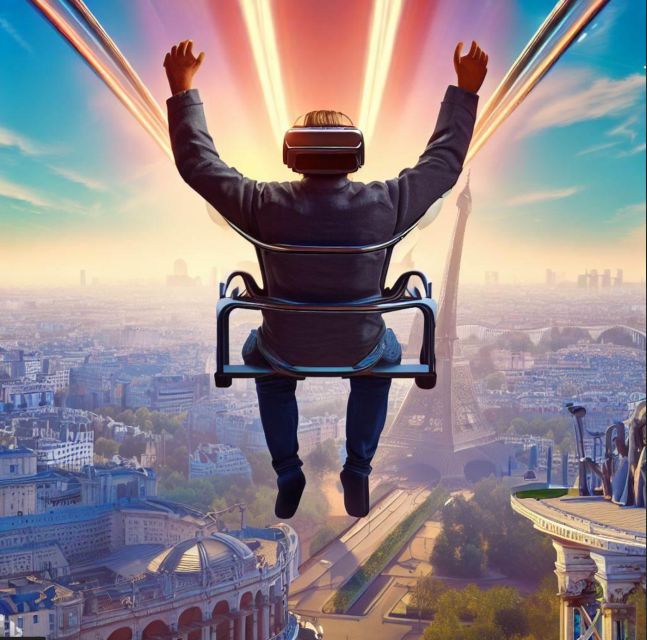
The experience is well suited to families who want an activity that combines entertainment and education. The wide age range of the subjects helps. A child may enjoy the visual journey through space, while an older child may become more interested in lasers, teleportation, and levitation.
The attraction also gives adults something to discuss with children after each room. Why is the universe so large? What would it mean to travel below Earth’s surface? Why do quantum ideas seem to break everyday rules? You do not need advanced science knowledge to start those conversations.
Still, the experience may not satisfy every age group equally. A young child can enjoy the colors, sounds, and movement without following the full explanation. An older child may want more control or more experiments. Adults who already know a lot about physics may find the treatment introductory.
I would choose it for a family looking for a break from monuments and paintings. I would be more cautious if your children become frustrated when they cannot touch or operate every display.
The practical value at the listed price
The listed price is $1,178 per person, which is extraordinarily high for a 90-minute museum-style attraction. At that figure, I cannot call the experience good value. Before paying, check the currency, date, and final booking total carefully, because the price may reflect a listing or currency issue rather than the normal cost you expect.
The admission includes the main Science Experiences course. Virtual reality simulators and the audio guide cost extra on site. If the base price is genuinely $1,178 per person, adding those options would make the value even harder to justify.
At a normal museum admission level, the calculation would be different. The attraction offers a compact family activity, a clear route, several major science topics, and a format that can entertain people who do not usually choose science museums. At the listed price, however, the attraction would need to be exceptionally reliable and unusually extensive to make sense.
The mixed satisfaction also matters when judging value. The strongest points are variety, playful presentation, and appeal to children of different ages. The weaker points are limited testing, occasional nonfunctional attractions, group confusion, and competing audio or written information.
Accessibility, booking flexibility, and timing
The activity is wheelchair accessible, an important advantage for visitors who need step-free access or room to move through an indoor attraction. The supplied information does not provide further details about specific equipment, seating, transfer arrangements, or restroom access, so you should ask the provider if you need those details.
The duration is 90 minutes, with starting times based on availability. You can cancel up to 24 hours in advance for a full refund, and the reservation option allows you to book now and pay later. Those terms are useful if your Paris schedule is still changing.
The language information is not clearly specified in the supplied details. Do not assume that every explanation, sign, or audio guide will be available in the language you prefer. Confirm before booking if language access is important to you.
Extra simulators and the audio guide are paid options. Treat them as optional additions, not part of the standard ticket.
Who should book Science Experiences?
I would put this near the top of the list for families with children who enjoy space, technology, unusual machines, or big scientific questions. It also works for adults who want a short indoor activity with a clear start and finish.
It may suit you if you:
- Prefer visual presentations to long museum labels
- Want a 90-minute activity in the Bercy Village area
- Enjoy seeing science presented through sound, projections, and special effects
- Are happy with a guided course rather than a free-form museum visit
- Want children and adults to share the same activity
I would be careful if you:
- Expect a large collection of physical artifacts
- Want every station to be a practical experiment
- Dislike guided movement between rooms
- Need a quiet visit with plenty of time to read
- Are being charged the full listed price of $1,178 per person
Should you book it?
Book Science Experiences if you want a short, visual, family-friendly science show and the confirmed ticket price is reasonable. Its best qualities are the varied route, the strong mix of subjects, and the ability to give children an entertaining introduction to ideas that can otherwise seem remote.
Do not book it blindly at the stated price. Confirm the currency and final cost first, then ask about the current condition of the interactive displays and the language of instruction. Also remember that the audio guide and virtual reality simulators cost extra.
My practical verdict is simple: good concept, uneven execution, and very poor value at the listed price. Choose it for variety and spectacle, not for a full day of experiments or detailed scientific study.
FAQ
Where is Science Experiences located?
It is located at Bercy Village in the Ile-de-France region of France.
How long does the activity last?
The experience lasts about 90 minutes.
What subjects are covered?
The route covers the edges of the universe, the depths of the abyss, the center of Earth, and quantum physics.
What types of technology are used?
The experience uses virtual reality, video mapping, and multisensory and emotional presentations.
Are virtual reality simulators included?
No. Virtual reality simulators are listed as options that must be paid for on site.
Is an audio guide included?
No. The audio guide is an additional paid option.
Is the attraction wheelchair accessible?
Yes. The activity is described as wheelchair accessible.
Is an instructor included?
Yes. The activity information includes an instructor as part of the experience.
Can I cancel for a refund?
Yes. You can cancel up to 24 hours in advance for a full refund.
Can I reserve now and pay later?
Yes. The booking terms allow you to reserve your place and pay later.
Just added around Paris
- Private Paris Marche d’Aligre Walking Tour with Tastings★ 5.0 · 8 reviews
- Private Louvre Museum Tour for Kids & Families with Alberto or his team in Paris★ 5.0 · 41 reviews
- Private Highlights of Paris Tuk-Tuk Experience★ 5.0 · 26 reviews
- Paris Latin Quarter Walking Tour: History & Culture – Small Group★ 5.0 · 14 reviews
- Private Highlights of Paris Bike Tour★ 4.5 · 15 reviews
- Paris Musee d’Orsay PRIVATE TOUR with a Local Private Guide★ 5.0 · 41 reviews
- Private Half Day Historic Tour★ 5.0 · 58 reviews
- Pere Lachaise Cemetery Paris – Exclusive Guided Walking Tour★ 5.0 · 72 reviews
Museums, compared.
Louvre Museum Masterpieces Guided Tour with Access
Read our review →
Louvre Museum Entry Ticket With Host and River Cruise
Read our review →
Les Invalides: Napoleon’s Tomb & Army Museum Entry
Read our review →
Louvre Museum – Exclusive Guided Tour (Entry Included)
Read our review →
Louvre Museum Hosted Entry and Mona Lisa Audioguide
Read our review →
Louvre Museum Tour Mona Lisa & Iconic Masterpieces
Read our review →
Browse the lists this tour appears in