
Reviewed · NOTRE-DAME AND SAINTE-CHAPELLE TOURS
Paris History Walk: Medieval Marais, Notre Dame Islands & Stories
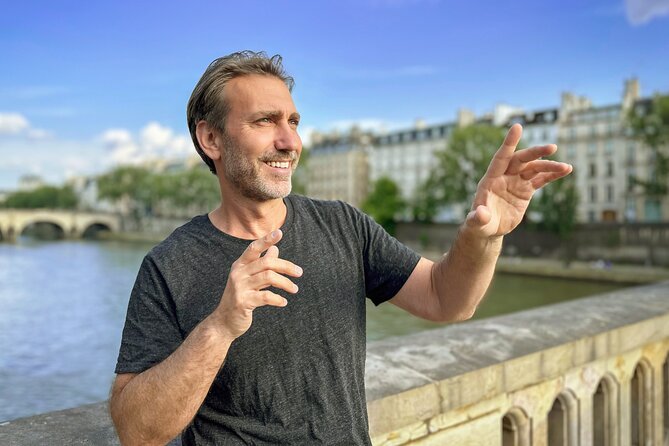
Paris reveals itself best on foot, and this walk begins with some of the city’s oldest surviving stones. You move from the medieval Marais to the islands of the Seine, passing royal mansions, Gothic landmarks, quiet squares, and the river views that make central Paris so memorable. James, an American photographer who lives in Paris, leads the experience with visual aids and plenty of historical context.
I like two things right away: the route links several major sights without feeling like a checklist, and the group is capped at eight people. James also takes complimentary group photos with your device, a useful touch if you want everyone in the picture. The main consideration is that this is an active two-hour walk, with no transportation and no included monument admissions.
Key points to know before you book
- The route covers two Paris islands and the medieval Marais: You see a broad slice of the city’s early story in a compact walk.
- James combines photography with history: Visual aids help you understand how Paris changed over time.
- The group maximum is eight people: That makes it easier to ask questions and keep a personal pace.
- Major sights are viewed from outside: Entry to Sainte-Chapelle, the Conciergerie, and other monuments is not included.
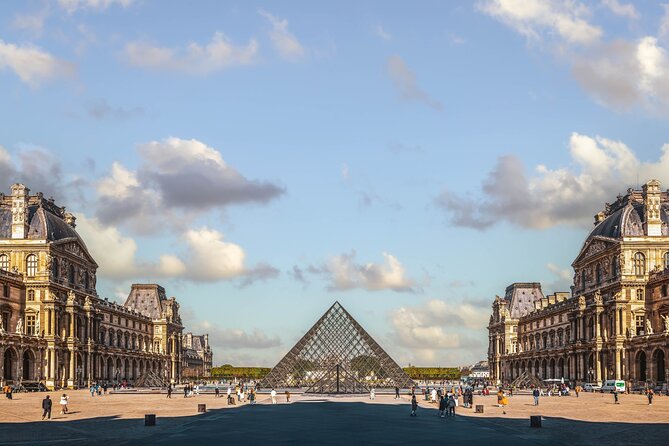
- The finish is at Pont Neuf: You end beside the Seine, with views toward the Louvre and a peaceful riverside park.
- Comfortable shoes matter: The route involves steady walking, and the tour timing is approximate.
Starting in the Marais with medieval Paris
The meeting point is Le Louis Philippe at 66 Quai de l’Hôtel de Ville, near the Seine. The start time is 10 a.m., which gives you a useful morning introduction to central Paris before the day gets crowded.
The first section steps into the medieval Marais. This is not just a pretty neighborhood of cafés and old façades. The area helps explain how Paris grew beyond the original islands and how royal and religious power shaped the city.
At Hôtel de Sens, you see a 15th-century Gothic mansion with royal connections. Its towers and sharply detailed exterior give you a strong visual start. This is the kind of place that can be easy to pass without context, so James’s images and explanations add value.
Maison Faust brings a different period into view. Its Renaissance details and decorated courtyards show how Parisian architecture changed after the Middle Ages. You are not simply looking at old buildings. You are comparing different ideas of wealth, taste, and status across several centuries.
The Philippe Auguste Wall is one of the route’s more unusual stops. Built in 1190 as part of the city’s defenses during the Crusades, it is a rare surviving piece of Paris’s third fortification. A fragment of wall may not sound as dramatic as Notre Dame, but it gives the walk a physical connection to medieval Paris. You can see that the old city was once smaller, fortified, and far more enclosed than the capital you see today.
More Le Marais Tours:
- Award-Winning Paris French Bakery Experience — Le Marais, 4th Arr
★ 4.5 · 1,186 reviews - Paris Le Marais Food Tour With 10+ Tastings, Cheese, Wine & More
★ 5.0 · 985 reviews - Paris Le Marais District Original Food and Wine Tasting Tour
★ 4.5 · 880 reviews
Île Saint-Louis and the quieter side of central Paris
From the Marais, the walk continues toward Île Saint-Louis. The island was developed in the 17th century and is known for elegant mansions, tree-lined quays, and quieter streets.
I like this change of pace. The Marais section is about layers of urban history, while Île Saint-Louis gives you room to notice proportions, façades, riverfront views, and the feel of a residential quarter. It is still central Paris, but the streets can feel removed from the main sightseeing rush.
You may pause at Berthillon, the famous ice cream shop that has operated since 1954. Food and drinks are not included, so any stop here is optional and at your own expense. It is a pleasant add-on, but do not assume it is a formal tasting or part of the ticket price.
This section will suit you if you enjoy photography. The island offers long views along the Seine, orderly façades, and smaller street scenes. James’s background as a photographer should be especially useful for framing group pictures and pointing out details you might otherwise miss.
Where Paris began on Île de la Cité
The route then reaches Île de la Cité, the island tied to the origins of Paris. This is the historic center of the city, and the walk uses its landmarks to connect Roman, medieval, royal, judicial, and revolutionary chapters.
The island can feel packed with major sights, but the value of a guided walk is knowing how they relate. Instead of treating Notre Dame, the Palais de Justice, Sainte-Chapelle, and the Conciergerie as separate photo stops, James ties them into the story of power in Paris.
You should expect a walking tour rather than a museum visit. The tour price does not include entrance to any site or monument. That means you will learn about these places and see them along the route, but admission inside Sainte-Chapelle or the Conciergerie would require a separate ticket and additional time.
Notre Dame and the Gothic heart of Paris
Notre Dame is one of the central moments of the walk. You stop to take in the cathedral and hear about its construction, long role in French culture, and place in Paris’s story.
The experience is especially useful for a first visit because it gives you an organized introduction without asking you to spend the whole day inside one monument. You get the exterior, the setting, and the historical framework. You can then decide if you want to return on your own for more time around the cathedral.
For photography, Notre Dame offers plenty to work with: stone details, towers, the surrounding island, and changing river views. The guide’s visual aids also help put the building into perspective, which matters when you are looking at a monument that has been altered and repaired over many centuries.
More Notre-Dame and Sainte-Chapelle Tours:
- Paris Île de la Cité and Notre-Dame Walking Tour With Crypt
★ 5.0 · 2,272 reviews - Paris: Eternal Notre-Dame VR Experience Ticket
★ 4.4 · 1,150 reviews - Paris: Notre-Dame Cathedral Exterior Tour & Free Entrance
★ 3.7 · 1,010 reviews - Paris Highlights Bike Tour: Eiffel Tower, Louvre and Notre-Dame
★ 5.0 · 853 reviews
Flowers, courts, chapels, and a prison
Marché aux Fleurs adds a lighter stop to the route. This historic flower market brings color and scent into a walk otherwise filled with walls, courts, churches, and stone façades. It is a good reminder that Paris history is not only found in grand monuments. Everyday markets also give a neighborhood its character.
The Palais de Justice follows, with its long connection to French legal affairs. Its architecture is imposing, and its location shows how Île de la Cité became a center of royal and judicial power.
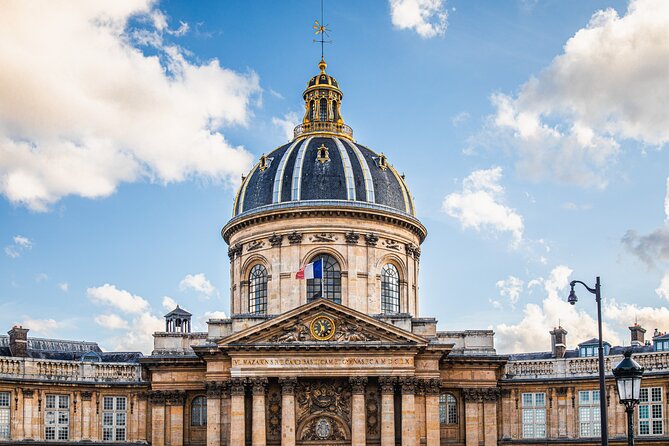
Sainte-Chapelle is one of the most important landmarks on the route. The royal chapel is famous for its stained glass and its connection to the French monarchy. Even if you do not go inside during this tour, the exterior and the story provide a useful preview. If the stained glass is high on your Paris wish list, plan a separate visit and budget for admission.
The Conciergerie adds a darker note. Once a royal palace and later a prison, it became especially important during the French Revolution. The Gothic architecture is striking, but the site also carries the weight of imprisonment and political upheaval. You can learn about that history during the walk without entering the building, though an interior visit would give you a fuller sense of the place.
Place Dauphine and the river views at the finish
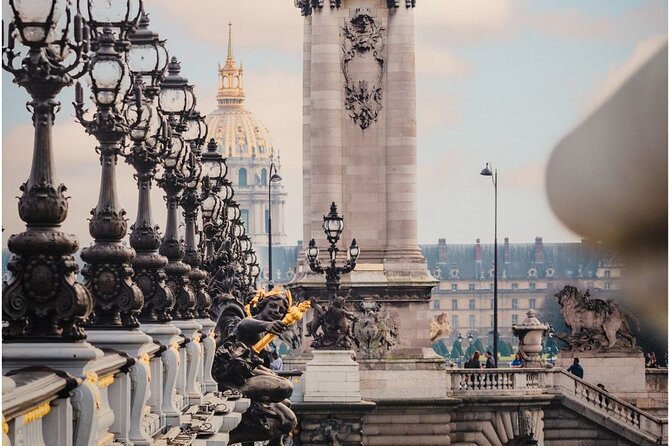
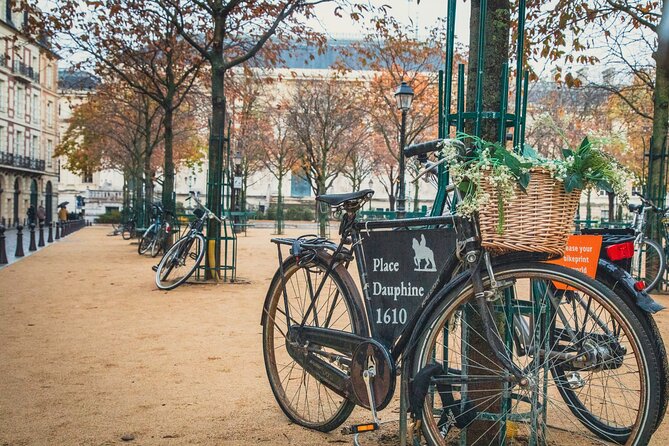
Place Dauphine is one of the most pleasant pauses on the route. This triangular square was created as a royal project and now offers a calmer setting in the middle of the city.
I value stops like this because they give your eyes a break from major monuments. You can take in the shape of the square, notice the surrounding buildings, and get a better feel for how Paris blends formal planning with intimate public spaces.
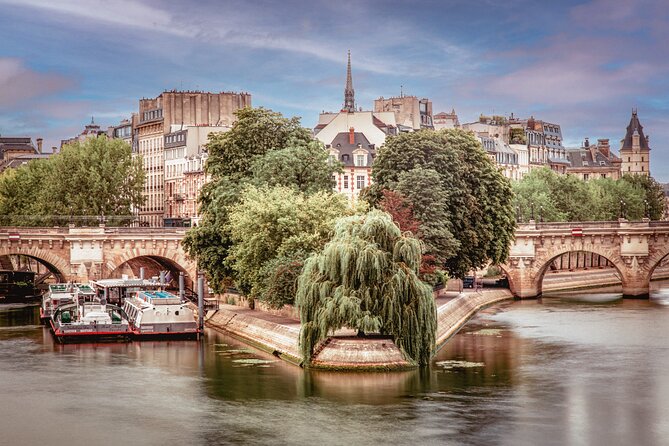
The walk continues to Square du Vert-Galant, a small park at the western tip of Île de la Cité. It is described as James’s favorite spot in Paris, and the location makes that preference understandable. The park sits beside the Seine and offers broad river views, a quiet place to pause, and a different angle on the city.
There is also a secret spot under a willow tree on the riverbank. The exact details are intentionally not given in advance, which is part of the charm. The ending includes views toward the Louvre and several historic landmarks, making it a strong place for final photographs.
Pont Neuf, Paris’s oldest new bridge
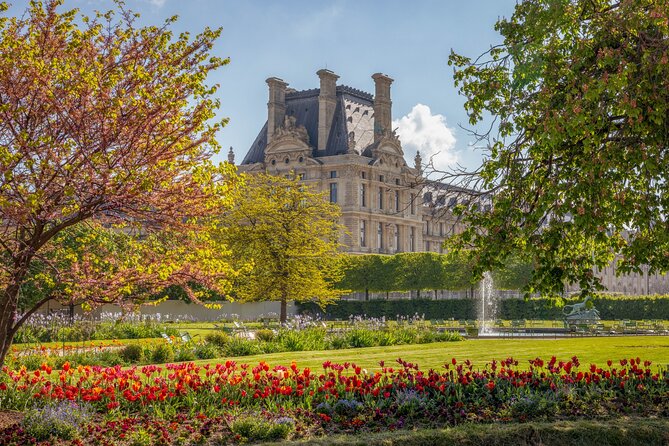
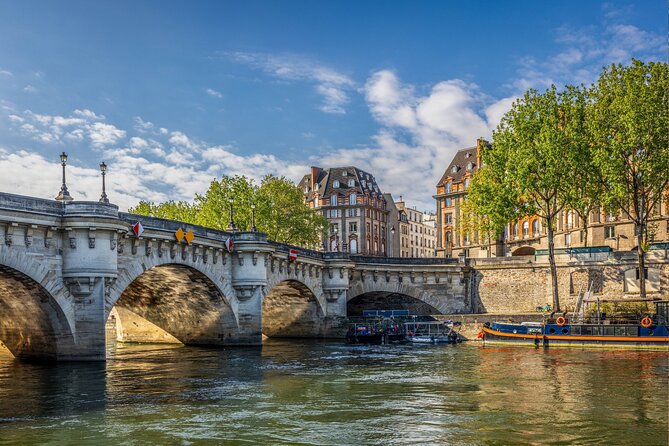
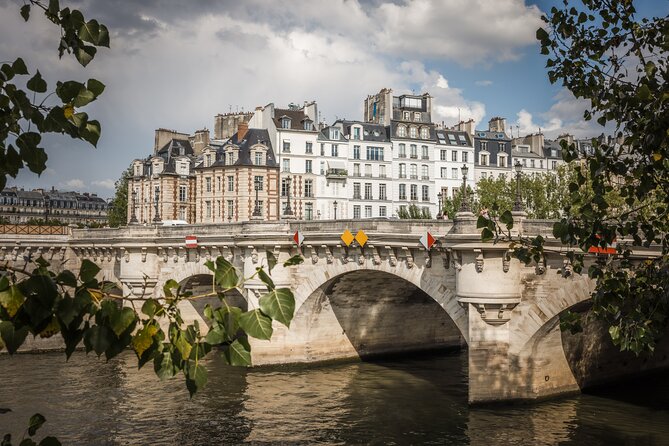
The tour ends at Pont Neuf. Despite its name, which means New Bridge, it is Paris’s oldest surviving bridge, completed in the early 17th century after construction began in 1578.
Its design was unusual for its time. The bridge placed more emphasis on pedestrians and open views than on rows of houses, changing how people experienced the Seine. That detail helps explain why Pont Neuf feels like more than a crossing. It is also a viewing platform and a public space.
Ending here works well from a practical point of view. You finish near the river rather than being returned to the starting point, so you can continue toward other parts of central Paris. The endpoint is Pont Neuf, 75001 Paris.
What the two-hour format does well
Two hours is enough to cover a lot, but not enough for a slow visit inside every landmark. The route works best as an orientation walk. You see where the major sites are, hear the connecting story, and collect ideas for later visits.
The pace has been described as well judged, with enough information to be useful without turning into a lecture. That matters on a route with this many landmarks. Too much detail would make the walk tiring, while too little would leave the buildings disconnected.
The hours are approximate, so do not schedule a tight museum reservation immediately afterward. Allow extra time for the walking pace, photographs, questions, and any pauses along the river.
Small groups, photos, and the guide’s approach
The group limit is eight people, one of the strongest practical features here. A small group makes it easier to hear near busy streets, ask James questions, and keep the walk personal.
James stays in communication from booking through the time in Paris, according to the experience details. That can be useful if you need clarity about the meeting point or timing. His American perspective may also help if you prefer explanations in straightforward English.
The complimentary group photos are taken with your own device. This is not a professional photo session, and prints are not included. Still, it solves a common problem: someone in the group is often missing from every picture. You should have your phone ready and make sure it has enough battery.
Price, pace, and who gets good value
At $82.91 per person, this is not a bargain-priced orientation walk. You are paying for a small group, an English-speaking local guide, visual aids, photo help, and a route that connects many historic sites.
The value improves if you are visiting Paris for the first time, want context before independent sightseeing, or care about photographs and city design. It is less compelling if you already know the Marais and Île de la Cité well, or if you mainly want interior access to Sainte-Chapelle and the Conciergerie. Those admissions are separate.
The experience is recommended for most people who can manage a steady urban walk. Service animals are allowed, and the route is near public transportation. Food, drinks, gratuities, and transportation to and from the meeting point are not included.
Good walking shoes are the practical choice. One person described it as an active tour, and that is the right expectation. The distance may not look extreme on a map, but two hours of standing and walking on city streets can feel demanding in poor footwear.
Should you book the Paris History Walk?
Book this if you want a compact, personal introduction to medieval Paris, the Seine islands, and the story behind Notre Dame and the surrounding monuments. It is particularly well suited to first-time visitors, families who want a manageable introduction, and anyone who likes taking photographs while learning what they are seeing.
Skip it if your main goal is a long interior visit at Sainte-Chapelle or the Conciergerie, since entry is not included. Also think twice if you dislike walking or need a fixed end time.
For most people, the strongest reason to choose it is the combination of James’s local perspective, visual teaching tools, and a maximum group of eight. You finish at Pont Neuf with a clear sense of how Paris grew from its islands, walls, royal buildings, and river crossings.
FAQ
How long does the Paris History Walk last?
The walk lasts approximately two hours. The timing is approximate, so allow some flexibility for walking, photos, and questions.
What time does the tour begin?
The scheduled start time is 10 a.m.
Where does the tour begin?
It begins at Le Louis Philippe, 66 Quai de l’Hôtel de Ville, 75004 Paris, France.
Where does the tour end?
The tour ends at Pont Neuf, 75001 Paris.
What landmarks are included along the route?
The route includes the medieval Marais, Hôtel de Sens, Maison Faust, the Philippe Auguste Wall, Île Saint-Louis, Île de la Cité, Notre Dame, Marché aux Fleurs, the Palais de Justice, Sainte-Chapelle, the Conciergerie, Place Dauphine, Square du Vert-Galant, and Pont Neuf.
Is admission to Sainte-Chapelle or the Conciergerie included?
No. Entrance to any site or monument is not included in the tour price.
How many people can join the tour?
The maximum group size is eight people.
Is the tour offered in English?
Yes. The experience is offered in English.
Can I cancel for a full refund?
Yes, if you cancel at least 24 hours before the scheduled start time. Cancellations made less than 24 hours before the start are not refunded, and poor weather may lead to a different date or a full refund.
More history tours in Paris
- Paris: Dark History and Ghostly Guided Walking Tour
★ 4.7 · 1,000 reviews - Le Marais/Paris – The Historic, Trendy, Jewish, LGBT district
★ 5.0 · 341 reviews - Paris City of Fashion History Private Guided Walking Tour
★ 5.0 · 221 reviews - Paris: Le Marais & Montmartre Jewish History Walking Tour
★ 4.8 · 170 reviews
More walking tours in Paris
- Paris Top Sights Half Day Walking Tour with a Fun Guide
★ 5.0 · 2,893 reviews - Montmartre Hidden Gems and Scenic Highlights Walking Tour
★ 5.0 · 2,684 reviews - Montmartre Hill French Gourmet Food and Wine Tasting Walking Tour
★ 5.0 · 2,588 reviews - Paris: Montmartre Cheese, Wine & Pastry Guided Walking Tour
★ 4.8 · 2,255 reviews
Just added around Paris
- Private Paris Marche d’Aligre Walking Tour with Tastings★ 5.0 · 8 reviews
- Private Louvre Museum Tour for Kids & Families with Alberto or his team in Paris★ 5.0 · 41 reviews
- Private Highlights of Paris Tuk-Tuk Experience★ 5.0 · 26 reviews
- Paris Latin Quarter Walking Tour: History & Culture – Small Group★ 5.0 · 14 reviews
- Private Highlights of Paris Bike Tour★ 4.5 · 15 reviews
- Paris Musee d’Orsay PRIVATE TOUR with a Local Private Guide★ 5.0 · 41 reviews
- Private Half Day Historic Tour★ 5.0 · 58 reviews
- Pere Lachaise Cemetery Paris – Exclusive Guided Walking Tour★ 5.0 · 72 reviews
Notre-Dame and Sainte-Chapelle Tours, compared.
Paris Île de la Cité and Notre-Dame Walking Tour With Crypt
Read our review →
Notre-Dame Cathedral Exterior Tour & Free Entrance
Read our review →
Paris Highlights Bike Tour: Eiffel Tower, Louvre and Notre-Dame
Read our review →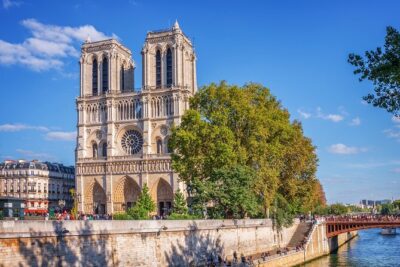
Early Access Paris Notre Dame Cathedral Walking Tour
Read our review →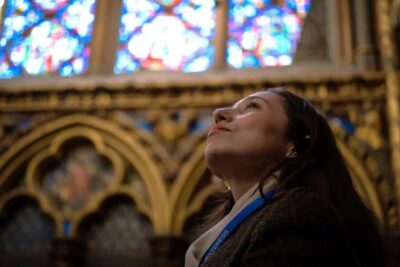
Sainte-Chapelle, Conciergerie, Notre Dame Guided Tour
Read our review →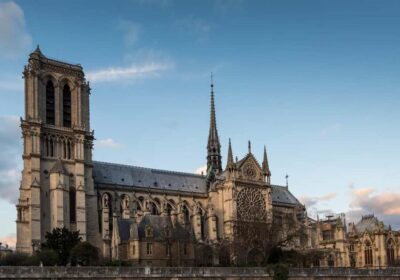
Notre Dame Outdoor Tour with Sainte-Chapelle / Crypt.
Read our review →
Notre Dame Outdoor Walking Tour and Entrance to Sainte Chapelle
Read our review →Browse the lists this tour appears in