
Reviewed · MONTMARTRE AND SACRé-CœUR TOURS
Paris: Le Marais & Montmartre Jewish History Walking Tour
Paris is at its most revealing when a guide shows you what the street signs do not. This tour links Le Marais’s Jewish quarter with Montmartre’s artists, writers, cafés, and studios, then ends at Sacré-Cœur with Paris spread below. Guides such as Benjamin, Benoit, Pierre-Louis, and Achilles have been especially praised for making difficult history clear and human.
I like the compact group, limited to nine people, and the way the route connects Jewish life across very different parts of Paris. I also like the balance between solemn places, such as the Shoah Memorial, and livelier stops near falafel shops, old streets, and Montmartre landmarks. The main drawback is the pace: three and a half hours of walking, plus public transport, can feel long, and you will see the synagogues and major sites from outside.
Key points at a glance
- Two neighborhoods, one broad story: Move from Jewish Paris in Le Marais to Jewish artists and writers in Montmartre.
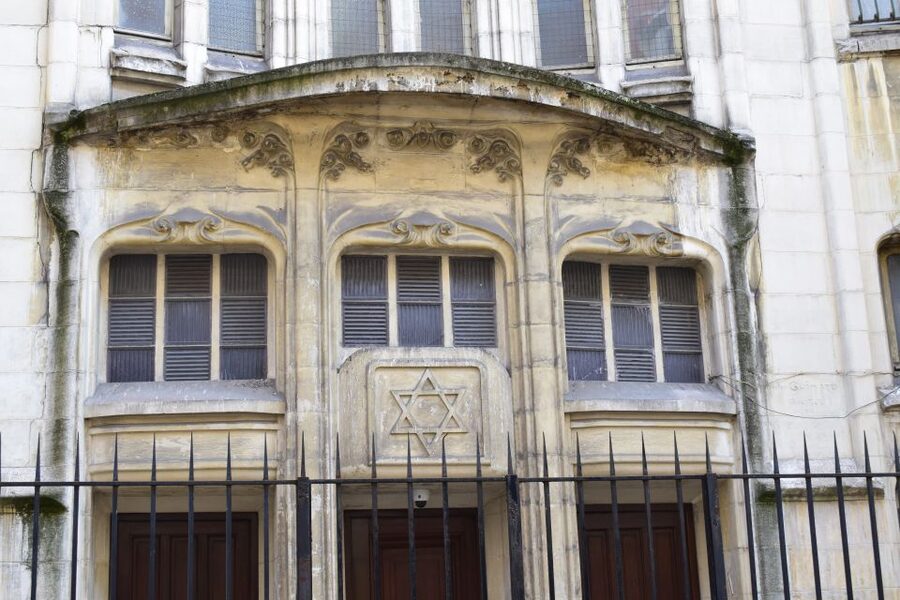
- Hector Guimard’s synagogue: See the exterior of Agoudas Hakehilos, an Art Nouveau work by the architect of Paris Métro entrances.
- A serious stop at the Shoah Memorial: Learn about persecution, deportation, remembrance, and the people who helped others escape.
- A small group matters: With up to nine people, it is easier to ask questions and hear the guide on narrow streets.
- Montmartre with a different focus: Visit addresses tied to artistic life, including 7 Rue Ravignan and Le Bateau-Lavoir.
- Practical ending: Finish at Square Louise-Michel near Sacré-Cœur, with broad views and food options nearby.
Why this tour gives Paris a wider story

Most first visits to Paris split the city into familiar pieces: the Marais for old streets and food, Montmartre for painters and Sacré-Cœur. This walk connects the two through Jewish history. That link is the reason to book it.
In Le Marais, you hear how Jewish communities lived, worked, worshipped, and adapted over many centuries. In Montmartre, the story shifts toward artists, writers, and cultural circles that helped shape modern Paris. The change of setting keeps the tour from becoming one long lecture in a single district.
The subject includes discrimination, wartime persecution, and the Holocaust, so this is not a light sightseeing stroll. The guides have been praised for handling painful material with care while still keeping the discussion open and approachable. If you want history softened into a few pleasant anecdotes, choose another walk. If you want context that stays with you as you continue through Paris, this is a strong choice.
More Le Marais Tours:
- Award-Winning Paris French Bakery Experience — Le Marais, 4th Arr
★ 4.5 · 1,186 reviews - Paris Le Marais Food Tour With 10+ Tastings, Cheese, Wine & More
★ 5.0 · 985 reviews - Paris Le Marais District Original Food and Wine Tasting Tour
★ 4.5 · 880 reviews
Starting near BHV Marais and finding your guide
There are two possible starting points: BHV Marais or L’Elephant Du Nil. Check the exact option on your booking, because the meeting place can vary.
BHV Marais can be confusing. The department store has four entrances, and one participant had trouble finding the correct one. Arrive at least 15 minutes early, and use the precise meeting instructions rather than assuming any entrance will do. One person also reported a short delay because the guide did not have the expected orange flag, so confirm the guide’s identity if the meeting point feels unclear.
You cannot join after the walk has begun. That matters in Paris, where a missed meeting can mean losing the entire tour rather than simply catching up at the next stop.
Le Marais: streets shaped by Jewish Paris
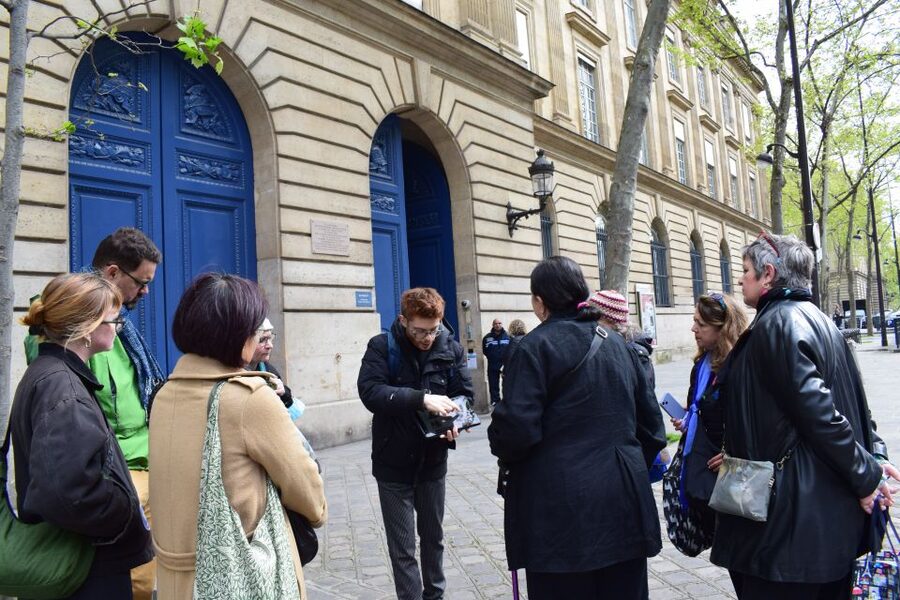
The first 90 minutes take place in Le Marais. This is the strongest part of the tour for many people because the neighborhood still gives you visible clues to Jewish life, even though it has changed greatly.
Your guide sets the story in a much longer French timeline than the typical Paris sightseeing walk. You learn about Jewish communities from the Middle Ages to the present, including daily work, trade, worship, family life, and the pressures placed on Jewish residents at different points in French history.
The value here is not just seeing a famous district. It is learning how a neighborhood functions as a community, and how those traces can remain even after the original population, businesses, and buildings have changed.
Village Saint-Paul and the old streets
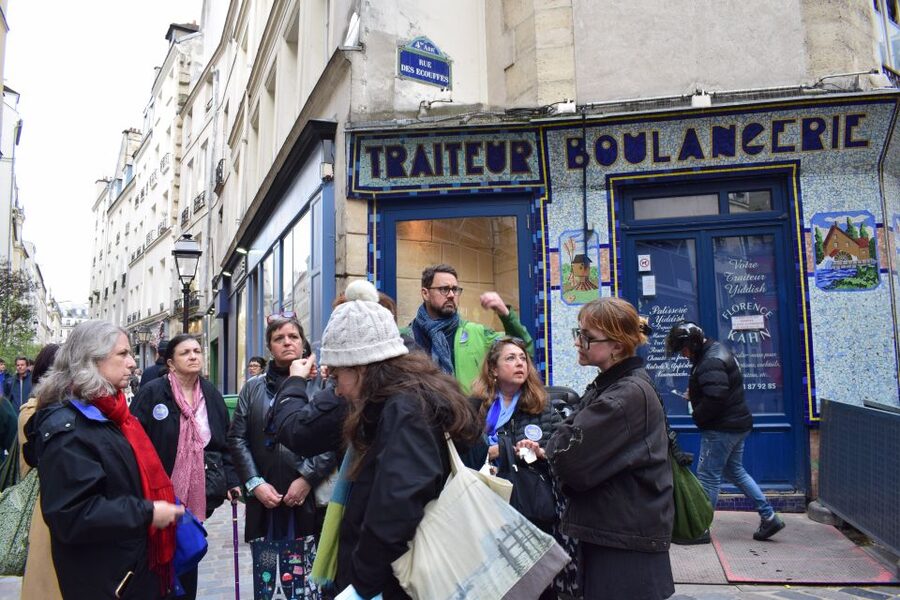
Le Village Saint-Paul is part of the walking route. The guide uses the streets and buildings to explain how the district developed and how Jewish residents formed part of its social and commercial life.
Do not expect an intact historical quarter preserved exactly as it once was. Much of Le Marais is now fashionable, restored, and heavily visited. One participant felt the area had become gentrified and somewhat homogenized, with much of the Jewish story depending on what used to be in a particular place.
That is not a reason to skip the walk. It is a reason to listen closely. The guide helps you read absence as well as architecture, showing how political decisions, war, redevelopment, and changing populations affect what remains visible.
More Montmartre and Sacré-Cœur Tours:
- Montmartre Hidden Gems and Scenic Highlights Walking Tour
★ 5.0 · 2,684 reviews - Montmartre Hill French Gourmet Food and Wine Tasting Walking Tour
★ 5.0 · 2,588 reviews - Paris: Montmartre Cheese, Wine & Pastry Guided Walking Tour
★ 4.8 · 2,255 reviews - Paris: Montmartre Highlights Walking Tour with a Local Guide
★ 4.9 · 1,668 reviews
Agoudas Hakehilos Synagogue and Hector Guimard
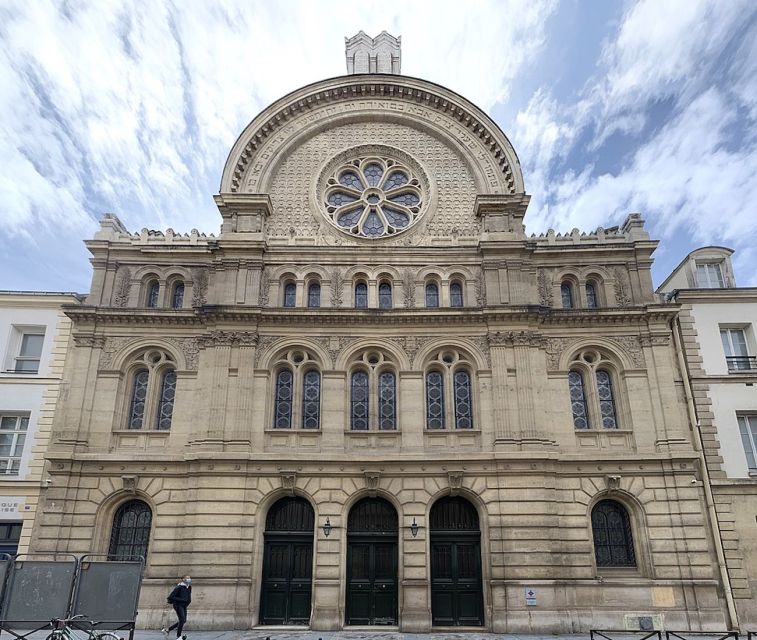
The exterior of Agoudas Hakehilos Synagogue is one of the route’s clearest architectural highlights. Designed by Hector Guimard, better known to many visitors for his flowing Métro entrances, it brings Art Nouveau into the Jewish story of Le Marais.
You will not go inside the synagogue. The stop is about its exterior, design, setting, and place in the neighborhood. That limitation is worth knowing before you pay $80. If you want an interior visit, ceremonial access, or a longer architectural inspection, this walk will not provide it.
Still, the building gives the guide a concrete way to discuss the community that commissioned it and the era in which it was built. It also breaks up the historical material with something you can see and photograph.
The Shoah Memorial
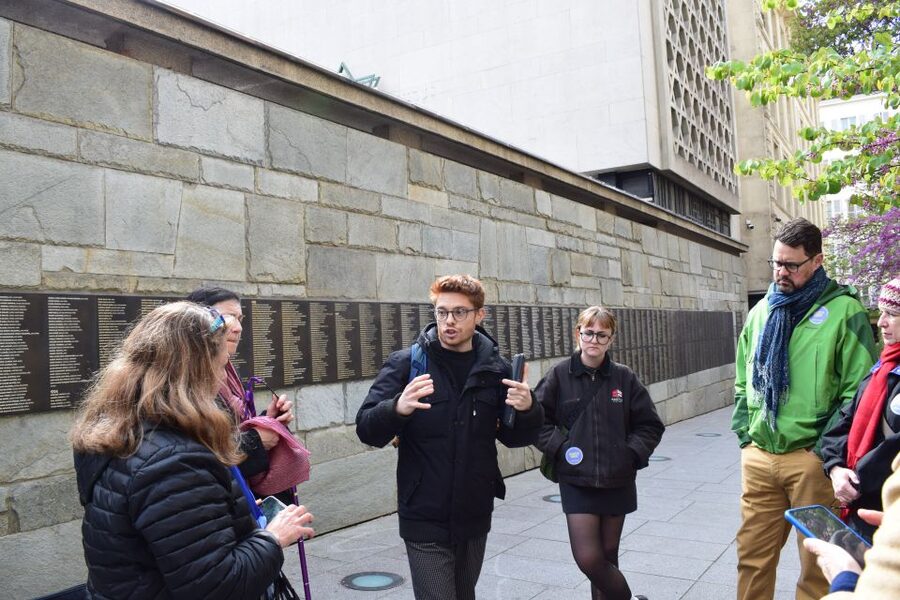
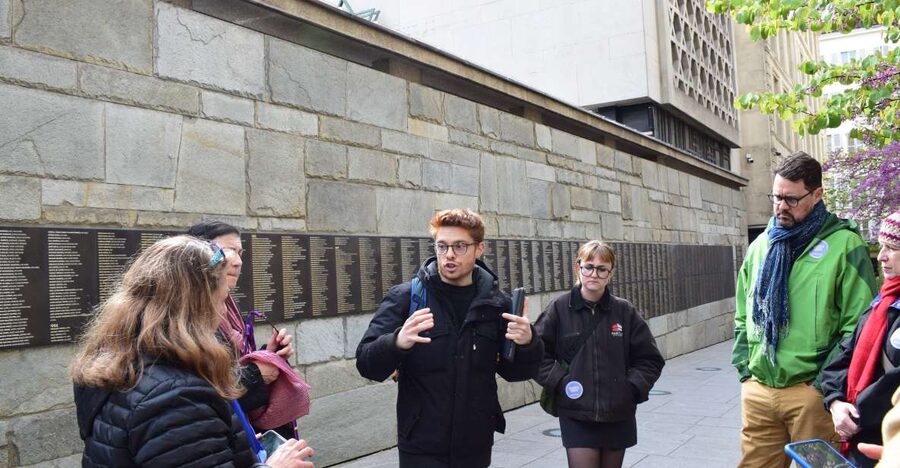
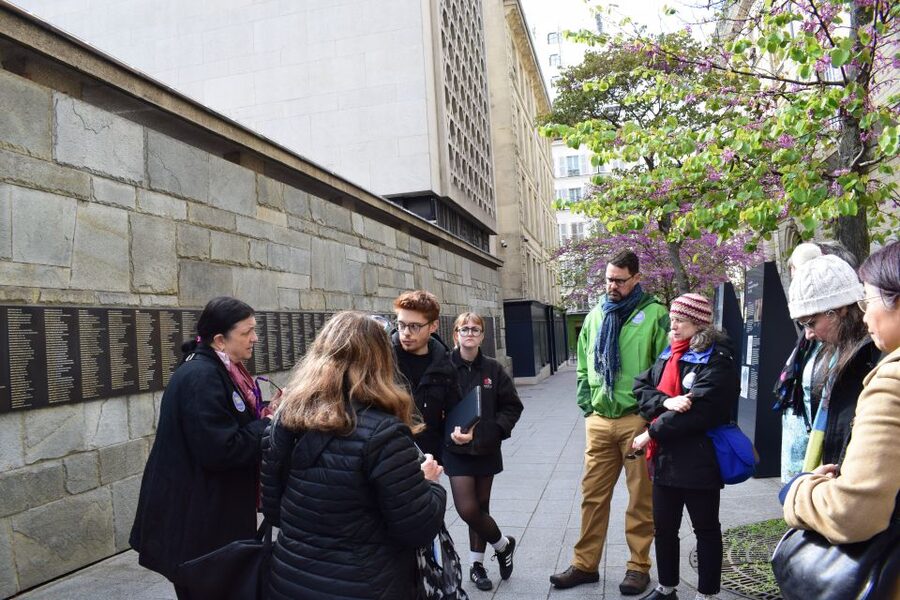
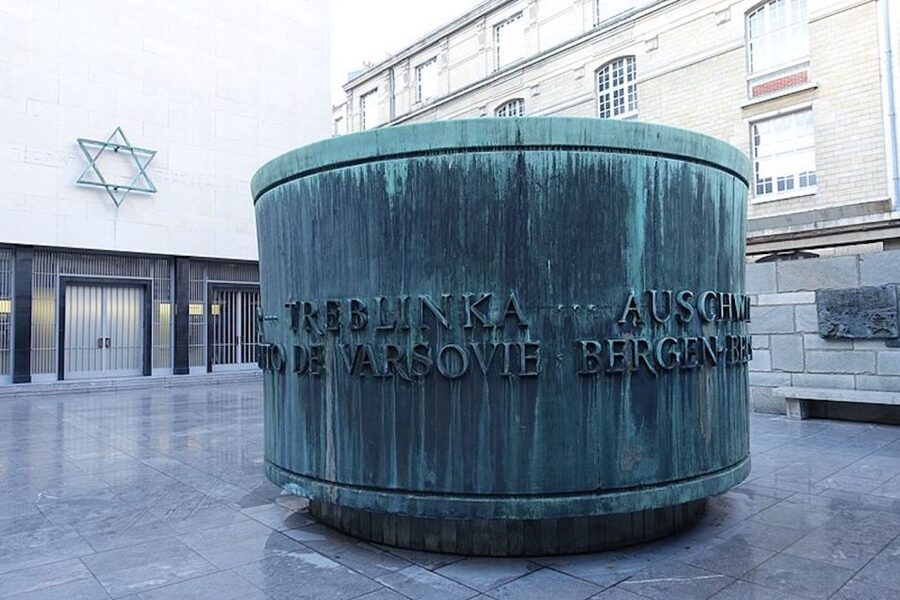
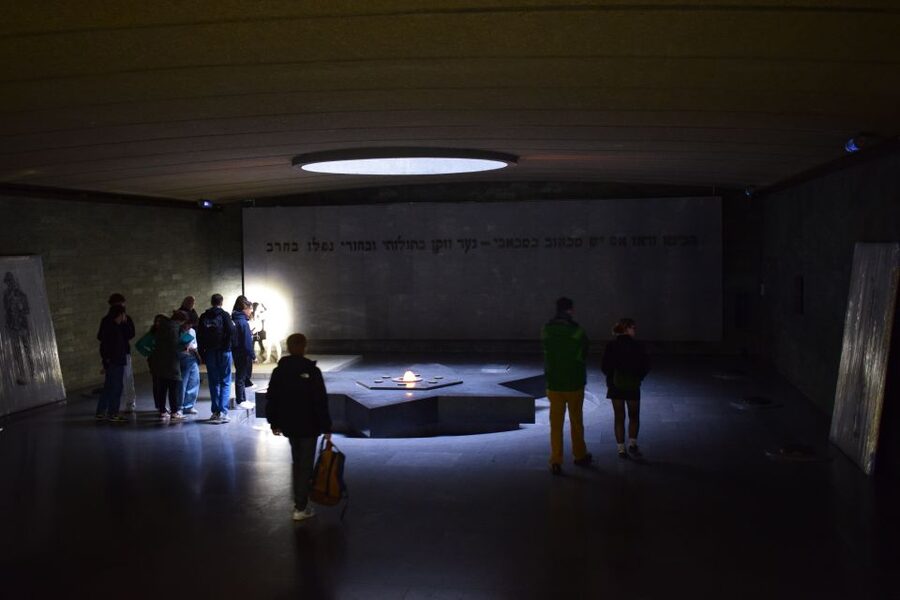
The Shoah Memorial is the emotional center of the Le Marais section. The guide explains its significance from the exterior, including the memorial wall and the crypt. This is a solemn stop, and the tone changes naturally.
You will hear about the destruction of Jewish life during the Nazi occupation, those who were killed, and people in France who helped Jews escape or survive. The memorial gives the larger history a physical place. Instead of hearing only dates and names, you stand before a site designed for remembrance.
Allow yourself time to take this stop seriously. The walk continues afterward, but the memorial can alter the way you see the rest of the neighborhood.
The Le Marais section may also leave you near Jewish-owned businesses and food shops. Several guides have offered food advice, and falafel is a recurring recommendation for after the tour. Food is not the main event, but it gives the neighborhood a present-day connection after so much attention to the past.
The public transport link to Montmartre
After Le Marais, the group uses public transportation for about 30 minutes to reach Montmartre. The ticket is included, so you do not need to buy a separate transport fare for this transfer.
This change is useful rather than awkward. Le Marais and Montmartre are not next-door stops, and public transport lets the tour cover two districts without turning the entire experience into a long city crossing. It also gives you a short break from walking.
Keep your group together and pay attention to the guide during the transfer. The tour is built around moving from place to place, and there is no option to join later if you lose the group.
Montmartre at 7 Rue Ravignan and Le Bateau-Lavoir
The second 90-minute walking section looks at Montmartre through Jewish artistic and literary life. This is not simply the standard painter’s tour with a Jewish label added on. The guide focuses on how Jewish artists, writers, and thinkers took part in the creative circles that made Montmartre famous in the late 19th and early 20th centuries.
At 7 Rue Ravignan, you hear about the people and creative networks linked with the address. Le Bateau-Lavoir adds another important stop in the story of studios, friendships, experiments, and artistic ambition.
The exact balance will depend on your guide. Several guides, including Pierre-Louis, Achilles, and Benjamin, have been praised for explaining history in a lively way and answering questions. One earlier participant felt that a church architecture discussion took attention away from the Jewish focus. That is useful to keep in mind: the tour includes wider Paris and Montmartre context, not only Jewish sites.
Montmartre’s steep streets and uneven paving add physical work. Wear sturdy shoes, and expect the second half to feel more demanding if you have already spent the day walking around Paris.
Musée de Montmartre, Rue du Mont-Cenis, and the hilltop
The route passes the Musée de Montmartre rather than entering it. You also walk by 16 Rue du Mont-Cenis, another address used to explore Montmartre’s cultural history.
These stops work best when you see them as part of a chain of places rather than as individual attractions. You are not stopping for long indoor visits. Instead, your guide builds a picture from addresses, studios, streets, and local stories.
That approach suits you if you enjoy understanding how a neighborhood’s creative life took shape. It may disappoint you if you expect museum time or a series of formal exhibits. Entry to monuments and historical sites is not included, so plan a separate visit if you want to go inside the Musée de Montmartre or another attraction.
Sacré-Cœur and the view over Paris
The route finishes at Sacré-Cœur Basilica and Square Louise-Michel. You get the famous Montmartre view, with wide-open sight lines across Paris, but the ending is tied back to Jewish identity, artistic expression, and the idea of Paris as a place shaped by many communities.
Sacré-Cœur itself is primarily a sightseeing stop here, not a full interior tour. The reward is the setting and the chance to pause after the walk. The view gives the tour a lighter final note after the Shoah Memorial and the harder parts of Jewish history.
Square Louise-Michel is also a practical place to continue your evening. You can remain in Montmartre, make your way to food, or use the area as a starting point for more exploring.
What $80 gets you
At $80 per person, this is not the cheapest way to see Le Marais or Montmartre. You are paying for a 210-minute guided experience, an English-speaking local expert, public transport tickets, and a small group of up to nine people.
The value depends on your interest. If you only want attractive streets and major views, a self-guided walk will cost much less. If you want a clear historical thread, help locating meaningful sites, and time to ask questions, the price is easier to justify.
The small group is important. Guides such as Benoit, Benjamin, Pierre-Louis, and Achilles have been praised for clear explanations, strong English, warmth, and sensitivity when discussing difficult subjects. A guide can also adjust the discussion to your questions, though one participant noted that an especially talkative group member made the tour run well past its planned end.
Private groups are available, but the supplied information does not give a separate private-tour price. Compare the cost before booking if you want more control over pace and discussion.
Walking conditions and who should book
This is a serious walking tour. The two main walking sections total about three hours, with public transport between them. You will deal with normal Paris streets, hills in Montmartre, and the need to keep moving with the group.
The activity is not suitable for wheelchair users or people with mobility impairments. Rain or heat can make it harder. The walk has gone ahead in heavy rain and very hot conditions, so check the forecast and dress for the day.
I would recommend it most to:
- First-time visitors who want Jewish history connected to the wider story of Paris
- People with a strong interest in French, Jewish, or Holocaust history
- Visitors who prefer a guide and conversation to a museum-only visit
- Families with older teenagers who can manage the walking and serious subject matter
- Repeat Paris visitors who want a new reason to revisit Le Marais and Montmartre
It is less suitable for anyone seeking synagogue interiors, museum admissions, a relaxed food tour, or a short stroll with little walking.
Booking tips for a smoother walk
Choose your starting option carefully and arrive 15 minutes early. BHV Marais has multiple entrances, so read the meeting instructions before you leave your hotel.
Ask your guide questions. The strongest part of this experience is the explanation, not a long list of photo stops. Guides have covered more than 1,000 years of Jewish history, French history, wartime events, architecture, and modern neighborhood life, so you can get more from the walk by speaking up.
Do not schedule an immediate dinner reservation after the tour. The advertised duration is 210 minutes, but detailed questions or group discussion can push the finish later. The tour may end near food options, including falafel and kosher recommendations, but meals are not included.
Free cancellation is available up to 24 hours before the start, and you can reserve now and pay later. That gives you some flexibility, but it does not change the need to show up on time.
Should you book the Jewish History Walking Tour?
Book it if you want Jewish Paris explained in place, with a guide who can connect medieval community life, the Shoah Memorial, Montmartre’s artists, and present-day neighborhoods. The small group, included transport, and strong record of guides such as Benjamin, Benoit, Pierre-Louis, and Achilles make it a practical choice for an engaged visitor.
Skip it if you need indoor access to synagogues and museums, have limited walking ability, or want a purely cheerful tour. At $80, the cost is fair for a focused three-and-a-half-hour experience, but only if the subject and walking format match your interests. Bring good shoes, allow extra time, and treat the memorial section with the attention it deserves.
FAQ
How long does the tour last?
The tour lasts 210 minutes, or three and a half hours. It includes two walking sections and about 30 minutes of public transport between Le Marais and Montmartre.
What language is the tour in?
The live tour guide speaks English.
How large is the group?
The shared small-group option allows up to nine people. Private groups are also available.
Where does the tour begin?
There are two possible starting locations: BHV Marais and L’Elephant Du Nil. The exact meeting point depends on the option booked.
Does the tour enter the synagogues?
No. The synagogue visits are exterior visits only.
Is entry to the Shoah Memorial included?
The route explores the Shoah Memorial from the exterior. Entry to monuments and historical sites is not included.
Are public transport tickets included?
Yes. Public transport tickets for the transfer to Montmartre are included.
Is the tour suitable for wheelchair users?
No. The activity is not suitable for wheelchair users or people with mobility impairments.
What happens if I arrive late?
You must arrive 15 minutes before the start. It is not possible to join the tour after it has begun.
More walking tours in Paris
- Paris Top Sights Half Day Walking Tour with a Fun Guide
★ 5.0 · 2,893 reviews - Paris Île de la Cité and Notre-Dame Walking Tour With Crypt
★ 5.0 · 2,272 reviews - Paris in a Day: Louvre or Orsay, Eiffel Tower, City Walk & Cruise
★ 5.0 · 1,956 reviews - Paris City Center Free Walking Tour (Tip-Based)
★ 5.0 · 1,340 reviews
More Jewish heritage tours in Paris
- Le Marais District & Jewish Quarter Guided Walking Tour 12ppl Max
★ 5.0 · 361 reviews - Le Marais/Paris – The Historic, Trendy, Jewish, LGBT district
★ 5.0 · 341 reviews - Le Marais District & Jewish Quarter – Exclusive Guided Walking Tour
★ 5.0 · 154 reviews - Jewish Marais – Yiddish world : Walking tour and pastries
★ 5.0 · 23 reviews
Just added around Paris
- Paris: The Da Vinci Code Walking Tour with a Local Guide★ 4.3 · 5 reviews
- Paris: Flea Market Insider’s Tour in Extra-Small Group★ 4.6 · 73 reviews
- Paris: Private Fashion Tour (Chanel, Dior, Sex & the City)★ 5.0 · 3 reviews
- Paris: Floral Earrings workshop★ 5.0 · 3 reviews
- Paris: Fashion History Walking Tour in the Heart of Paris★ 4.9 · 22 reviews
- PARIS: Family e-bike longtail renting★ 5.0 · 3 reviews
- Paris: Famous Monuments Cycling Tour★ 4.7 · 20 reviews
- Paris: private city tour with seine river cruise★ 4.8 · 28 reviews
Montmartre and Sacré-Cœur Tours, compared.

Montmartre Hidden Gems and Scenic Highlights Walking Tour
Read our review →
Montmartre Hill French Gourmet Food and Wine Tasting Walking Tour
Read our review →
Montmartre Cheese, Wine & Pastry Guided Walking Tour
Read our review →
Montmartre Highlights Walking Tour with a Local Guide
Read our review →
Sacré-Coeur and Montmartre Tour with Expert Guide
Read our review →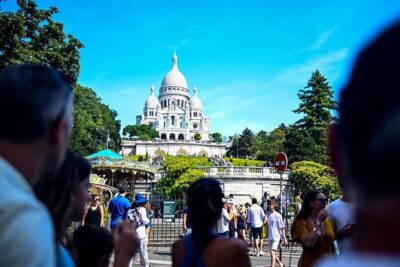
Private Montmartre Food Tour with Wine, Cheese & Pastries
Read our review →
Paris Montmartre Food Tour – A Full French Meal by Do Eat Better
Read our review →
Hidden Montmartre: Paris’ Secret Streets Walking Tour
Read our review →Browse the lists this tour appears in