
Reviewed · MONTMARTRE AND SACRé-CœUR TOURS
Montmartre guided walking tour with local guide in small group
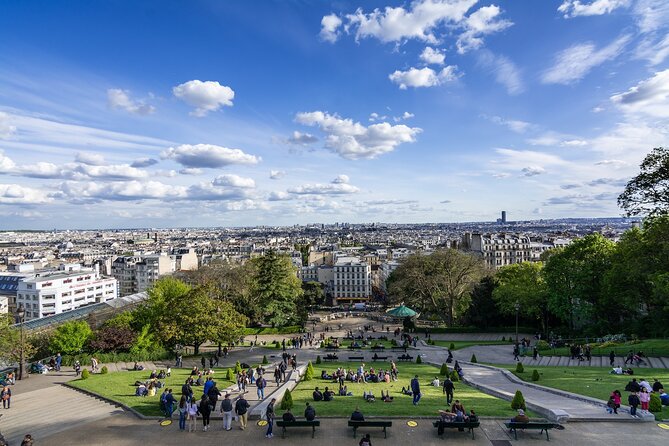
Montmartre is at its best on foot, where a short turn can take you from a famous artists’ square to a quiet lane, a pink house, or the former home of a music legend. This small-group walk connects the neighborhood’s best-known sights with stories about Picasso, Dalida, cabarets, love, and local life.
I like the route’s focus on real street corners and personal stories, rather than only grand monuments. I also like that it ends at Sacré-Cœur, after the uphill streets have given you a sense of how Montmartre fits together. The main drawback is the walking itself: hills, steps, and uneven streets make this a poor choice if you have reduced mobility.
Key points to know before you book
- The group is capped at 10 people, which gives you a better chance to hear the guide and ask questions.
- The route links art and music, from Picasso’s Bateau-Lavoir to Dalida’s former home and bust.
- Sacré-Cœur is the finish, so you can continue inside the basilica after the walk.
- The Wall of Love and Place du Tertre provide two very different views of Montmartre, one romantic and one artistic.
- The price is $42.05 per person, with guiding included but food, drinks, and tips extra.
- The walk lasts about 2 hours 20 minutes, and the route is not recommended for people with reduced mobility.
Why this Montmartre walk works so well
Montmartre can feel confusing at first. It is part village, part pilgrimage site, part art district, and part popular Paris stop. The streets climb, the landmarks are scattered, and the most interesting details are easy to miss if you simply follow the crowd toward Sacré-Cœur.
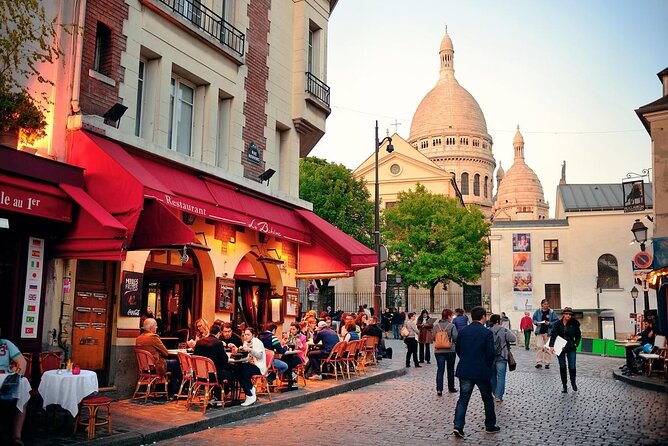
This tour gives you a clear route through that mix. You begin at Carrousel de Saint-Pierre and finish at the Basilica of Sacré-Cœur, covering several major Montmartre sights along the way. The guide fills the gaps between them with stories about artists, performers, romance, music, and the people who helped shape the neighborhood.
The small group matters here. With a maximum of 10 people, the walk should feel more personal than a large group procession. Guides named in the tour information include Yazid, Marcella, and Jean-Baptiste. Yazid is especially associated with lively storytelling, humor, music, and practical suggestions for enjoying the area after the walk.
You should expect a talkative, story-led experience rather than a silent stroll. That suits Montmartre. This is a neighborhood where a house, statue, wall, or café corner often needs a bit of explanation before its importance becomes clear.
More Montmartre and Sacré-Cœur Tours:
- Montmartre Hidden Gems and Scenic Highlights Walking Tour
★ 5.0 · 2,684 reviews - Montmartre Hill French Gourmet Food and Wine Tasting Walking Tour
★ 5.0 · 2,588 reviews - Paris: Montmartre Cheese, Wine & Pastry Guided Walking Tour
★ 4.8 · 2,255 reviews
Starting at Carrousel de Saint-Pierre
The meeting point is Carrousel de Saint-Pierre at Place Saint-Pierre, in the 18th arrondissement. This puts you at the lower end of Montmartre, before the route begins its gradual climb through the neighborhood.
Arrive ready to walk. The tour lasts about 2 hours 20 minutes, and the route includes uphill sections. Comfortable shoes are more useful here than stylish ones, especially because Montmartre combines slopes, stairs, and older paving.
The tour is offered in English and includes the guide only. You will need to pay separately for anything you eat or drink, and tips are not included. Since the walk ends near Sacré-Cœur rather than returning to the starting point, you can continue sightseeing from the top of the hill without retracing your steps.
The Wall of Love and Montmartre’s romantic side
The first major stop is Le Mur des Je t’aime, or the Wall of Love. This public artwork is built around the phrase I love you written in many languages, making it one of Montmartre’s most recognizable romantic symbols.
A guide adds useful context here because the wall is easy to see quickly and leave. The stop gives the tour an early theme: Montmartre is not only about painters and grand views. It is also tied to love songs, romance, poetry, and the sentimental side of Paris.
You will have time to look closely and take photographs, though this is a shared public space rather than a private attraction. Its appeal is visual and symbolic, not architectural. If you have already seen it, the guide’s explanation can give the stop more meaning than a brief photo break.
Bateau-Lavoir, where Picasso changed direction
Le Bateau-Lavoir is one of the most important art stops on the route. Picasso worked here, and the building is linked with his early development of Cubism.
This is where the tour moves from picturesque Montmartre to the neighborhood’s role in modern art. The building itself may not deliver the dramatic visual impact of Sacré-Cœur, but its importance comes from the creative life connected to the address.
The guide’s job is especially valuable here. A quick glance at the building will not explain why it matters. You will hear about Picasso and the artists who made Montmartre a place of experimentation. The stop also helps you see the district as a working art community, not just a pretty backdrop for photographs.
The art focus continues later at Place du Tertre, but Bateau-Lavoir gives you the stronger historical anchor. It connects a specific address with one of the great changes in European painting.
More walking tours in Paris:
- Paris Top Sights Half Day Walking Tour with a Fun Guide
★ 5.0 · 2,893 reviews - Paris Île de la Cité and Notre-Dame Walking Tour With Crypt
★ 5.0 · 2,272 reviews - Paris in a Day: Louvre or Orsay, Eiffel Tower, City Walk & Cruise
★ 5.0 · 1,956 reviews - Paris: Montmartre Highlights Walking Tour with a Local Guide
★ 4.9 · 1,668 reviews
Dalida’s house and the music of Montmartre
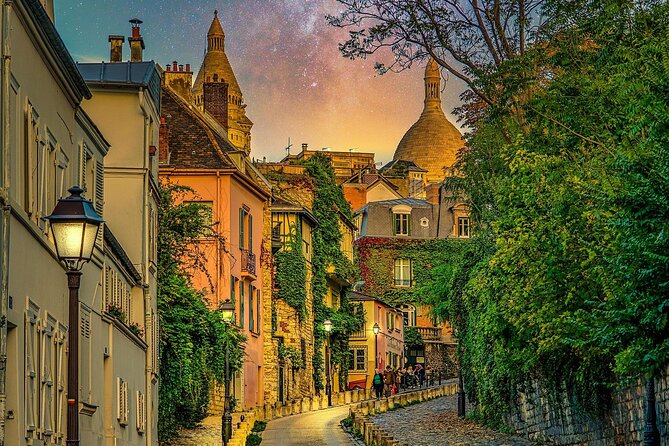
The walk then turns toward La Maison de Dalida, the former home of the famous singer. You pass by the house and hear about Dalida’s connection with Montmartre and her place in French popular culture.
This part adds welcome variety. A tour focused only on painters can make Montmartre seem like a museum of art history. Dalida brings in music, celebrity, performance, and the emotional life of the neighborhood.
The experience is not simply a stop for fans. The story helps explain why Montmartre has attracted performers as well as painters. The guide may also connect Dalida’s music with the streets around you, keeping the subject tied to the place rather than treating it as a separate biography.
The house itself is viewed from outside. Keep that in mind if you expect an interior visit. The value is in the story and the location, not access inside the building.
Place Dalida and a more personal landmark
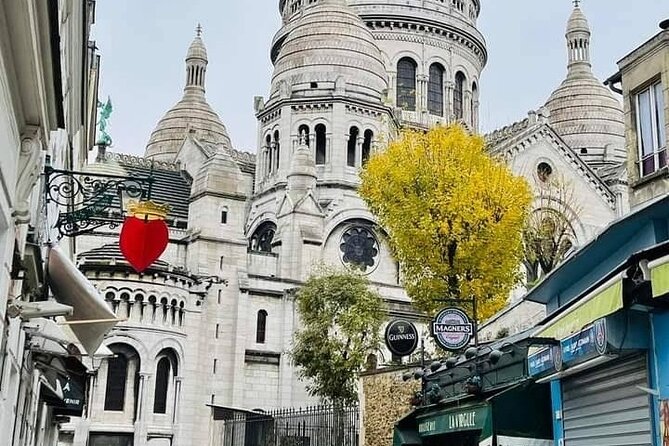
Place Dalida is a small square named for the singer, with a bust of Dalida as its central marker. It is a quieter, more personal stop than the major viewpoints and basilica.
The bust gives you a clear physical link to the person introduced at the previous stop. It also shows how Montmartre commemorates its cultural figures in the streets where they lived and worked.
This is the sort of place that is easy to pass without a guide. You might notice the name of the square, but not know why it matters. With the background provided, the stop becomes part of a larger story about Montmartre’s performers and the affection the neighborhood has for Dalida.
The route’s repeated 20-minute stop pattern allows time for explanations and photographs. Still, the precise pace can vary with the group, street conditions, and the guide’s storytelling. You should expect a flexible walking experience, not a tightly timed museum visit.
The Pink House and Montmartre’s picture-postcard side
La Petite Maison Rose de Montmartre is the famous small pink house associated with the neighborhood’s artistic identity. Its color and compact shape make it one of the area’s most photographed buildings.
The house is attractive, but its real value on the walk is how it fits into the changing character of Montmartre. The neighborhood has long balanced everyday residential life with an image built around artists, cafés, music, and picturesque streets.
This is a good point to keep your expectations sensible. The stop is an exterior viewing point, not a house tour. You will have a chance to see and photograph it while learning about its connection to Montmartre’s artists.
The tour works best when you appreciate these small locations as pieces of a larger neighborhood story. No single stop needs to carry the whole experience. The pleasure comes from moving between them and seeing how art, music, romance, and local memory overlap.
Place du Tertre, the artists’ square
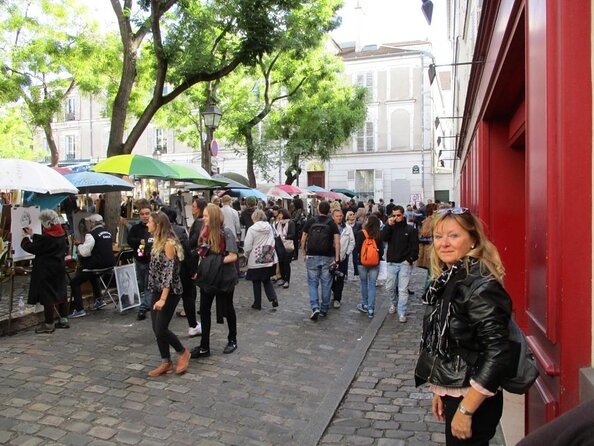
Place du Tertre is the classic Montmartre scene: artists, easels, portrait work, and a square filled with Parisian atmosphere. It is one of the busiest and most recognizable points on the route.
The square can feel touristy, especially compared with the quieter lanes earlier in the walk. That is not a reason to skip it. Place du Tertre has genuine importance in Montmartre’s artistic identity, but you will enjoy it more if you understand that it is both a working art area and a major sightseeing stop.
Your guide can help you read the scene instead of simply passing through it. Look at the artists, the surrounding buildings, and the way the square gathers people into one compact space. The guide may also point out details about the artists and architecture that are easy to miss when you are focused on taking pictures.
This is a good place to browse, but the tour does not include food or drinks. If you want a meal or café stop, plan it separately. The walk’s purpose is to show you the district and explain it, not to provide a tasting tour.
The final climb to Sacré-Cœur
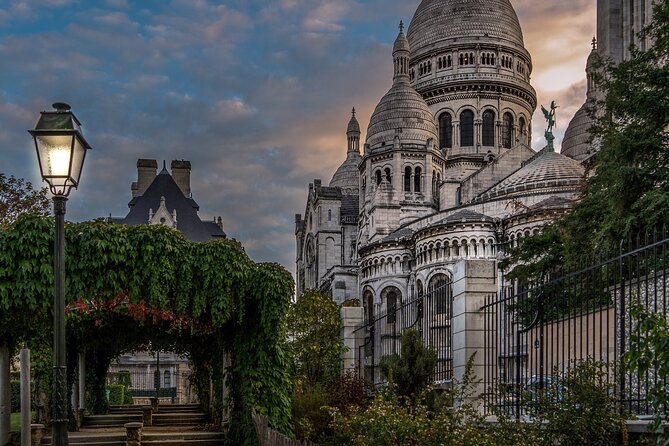
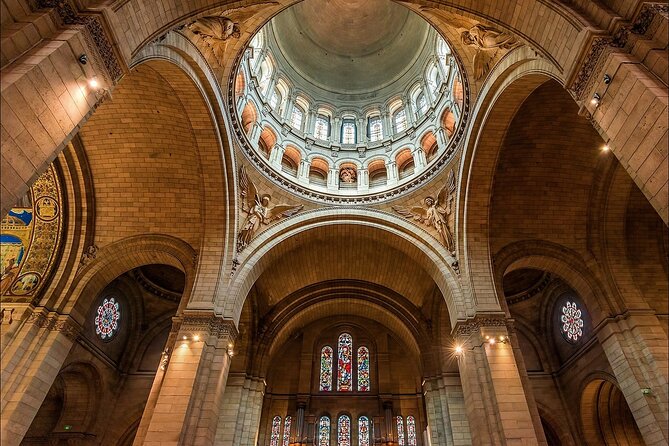
The walk finishes at Basilique du Sacré-Cœur de Montmartre on Rue du Chevalier de la Barre. Ending here makes practical sense. Sacré-Cœur is the district’s best-known landmark, and you can continue exploring the basilica and surrounding viewpoints after the guide says goodbye.
One of the highlights is the church’s huge mosaic of Jesus, described as one of the world’s largest. The tour brings you to the basilica, but the supplied details do not promise an interior guided visit or special admission. Treat the church visit as the natural next step after the walking tour, with your own time to look around.
The approach can be tiring because Montmartre is hilly. The good news is that the route gives the climb a purpose. You are not simply struggling uphill to reach a viewpoint. You are moving through the district’s streets, stopping often, and learning why the area became so important.
The guide’s storytelling also changes how the final arrival feels. After hearing about artists, musicians, love, and local landmarks, Sacré-Cœur becomes more than a dramatic white church at the top of Paris. It is the closing image of a neighborhood walk.
Guide style: stories, humor, and local suggestions
The strongest part of this experience is the guide’s personality. Yazid is praised for his energy, humor, passion for Montmartre, and ability to connect history with music and present-day life. He is also noted for keeping the group involved during the uphill walk.
Marcella is described as an expert guide with clear descriptions of the areas visited. Jean-Baptiste is praised for making the route both fun and informative. Since guide assignments can vary, you should not assume a particular person will lead your departure, but these names give you a useful sense of the guiding style.
You are likely to get more from this tour if you enjoy asking questions. Small groups make that easier, and Montmartre offers plenty to discuss: Picasso, architecture, cabarets, Dalida, artists, love, and the district’s changing identity.
One especially practical touch is the local food advice associated with Yazid. A lunch recommendation after the walk was considered worthwhile. Food is not part of the booking, but a good suggestion can help you turn the tour into a longer Montmartre outing.
Is $42.05 a fair price?
At $42.05 per person, this is not the cheapest way to see Montmartre. You can walk through the neighborhood for free, photograph the pink house, visit Place du Tertre, and reach Sacré-Cœur without a guide.
The price pays for interpretation. You are buying about 2 hours 20 minutes of organized walking, a route that connects scattered sights, and access to a guide who can explain why the locations matter. The maximum group size of 10 makes the cost easier to justify than it would be for a large crowd.
I would consider it good value if this is your first visit to Montmartre or if you want more than photographs. It is less essential if you already know the neighborhood well and prefer wandering alone.
The strongest value comes from the links between places. The Wall of Love, Bateau-Lavoir, Dalida’s house, Place Dalida, the pink house, Place du Tertre, and Sacré-Cœur would otherwise feel like separate stops. The guide turns them into one readable route.
Who should book this walk?
This tour suits you if you like history told through streets and personalities, rather than long indoor lectures. It works particularly well for first-time visitors who want a clear introduction to Montmartre without committing to a full-day tour.
Art lovers will appreciate Bateau-Lavoir and Place du Tertre. Music fans will enjoy the Dalida stops. Couples may like the Wall of Love and Montmartre’s romantic atmosphere. Anyone interested in Paris beyond the major monuments will get a better feel for the neighborhood’s character.
It is less suitable if you have reduced mobility, tire quickly on hills, or want a flat route. The tour is specifically not recommended for people with reduced mobility. It also may not suit you if you want a food-focused experience, interior access to attractions, or a tour conducted in a language other than English.
The tour is available by mobile ticket, and public transportation is nearby. Service animals are allowed, and most people can participate, but the walking conditions remain the key practical concern.
Should you book the Montmartre guided walk?
Book it if you want Montmartre explained by a lively local guide rather than simply photographed. The route has a strong mix of art, music, romance, famous buildings, and neighborhood corners, and the small group keeps the experience personal.
I especially recommend it early in your Paris stay. You can return later to Place du Tertre, Sacré-Cœur, or one of the local cafés with a better sense of what you are seeing. At $42.05, the tour earns its price through the stories, route planning, and guide interaction.
Skip it if hills are a serious problem or if you already know Montmartre well. For everyone else, this is a focused and enjoyable way to understand why the district remains one of Paris’s most distinctive walks.
FAQ
How long does the Montmartre walking tour last?
The tour lasts approximately 2 hours and 20 minutes.
Where does the tour begin?
It begins at Carrousel de Saint-Pierre, at Place Saint-Pierre in Paris’s 18th arrondissement.
Where does the tour end?
The walk ends at Basilique du Sacré-Cœur de Montmartre on Rue du Chevalier de la Barre.
How many people can join the tour?
The maximum group size is 10 people.
Is the tour offered in English?
Yes. The experience is offered in English.
Is food or drink included?
No. Food and drinks are not included. Tips are also separate.
Is the tour suitable for people with reduced mobility?
No. The tour is not recommended for people with reduced mobility because Montmartre includes uphill walking and uneven streets.
Just added around Paris
- Private Paris Marche d’Aligre Walking Tour with Tastings★ 5.0 · 8 reviews
- Private Louvre Museum Tour for Kids & Families with Alberto or his team in Paris★ 5.0 · 41 reviews
- Private Highlights of Paris Tuk-Tuk Experience★ 5.0 · 26 reviews
- Paris Latin Quarter Walking Tour: History & Culture – Small Group★ 5.0 · 14 reviews
- Private Highlights of Paris Bike Tour★ 4.5 · 15 reviews
- Paris Musee d’Orsay PRIVATE TOUR with a Local Private Guide★ 5.0 · 41 reviews
- Private Half Day Historic Tour★ 5.0 · 58 reviews
- Pere Lachaise Cemetery Paris – Exclusive Guided Walking Tour★ 5.0 · 72 reviews
Montmartre and Sacré-Cœur Tours, compared.

Montmartre Hidden Gems and Scenic Highlights Walking Tour
Read our review →
Montmartre Hill French Gourmet Food and Wine Tasting Walking Tour
Read our review →
Montmartre Cheese, Wine & Pastry Guided Walking Tour
Read our review →
Montmartre Highlights Walking Tour with a Local Guide
Read our review →
Sacré-Coeur and Montmartre Tour with Expert Guide
Read our review →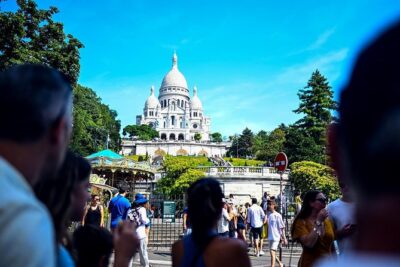
Private Montmartre Food Tour with Wine, Cheese & Pastries
Read our review →
Paris Montmartre Food Tour – A Full French Meal by Do Eat Better
Read our review →
Hidden Montmartre: Paris’ Secret Streets Walking Tour
Read our review →Browse the lists this tour appears in