
Reviewed · LOUVRE MUSEUM TOURS
Louvre Museum Access Private Guided Visit
The best thing about this Louvre visit is its focus. In two hours, a private art historian gets you through a museum that can swallow an entire day, from the Nike of Samothrace and Mona Lisa to Greek sculpture, Roman art, medieval works, and major French paintings. Guides such as Boris, Tina, Mila, and Anya have been praised for clear explanations, warm company, and quick navigation.
I like the personal format, since your guide can ask what you most want to see and adjust the route. I also like that the tour gives you a useful map of the Louvre, so you can continue on your own afterward. The main drawback is the price, $301.71 per person, and two hours is only enough for a fast introduction to a vast museum.
Key points to know before you book
- A private two-hour route: Only your group takes part, so the guide can shape the visit around your interests.
- Major works plus art history: You see the Mona Lisa and Nike of Samothrace while learning how Greek, Roman, medieval, Renaissance, Romantic, and Neoclassical art connect.
- A practical choice for a huge museum: Guides help you find important galleries without wasting precious time on wrong turns.
- Several praised guides: Boris, Tina, Mila, Anya, Amy, Anne, Adi, and Steph are named in the experience feedback, though your assigned guide may differ.
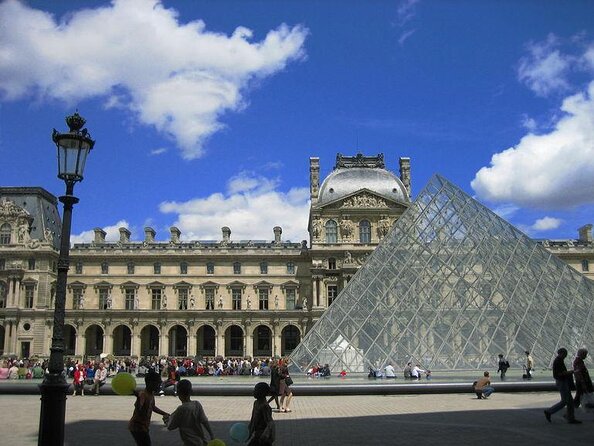
- A fast start at the Louvre: The meeting point is the Arc de Triomphe du Carrousel, and admission is included for adults.
- Good for a first Louvre visit: You get an organized introduction, then may continue alone if you still have energy.
Why a private Louvre visit can make sense
The Louvre is not a museum you casually wander through and fully understand in one pass. Its halls cover ancient civilizations, European painting, sculpture, decorative arts, and much more. Without a plan, you can spend a long time walking and still miss the works you came to see.
This private visit solves part of that problem. Your guide leads you to a set of major galleries and explains how the art fits together. Instead of seeing isolated famous objects, you get a short course in the development of European art.
That difference matters. The Mona Lisa is easy to recognize, but the surrounding rooms make more sense when you understand Renaissance painting. Greek sculpture becomes more useful when you see how later artists borrowed its body types, poses, and ideas of beauty. The same goes for Roman art and its effect on later European culture.
The format is also more relaxed than a large group tour. Your group is the only group taking part, and guides have adjusted visits to suit interests ranging from famous paintings to ancient sculpture and the history of the Louvre itself.
The experience lasts about two hours. That is enough for a strong first look, not enough for the entire museum. I would treat it as an orientation with substance, rather than a complete Louvre visit.
More Louvre Museum Tours:
- Paris: Louvre Museum Timed-Entrance Ticket
★ 4.6 · 71,977 reviews - Paris: Louvre Guided Tour with Reserved Access & Boat Cruise
★ 4.3 · 16,353 reviews - Louvre Museum Masterpieces Guided Tour with Access
★ 4.5 · 12,023 reviews
Meeting at the Arc de Triomphe du Carrousel
The tour begins at the Arc de Triomphe du Carrousel, at Place du Carrousel in the 1st arrondissement. This is a practical spot near the Louvre and public transportation, and the activity ends back at the same meeting point.
Your professional art historian guide meets you there and leads you into the museum. The guide names associated with this experience include Boris, Tina, Mila, Anya, Amy, Anne, Adi, and Steph. That does not mean you can select a particular person, but it gives you an idea of the guide team.
Several guides have been praised for being easy to find and punctual. That is useful at a museum as large as the Louvre, where a missed meeting can cost you valuable time. Keep your confirmation handy and arrive with enough time to locate the meeting point.
The museum entrance ticket is included for adults, listed at €22. Food and drinks are not included, but a two-hour visit does not require a meal stop. Wear shoes suitable for walking. The physical requirement is described as moderate, and the Louvre’s long corridors and gallery floors can make a short tour feel more active than the clock suggests.
The first look: the Louvre and its famous faces
The opening stop introduces the Louvre as one of the world’s great museums. This is not simply a prelude to the Mona Lisa. It helps you understand that the museum contains thousands of works, many of which are less famous than Leonardo’s portrait but just as rewarding to study.
Of course, the Mona Lisa is central to most first visits. Your guide takes you to it and gives you a way to look beyond the crowd and the familiar image. You may learn more by asking about the painting’s technique, expression, setting, and place in Renaissance art than by simply taking a photograph.
The guide also leads you toward other major works. This is where a private visit can earn its keep. You do not need to spend your limited time guessing which corridor leads to the next important room.
One useful feature of the visit is the chance to explain your priorities early. If the Mona Lisa is essential, say so. If you care more about sculpture, ancient history, or painting, say that too. Guides have adjusted routes to match different interests, and this is one of the strongest reasons to choose private touring.
Greek art and the power of the ideal body
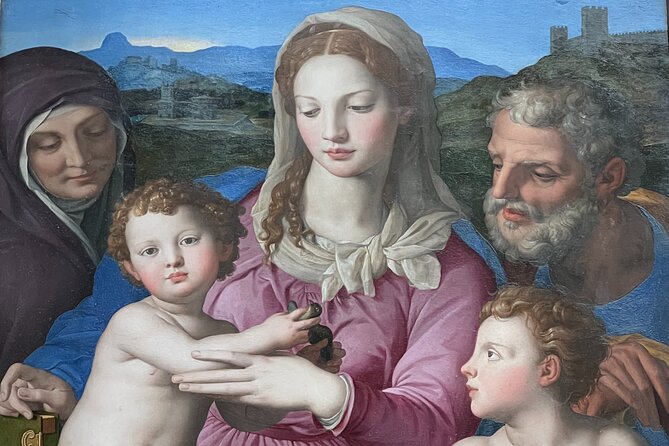
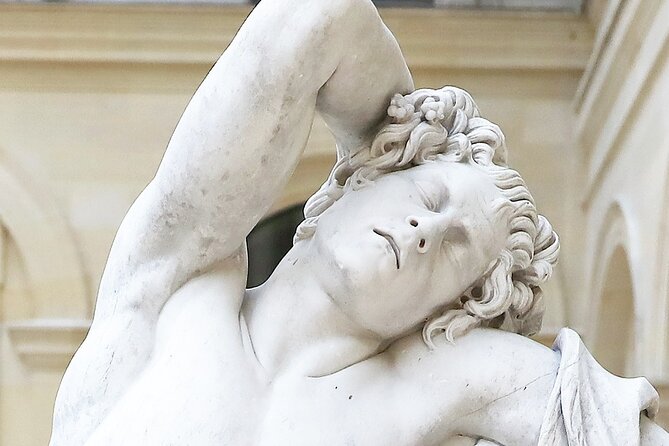
The Greek galleries give you a look at art that shaped European ideas about proportion, movement, beauty, and the human figure. The tour treats Greek art as more than a collection of old statues. It shows why later European artists kept returning to Greek models.
This is also where a good explanation makes a difference. White marble can seem calm and simple when you first see it. Context helps you notice posture, balance, anatomy, drapery, and the choices made by the sculptor.
The famous Nike of Samothrace is one of the major sights on the route. Its position and dramatic movement make it a memorable contrast to more restrained sculpture. Your guide can connect it to the larger story of Greek art and its influence on later periods.
The drawback is time. Fifteen minutes is listed for this stop, so you should expect a focused introduction rather than a slow examination of every room. If ancient sculpture is your main interest, tell your guide at the start. The private format gives you a better chance of adjusting the balance.
More art museums in Paris:
- Paris: Louvre Museum Entry Ticket With Host and River Cruise
★ 4.6 · 9,926 reviews - Les Invalides: Napoleon’s Tomb & Army Museum Entry
★ 4.6 · 9,185 reviews - Louvre Museum – Exclusive Guided Tour (Entry Included)
★ 5.0 · 6,296 reviews - Paris: Louvre Museum Hosted Entry and Mona Lisa Audioguide
★ 4.6 · 5,235 reviews
Roman art and the long afterlife of empire
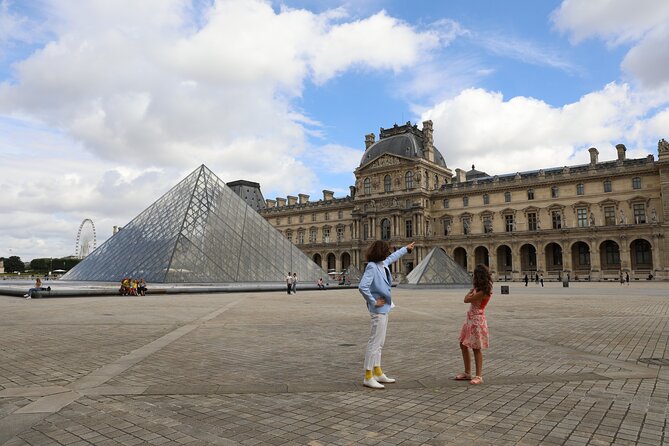
The Roman gallery follows naturally from the Greek section. Roman artists borrowed heavily from Greek art, but Roman culture also used art for portraits, public identity, power, and memory.
This stop explains why Roman art mattered long after the Roman Empire declined. Later European artists and rulers looked back to Roman forms and ideas. The influence appears in sculpture, architecture, painting, and political imagery.
A guide can help you compare the Greek ideal with the Roman interest in recognizable people and public life. Those comparisons are easy to miss when you walk through the rooms alone.
Again, expect a brisk visit. The listed time is about 15 minutes, and the Louvre contains far more Roman material than any short tour can cover. You are getting a clear framework, not an exhaustive study.
Medieval art before the Renaissance
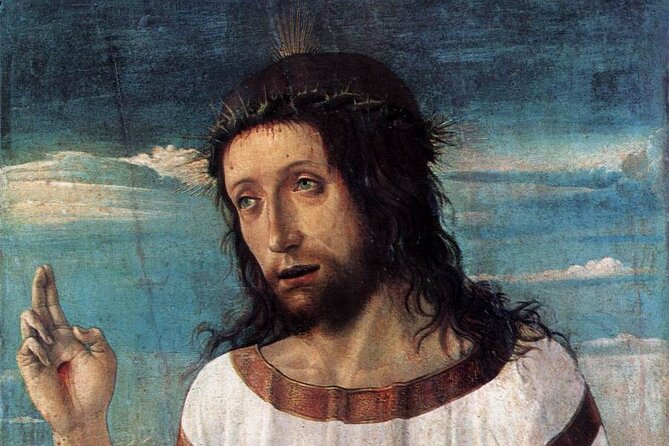
The medieval section is important because it fills a gap between ancient art and the Renaissance. Many visitors rush toward Italian painting and miss the art that came before it. This tour gives medieval works their place in the story.
Your guide explains how medieval art influenced the Renaissance period. That connection helps you see the Renaissance as a change built on earlier traditions, rather than a sudden appearance of perfect painting.
You may find this section especially useful if you know the Mona Lisa but have less sense of the centuries leading up to it. The route gives you a quick timeline and helps explain why artists began to approach space, bodies, nature, and storytelling in new ways.
The 15-minute slot keeps the pace moving. If you want a long look at religious imagery or medieval objects, you will need more museum time after the tour. The short stop is best understood as a bridge to the Renaissance galleries.
The Great Gallery and Italian Renaissance painting
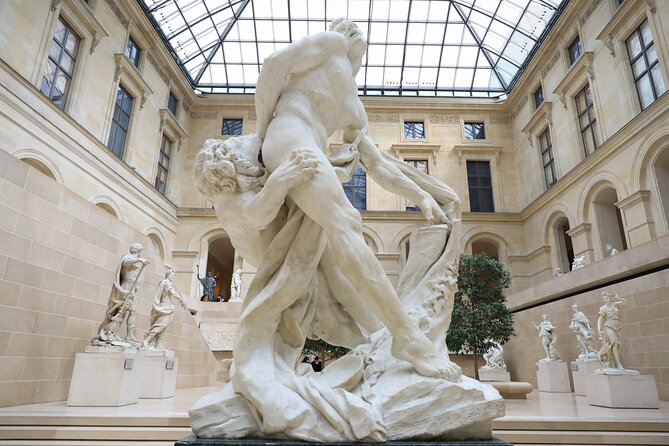
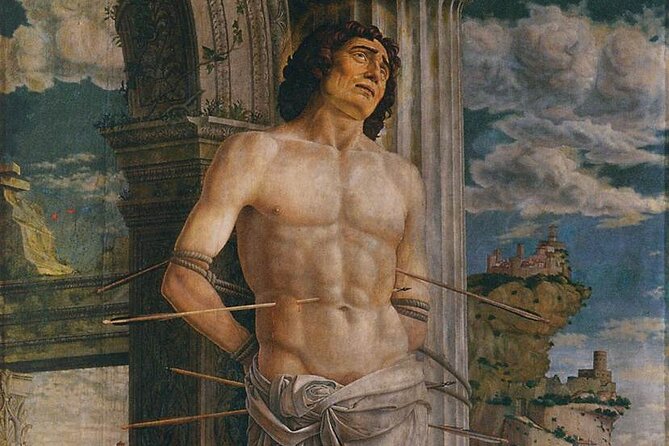
The Great Gallery is the emotional center of the visit. It is the part of the Louvre many people picture before they arrive, with its long run of Italian Renaissance paintings and grand architectural setting.
Here the guide can place the Mona Lisa within a wider artistic world. You may see how artists handled perspective, light, human expression, composition, and religious or mythological subjects. The point is not just to collect famous names. It is to understand why the period had such a lasting effect on European painting.
This is one of the places where a private guide can save you from a shallow visit. You can find a famous painting on your own, but it is harder to know which nearby works deserve your attention and why. A guide can point out less celebrated paintings that reward a closer look.
The Great Gallery also brings up a practical issue: crowds. The Louvre is often busy, and major works draw heavy attention. A guide who knows the building can keep the route moving and help you spend your limited time where it matters.
Romanticism: drama, movement, and strong feeling
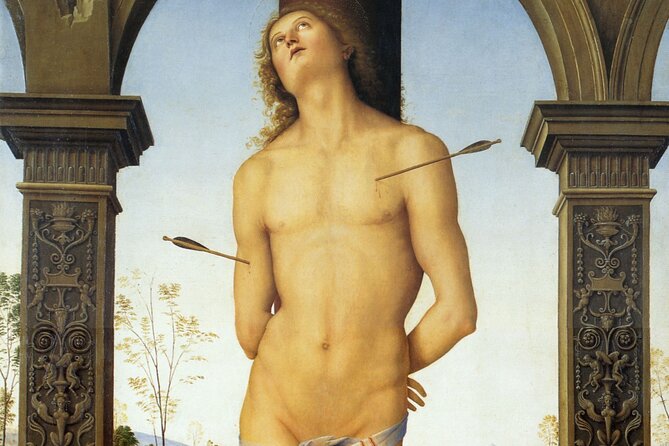
The Romanticism gallery changes the mood. Instead of the balance and restraint associated with Neoclassicism, Romantic painting often leans toward drama, emotion, conflict, and movement.
The tour presents this as a fiery period in European painting. Look for bold action, striking light, emotional faces, and scenes designed to stir the viewer. Your guide can help you see how these choices differ from the order and control of earlier styles.
This is a useful stop for visitors who want more than ancient art and the Louvre’s most famous portrait. It broadens the visit and shows that the museum’s appeal does not end with Leonardo or Greek sculpture.
The time is again limited to about 15 minutes. You will get a pointed introduction to the gallery, but you will not cover every major Romantic work. If this period matters most to you, mention it before the route begins.
Neoclassicism and the return to order
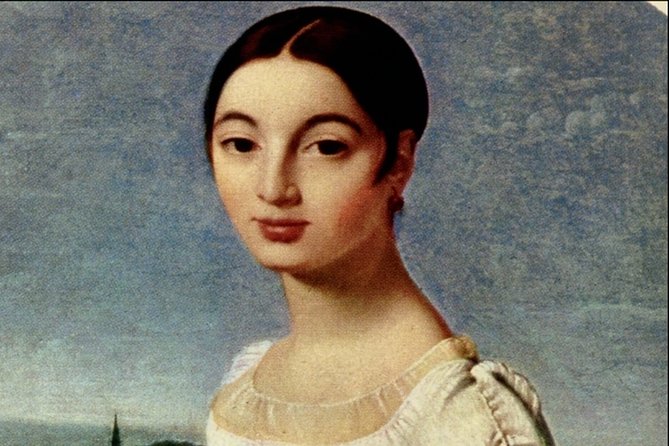
Neoclassical painting offers a contrast to Romanticism. The style is elegant, poised, and controlled, with an interest in classical subjects and firm composition.
The guide helps place this period within the larger sequence. You first see Greek and Roman models, then medieval traditions, Renaissance developments, and later styles that look back to antiquity in different ways.
That long view is one of the strongest parts of this experience. The tour is not just a checklist of rooms. At its best, it shows how artists respond to the past, either by following older rules or pushing against them.
As with the Romanticism section, the visit is brief. You will leave with a useful outline and several key works, not a full lecture on French painting.
How much can you really see in two hours?
The planned route gives roughly 15 minutes to each of seven stops. In practice, moving through the museum, pausing for questions, and finding the major works all take time. You should expect a brisk but organized visit.
The route includes:
- The Louvre’s major highlights
- Greek art
- Roman art
- Medieval art
- Italian Renaissance painting
- Romanticism
- Neoclassicism
That is a lot for one morning or afternoon. The benefit is range. The cost is depth. You will not study every room, and you may leave wanting more.
That is not a flaw if you use the tour correctly. Think of it as a guided first chapter. Several guides have offered directions and advice so people could continue independently after the formal two hours. If you have the time, plan to stay longer and revisit the areas that caught your attention.
Guides, pace, and the private format
The strongest element is the guide. Boris has been singled out for his command of the museum, his ability to connect objects to larger ideas, and his success with families including teenagers. Tina has been praised for tailoring the route and bringing enthusiasm to art and history. Mila, Anya, Amy, Anne, Adi, and Steph are also associated with warm, engaging, well-prepared visits.
The feedback is not uniformly perfect. One person found the tour good but wanted more background on the art and artists. Another noted that the guide was kind and worked hard, but wished for stronger English. Those are fair reminders that the experience can vary by guide.
A private tour gives you room to ask questions and request changes. It does not guarantee that every explanation will match your preferred level of detail. If you want more art history, say that plainly at the beginning. If you prefer a lighter overview, say so too.
Is $301.71 per person a fair price?
At $301.71 per person, this is expensive for a two-hour museum visit. The price makes most sense for people who place a high value on time, direction, and personal attention.
You are paying for a private art historian, a private route, and the adult museum ticket. You are also paying to avoid wandering through a building where wrong turns are easy and the major rooms can be crowded.
For a solo visitor, the price is harder to justify unless you strongly want personal instruction. For a couple, family, or small group, the value improves because the guide serves everyone in your party. Group discounts are listed, so check the final price for your group before booking.
Compare the cost with what you want from the Louvre. If you only need to see the Mona Lisa and take a quick look around, this may feel like too much. If you have limited time and want a clear introduction to the museum’s art and layout, it can be money well spent.
The experience is non-refundable and cannot be changed after booking. That makes it important to choose your date carefully.
Who should book this Louvre visit?
I would consider this tour for a first-time Louvre visitor with only a few hours in Paris. It also suits anyone who feels uneasy about navigating a huge museum alone.
Families can benefit from the pace and personal attention. A guide who can keep teenagers involved, as Boris has done, may make the visit more rewarding than a long unplanned walk through galleries.
Art lovers should book only if they accept the quick pace or plan to stay afterward. The tour gives you a strong route and useful context, but two hours cannot satisfy every special interest.
Independent museum visitors may prefer to buy admission and make their own plan. The Louvre rewards wandering once you know the layout, and the tour may feel too structured if you already understand the collections.
Should you book it?
Book this private Louvre visit if you want the Mona Lisa, Nike of Samothrace, and major art periods in one efficient route, with a guide who can explain what you are seeing and adjust the focus to your group.
Skip it if $301.71 feels too high for two hours, or if you prefer a slow, unplanned museum day. For the best value, book it early, arrive ready to explain your interests, and keep extra time afterward for the rooms you only glimpse during the tour.
FAQ
How long does the Louvre private visit last?
The tour lasts approximately two hours.
Where does the tour begin?
It begins at the Arc de Triomphe du Carrousel, Place du Carrousel, 75001 Paris, France.
Where does the activity end?
The tour ends back at the meeting point.
Is the Louvre admission ticket included?
Yes. The €22 adult museum entrance ticket is included.
Is this a private activity?
Yes. Only your group takes part in the activity.
What language is the tour offered in?
The tour is offered in English.
Which Louvre works and galleries are included?
The route includes the Mona Lisa, Nike of Samothrace, Greek art, Roman art, medieval art, Italian Renaissance painting in the Great Gallery, Romanticism, and Neoclassicism.
Is food or drink included?
No. Food and drinks are not included.
Are visitors under 18 charged admission?
Free admission applies to visitors under 18 and to EEA residents under 26 who present valid identification and proof of residency.
Just added around Paris
- Private Paris Marche d’Aligre Walking Tour with Tastings★ 5.0 · 8 reviews
- Private Louvre Museum Tour for Kids & Families with Alberto or his team in Paris★ 5.0 · 41 reviews
- Private Highlights of Paris Tuk-Tuk Experience★ 5.0 · 26 reviews
- Paris Latin Quarter Walking Tour: History & Culture – Small Group★ 5.0 · 14 reviews
- Private Highlights of Paris Bike Tour★ 4.5 · 15 reviews
- Paris Musee d’Orsay PRIVATE TOUR with a Local Private Guide★ 5.0 · 41 reviews
- Private Half Day Historic Tour★ 5.0 · 58 reviews
- Pere Lachaise Cemetery Paris – Exclusive Guided Walking Tour★ 5.0 · 72 reviews
Louvre Museum Tours, compared.
Louvre Guided Tour with Reserved Access & Boat Cruise
Read our review →
Louvre Museum Masterpieces Guided Tour with Access
Read our review →
Louvre Museum Entry Ticket With Host and River Cruise
Read our review →
Priority Access Louvre with Host -Direct to Mona Lisa
Read our review →
Mona Lisa & Louvre Masterpieces Tour with Reserved Access
Read our review →
Louvre Museum – Exclusive Guided Tour (Entry Included)
Read our review →
Louvre Reserved Ticket and River Cruise Combo
Read our review →Browse the lists this tour appears in