
Reviewed · MONTMARTRE AND SACRé-CœUR TOURS
Exclusive Walking Tour In Montmartre With Local Guide
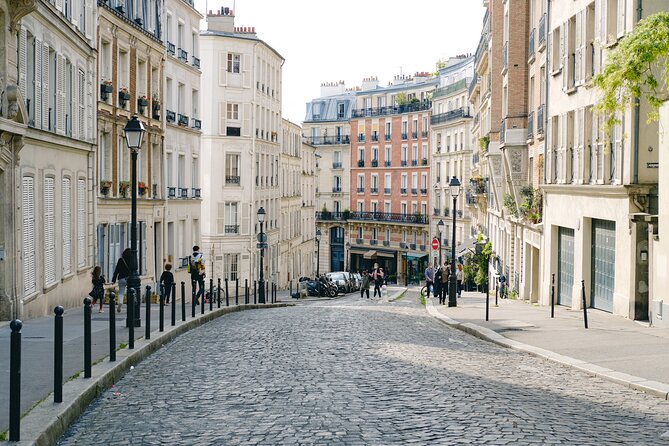
Montmartre reveals itself best on foot, one sloping street and unexpected story at a time. This private walk with local guide Ezrah links the Moulin Rouge, Van Gogh’s former home, Dalida’s statue, Place du Tertre, and Sacré-Cœur in about 90 minutes.
I like the way the route mixes famous sights with smaller details, such as the shiny parts of Dalida’s statue and the old Wallace fountain. I also like that Ezrah brings in artists, musicians, films, and everyday Parisian life rather than treating Montmartre as just a photo stop. The main consideration is timing: 90 minutes is short, and the tour packs nine stops into a hilly walk.
Key things to know before you book
- A private walk with Ezrah: Only your group participates, with space for up to 15 people.
- A story-led route: Expect art, cinema, music, architecture, gossip, and local history rather than a simple list of monuments.
- Nine Montmartre stops: The route runs from Blanche and the Moulin Rouge uphill to Sacré-Cœur.
- Good family appeal: Ezrah kept children aged 8 and 11 involved during one tour by including them in the conversation.
- A useful morning start: The tour begins at 9:00 a.m., before the day’s activity reaches its peak.
- One practical warning: One booking had a guide no-show, though a refund was arranged through Viator.
Why this Montmartre walk feels different
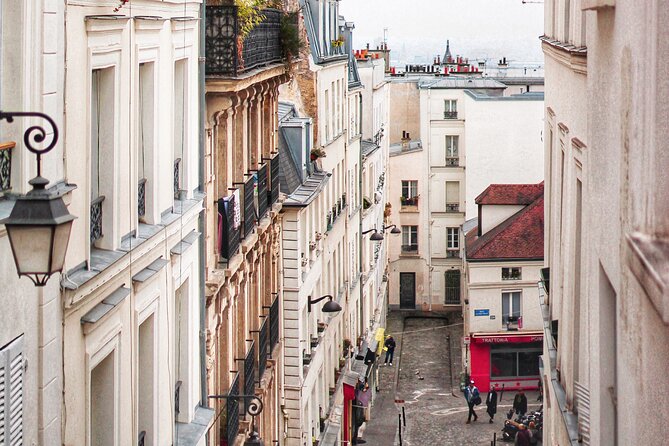
Montmartre is often reduced to two images: the red windmill of the Moulin Rouge and the white domes of Sacré-Cœur. Those sights matter, but they tell only a small part of the neighborhood’s story.
This route gives you a fuller picture in a compact format. You move through places tied to painters, writers, singers, filmmakers, shopkeepers, and ordinary Parisians. The tour also makes room for light gossip and curious details, which can help Montmartre feel like a lived-in neighborhood rather than a museum district.
Ezrah’s role matters here. The best parts of this walk depend on storytelling, and the available feedback points to a guide who is friendly, funny, and able to hold children’s attention. You should expect a conversational tour rather than a formal lecture.
Because the activity is private, you can share it only with your own group. That is a real advantage for families and friends who prefer to ask questions or move at their own pace. The tradeoff is price. At $231.52 per group, the cost is high for two people, but it works out to about $15.43 per person if you fill all 15 places.
More Montmartre and Sacré-Cœur Tours:
- Montmartre Hidden Gems and Scenic Highlights Walking Tour
★ 5.0 · 2,684 reviews - Montmartre Hill French Gourmet Food and Wine Tasting Walking Tour
★ 5.0 · 2,588 reviews - Paris: Montmartre Cheese, Wine & Pastry Guided Walking Tour
★ 4.8 · 2,255 reviews
Starting at Blanche and the Moulin Rouge
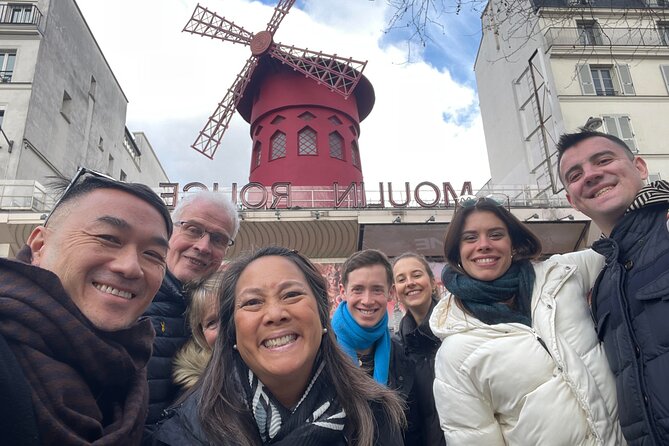
The meeting point is at Blanche Metro station, and the first stop is the Moulin Rouge. This is a sensible place to begin because it immediately places you in Montmartre’s theatrical world.
You spend about 10 minutes discussing the district and the famous red windmill. The stop is outside, with no admission charge, so you are not paying for a cabaret performance or a ticketed visit. The value comes from context: Ezrah uses the Moulin Rouge to introduce Montmartre as a district shaped by entertainment, nightlife, and creativity.
You will want to take photographs here, but the street can be busy and the stop is brief. Treat it as an orientation point, not a full visit to the cabaret.
From there, the walk moves into film and food.
Amélie, chocolate, and the everyday side of Paris
The Café des Deux Moulins takes only about five minutes, but movie fans will recognize it as the workplace of Amélie Poulain in the film Amélie. The café gives the route a modern cultural reference, and it helps show how Montmartre continues to inspire popular stories.
You see the exterior and hear about its role in the film. The tour does not include a meal or a long café stop, so do not book this expecting time to sit down. If you want coffee or a pastry, you would need to arrange that separately.
The next stop is À la Mère de Famille, described as the oldest chocolate shop in Paris. You spend a few minutes hearing about its place in Parisian chocolate-making, with the option to buy something inside.
This is a useful stop because it breaks up the monuments with a small commercial tradition. You get a glimpse of the kind of shop that makes a neighborhood feel local and practical. Still, the shopping opportunity is optional, and the schedule allows only a short visit.
Rue des Abbesses and Van Gogh’s Montmartre
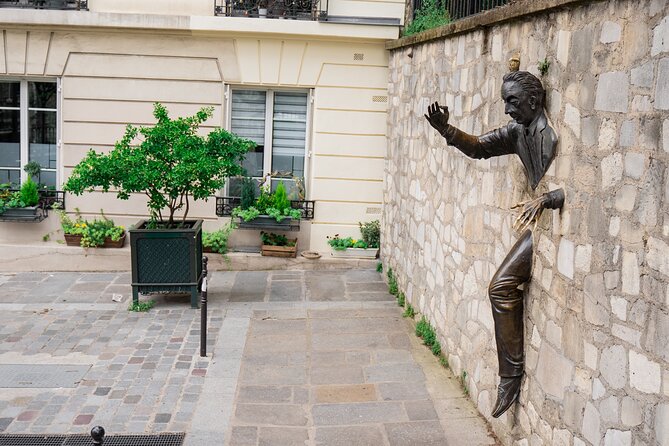
Rue des Abbesses brings you into one of the more atmospheric parts of the walk. The route includes a detour to the building where Vincent van Gogh lived with his brother.
You do not visit a private interior, but the location gives Ezrah a chance to explain why Montmartre became a retreat for artists. That context is more useful than simply hearing that a famous painter once lived there. You begin to see how the streets, inexpensive living spaces, and artistic circles helped shape the area’s identity.
The stop lasts around 15 minutes, which gives enough time for explanation without turning the walk into a long history lesson. If you are especially interested in Van Gogh, you may wish for more detail, but the tour covers a broad range of people and places in a short time.
This is also where the uphill nature of Montmartre becomes more noticeable. You should wear comfortable shoes and be ready for steps later in the route.
More walking tours in Paris:
- Paris Top Sights Half Day Walking Tour with a Fun Guide
★ 5.0 · 2,893 reviews - Paris Île de la Cité and Notre-Dame Walking Tour With Crypt
★ 5.0 · 2,272 reviews - Paris in a Day: Louvre or Orsay, Eiffel Tower, City Walk & Cruise
★ 5.0 · 1,956 reviews - Paris: Montmartre Highlights Walking Tour with a Local Guide
★ 4.9 · 1,668 reviews
Le Bateau-Lavoir and the Wallace fountain
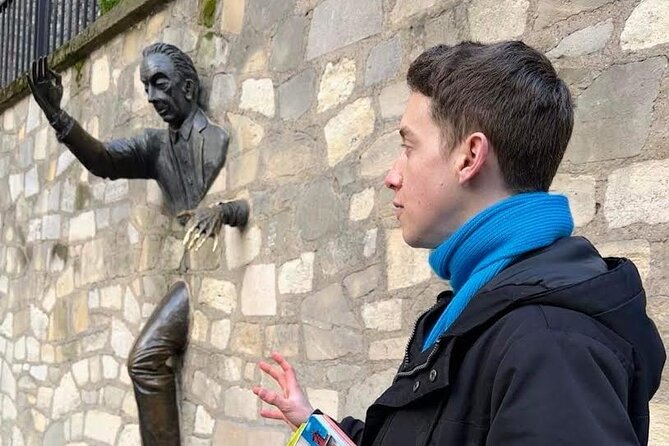
Le Bateau-Lavoir looks modest today, yet its artistic importance gives the stop real weight. Ezrah explains how this former artists’ residence affected the art world and why Montmartre became such an important meeting place for creative people.
The attraction here is the story, not a grand façade. You are looking at an unassuming place and learning how much can happen behind an ordinary exterior. That contrast is one of the better reasons to take a guided walk rather than wander alone.
The stop also includes a historic Wallace fountain in the square. Ezrah explains how these fountains helped modernize Paris, then gives the group a few minutes in the shade of the trees.
That pause is practical. Montmartre involves inclines and stairs, and a short rest helps keep the walk comfortable. It also keeps the experience from feeling like a race between landmarks.
Dalida and the clues on her statue
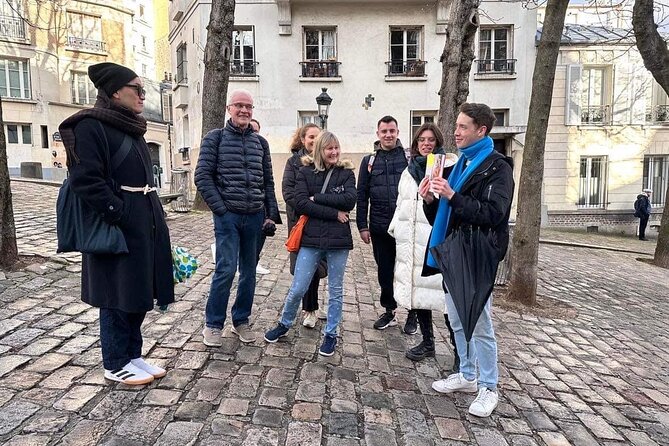
The stop at the Buste de Dalida is brief, about five minutes, but it offers one of the route’s most memorable details. Ezrah tells the story of the famous singer and her tragic ending, then explains why parts of the statue have become shiny.
That detail gives you something to look for with your own eyes. It is exactly the sort of small fact that can make a passing monument more interesting than a standard photograph.
The Dalida stop also broadens the story beyond painters. Montmartre is presented as a place connected to music and public personalities as well as visual art. The short timing means you will not get an extended biography, but you will leave with a clear reason to remember the statue.
La Maison Rose and Place du Tertre
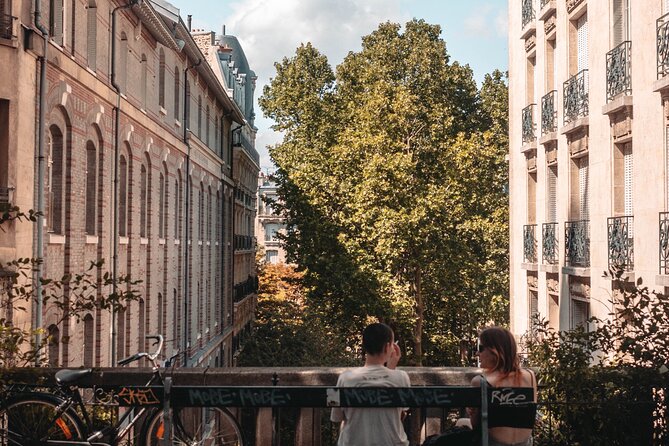
La Maison Rose is one of Montmartre’s most recognizable photo stops. You have time to take pictures while Ezrah explains the restaurant’s claim to fame and its appearances in films.
This is a highly visual part of the route, but it can also be crowded with people trying to photograph the same bright building. The tour gives you the setting and the story without promising a meal inside.
Place du Tertre follows with about 10 minutes among restaurants and working artists. Ezrah discusses the square and shares facts about the artists who paint there today.
This stop is useful because it lets you compare Montmartre’s artistic image with its present-day reality. The square is active and commercial, and it can feel much more polished than the old artists’ stories suggest. A guide can help you understand that contrast instead of treating the square as a frozen version of the past.
Keep your expectations realistic. Ten minutes is enough for an introduction and a look around, but not enough for a long conversation with artists or a leisurely meal.
Finishing at Sacré-Cœur and the Paris view
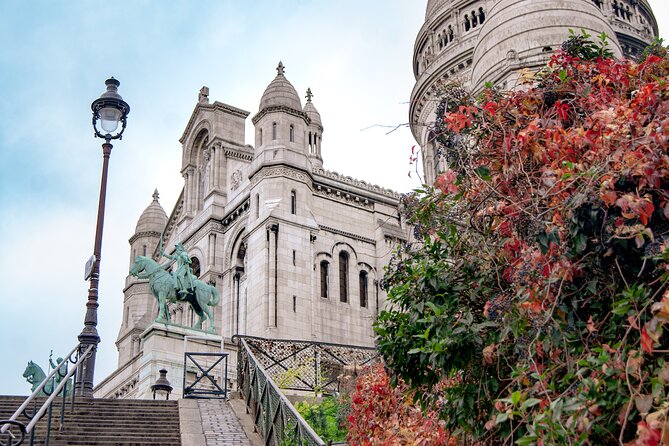
The final stop is the Basilica of the Sacred Heart of Paris, reached after walking up a couple of flights of steps. The tour ends at 35 Rue du Chevalier de la Barre, at Sacré-Cœur.
This ending works well because the view opens up after the narrower streets and small squares. Ezrah points out notable architecture in the distance, then discusses the darker history of the land where the basilica now sits and some of the church’s architectural features.
The tour does not list an admission charge, and the itinerary focuses on the outside view and the story of the basilica. You should see the interior separately if that is important to you.
The steps deserve attention. Most travelers can take part according to the tour information, and service animals are allowed, but this is not a flat route. If your group includes anyone who finds stairs difficult, ask the provider before booking.
Ending at Sacré-Cœur also gives you a useful starting point for the rest of your day. You are already in one of Montmartre’s major sightseeing areas, rather than being returned to the beginning.
What the 90-minute schedule really means
Nine stops in 90 minutes makes this a fast introduction. The listed stop times add up to about 80 minutes, with walking time included in the itinerary. That leaves little room for lingering, shopping, or long questions.
I would choose this tour if you want a strong first look at Montmartre and prefer a guide to connect the pieces. I would not choose it as your only Montmartre experience if you want long museum visits, extended café time, or a slow photographic walk.
The private format helps. Your group can ask questions and stay together without being mixed with strangers. Yet the maximum group size is 15, so private does not always mean intimate. A group of 15 can still feel fairly large on narrow streets.
The 9:00 a.m. start is another advantage. It gives you an early orientation before you spend more time in the neighborhood later. It also means you need to arrive ready for a morning walk, with the correct meeting point at Blanche.
Is $231.52 good value?
For a couple, $231.52 is a considerable price for a 90-minute walk. For a family or larger private group, the numbers look better. At the full capacity of 15, the cost is about $15.43 per person. At six people, it is about $38.59 each.
The value depends on what you want from the guide. You are not paying for entry to attractions. You are paying for a private route, local storytelling, and the chance to connect places that might otherwise feel unrelated.
Ezrah’s reported strengths make the price easier to justify for families. Children aged 8 and 11 were included in conversation and stayed engaged, which is not always easy on a history walk. The mix of films, music, artists, food, and Parisian life also gives younger participants several ways into the subject.
There is one reliability concern. One booking had a guide who did not arrive, and a refund was arranged through Viator. That is a serious disappointment, even though the refund response was helpful. The experience has an overall rating of 4 out of 5 from four reviews, so the sample is small. I would confirm the meeting point and start time before setting out.
Free cancellation is available up to 24 hours before the start time. Within 24 hours, the payment is not refunded, and changes are not accepted. The cut-off uses local Paris time.
Who should book this Montmartre walk?
I would recommend it to:
- Families who want history presented through stories and recognizable people.
- First-time Paris visitors who want a clear introduction to Montmartre.
- Friends or relatives who can share the group price.
- Film fans interested in Amélie and La Maison Rose.
- Art lovers who want Van Gogh, Le Bateau-Lavoir, and Montmartre’s creative past in one route.
- Visitors who prefer a private guide rather than a large public group.
I would think twice if you want a leisurely day in the neighborhood. The pace is brisk, the route includes steps, and each stop is short. You may get more from it by treating the walk as an orientation, then returning later to the cafés, shops, artists’ square, and basilica that interest you most.
Should you book it?
Book this tour if you want Montmartre explained through people and stories, not just photographed from the steps of Sacré-Cœur. Ezrah’s friendly style, family appeal, and attention to small details such as Dalida’s statue and the Wallace fountain give the walk personality.
Skip it if the price feels too high for a 90-minute route or if you want plenty of free time at each stop. For a group of several people, the private format can offer fair value. For only one or two people, the cost is harder to defend.
My practical choice would be to book it early in your Paris stay, use the morning walk to get your bearings, and leave the rest of the day open for a slower return to the places that catch your interest.
FAQ
Where does the Montmartre walking tour begin?
The tour begins at Blanche Metro station in Paris, at 9:00 a.m.
Where does the tour end?
The tour ends at the Basilica of the Sacred Heart of Paris, at 35 Rue du Chevalier de la Barre, 75018 Paris.
How long does the tour last?
The walking tour lasts approximately 1 hour and 30 minutes, with travel time included in the itinerary.
How many people can join the private tour?
The private activity is for only your group, with up to 15 people.
Who guides the tour?
The guide is Ezrah, a local guide who leads the group through Montmartre’s stories, art, film, music, and Parisian life.
What sights are included?
The route includes the Moulin Rouge, Café des Deux Moulins, À la Mère de Famille, Rue des Abbesses, Van Gogh’s former home, Le Bateau-Lavoir, a Wallace fountain, Dalida’s statue, La Maison Rose, Place du Tertre, and Sacré-Cœur.
Is the tour suitable for children?
Most travelers can participate, and Ezrah has kept children aged 8 and 11 engaged by including them in conversation. The route does include steps near Sacré-Cœur.
Can I cancel for a refund?
You can cancel up to 24 hours before the start time for a full refund. Cancellations or changes made less than 24 hours before the tour are not refunded or accepted.
Just added around Paris
- Private Paris Marche d’Aligre Walking Tour with Tastings★ 5.0 · 8 reviews
- Private Louvre Museum Tour for Kids & Families with Alberto or his team in Paris★ 5.0 · 41 reviews
- Private Highlights of Paris Tuk-Tuk Experience★ 5.0 · 26 reviews
- Paris Latin Quarter Walking Tour: History & Culture – Small Group★ 5.0 · 14 reviews
- Private Highlights of Paris Bike Tour★ 4.5 · 15 reviews
- Paris Musee d’Orsay PRIVATE TOUR with a Local Private Guide★ 5.0 · 41 reviews
- Private Half Day Historic Tour★ 5.0 · 58 reviews
- Pere Lachaise Cemetery Paris – Exclusive Guided Walking Tour★ 5.0 · 72 reviews
Montmartre and Sacré-Cœur Tours, compared.

Montmartre Hidden Gems and Scenic Highlights Walking Tour
Read our review →
Montmartre Hill French Gourmet Food and Wine Tasting Walking Tour
Read our review →
Montmartre Cheese, Wine & Pastry Guided Walking Tour
Read our review →
Montmartre Highlights Walking Tour with a Local Guide
Read our review →
Sacré-Coeur and Montmartre Tour with Expert Guide
Read our review →
Private Montmartre Food Tour with Wine, Cheese & Pastries
Read our review →
Paris Montmartre Food Tour – A Full French Meal by Do Eat Better
Read our review →
Hidden Montmartre: Paris’ Secret Streets Walking Tour
Read our review →Browse the lists this tour appears in