
Reviewed · PARIS WALKING TOURS
Bastille’s Architecture & Artisans Self-Guided Walking Tour
Bastille’s story is not confined to a single monument. This self-guided walk links the famous square with old artisan streets, a tucked-away passage, a market, and a planted railway path. I like the way Juan’s local-history narration gives the neighborhood a human scale, instead of treating Bastille as only a revolution site.
I also like the freedom to stop when you want and the low price of $17.88 per person. The catch is that this is a phone-based tour, not a guided walk with someone waiting at the meeting point. Download instructions matter, and one purchaser had trouble receiving the app link in time.
Key points to know before you go
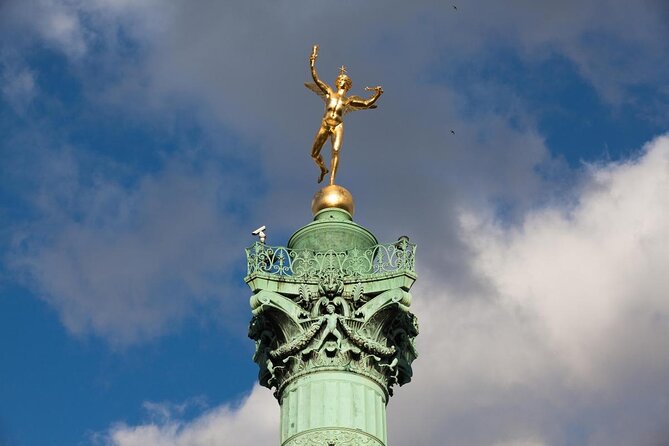
- Start at Place de la Bastille: You begin at the square tied to the French Revolution, with no admission ticket required.
- Hear the area through Juan’s narration: The English audio guide connects Bastille’s political past with its artisan trades and buildings.
- Walk through working-neighborhood history: Rue du Faubourg Saint-Antoine and Passage du Chantier show a less obvious side of the district.
- Build in your own pauses: You can stop to explore, eat, browse, or take photos without keeping pace with a group.
- Finish beside a former railway route: The walk ends at Coulée Verte René-Dumont, a pleasant change from the city streets.
- Bring your own setup: You need a mobile device and earphones, though tours can be downloaded for offline use.
Why this Bastille walk is different
Many visitors meet Bastille as a large traffic circle with the July Column at its center, then move on. This route asks you to look beyond the square. It follows the neighborhood’s connection to furniture makers, craftspeople, old courtyards, markets, fountains, and converted public spaces.
That wider view is the main reason I find the tour useful. You are not simply told what happened in 1789. You are shown how the district worked before, during, and after that turning point. The artisan trades along Faubourg Saint-Antoine help explain why this was a politically charged part of Paris.
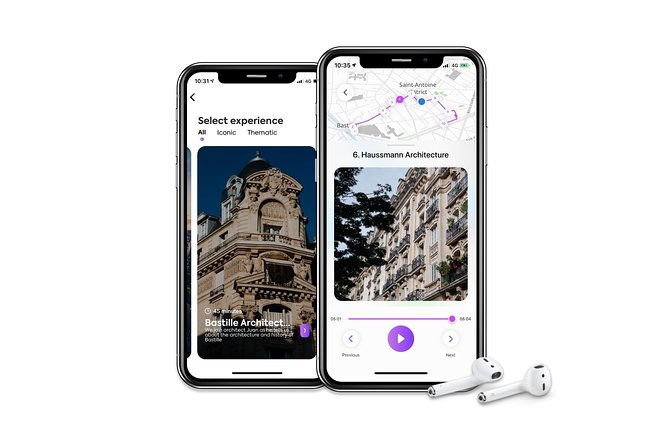
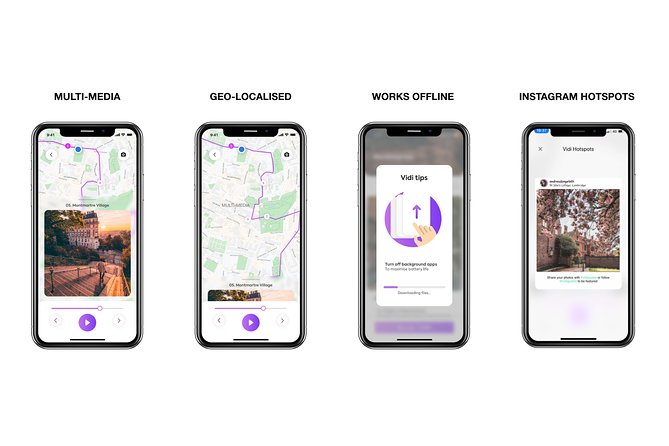
The format is simple. You use the Vidi Guides app on your own phone, follow a GPS map, and listen to the audio as you walk. The guide is in English, and the tour is designed for a small maximum of 10 people, though the experience remains self-guided rather than group-led.
Plan on about 45 minutes to an hour. The listed stops add up to roughly 40 minutes of commentary and pauses, so the extra time allows for walking between points and stopping at the market or taking pictures.
More self-guided and audio tours in Paris:
- From Paris: Giverny Day Trip with Audio Guide or Live Guide
★ 4.3 · 2,372 reviews - Paris: Catacombs Entry & Seine River Cruise with Audio Guide
★ 4.4 · 1,150 reviews - From Paris: Versailles Palace Self Guided & Gardens tickets
★ 4.4 · 1,100 reviews
Starting at Place de la Bastille
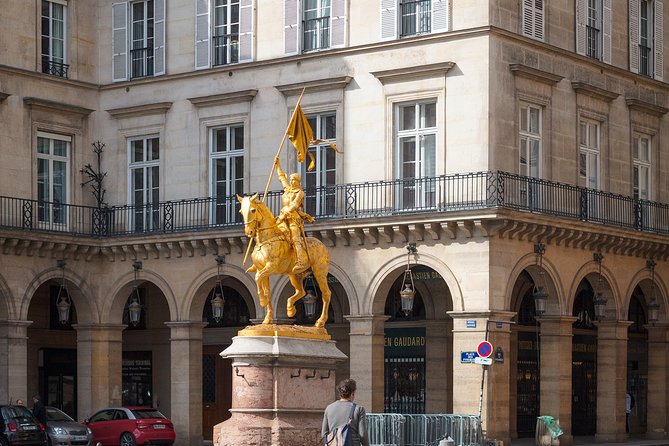
The tour begins at Place de la Bastille, a fitting place for a walk about change in Paris. The former prison became a powerful symbol of the French Revolution, and the opening explanation gives you the basic setting before the route moves into the surrounding streets.
The square itself is free to visit and open daily from 7:00 a.m. to 10:00 p.m. You do not need a timed entry ticket. Its size and traffic can make it a slightly awkward place to find a precise starting point, so use the GPS map and confirm the tour has loaded before you set off.
This first stop lasts about five minutes. It is short, but that is sensible. The square works best as a starting reference, not as the whole story. You will get more from the route once you leave the traffic and head toward the old commercial streets.
Rue du Faubourg Saint-Antoine and the artisan past
The second stop moves along Rue du Faubourg Saint-Antoine, where the audio explains the neighborhood’s artisan roots. This is one of the most useful parts of the walk because it gives social and economic context to the revolution.
Furniture makers and other craftspeople shaped the area’s identity. Their work, workshops, and connections helped make Faubourg Saint-Antoine an important part of Parisian life. Juan’s narration links those trades to the pressure that helped inspire the French Revolution.
You spend about five minutes here, but the value comes from knowing what to look for as you walk. Without that context, this can seem like another busy Paris street. With it, ordinary facades and shopfronts become clues to the area’s working past.
I would not expect a long stop or a museum-style presentation. This is an outdoor introduction, best suited to people who enjoy connecting street scenes with the events that shaped them.
Passage du Chantier and old building details
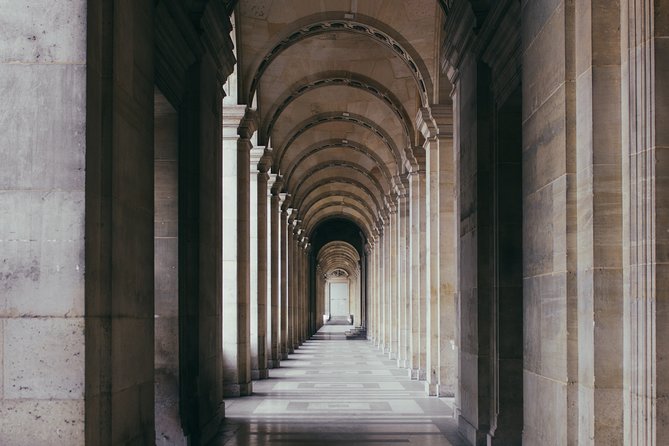
Passage du Chantier offers a quieter look at the architecture of Faubourg Saint-Antoine. The route pauses here for about five minutes while Juan explains why the older building style matters.
Passages can reward slow looking. Pay attention to proportions, entrances, construction details, and the way the older fabric fits into present-day Paris. The tour’s strength is not that it gets you inside a grand monument. It teaches you how to read a modest urban space.
This stop also shows the limits of a short audio walk. You receive an explanation, but the guide cannot point with a hand or answer a question when you are unsure what detail he means. Use the pause button and replay a section if you need more time.
More walking tours in Paris:
- Paris Top Sights Half Day Walking Tour with a Fun Guide
★ 5.0 · 2,893 reviews - Montmartre Hidden Gems and Scenic Highlights Walking Tour
★ 5.0 · 2,684 reviews - Montmartre Hill French Gourmet Food and Wine Tasting Walking Tour
★ 5.0 · 2,588 reviews - Paris Île de la Cité and Notre-Dame Walking Tour With Crypt
★ 5.0 · 2,272 reviews
Fontaine de Charonne and the survival of old Paris
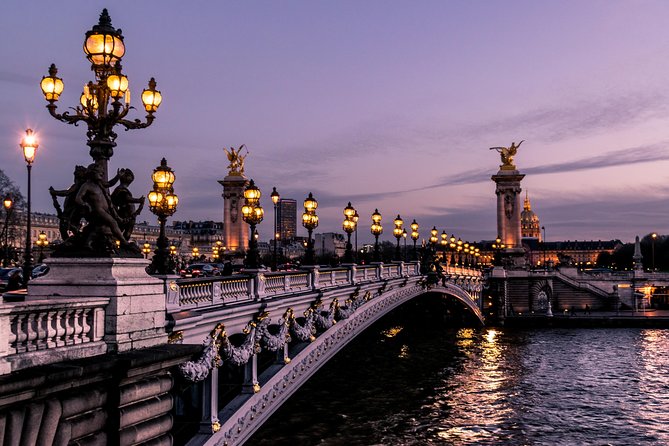
At Fontaine de Charonne, the tour shifts from political and commercial history to preservation. The five-minute stop focuses on the fountain’s antiquity and the way it remains part of the modern neighborhood.
That contrast is worth noticing. Paris often places old stonework beside busy streets, apartments, shops, and newer public life. Here, the point is not simply that the fountain is attractive. It is that a piece of the past can remain useful as a visual marker while the city around it changes.
You do not need an admission ticket, and there is no formal entry process. The stop is quick, so keep moving if you are following the full route, or pause longer if the fountain interests you. The self-guided format gives you that choice.
A quiet break at Square Trousseau
Square Trousseau provides the route’s breathing space. After several streets and historical explanations, you reach a green public square where Juan introduces the site’s story.
The stop lasts about five minutes, but you can linger. I like this part because it breaks up the information without requiring a café stop or a separate detour. You get a chance to rest, reset your headphones, and decide how much time you want to spend at the next stop.
The square is also a reminder that this walk is not only about revolution and architecture. It includes the ordinary places that make a neighborhood feel lived in. If you are walking with a companion, this is a natural point to pause the audio and enjoy the setting together.
The Bastille market and local street life
The market section receives the longest pause, about 10 minutes. It covers Marché d’Aligre and Marché Beauvau, with attention to brocantes, local food, and the atmosphere Juan considers especially worthwhile.
This is likely the most flexible part of the route. You can listen while looking around, browse at your own speed, or stop the narration to focus on the stalls. The tour does not include food or purchases, so budget separately if you want to eat or shop.
The market adds a sensory side to the walk that the architectural stops cannot provide. After hearing about artisans and neighborhood work, you encounter a place tied to present-day buying, eating, and social life. That link between past trades and current commerce gives the route a useful balance.
The timing can vary here. Ten minutes is enough for a quick look, but not enough if you want to browse carefully. If the market is your main interest, treat the advertised hour as a minimum rather than a strict finish time.
Ending at Coulée Verte René-Dumont
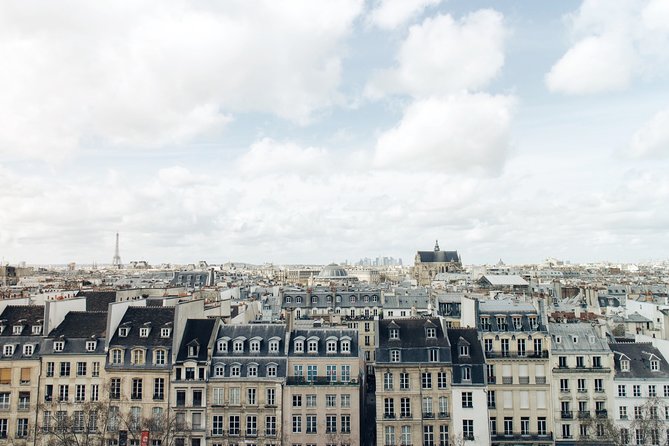
The walk ends at 1 Coulée Verte René-Dumont, where the audio recounts the area’s past and its poetic present. This former railway route has become a distinctive public path, and it gives the tour a calmer finish than another busy intersection would.
The final stop lasts about five minutes. It works as a closing idea: Paris keeps changing, but older structures can find new uses. After streets shaped by workshops, politics, and trade, the route ends in a public space designed for walking and pause.
The tour ends here rather than returning you to Place de la Bastille. That matters for planning. You should be comfortable making your own way onward after the final audio stop. The endpoint is listed as 1 Coulée Verte René-Dumont, 75012 Paris, and the route is near public transportation.
What the $17.88 price gives you
At $17.88 per person, this is a reasonably priced way to add structure to an independent walk. You are paying for the audio content, the route design, the GPS map, offline access, and photo-location suggestions. There is no separate entrance fee for the stops described.
The value is strongest if you want background while walking but do not want a fixed appointment with a guide. You can choose the start time within the operating hours, pause for food, and spend longer at the market or square.
The value is weaker if you expect personal attention. No guide meets you in person, answers questions, or adjusts the route for your interests. You also need to supply the phone, data setup before departure, and earphones.
One review described the experience as informative and praised the ability to stop whenever desired. That matches the format’s main advantage. Another person could not start because the download link did not arrive until it was too late. For that reason, I would not wait until the last moment to activate the tour.
Phone setup and practical planning
After booking, you receive confirmation and a unique code for the Vidi Guides app. Download the tour before you reach Place de la Bastille. The offline mode is useful if you do not want to depend on a mobile connection while walking.
Bring:
- A charged mobile device
- Earphones, since they are not included
- Enough storage and battery for the app
- Comfortable shoes for roughly an hour of city walking
The GPS map is meant to help you find each point without getting lost. Still, a self-guided tour demands more attention than a walking tour with a person in front of you. Check that the map, audio, and access code work before leaving your hotel or accommodation.
The experience is offered in English. Service animals are allowed, and most people can participate. The maximum is 10 people, although you control your own pace and do not need to stay in a tight group.
Who should choose this experience
I would choose this tour if you like history in small portions, prefer to walk independently, and want to see more than the usual Bastille photo stop. It suits first-time Paris visitors who want a clear route, as well as repeat visitors looking for a different corner of the city.
It is also a good fit for couples or friends who dislike fixed group schedules. You can pause the audio, stop at the market, and take pictures at the suggested Instagram spots without holding up a guide.
I would be cautious if you want a fully guided experience or if app setup is a concern. The instructions must reach you, and you must know where to begin. If you prefer a person handling navigation and questions, spend your money on a live walking tour instead.
Should you book Bastille’s Architecture & Artisans walk?
Book it if you want an affordable, flexible introduction to Bastille that connects revolution, craftsmanship, architecture, markets, and public spaces. The strongest feature is the route itself, which moves beyond the famous square and shows how the neighborhood’s older identity still shapes what you see.
Before booking, make sure you are comfortable with a self-guided app. Download the audio and map early, bring earphones, and use the listed starting point at Place de la Bastille. If you take those simple steps, $17.88 buys a useful hour of context and independent exploring.
FAQ
How much does the tour cost?
The listed price is $17.88 per person.
How long does the walking tour take?
The tour takes approximately 45 minutes to one hour.
What language is the audio tour in?
The audio tour is offered in English.
Where does the tour begin?
It begins at Place de la Bastille, Place de la Bastille, Paris, France.
Where does the tour finish?
It ends at 1 Coulée Verte René-Dumont, 75012 Paris, France.
Is the tour guided in person?
No. It is a self-guided audio tour accessed through the Vidi Guides app.
Who provides the audio narration?
The audio is provided by a local or historian. The route refers to the narrator as Juan.
Do I need my own phone and earphones?
Yes. A mobile device and earphones are not included.
Can I listen without Wi-Fi?
Yes. You can download the tour in advance and use its offline mode.
What happens if I need to cancel?
You can receive a full refund if you cancel at least 24 hours before the experience start time. Cancellations or changes made within 24 hours are not refunded or accepted.
Just added around Paris
- Private Paris Marche d’Aligre Walking Tour with Tastings★ 5.0 · 8 reviews
- Private Louvre Museum Tour for Kids & Families with Alberto or his team in Paris★ 5.0 · 41 reviews
- Private Highlights of Paris Tuk-Tuk Experience★ 5.0 · 26 reviews
- Paris Latin Quarter Walking Tour: History & Culture – Small Group★ 5.0 · 14 reviews
- Private Highlights of Paris Bike Tour★ 4.5 · 15 reviews
- Paris Musee d’Orsay PRIVATE TOUR with a Local Private Guide★ 5.0 · 41 reviews
- Private Half Day Historic Tour★ 5.0 · 58 reviews
- Pere Lachaise Cemetery Paris – Exclusive Guided Walking Tour★ 5.0 · 72 reviews
Paris Walking Tours, compared.
Paris Top Sights Half Day Walking Tour with a Fun Guide
Read our review →
Montmartre Hidden Gems and Scenic Highlights Walking Tour
Read our review →
Montmartre Hill French Gourmet Food and Wine Tasting Walking Tour
Read our review →
Paris Île de la Cité and Notre-Dame Walking Tour With Crypt
Read our review →
Montmartre Cheese, Wine & Pastry Guided Walking Tour
Read our review →
Paris in a Day: Louvre or Orsay, Eiffel Tower, City Walk & Cruise
Read our review →
Montmartre Highlights Walking Tour with a Local Guide
Read our review →
Browse the lists this tour appears in