
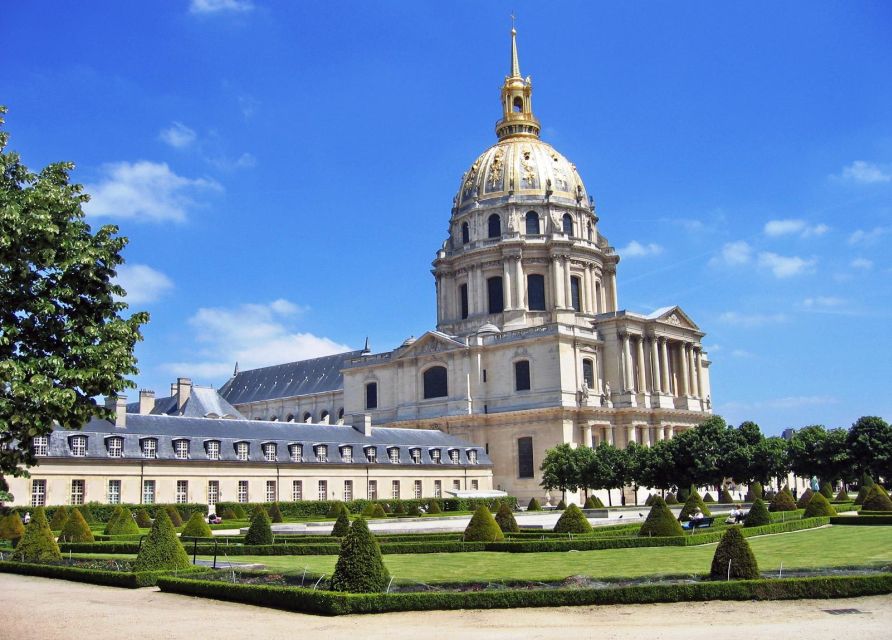
Reviewed · LES INVALIDES AND NAPOLEON TOURS
Invalides War Museum the World Wars Guided Tour
The most useful feature of this Invalides tour is its clear chain of events. Instead of treating the world wars as two piles of objects, your guide starts with the Franco-Prussian War, Bismarck, and the political tensions of 19th-century Europe, then connects them to the assassination of Franz Ferdinand and the outbreak of World War I. The story has a beginning, middle, and end, which helps when dates and names start to blur.
I like the close look at weapons, uniforms, and battlefield equipment, along with the human stories behind them. I also like the small-group format, limited to eight people per guide, and the chance to ask questions as you go. The drawback is the pace: two hours is enough for a strong overview, not every room or collection, and moderate walking makes this a poor fit for wheelchair users or people with mobility impairments.
Key points to know before you book
- The Marne taxi is a memorable stop: See the kind of taxi linked with the movement of French troops during the Battle of the Marne.
- The tour begins before World War I: Bismarck and the Franco-Prussian War help explain how Europe reached the 1914 crisis.
- The 1918 armistice gets a physical setting: You’ll see the railway carriage associated with the agreement that ended World War I.
- World War II is told through France’s experience: Expect discussion of the Maginot Line, Dunkerque, the Occupation of Paris, Normandy, and Liberation.
- Small groups make questions practical: Semi-private groups have up to eight people, while private tours offer more control over the pace.
- The route requires walking: Large bags and luggage are not allowed, and wheelchair tours must be requested in advance.
Why this Invalides tour works as a history lesson
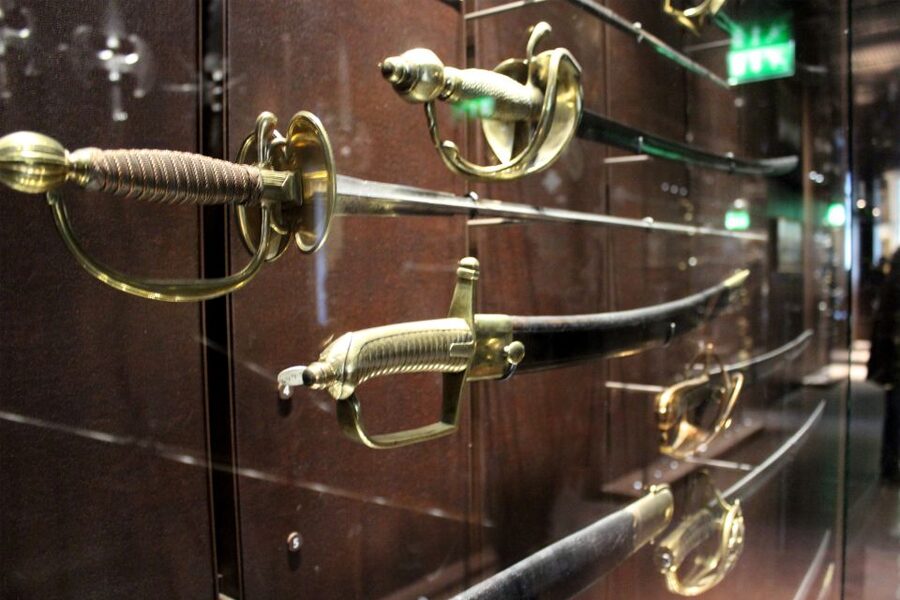
The Invalides War Museum can feel large and serious. A guide gives the visit a human scale. You are not simply moving from one glass case to the next. You are following France through defeat, fear, military decision-making, occupation, and recovery.
That order matters. If you walk in without a plan, it is easy to notice impressive uniforms and weapons without understanding why they were used or what they meant. This tour gives you a framework first, then uses the museum’s objects to fill it in.
The format also suits you if you want more than a general Paris sightseeing stop. The guide is an art historian, and the tour is offered in English, French, Spanish, German, Italian, and Russian. The advertised rating is 4.9 from eight reviews, and the strongest praise centers on the guide’s ability to explain the wars from a less familiar angle, answer questions, and add humor without making the subject feel casual.
More Les Invalides and Napoleon Tours:
- Les Invalides: Napoleon’s Tomb & Army Museum Entry
★ 4.6 · 9,185 reviews - Paris: Aura Invalides Immersive Experience Entry Ticket
★ 4.7 · 3,360 reviews - Paris Entrance Ticket to the Aura Invalides Immersive Show
★ 4.0 · 174 reviews
Starting with Bismarck and the Franco-Prussian War
The tour begins in the 19th century, before the first world war. That may seem like a slow start when you have only two hours, but it is one of the better choices in the program.
The Franco-Prussian War and the role of Bismarck help explain France’s relationship with Germany and the shifting balance of power in Europe. You get the background needed to understand why national pride, military alliances, and territorial disputes carried such force by 1914.
This opening is especially helpful if you know the major events but not the connections between them. The guide pieces together the chain rather than asking you to memorize isolated facts. From there, the assassination of Franz Ferdinand becomes part of a wider political crisis, not just a single dramatic incident.
You should expect interpretation rather than a long lecture. The tour has to cover two wars in two hours, so the guide will focus on the major turning points and the stories that best explain France’s position.
World War I through objects and battlefield equipment
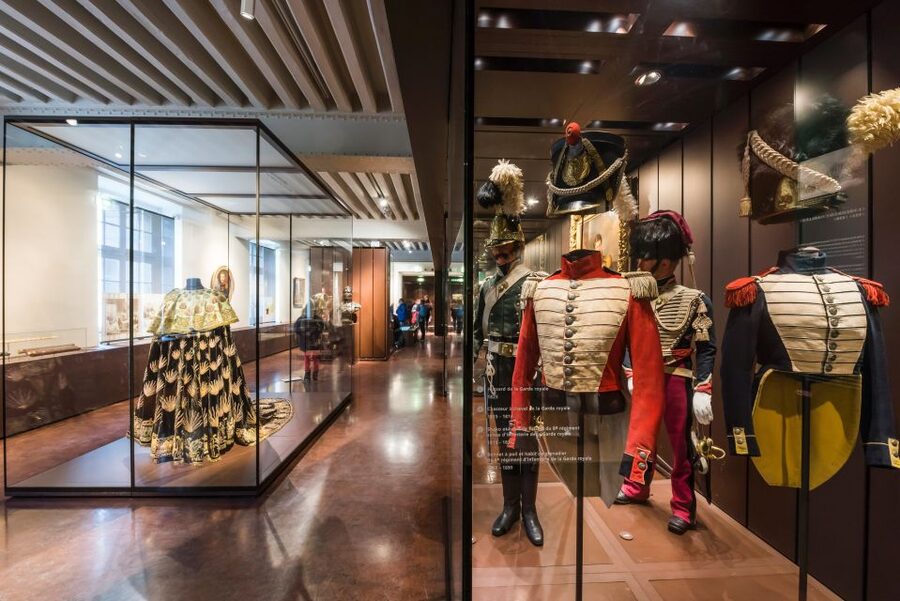
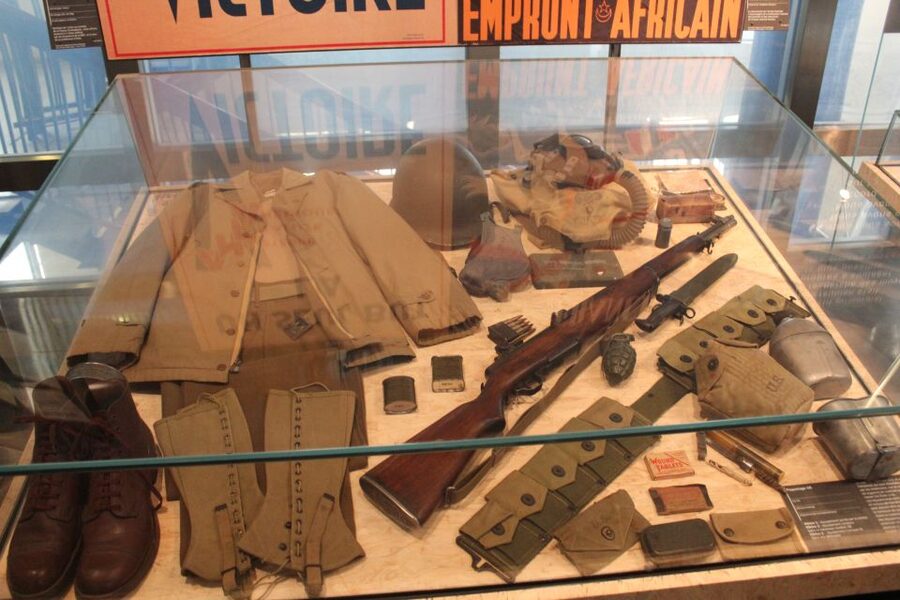
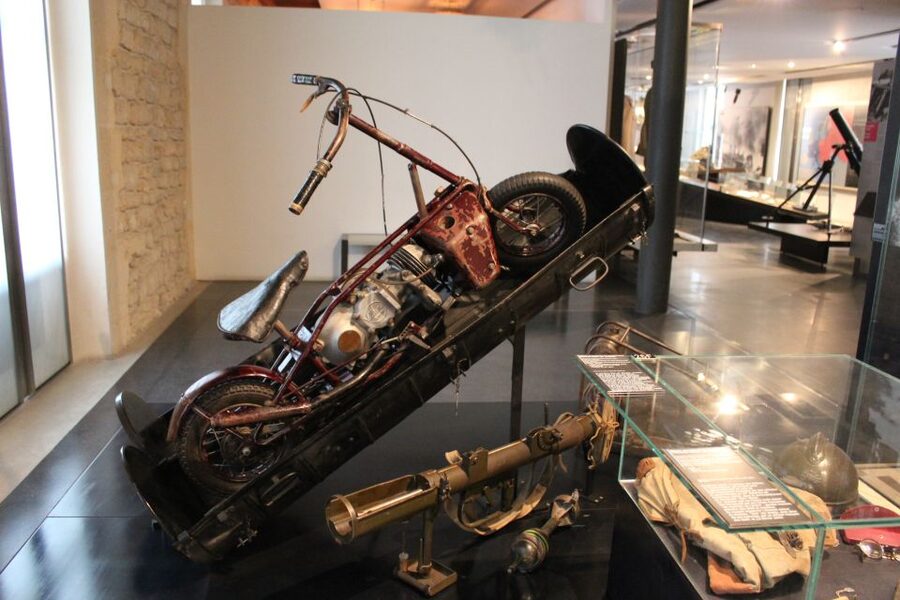
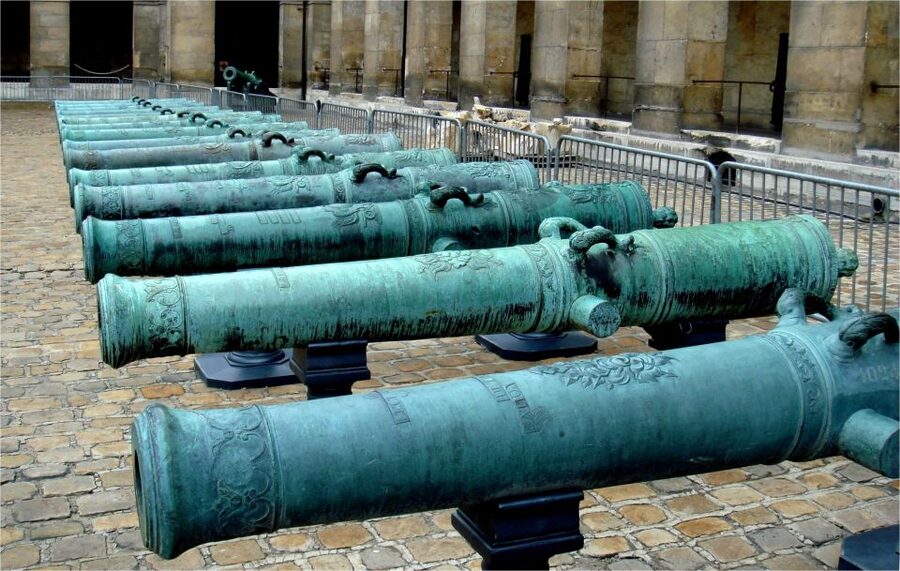
The World War I section brings the broad story down to physical things. You’ll see weapons, uniforms, equipment, and other artifacts connected to the fighting. These objects help show the scale of industrial warfare and the conditions faced by soldiers.
I find this part valuable because a weapon or uniform can make a date feel less remote. The museum’s displays give the guide something concrete to explain, whether the subject is combat, military organization, or the changing nature of warfare.
One of the most distinctive objects on the route is a taxi connected with the Battle of the Marne. The taxis helped carry French troops toward the battle, and seeing one gives the event a surprisingly ordinary point of entry. It is an effective reminder that major military movements can involve everyday vehicles and civilian life, not only generals and grand strategy.
The tour also includes original footage about the atrocities of the war. This is a more difficult part of the visit, and the material may be emotionally heavy. Some museum rooms have quiet rules or restrictions on speaking, so you may need to listen without discussion in certain areas.
The armistice and the railway carriage
The end of World War I is made tangible with the railway carriage where the armistice was signed. That setting helps explain the seriousness of the event better than a date on a wall can.
You’ll also discuss the Treaty of Versailles and how it brought the conflict to a formal close. The guide can connect the military end of the war with the political settlement that followed, giving you a clearer sense of why the peace did not erase tensions in Europe.
This stop is a good example of the tour’s main strength. It takes a large event and anchors it in a specific object and place. The carriage is not just a display item. It represents the moment when the fighting stopped, while the political consequences continued.
More art museums in Paris:
- Paris: Louvre Museum Timed-Entrance Ticket
★ 4.6 · 71,977 reviews - Louvre Museum Masterpieces Guided Tour with Access
★ 4.5 · 12,023 reviews - Paris: Louvre Museum Entry Ticket With Host and River Cruise
★ 4.6 · 9,926 reviews - Louvre Museum – Exclusive Guided Tour (Entry Included)
★ 5.0 · 6,296 reviews
From the aftermath of World War I to Hitler

The second half moves into the conditions that allowed Adolf Hitler’s threat to become reality. Again, the aim is to connect events rather than treat World War II as an isolated chapter.
The guide discusses the road from the postwar settlement to the rise of Nazi Germany and the beginning of another war. You’ll encounter artifacts collected from battlefields and hear about the decisions that shaped France’s military and political response.
This section can move quickly. The tour covers a large period, and there is no promise that every major operation or political figure will receive equal time. Still, the structure helps you see how the unresolved issues after World War I fed into the next crisis.
If you already have a strong background in the period, you may want more time with individual objects. If you are looking for a readable explanation of how one war led into another, the guided format should be more useful than trying to study every label alone.
Maginot Line, Dunkerque, and the Occupation of Paris

The discussion of the Maginot Line, Dunkerque, and the Occupation of Paris shifts attention to France’s particular experience in World War II.
The Maginot Line raises questions about defensive planning and the limits of relying on fixed fortifications. Dunkerque brings the focus to retreat, survival, and the changing direction of the war. The Occupation of Paris makes the conflict immediate for the city around you.
That local connection is important. You are not hearing only about distant fronts. You are learning how war altered France and Paris, including the pressure of occupation and the decisions made by French leaders.
The museum artifacts help keep the discussion grounded. You may see equipment and objects from battlefields while your guide explains what they reveal about the people who used them. Since temporary exhibits are not included, the exact selection of displays can change during the year, but the main tour is built around the permanent museum collections.
Pétain, De Gaulle, Normandy, and Liberation
The guide also discusses Marshal Pétain and Charles de Gaulle, two figures who represent very different responses to France’s wartime crisis. Their stories help you consider leadership, military defeat, political authority, and the competing visions of France during the war.
Normandy and the Liberation of Paris bring the tour toward its final section. You’ll hear how the fighting moved toward liberation and why the preservation of Paris matters to the city you see today.
This part should appeal to you if you want the French viewpoint rather than a general account of Allied operations. The focus is on how France was led through the war, how the country endured occupation, and how Paris came through the fighting.
The subject is too large for a full military study in two hours. You will not get every campaign or commander. What you do get is a focused account of the episodes that most directly shaped France.
A small group makes a real difference
The semi-private option has a maximum of eight people per guide. That is small enough for questions and much easier to manage than a large walking group in crowded museum rooms.
A private tour gives you more control over what you ask about. If you want to spend more time on World War I equipment, French leaders, or the Liberation of Paris, private touring may suit you better. The supplied feedback highlights guide Anatole as personable, humorous, and willing to explain the material from a different perspective, though guide availability can vary with your booking.
The tour is also available in several languages: English, French, Spanish, German, Italian, and Russian. Choose carefully when booking, since the language is central to how much you gain from a fast-moving history tour.
Timing, walking, and what to carry
The tour lasts two hours and ends back at the meeting point. The precise starting time and meeting point depend on the option you book, so check those details before setting your Paris schedule.
Moderate walking is involved. The semi-private version is not suitable for wheelchair users or people with walking disabilities. Wheelchair tours are available only on request, so you should arrange that before booking rather than assume the standard route will work.
Do not bring a suitcase or large bag. The museum does not allow large luggage, and you should carry a passport or identity card and some cash. Food and drinks are not included, and temporary exhibitions require separate consideration because they are outside the tour price.
Museum management can occasionally close rooms without advance warning. If opening is delayed by more than an hour, an alternative is offered, but the stated terms do not promise a refund or discount in that situation.
Is $128 a fair price?
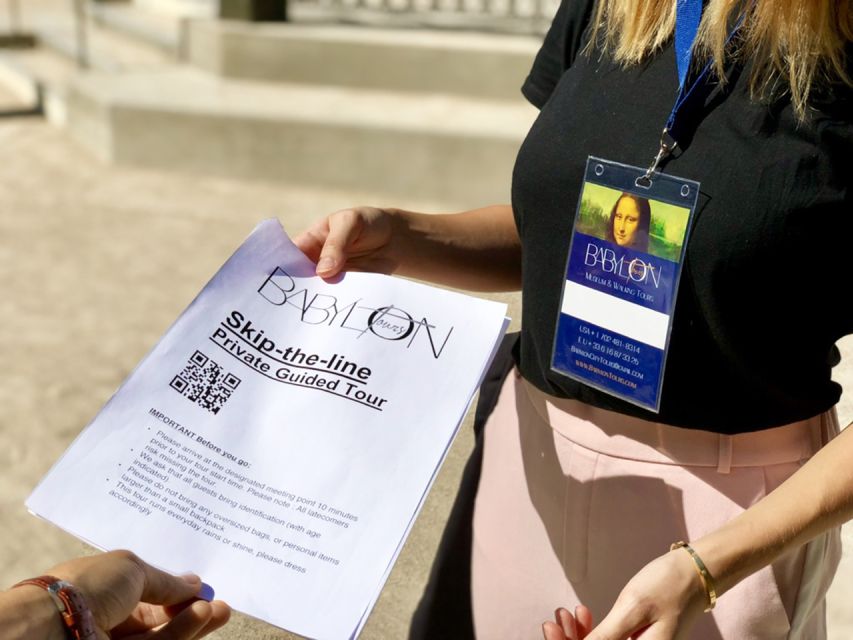
At $128 per person, this is not a casual add-on for a quick look at Invalides. The price includes museum admission, skip-the-ticket-line access, and a professional art historian guide. You are paying mainly for structure, explanation, and the ability to ask questions in a small group.
The value is strongest if you would otherwise wander through the museum without knowing where to focus. It is also stronger for visitors who want the French story of both wars, not just a collection of military objects.
The value is weaker if you prefer to read every label at your own pace or already know the period well. Two hours can only cover selected rooms and themes, and temporary exhibits are not included. A private option may cost more, but it can make sense for families or serious history enthusiasts who want a tailored discussion.
Free cancellation up to 24 hours before the tour and reserve-now, pay-later booking add flexibility. Those terms help if your Paris plans are still changing, but they do not remove the need to check the start time and meeting point.
Who should book this experience?
I would choose this tour if you want a guided introduction to France’s two world wars and prefer clear storytelling over an unstructured museum visit. It suits couples, families with older children, and history-minded visitors who want to ask questions without joining a large crowd.
It is particularly useful if you are unsure how World War I led to World War II. The opening discussion of the Franco-Prussian War, the armistice carriage, and the French focus during the Occupation and Liberation give the visit a strong shape.
I would skip it if you need a fully accessible route, dislike walking, or want several hours to study every object. In that case, a self-guided visit or a specially arranged wheelchair tour may be a better choice.
Should you book it?
Book it if you want the Invalides War Museum to make sense as a story, not just a series of cases. The Marne taxi, the 1918 railway carriage, battlefield artifacts, and the discussion of Pétain and De Gaulle give the two-hour route several memorable anchors.
The best reason to pay for this tour is the guide’s interpretation. The strongest feedback points to Anatole’s clear explanations, humor, and willingness to answer questions. Just keep your expectations in line: this is a focused overview with moderate walking, not an exhaustive study of every World War I and II collection.
FAQ
How long does the Invalides War Museum World Wars Guided Tour last?
The tour lasts two hours.
How much does the tour cost?
The listed price is $128 per person.
What does the tour cover?
It covers the roots of World War I, the Franco-Prussian War, Bismarck, the assassination of Franz Ferdinand, World War I weapons and equipment, the Battle of the Marne, the Treaty of Versailles, the 1918 armistice, Adolf Hitler’s rise, the Maginot Line, Dunkerque, the Occupation of Paris, Normandy, and the Liberation of Paris.
Is museum entry included?
Yes. Entrance fees and skip-the-ticket-line access are included.
Is this a private tour or a group tour?
You can book a private tour or a semi-private small-group option. The semi-private tour has a maximum of eight people per guide.
What languages are available?
The live guide is available in English, French, Spanish, German, Italian, and Russian.
Is the tour suitable for wheelchair users?
The standard semi-private tour is not suitable for wheelchair users or people with mobility impairments. Wheelchair tours are available only on request.
Is food included?
No. Food and drinks are not included unless specifically stated for your booking.
Can I bring a suitcase or large bag?
No. Large bags and luggage are not allowed.
What happens if the museum closes unexpectedly?
Museum management may occasionally close rooms without advance warning. If the museum opening is delayed by more than one hour, an appropriate alternative is offered.
Just added around Paris
- Paris: The Da Vinci Code Walking Tour with a Local Guide★ 4.3 · 5 reviews
- Paris: Flea Market Insider’s Tour in Extra-Small Group★ 4.6 · 73 reviews
- Paris: Private Fashion Tour (Chanel, Dior, Sex & the City)★ 5.0 · 3 reviews
- Paris: Floral Earrings workshop★ 5.0 · 3 reviews
- Paris: Fashion History Walking Tour in the Heart of Paris★ 4.9 · 22 reviews
- PARIS: Family e-bike longtail renting★ 5.0 · 3 reviews
- Paris: Famous Monuments Cycling Tour★ 4.7 · 20 reviews
- Paris: private city tour with seine river cruise★ 4.8 · 28 reviews
Les Invalides and Napoleon Tours, compared.

Les Invalides: Napoleon’s Tomb & Army Museum Entry
Read our review →
Aura Invalides Immersive Experience Entry Ticket
Read our review →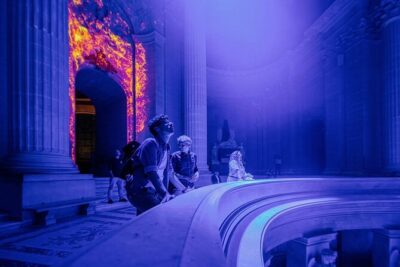
Paris Entrance Ticket to the Aura Invalides Immersive Show
Read our review →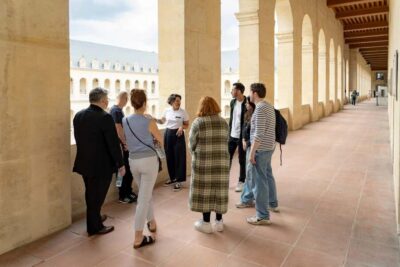
Napoleon’s Tomb & Invalides Small Group Guided Tour
Read our review →
Pairs: The Opera to Hotel des Invalides Guided Walking Tour
Read our review →Browse the lists this tour appears in