
Reviewed · MUSéE D’ORSAY TOURS
Paris: Orsay Museum Daily Entry Ticket
The best part of this Musée d’Orsay ticket is freedom. You can enter during opening hours, choose your own route, and stay for two hours or most of the day. Inside the old Gare d’Orsay, you’ll find Impressionist and Post-Impressionist masterpieces beside sculpture, photography, and decorative art.
I like two things here: temporary exhibitions are included, so you do not need to buy a second ticket, and the dedicated C1 entrance can save a great deal of time when it is working as intended. The main catch is that this is an open ticket, not a timed ticket. On holidays, busy afternoons, or peak days, you may still face a long wait.
Key points to know before you go
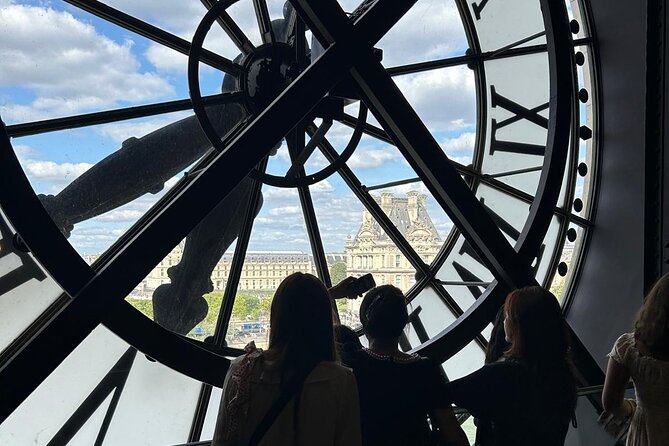
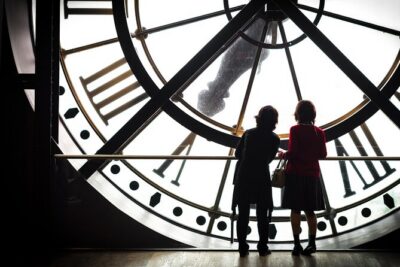
- The old railway station is part of the experience: The enormous clock, broad central hall, and Beaux-Arts setting give the museum a character you will not get in a plain gallery building.
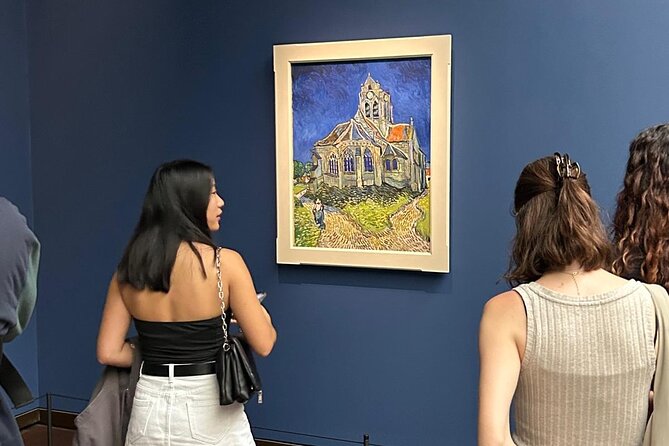
- Van Gogh, Renoir, Cézanne, Monet, and Degas are central attractions: You can see famous paintings alongside sculpture, photographs, and decorative arts.
- Entrance C1 is the dedicated access point: Follow the ticket instructions carefully, and have the QR code ready on your phone.
- Your ticket covers temporary exhibitions: This is useful when a special show is on and regular museum tickets have sold out.
- Open entry gives you control: Visit any time from 9:30am to 6pm, then set your own pace inside.
- Crowds can erase the time-saving advantage: A pre-booked ticket helps, but it does not guarantee instant entry during holidays or heavy afternoon lines.
Why the Musée d’Orsay deserves a place in your Paris plans
Paris has larger museums, but the Musée d’Orsay is often easier to manage in a single visit. Its collection is focused enough that you can see a lot in two or three hours without feeling that you have only crossed the entrance hall.
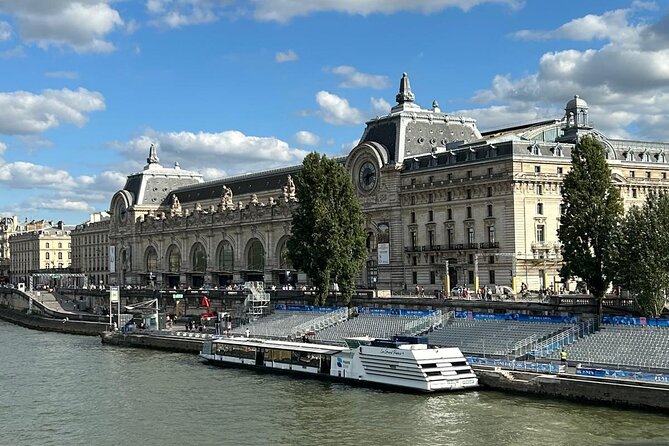
The museum is housed in the former Gare d’Orsay, a grand railway station turned art museum. That setting matters. You are not simply moving from one white gallery to another. You walk through a broad central space under the old station roof, with sculpture arranged below and galleries branching off around it.
The famous clock is another reason to come. It gives you a memorable view toward the right bank and makes the building feel connected to the city outside. Even if you are not an art specialist, the architecture and scale give the visit plenty of atmosphere.
The collection is especially strong from the mid-19th century through the early 20th century. That means you can move from academic painting and sculpture into Realism, Impressionism, Post-Impressionism, Art Nouveau, photography, and decorative arts.
I would not treat this as only an Impressionist museum. The paintings are the main draw for many people, but the sculpture galleries and decorative objects help explain the period. The change in style becomes easier to follow when you see paintings, furniture, sculpture, and design in the same visit.
More Musée d’Orsay Tours:
- Paris in a Day: Louvre or Orsay, Eiffel Tower, City Walk & Cruise
★ 5.0 · 1,956 reviews - Paris: Musée d’Orsay Skip-the-Line Tour with Expert Guide
★ 4.5 · 1,145 reviews - Musée d’Orsay Skip-the-Line Tour with Expert Guide
★ 4.8 · 1,088 reviews
Entering through C1 with an open ticket
Your admission includes a dedicated entrance at C1. The ticket is delivered as a QR code, and the practical goal is simple: go to the correct door with the code ready on your phone.
The experience at C1 can be quick. Some ticket holders have walked directly toward security and been admitted without trouble. Staff have generally been pleasant, and the entry process can be much easier than buying a regular ticket after arriving.
But you should understand what dedicated entrance means here. It does not promise instant entry at every hour. Security checks still apply, and the museum can become crowded. During the holiday season, a wait of about 30 minutes is possible even at C1.
The situation can be much worse at peak times. Long waits of more than an hour, and sometimes around two hours, have occurred when the museum was crowded. New Year’s Eve season, busy Tuesdays, and arriving around 2pm have all been poor conditions for an open ticket.
I would aim for the morning if you want the best chance of a smooth entry. The ticket is valid throughout opening hours, so you have flexibility, but using that flexibility late in the day may work against you.
Keep the voucher or QR code easy to find. A small number of admission problems have come from confusion between a voucher and a museum ticket, or from a code not being immediately available. If your code has not arrived, deal with that before you reach the entrance rather than standing at the door trying to sort it out.
The central hall and the museum’s unusual setting
Once inside, take a moment before rushing toward the famous paintings. The old station hall gives you a useful sense of direction, and the sculpture below helps you understand the museum’s layout.
The building is one of the most memorable features of the visit. The clock, vaulted roof, stonework, and long sight lines create a feeling of occasion without requiring a guide or formal tour.
You can explore independently. No group follows you from room to room, and no fixed route forces you to hurry. That suits people who already know what they want to see, as well as families who need to adjust their pace.
There are lockers and a coat check for your belongings. Food is not included, but cafés are available in the museum, along with a gift shop. One café and the museum restaurant can make it possible to stay longer without leaving the building.
Do not expect a seat in every gallery. Finding a bench can be difficult when the museum is full, so plan to pause when you see an open one. A two-hour visit may sound easy, but standing in crowded rooms can make a longer stay tiring.
The Impressionist and Post-Impressionist rooms
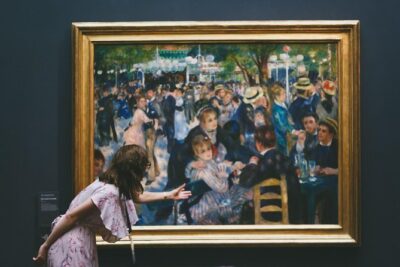
This is the section that brings most people through the doors. The collection includes Renoir’s Dance at le Moulin de la Galette, Cézanne’s Apples and Oranges, and several self-portraits by Van Gogh.
You can also see works connected with Monet, Degas, and other major painters of the period. The pleasure comes from seeing familiar names in the same museum, then comparing how differently they handled light, movement, color, and everyday life.
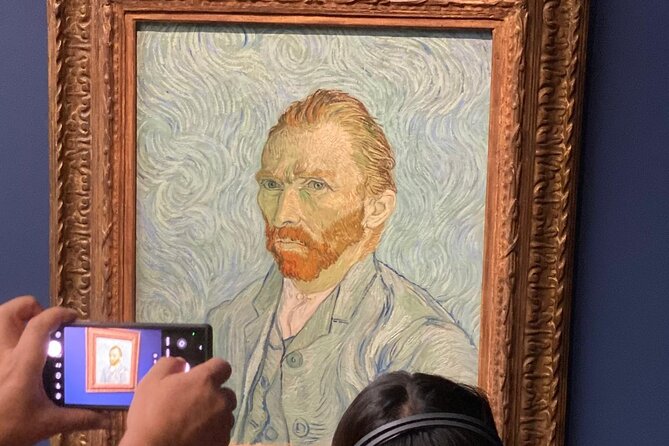
Van Gogh’s self-portraits reward close attention. They are not large theatrical objects, but they have a direct force that works best when you can stand near enough to study the brushwork. Renoir offers a different experience, with lively social scenes and a strong sense of motion.
Cézanne slows the pace down. His still lifes may look simple at first, but the arrangement of fruit, table, and space gives you plenty to examine. The museum works well for this kind of contrast because you can move from one artistic voice to another without covering huge distances.
The upper-level galleries are a favorite part of the visit for many families and first-time museumgoers. The layout is fairly easy to follow, and children can see a range of art without being asked to spend the whole day in a single style.
The rooms can become packed. If you want to stand quietly in front of a particular painting, arrive early or move through the busiest section and return later. Your open ticket makes that possible, since you are not tied to a one-way tour.
More art museums in Paris:
- Paris: Louvre Museum Timed-Entrance Ticket
★ 4.6 · 71,977 reviews - Louvre Museum Masterpieces Guided Tour with Access
★ 4.5 · 12,023 reviews - Paris: Louvre Museum Entry Ticket With Host and River Cruise
★ 4.6 · 9,926 reviews - Les Invalides: Napoleon’s Tomb & Army Museum Entry
★ 4.6 · 9,185 reviews
Sculpture, photography, and decorative arts
The museum’s sculpture collection gives the visit a welcome change of scale. After several rooms of paintings, three-dimensional works let you walk around objects and see how artists handled the human body, movement, and surface.
Photography and decorative art broaden the story further. These collections show how artistic change reached beyond painting. Furniture, objects, and design details help you see the period as a whole rather than as a parade of famous canvases.
The Art Nouveau sections are particularly useful if the Impressionist galleries become crowded. They can be quieter and offer a different kind of interest, with attention to line, ornament, materials, and the shapes of everyday objects.
I would give yourself more time than the bare minimum if you want these areas. A quick two-hour visit can cover the best-known paintings, but it may leave you rushing past the very material that makes the museum feel complete.
Temporary exhibitions are included
This ticket includes access to the temporary exhibition as well as the permanent collection. That is a real financial advantage when a special show is running, since you do not need to arrange a separate museum admission.
The exhibition program changes, so the exact subject is not fixed. You should check what is on during your visit if a special exhibition is important to your plans.
Temporary displays can also affect crowd levels. A popular show may increase the number of people inside and make the permanent collection feel busier. On the other hand, a special exhibition can give you a clear focus if you only have a few hours.
The inclusion is most useful for flexible visitors. You can decide once inside whether to spend time with the temporary material or concentrate on the permanent collection. That freedom is better than paying for a separate feature you may not have time to see.
How much time should you allow?
The stated visit length is about two to four hours. That range makes sense.
Plan on two hours if you want the major Impressionist rooms, the building, the famous clock, and a few sculptures. Three or four hours is better if you want to include the temporary exhibition, decorative arts, photography, cafés, and a less hurried look at Van Gogh, Renoir, Degas, or Cézanne.
I would not build a tightly packed schedule around this ticket. Entry may be quick, but it may also involve a queue, especially later in the day. Once inside, you will want room to stop rather than sprint from one famous work to the next.
The museum is open from 9:30am to 6pm for this ticket. Since the ticket is open rather than timed, you can fit it around a morning walk, lunch, or another Paris sight. Just remember that a flexible ticket is not the same as a guaranteed short wait.
Is the $24.14 price good value?
At $24.14 per person, this ticket is a reasonable purchase when museum tickets are scarce or you value a simple booking process. The best value comes from three features: dedicated C1 access, flexible admission during opening hours, and entry to both the permanent collection and temporary exhibition.
The price is less attractive if you expect a guaranteed skip-the-line experience. You may still wait at security or outside the entrance, and the lack of a timed slot can be a serious weakness on high-demand days.
For a last-minute decision, the ticket can be especially useful. Regular museum admission may be sold out while this option remains available, giving you a way to see the museum without abandoning the plan.
You are paying for access, not a guided interpretation. There is no guide, transportation, meal, or audio guide included. An audio guide can be purchased at the museum, but if you want expert explanation built into your visit, this is not the right product.
Who should book this museum ticket?
I would recommend it for independent visitors who want to choose their own pace. It suits art lovers focused on Impressionism, families who need flexibility, and people making a last-minute Paris plan.
It also works for visitors who dislike long museum tours. You can stay for a short visit, leave when your attention fades, or spend several hours with a favorite section.
The ticket is less suitable for anyone who needs a guaranteed entry time. If your Paris schedule is packed or you are visiting during a major holiday, a timed ticket would offer more certainty. The open format can leave you exposed to a long queue.
It is also not ideal if you want a guide to explain the collection. You can buy an audio guide separately, but the basic ticket is self-guided.
Practical advice for a smoother visit
- Go in the morning when possible, especially during holiday periods.
- Use entrance C1 and keep your QR code ready.
- Do not assume open entry means no waiting.
- Allow two to four hours, with extra schedule space for the entrance line.
- Look for lockers or coat check if you have bulky belongings.
- Take time for the building, not just the paintings.
- If the central Impressionist rooms are packed, try sculpture, Art Nouveau, photography, or decorative arts.
- Find a bench when you see one, since seating can be limited.
- Consider the museum cafés or restaurant if you want to stay inside longer.
- Cancel at least 24 hours before the start time if your plans change and you want a full refund.
The ticket has a 4.2 rating from 509 submitted ratings, which fits the experience well. Entry is often easy and the museum itself is outstanding, but queue conditions can change the value of an open ticket from excellent to disappointing.
Should you book the Musée d’Orsay open ticket?
Book it if you want a flexible, self-guided visit and you care about seeing Van Gogh, Renoir, Cézanne, Degas, Monet, and the museum’s remarkable station setting. The inclusion of temporary exhibitions adds useful value, and C1 can make entry far easier than buying a ticket at the door.
I would book with one condition: plan to arrive early and leave room in your schedule. If you need a guaranteed entry time, search for a timed option instead. For everyone else, this is a practical way to get into one of Paris’s finest art museums without handing your day over to a guide or fixed itinerary.
FAQ
What are the opening hours for this ticket?
The open ticket can be used during the stated opening hours, from 9:30am to 6pm.
Does the ticket include temporary exhibitions?
Yes. Admission includes the permanent collection and the temporary exhibition.
Which entrance should I use?
Use the dedicated C1 entrance listed with the ticket instructions.
Is this a timed-entry ticket?
No. It is an open ticket that can be used during opening hours. It does not guarantee immediate entry during crowded periods.
Is an audio guide included?
No. An audio guide is not included, but it can be purchased at the museum.
Is transportation included?
No. Transportation to and from the Musée d’Orsay is not included.
Can I cancel for a full refund?
Yes, if you cancel at least 24 hours before the experience start time. Cancellations made less than 24 hours before the start time are not refunded, and changes within that period are not accepted.
Just added around Paris
- Paris: The Da Vinci Code Walking Tour with a Local Guide★ 4.3 · 5 reviews
- Paris: Flea Market Insider’s Tour in Extra-Small Group★ 4.6 · 73 reviews
- Paris: Private Fashion Tour (Chanel, Dior, Sex & the City)★ 5.0 · 3 reviews
- Paris: Floral Earrings workshop★ 5.0 · 3 reviews
- Paris: Fashion History Walking Tour in the Heart of Paris★ 4.9 · 22 reviews
- PARIS: Family e-bike longtail renting★ 5.0 · 3 reviews
- Paris: Famous Monuments Cycling Tour★ 4.7 · 20 reviews
- Paris: private city tour with seine river cruise★ 4.8 · 28 reviews
Musée d’Orsay Tours, compared.
Paris in a Day: Louvre or Orsay, Eiffel Tower, City Walk & Cruise
Read our review →
Musée d’Orsay Skip-the-Line Tour with Expert Guide
Read our review →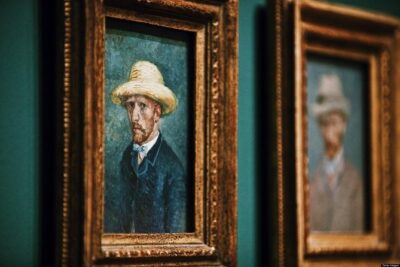
The Musée d’Orsay Guided Tour Orsay Museum Semi-Private 6ppl Max
Read our review →
Louvre & Musée d’Orsay Guided Museum Tour Semi-Private 6ppl Max
Read our review →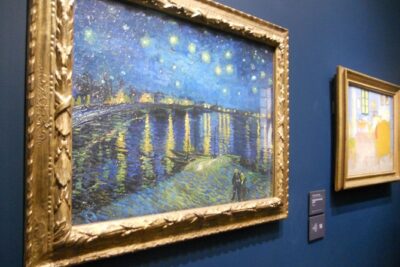
Orsay Museum – Exclusive Guided Tour (Reserved Entry Included)
Read our review →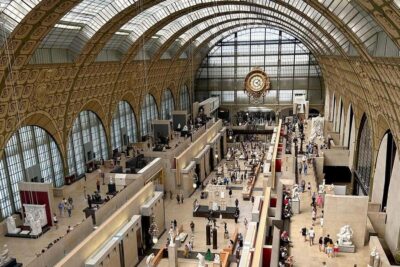
Orsay Museum and Rodin Museum Combo Entry Ticket
Read our review →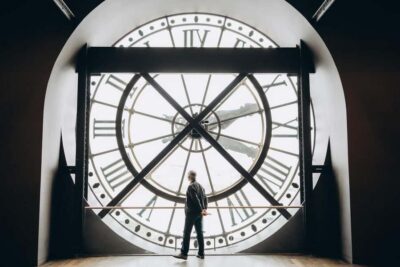
Browse the lists this tour appears in